
Naming Ionic Compounds Charges or Oxidation Numbers Group
Naming - Ionic Compounds
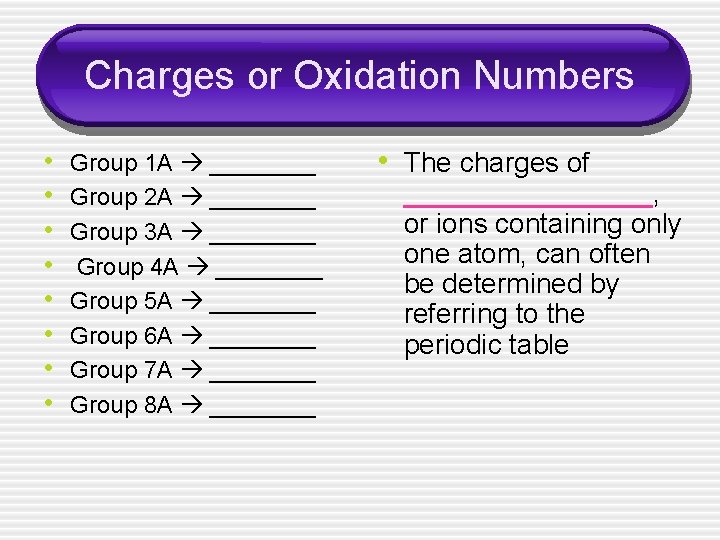
Charges or Oxidation Numbers • • Group 1 A ____ Group 2 A ____ Group 3 A ____ Group 4 A ____ Group 5 A ____ Group 6 A ____ Group 7 A ____ Group 8 A ____ • The charges of ________, or ions containing only one atom, can often be determined by referring to the periodic table
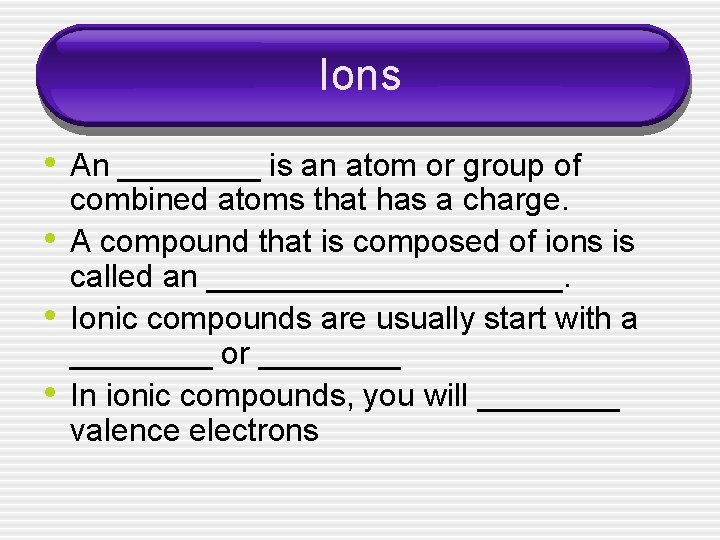
Ions • An ____ is an atom or group of • • • combined atoms that has a charge. A compound that is composed of ions is called an __________. Ionic compounds are usually start with a ____ or ____ In ionic compounds, you will ____ valence electrons
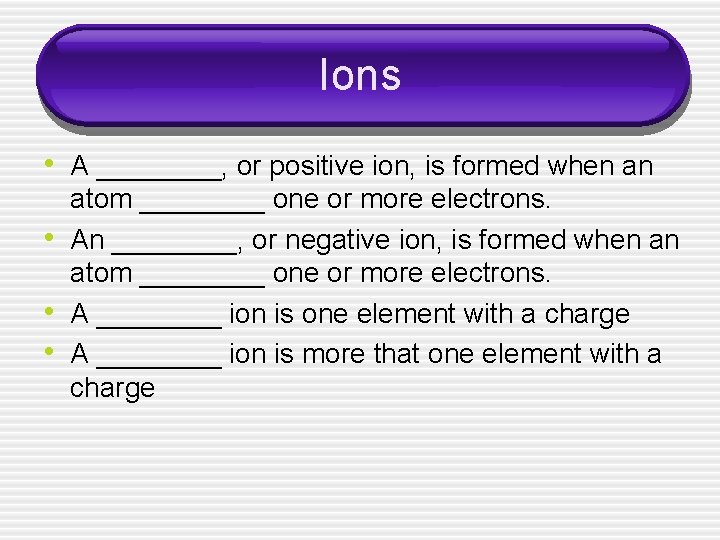
Ions • A ____, or positive ion, is formed when an • • • atom ____ one or more electrons. An ____, or negative ion, is formed when an atom ____ one or more electrons. A ____ ion is one element with a charge A ____ ion is more that one element with a charge
Formation of Ionic Compounds • Remember that objects with opposite charges • ____. The strong attractive force between ions of opposite charge is called an ______. • Don’t forget that even though the ions have • charges, the overall charge of the compound will be … ____
Examples of Formula Writing • Write the formula for the compound formed between sodium and chloride
More examples • Write the formula between Mg and Br
More examples • Write the formula for the compound formed between Ca and S
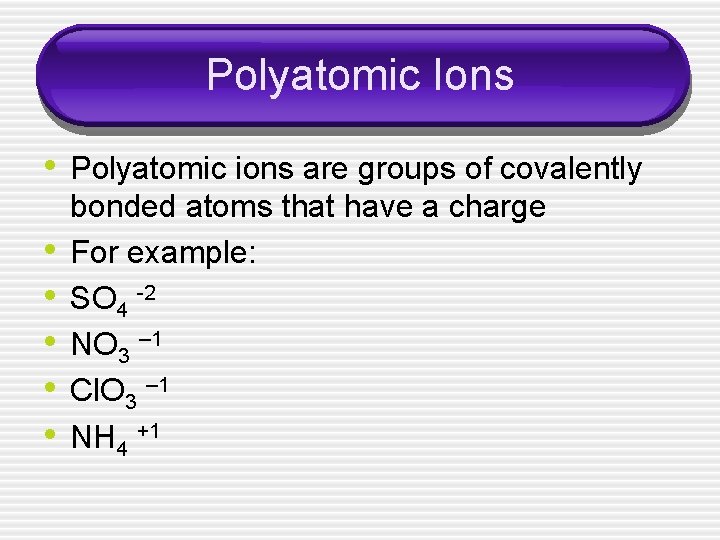
Polyatomic Ions • Polyatomic ions are groups of covalently • • • bonded atoms that have a charge For example: SO 4 -2 NO 3 – 1 Cl. O 3 – 1 NH 4 +1
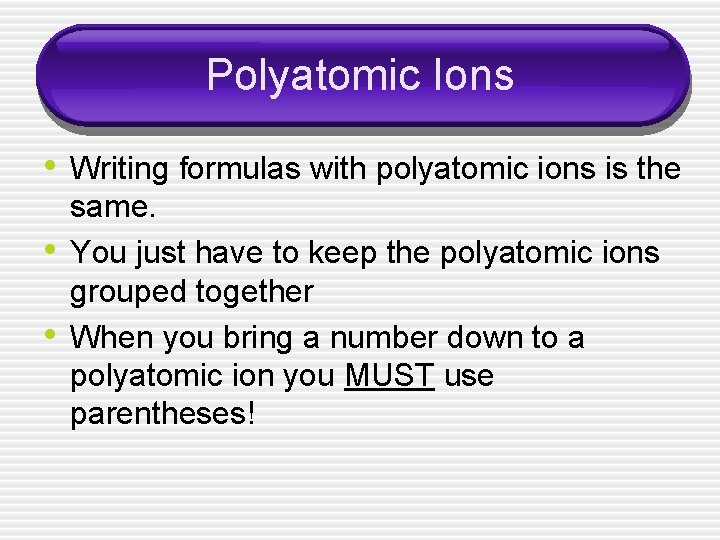
Polyatomic Ions • Writing formulas with polyatomic ions is the • • same. You just have to keep the polyatomic ions grouped together When you bring a number down to a polyatomic ion you MUST use parentheses!
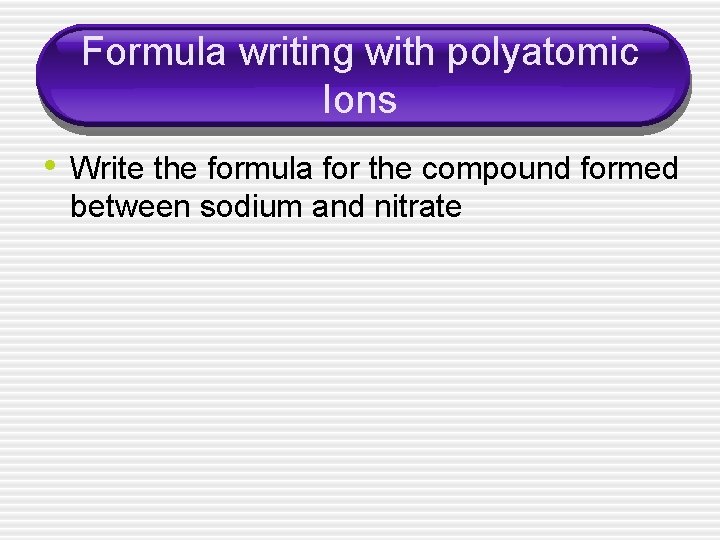
Formula writing with polyatomic Ions • Write the formula for the compound formed between sodium and nitrate
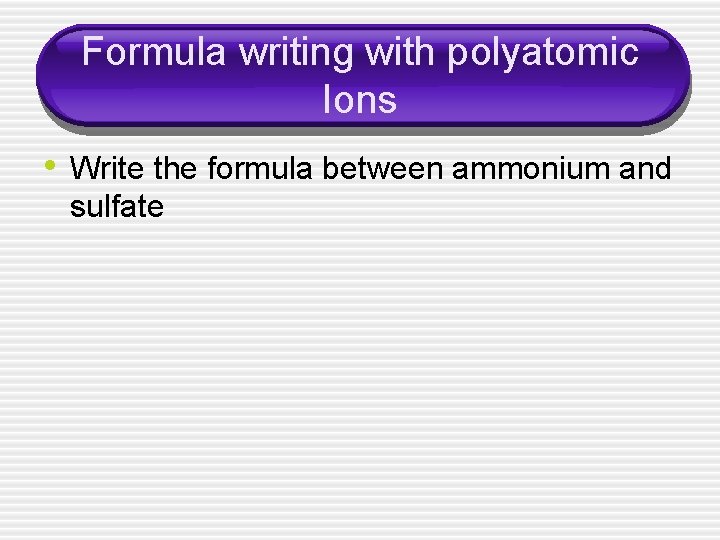
Formula writing with polyatomic Ions • Write the formula between ammonium and sulfate
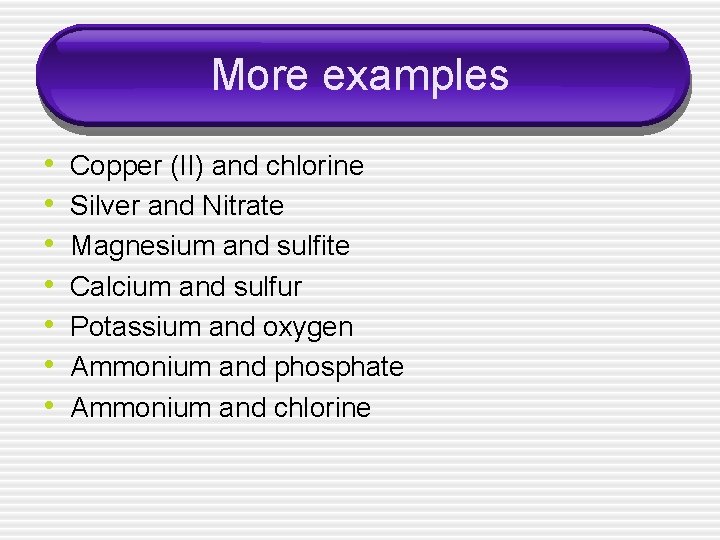
More examples • • Copper (II) and chlorine Silver and Nitrate Magnesium and sulfite Calcium and sulfur Potassium and oxygen Ammonium and phosphate Ammonium and chlorine
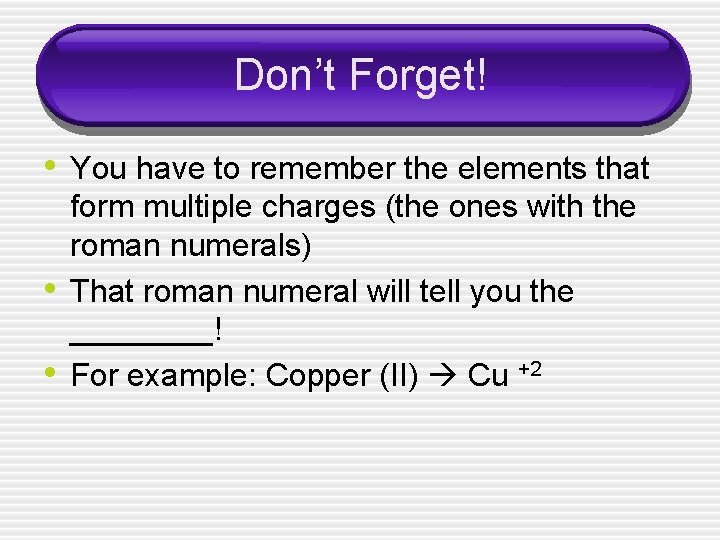
Don’t Forget! • You have to remember the elements that • • form multiple charges (the ones with the roman numerals) That roman numeral will tell you the ____! For example: Copper (II) Cu +2
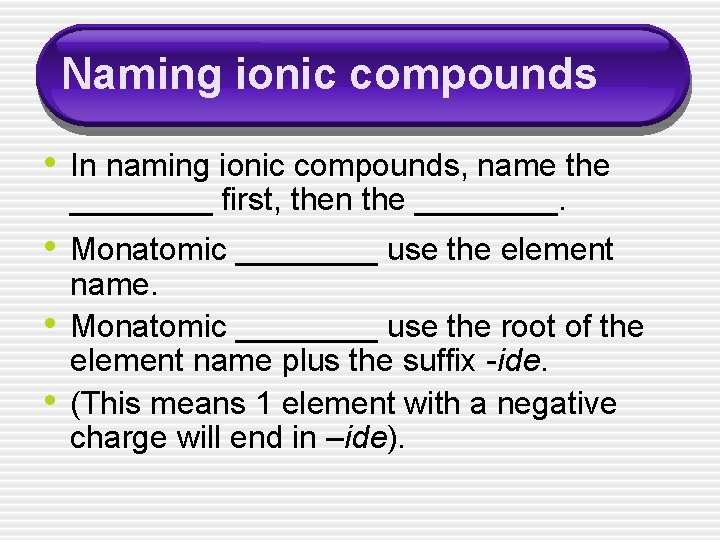
Naming ionic compounds • In naming ionic compounds, name the ____ first, then the ____. • Monatomic ____ use the element • • name. Monatomic ____ use the root of the element name plus the suffix -ide. (This means 1 element with a negative charge will end in –ide).
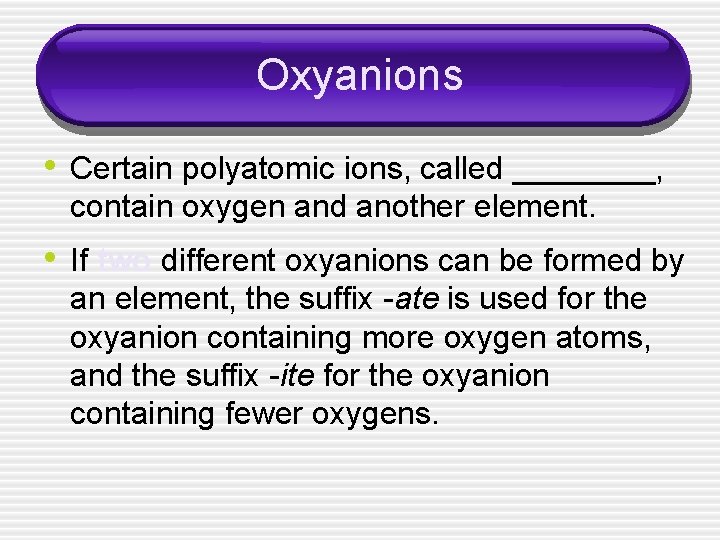
Oxyanions • Certain polyatomic ions, called ____, contain oxygen and another element. • If two different oxyanions can be formed by an element, the suffix -ate is used for the oxyanion containing more oxygen atoms, and the suffix -ite for the oxyanion containing fewer oxygens.
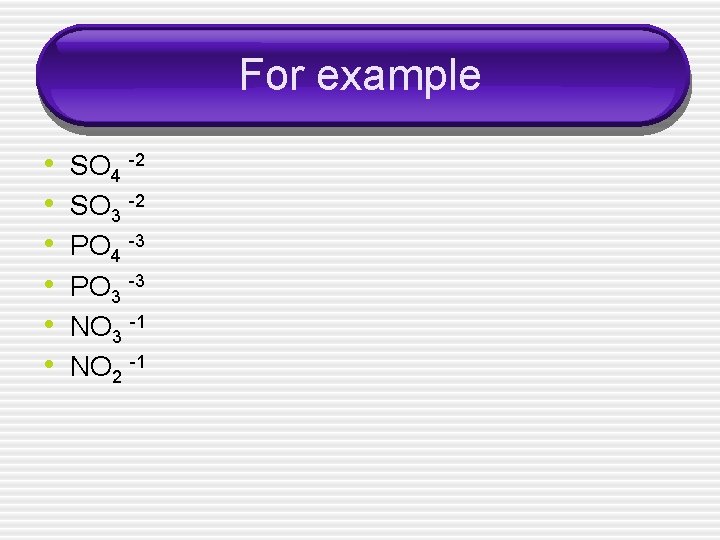
For example • • • SO 4 -2 SO 3 -2 PO 4 -3 PO 3 -3 NO 3 -1 NO 2 -1
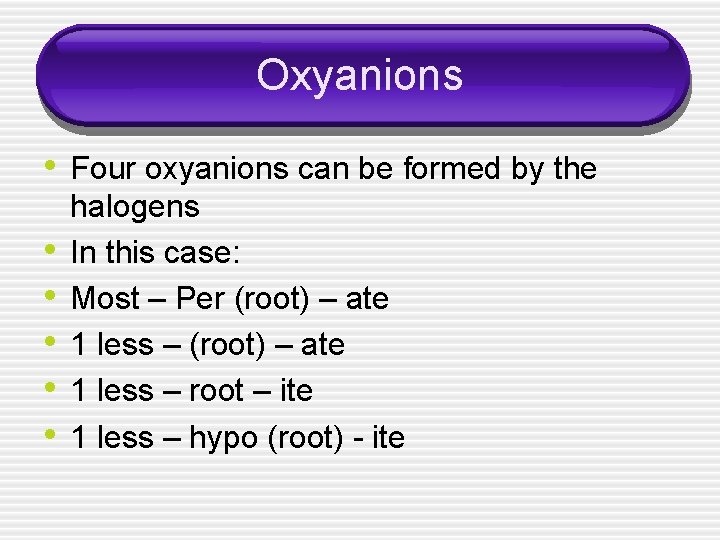
Oxyanions • Four oxyanions can be formed by the • • • halogens In this case: Most – Per (root) – ate 1 less – root – ite 1 less – hypo (root) - ite
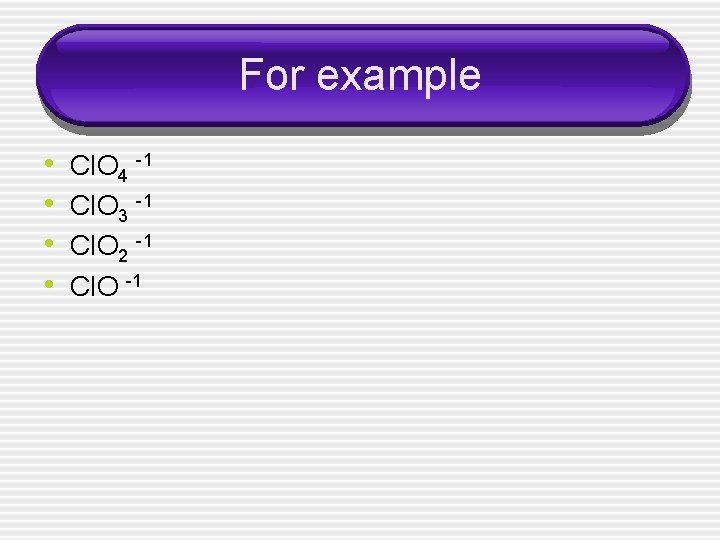
For example • • Cl. O 4 -1 Cl. O 3 -1 Cl. O 2 -1 Cl. O -1
Simply put. . • All you have to do is name the 1 st thing then name the 2 nd thing
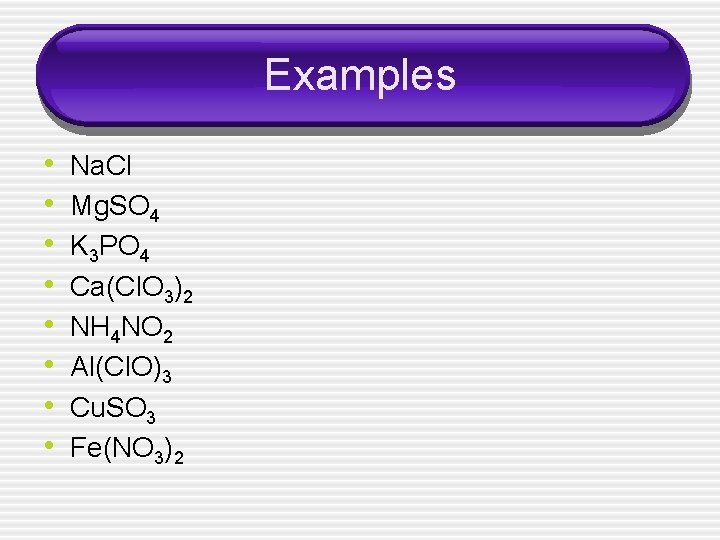
Examples • • Na. Cl Mg. SO 4 K 3 PO 4 Ca(Cl. O 3)2 NH 4 NO 2 Al(Cl. O)3 Cu. SO 3 Fe(NO 3)2
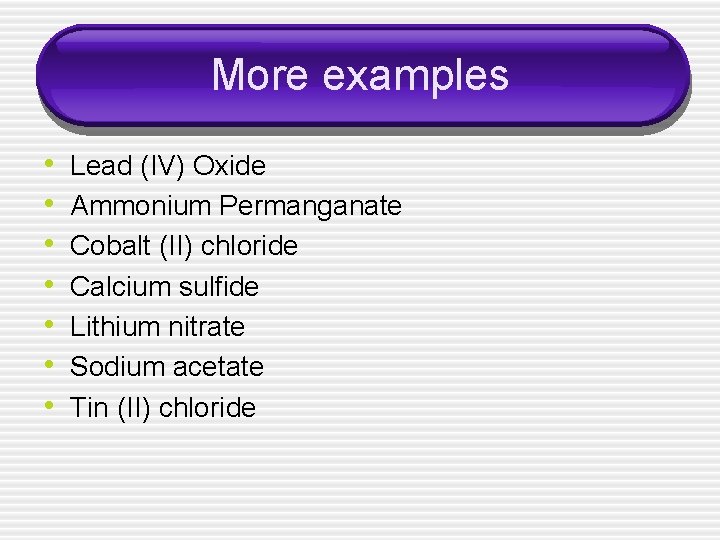
More examples • • Lead (IV) Oxide Ammonium Permanganate Cobalt (II) chloride Calcium sulfide Lithium nitrate Sodium acetate Tin (II) chloride
- Slides: 22