
Naming Compounds Rules 1 Name the cation first
- Slides: 8
Naming Compounds Rules
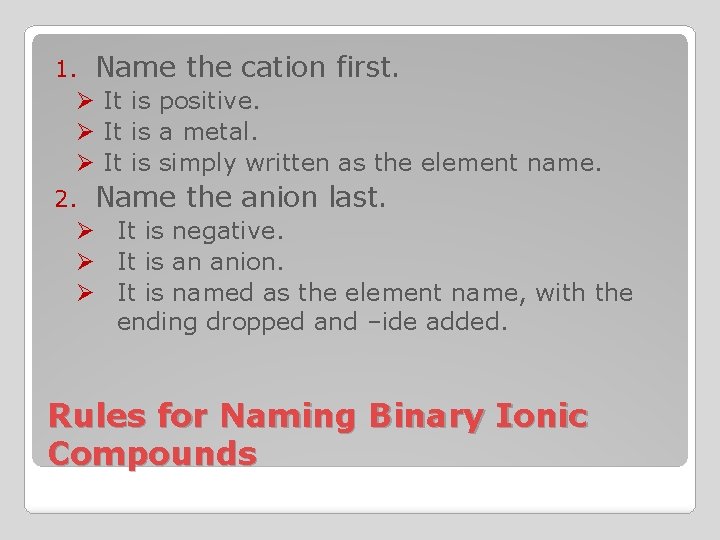
1. Name the cation first. Ø It is positive. Ø It is a metal. Ø It is simply written as the element name. 2. Name the anion last. Ø It is negative. Ø It is an anion. Ø It is named as the element name, with the ending dropped and –ide added. Rules for Naming Binary Ionic Compounds
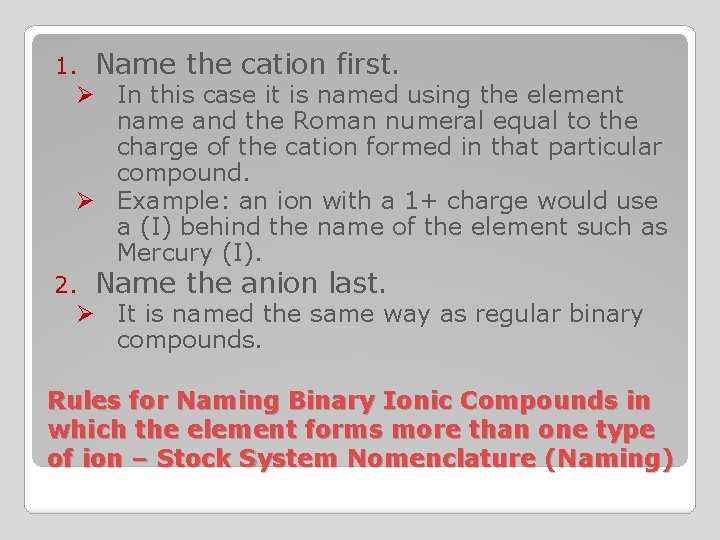
1. Name the cation first. Ø In this case it is named using the element name and the Roman numeral equal to the charge of the cation formed in that particular compound. Ø Example: an ion with a 1+ charge would use a (I) behind the name of the element such as Mercury (I). 2. Name the anion last. Ø It is named the same way as regular binary compounds. Rules for Naming Binary Ionic Compounds in which the element forms more than one type of ion – Stock System Nomenclature (Naming)
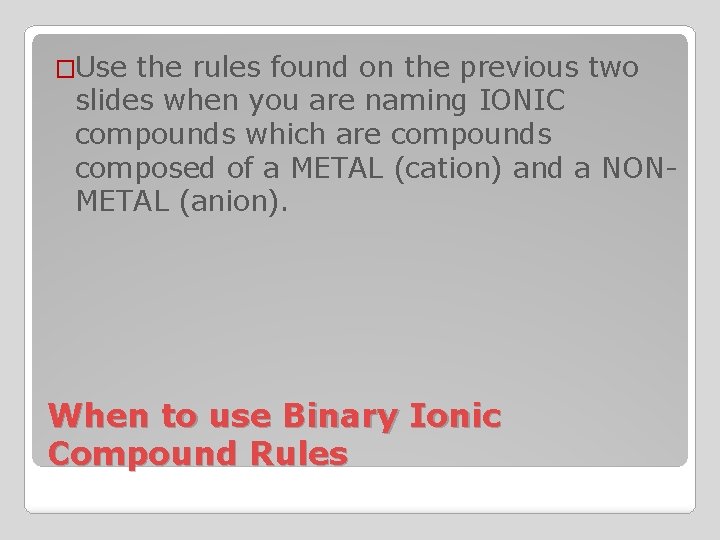
�Use the rules found on the previous two slides when you are naming IONIC compounds which are compounds composed of a METAL (cation) and a NONMETAL (anion). When to use Binary Ionic Compound Rules
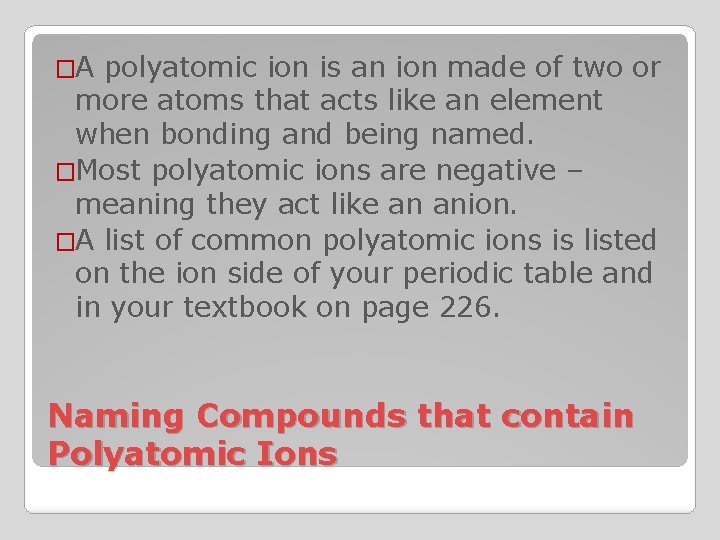
�A polyatomic ion is an ion made of two or more atoms that acts like an element when bonding and being named. �Most polyatomic ions are negative – meaning they act like an anion. �A list of common polyatomic ions is listed on the ion side of your periodic table and in your textbook on page 226. Naming Compounds that contain Polyatomic Ions
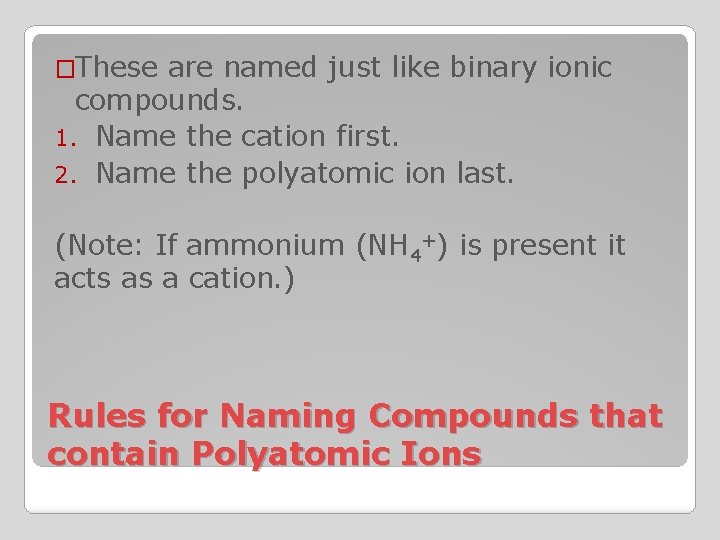
�These are named just like binary ionic compounds. 1. Name the cation first. 2. Name the polyatomic ion last. (Note: If ammonium (NH 4+) is present it acts as a cation. ) Rules for Naming Compounds that contain Polyatomic Ions
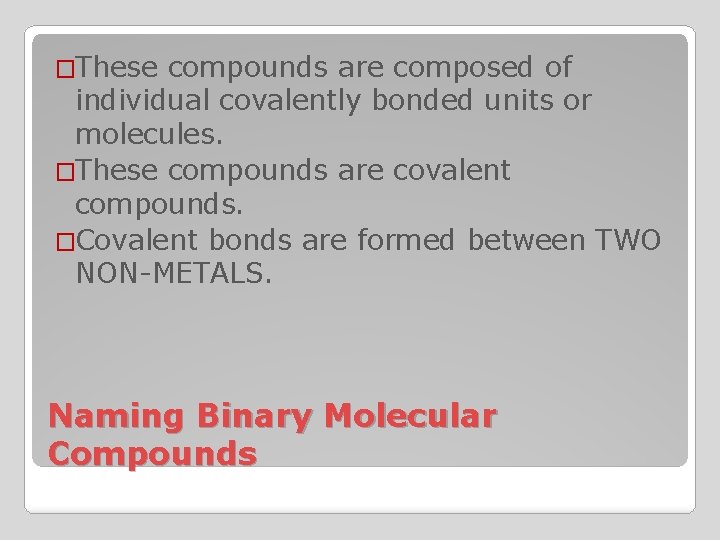
�These compounds are composed of individual covalently bonded units or molecules. �These compounds are covalent compounds. �Covalent bonds are formed between TWO NON-METALS. Naming Binary Molecular Compounds
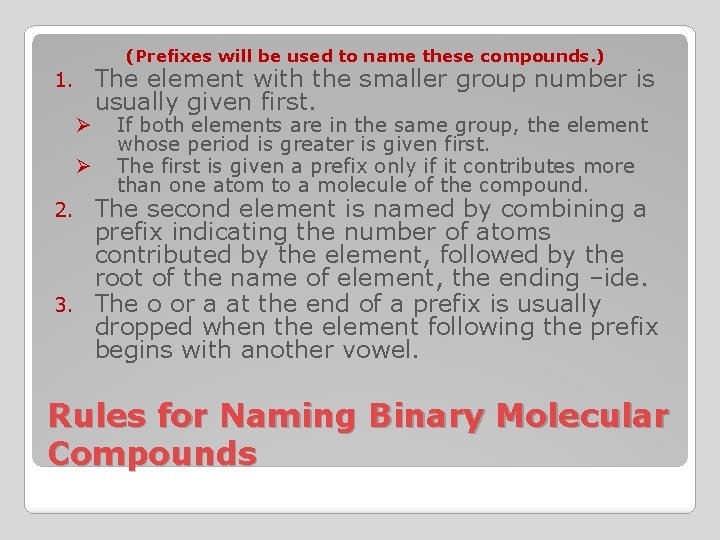
(Prefixes will be used to name these compounds. ) 1. Ø Ø The element with the smaller group number is usually given first. If both elements are in the same group, the element whose period is greater is given first. The first is given a prefix only if it contributes more than one atom to a molecule of the compound. The second element is named by combining a prefix indicating the number of atoms contributed by the element, followed by the root of the name of element, the ending –ide. 3. The o or a at the end of a prefix is usually dropped when the element following the prefix begins with another vowel. 2. Rules for Naming Binary Molecular Compounds