
Naming Compounds Formulas and Compounds Compound a substance
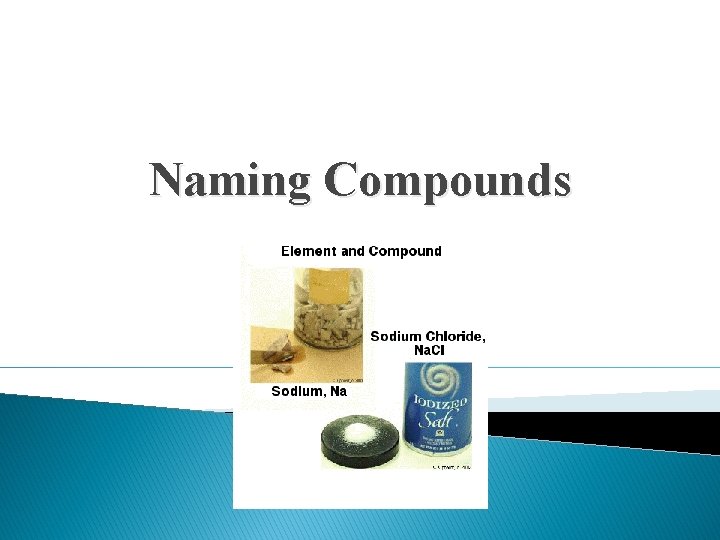
Naming Compounds

Formulas and Compounds � Compound- a substance made of 2 or more elements joined together in a specific way � Chemical Formula- the expression of types and number of atoms of each type in a molecule � Structural Formula- a graphic representation of the molecular structure, showing how the atoms are arranged
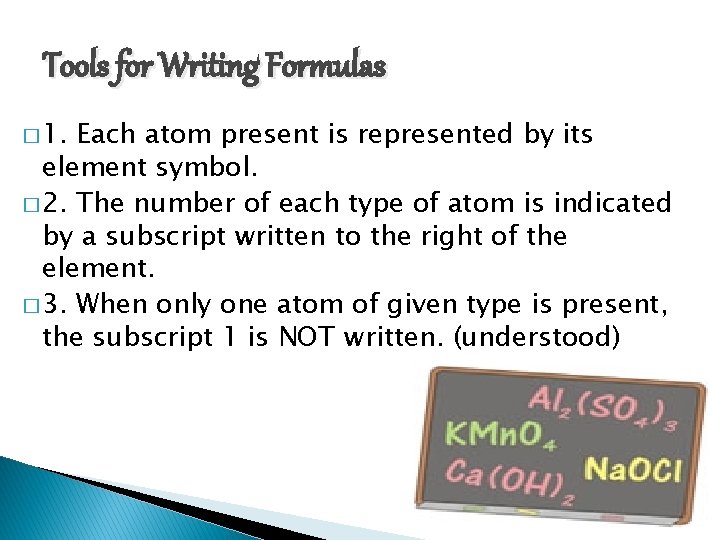
Tools for Writing Formulas � 1. Each atom present is represented by its element symbol. � 2. The number of each type of atom is indicated by a subscript written to the right of the element. � 3. When only one atom of given type is present, the subscript 1 is NOT written. (understood)
Problems � 1. A molecule contains four phosphorus atoms and ten oxygen atoms. � 2. A molecule contains one uranium atom and six fluorine atoms. � 3. A compound contains one aluminum atom and 3 chlorine atoms. � Worksheet Examples
Naming Binary Compounds
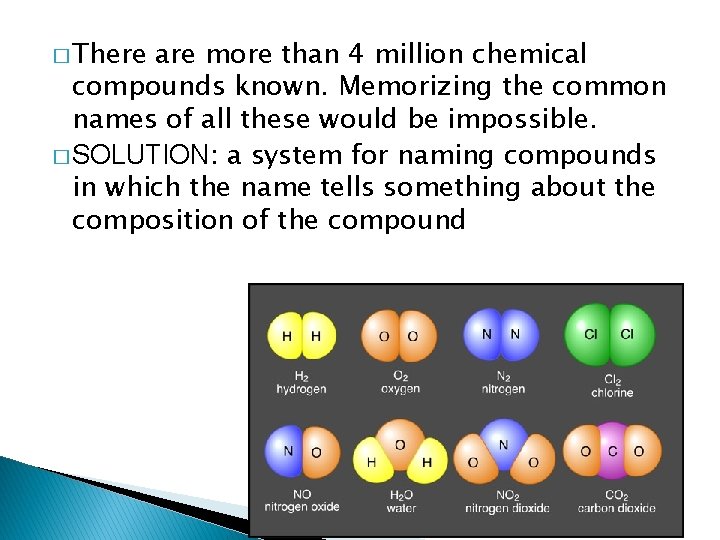
� There are more than 4 million chemical compounds known. Memorizing the common names of all these would be impossible. � SOLUTION: a system for naming compounds in which the name tells something about the composition of the compound
Naming Compounds That Contain Metal and a Nonmetal � Binary Ionic Compound- a 2 element compound consisting of a cation and an anion RULES � cation (+) is always written 1 st � cation takes the name from the name of the element. Ex: Na+ is called sodium � anion (-) is written second � anion take the first part of the element name and adding –ide. Ex: Cl- ion is chloride
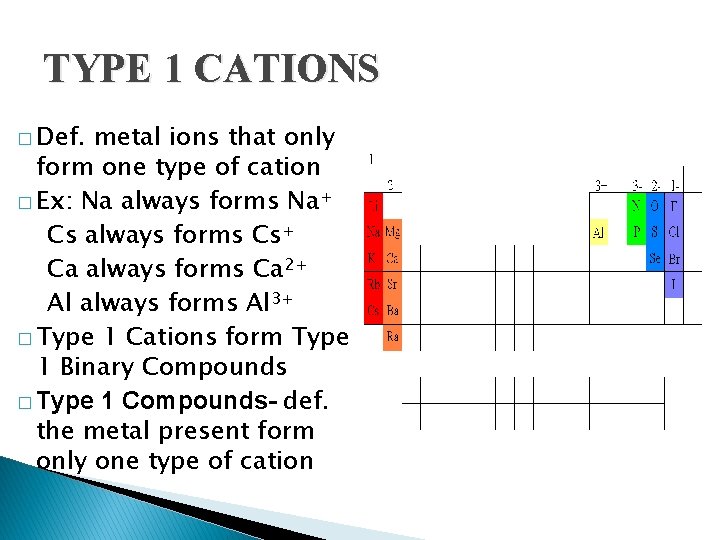
TYPE 1 CATIONS � Def. metal ions that only form one type of cation � Ex: Na always forms Na+ Cs always forms Cs+ Ca always forms Ca 2+ Al always forms Al 3+ � Type 1 Cations form Type 1 Binary Compounds � Type 1 Compounds- def. the metal present form only one type of cation
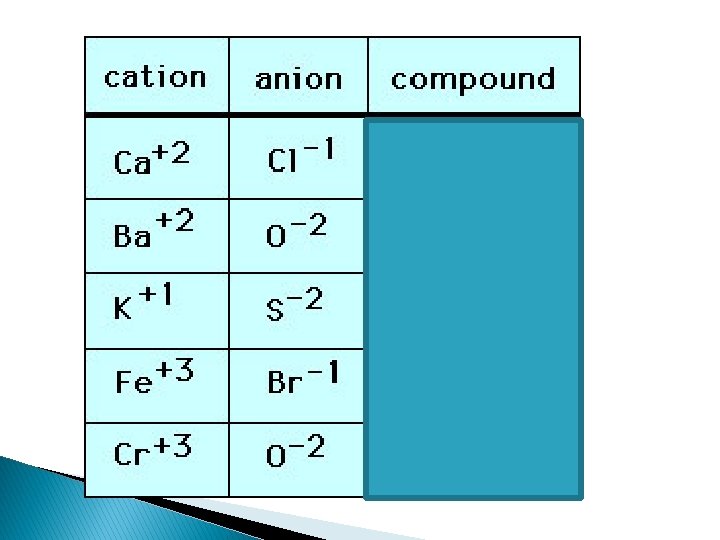
EXAMPLES � Ex: Na. I Sodium iodide � Na+ = sodium cation � I- = iodine anion � Ca. O Calcium Oxide � Ca 2+ = calcium � O 2 - = oxide
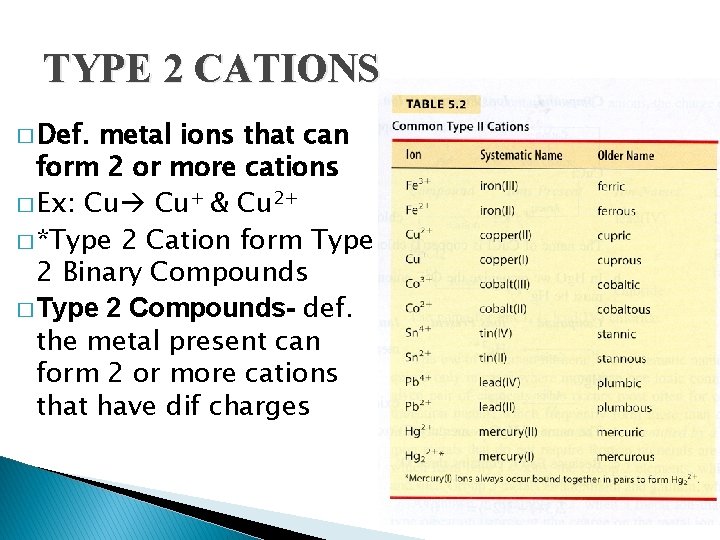
TYPE 2 CATIONS � Def. metal ions that can form 2 or more cations � Ex: Cu Cu+ & Cu 2+ � *Type 2 Cation form Type 2 Binary Compounds � Type 2 Compounds- def. the metal present can form 2 or more cations that have dif charges
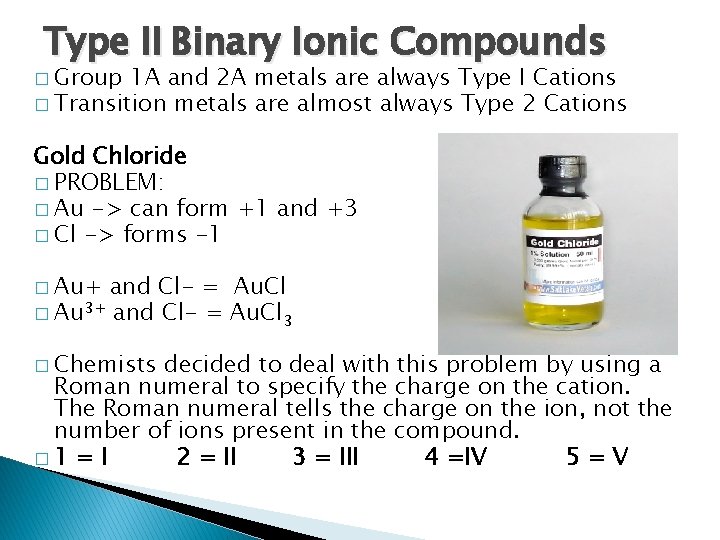
Type II Binary Ionic Compounds � Group 1 A and 2 A metals are always Type I Cations � Transition metals are almost always Type 2 Cations Gold Chloride � PROBLEM: � Au -> can form +1 and +3 � Cl -> forms -1 � Au+ and Cl- = Au. Cl � Au 3+ and Cl- = Au. Cl 3 � Chemists decided to deal with this problem by using a Roman numeral to specify the charge on the cation. The Roman numeral tells the charge on the ion, not the number of ions present in the compound. � 1 = I 2 = II 3 = III 4 =IV 5=V

EXAMPLES � Fe. Cl 2 � Fe? + 2 Cl� ? (+) + 2(1 -) = 0 � 2+ + 2 - = 0 � So the charge of Fe = 2+ � Called Iron (II) Chloride

� Fe. Cl 3 � Fe? + 3 Cl� ? (+) + 3(1 -) = 0 � 3+ + 3 - = 0 � So the charge of Fe = 3+ Called Iron (III) Chloride � Pb. O 2 � Pb? + 2 O 2� ? (+) + 2(2 -) = 0 � 4+ + 4 - = 0 � So the charge of Pb = 4+ Called Lead (IV) Oxide
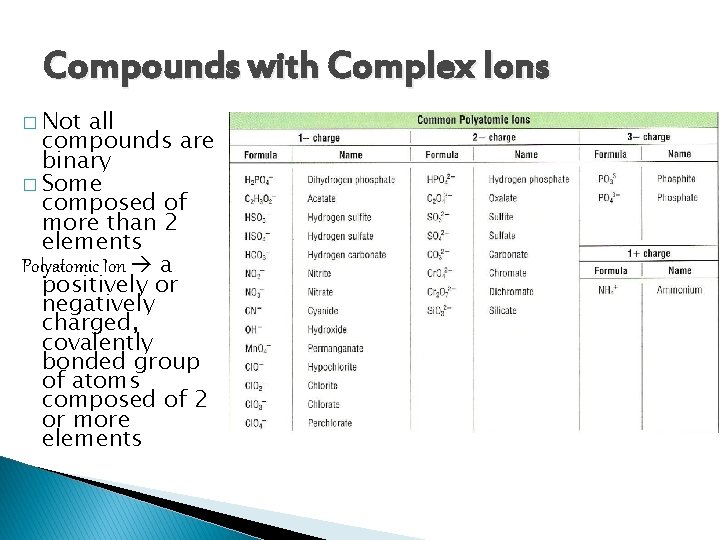
Compounds with Complex Ions � Not all compounds are binary � Some composed of more than 2 elements Polyatomic Ion a positively or negatively charged, covalently bonded group of atoms composed of 2 or more elements
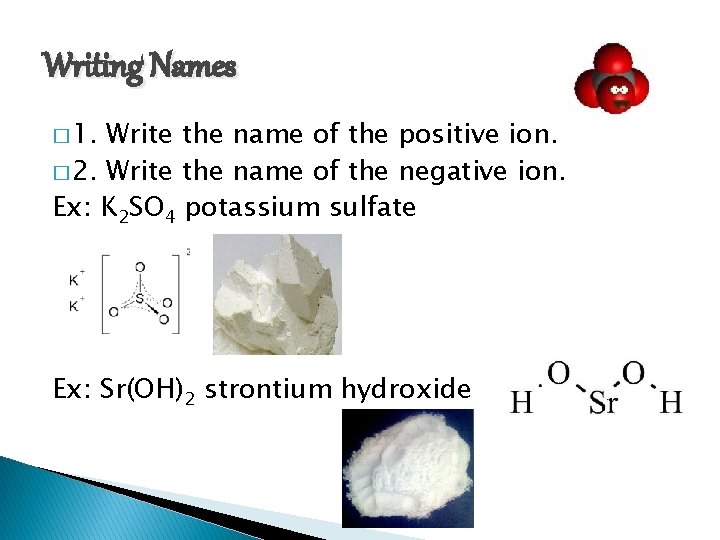
Writing Names � 1. Write the name of the positive ion. � 2. Write the name of the negative ion. Ex: K 2 SO 4 potassium sulfate Ex: Sr(OH)2 strontium hydroxide
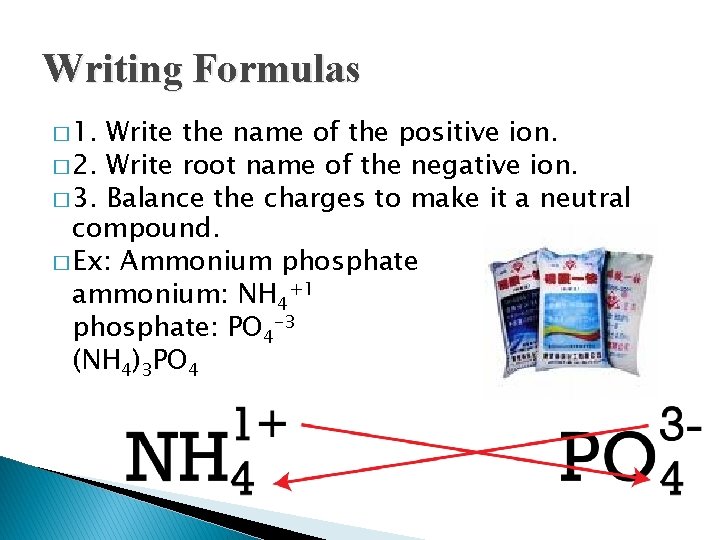
Writing Formulas � 1. Write the name of the positive ion. � 2. Write root name of the negative ion. � 3. Balance the charges to make it a neutral compound. � Ex: Ammonium phosphate ammonium: NH 4+1 phosphate: PO 4 -3 (NH 4)3 PO 4
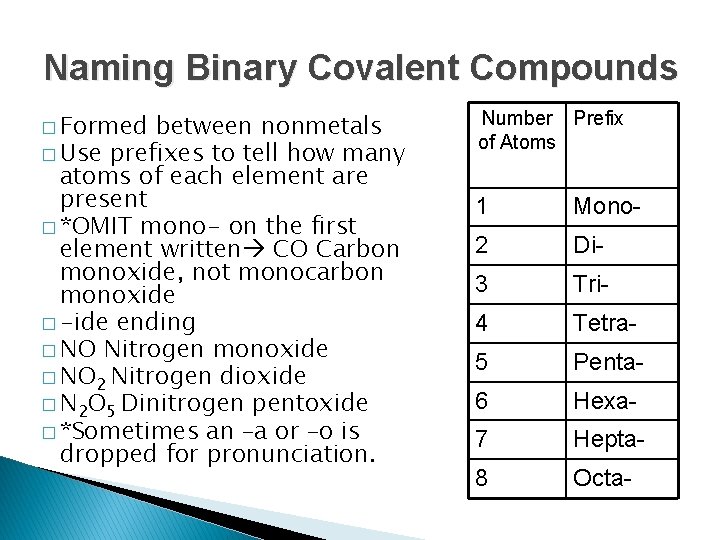
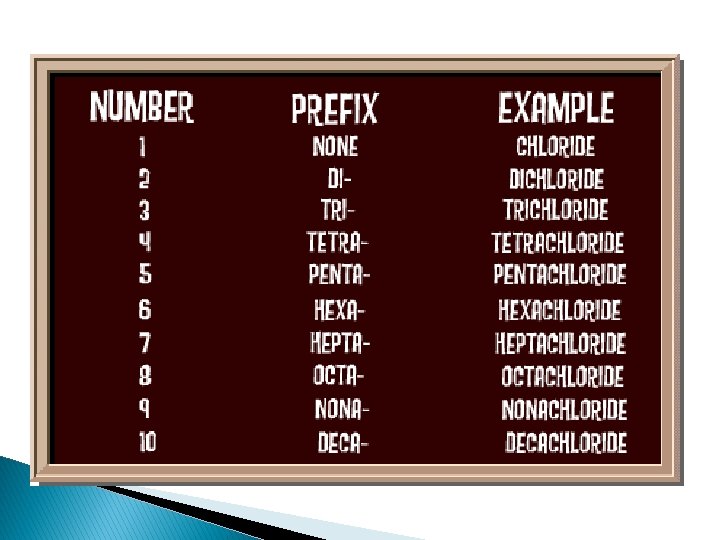
Naming Binary Covalent Compounds � Formed between nonmetals � Use prefixes to tell how many atoms of each element are present � *OMIT mono- on the first element written CO Carbon monoxide, not monocarbon monoxide � -ide ending � NO Nitrogen monoxide � NO 2 Nitrogen dioxide � N 2 O 5 Dinitrogen pentoxide � *Sometimes an –a or –o is dropped for pronunciation. Number Prefix of Atoms 1 Mono- 2 Di- 3 Tri- 4 Tetra- 5 Penta- 6 Hexa- 7 Hepta- 8 Octa-
- Slides: 20