
Name That Pesticide How to Identify the Products








- Slides: 25
Name That Pesticide How to Identify the Products Your Patients Are Exposed To Helen Murphy, RN, FNP, MHS Director of Outreach Pacific Northwest Agricultural Safety and Health University of Washington, Seattle WA 2009
The nomenclature of pesticides is similar to medications in that they have…. n n n A brand/trade or product name: e. g. Motrin A generic name (common name or active ingredient): ibuprofen A chemical family: e. g. NSAID Likewise one needs to know the chemical family and more specifically the common name to understand the health effect of an exposure and how to treatment a poisoning.
What the Patient Will Know ? NOT the common or chemical family name. More likely they can identify: the BRAND name n the TYPE (insecticide, herbicide, fungicide, fumigant) n the CROP to which the pesticide was being applied. n
Pesticide Product Label n n The label is the agriculture world = the package insert for the medical world The label is the LAW and dictates: Use n Required personal protective equipment n n The label on the bottle or package provides basic information
Sample Package Labels Type of pesticide ü Company name ü Brand/trade/product name ü Common/generic name (sometimes the same as ü the active ingredients) Chemical family ü Signal word (hazard level) ü
Type “Insecticide” Brand Name “SUPRACIDE” Hazard Level Common Name “methadithion” “Danger/poison” Poison Icon Chemical Family Antidote ‘organophosphate’ “atropine” Manufacturer Gowan
Class Exercise Distribute Sample Pesticide Product Labels 1. 2. 3. 4. 5. 6. Temik Sevin Thiodan Guthion Dursban Gramoxone 7. 8. 9. 10. 11. 12. Weed Rhap Asana Captan Roundup Dithane Ziram
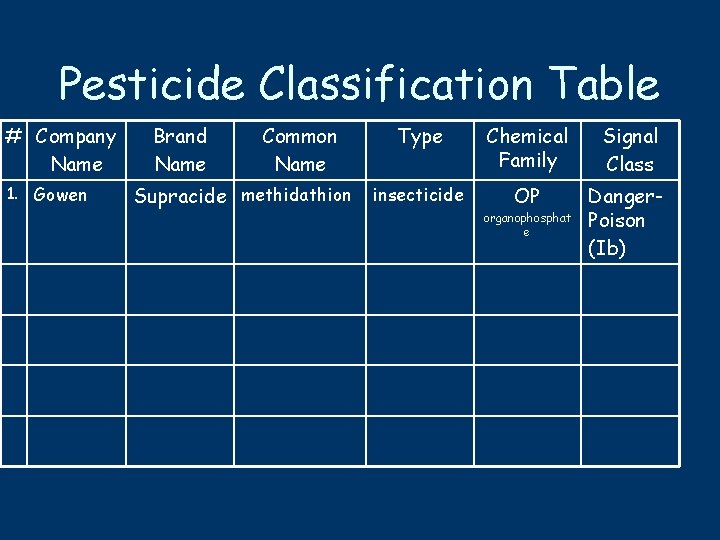
Class Exercise n Find the following items on the label n n n n Company/Manufacturer’s name Brand/Product/Trade name Common name (generic – active ingredient) Type: use in agriculture Chemical family Signal word (hazard level) Fill in the pesticide classification table (hand out)
Pesticide Classification Table # Company Name 1. Gowen Brand Name Common Name Supracide methidathion Type Chemical Family Signal Class insecticide OP Danger. Poison (Ib) organophosphat e
Exercise: Classifying Pesticides Pesticide Labels COMPANY BRAND COMMON TYPE FAMILY SIGNAL * WHO 1. Bayer Temik Aldicarb Insecticide Carbamate Danger-poison la 2. Verdicon Sevin Carbaryl Insecticide Carbamate Caution ll 3. UCP Alliance Thiodan Endosulfan Insecticide Organochlorine Warning ll 4. Bayer Guthion Azinophos methyl Insecticide Organophospate Danger-poison lb 5. Dow Dursban Chlorpyrifos Insecticide Organophospate Warning ll 6. Syngenta Gramoxone Paraquat Herbicide Paraquat Danger-poison ll 7. Helena Weed Rhap 2, 4 -D Herbicide Chlorophenoxy Danger-poison ll 8. Du. Pont Asana Esfenverlate Insecticide Pyrethroid Warning l. V 9. Bayer Captan Fungicide Danger-poison II 10. Max Roundup Glyphosate Herbicide Caution U-IV Dow Dithane Mancozeb Fungicide Ziram Fungicide 11. 12. Cerexagri-Nisso Ziram * WHO – World Health Organization International Classification Caution Danger U-IV III
Company Name n n n May be useful in looking up a product Workers may confuse this name with the brand, product or trade name. Some companies also produce pharmaceuticals.
Brand/Trade/Product Name n n n Agricultural workers know pesticides primarily through the brand name Companies will keep brand names but CHANGE the active ingredients (e. g. Raid) Can use brand name as a search term
Common Name n n n Critical identifier of the chemical Some databases only allow you to search by common name. Basis of treatment!
Types of Pesticides Fumigants Insecticides Control pests by attacking their nervous system Herbicides Corrosive weed killers Disinfectants Fungicides Antibiotics for plants Rodenticides Kill rodents with anticoagulants
Pesticide Chemical Families -grouping based on similarities 1. 2. 3. Similar chemically (similar structure) Attacks pests in a similar way (toxicity) Common treatment + antidote Organophosphate insecticides Organochlorine insecticides Carbamate insecticides Chlorophenoxy Herbicides Pyrethroid insecticides Paraquat Diquat herbicides
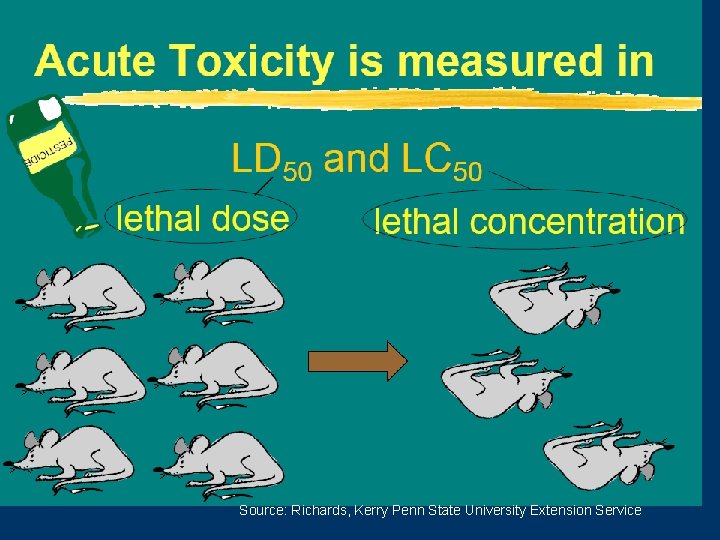
How toxic is it? Source: Richards, Kerry Penn State University Extension Service
Source: Richards, Kerry Penn State University Extension Service
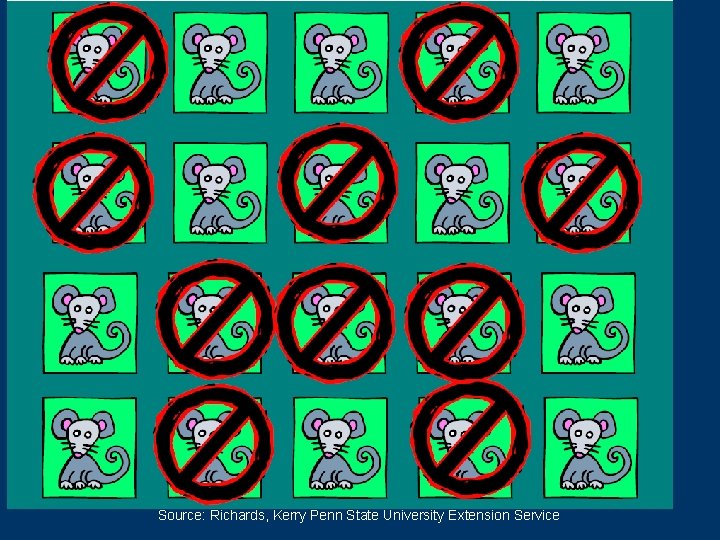
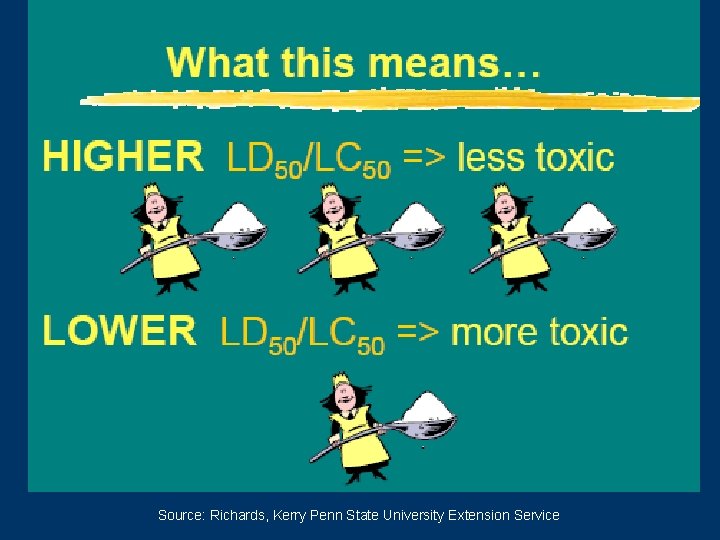
LD 50 Lethal dose = Amount of chemical it takes to kill 50% of an experimental population
Source: Richards, Kerry Penn State University Extension Service
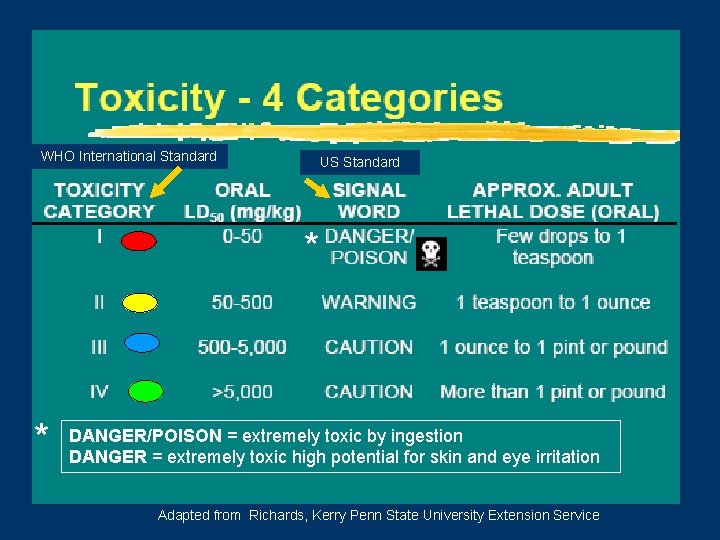
WHO International Standard US Standard * * DANGER/POISON = extremely toxic by ingestion DANGER = extremely toxic high potential for skin and eye irritation Adapted from Richards, Kerry Penn State University Extension Service
Source: Richards, Kerry Penn State University Extension Service
Sample Case A patient comes into your office after spilling the weed killer – Direx - on himself. He is having some vague non specific problems. How will you identify what kind of adverse heath effects he may experience?
Pesticide Identification Resources n n n Poison Control (800) 222 -1222 (TDD) 1(800) 572 -0638 Google “Direx” Pesticide Websites: PAN http: //www. pesticideinfo. org/ n CDMS http: //www. cdms. net/Labels. Msds/LMDefault. aspx http: //npic. orst. edu/npicfact. htm n NPIC n
Practice: Using these resources for Diurex ™find n n n The common name The chemical family Health effects Recommended decontamination Recommended PPE Describe the attributes of each resource used including advantages and disadvantages
http: //creativecommons. org/licenses/by-nc-sa/3. 0/ This work is licensed under a Creative Commons Attribution-Noncommercial-Share Alike 3. 0 Unported License.