
Name Per Date Classification of Organisms The Kingdom
![Examples of species names Escherichia coli [E. coli] o Drosophila melanogaster [D. melanogaster] o](https://slidetodoc.com/presentation_image_h/e48bd40b2ee70d1acfa414c168b5075b/image-11.jpg "Examples of species names Escherichia coli [E. coli] o Drosophila melanogaster [D. melanogaster] o")
- Slides: 12
Name: ______________ Per: ______ Date: _______ Classification of Organisms: The Kingdom System
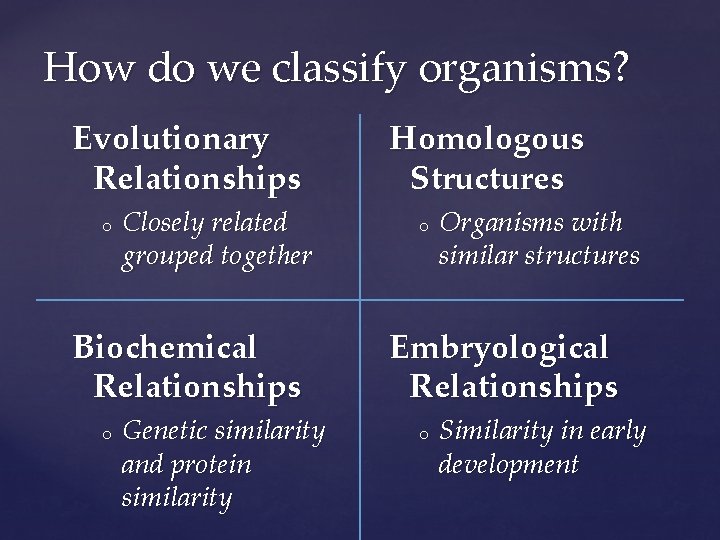
How do we classify organisms? Evolutionary Relationships o Closely related grouped together Biochemical Relationships o Genetic similarity and protein similarity Homologous Structures o Organisms with similar structures Embryological Relationships o Similarity in early development
What is taxonomy? Taxonomy = science of grouping and naming organisms o Taxon = group of organisms (pl: taxa) o Carolus Linnaeus credited for coming up with system o
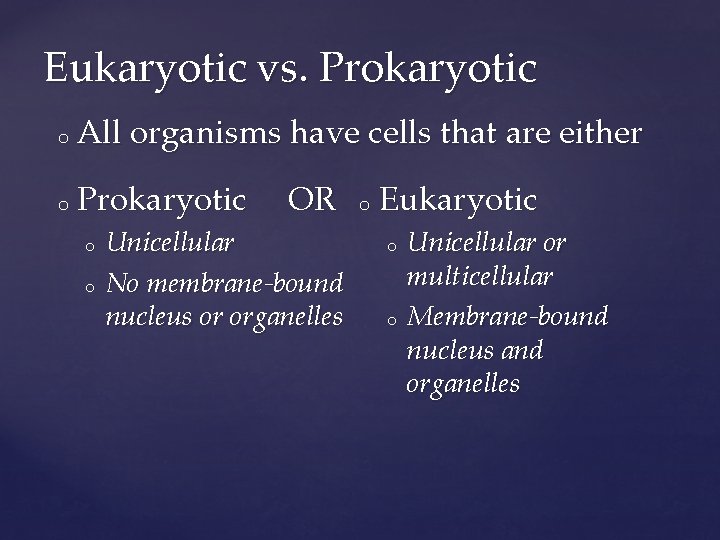
Eukaryotic vs. Prokaryotic o All organisms have cells that are either o Prokaryotic o o OR Unicellular No membrane-bound nucleus or organelles o Eukaryotic o o Unicellular or multicellular Membrane-bound nucleus and organelles
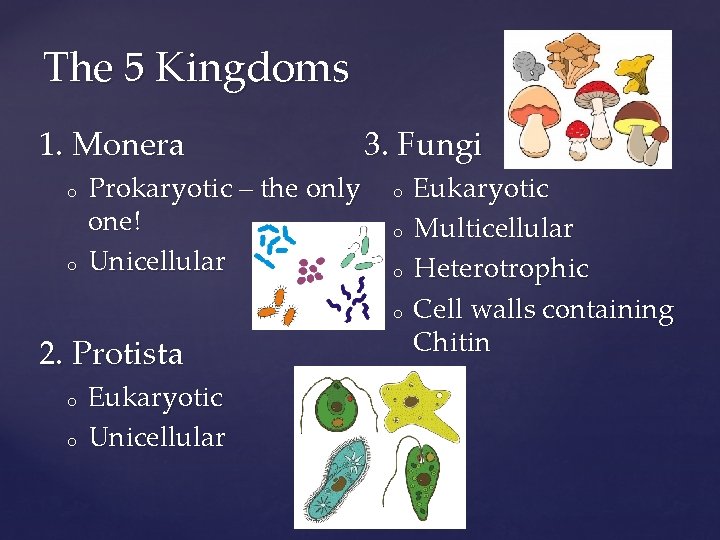
The 5 Kingdoms 1. Monera o o Prokaryotic – the only one! Unicellular 3. Fungi o o 2. Protista o o Eukaryotic Unicellular Eukaryotic Multicellular Heterotrophic Cell walls containing Chitin
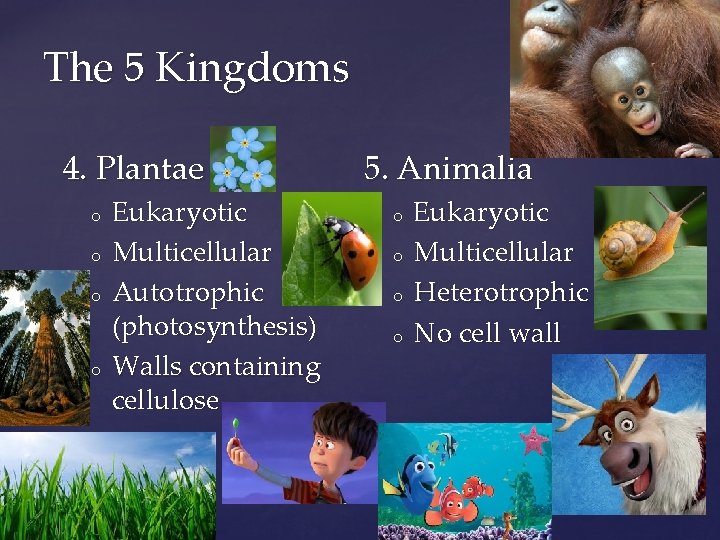
The 5 Kingdoms 4. Plantae o o Eukaryotic Multicellular Autotrophic (photosynthesis) Walls containing cellulose 5. Animalia o o Eukaryotic Multicellular Heterotrophic No cell wall
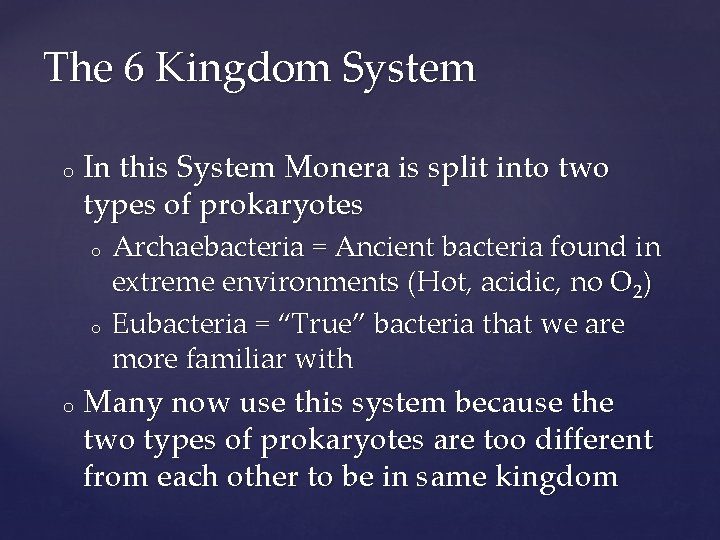
The 6 Kingdom System o In this System Monera is split into two types of prokaryotes o o o Archaebacteria = Ancient bacteria found in extreme environments (Hot, acidic, no O 2) Eubacteria = “True” bacteria that we are more familiar with Many now use this system because the two types of prokaryotes are too different from each other to be in same kingdom
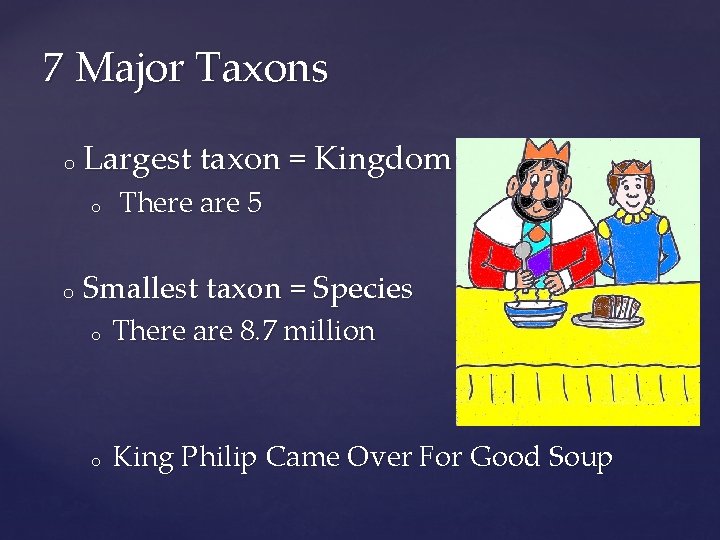
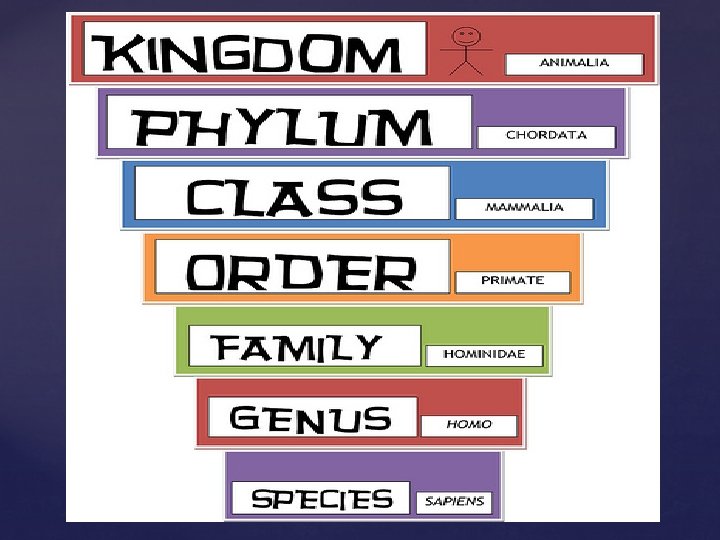
7 Major Taxons o Largest taxon = Kingdom o o There are 5 Smallest taxon = Species o There are 8. 7 million o King Philip Came Over For Good Soup
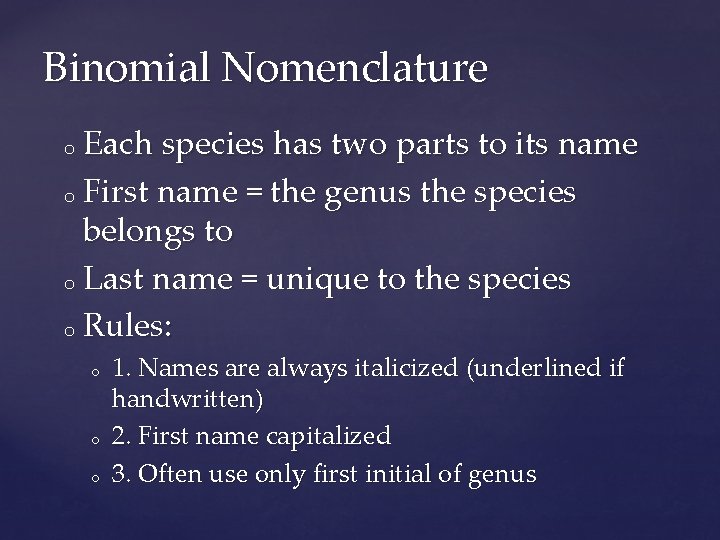
Binomial Nomenclature Each species has two parts to its name o First name = the genus the species belongs to o Last name = unique to the species o Rules: o o 1. Names are always italicized (underlined if handwritten) 2. First name capitalized 3. Often use only first initial of genus
Examples of species names Escherichia coli [E. coli] o Drosophila melanogaster [D. melanogaster] o Felis catus [F. catus] o Papaver rhoeas [P. rhoeas] o
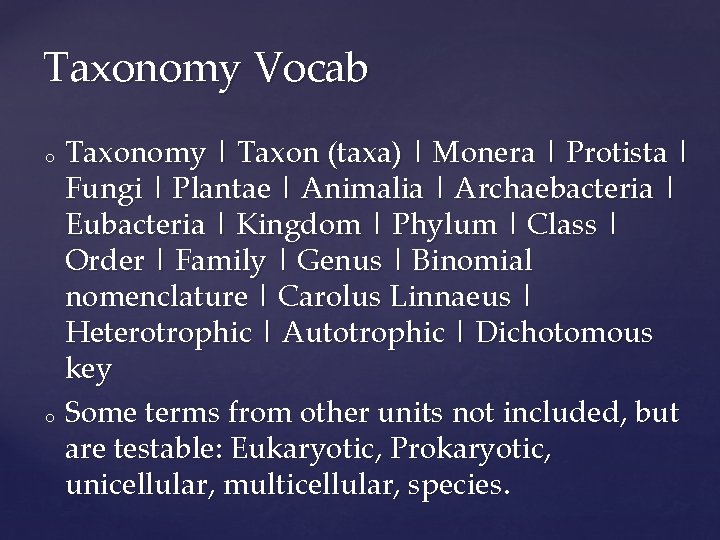
Taxonomy Vocab Taxonomy | Taxon (taxa) | Monera | Protista | Fungi | Plantae | Animalia | Archaebacteria | Eubacteria | Kingdom | Phylum | Class | Order | Family | Genus | Binomial nomenclature | Carolus Linnaeus | Heterotrophic | Autotrophic | Dichotomous key o Some terms from other units not included, but are testable: Eukaryotic, Prokaryotic, unicellular, multicellular, species. o