
NAME OF COURSE OUR SESSION WILL BEGIN SHORTLY
NAME OF COURSE OUR SESSION WILL BEGIN SHORTLY While we wait for everyone to join, think about the scenario below: Think of a recent situation where you felt anxious, frustrated, disappointed, or any other unpleasant emotion. How did you address it? (Do not share your answers!) BECAME ANGRY BECAME STRESSED OUT FOCUSED ON SOMETHING ELSE REDIRECED THOUGHTS / ACTIONS FELT OR GOT SICK IGNORED IT ISD to Update www. 327 solutions. com
Name of course Update Image Script complete. Do not alter. www. 327 solutions. com
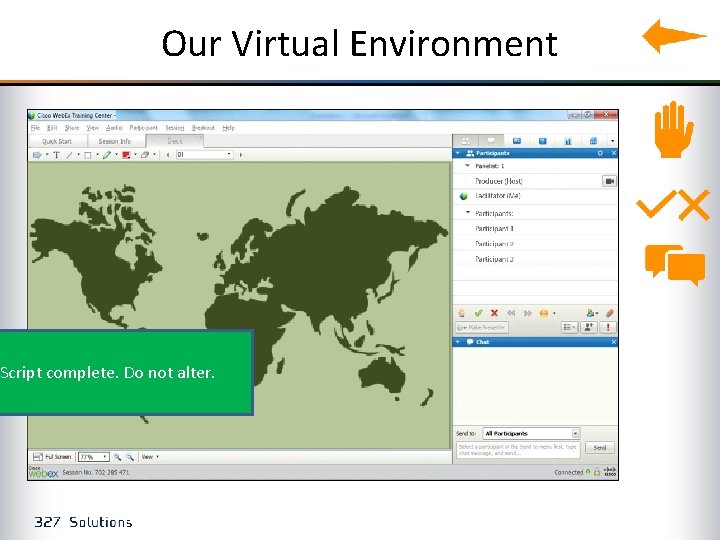
Our Virtual Environment Script complete. Do not alter.
Setting the Stage 1. Why is leadership and influence ISD to Update interesting or important for you? 2. What are your learning expectations for the course today?
Session Objectives Performing in a remote workforce High performance team characteristics Understand the importance of communication Managing for high performance ISD to Update Effective team meeting techniques

Section 1 xxxxxxxxxxxxxxxxxxxxxx
Developing New Managers Corporate Training Materials
Module One: Getting Started Effective, high-quality management is key to organizational success. No matter what your industry, your organization needs to have skilled managers in place to be the best it can be. But managers don’t just appear out of nowhere, equipped with the skills to succeed. Managers need to be developed. The secret of winning is constant, consistent management. Tom Landry
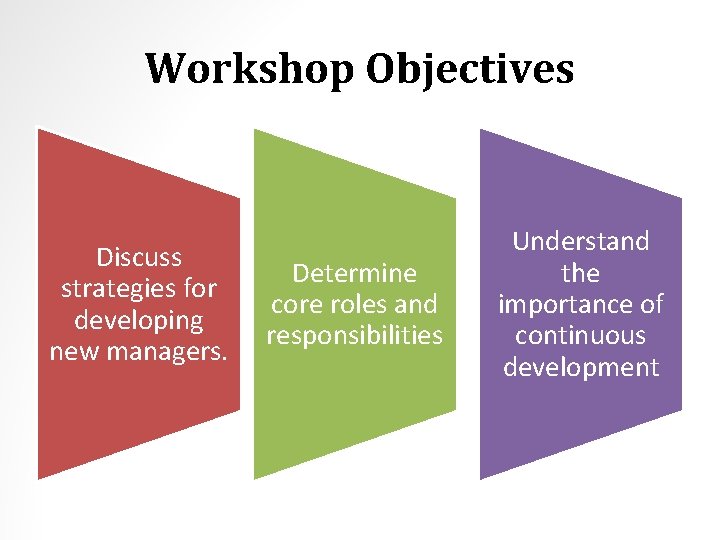
Workshop Objectives Discuss strategies for developing new managers. Determine core roles and responsibilities Understand the importance of continuous development
Module Two: Managers Are Made, Not Born While it may seem that management skills come naturally to some people, in reality management is a set of skills that can be learned. I think the best training a top manager can be engaged in is managing by example. Carlos Ghosn
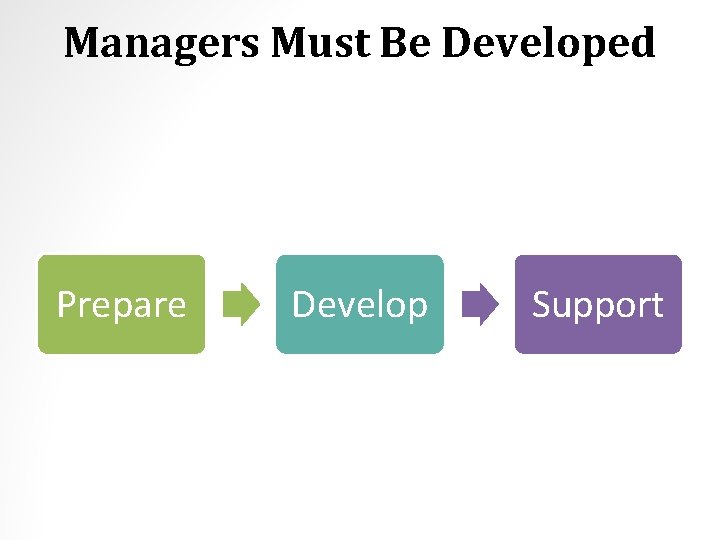
Managers Must Be Developed Prepare Develop Support
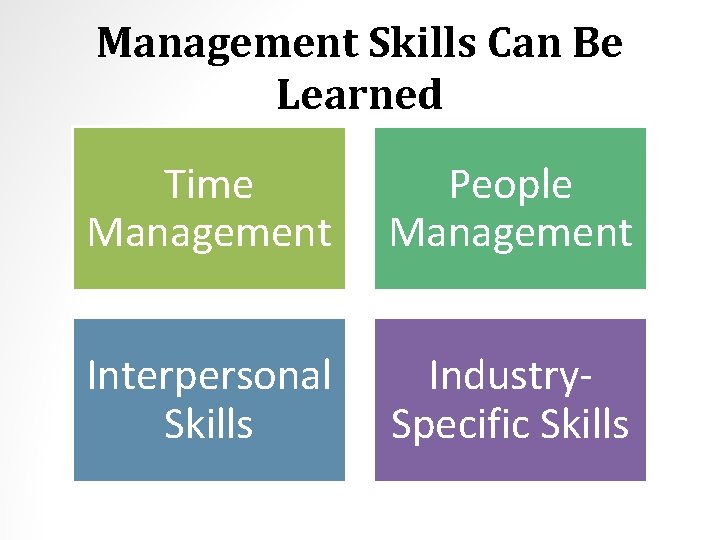
Management Skills Can Be Learned Time Management People Management Interpersonal Skills Industry. Specific Skills
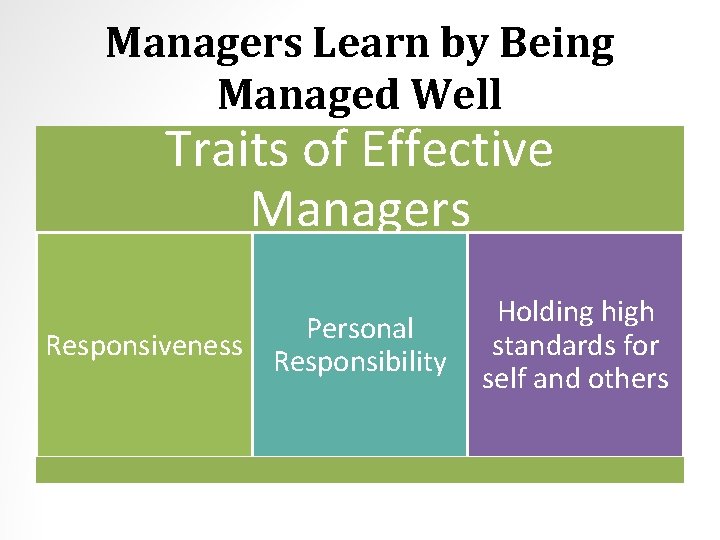
Managers Learn by Being Managed Well Traits of Effective Managers Personal Responsiveness Responsibility Holding high standards for self and others
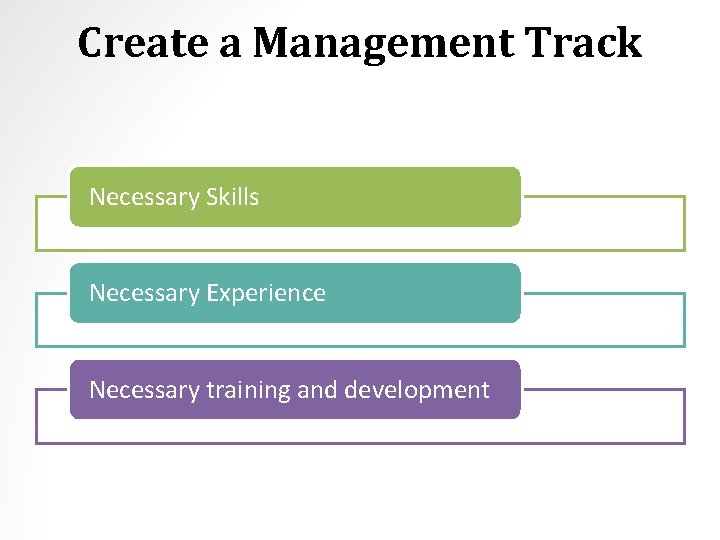
Create a Management Track Necessary Skills Necessary Experience Necessary training and development
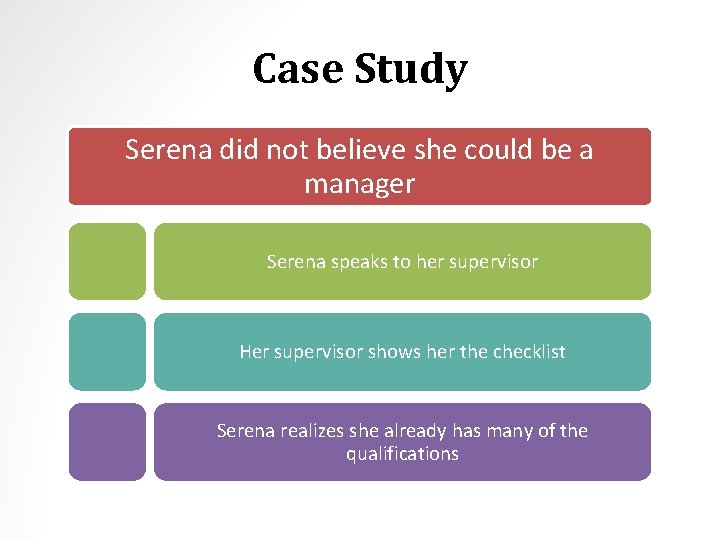
Case Study Serena did not believe she could be a manager Serena speaks to her supervisor Her supervisor shows her the checklist Serena realizes she already has many of the qualifications
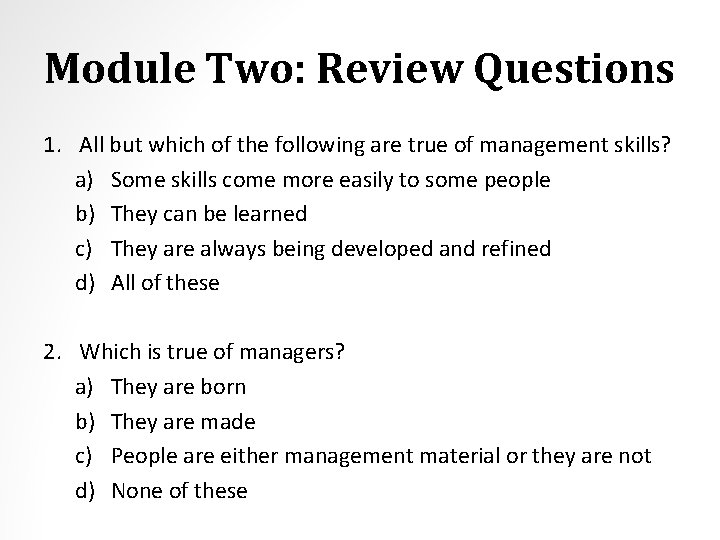
Module Two: Review Questions 1. All but which of the following are true of management skills? a) Some skills come more easily to some people b) They can be learned c) They are always being developed and refined d) All of these 2. Which is true of managers? a) They are born b) They are made c) People are either management material or they are not d) None of these
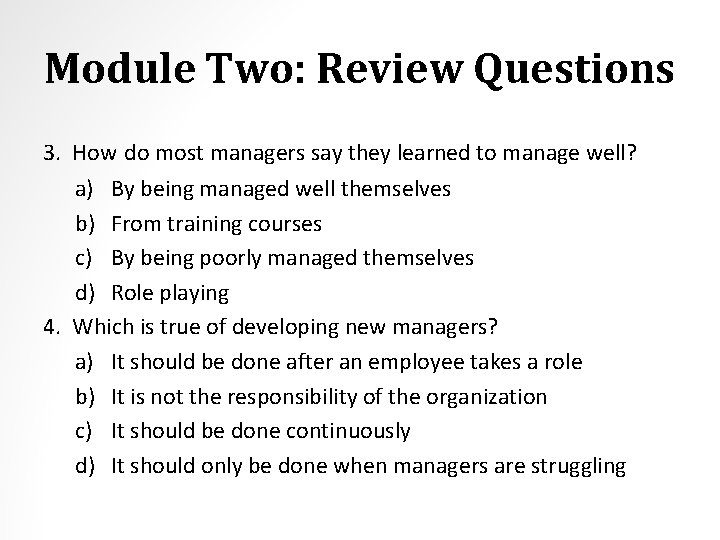
Module Two: Review Questions 3. How do most managers say they learned to manage well? a) By being managed well themselves b) From training courses c) By being poorly managed themselves d) Role playing 4. Which is true of developing new managers? a) It should be done after an employee takes a role b) It is not the responsibility of the organization c) It should be done continuously d) It should only be done when managers are struggling
Module Two: Review Questions 5. Why do many new managers struggle? a) Lack of potential b) Underdevelopment c) Incompetence d) Stress 6. How does developing new managers benefit the organization as a whole? a) It prepares employees to transition to new roles, promoting retention b) It prepares employees to transition to new roles, enabling inside rather than outside hiring c) It prepares employees to succeed in managerial roles d) All of the above
Module Two: Review Questions 7. Which of the following should you include when creating a management track? a) All of these b) Educational requirements for managers c) Experience requirements for managers d) Typical paths through other positions to management 8. How should you communicate with employees about the management track? a) Wait for them to ask about it b) Make it available on the server c) None of these d) Discuss it with them during annual reviews or other performance reviews
Module Two: Review Questions 9. What best describes Serena? a) Hesitant b) Relaxed c) Personable d) Imaginative 10. What did consulting her supervisor help increase? a) Anxiety b) Understanding c) Confidence d) Communication
Module Two: Review Questions 1. All but which of the following are true of management skills? a) Some skills come more easily to some people b) They can be learned c) They are always being developed and refined d) All of these Managerial skills are learned. Some people, depending on personality, may develop some skills more easily than others. Skill building is a continuous process. 2. Which is true of managers? a) They are born b) They are made c) People are either management material or they are not d) None of these Managers are made, not born. The skills for effective management can be learned by anyone.
Module Two: Review Questions 3. How do most managers say they learned to manage well? a) By being managed well themselves b) From training courses c) By being poorly managed themselves d) Role playing Managers learn to manage by being managed well themselves. Most skilled managers say they learned from past effective managers, and they emulate those traits. 4. Which is true of developing new managers? a) It should be done after an employee takes a role b) It is not the responsibility of the organization c) It should be done continuously d) It should only be done when managers are struggling The process of developing new managers should be continuous. Waiting until someone is struggling sets the employee and organization up for failure.
Module Two: Review Questions 5. Why do many new managers struggle? a) Lack of potential b) Underdevelopment c) Incompetence d) Stress When new managers struggle, it is most often the result of underdevelopment. Even the most talented employee will struggle if not given the tools and resources needed to succeed. This is why developing new managers is so important. 6. How does developing new managers benefit the organization as a whole? a) It prepares employees to transition to new roles, promoting retention b) It prepares employees to transition to new roles, enabling inside rather than outside hiring c) It prepares employees to succeed in managerial roles d) All of the above Developing new managers from within benefits the whole organization. Employees who can advance are more likely to stay with the organization, which promotes retention and allows internal promotion rather than outside hiring. It also prepares employees to succeed in managerial roles, which is good for the whole organization.
Module Two: Review Questions 7. Which of the following should you include when creating a management track? a) All of these b) Educational requirements for managers c) Experience requirements for managers d) Typical paths through other positions to management A clear management track makes developing new managers easier. Include educational and experience expectations. Also map out some possible paths through other positions to management, to give employees an idea of what their career path might look like. 8. How should you communicate with employees about the management track? a) Wait for them to ask about it b) Make it available on the server c) None of these d) Discuss it with them during annual reviews or other performance reviews The annual review is an excellent time to discuss the management track with employees who show potential or desire to move into management. Go over the track with these employees, and keep the lines of conversation over.
Module Two: Review Questions 9. What best describes Serena? a) Hesitant b) Relaxed c) Personable d) Imaginative Serena was hesitant. She wanted to go for a management position but did not know how to get started. 10. What did consulting her supervisor help increase? a) Anxiety b) Understanding c) Confidence d) Communication Talking to her supervisor gave Serena the confidence to pursue a management position. Once she knew what would be expected, she was less hesitant.
Module Three: Create a Management Track Creating a clear management track is a vital tool for developing new managers. It provides employees who want to advance into management with a guide for the skills, experiences, and professional development they will need in order to become managers. I got even with all the bad management I had by being a good manager. Victoria Principal
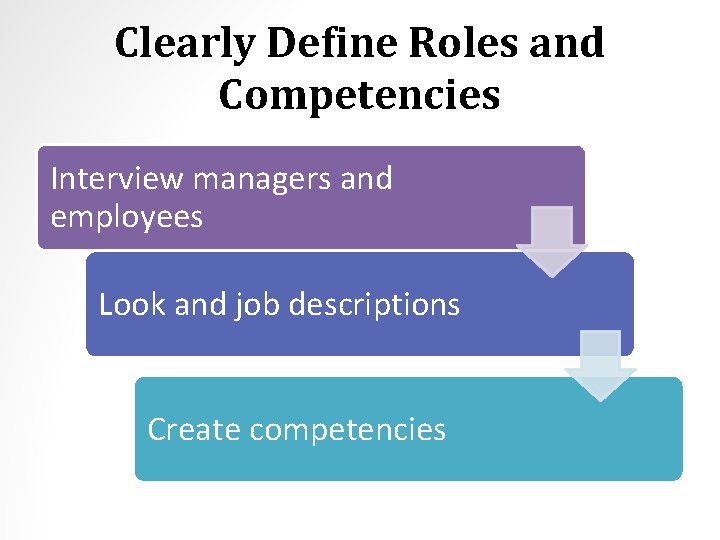
Clearly Define Roles and Competencies Interview managers and employees Look and job descriptions Create competencies
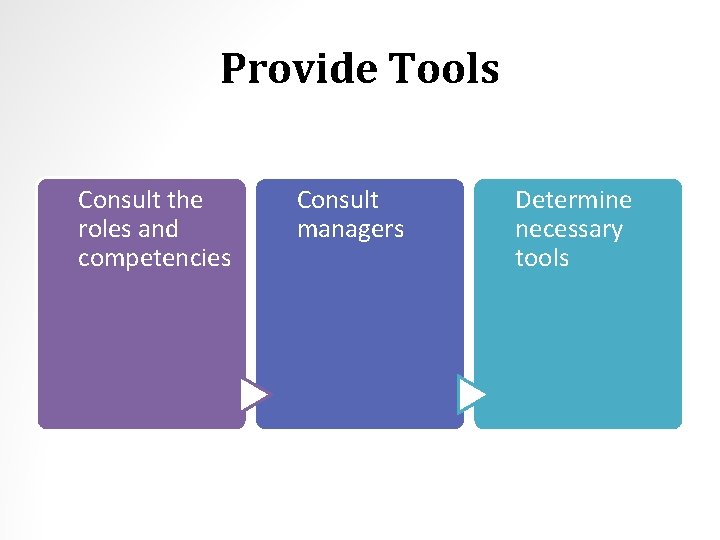
Provide Tools Consult the roles and competencies Consult managers Determine necessary tools
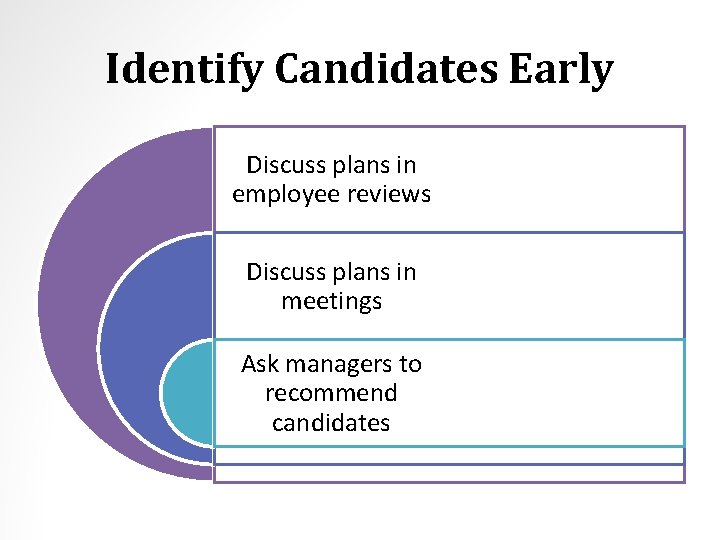
Identify Candidates Early Discuss plans in employee reviews Discuss plans in meetings Ask managers to recommend candidates
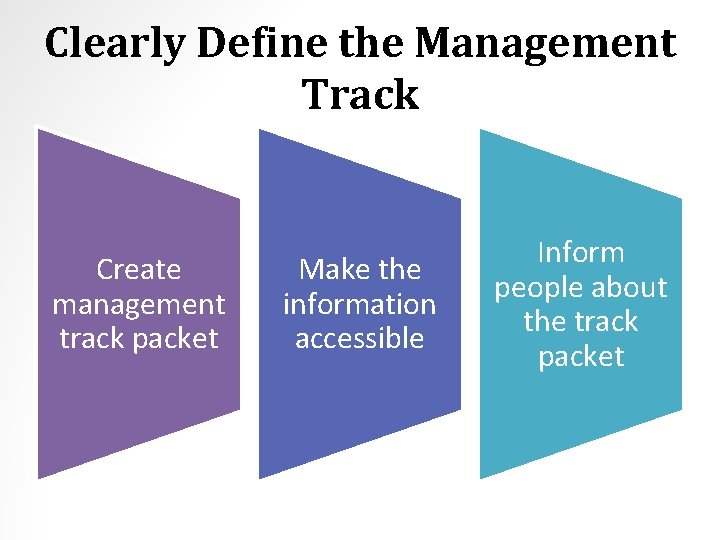
Clearly Define the Management Track Create management track packet Make the information accessible Inform people about the track packet
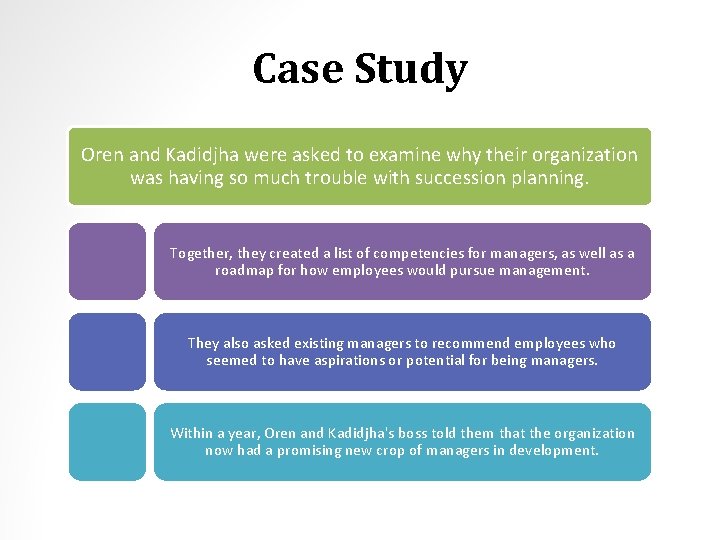
Case Study Oren and Kadidjha were asked to examine why their organization was having so much trouble with succession planning. Together, they created a list of competencies for managers, as well as a roadmap for how employees would pursue management. They also asked existing managers to recommend employees who seemed to have aspirations or potential for being managers. Within a year, Oren and Kadidjha's boss told them that the organization now had a promising new crop of managers in development.
Module Three: Review Questions 1. What should you clearly define for new managers? a) Roles and competencies b) Incentives c) Sanctions d) None of the above 2. Where can you look for information on managerial roles and competencies? a) Job descriptions b) Talking to current managers c) All of these d) Reflecting on your own managerial experience
Module Three: Review Questions 3. Which of the following is a tool that is useful for developing new managers? a) External training b) All of these c) Internal workshops d) Peer groups 4. Which of the following is true? a) Talented managers don’t need support tools to succeed b) Motivated managers don’t need training c) Tools should be provided only to struggling managers d) Even talented, motivated managers will struggle without the right tools
Module Three: Review Questions 5. What does a clearly defined management track do? a) Transfers all responsibility for employee development to the individual employee b) Empowers employees to help direct their career growth c) Prevents lawsuits d) None of these 6. When should potential management candidates be identified? a) When a current manager resigns b) When a new position is created c) When a new position needs to be filled d) As early as possible
Module Three: Review Questions 7. Which of the following is a way to identify potential candidates for management? a) All of these b) Employee annual reviews c) Referrals from managers and supervisors d) Talking to employees about their goals 8. Once a management track is created, what should you do? a) Make employees aware of it b) Discuss it with employees who express management goals c) All of these d) Make it available in hard copy or online
Module Three: Review Questions 9. What did Oren and Khadijdha do to get information? a) Read business journals b) Talked to employees at different levels c) Talked to only high level managers d) Nothing 10. What did Oren and Khadidjha find? a) Their company had a well-defined management track b) Their company had incompetent managers c) Nothing d) Their company did not have a clearly defined management track
Module Three: Review Questions 1. What should you clearly define for new managers? a) Roles and competencies b) Incentives c) Sanctions d) None of the above Clearly defining roles and competencies helps in creating a management track. Take time to figure out not only what managers do, but what skills they need to do it. 2. Where can you look for information on managerial roles and competencies? a) Job descriptions b) Talking to current managers c) All of these d) Reflecting on your own managerial experience There are several sources of information when you are defining roles and competencies. Look at job descriptions for managers, and also talk to managers about their work. If you have been a manager, reflect on your own experience as well.
Module Three: Review Questions 3. Which of the following is a tool that is useful for developing new managers? a) External training b) All of these c) Internal workshops d) Peer groups There are many tools that may help new managers succeed. Internal workshops and external trainings are both ways to equip mangers with skills for success. Peer groups are also a valuable source of support. 4. Which of the following is true? a) Talented managers don’t need support tools to succeed b) Motivated managers don’t need training c) Tools should be provided only to struggling managers d) Even talented, motivated managers will struggle without the right tools Access to the right tools is essential for success. Even the most talented, motivated manager will struggle if he or she does not have access to tools and support.
Module Three: Review Questions 5. What does a clearly defined management track do? a) Transfers all responsibility for employee development to the individual employee b) Empowers employees to help direct their career growth c) Prevents lawsuits d) None of these A clearly defined management track helps to empower employees in directing their career path. They will still need training and development, but a clearly defined track helps them in making choices about their career. 6. When should potential management candidates be identified? a) When a current manager resigns b) When a new position is created c) When a new position needs to be filled d) As early as possible Potential candidates for management should be identified as early as possible. This allows the maximum time for development and training.
Module Three: Review Questions 7. Which of the following is a way to identify potential candidates for management? a) All of these b) Employee annual reviews c) Referrals from managers and supervisors d) Talking to employees about their goals There are several ways to identify employees with management potential. Employee reviews are one way, as are discussions with employees about their goals at other times. Current managers and supervisors may also refer employees they see as potential candidates. 8. Once a management track is created, what should you do? a) Make employees aware of it b) Discuss it with employees who express management goals c) All of these d) Make it available in hard copy or online Once a management track is created, employees need to know about it. Discuss it with employees, make it available in hard copy or online, and make employees aware that these materials are available.
Module Three: Review Questions 9. What did Oren and Khadijdha do to get information? a) Read business journals b) Talked to employees at different levels c) Talked to only high level managers d) Nothing Oren and Khadidjha talked to employees at various levels to get information about what people knew about moving into management. They interviewed dozens of people. 10. What did Oren and Khadidjha find? a) Their company had a well-defined management track b) Their company had incompetent managers c) Nothing d) Their company did not have a clearly defined management track Oren and Khadidjha found that most people had no idea how they would pursue a management position. This indicated that the company did not have a clearly defined management track.
Module Four: Define and Build Competencies Taking time to define the core competencies needed for management, and then creating opportunities to build and practice those competencies, is a valuable investment in developing new managers. A manager is responsible for the application and performance of knowledge. Peter Drucker
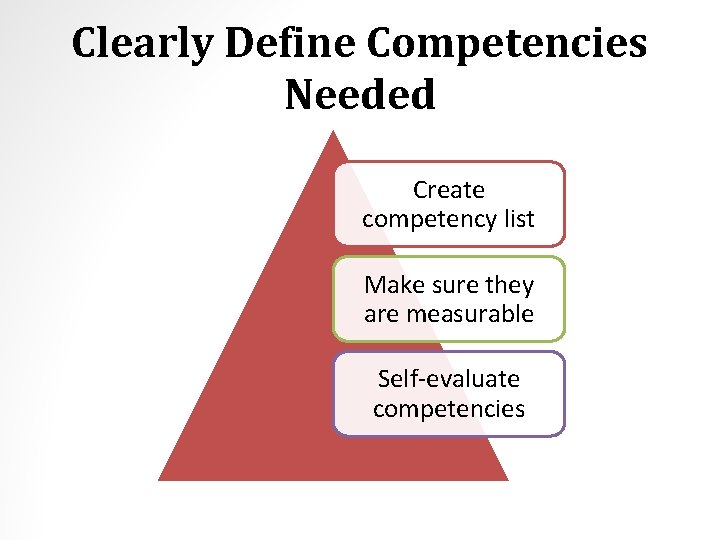
Clearly Define Competencies Needed Create competency list Make sure they are measurable Self-evaluate competencies
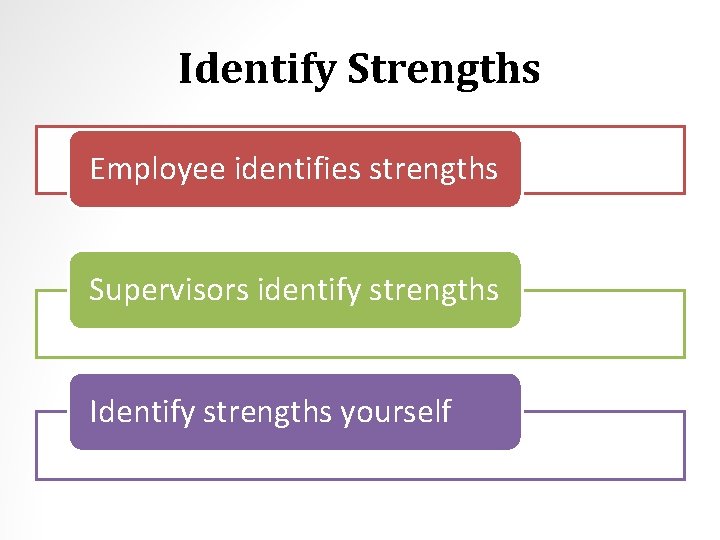
Identify Strengths Employee identifies strengths Supervisors identify strengths Identify strengths yourself
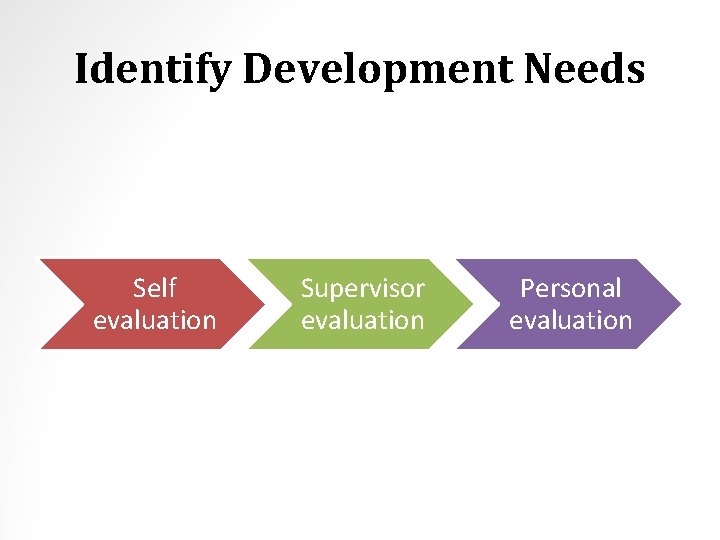
Identify Development Needs Self evaluation Supervisor evaluation Personal evaluation
![• The employee sets goals ] i Provide Development Opportunities • Evaluate progress](http://slidetodoc.com/presentation_image/2ad81ece2d316122417b4f0f5b4ed731/image-46.jpg "• The employee sets goals ] i Provide Development Opportunities • Evaluate progress")
• The employee sets goals ] i Provide Development Opportunities • Evaluate progress • Provide information about tools and programs
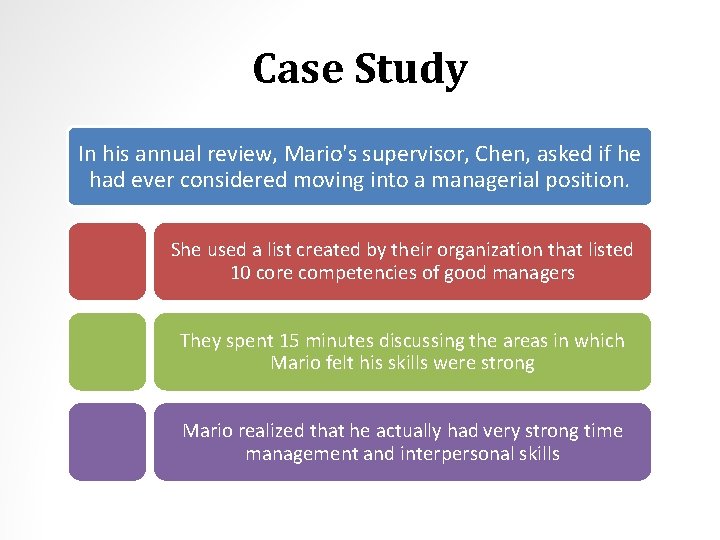
Case Study In his annual review, Mario's supervisor, Chen, asked if he had ever considered moving into a managerial position. She used a list created by their organization that listed 10 core competencies of good managers They spent 15 minutes discussing the areas in which Mario felt his skills were strong Mario realized that he actually had very strong time management and interpersonal skills
Module Four: Review Questions 1. Which should be the first step in creating a management track? a) Identifying competencies b) Allocating deliverables c) Setting a timeline d) Reviewing the budget 2. What does identifying competencies do? a) Gives a clear picture of what skills a manager needs b) Helps employees direct their development efforts c) Helps in identifying management candidates d) All of these
Module Four: Review Questions 3. What should you identify first when working with an employee? a) Development needs b) Strengths c) Goals d) Consequences 4. Where can you get information about strengths? a) The employee’s supervisor b) Employee evaluations c) All of these d) The employee’s self-assessment
Module Four: Review Questions 5. What should you do when identifying development needs? a) All of these b) Frame them as opportunities not weaknesses c) Tie them to areas of strength when possible d) Create a plan for developing these areas 6. Development needs should be linked to which of the following? a) The employee’s career goals b) All of these c) The employee’s strengths d) Concrete steps for improvement
Module Four: Review Questions 7. The development process should be _______. a) Strict b) Tightly overseen c) One time d) Ongoing 8. Which of the following is a way to address development needs? a) External training b) Mentoring c) On the job practice d) All of these
Module Four: Review Questions 9. Who advised Mario? a) Friend b) Mentor c) Supervisor d) No one 10. What did Chen go over with Mario? a) His pay scale b) His sales record c) None of these d) Core competencies for managers
Module Four: Review Questions 1. Which should be the first step in creating a management track? a) Identifying competencies b) Allocating deliverables c) Setting a timeline d) Reviewing the budget The first step must be to define competencies. It is important to know what skills managers need to succeed. 2. What does identifying competencies do? a) Gives a clear picture of what skills a manager needs b) Helps employees direct their development efforts c) Helps in identifying management candidates d) All of these When you have a clear list of competencies, this gives a picture of what skills are needed for management. This allows employees to direct their own development efforts and makes it possible to identify employees with management potential
Module Four: Review Questions 3. What should you identify first when working with an employee? a) Development needs b) Strengths c) Goals d) Consequences Always start by defining strengths. Starting with a strengths perspective helps to keep the employee focused on the positive. 4. Where can you get information about strengths? a) The employee’s supervisor b) Employee evaluations c) All of these d) The employee’s self-assessment There are several sources of information about strengths. Employee self assessments are a key source, as are annual reviews and comments from peers and supervisors.
Module Four: Review Questions 5. What should you do when identifying development needs? a) All of these b) Frame them as opportunities not weaknesses c) Tie them to areas of strength when possible d) Create a plan for developing these areas When identifying development areas, frame them as opportunities rather than weaknesses. Tie them to the employee’s strengths where you can, and always work with the employee to make a plan for development. 6. Development needs should be linked to which of the following? a) The employee’s career goals b) All of these c) The employee’s strengths d) Concrete steps for improvement Development areas are opportunities. Link them to the employee’s goals, his or her strengths, and concrete steps he or she can take.
Module Four: Review Questions 7. The development process should be _______. a) Strict b) Tightly overseen c) One time d) Ongoing No one is ever done developing. Employee development, with new managers especially, should be ongoing. 8. Which of the following is a way to address development needs? a) External training b) Mentoring c) On the job practice d) All of these There are many ways to address development needs. External and internal training, mentoring, and on the job practice are all potential ways to build skills.
Module Four: Review Questions 9. Who advised Mario? a) Friend b) Mentor c) Supervisor d) No one Mario’s advice came from Chen. She was his supervisor. 10. What did Chen go over with Mario? a) His pay scale b) His sales record c) None of these d) Core competencies for managers Chen and Mario went over a list of core competencies for managers. Then they reviewed his strengths and development needs.
Module Five: Managers Learn by Being Managed Well Employees who are managed effectively tend to be happier and more productive. As a result, when they enter management, they want to recreate that environment for their own employees or direct reports. In most cases, being a good boss means hiring talented people and getting out of their way. Tina Fey
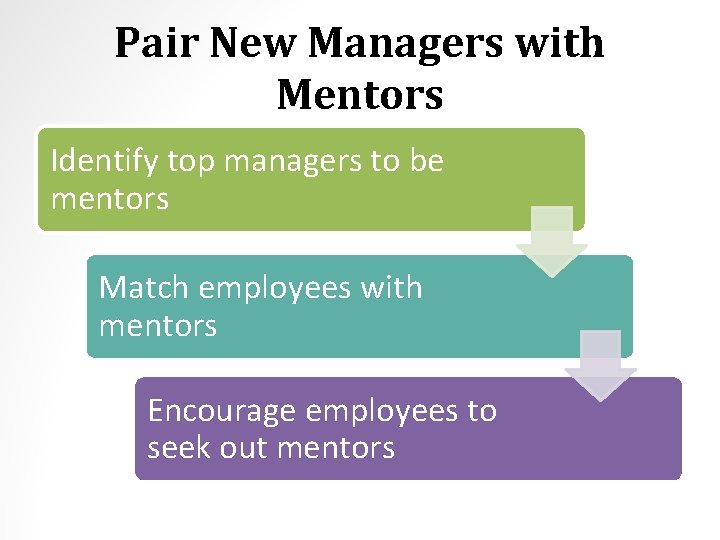
Pair New Managers with Mentors Identify top managers to be mentors Match employees with mentors Encourage employees to seek out mentors
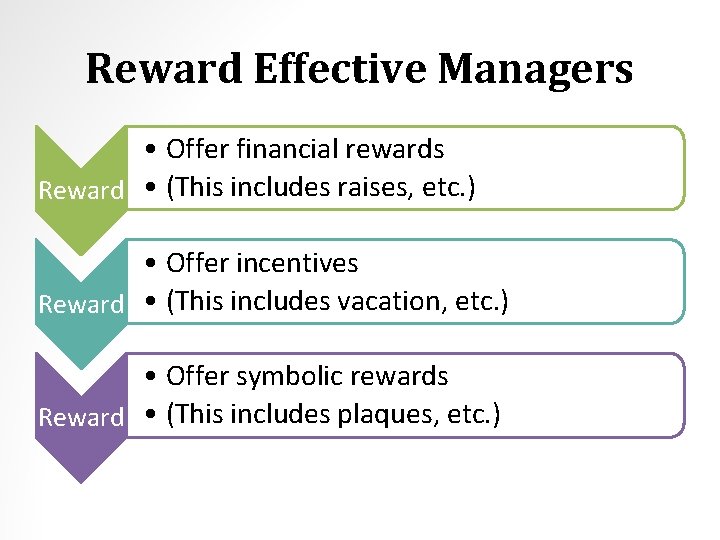
Reward Effective Managers • Offer financial rewards Reward • (This includes raises, etc. ) • Offer incentives Reward • (This includes vacation, etc. ) • Offer symbolic rewards Reward • (This includes plaques, etc. )
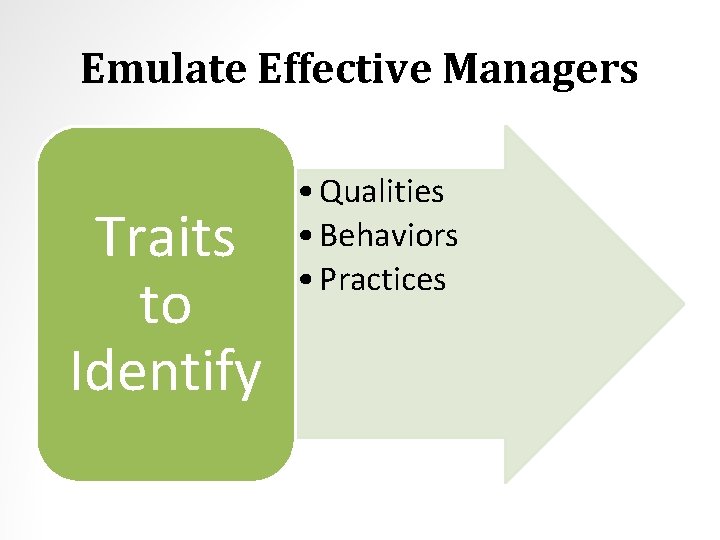
Emulate Effective Managers Traits to Identify • Qualities • Behaviors • Practices
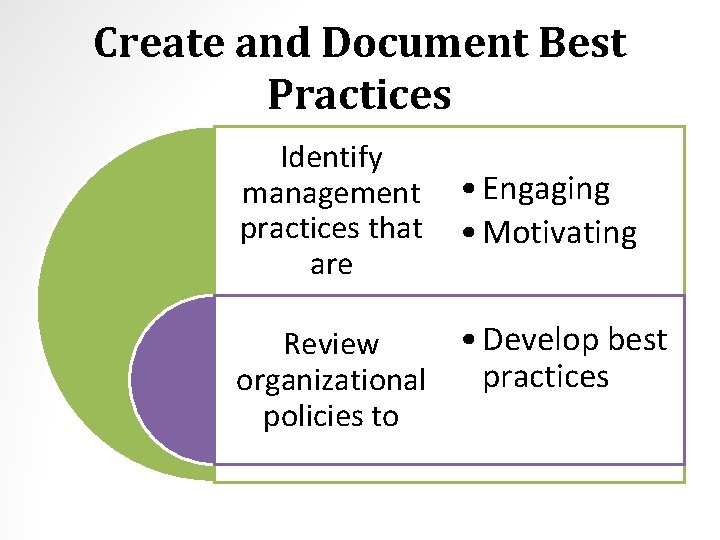
Create and Document Best Practices Identify management • Engaging practices that • Motivating are • Develop best Review organizational practices policies to
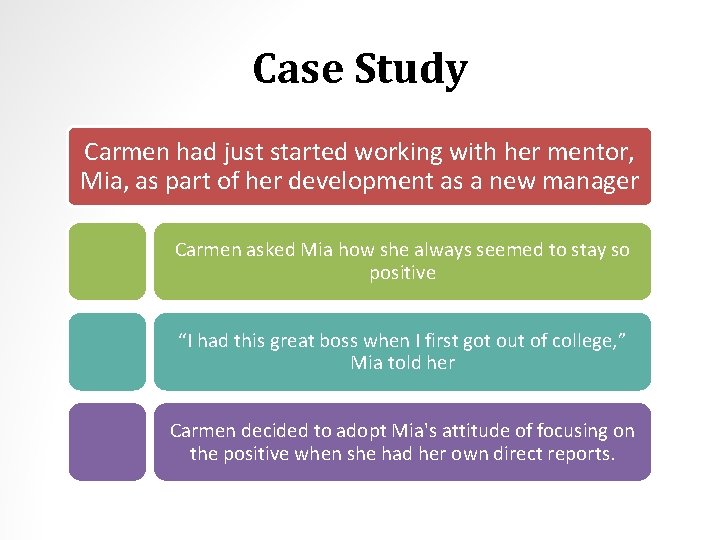
Case Study Carmen had just started working with her mentor, Mia, as part of her development as a new manager Carmen asked Mia how she always seemed to stay so positive “I had this great boss when I first got out of college, ” Mia told her Carmen decided to adopt Mia's attitude of focusing on the positive when she had her own direct reports.
Module Five: Review Questions 1. How do most managers learn to manage well? a) By being managed well themselves b) In business school c) From being managed poorly d) None of these 2. How does being paired with a mentor develop a new manager? a) It gives him or her the chance to see a good manager in action b) All of these c) It provides the new manager with someone to emulate d) It provides the new manager with a support person
Module Five: Review Questions 3. What should you reward? a) High sales b) Effective managers c) Winning at all costs d) Nothing 4. Which is true of rewarding effective managers? a) It demonstrates that the organization values good management b) It motivates managers to continue performing well c) It promotes retention d) All of these
Module Five: Review Questions 5. What should be encouraged? a) Emulation of good managers b) Emulation of poor managers c) Outside hiring d) None of these 6. What does emulating good managers do? a) Helps spot those incompetence b) Helps find the best solution c) Gives employees an experience of being managed well d) Helps spot potential problems
Module Five: Review Questions 7. What should be created and documented? a) Best practices b) Clear sanctions c) Potential problems d) Financial goals 8. What does documenting best practices do? a) Helps promote organizational culture b) Serves as a resource for new managers c) All of these d) Codifies expectations of effective management
Module Five: Review Questions 9. How did Carmen view Mia? a) With skepticism b) With admiration c) Ambivalently d) Hostilely 10. What did Lewis teach Mia? a) Be uncompromising b) Make a plan c) Be distant d) Focus on the positive
Module Five: Review Questions 1. How do most managers learn to manage well? a) By being managed well themselves b) In business school c) From being managed poorly d) None of these Most managers will say they learned to manage by being managed well. One way to develop new managers is to ensure that your employees are managed well. 2. How does being paired with a mentor develop a new manager? a) It gives him or her the chance to see a good manager in action b) All of these c) It provides the new manager with someone to emulate d) It provides the new manager with a support person Mentorships are invaluable for developing new managers. Working with an established effective manager helps the new manager see management in action. It also provides him or her with support and a model to emulate.
Module Five: Review Questions 3. What should you reward? a) High sales b) Effective managers c) Winning at all costs d) Nothing Reward effective managers. This demonstrates that your organization values good management. 4. Which is true of rewarding effective managers? a) It demonstrates that the organization values good management b) It motivates managers to continue performing well c) It promotes retention d) All of these Rewarding effective managers indicates that the organization values good management. This motivates managers and promotes retention.
Module Five: Review Questions 5. What should be encouraged? a) Emulation of good managers b) Emulation of poor managers c) Outside hiring d) None of these New managers should be encouraged to emulate the traits of effective managers. When helping develop new managers, you should also emulate those traits. 6. What does emulating good managers do? a) Helps spot those incompetence b) Helps find the best solution c) Gives employees an experience of being managed well d) Helps spot potential problems Emulating effective managers gives employees an experience of being managed well. When they in turn become managers, they are likely to also emulate these practices.
Module Five: Review Questions 7. What should be created and documented? a) Best practices b) Clear sanctions c) Potential problems d) Financial goals In developing new managers, it is key to create and document best practices. This gives a clear set of guidelines and expectations for job performance. 8. What does documenting best practices do? a) Helps promote organizational culture b) Serves as a resource for new managers c) All of these d) Codifies expectations of effective management Best practices codify the organization’s ideas about and expectations of good management. This promotes organizational culture and serves as a resource for new managers.
Module Five: Review Questions 9. How did Carmen view Mia? a) With skepticism b) With admiration c) Ambivalently d) Hostilely Carmen admired Mia. This is why she turned to her for advice and emulated her traits. 10. What did Lewis teach Mia? a) Be uncompromising b) Make a plan c) Be distant d) Focus on the positive Lewis taught Mia to focus on the positive. She emulated this trait when working with her own employees.
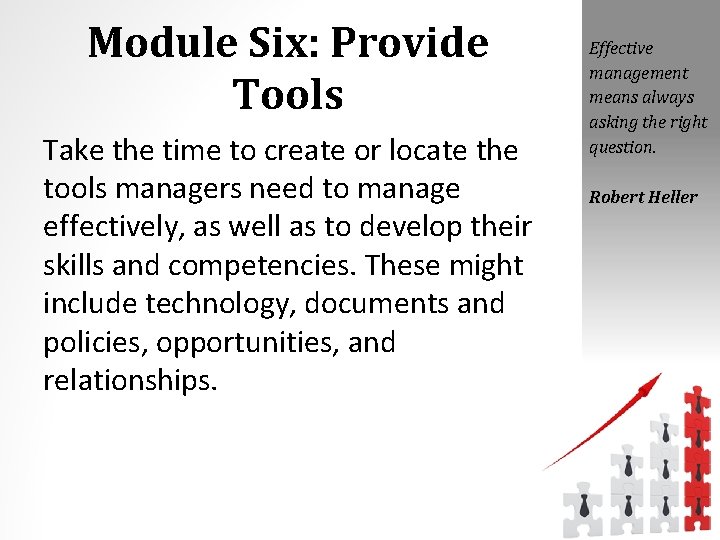
Module Six: Provide Tools Take the time to create or locate the tools managers need to manage effectively, as well as to develop their skills and competencies. These might include technology, documents and policies, opportunities, and relationships. Effective management means always asking the right question. Robert Heller
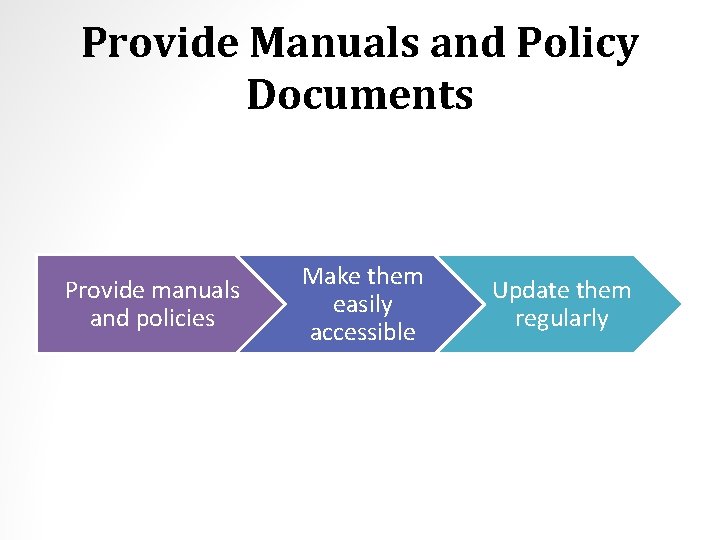
Provide Manuals and Policy Documents Provide manuals and policies Make them easily accessible Update them regularly
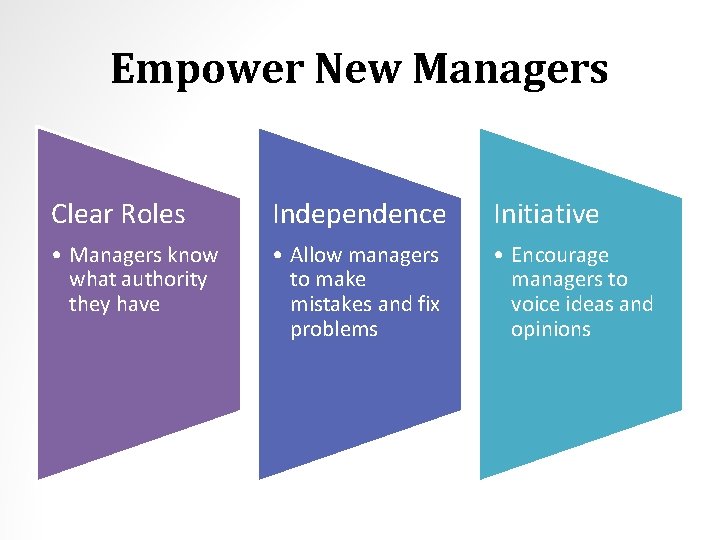
Empower New Managers Clear Roles Independence Initiative • Managers know what authority they have • Allow managers to make mistakes and fix problems • Encourage managers to voice ideas and opinions
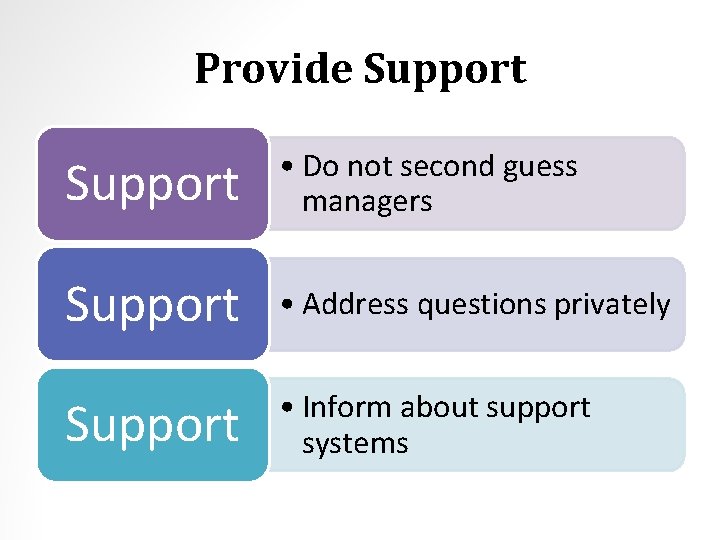
Provide Support • Do not second guess managers Support • Address questions privately Support • Inform about support systems
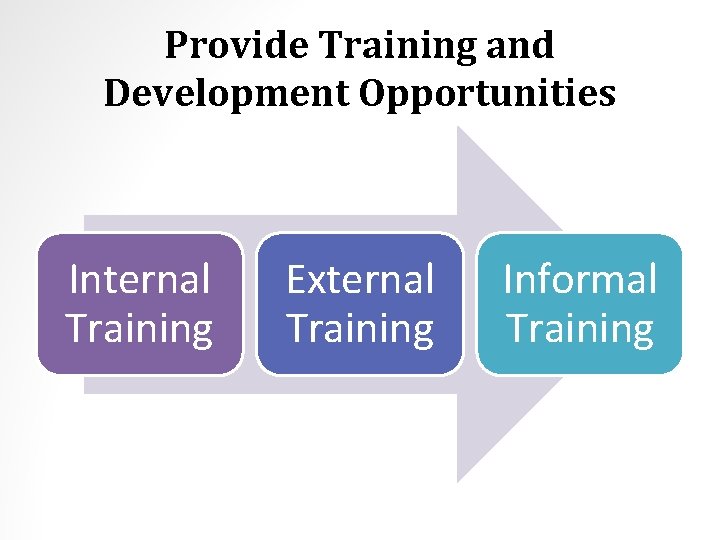
Provide Training and Development Opportunities Internal Training External Training Informal Training
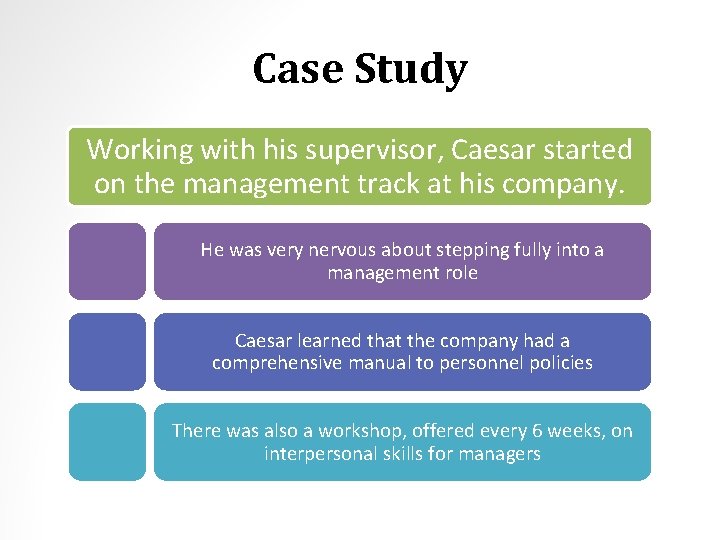
Case Study Working with his supervisor, Caesar started on the management track at his company. He was very nervous about stepping fully into a management role Caesar learned that the company had a comprehensive manual to personnel policies There was also a workshop, offered every 6 weeks, on interpersonal skills for managers
Module Six: Review Questions 1. What should you provide for new managers? a) All of these b) Manuals c) Policy documents d) Development opportunities 2. What do manuals do? a) Provide a roadmap for how to do the day to day aspects of a job b) All of these c) Help managers solve their own problems d) Provide an guide to organizational culture
Module Six: Review Questions 3. New managers should be _______. a) Closely supervised b) Micromanaged c) Empowered d) None of these 4. What can help empower a new manager? a) A clear job description b) Being allowed to make decisions on their own c) Knowing that established managers trust them d) All the above
Module Six: Review Questions 5. What should you do when you disagree with a new manager? a) Confront them in front of employees b) Address the concerns privately c) Fire them d) None of these 6. How do many new managers feel when entering a new role? a) Confident b) Lazy c) Competent d) Nervous
Module Six: Review Questions 7. Which is NOT true of training and development? a) It should only be provided to struggling employees b) IT should be provided to all employees c) It is an important tool for developing new managers d) It should be continuous 8. Which of the following is a potential training and development opportunity for a new manager? a) A workshop offered by HR on employee evaluation b) Working with an established manager to develop a budget c) All of these d) A training on new payroll software offered by the vendor
Module Six: Review Questions 9. What did Caesar not know his company had? a) A manual b) A management track c) Opportunities for advancement d) Training 10. What was Caesar uncomfortable doing? a) Asking for help b) Using technology c) Managing personnel d) Delegating
Module Six: Review Questions 1. What should you provide for new managers? a) All of these b) Manuals c) Policy documents d) Development opportunities You should provide manuals and policy documents to new managers. Also, be sure to provide opportunities for training and development. 2. What do manuals do? a) Provide a roadmap for how to do the day to day aspects of a job b) All of these c) Help managers solve their own problems d) Provide an guide to organizational culture Manuals are invaluable. They are roadmaps for the day to day aspects of the job. They are also tools for problem solving, and act as guides to organizational culture.
Module Six: Review Questions 3. New managers should be _______. a) Closely supervised b) Micromanaged c) Empowered d) None of these New managers should be empowered. This will better allow them to develop in their new role. 4. What can help empower a new manager? a) A clear job description b) Being allowed to make decisions on their own c) Knowing that established managers trust them d) All the above A clear job description can empower new managers. Making clear that they are trusted and supported, and encouraging them to take action and make decisions, is also empowering.
Module Six: Review Questions 5. What should you do when you disagree with a new manager? a) Confront them in front of employees b) Address the concerns privately c) Fire them d) None of these Part of supporting a new manager is not undermining him or her. IF you disagree or have concerns, address them privately. 6. How do many new managers feel when entering a new role? a) Confident b) Lazy c) Competent d) Nervous Many new managers are nervous or anxious when entering a new role. Providing support helps them to move through these feelings.
Module Six: Review Questions 7. Which is NOT true of training and development? a) It should only be provided to struggling employees b) IT should be provided to all employees c) It is an important tool for developing new managers d) It should be continuous Training and development is key to all employees, especially new managers. The training and development process should be ongoing, with a diversity of experiences offered. 8. Which of the following is a potential training and development opportunity for a new manager? a) A workshop offered by HR on employee evaluation b) Working with an established manager to develop a budget c) All of these d) A training on new payroll software offered by the vendor There are many different training and development opportunities for new managers. These include internal and external training and workshops, as well as on the job experiences working with colleagues and superiors.
Module Six: Review Questions 9. What did Caesar not know his company had? a) A manual b) A management track c) Opportunities for advancement d) Training Caesar didn’t know his company had a manual. Wayne shared it with him, which helped him better do his job. 10. What was Caesar uncomfortable doing? a) Asking for help b) Using technology c) Managing personnel d) Delegating Caesar struggled with managing people. The manual of policies helped him become more confident.
Module Seven: Provide Support When creating a plan to develop new managers, be sure to build in some support systems. When there are support systems in place, and those systems are readily accessible, employees are much more likely to access them. Management is above all a practice where art, science, and craft meet. Henry Mintzberg
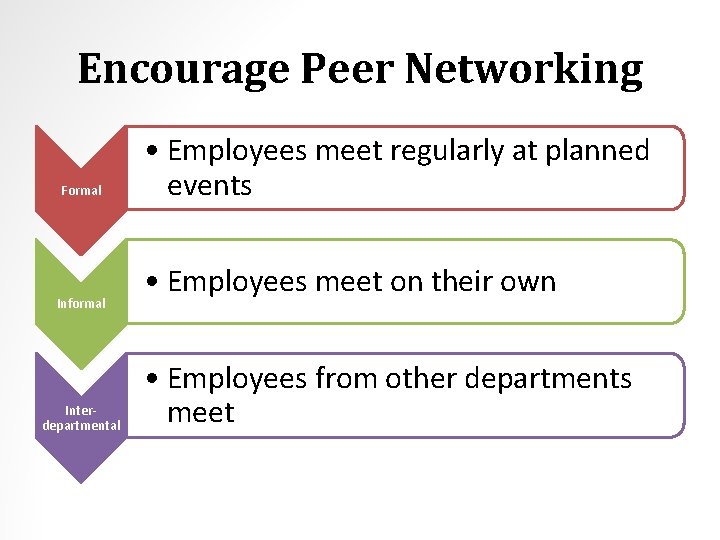
Encourage Peer Networking Formal Informal Interdepartmental • Employees meet regularly at planned events • Employees meet on their own • Employees from other departments meet
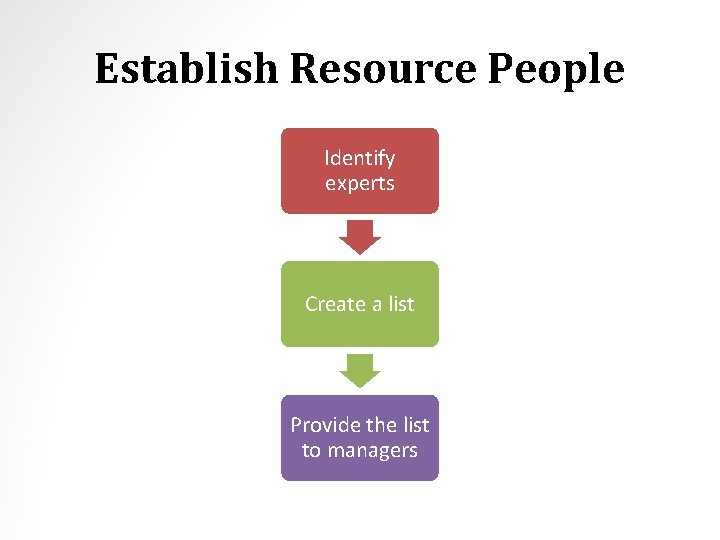
Establish Resource People Identify experts Create a list Provide the list to managers
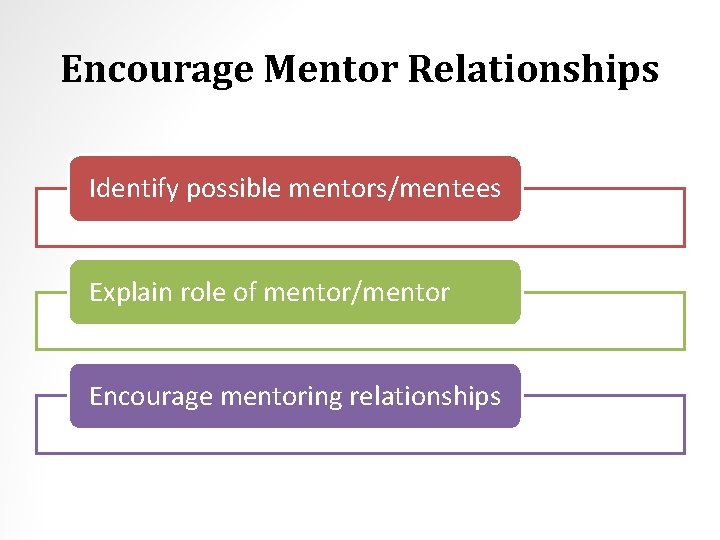
Encourage Mentor Relationships Identify possible mentors/mentees Explain role of mentor/mentor Encourage mentoring relationships
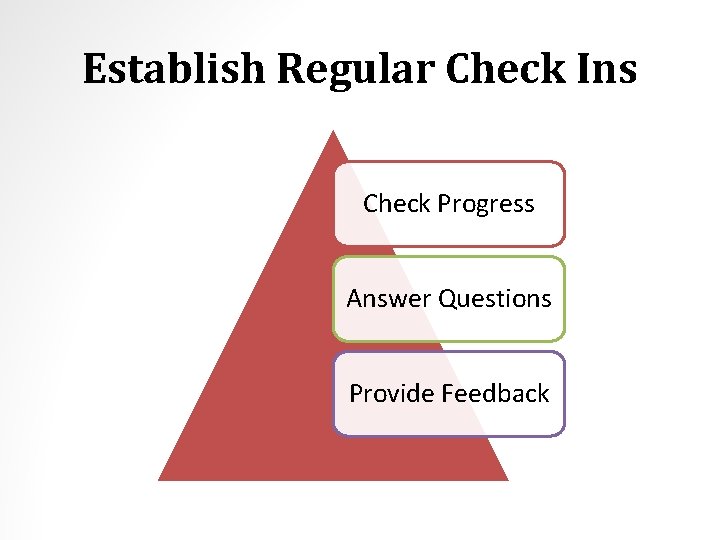
Establish Regular Check Ins Check Progress Answer Questions Provide Feedback
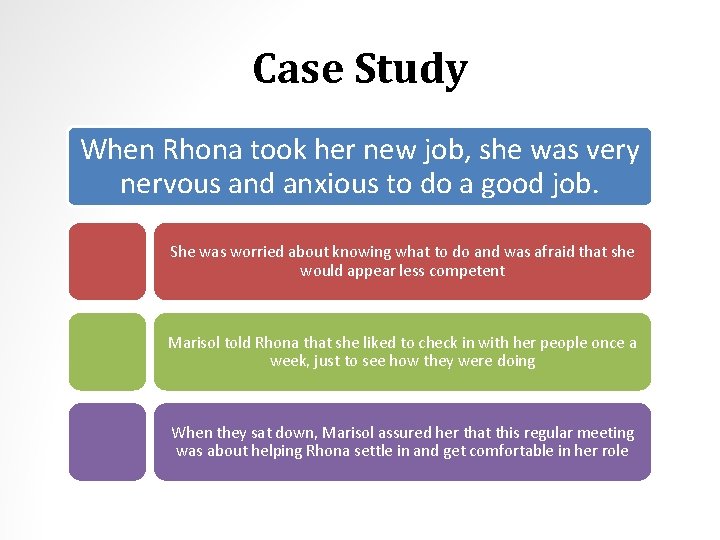
Case Study When Rhona took her new job, she was very nervous and anxious to do a good job. She was worried about knowing what to do and was afraid that she would appear less competent Marisol told Rhona that she liked to check in with her people once a week, just to see how they were doing When they sat down, Marisol assured her that this regular meeting was about helping Rhona settle in and get comfortable in her role
Module Seven: Review Questions 1. What type of environment should you cultivate? a) One where peers compete b) One where peers support each other c) One where self-sufficiency is most important d) None of the above 2. How do peer networks help develop new managers? a) They serve as a source of support b) They serve as a place for shared knowledge c) All of these d) They allow peers to learn from each other’s experiences
Module Seven: Review Questions 3. Having a group of resource people does which of the following? a) All of these b) Empowers new managers to problem solve c) Ensures consistency d) Leverages organizational expertise 4. You resource people should be which of the following? a) Only lower level employees b) Only managers c) Accountable to you personally d) Experts in their area
Module Seven: Review Questions 5. All but which of the following is true of pairing new managers with mentors? a) Mentors serve as support for new managers b) Mentors provide models of effective management c) Mentors hinder the development of new managers d) Mentors can help empower new managers 6. You should encourage new managers to do which of the following? a) Seek out a mentor in the organization b) All of these c) Mentor their own direct reports d) Seek out multiple mentors if it is appropriate
Module Seven: Review Questions 7. How often should you check in? a) As often as you and the new manager agree is appropriate b) Only when there is a problem c) Daily d) Yearly 8. What should you do during regular check in time? a) Ask the new manager how the job is going b) All of these c) Listen to the new manager’s concerns or questions d) Provide feedback
Module Seven: Review Questions 9. How did Rhona feel when she started her new position? a) Nervous b) Confident c) Incompetent d) Depressed 10. What did Marisol request? a) That Rhona have all her decisions approved by her b) That Rhona seek training c) That she and Rhona check in each Friday d) That Rhona quit
Module Seven: Review Questions 1. What type of environment should you cultivate? a) One where peers compete b) One where peers support each other c) One where self-sufficiency is most important d) None of the above Cultivate an environment where peers support each other. This will allow new managers to reach out to peers. 2. How do peer networks help develop new managers? a) They serve as a source of support b) They serve as a place for shared knowledge c) All of these d) They allow peers to learn from each other’s experiences Peer networks are incredibly valuable. They are not only support systems, but also serve as a place to share knowledge and learn from each other’s experiences.
Module Seven: Review Questions 3. Having a group of resource people does which of the following? a) All of these b) Empowers new managers to problem solve c) Ensures consistency d) Leverages organizational expertise Establishing resource people helps new manager solve problems on their own. Resource people are also a way to ensure consistency in information and to showcase the expertise in the organization. 4. You resource people should be which of the following? a) Only lower level employees b) Only managers c) Accountable to you personally d) Experts in their area Choose experts in their area as resource people. This way they are able to successfully answer questions and assist others.
Module Seven: Review Questions 5. All but which of the following is true of pairing new managers with mentors? a) Mentors serve as support for new managers b) Mentors provide models of effective management c) Mentors hinder the development of new managers d) Mentors can help empower new managers Mentors are key to the development of new managers. They serve as models and support, and can do much to empower new managers as they grow. 6. You should encourage new managers to do which of the following? a) Seek out a mentor in the organization b) All of these c) Mentor their own direct reports d) Seek out multiple mentors if it is appropriate Encourage new managers to seek out a mentor or even multiple mentors, depending on their needs. Also, encourage them to think about how they can mentor their own direct reports and ultimately future new managers.
Module Seven: Review Questions 7. How often should you check in? a) As often as you and the new manager agree is appropriate b) Only when there is a problem c) Daily d) Yearly Regular check ins are an excellent development tool. Establish regular check ins at a frequency that both you and the new manager feel is appropriate. 8. What should you do during regular check in time? a) Ask the new manager how the job is going b) All of these c) Listen to the new manager’s concerns or questions d) Provide feedback The regular check in is a time to do just that—check in. Ask the new manger how the job is going, listen to questions or concerns, and provide feedback and guidance.
Module Seven: Review Questions 9. How did Rhona feel when she started her new position? a) Nervous b) Confident c) Incompetent d) Depressed Rhona was nervous when she first started her new position. She was new to management and not entirely sure what to do. 10. What did Marisol request? a) That Rhona have all her decisions approved by her b) That Rhona seek training c) That she and Rhona check in each Friday d) That Rhona quit Marisol requested that she and Rhona meet once a week, on Fridays. This was a way to help Rhona become more comfortable in the job.
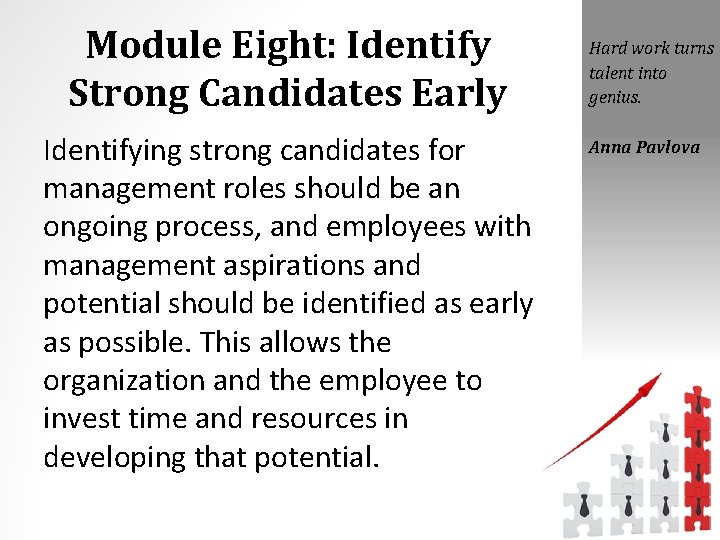
Module Eight: Identify Strong Candidates Early Identifying strong candidates for management roles should be an ongoing process, and employees with management aspirations and potential should be identified as early as possible. This allows the organization and the employee to invest time and resources in developing that potential. Hard work turns talent into genius. Anna Pavlova
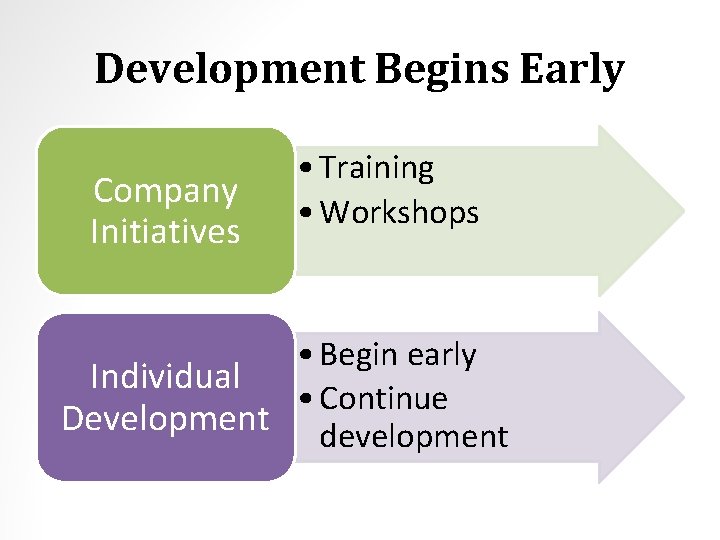
Development Begins Early Company Initiatives • Training • Workshops • Begin early Individual • Continue Development development
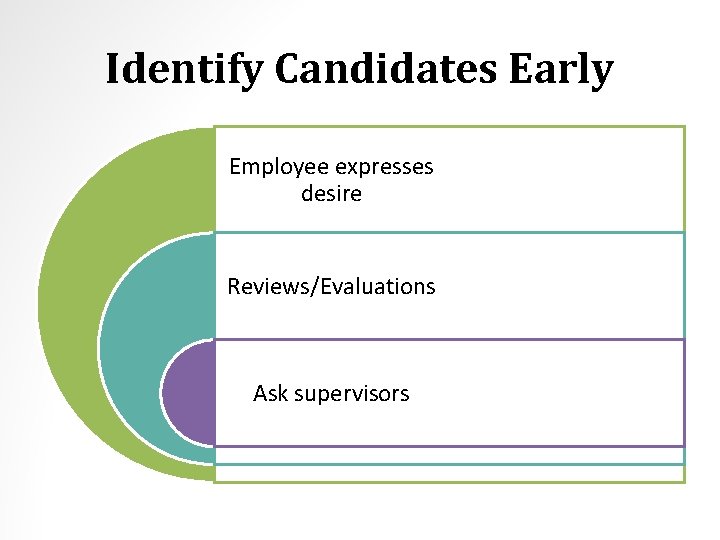
Identify Candidates Early Employee expresses desire Reviews/Evaluations Ask supervisors
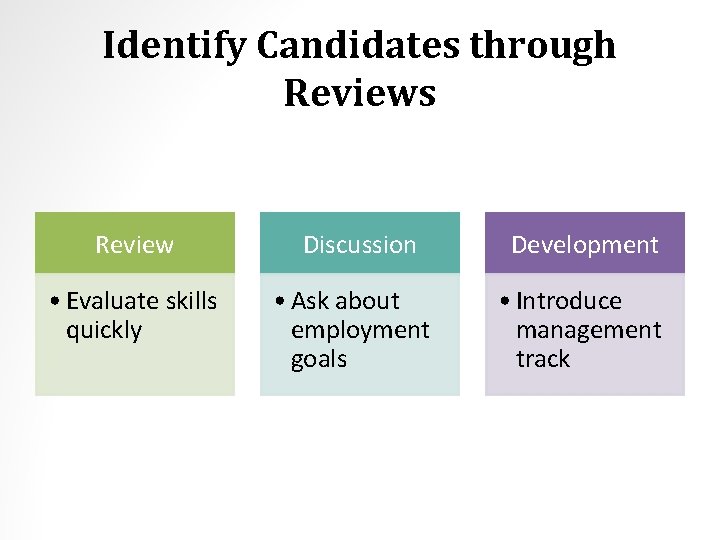
Identify Candidates through Reviews Review Discussion Development • Evaluate skills quickly • Ask about employment goals • Introduce management track
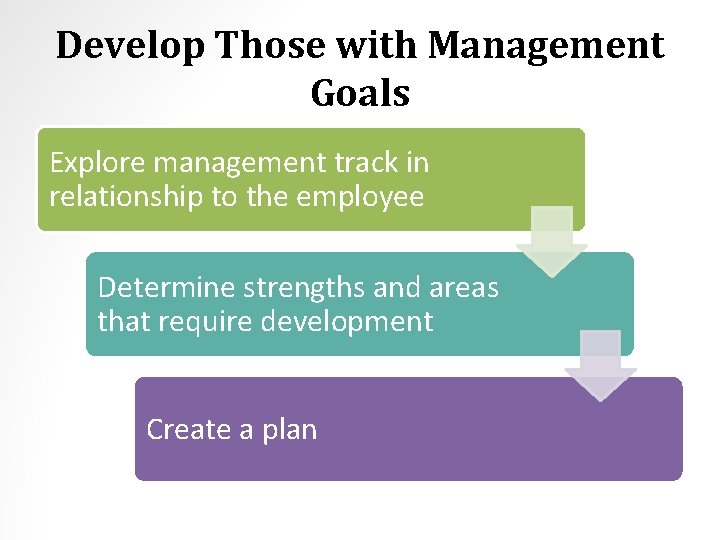
Develop Those with Management Goals Explore management track in relationship to the employee Determine strengths and areas that require development Create a plan
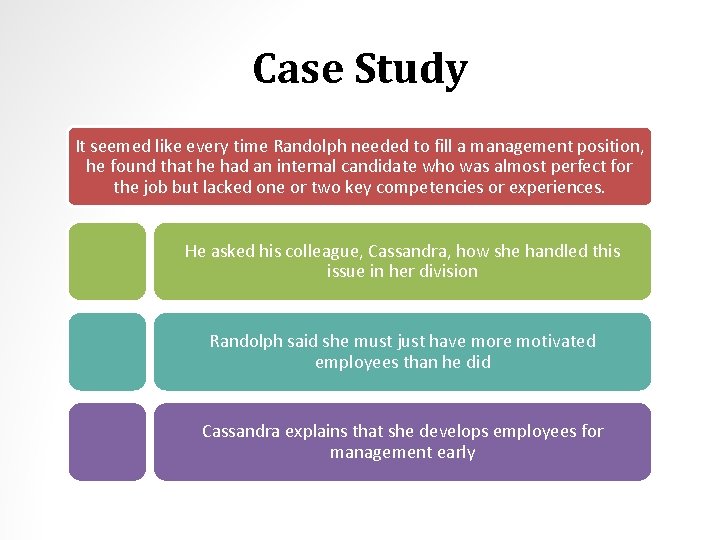
Case Study It seemed like every time Randolph needed to fill a management position, he found that he had an internal candidate who was almost perfect for the job but lacked one or two key competencies or experiences. He asked his colleague, Cassandra, how she handled this issue in her division Randolph said she must just have more motivated employees than he did Cassandra explains that she develops employees for management early
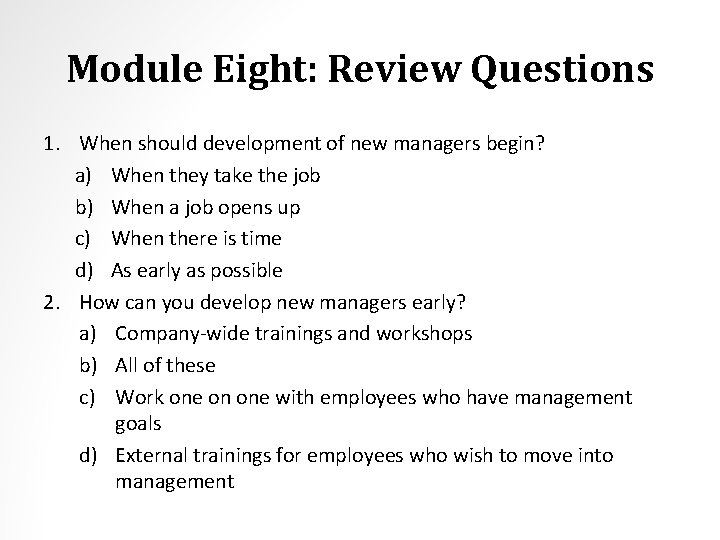
Module Eight: Review Questions 1. When should development of new managers begin? a) When they take the job b) When a job opens up c) When there is time d) As early as possible 2. How can you develop new managers early? a) Company-wide trainings and workshops b) All of these c) Work one on one with employees who have management goals d) External trainings for employees who wish to move into management
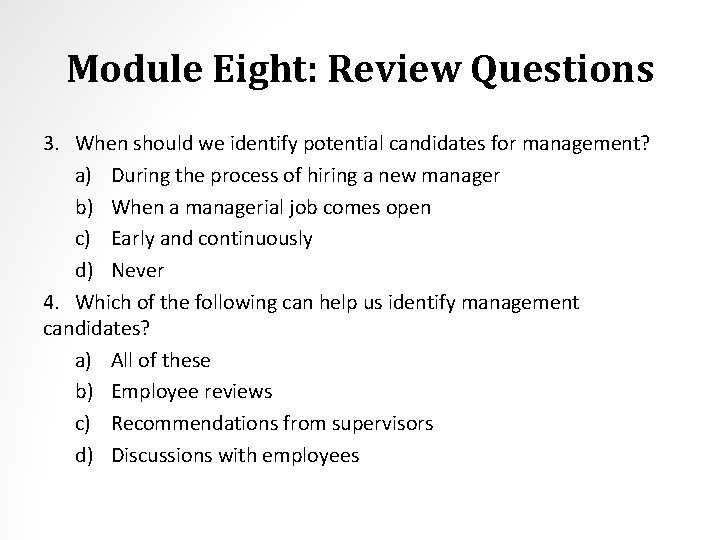
Module Eight: Review Questions 3. When should we identify potential candidates for management? a) During the process of hiring a new manager b) When a managerial job comes open c) Early and continuously d) Never 4. Which of the following can help us identify management candidates? a) All of these b) Employee reviews c) Recommendations from supervisors d) Discussions with employees
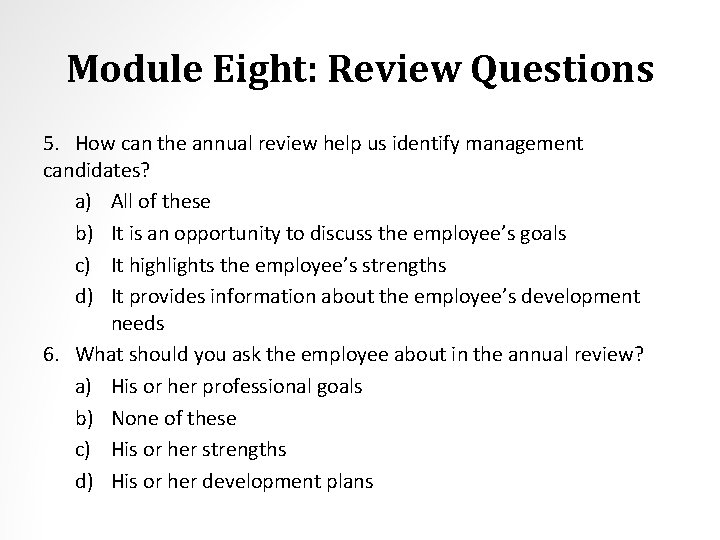
Module Eight: Review Questions 5. How can the annual review help us identify management candidates? a) All of these b) It is an opportunity to discuss the employee’s goals c) It highlights the employee’s strengths d) It provides information about the employee’s development needs 6. What should you ask the employee about in the annual review? a) His or her professional goals b) None of these c) His or her strengths d) His or her development plans
Module Eight: Review Questions 7. What should you do with employees that express management goals? a) Ignore them b) Develop them c) Micromanage them d) Promote them 8. What should you discuss with an employee who has management goals? a) Whether or not you think they can succeed b) Compensation c) None of these d) The management track
Module Eight: Review Questions 9. What was Randolph’s organization lacking? a) Talent b) A clear management track c) Training d) Motivation 10. Who suggested Randolph discuss his employee’s goals with them? a) His manager b) His colleague c) One of his direct reports d) His wife
Module Eight: Review Questions 1. When should development of new managers begin? a) When they take the job b) When a job opens up c) When there is time d) As early as possible Developing new managers should start as early as possible. This gives the most time for quality development. 2. How can you develop new managers early? a) Company-wide trainings and workshops b) All of these c) Work one on one with employees who have management goals d) External trainings for employees who wish to move into management There are many ways to develop new managers. You may work one on one with employees with management goals, or may use internal and external workshops and training to develop groups of employees at once.
Module Eight: Review Questions 3. When should we identify potential candidates for management? a) During the process of hiring a new manager b) When a managerial job comes open c) Early and continuously d) Never Potential candidates for management should be identified early so that they can be developed. This should be an ongoing process. 4. Which of the following can help us identify management candidates? a) All of these b) Employee reviews c) Recommendations from supervisors d) Discussions with employees There are many sources of information when identifying management candidates. Employee reviews and feedback from supervisors are both helpful. Talking to employees about their goals is another source.
Module Eight: Review Questions 5. How can the annual review help us identify management candidates? a) All of these b) It is an opportunity to discuss the employee’s goals c) It highlights the employee’s strengths d) It provides information about the employee’s development needs The annual review is a valuable source of information on potential management client. The annual review is a chance to talk to the employee about his or her goals. The review also highlights strengths and development areas, which give insight into an employee’s skill set. 6. What should you ask the employee about in the annual review? a) His or her professional goals b) None of these c) His or her strengths d) His or her development plans The annual review is a valuable source of information when identifying strong candidates for management. It is a chance to discuss the employee’s goals and identify those who wish to move into management.
Module Eight: Review Questions 7. What should you do with employees that express management goals? a) Ignore them b) Develop them c) Micromanage them d) Promote them Employees who express management goals should be developed. While not every such employee will eventually enter management, developing them from early on increases their chances of success. 8. What should you discuss with an employee who has management goals? a) Whether or not you think they can succeed b) Compensation c) None of these d) The management track When an employee expresses management goals, discuss the management track with him or her. This will give you both a sense of what needs to occur for the employee to pursue his or her goals.
Module Eight: Review Questions 9. What was Randolph’s organization lacking? a) Talent b) A clear management track c) Training d) Motivation Randolph’s organization lacked a clear management track. This kept internal candidates from pursuing management roles. 10. Who suggested Randolph discuss his employee’s goals with them? a) His manager b) His colleague c) One of his direct reports d) His wife Cassandra was Randolph’s colleague. She suggested he discuss his employee’s goals with them to identify management candidates.
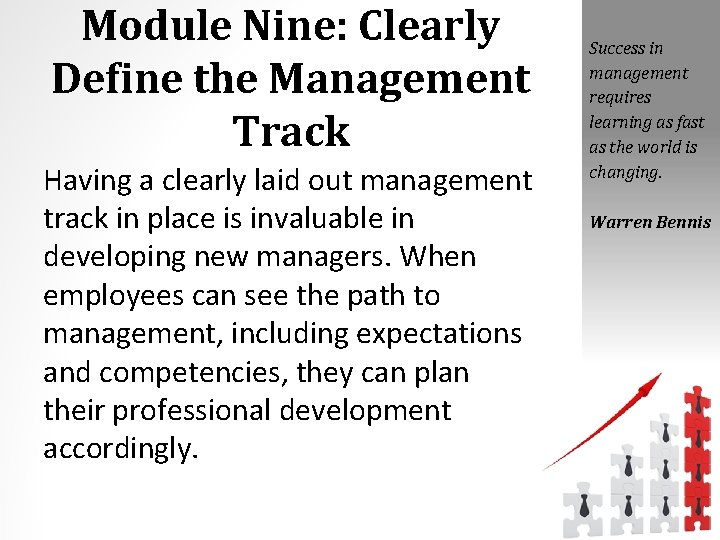
Module Nine: Clearly Define the Management Track Having a clearly laid out management track in place is invaluable in developing new managers. When employees can see the path to management, including expectations and competencies, they can plan their professional development accordingly. Success in management requires learning as fast as the world is changing. Warren Bennis
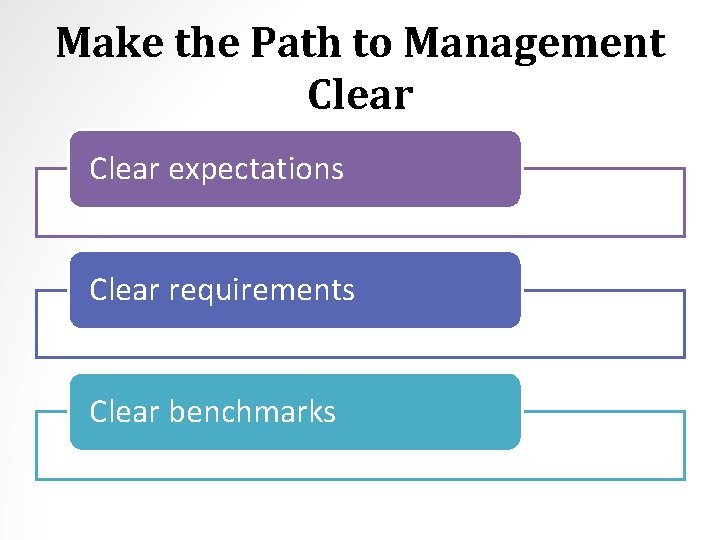
Make the Path to Management Clear expectations Clear requirements Clear benchmarks
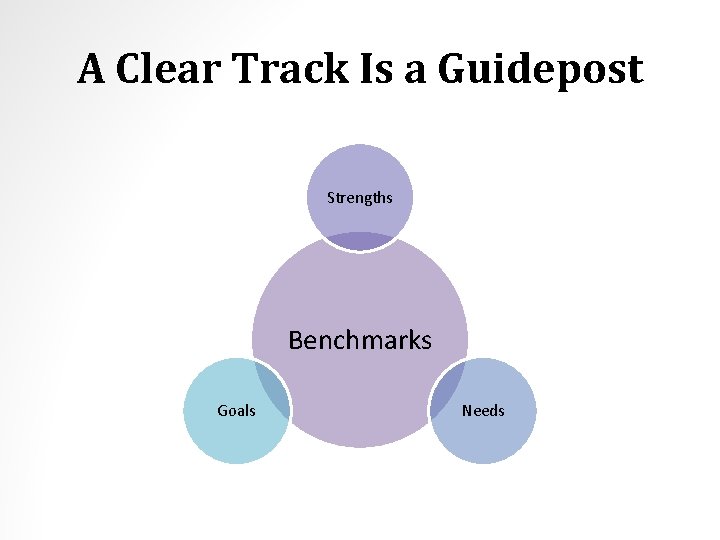
A Clear Track Is a Guidepost Strengths Benchmarks Goals Needs
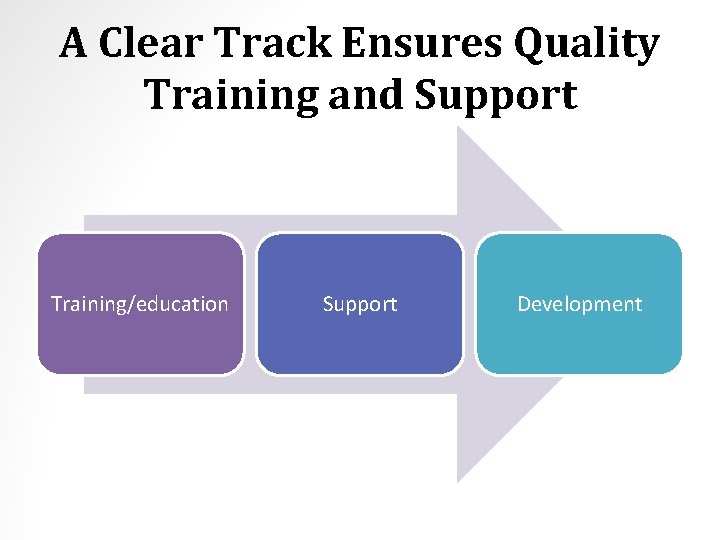
A Clear Track Ensures Quality Training and Support Training/education Support Development
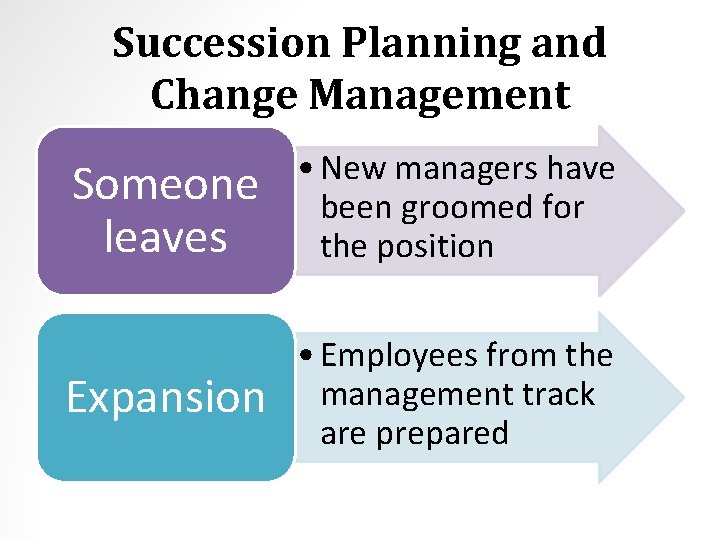
Succession Planning and Change Management Someone leaves • New managers have been groomed for the position Expansion • Employees from the management track are prepared
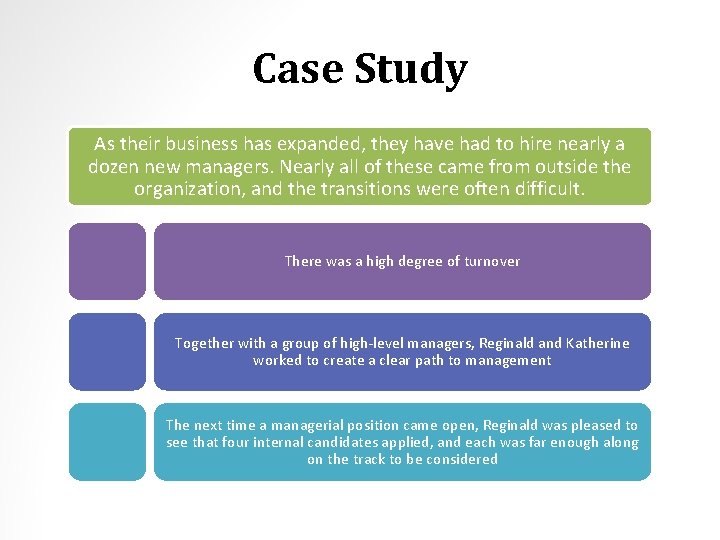
Case Study As their business has expanded, they have had to hire nearly a dozen new managers. Nearly all of these came from outside the organization, and the transitions were often difficult. There was a high degree of turnover Together with a group of high-level managers, Reginald and Katherine worked to create a clear path to management The next time a managerial position came open, Reginald was pleased to see that four internal candidates applied, and each was far enough along on the track to be considered
Module Nine: Review Questions 1. How can a clear management track help with employee retention? a) All of these b) It helps employees to keep growing c) It helps employees know how to pursue their goals d) It helps employees move up in the organization 2. The management track should be what? a) Busy b) Respected c) Clear d) None of these
Module Nine: Review Questions 3. A clear management track serves as what? a) A guidepost for development b) A map to employee’s goals c) A tool for planning employee development d) All of the above 4. The management track can be used to create which of the following? a) Employee development plans b) All of these c) Training initiatives d) Benchmarks for an employee
Module Nine: Review Questions 5. A clear management track ensures which of the following? a) Quality training and support b) Accountability c) Minimal supervision d) None of these 6. A clear management track helps in planning which of the following? a) Development activities b) Human resource allocation c) Financial resource allocation d) All of these
Module Nine: Review Questions 7. Having a clear management track can make which of the following easier? a) All of these b) Succession planning c) Change management d) Hiring 8. What can mentors do when there is a clear management track? a) Retire early b) Delegate work c) Share the spotlight d) Develop their successors from the earliest stage
Module Nine: Review Questions 9. What did Reginald dislike? a) Managing people b) The high level of turnover c) Collaborating with others d) None of the above 10. Who helped Reginald? a) His colleague b) An external consultant c) His boss d) Someone from HR
Module Nine: Review Questions 1. How can a clear management track help with employee retention? a) All of these b) It helps employees to keep growing c) It helps employees know how to pursue their goals d) It helps employees move up in the organization A clear management track helps employees reach their goals, including promotion, and so helps stave off frustration and stagnation. It also helps employees to keep growing. 2. The management track should be what? a) Busy b) Respected c) Clear d) None of these The management track should be made clear. If it is unclear or confusing it is of no benefit.
Module Nine: Review Questions 3. A clear management track serves as what? a) A guidepost for development b) A map to employee’s goals c) A tool for planning employee development d) All of the above The management track helps employees plan their development and gives them a map to goals. It is also useful when planning larger training and development initiatives. 4. The management track can be used to create which of the following? a) Employee development plans b) All of these c) Training initiatives d) Benchmarks for an employee A clear management track is useful in planning individual and group development and training. It can also provide employees with benchmarks as they work toward their goals.
Module Nine: Review Questions 5. A clear management track ensures which of the following? a) Quality training and support b) Accountability c) Minimal supervision d) None of these A clear management track helps ensure quality training and support. The track provides a guideline for what experiences and trainings that managers should have. 6. A clear management track helps in planning which of the following? a) Development activities b) Human resource allocation c) Financial resource allocation d) All of these A clear management track helps the organization in planning. It helps in allocation of human and financial resources, as well as in planning training and development.
Module Nine: Review Questions 7. Having a clear management track can make which of the following easier? a) All of these b) Succession planning c) Change management d) Hiring A clear management track is helpful in times of change. It can be a key tool in making hiring, change management, and succession planning easier. 8. What can mentors do when there is a clear management track? a) Retire early b) Delegate work c) Share the spotlight d) Develop their successors from the earliest stage When there is a clear management track, mentors can begin developing their successors early on. This helps succession planning and change management.
Module Nine: Review Questions 9. What did Reginald dislike? a) Managing people b) The high level of turnover c) Collaborating with others d) None of the above Reginald disliked the high level of turnover among the new managers. He wanted to find a way to stop this. 10. Who helped Reginald? a) His colleague b) An external consultant c) His boss d) Someone from HR Katherine helped Reginald. She was his colleague.
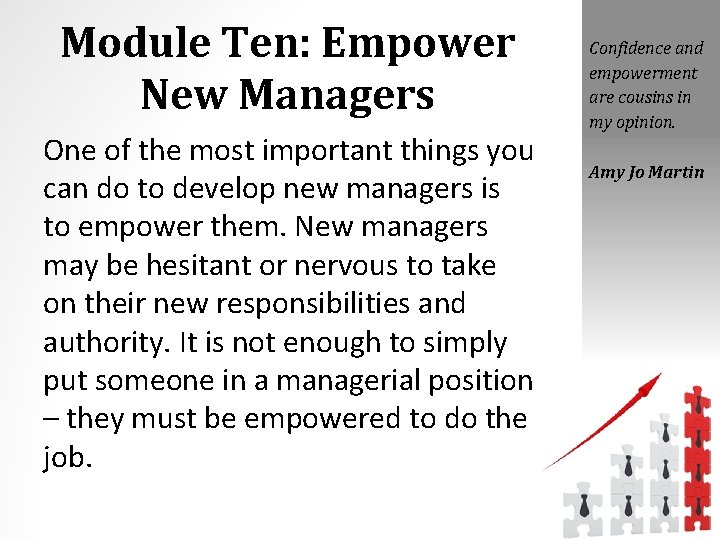
Module Ten: Empower New Managers One of the most important things you can do to develop new managers is to empower them. New managers may be hesitant or nervous to take on their new responsibilities and authority. It is not enough to simply put someone in a managerial position – they must be empowered to do the job. Confidence and empowerment are cousins in my opinion. Amy Jo Martin
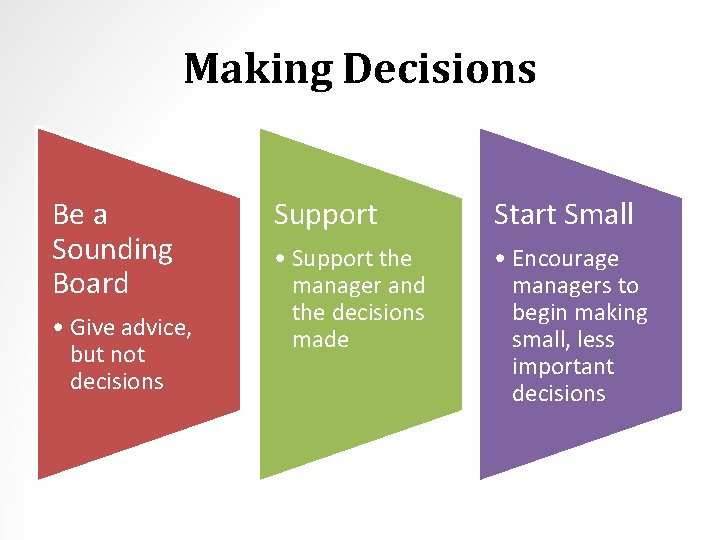
Making Decisions Be a Sounding Board • Give advice, but not decisions Support Start Small • Support the manager and the decisions made • Encourage managers to begin making small, less important decisions
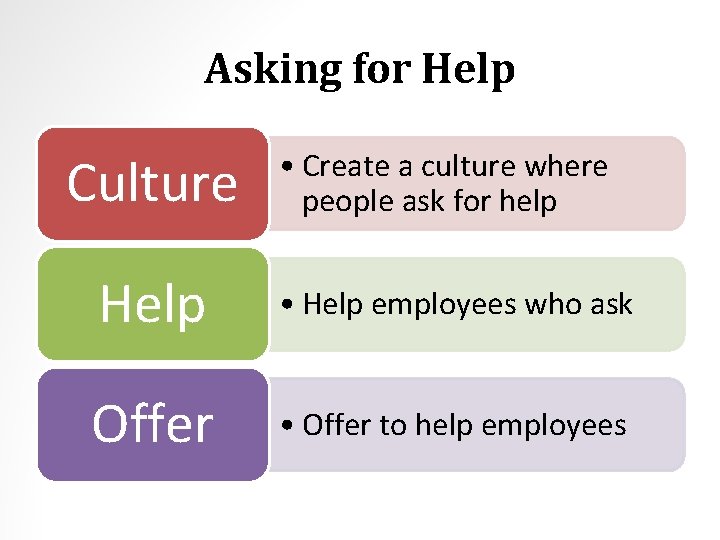
Asking for Help Culture • Create a culture where people ask for help Help • Help employees who ask Offer • Offer to help employees
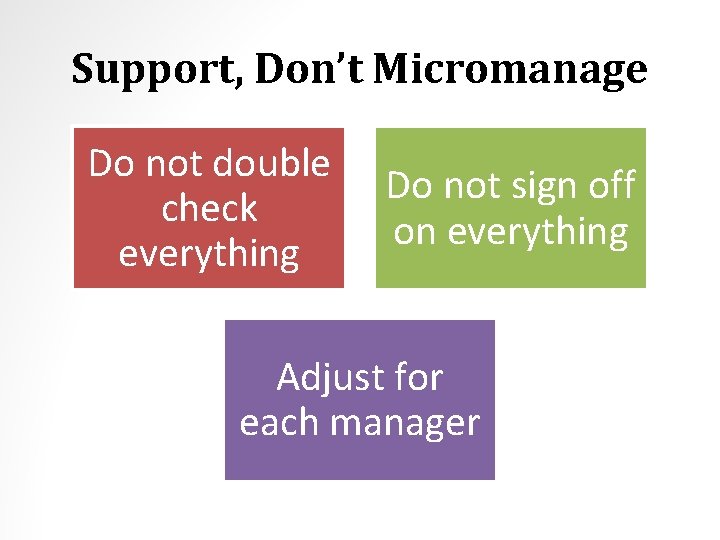
Support, Don’t Micromanage Do not double check everything Do not sign off on everything Adjust for each manager
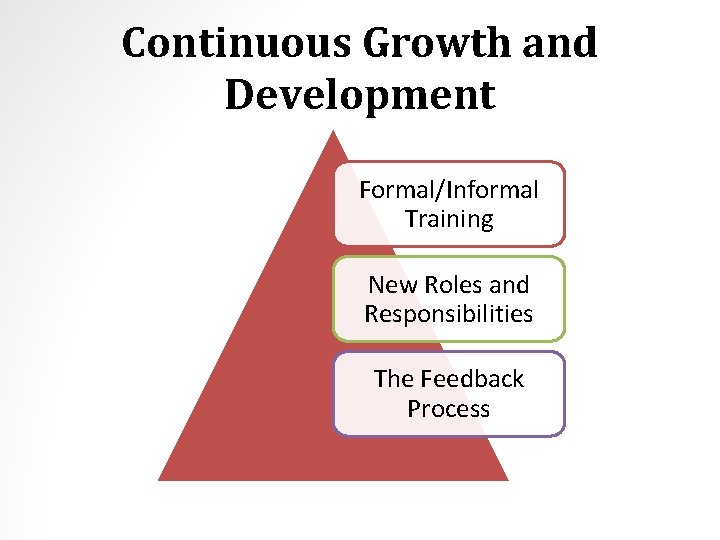
Continuous Growth and Development Formal/Informal Training New Roles and Responsibilities The Feedback Process
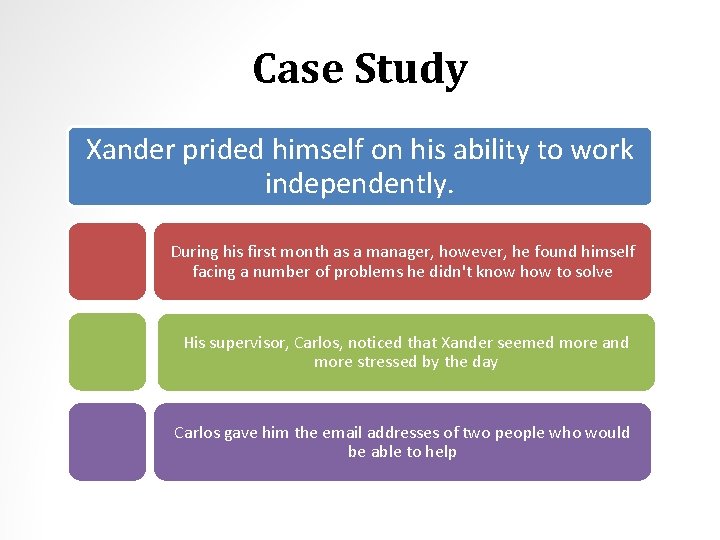
Case Study Xander prided himself on his ability to work independently. During his first month as a manager, however, he found himself facing a number of problems he didn't know how to solve His supervisor, Carlos, noticed that Xander seemed more and more stressed by the day Carlos gave him the email addresses of two people who would be able to help
Module Ten: Review Questions 1. What should we do for new managers? a) Empower them b) Criticize them c) Defend them d) Ignore them 2. What does empowering new managers do? a) Builds their confidence b) Shows confidence in them. c) Helps them grow d) All of these
Module Ten: Review Questions 3. We should empower new managers to do which of the following? a) Take action b) All of these c) Ask for help d) Make decisions 4. Which is not a way to empower a new manager to ask for help? a) Provide them with a list of resources b) Tell them about times you have needed help c) Encourage them to seek out assistance d) Punish them
Module Ten: Review Questions 5. All but which of the following is micromanaging rather than supporting? a) Requiring a new manager to have all actions approved by another b) Backing up the new manager’s decisions c) Double checking all the new manager’s work d) Second guessing the new manager’s decisions. 6. Which of the following is a way to support a new manager a) Support their decisions b) Offer your help c) All of these d) Provide them with tools
Module Ten: Review Questions 7. Growth and development should be which of the following? a) All of these b) Continuous c) Personalized d) Part of every employee’s career path 8. When does new manager development end? a) When the position is filled b) When the employee says so c) When the employee is promoted d) Never
Module Ten: Review Questions 9. How did Xander picture himself? a) Independent b) Incompetent c) Dependent on others d) Creative 10. What did Carlos encourage Xander to do? a) Sleep b) Ask for help c) Seek out more training d) Brainstorm
Module Ten: Review Questions 1. 2. What should we do for new managers? a) Empower them b) Criticize them c) Defend them d) Ignore them New managers need to be empowered. This helps them succeed. What does empowering new managers do? a) Builds their confidence b) Shows confidence in them. c) Helps them grow d) All of these Empowering new managers builds their confidence and helps them grow. It also demonstrates confidence in them, which in turn builds their confidence.
Module Ten: Review Questions 3. We should empower new managers to do which of the following? a) Take action b) All of these c) Ask for help d) Make decisions New managers should be empowered to ask for help, make decisions, and take action. 4. Which is not a way to empower a new manager to ask for help? a) Provide them with a list of resources b) Tell them about times you have needed help c) Encourage them to seek out assistance d) Punish them Never punish a new manager for asking for help. Instead, share instances where you have needed help, encourage them to seek assistance, and provide them with a list of resources.
Module Ten: Review Questions 5. All but which of the following is micromanaging rather than supporting? a) Requiring a new manager to have all actions approved by another b) Backing up the new manager’s decisions c) Double checking all the new manager’s work d) Second guessing the new manager’s decisions. Backing up the new manager’s decisions is an example of supporting a new manager. We should seek to support rather than micromanage. 6. Which of the following is a way to support a new manager a) Support their decisions b) Offer your help c) All of these d) Provide them with tools There are many ways to support a new manager. Back up their decisions, express confidence in them, offer your help, and provide them with tools.
Module Ten: Review Questions 7. Growth and development should be which of the following? a) All of these b) Continuous c) Personalized d) Part of every employee’s career path Growth and development are never done. They should be continuous, personalized, and part of every employee’s development plan and path. 8. When does new manager development end? a) When the position is filled b) When the employee says so c) When the employee is promoted d) Never Growth and development never end. This is why we must continuously provide opportunities.
Module Ten: Review Questions 9. How did Xander picture himself? a) Independent b) Incompetent c) Dependent on others d) Creative Xander pictured himself as independent. This is why it was hard to ask for help. 10. What did Carlos encourage Xander to do? a) Sleep b) Ask for help c) Seek out more training d) Brainstorm Carlos encouraged Xander to ask for help. He shared times when he had asked for help.
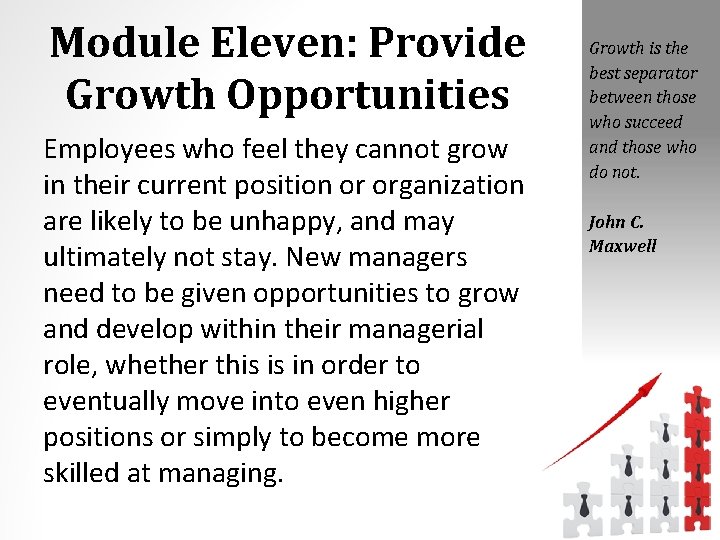
Module Eleven: Provide Growth Opportunities Employees who feel they cannot grow in their current position or organization are likely to be unhappy, and may ultimately not stay. New managers need to be given opportunities to grow and develop within their managerial role, whether this is in order to eventually move into even higher positions or simply to become more skilled at managing. Growth is the best separator between those who succeed and those who do not. John C. Maxwell
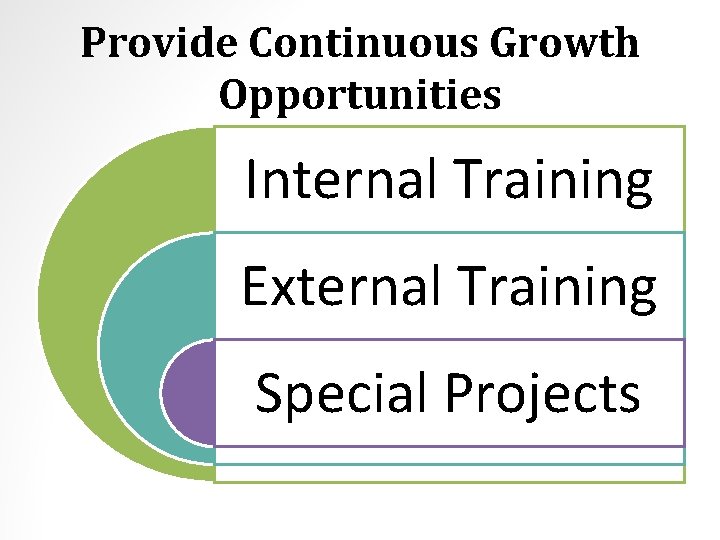
Provide Continuous Growth Opportunities Internal Training External Training Special Projects
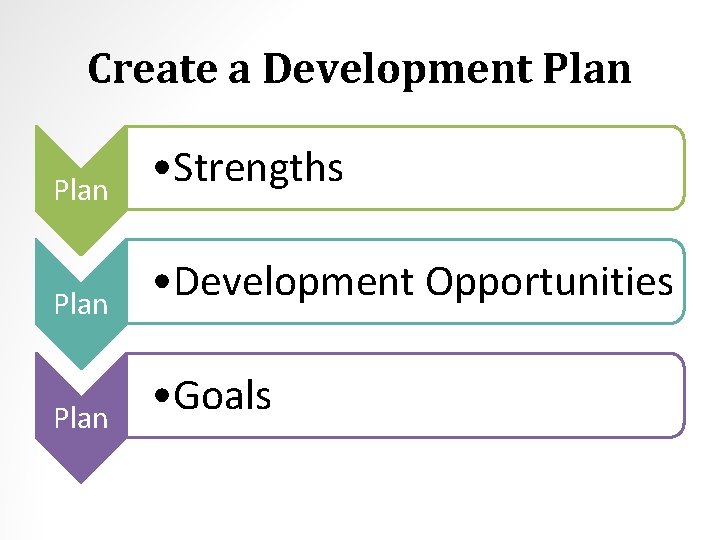
Create a Development Plan • Strengths Plan • Development Opportunities Plan • Goals
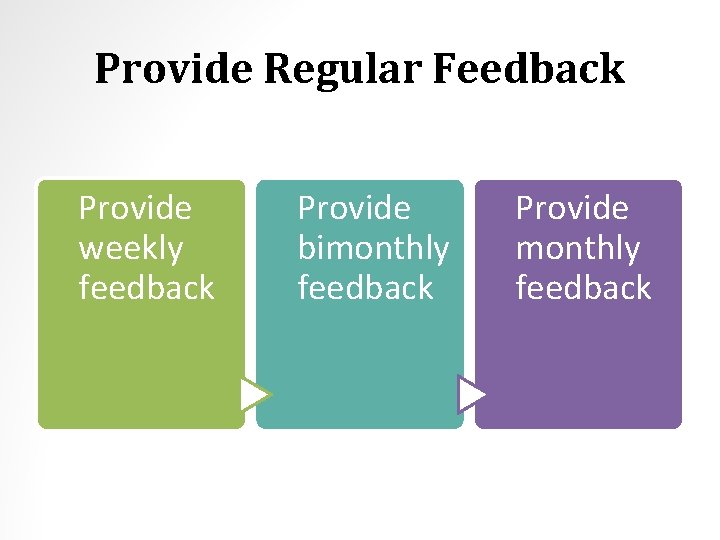
Provide Regular Feedback Provide weekly feedback Provide bimonthly feedback Provide monthly feedback
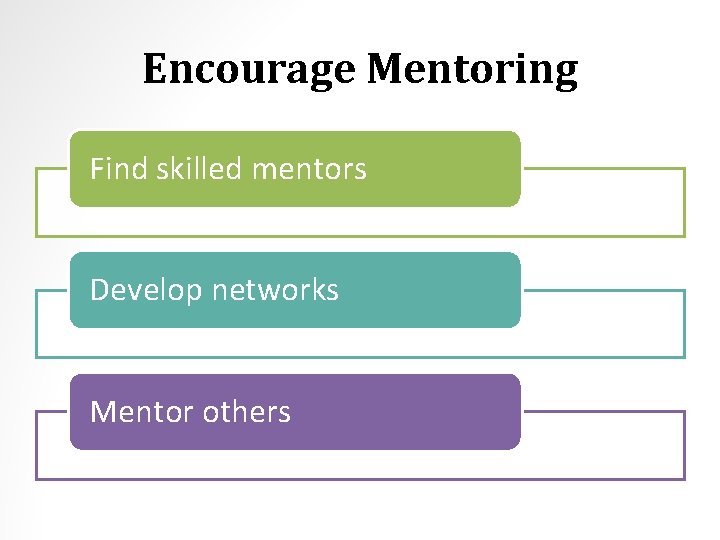
Encourage Mentoring Find skilled mentors Develop networks Mentor others
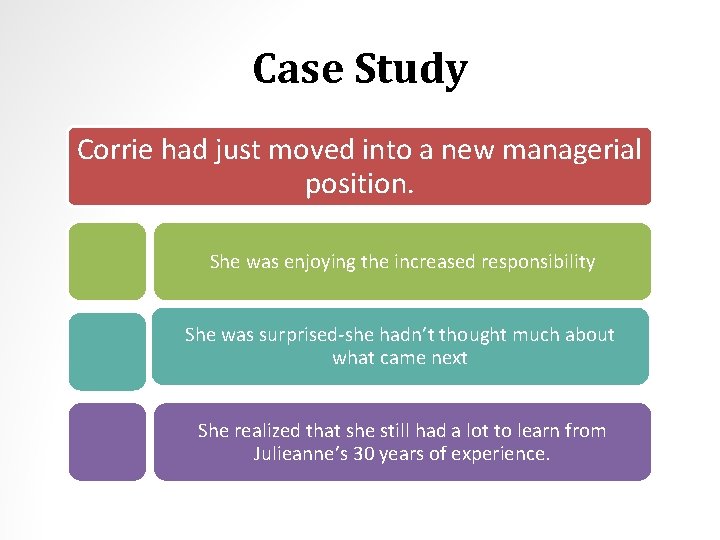
Case Study Corrie had just moved into a new managerial position. She was enjoying the increased responsibility She was surprised-she hadn’t thought much about what came next She realized that she still had a lot to learn from Julieanne’s 30 years of experience.
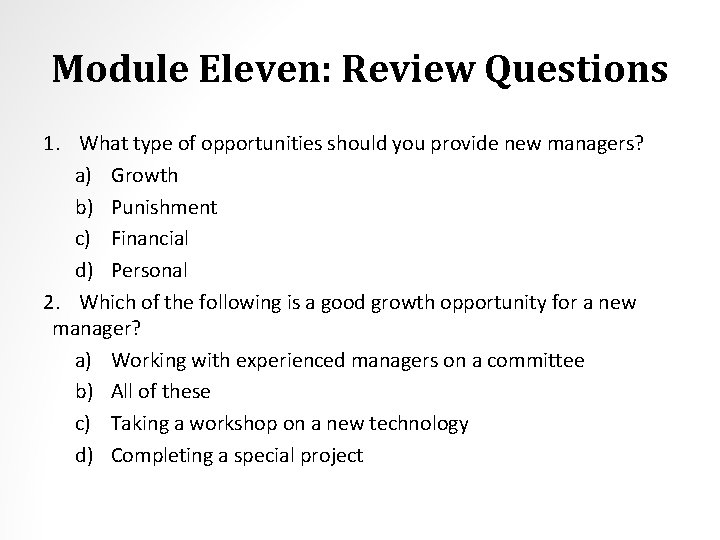
Module Eleven: Review Questions 1. What type of opportunities should you provide new managers? a) Growth b) Punishment c) Financial d) Personal 2. Which of the following is a good growth opportunity for a new manager? a) Working with experienced managers on a committee b) All of these c) Taking a workshop on a new technology d) Completing a special project
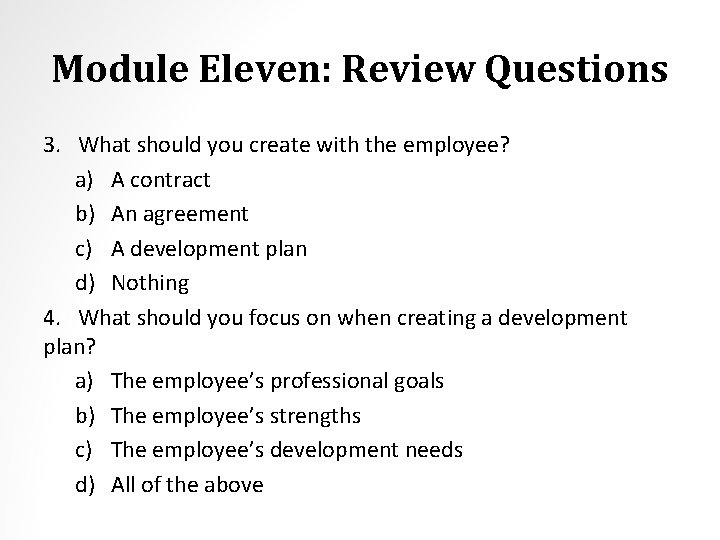
Module Eleven: Review Questions 3. What should you create with the employee? a) A contract b) An agreement c) A development plan d) Nothing 4. What should you focus on when creating a development plan? a) The employee’s professional goals b) The employee’s strengths c) The employee’s development needs d) All of the above
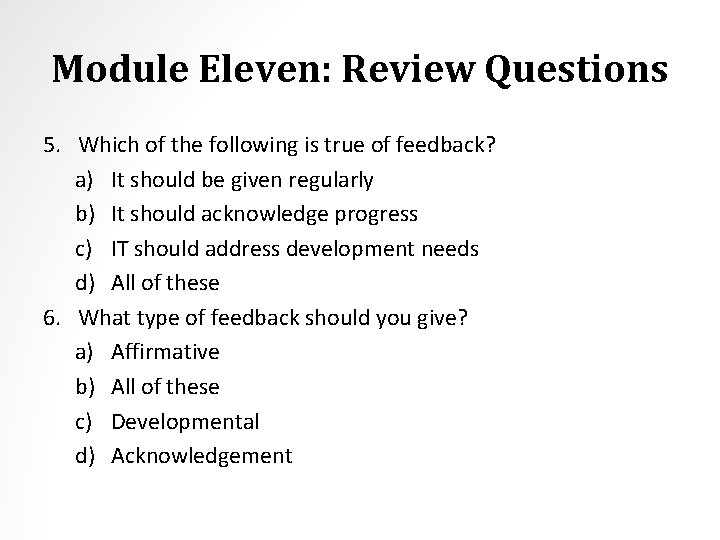
Module Eleven: Review Questions 5. Which of the following is true of feedback? a) It should be given regularly b) It should acknowledge progress c) IT should address development needs d) All of these 6. What type of feedback should you give? a) Affirmative b) All of these c) Developmental d) Acknowledgement
Module Eleven: Review Questions 7. What should you encourage in terms of mentoring? a) All of these b) New managers should become mentors c) New managers should continue to work with their mentors d) New managers should seek out mentors in new areas of interest 8. Which is true of mentoring? a) It can present growth opportunities b) It can build a new manager’s confidence c) All of these d) It can help develop new managers
Module Eleven: Review Questions 9. What did Corrie believe about her mentor? a) They were done working together b) She was incompetent c) She was lazy d) None of these 10. What did Julieanne recommend for Corrie? a) Joining groups b) Setting a new goal c) Ending their relationship d) Finding a new mentor
Module Eleven: Review Questions 1. What type of opportunities should you provide new managers? a) Growth b) Punishment c) Financial d) Personal Part of developing new managers is providing growth opportunities. These should be continuous. 2. Which of the following is a good growth opportunity for a new manager? a) Working with experienced managers on a committee b) All of these c) Taking a workshop on a new technology d) Completing a special project There are many different kinds of growth opportunities. These can be formal trainings, working on committees, or special projects.
Module Eleven: Review Questions 3. What should you create with the employee? a) A contract b) An agreement c) A development plan d) Nothing Work with an employee to create a development plan. This will help in providing growth opportunities. 4. What should you focus on when creating a development plan? a) The employee’s professional goals b) The employee’s strengths c) The employee’s development needs d) All of the above A development plan should be built around the employee’s goals. Take into account the employee’s strengths and areas of development need.
Module Eleven: Review Questions 5. Which of the following is true of feedback? a) It should be given regularly b) It should acknowledge progress c) IT should address development needs d) All of these Feedback should be given regularly. Feedback should focus on both development needs and areas of strength or progress. 6. What type of feedback should you give? a) Affirmative b) All of these c) Developmental d) Acknowledgement Feedback is important, and all types should be given. Do not just give developmental feedback, but also give affirmative feedback and acknowledge work well done.
Module Eleven: Review Questions 7. What should you encourage in terms of mentoring? a) All of these b) New managers should become mentors c) New managers should continue to work with their mentors d) New managers should seek out mentors in new areas of interest Mentoring can be incredibly valuable. Encourage new managers to continue to work with their mentors, and to seek out new mentors as needed. Also, encourage them to become mentors. 8. Which is true of mentoring? a) It can present growth opportunities b) It can build a new manager’s confidence c) All of these d) It can help develop new managers Mentoring is valuable to both the mentee and the organization. It can build confidence in new managers, present them with growth opportunities, and help develop them.
Module Eleven: Review Questions 9. What did Corrie believe about her mentor? a) They were done working together b) She was incompetent c) She was lazy d) None of these Corrie thought that once she achieved her management role, she and her mentor were done working together. She was pleased to find this wasn’t the case. 10. What did Julieanne recommend for Corrie? a) Joining groups b) Setting a new goal c) Ending their relationship d) Finding a new mentor Julieanne encouraged Corrie to set a new goal. They would then work towards it.
Module Twelve: Wrapping Up Although this workshop is coming to a close, we hope that your journey to improve your skills is just beginning. Please take a moment to review and update your action plan. This will be a key tool to guide your progress in the days, weeks, months, and years to come. We wish you the best of luck on the rest of your travels! In every business, in every industry, management does matter. Michael Eisner
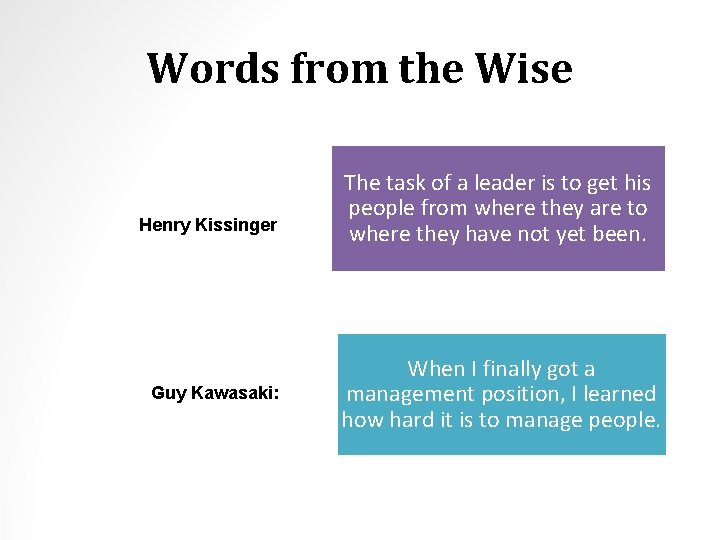
Words from the Wise Henry Kissinger Guy Kawasaki: The task of a leader is to get his people from where they are to where they have not yet been. When I finally got a management position, I learned how hard it is to manage people.
Recap and Reflect ISD to Update
Revisiting Your Answer Think of a recent situation where you felt anxious, frustrated, disappointed, or any other unpleasant emotion. How did you address it? BECAME ANGRY BECAME STRESSED OUT FOCUSED ON SOMETHING ELSE REDIRECED THOUGHTS / ACTIONS FELT OR GOT SICK IGNORED IT What of your original answer would have ISD to Update changed if you knew the insights provided today?
LEARN – APPLY – PRACTICE – EVALUATE Update Image Which insights of leadership and influence from today’s session will you apply immediately? ISD to Update www. 327 solutions. com
- Slides: 174