
Name CH 14 1 B RENAISSANCE VERNACULAR LITERATURE
Name: CH. 14. 1 B- RENAISSANCE VERNACULAR LITERATURE SWBAT ? Fold a piece of paper into quarters Upper Right Hand corner SWBAT: analyze the impact and influence of vernacular language & the printing press had on increased literacy rates and the education of the European people.
FRONT PAGE: VERNACULAR LITERATURE Front page: Influenced by: � Petrarch- father of the Renaissance humanism. Looked forgotten Latin manuscripts in monastic libraries. Intellectual life is one of solitude. � Humanist Writers: Emphasis on classical Latin to its widespread use in the writings of scholars, lawyers, and theologians. Often served as secretaries in Italian city-states. � Vernacular Language: Wrote in their own regional language such as Italian, German, French, and English. � Study of the Mind/Body � Basic education for ruling class � 7 Liberal Arts � Women-Good mothers/wives. HI, Riding, instruments, poetry
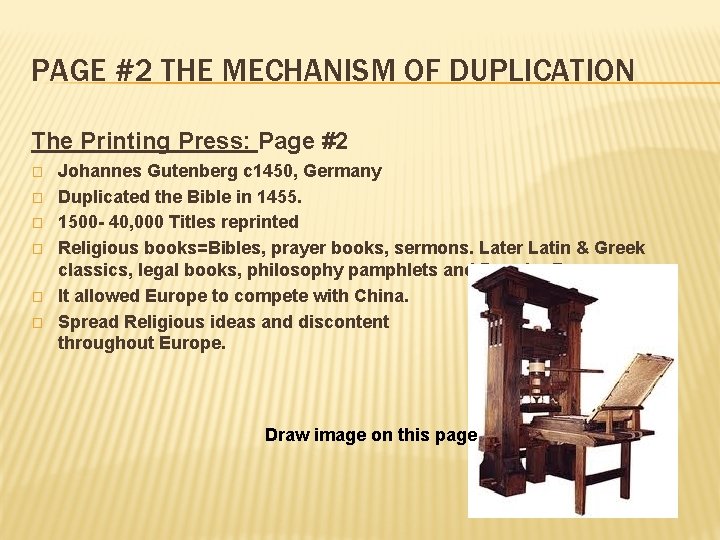
PAGE #2 THE MECHANISM OF DUPLICATION The Printing Press: Page #2 � � � Johannes Gutenberg c 1450, Germany Duplicated the Bible in 1455. 1500 - 40, 000 Titles reprinted Religious books=Bibles, prayer books, sermons. Later Latin & Greek classics, legal books, philosophy pamphlets and Popular Romance. It allowed Europe to compete with China. Spread Religious ideas and discontent throughout Europe. Draw image on this page
PAGE #3 GOLDEN AGE OF LITERATURE Humanist Writers: Machiavelli- The Prince (Government as it works) � Erasmus-Dutch- Praise the Folly (ridiculed ignorance & superstition). � Thomas More- Utopia (criticized society with an imaginary society). English: Elizabethan Era � William Shakespeare- Play write. London theatre, the Globe. Wrote for nobles, lawyers, merchants and vagabonds. Spanish Literature: � Theatres in Seville & Madrid reviled English theatres. � Lope De Vega- witty, action-packed full, and realistic. � Miguel de Cervantes- Don Quixote. �
PRINTING PRESS? The printing press contributed to all of the following developments EXCEPT � a. Increased acceptance between Catholics and Protestants � b. The founding of primary schools in villages and towns � c. The popularity of almanacs � d. Increased interest in reading among villagers
HUMANISM Humanists? � a. Studied human anatomy and physical development � b. Wanted to make things they learned harmonize with Christian teachings � c. Criticized classical literature for its formal style � d. Studied Greek and Latin manuscripts
GOLDEN AGE OF LIT? The poems and plays of which person are representative of the English Renaissance? � a. Johann Guttenberg � b. William Shakespeare � c. Dante Alighieri � d. Miguel de Cervantes
OBJECTIVE REVIEW Answer each objective on a separate page in your min-book. Remember, at least 3 sentences per objective. Sentence 1 - Statement/ declaration. Sentence 2 - supportive detail #1 Sentence 3 - supportive detail #2 Objective 1: Describe Renaissance Humanism. Objective 2: Describe Vernacular Language & list 3 writers. Objective 3: List who invented the printing press & 3 effects of it on society.
- Slides: 8