
Nakama 2 Chapter 6 P 268 E Nouns
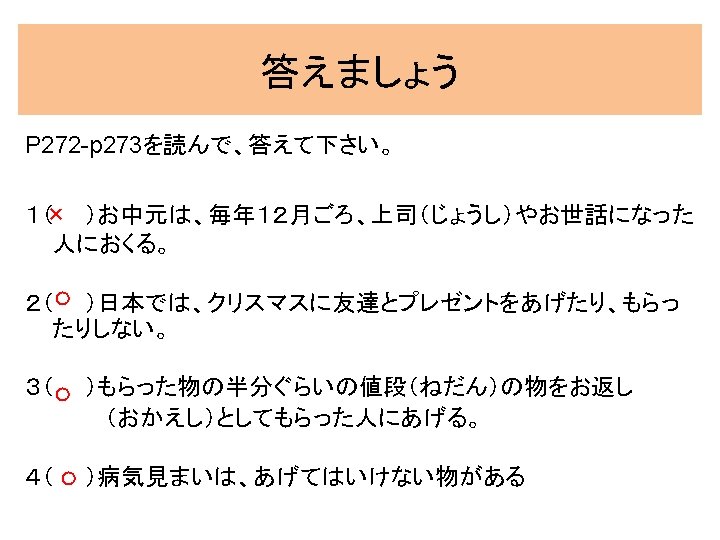

- Slides: 127
Nakama 2 Chapter 6
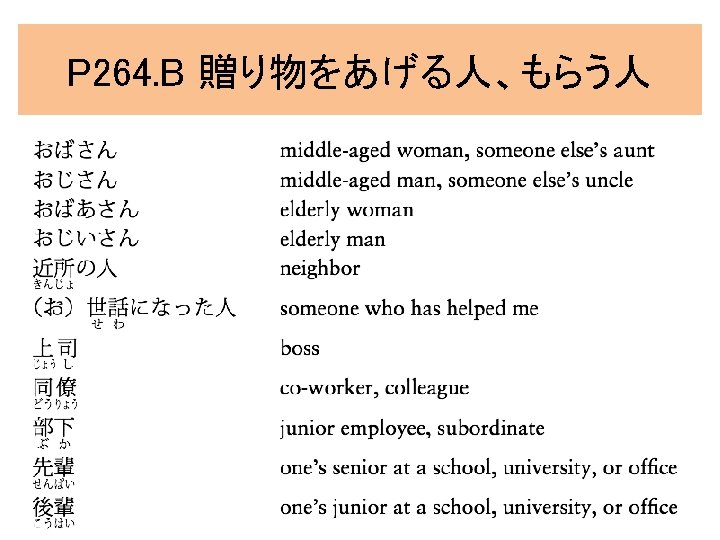
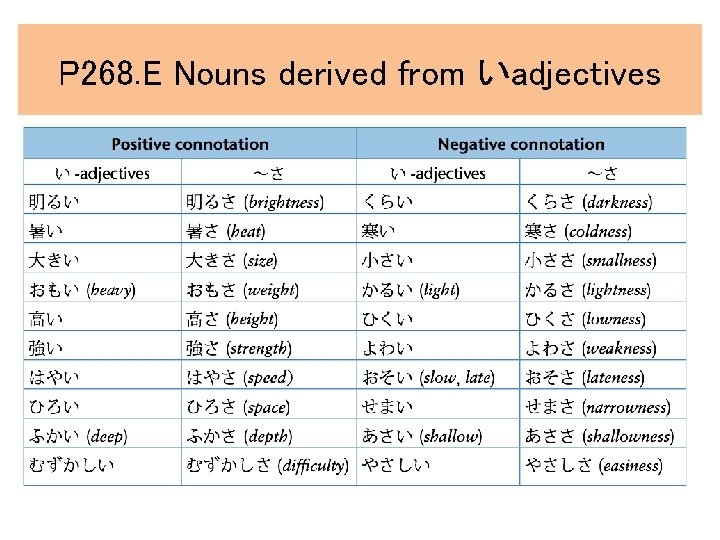
P 268. E Nouns derived from いadjectives
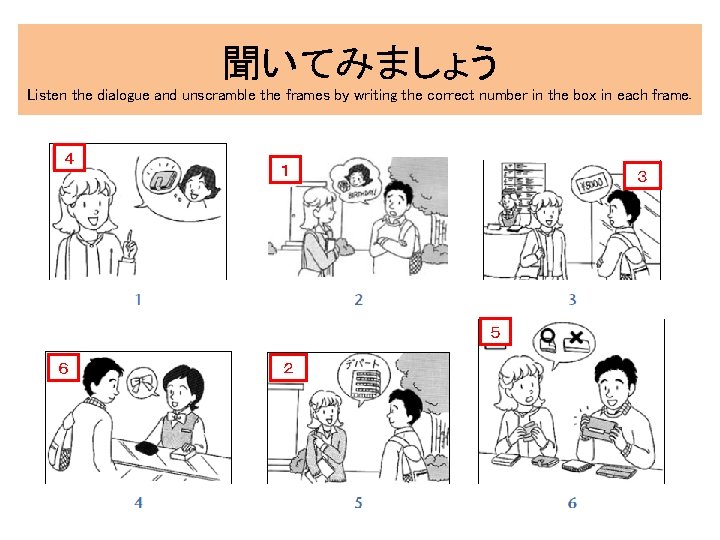
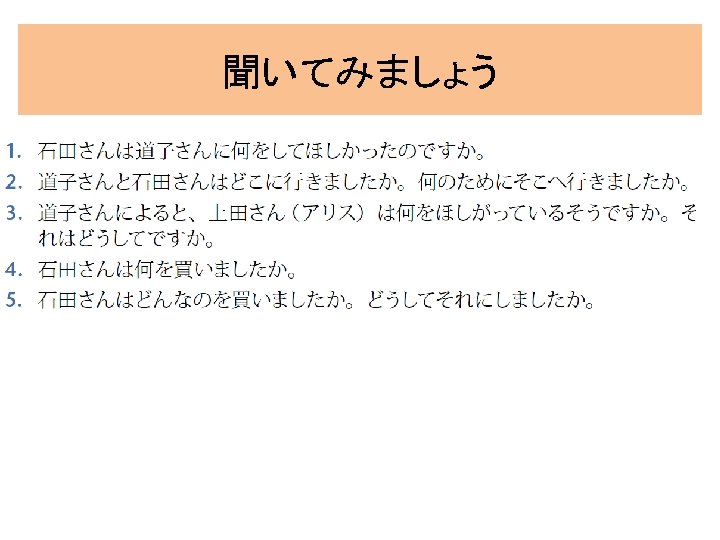
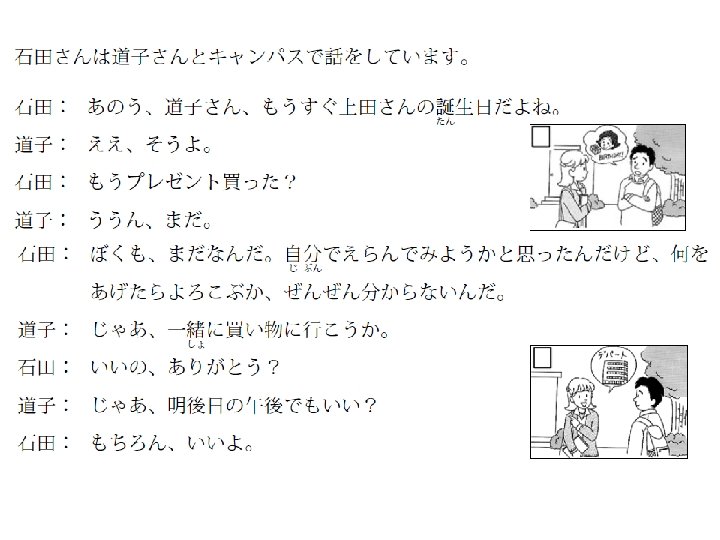
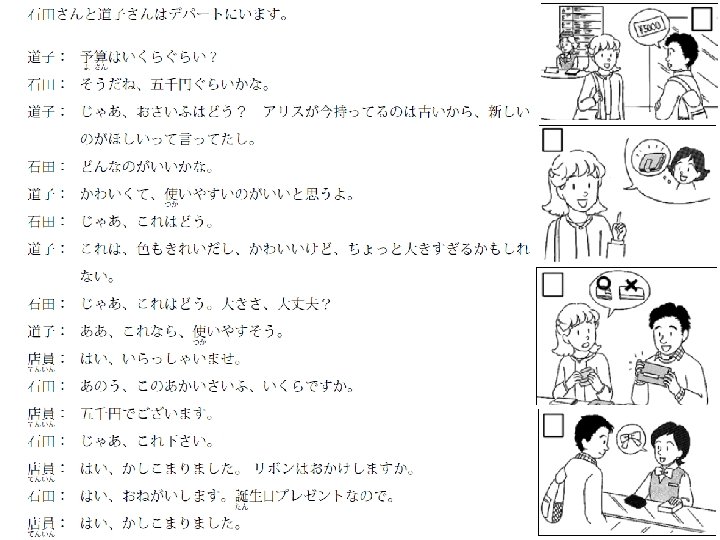
聞いてみましょう Listen the dialogue and unscramble the frames by writing the correct number in the box in each frame. 4 1 3 5 6 2
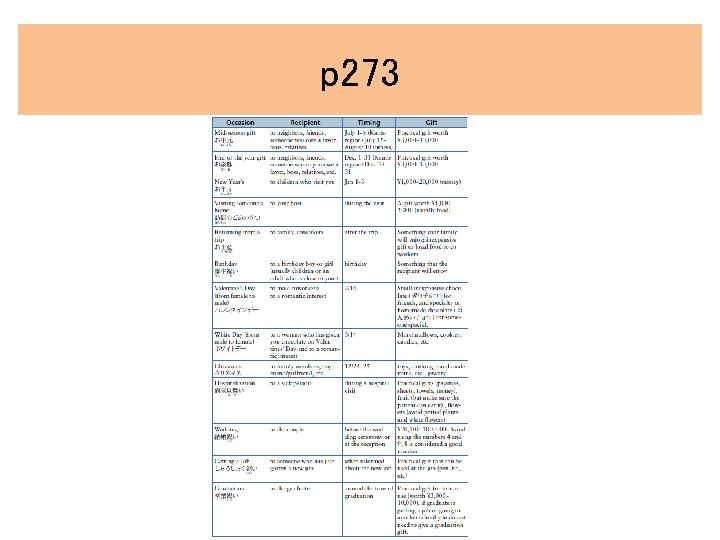
p 273
文法1 Using verbs of giving and receiving
GIVING VERBS (1) (IN-BOUND) ~くれる/~下さる
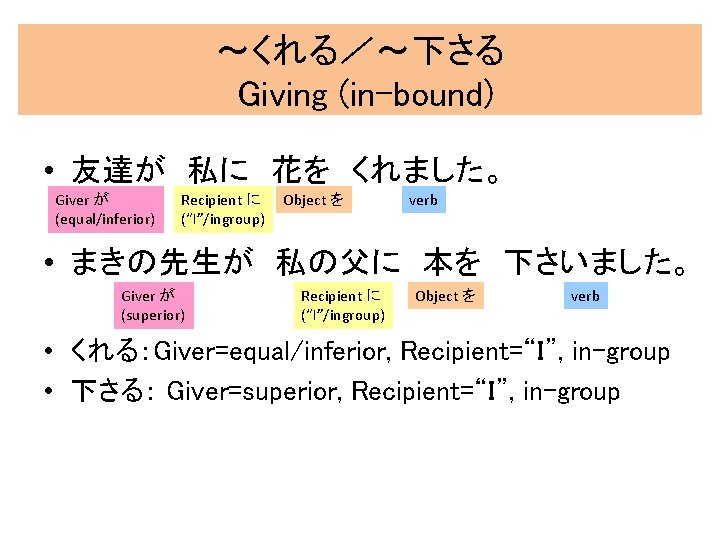
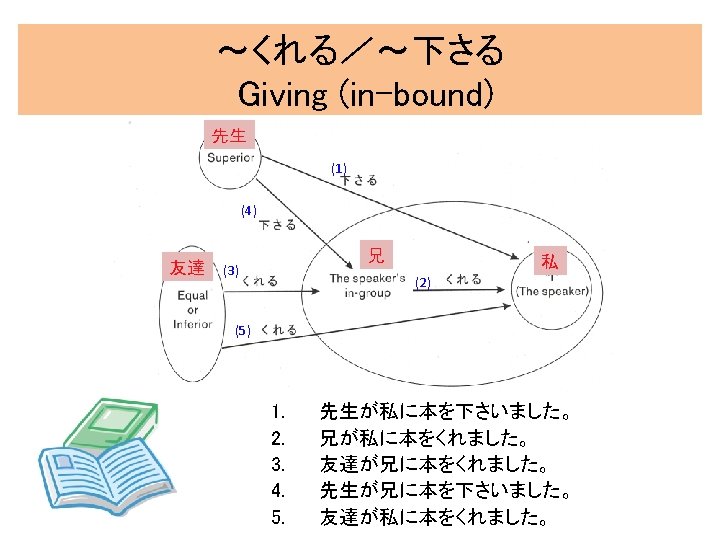
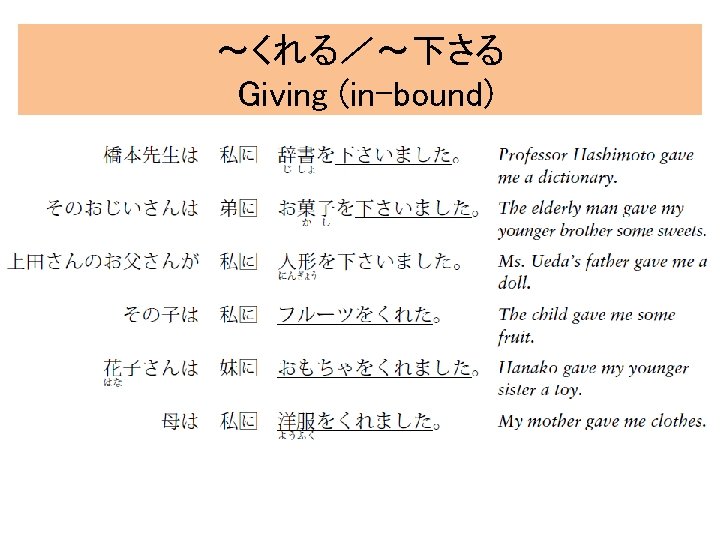
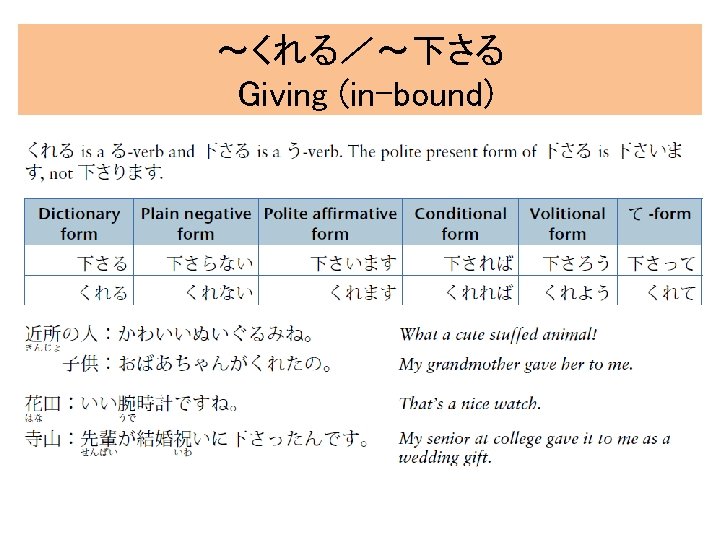
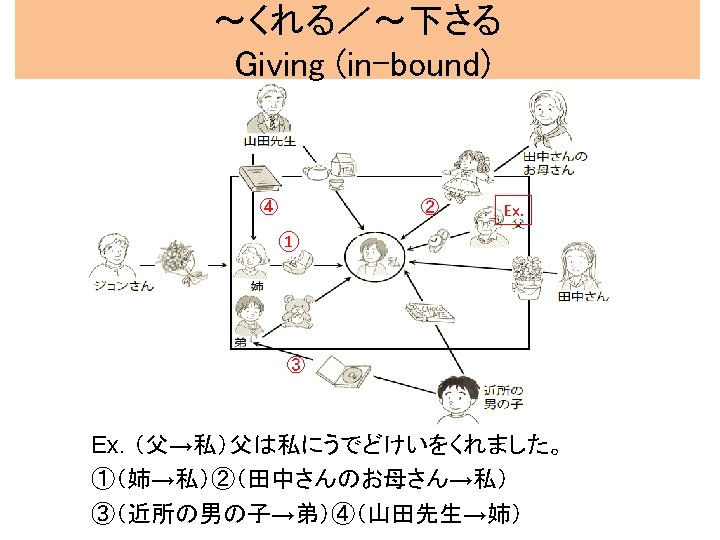
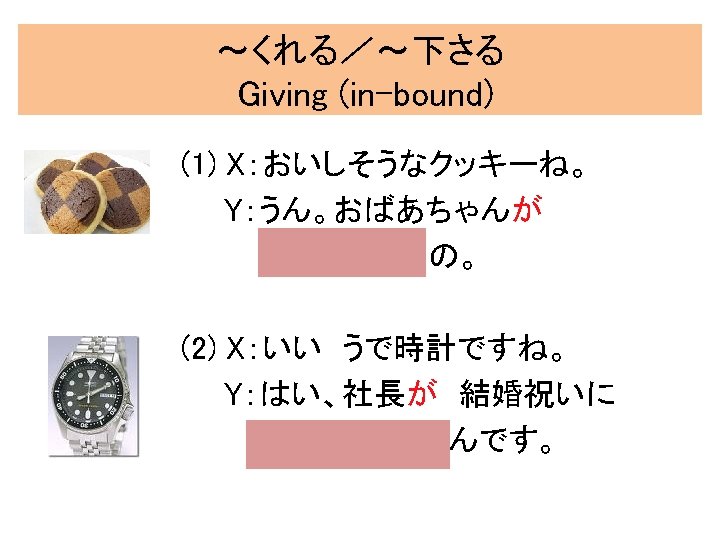
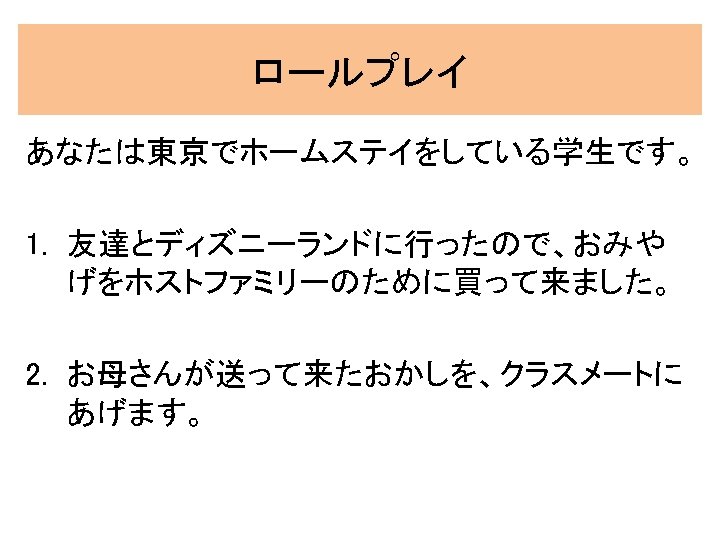
~くれる/~下さる Giving (in-bound) • 友達が 私に 花を くれました。 Giver が (equal/inferior) Recipient に (“I”/ingroup) Object を verb • まきの先生が 私の父に 本を 下さいました。 Giver が (superior) Recipient に (“I”/ingroup) Object を verb • くれる:Giver=equal/inferior, Recipient=“I”, in-group • 下さる: Giver=superior, Recipient=“I”, in-group
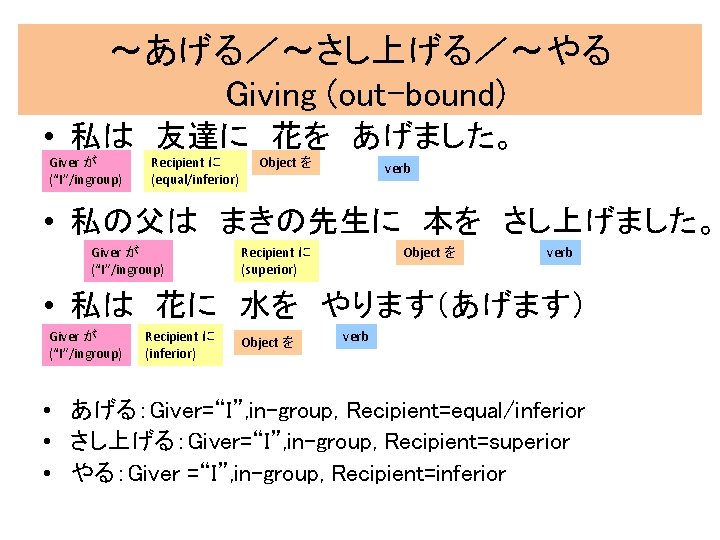
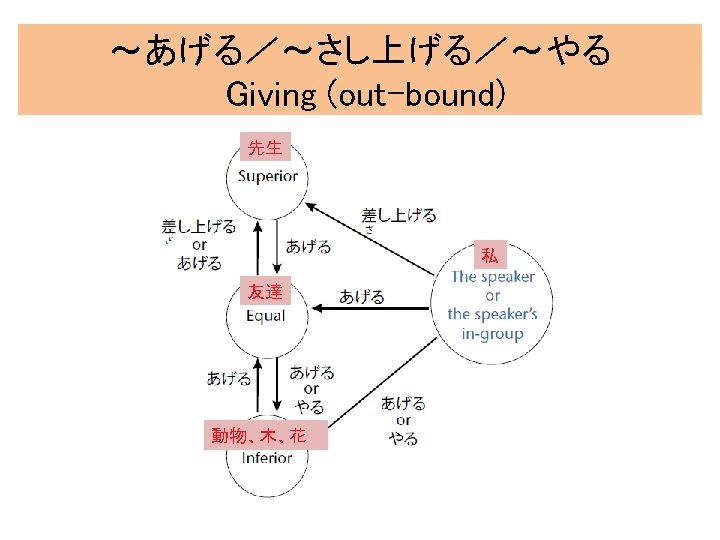
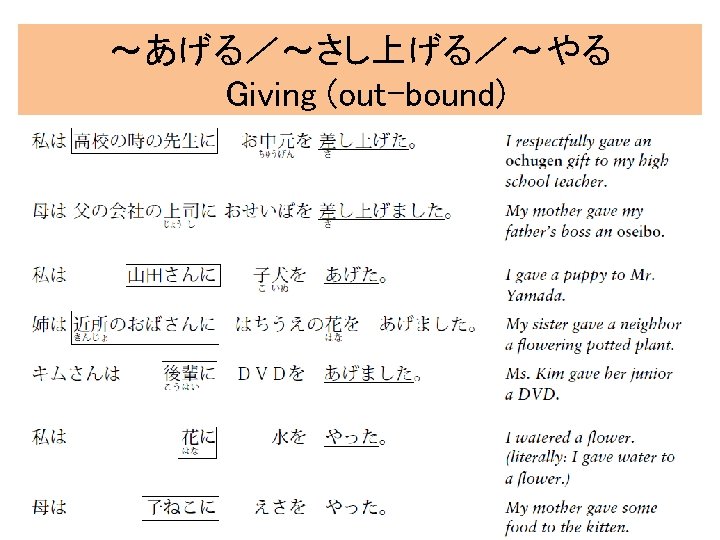
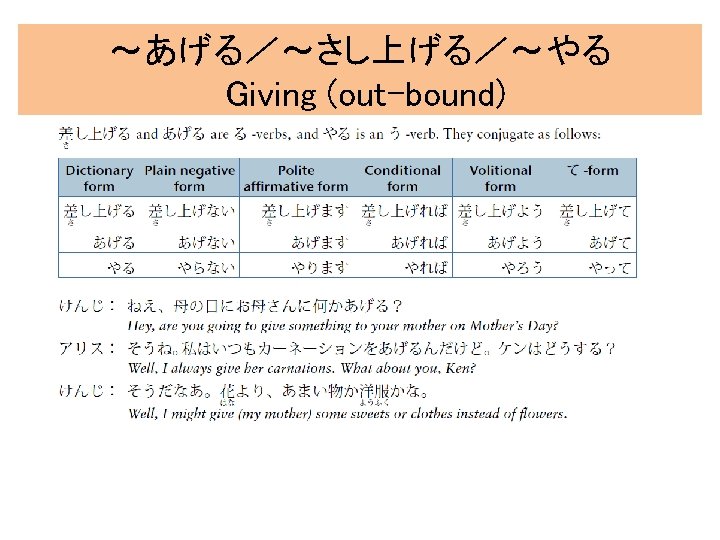
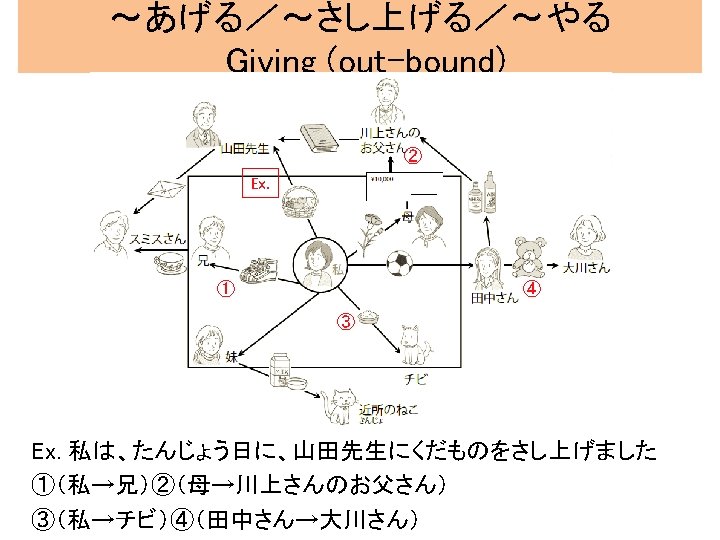
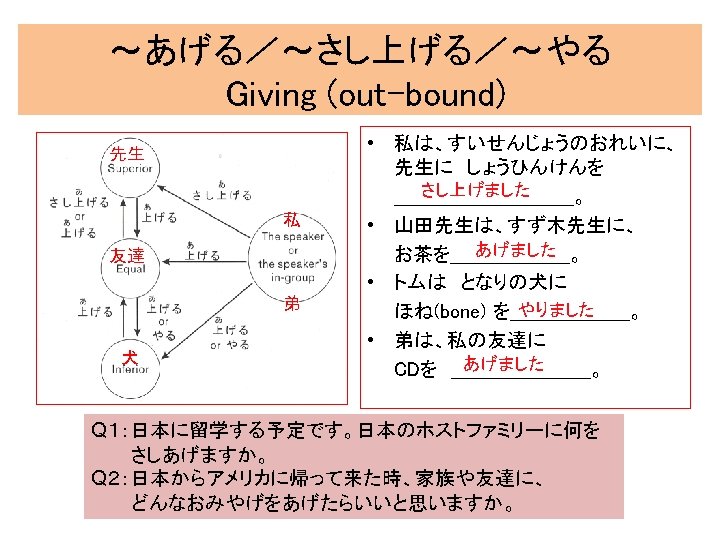
~あげる/~さし上げる/~やる Giving (out-bound) • 私は 友達に 花を あげました。 Giver が (“I”/ingroup) Recipient に (equal/inferior) Object を verb • 私の父は まきの先生に 本を さし上げました。 Giver が (“I”/ingroup) Recipient に (superior) Object を verb • 私は 花に 水を やります(あげます) Giver が (“I”/ingroup) Recipient に (inferior) Object を verb • あげる:Giver=“I”, in-group, Recipient=equal/inferior • さし上げる:Giver=“I”, in-group, Recipient=superior • やる:Giver =“I”, in-group, Recipient=inferior
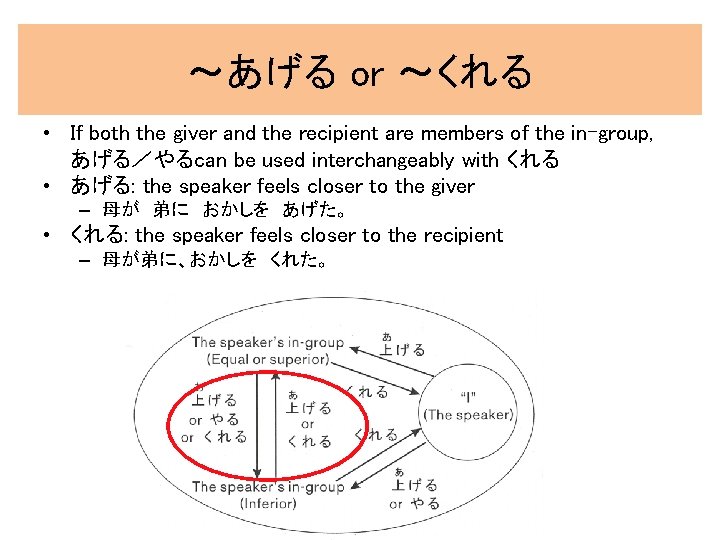
~あげる or ~くれる • If both the giver and the recipient are members of the in-group, あげる/やるcan be used interchangeably with くれる • あげる: the speaker feels closer to the giver – 母が 弟に おかしを あげた。 • くれる: the speaker feels closer to the recipient – 母が弟に、おかしを くれた。
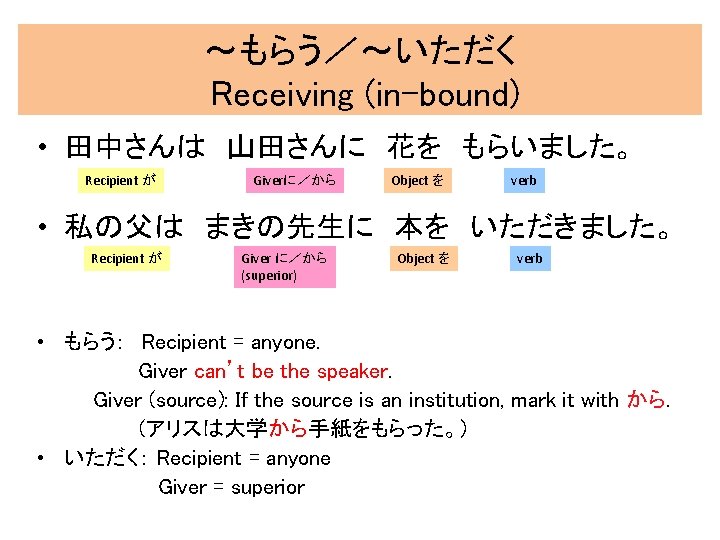
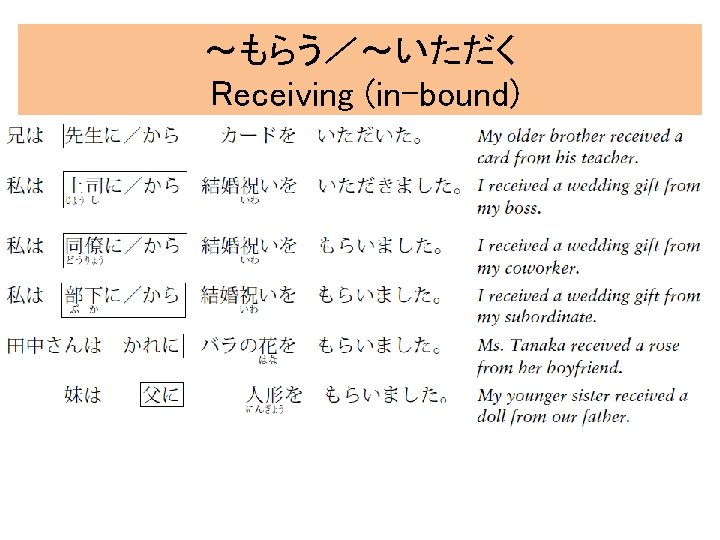
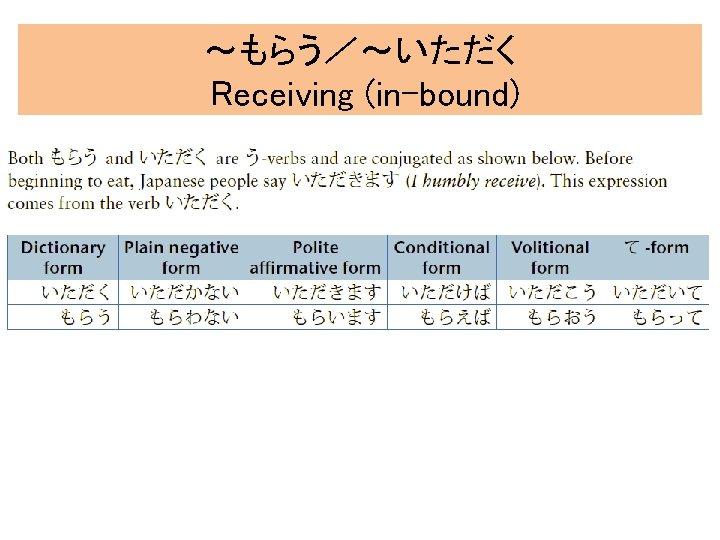
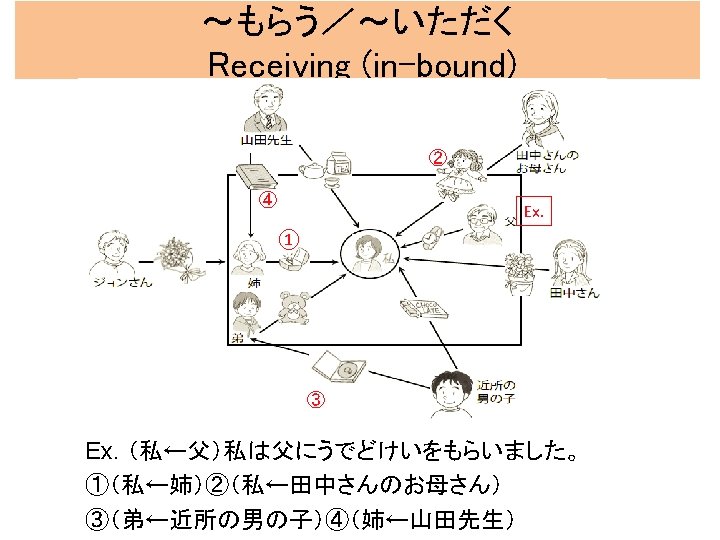
RECEIVING VERBS (IN-BOUND) ~もらう/~いただく
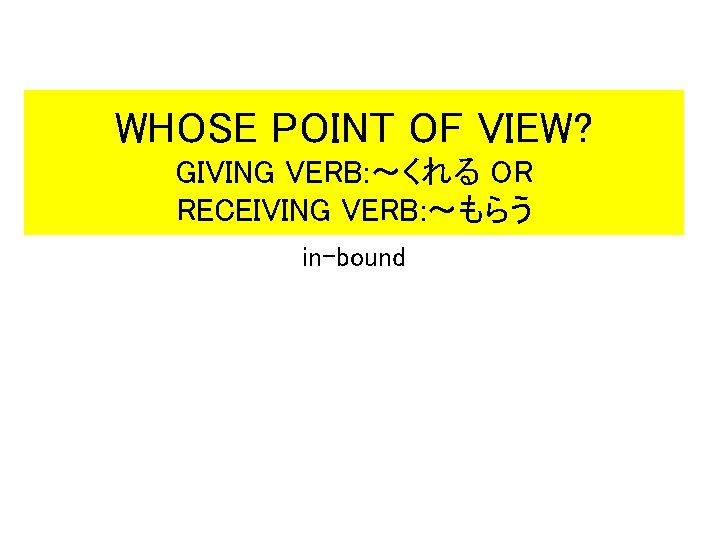
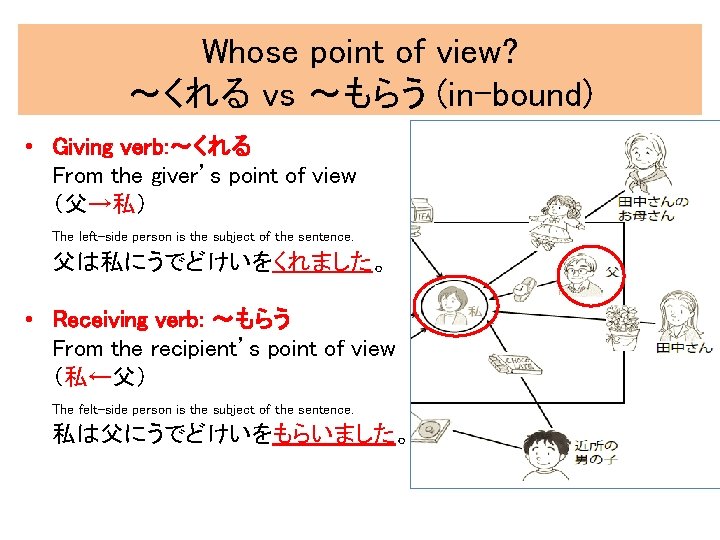
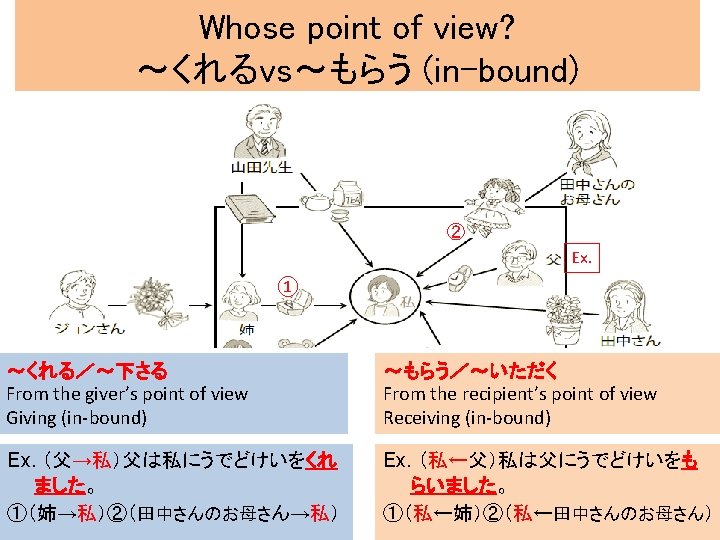
WHOSE POINT OF VIEW? GIVING VERB: ~くれる OR RECEIVING VERB: ~もらう in-bound
Whose point of view? ~くれる vs ~もらう (in-bound) • Giving verb: ~くれる From the giver’s point of view (父→私) The left-side person is the subject of the sentence. 父は私にうでどけいをくれました。 • Receiving verb: ~もらう From the recipient’s point of view (私←父) The felt-side person is the subject of the sentence. 私は父にうでどけいをもらいました。
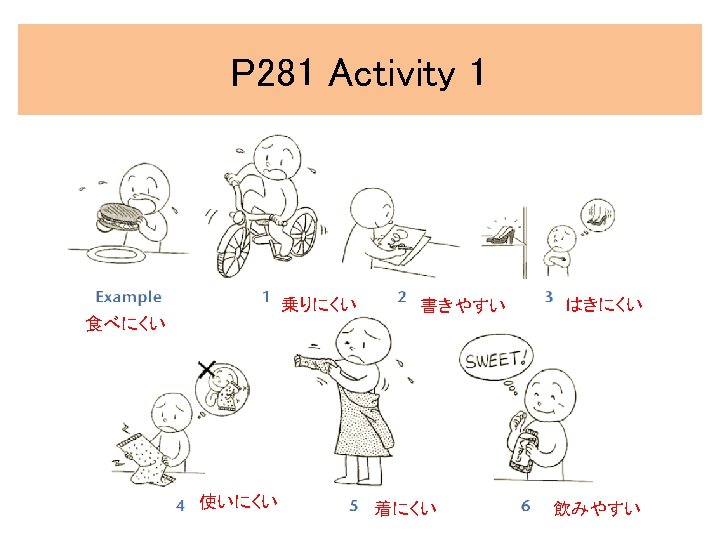
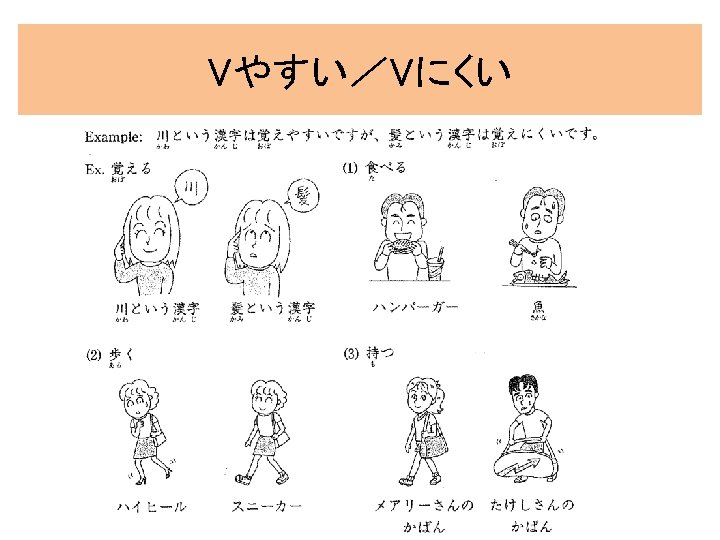
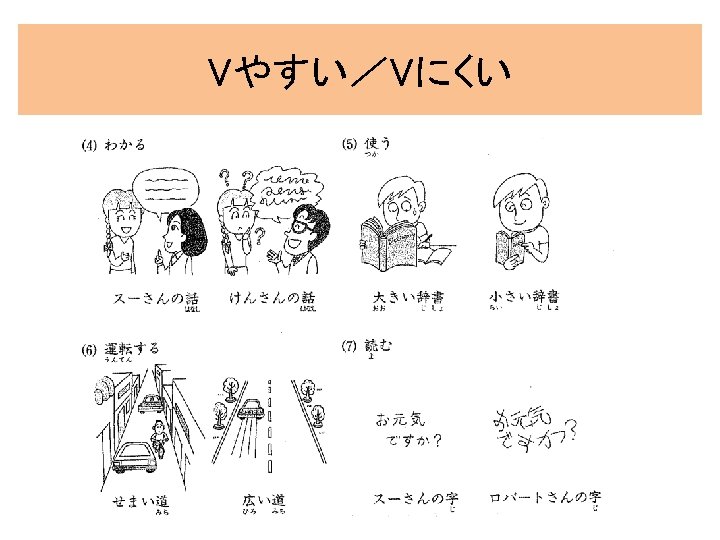
文法2 Expressing the fact that something is easy or hard to do using the stem of the verb + やすい/にくい
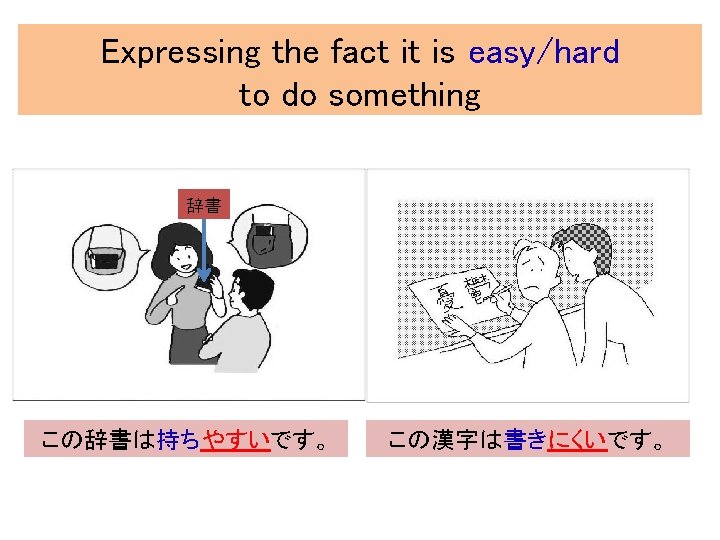
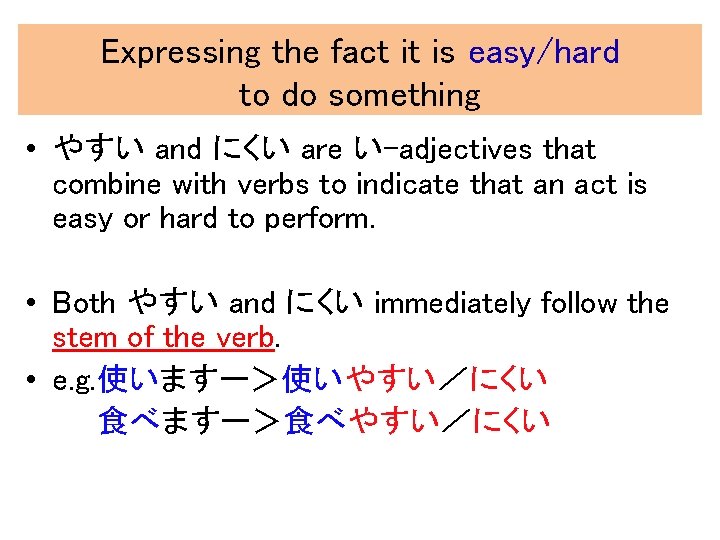
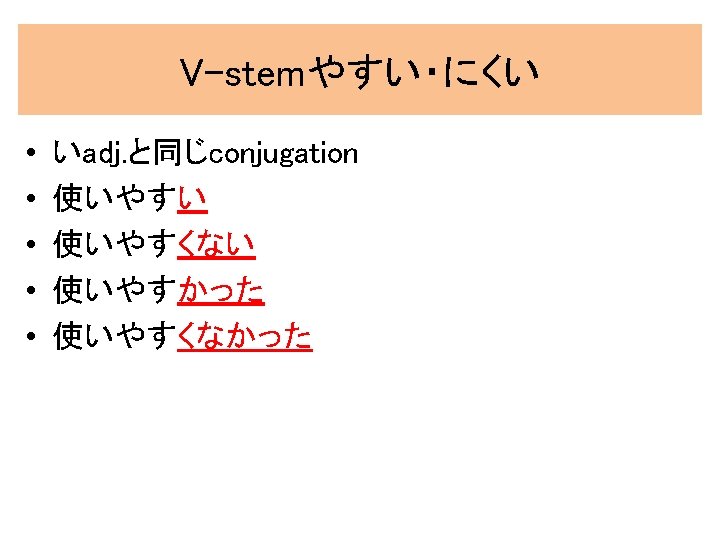
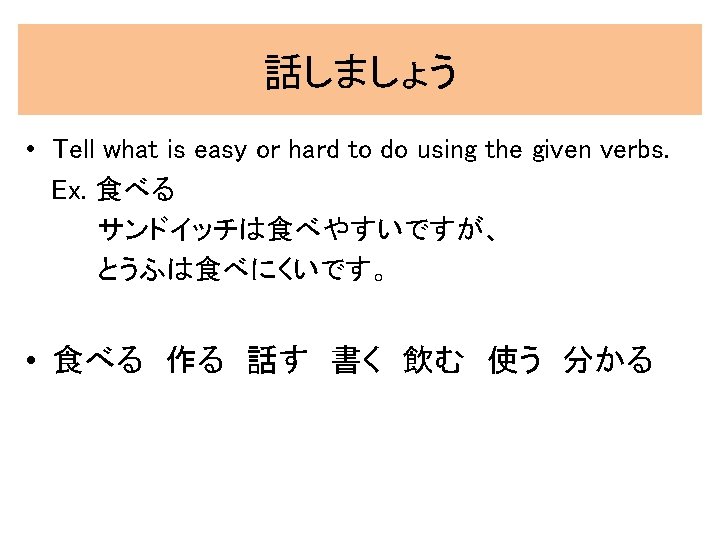
Expressing the fact it is easy/hard to do something • やすい and にくい are い-adjectives that combine with verbs to indicate that an act is easy or hard to perform. • Both やすい and にくい immediately follow the stem of the verb. • e. g. 使いますー>使いやすい/にくい 食べますー>食べやすい/にくい
文法3 -A Listing actions and states using the plain form + し
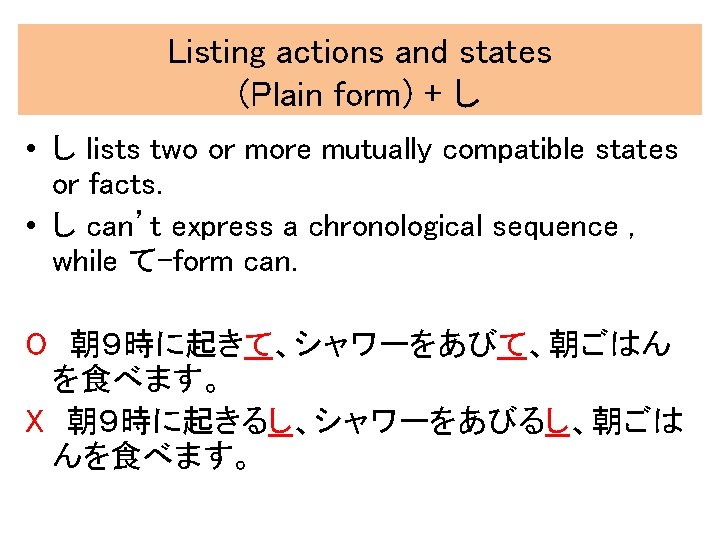
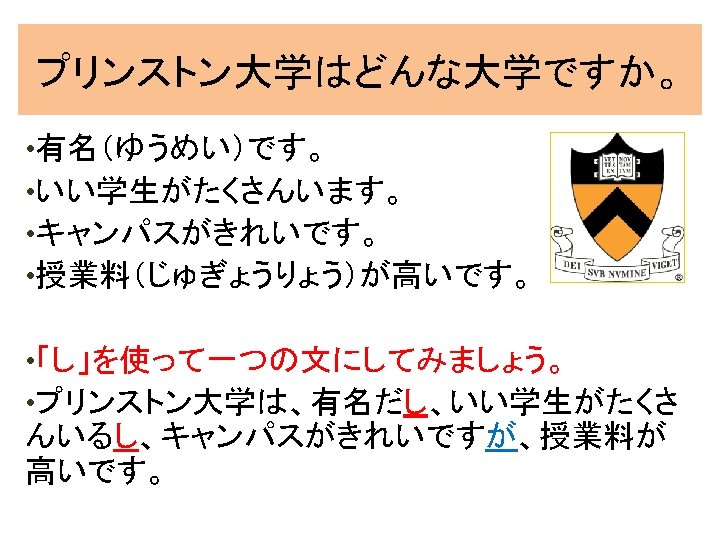
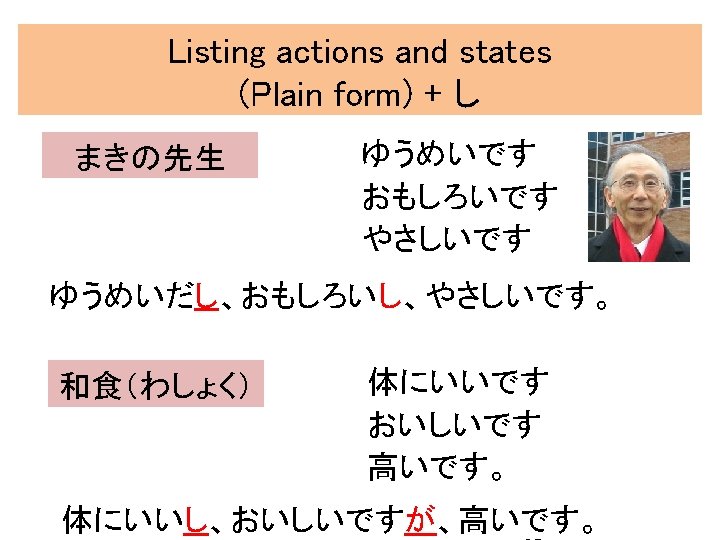
Listing actions and states (Plain form) + し • し lists two or more mutually compatible states or facts. • し can’t express a chronological sequence , while て-form can. O 朝9時に起きて、シャワーをあびて、朝ごはん を食べます。 X 朝9時に起きるし、シャワーをあびるし、朝ごは んを食べます。
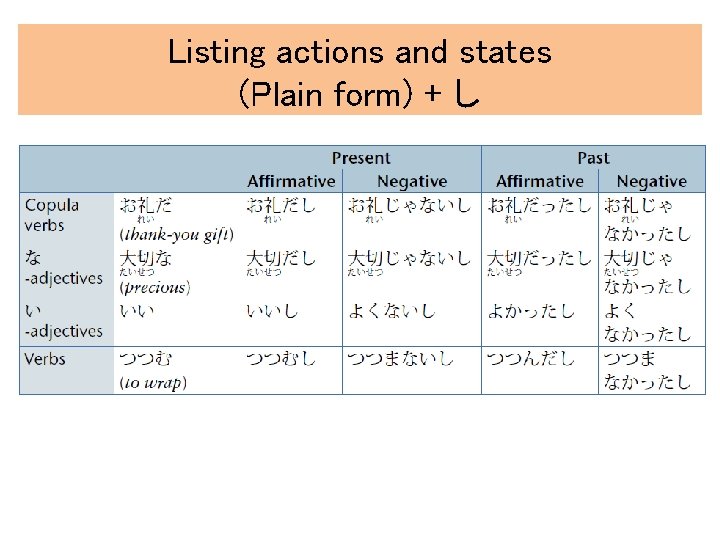
Listing actions and states (Plain form) + し
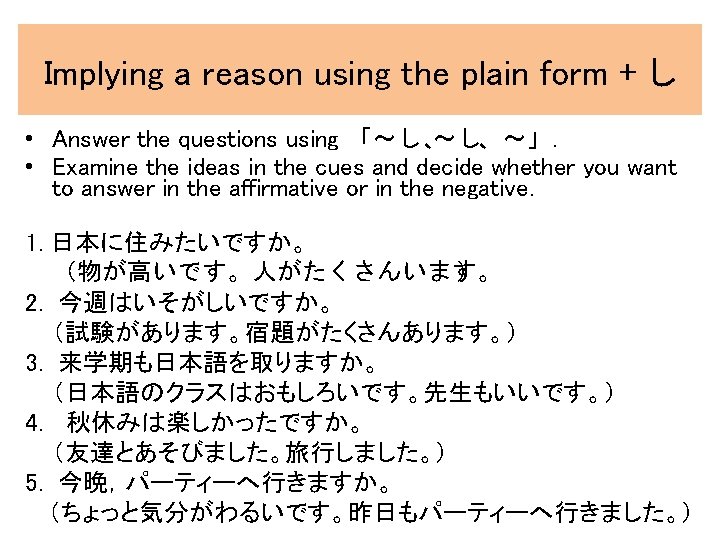
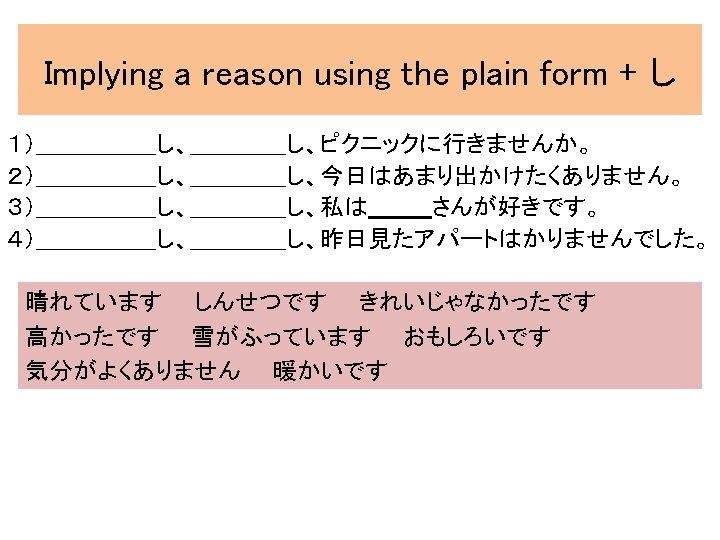
文法3 -B Implying a reason using the plain form + し
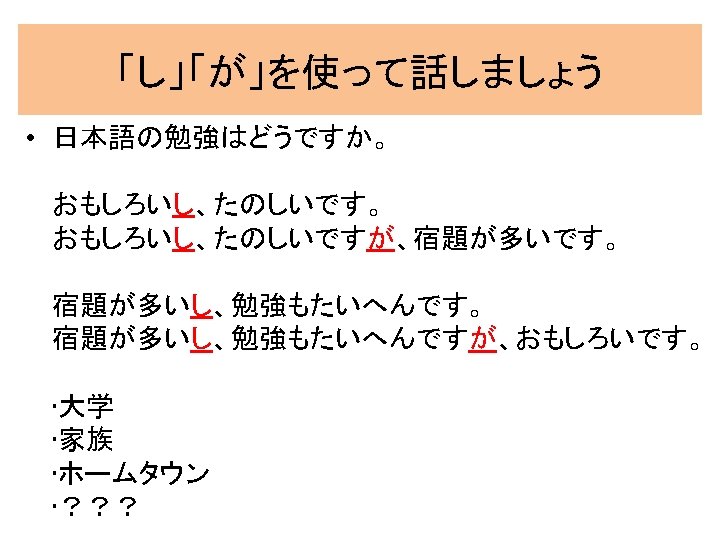
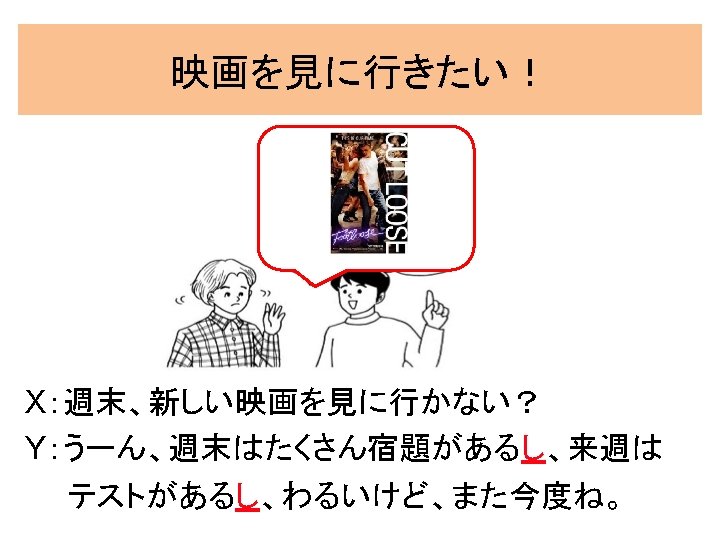
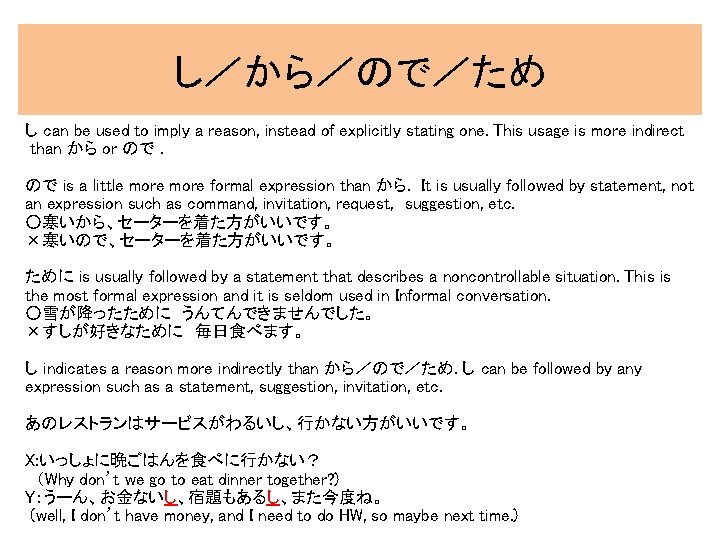
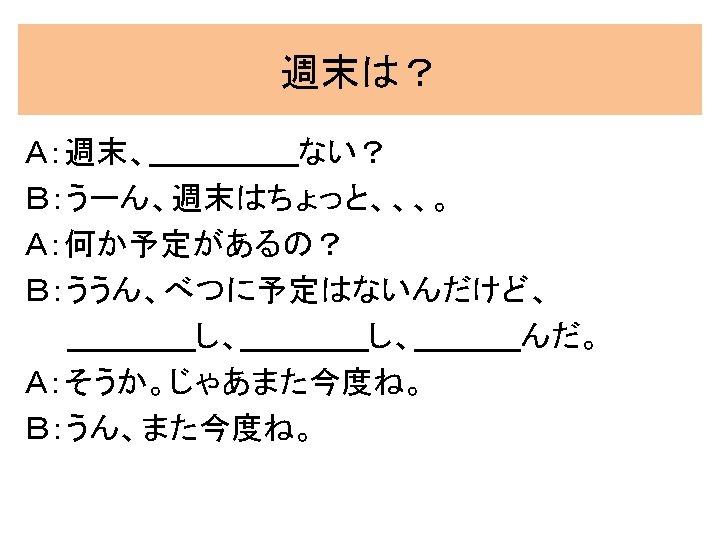
し/から/ので/ため し can be used to imply a reason, instead of explicitly stating one. This usage is more indirect than から or ので. ので is a little more formal expression than から. It is usually followed by statement, not an expression such as command, invitation, request, suggestion, etc. ○寒いから、セーターを着た方がいいです。 ×寒いので、セーターを着た方がいいです。 ために is usually followed by a statement that describes a noncontrollable situation. This is the most formal expression and it is seldom used in Informal conversation. ○雪が降ったために うんてんできませんでした。 ×すしが好きなために 毎日食べます。 し indicates a reason more indirectly than から/ので/ため. し can be followed by any expression such as a statement, suggestion, invitation, etc. あのレストランはサービスがわるいし、行かない方がいいです。 X: いっしょに晩ごはんを食べに行かない? (Why don’t we go to eat dinner together? ) Y:うーん、お金ないし、宿題もあるし、また今度ね。 (well, I don’t have money, and I need to do HW, so maybe next time. )
文法4 Trying something using 〜てみる
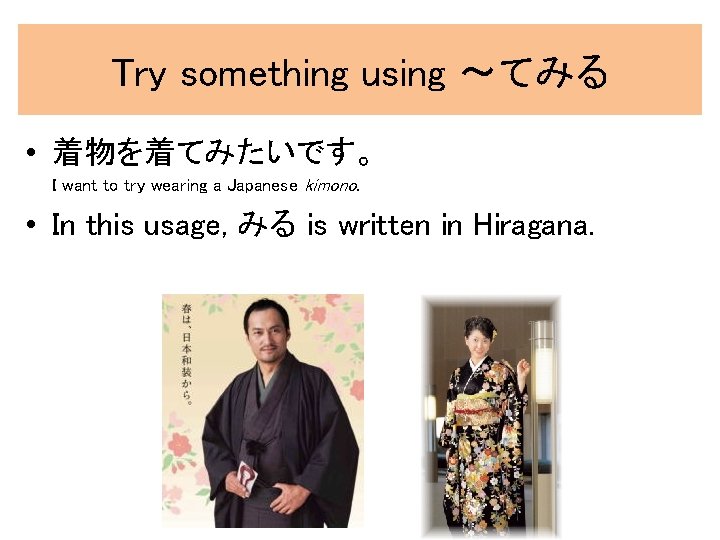
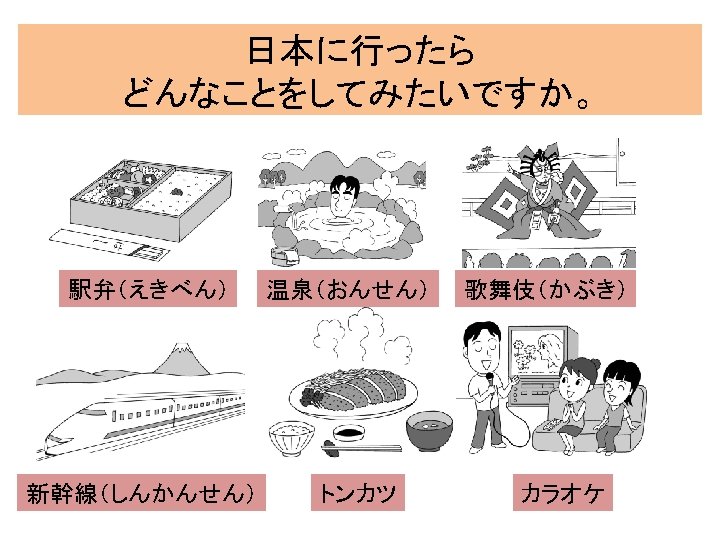
Try something using 〜てみる • 着物を着てみたいです。 I want to try wearing a Japanese kimono. • In this usage, みる is written in Hiragana.
文法5 -A/B A. Using direct quotes with と言う, 〜 say “〜” B. Using indirect quote Xは(Yに)Clause (plain form) と言う, X says (tells Y) that 〜
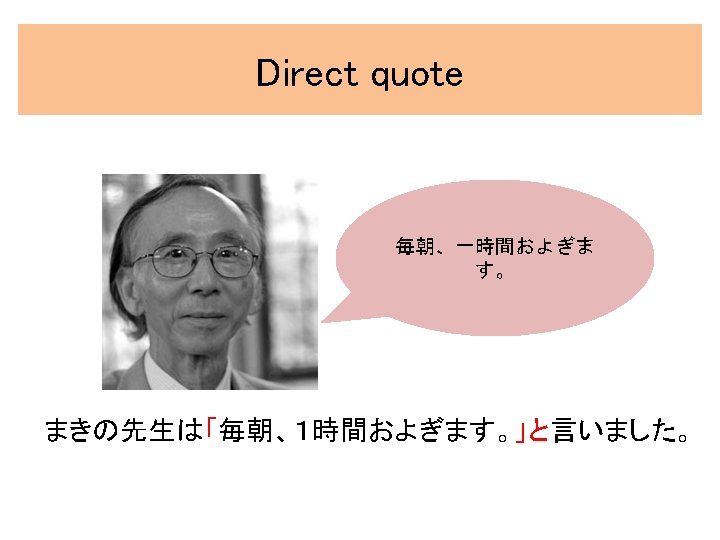
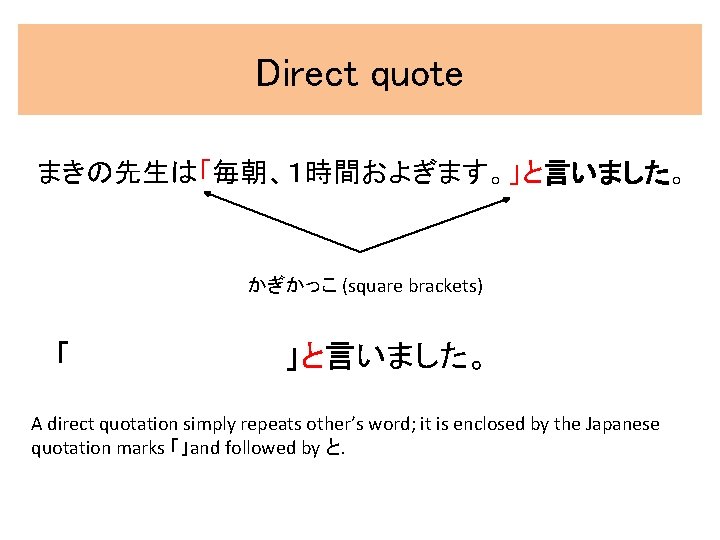
Direct quote まきの先生は「毎朝、1時間およぎます。」と言いました。 かぎかっこ (square brackets) 「 」と言いました。 A direct quotation simply repeats other’s word; it is enclosed by the Japanese quotation marks 「」and followed by と.
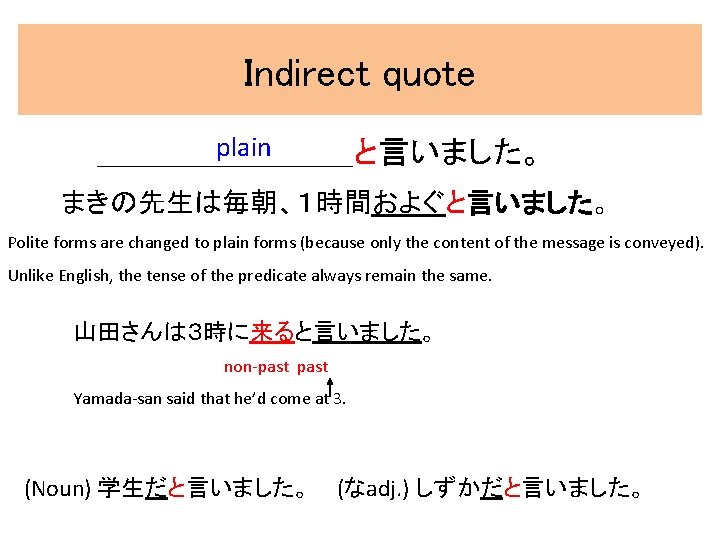
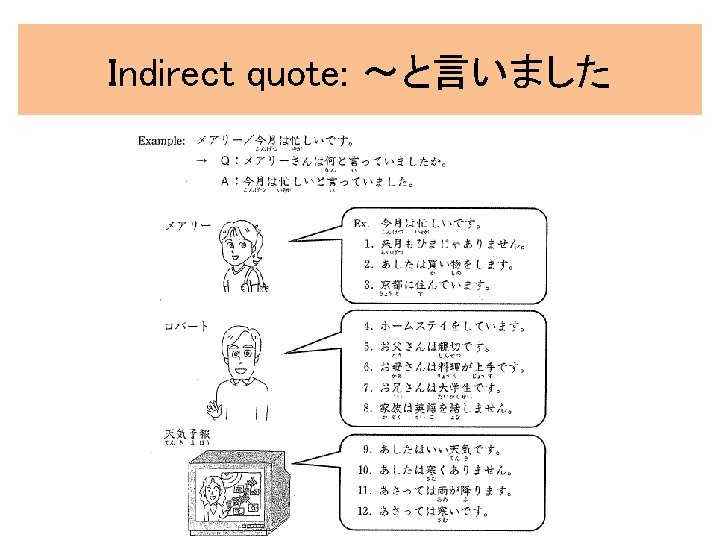
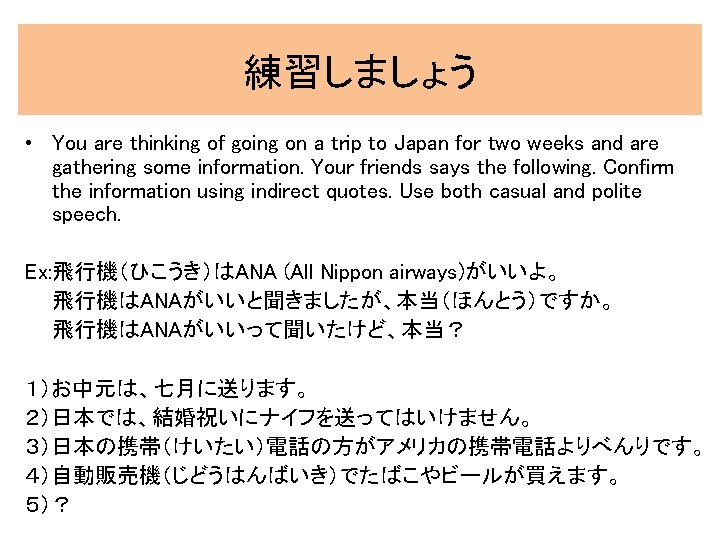
Indirect quote plain ____と言いました。 まきの先生は毎朝、1時間およぐと言いました。 Polite forms are changed to plain forms (because only the content of the message is conveyed). Unlike English, the tense of the predicate always remain the same. 山田さんは3時に来ると言いました。 non-past Yamada-san said that he’d come at 3. (Noun) 学生だと言いました。 (なadj. ) しずかだと言いました。
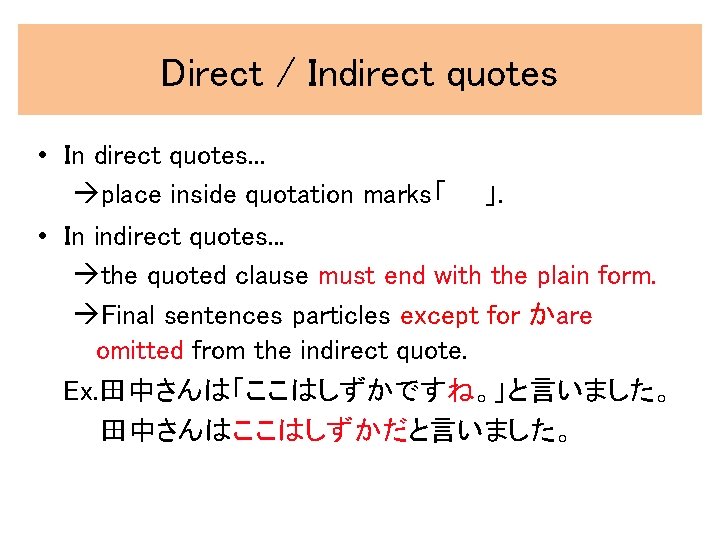
Direct / Indirect quotes • In direct quotes. . . place inside quotation marks「 」. • In indirect quotes. . . the quoted clause must end with the plain form. Final sentences particles except for かare omitted from the indirect quote. Ex. 田中さんは「ここはしずかですね。」と言いました。 田中さんはここはしずかだと言いました。
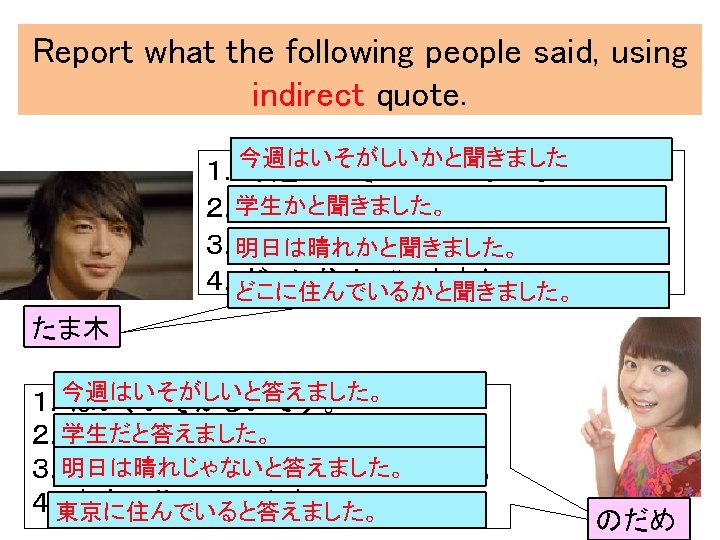
Indirect quote: 〜と言いました Indirect 〜と言いました 81
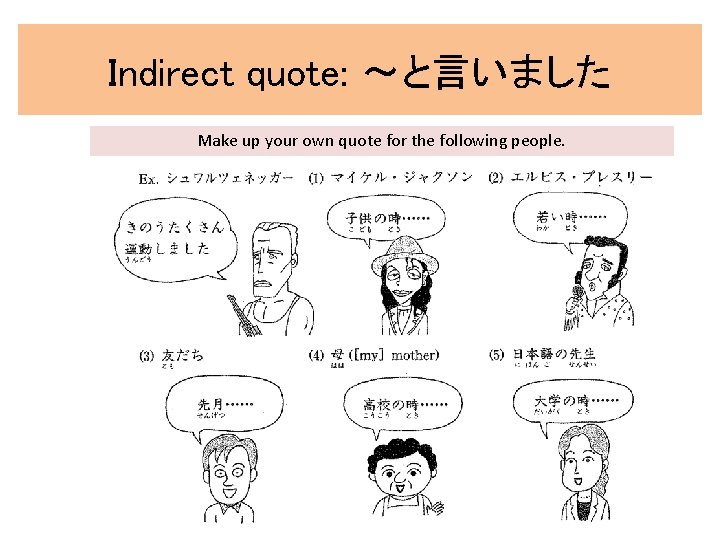
Indirect quote: 〜と言いました Make up your own quote for the following people. 82
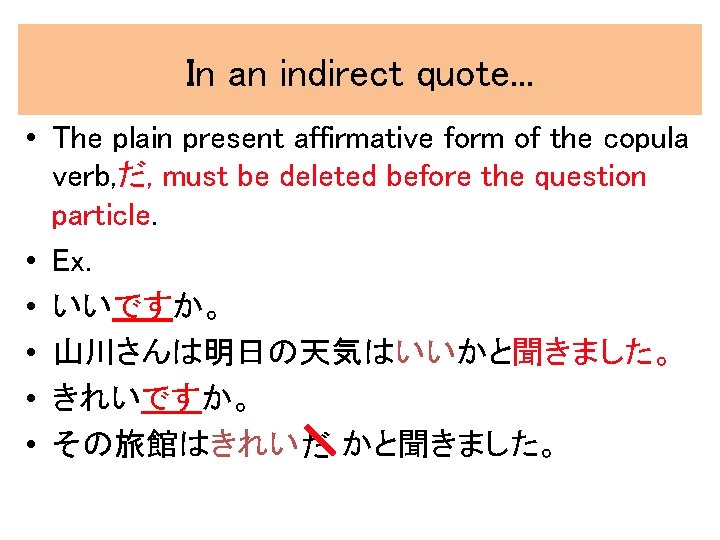
In an indirect quote. . . • The plain present affirmative form of the copula verb, だ, must be deleted before the question particle. • Ex. • いいですか。 • 山川さんは明日の天気はいいかと聞きました。 • きれいですか。 • その旅館はきれい かと聞きました。 だ
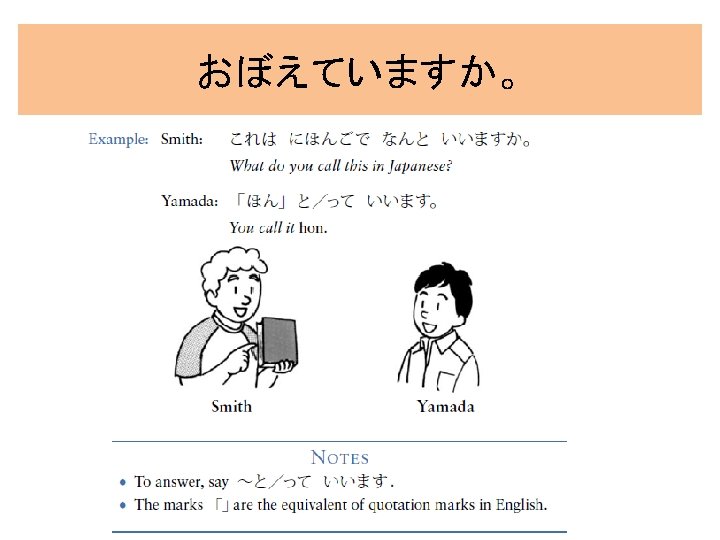
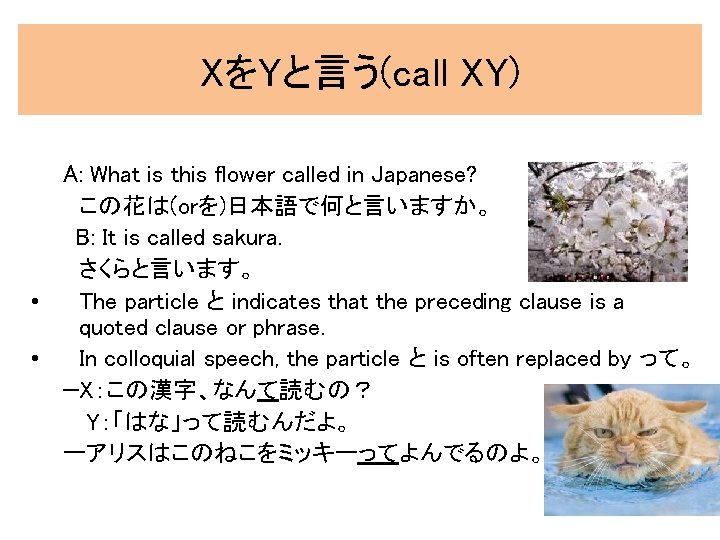
XをYと言う(call XY) A: What is this flower called in Japanese? この花は(orを)日本語で何と言いますか。 B: It is called sakura. さくらと言います。 • The particle と indicates that the preceding clause is a quoted clause or phrase. • In colloquial speech, the particle と is often replaced by って。 —X:この漢字、なんて読むの? Y:「はな」って読むんだよ。 ーアリスはこのねこをミッキーってよんでるのよ。
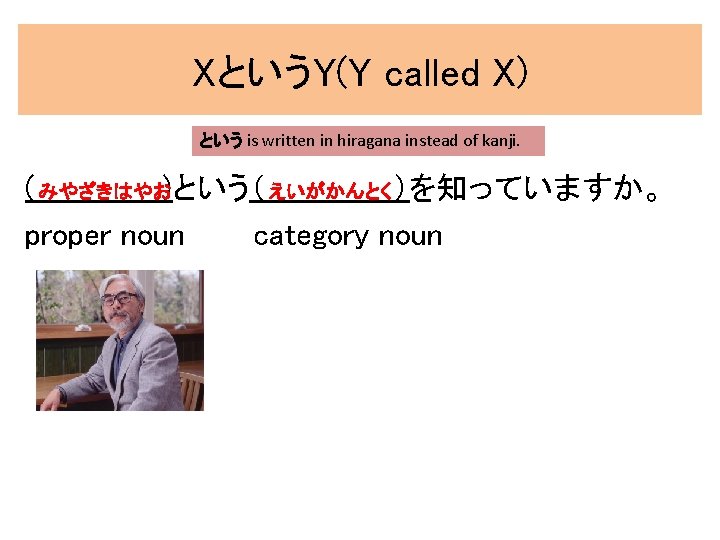
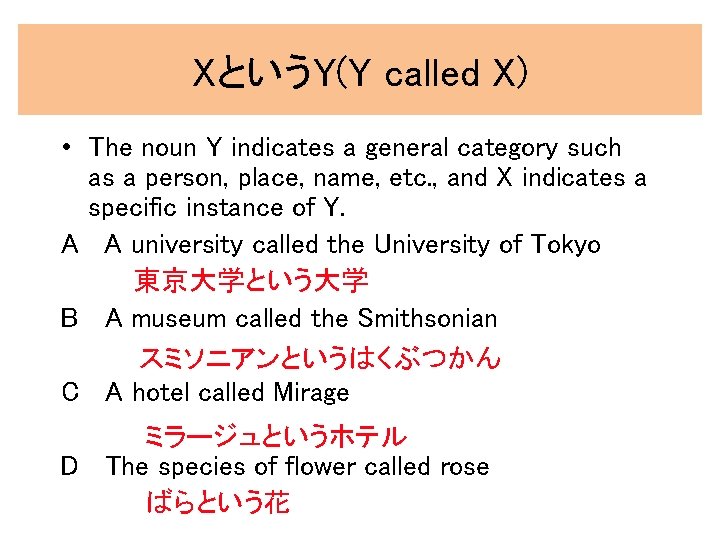
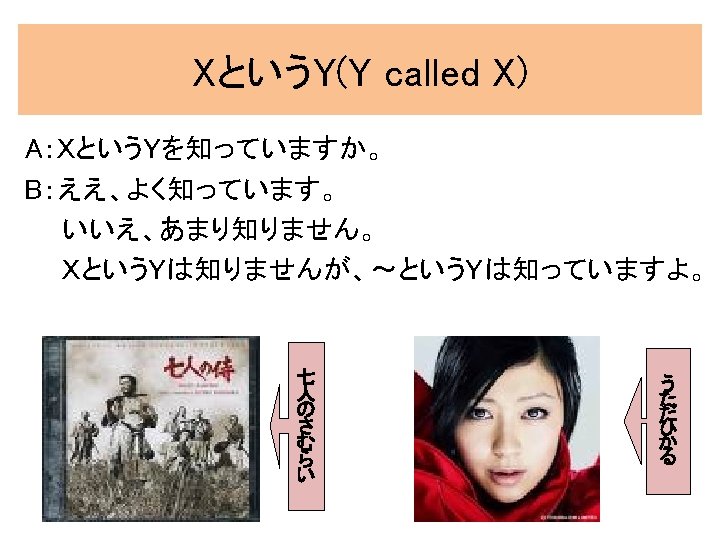
XというY(Y called X) • The noun Y indicates a general category such as a person, place, name, etc. , and X indicates a specific instance of Y. A A university called the University of Tokyo 東京大学という大学 B A museum called the Smithsonian スミソニアンというはくぶつかん C A hotel called Mirage ミラージュというホテル D The species of flower called rose ばらという花
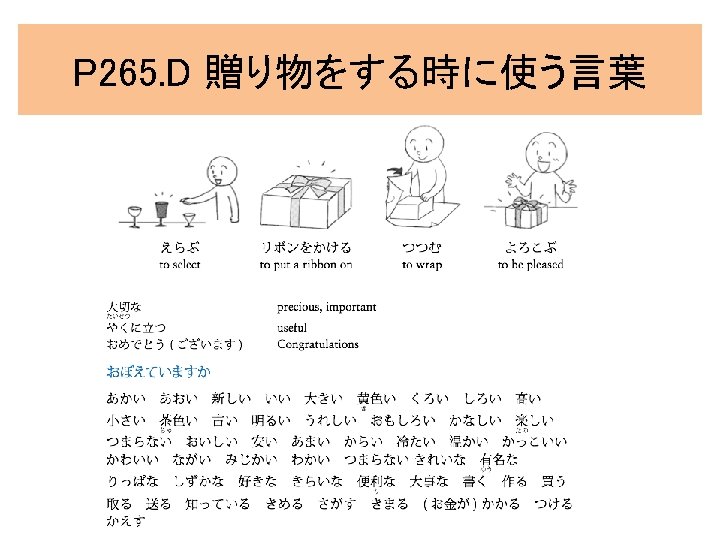
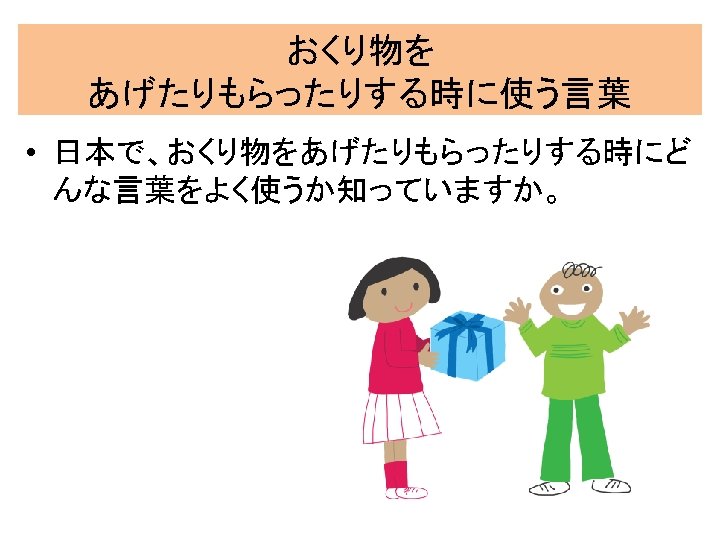
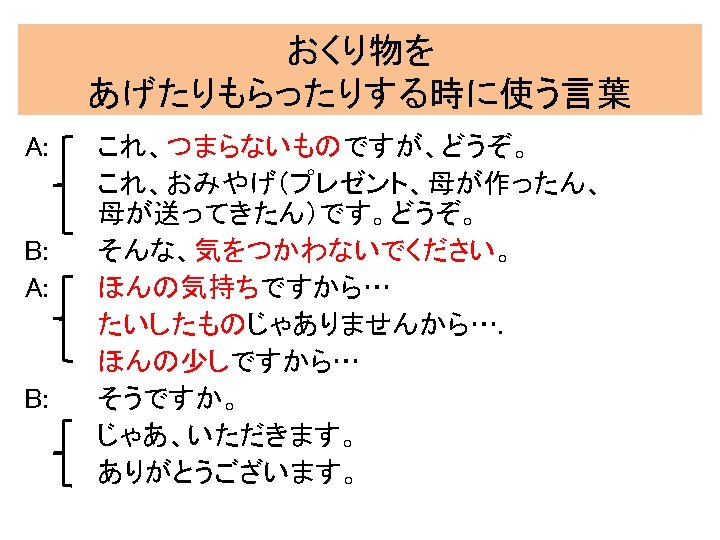
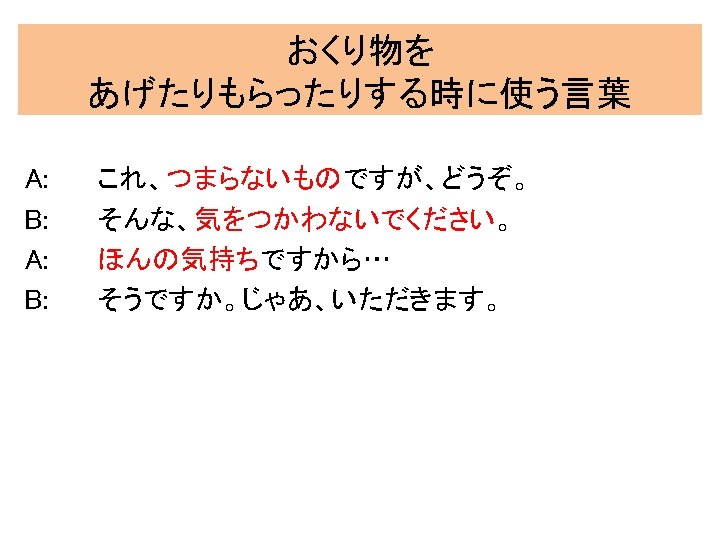
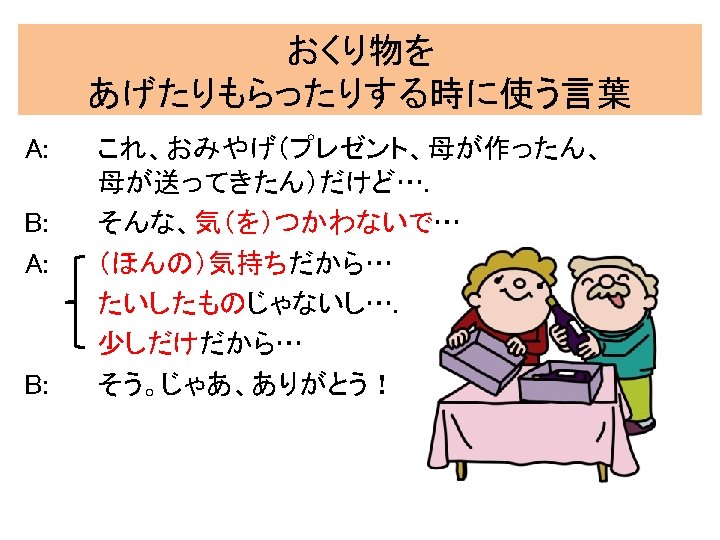
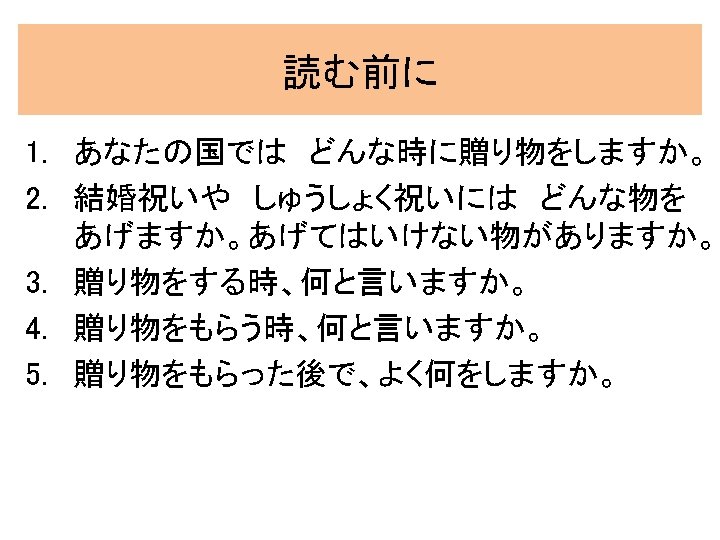
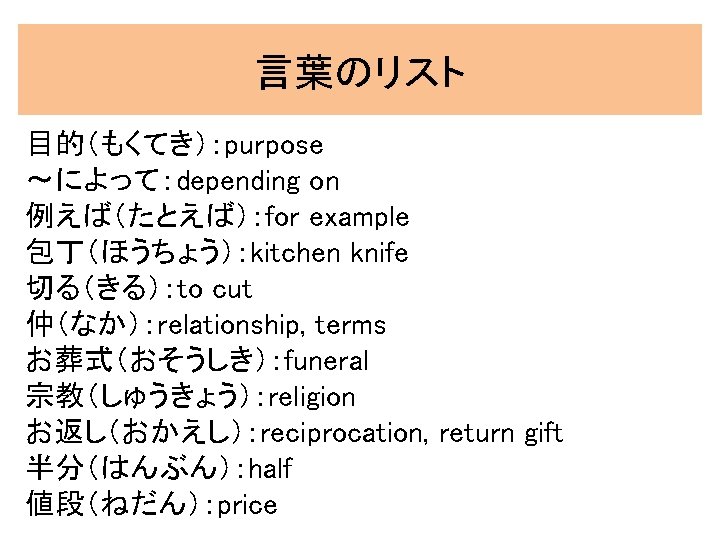
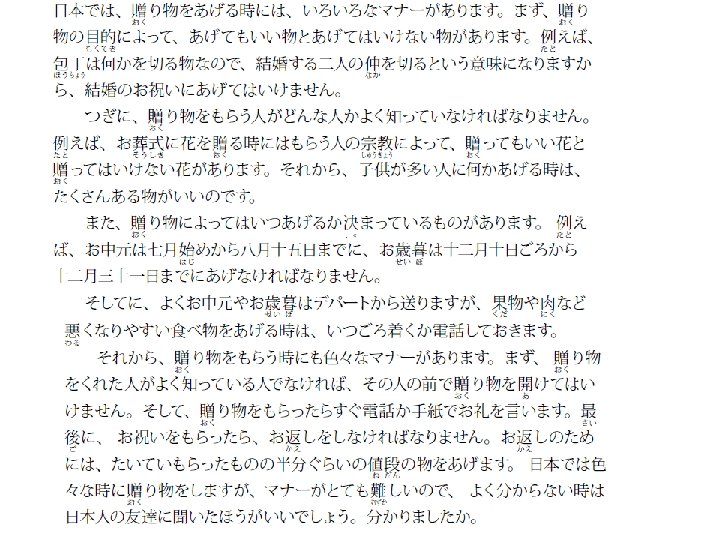
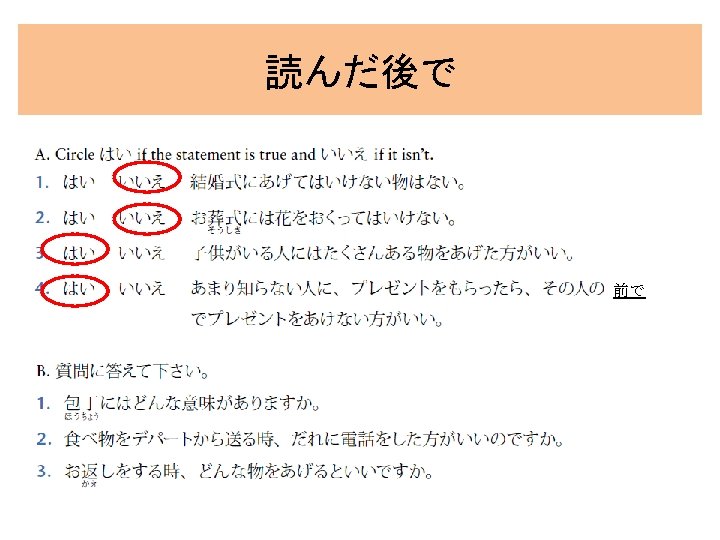
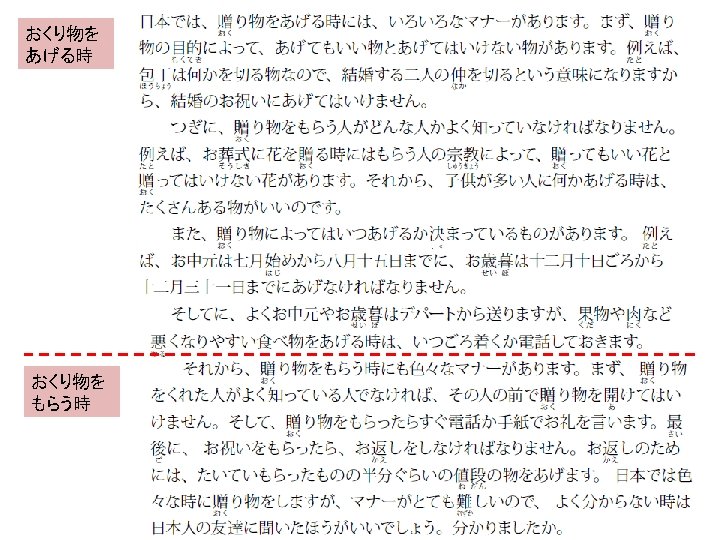
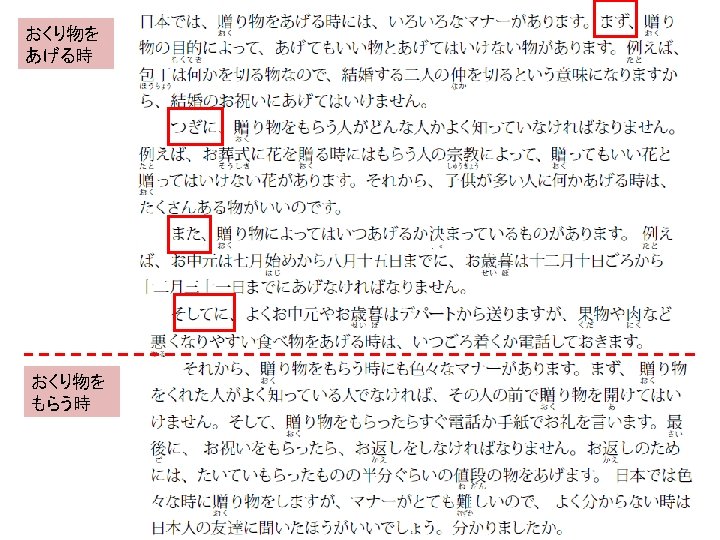
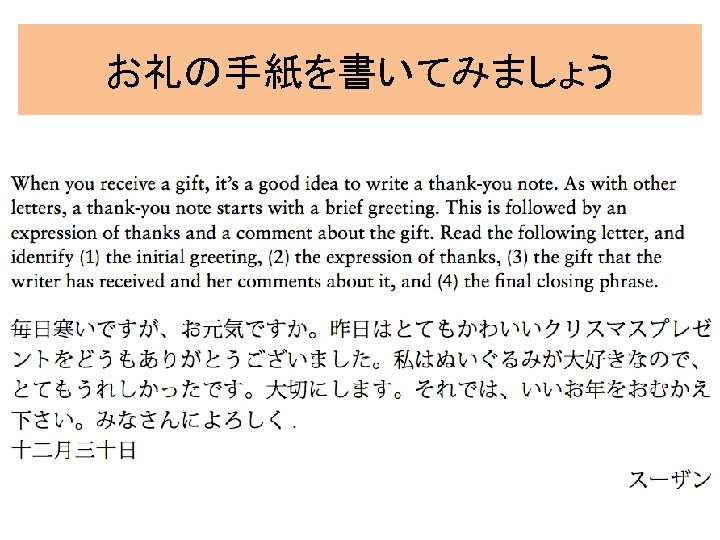
聞き上手話し上手 Phrases used when giving or receiving gifts
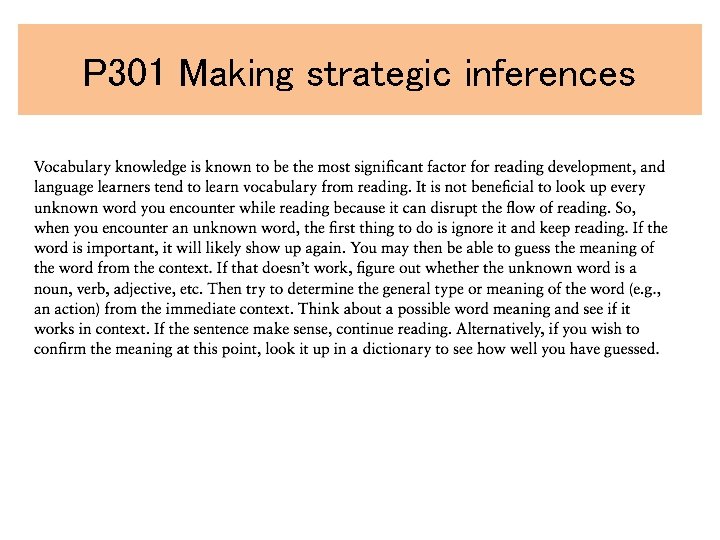
P 301 Making strategic inferences
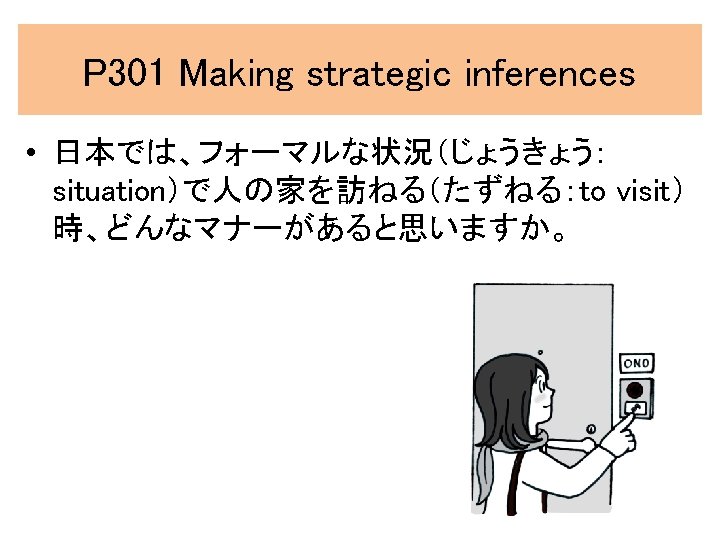
P 301 Making strategic inferences