
Na situations Hyponatremia Dr Madhumati S Otiv Consultant









- Slides: 55
Na situations- Hyponatremia Dr Madhumati S Otiv Consultant, PICU, KEM Hospital, Pune
• Hypo-Na very common in sick children • Associated with greater morbidity and mortality
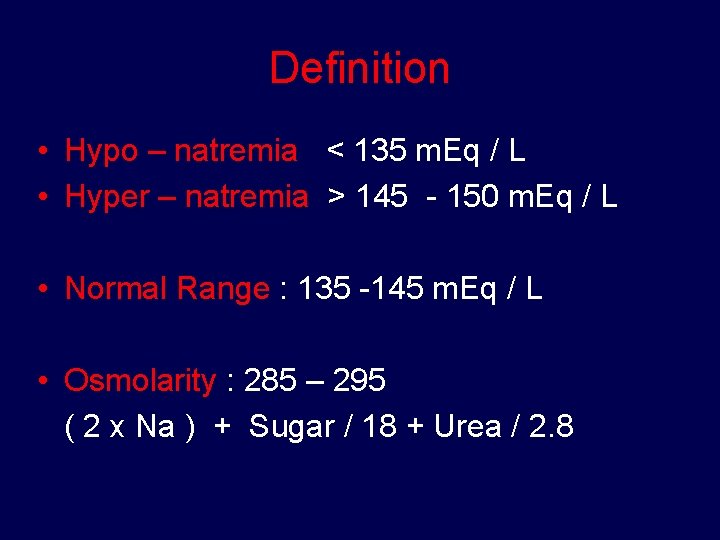
Definition • Hypo – natremia < 135 m. Eq / L • Hyper – natremia > 145 - 150 m. Eq / L • Normal Range : 135 -145 m. Eq / L • Osmolarity : 285 – 295 ( 2 x Na ) + Sugar / 18 + Urea / 2. 8
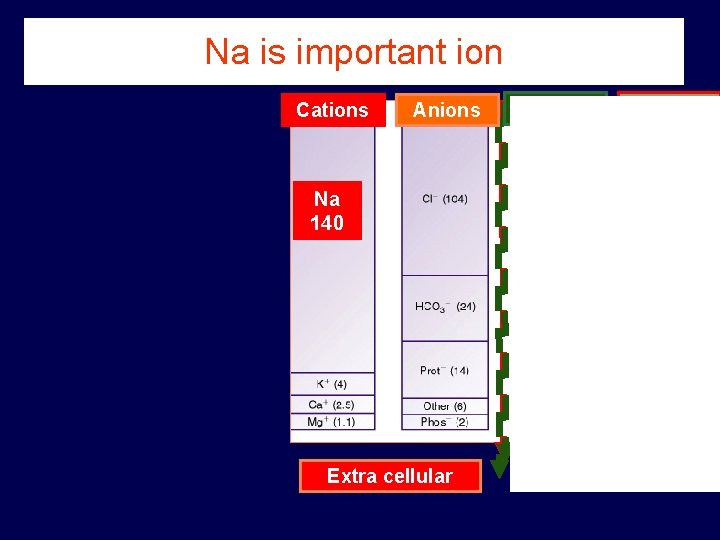
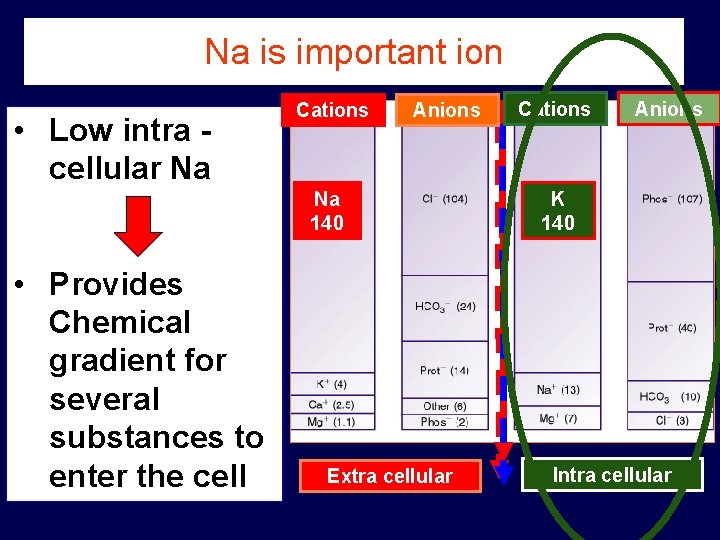
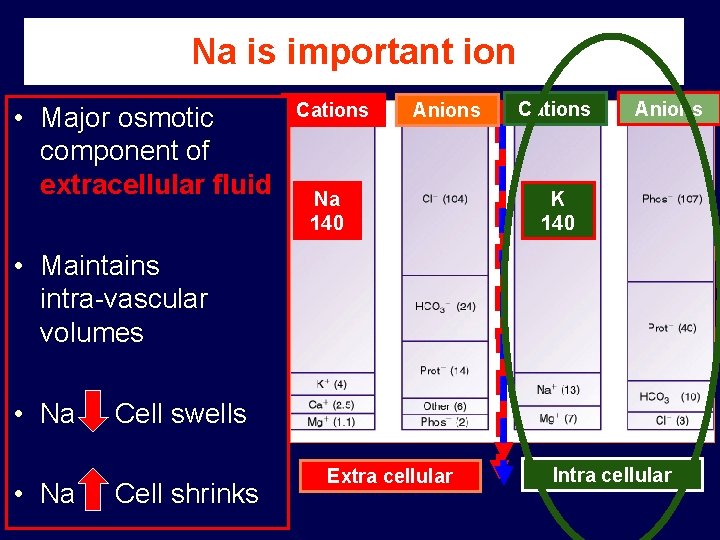
Na is important ion Cations Anions Na 140 Extra cellular Cations Anions K 140 Intra cellular
Na is important ion • Low intra cellular Na Cations Anions Na 140 • Provides Chemical gradient for several substances to enter the cell Extra cellular Cations Anions K 140 Intra cellular
Na is important ion • Major osmotic component of extracellular fluid Cations Anions Na 140 Cations Anions K 140 • Maintains intra-vascular volumes • Na Cell swells Cell shrinks Extra cellular Intra cellular
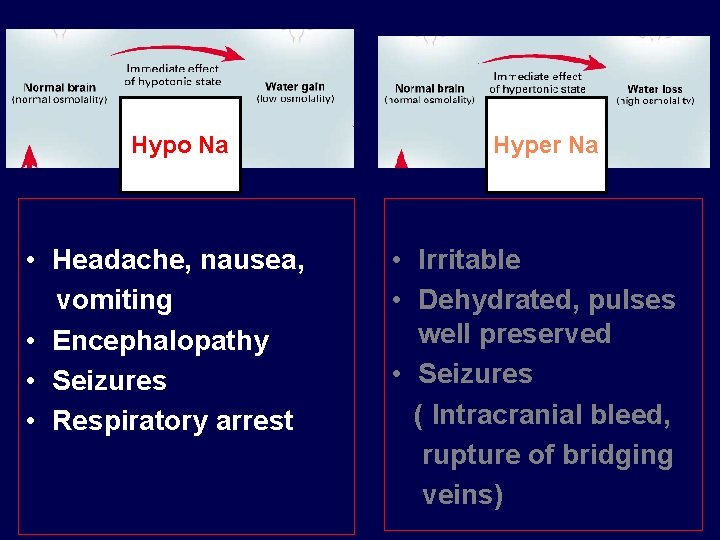
Hypo Na • Headache, nausea, vomiting • Encephalopathy • Seizures • Respiratory arrest Hyper Na • Irritable • Dehydrated, pulses well preserved • Seizures ( Intracranial bleed, rupture of bridging veins)
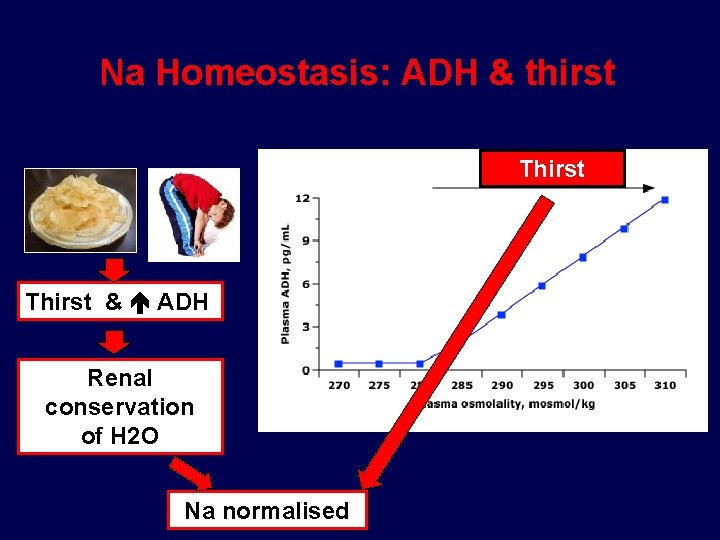
Na Homeostasis: ADH & thirst Thirst & ADH Renal conservation of H 2 O Na normalised
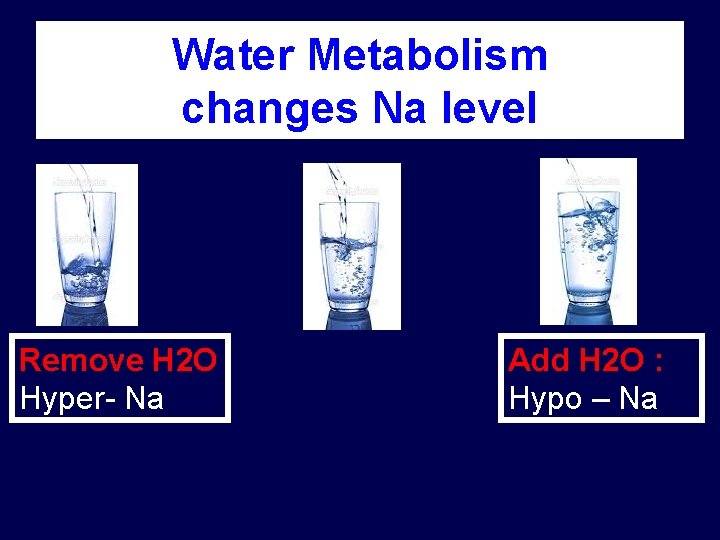
Water Metabolism changes Na level Remove H 2 O Hyper- Na Add H 2 O : Hypo – Na
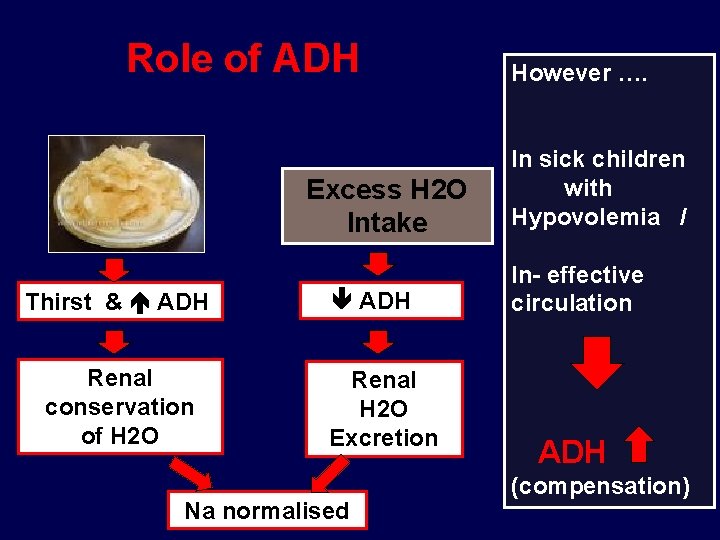
Role of ADH Excess H 2 O Intake Thirst & ADH Renal conservation of H 2 O ADH Renal H 2 O Excretion Na normalised However …. In sick children with Hypovolemia / In- effective circulation ADH (compensation)
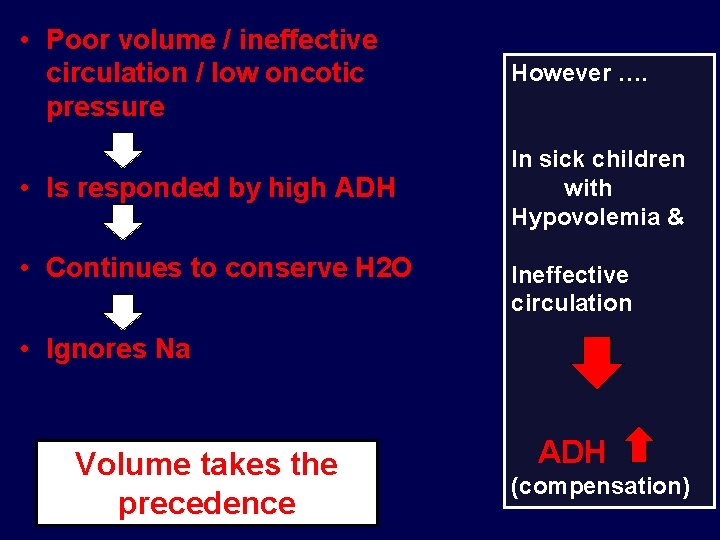
• Poor volume / ineffective circulation / low oncotic pressure However …. • Is responded by high ADH In sick children with Hypovolemia & • Continues to conserve H 2 O Ineffective circulation • Ignores Na Volume takes the precedence ADH (compensation)
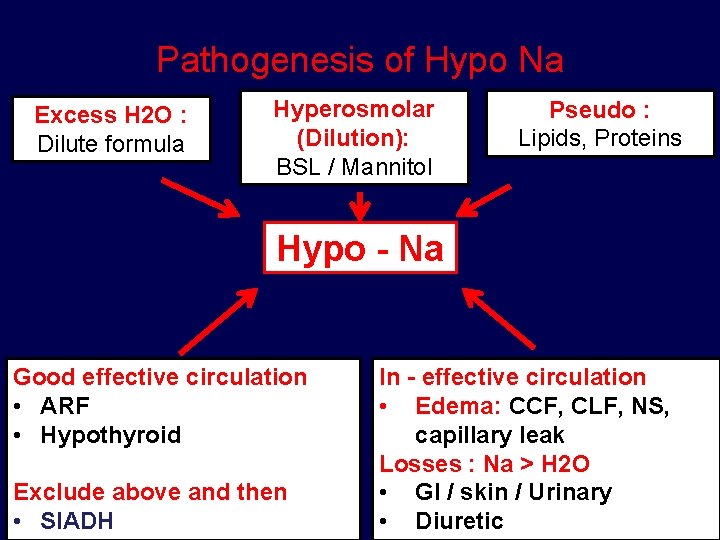
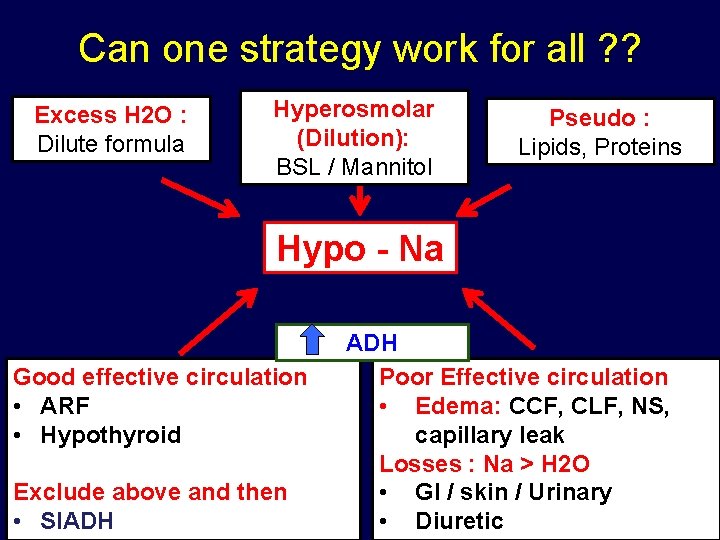
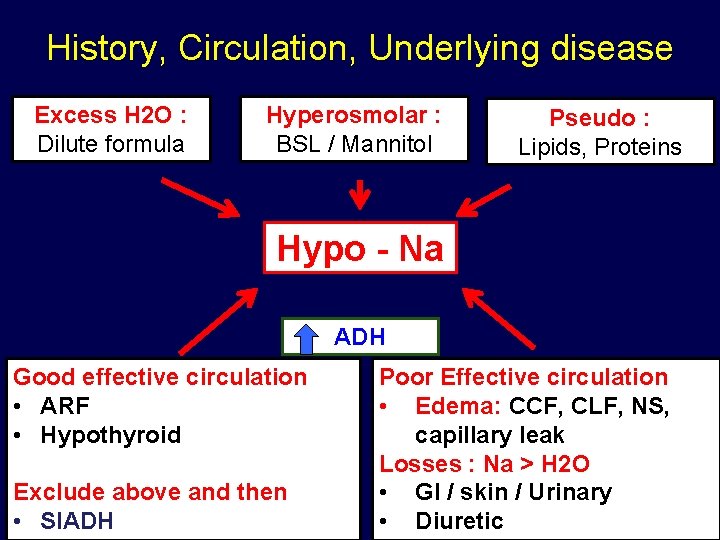
Pathogenesis of Hypo Na Excess H 2 O : Dilute formula Hyperosmolar (Dilution): BSL / Mannitol Pseudo : Lipids, Proteins Hypo - Na Good effective circulation • ARF • Hypothyroid Exclude above and then • SIADH In - effective circulation • Edema: CCF, CLF, NS, capillary leak Losses : Na > H 2 O • GI / skin / Urinary • Diuretic
Can one strategy work for all ? ? Excess H 2 O : Dilute formula Hyperosmolar (Dilution): BSL / Mannitol Pseudo : Lipids, Proteins Hypo - Na Good effective circulation • ARF • Hypothyroid Exclude above and then • SIADH Poor Effective circulation • Edema: CCF, CLF, NS, capillary leak Losses : Na > H 2 O • GI / skin / Urinary • Diuretic
History, Circulation, Underlying disease Excess H 2 O : Dilute formula Hyperosmolar : BSL / Mannitol Pseudo : Lipids, Proteins Hypo - Na ADH Good effective circulation • ARF • Hypothyroid Exclude above and then • SIADH Poor Effective circulation • Edema: CCF, CLF, NS, capillary leak Losses : Na > H 2 O • GI / skin / Urinary • Diuretic
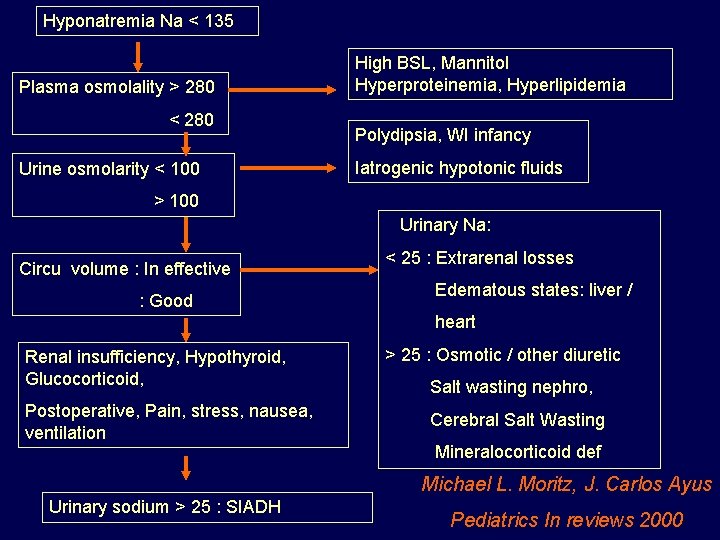
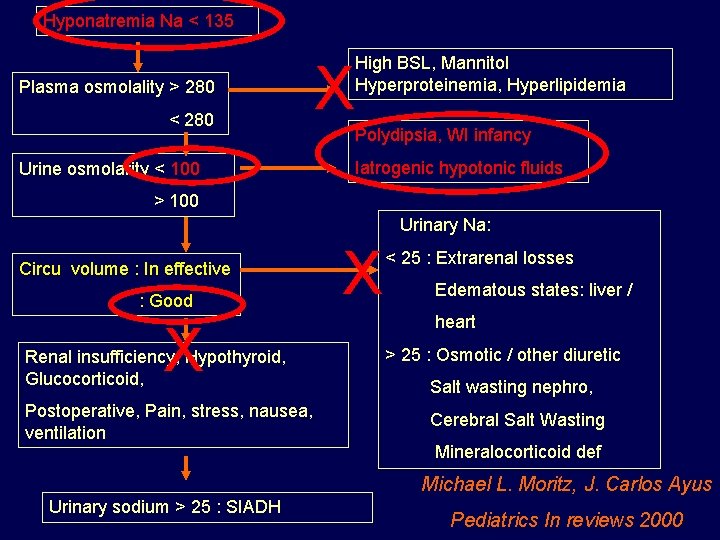
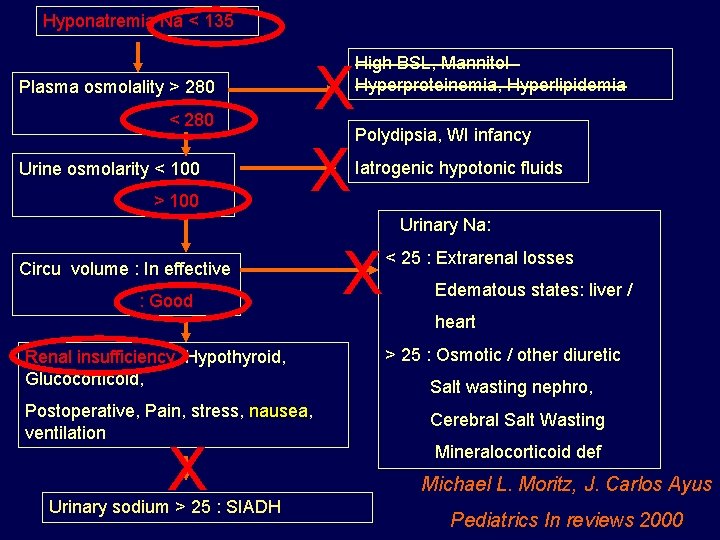
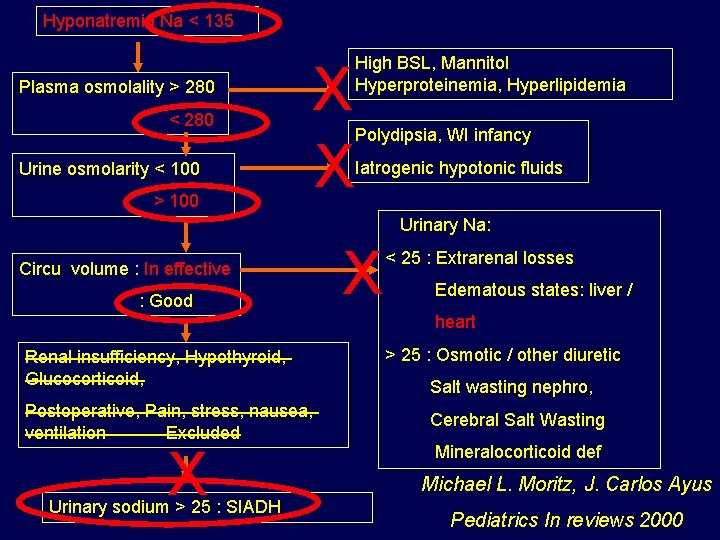
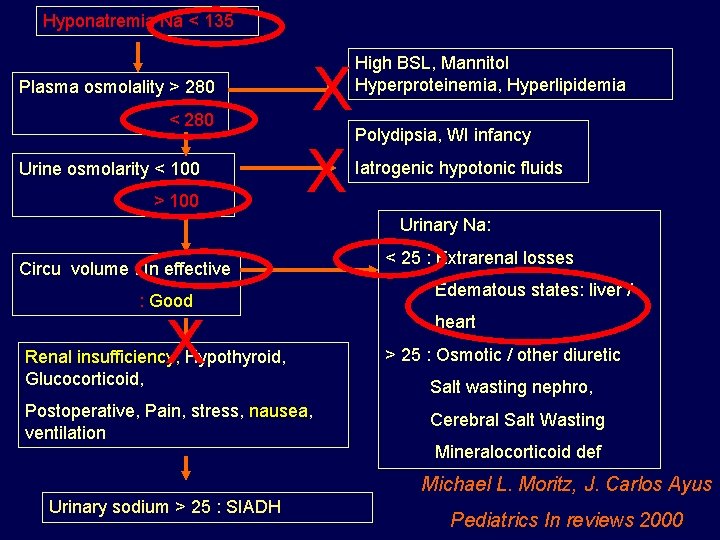
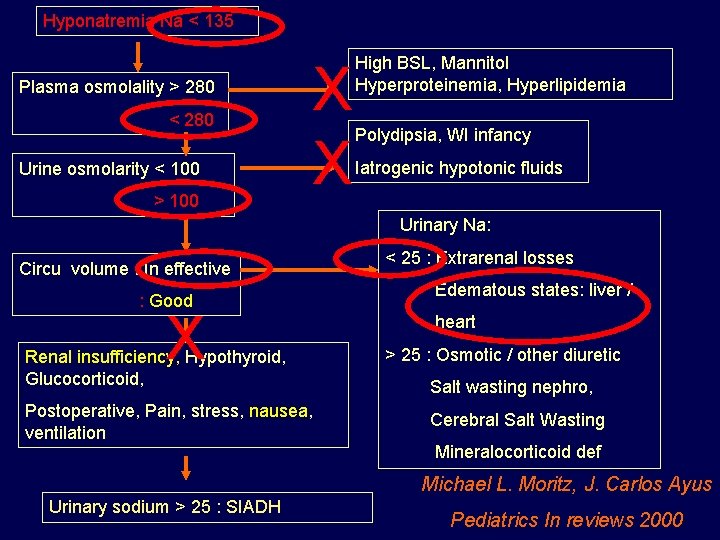
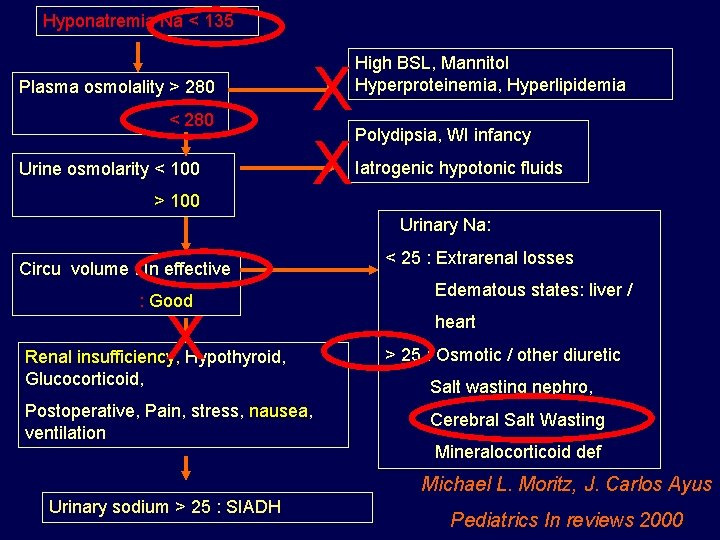
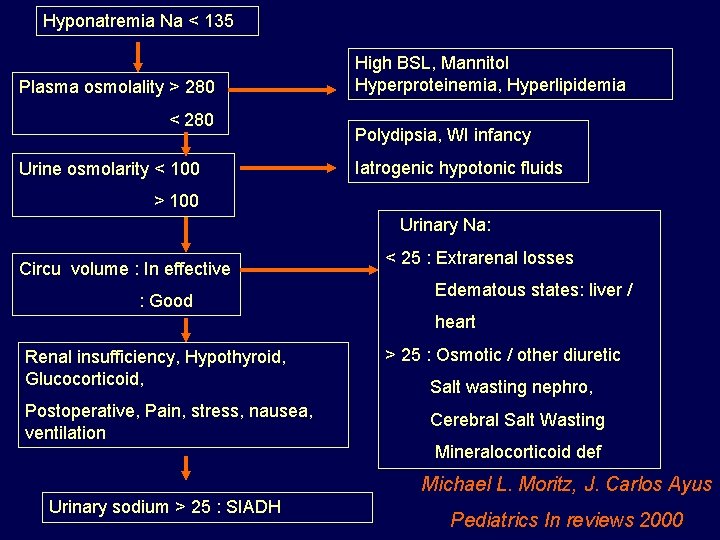
Hyponatremia Na < 135 Plasma osmolality > 280 < 280 Urine osmolarity < 100 High BSL, Mannitol Hyperproteinemia, Hyperlipidemia Polydipsia, WI infancy Iatrogenic hypotonic fluids > 100 Urinary Na: Circu volume : In effective : Good < 25 : Extrarenal losses Edematous states: liver / heart Renal insufficiency, Hypothyroid, Glucocorticoid, Postoperative, Pain, stress, nausea, ventilation > 25 : Osmotic / other diuretic Salt wasting nephro, Cerebral Salt Wasting Mineralocorticoid def Michael L. Moritz, J. Carlos Ayus Urinary sodium > 25 : SIADH Pediatrics In reviews 2000
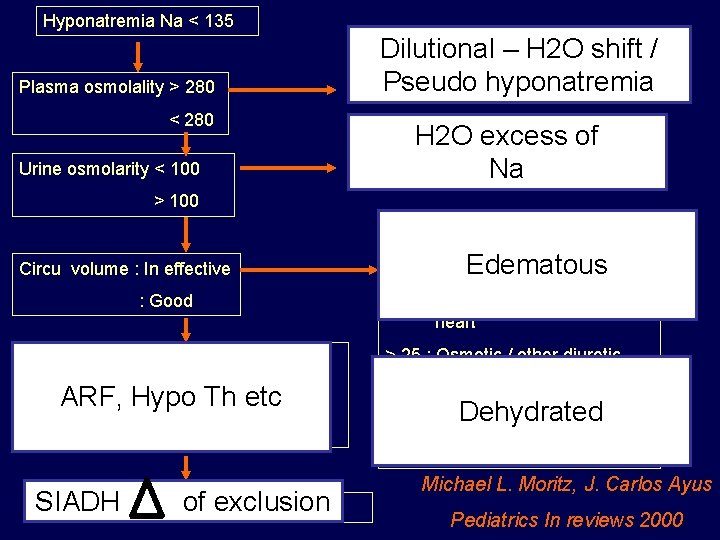
Hyponatremia Na < 135 Dilutional – H 2 O shift / Plasma osmolality > 280 < 280 Urine osmolarity < 100 High BSL, Mannitol Hyperproteinemia, Hyperlipidemia Pseudo hyponatremia Polydipsia, WI infancy H 2 O excess of Iatrogenic hypotonic Nafluids > 100 Urinary Na: Circu volume : In effective : Good < 25 : Extrarenal losses Edematous states: liver / heart Renal insufficiency, Hypothyroid, Glucocorticoid, ARF, Hypo Th etc Postoperative, Pain, stress, nausea, ventilation SIADH Urinary sodium >of 25 exclusion : SIADH > 25 : Osmotic / other diuretic Salt wasting nephro, Dehydrated Cerebral Salt Wasting Mineralocorticoid def Michael L. Moritz, J. Carlos Ayus Pediatrics In reviews 2000
CASES
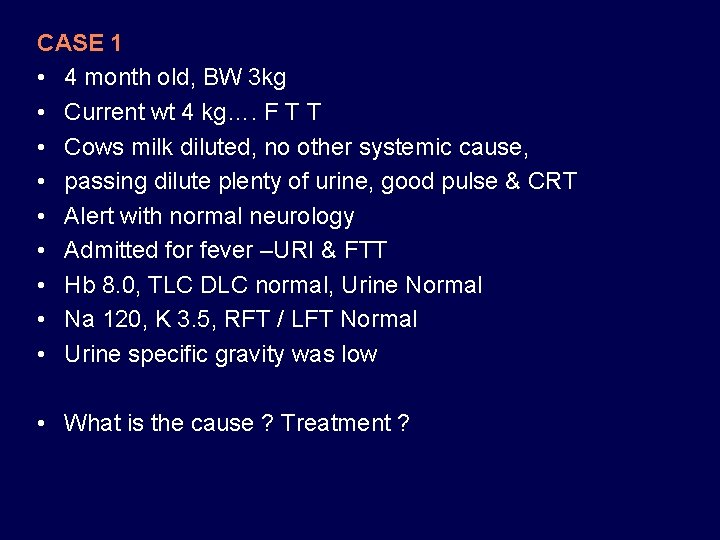
CASE 1 • 4 month old, BW 3 kg • Current wt 4 kg…. F T T • Cows milk diluted, no other systemic cause, • passing dilute plenty of urine, good pulse & CRT • Alert with normal neurology • Admitted for fever –URI & FTT • Hb 8. 0, TLC DLC normal, Urine Normal • Na 120, K 3. 5, RFT / LFT Normal • Urine specific gravity was low • What is the cause ? Treatment ?
Hyponatremia Na < 135 Plasma osmolality > 280 < 280 Urine osmolarity < 100 X High BSL, Mannitol Hyperproteinemia, Hyperlipidemia Polydipsia, WI infancy Iatrogenic hypotonic fluids > 100 Urinary Na: Circu volume : In effective : Good X Renal insufficiency, Hypothyroid, Glucocorticoid, Postoperative, Pain, stress, nausea, ventilation X < 25 : Extrarenal losses Edematous states: liver / heart > 25 : Osmotic / other diuretic Salt wasting nephro, Cerebral Salt Wasting Mineralocorticoid def Michael L. Moritz, J. Carlos Ayus Urinary sodium > 25 : SIADH Pediatrics In reviews 2000
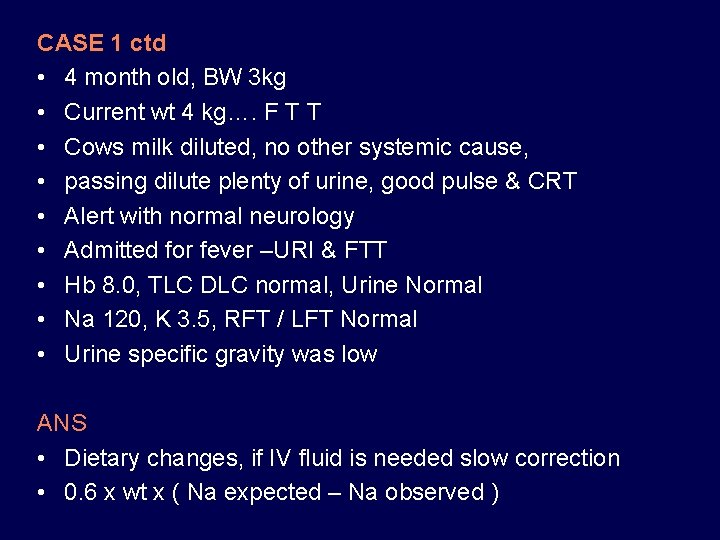
CASE 1 ctd • 4 month old, BW 3 kg • Current wt 4 kg…. F T T • Cows milk diluted, no other systemic cause, • passing dilute plenty of urine, good pulse & CRT • Alert with normal neurology • Admitted for fever –URI & FTT • Hb 8. 0, TLC DLC normal, Urine Normal • Na 120, K 3. 5, RFT / LFT Normal • Urine specific gravity was low ANS • Dietary changes, if IV fluid is needed slow correction • 0. 6 x wt x ( Na expected – Na observed )
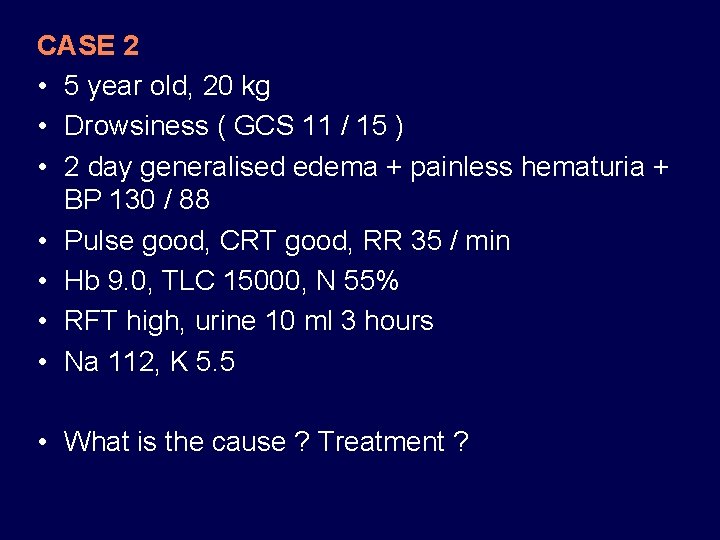
CASE 2 • 5 year old, 20 kg • Drowsiness ( GCS 11 / 15 ) • 2 day generalised edema + painless hematuria + BP 130 / 88 • Pulse good, CRT good, RR 35 / min • Hb 9. 0, TLC 15000, N 55% • RFT high, urine 10 ml 3 hours • Na 112, K 5. 5 • What is the cause ? Treatment ?
Hyponatremia Na < 135 Plasma osmolality > 280 < 280 Urine osmolarity < 100 > 100 X X High BSL, Mannitol Hyperproteinemia, Hyperlipidemia Polydipsia, WI infancy Iatrogenic hypotonic fluids Urinary Na: Circu volume : In effective : Good X < 25 : Extrarenal losses Edematous states: liver / heart Renal insufficiency, Hypothyroid, Glucocorticoid, Postoperative, Pain, stress, nausea, ventilation X Urinary sodium > 25 : SIADH > 25 : Osmotic / other diuretic Salt wasting nephro, Cerebral Salt Wasting Mineralocorticoid def Michael L. Moritz, J. Carlos Ayus Pediatrics In reviews 2000
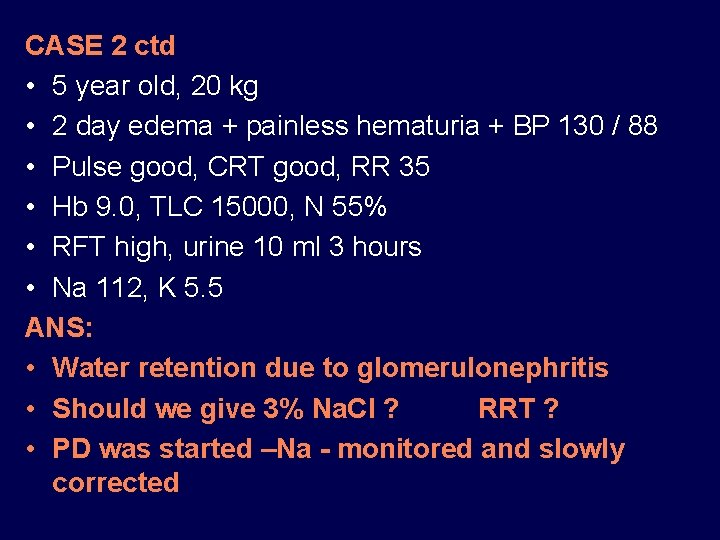
CASE 2 ctd • 5 year old, 20 kg • 2 day edema + painless hematuria + BP 130 / 88 • Pulse good, CRT good, RR 35 • Hb 9. 0, TLC 15000, N 55% • RFT high, urine 10 ml 3 hours • Na 112, K 5. 5 ANS: • Water retention due to glomerulonephritis • Should we give 3% Na. Cl ? RRT ? • PD was started –Na - monitored and slowly corrected
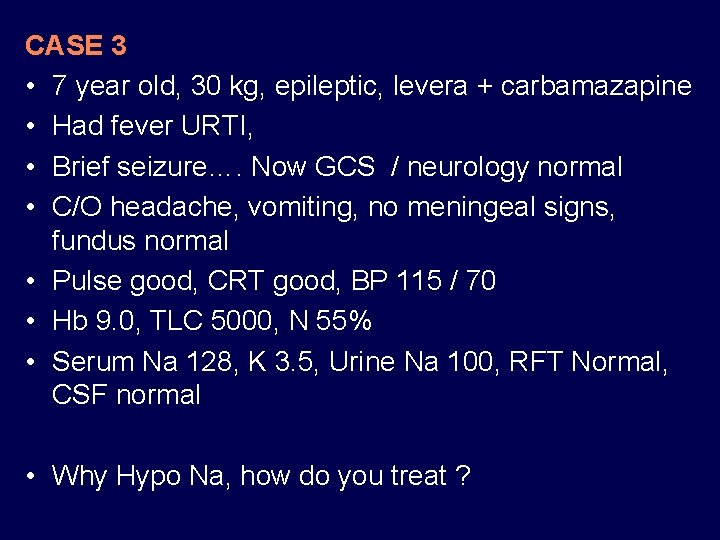
CASE 3 • 7 year old, 30 kg, epileptic, levera + carbamazapine • Had fever URTI, • Brief seizure…. Now GCS / neurology normal • C/O headache, vomiting, no meningeal signs, fundus normal • Pulse good, CRT good, BP 115 / 70 • Hb 9. 0, TLC 5000, N 55% • Serum Na 128, K 3. 5, Urine Na 100, RFT Normal, CSF normal • Why Hypo Na, how do you treat ?
Hyponatremia Na < 135 Plasma osmolality > 280 < 280 Urine osmolarity < 100 > 100 X X High BSL, Mannitol Hyperproteinemia, Hyperlipidemia Polydipsia, WI infancy Iatrogenic hypotonic fluids Urinary Na: Circu volume : In effective : Good X < 25 : Extrarenal losses Edematous states: liver / heart Renal insufficiency, Hypothyroid, Glucocorticoid, Postoperative, Pain, stress, nausea, ventilation Excluded X Urinary sodium > 25 : SIADH > 25 : Osmotic / other diuretic Salt wasting nephro, Cerebral Salt Wasting Mineralocorticoid def Michael L. Moritz, J. Carlos Ayus Pediatrics In reviews 2000
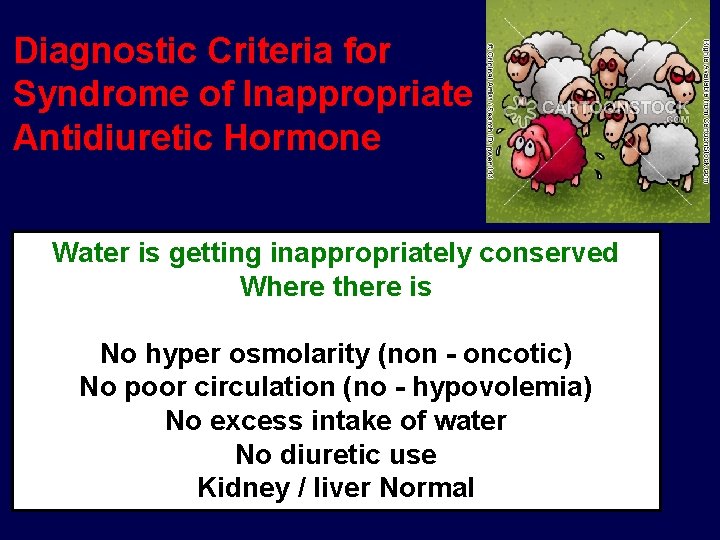
Diagnostic Criteria for Syndrome of Inappropriate Antidiuretic Hormone Water is getting inappropriately conserved Where there is No hyper osmolarity (non - oncotic) No poor circulation (no - hypovolemia) No excess intake of water No diuretic use Kidney / liver Normal
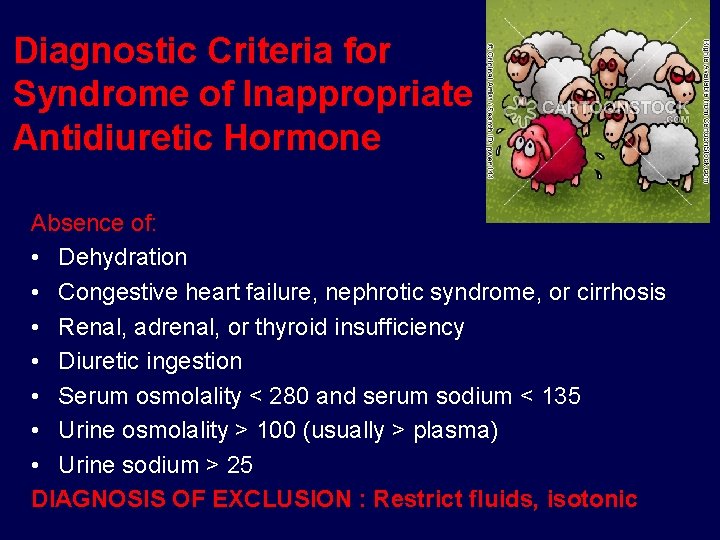
Diagnostic Criteria for Syndrome of Inappropriate Antidiuretic Hormone Absence of: • Dehydration • Congestive heart failure, nephrotic syndrome, or cirrhosis • Renal, adrenal, or thyroid insufficiency • Diuretic ingestion • Serum osmolality < 280 and serum sodium < 135 • Urine osmolality > 100 (usually > plasma) • Urine sodium > 25 DIAGNOSIS OF EXCLUSION : Restrict fluids, isotonic
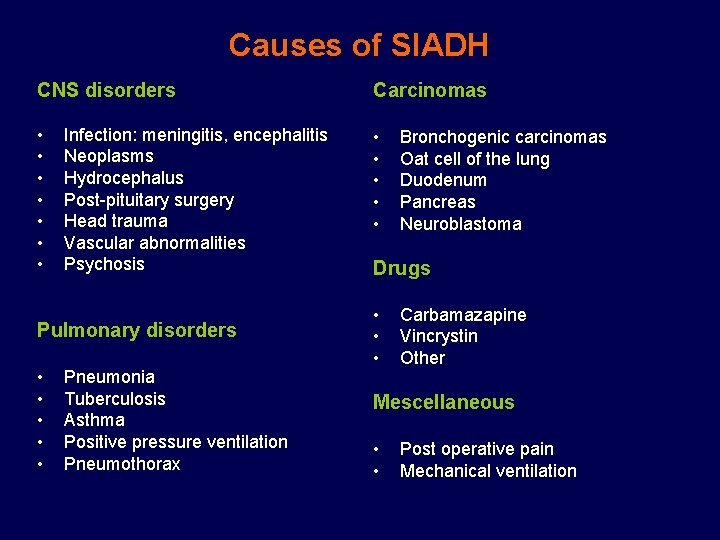
Causes of SIADH CNS disorders Carcinomas • • • Infection: meningitis, encephalitis Neoplasms Hydrocephalus Post-pituitary surgery Head trauma Vascular abnormalities Psychosis Pulmonary disorders • • • Pneumonia Tuberculosis Asthma Positive pressure ventilation Pneumothorax Bronchogenic carcinomas Oat cell of the lung Duodenum Pancreas Neuroblastoma Drugs • • • Carbamazapine Vincrystin Other Mescellaneous • • Post operative pain Mechanical ventilation
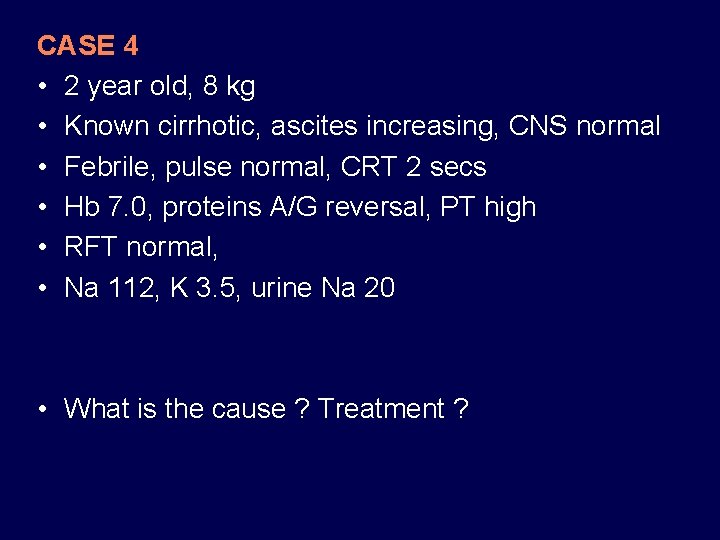
CASE 4 • 2 year old, 8 kg • Known cirrhotic, ascites increasing, CNS normal • Febrile, pulse normal, CRT 2 secs • Hb 7. 0, proteins A/G reversal, PT high • RFT normal, • Na 112, K 3. 5, urine Na 20 • What is the cause ? Treatment ?
Hyponatremia Na < 135 Plasma osmolality > 280 < 280 Urine osmolarity < 100 > 100 X X High BSL, Mannitol Hyperproteinemia, Hyperlipidemia Polydipsia, WI infancy Iatrogenic hypotonic fluids Urinary Na: Circu volume : In effective : Good X Renal insufficiency, Hypothyroid, Glucocorticoid, Postoperative, Pain, stress, nausea, ventilation < 25 : Extrarenal losses Edematous states: liver / heart > 25 : Osmotic / other diuretic Salt wasting nephro, Cerebral Salt Wasting Mineralocorticoid def Michael L. Moritz, J. Carlos Ayus Urinary sodium > 25 : SIADH Pediatrics In reviews 2000
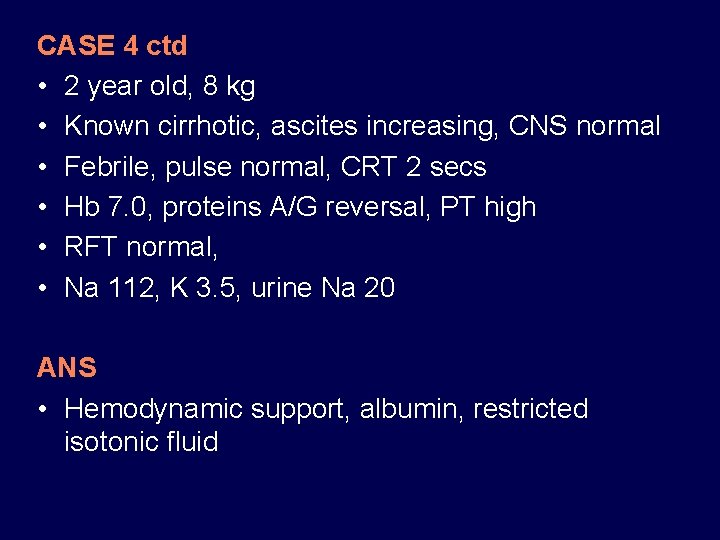
CASE 4 ctd • 2 year old, 8 kg • Known cirrhotic, ascites increasing, CNS normal • Febrile, pulse normal, CRT 2 secs • Hb 7. 0, proteins A/G reversal, PT high • RFT normal, • Na 112, K 3. 5, urine Na 20 ANS • Hemodynamic support, albumin, restricted isotonic fluid
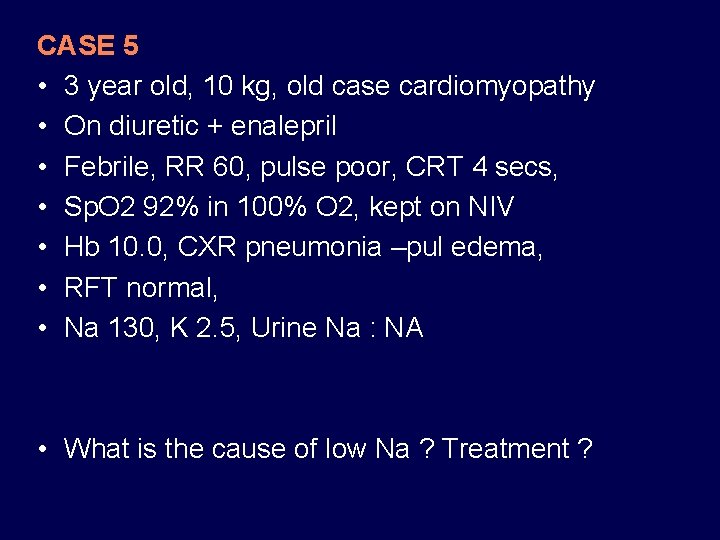
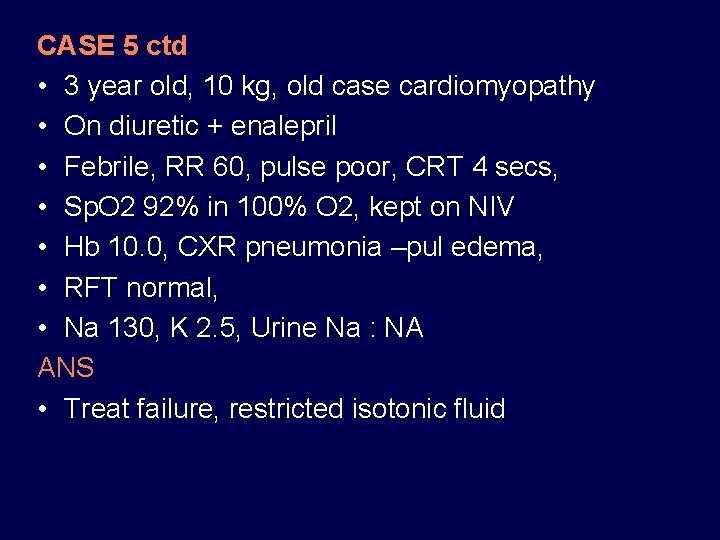
CASE 5 • 3 year old, 10 kg, old case cardiomyopathy • On diuretic + enalepril • Febrile, RR 60, pulse poor, CRT 4 secs, • Sp. O 2 92% in 100% O 2, kept on NIV • Hb 10. 0, CXR pneumonia –pul edema, • RFT normal, • Na 130, K 2. 5, Urine Na : NA • What is the cause of low Na ? Treatment ?
Hyponatremia Na < 135 Plasma osmolality > 280 < 280 Urine osmolarity < 100 > 100 X X High BSL, Mannitol Hyperproteinemia, Hyperlipidemia Polydipsia, WI infancy Iatrogenic hypotonic fluids Urinary Na: Circu volume : In effective : Good X Renal insufficiency, Hypothyroid, Glucocorticoid, Postoperative, Pain, stress, nausea, ventilation < 25 : Extrarenal losses Edematous states: liver / heart > 25 : Osmotic / other diuretic Salt wasting nephro, Cerebral Salt Wasting Mineralocorticoid def Michael L. Moritz, J. Carlos Ayus Urinary sodium > 25 : SIADH Pediatrics In reviews 2000
CASE 5 ctd • 3 year old, 10 kg, old case cardiomyopathy • On diuretic + enalepril • Febrile, RR 60, pulse poor, CRT 4 secs, • Sp. O 2 92% in 100% O 2, kept on NIV • Hb 10. 0, CXR pneumonia –pul edema, • RFT normal, • Na 130, K 2. 5, Urine Na : NA ANS • Treat failure, restricted isotonic fluid
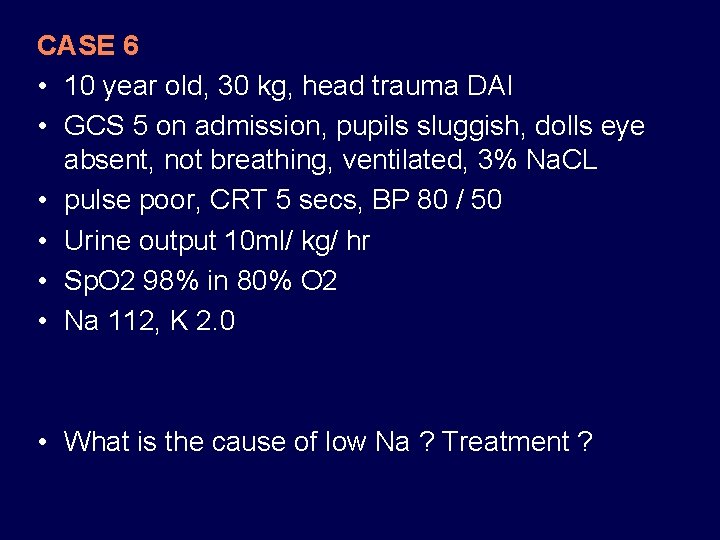
CASE 6 • 10 year old, 30 kg, head trauma DAI • GCS 5 on admission, pupils sluggish, dolls eye absent, not breathing, ventilated, 3% Na. CL • pulse poor, CRT 5 secs, BP 80 / 50 • Urine output 10 ml/ kg/ hr • Sp. O 2 98% in 80% O 2 • Na 112, K 2. 0 • What is the cause of low Na ? Treatment ?
Hyponatremia Na < 135 Plasma osmolality > 280 < 280 Urine osmolarity < 100 > 100 X X High BSL, Mannitol Hyperproteinemia, Hyperlipidemia Polydipsia, WI infancy Iatrogenic hypotonic fluids Urinary Na: Circu volume : In effective : Good X Renal insufficiency, Hypothyroid, Glucocorticoid, Postoperative, Pain, stress, nausea, ventilation < 25 : Extrarenal losses Edematous states: liver / heart > 25 : Osmotic / other diuretic Salt wasting nephro, Cerebral Salt Wasting Mineralocorticoid def Michael L. Moritz, J. Carlos Ayus Urinary sodium > 25 : SIADH Pediatrics In reviews 2000
CASE 6 ctd • 10 year old, 30 kg, head trauma DAI • GCS 5 on admission, pupils sluggish, dolls eye absent, not breathing, ventilated, 3% Na. CL • pulse poor, CRT 5 secs, BP 80 / 50 • Urine output 10 ml/ kg/ hr • Sp. O 2 98% in 80% O 2 • Na 112, K 2. 0 ANS • Replace urine output as per hemodynamics, • 3% drip, • Poor prognosis
Treatment: is based on the pathophysiology of the specific etiology • Hypo- volemic: replace • Hyper-volemic: CCF: restrict, treat CCF Nephrotic : Albumin, and diuretic Renal failure : Dialysis • Normo-volemic Endocrine: correct underlying condition SIADH : restrict fluids, treat underlying condition, isotonic fluids, demyclocyclin (expt)
Treatment Symptomatic: Seizures : are poorly responsive to anticonvulsants • 3% Na. Cl (513 m. Eq/l), 5 ml /kg over 1 hour - • 1 ml /kg/hr by drip, monitor Na 2 -4 hrly (Na is generally raised by about 5 m. Eq in 1 -2 hours) • 0. 6 x wt x desired rise in Na • Not > 10 to 12 m. Eq / 24 hrs Raised ICP: Target Na of about 150 – 155 m. Eq / L
Prevention of Hypo Na • Stop using hypotonic e. g N / 5 drip • Preferable is isotonic / half strength
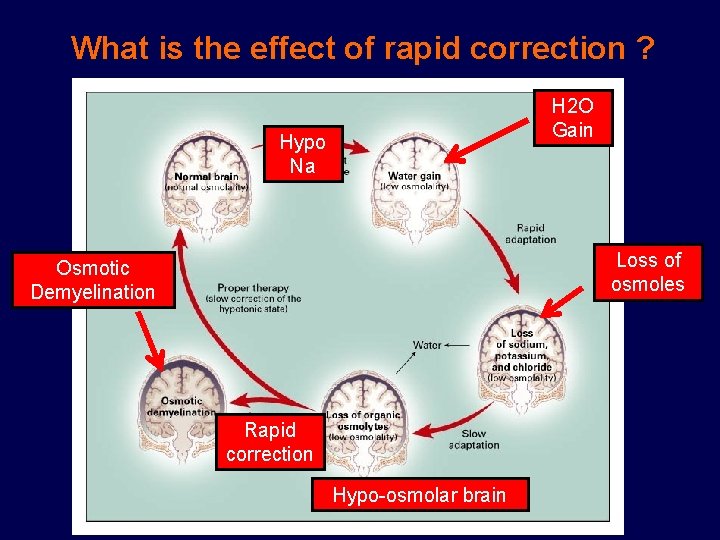
What is the effect of rapid correction ? H 2 O Gain Hypo Na Loss of osmoles Osmotic Demyelination Rapid correction Hypo-osmolar brain
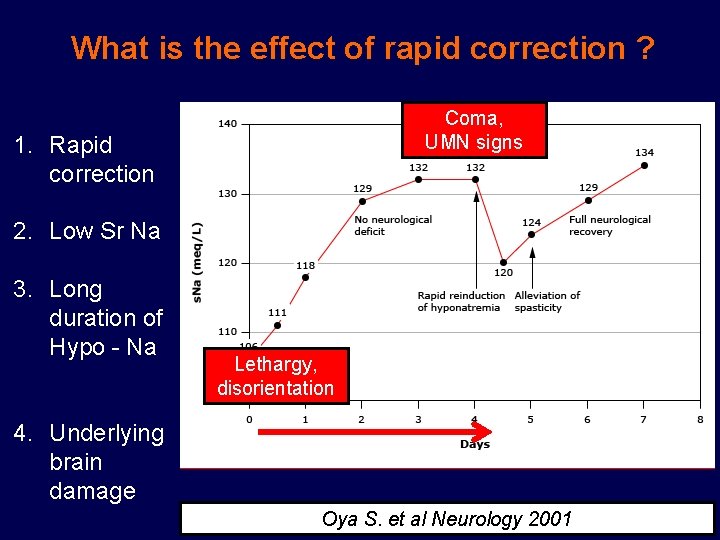
What is the effect of rapid correction ? Coma, UMN signs 1. Rapid correction 2. Low Sr Na 3. Long duration of Hypo - Na Lethargy, disorientation 4. Underlying brain damage Oya S. et al Neurology 2001
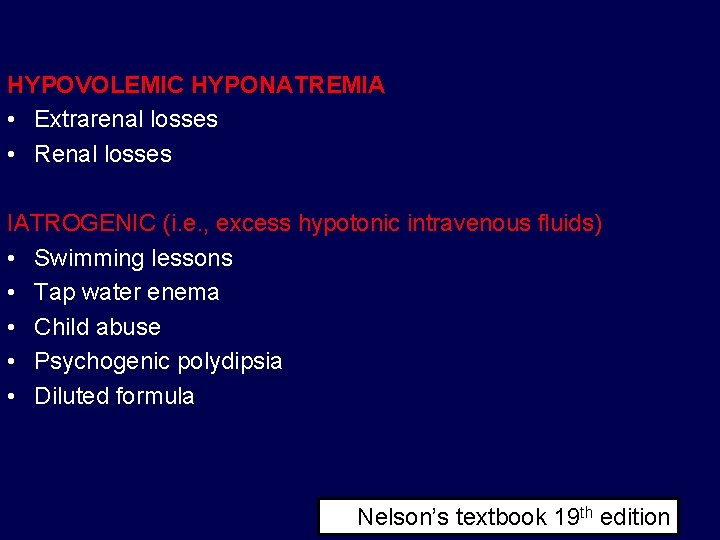
HYPOVOLEMIC HYPONATREMIA • Extrarenal losses • Renal losses IATROGENIC (i. e. , excess hypotonic intravenous fluids) • Swimming lessons • Tap water enema • Child abuse • Psychogenic polydipsia • Diluted formula Nelson’s textbook 19 th edition
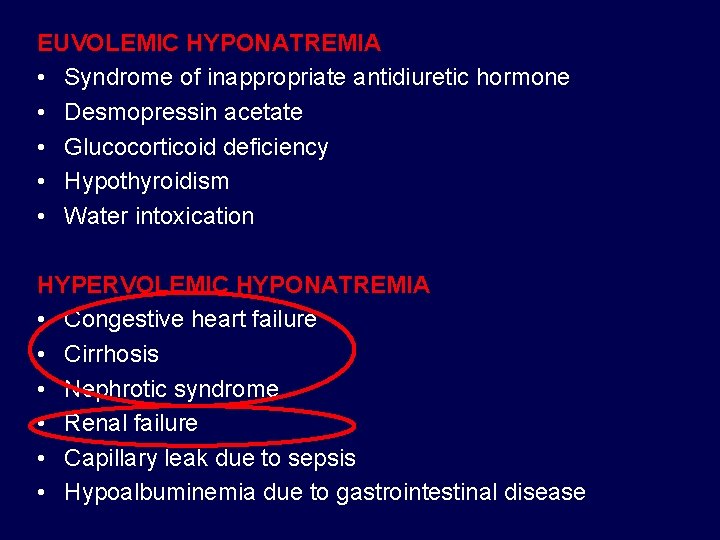
EUVOLEMIC HYPONATREMIA • Syndrome of inappropriate antidiuretic hormone • Desmopressin acetate • Glucocorticoid deficiency • Hypothyroidism • Water intoxication HYPERVOLEMIC HYPONATREMIA • Congestive heart failure • Cirrhosis • Nephrotic syndrome • Renal failure • Capillary leak due to sepsis • Hypoalbuminemia due to gastrointestinal disease
Hyponatremia Na < 135 Plasma osmolality > 280 < 280 Urine osmolarity < 100 High BSL, Mannitol Hyperproteinemia, Hyperlipidemia Polydipsia, WI infancy Iatrogenic hypotonic fluids > 100 Urinary Na: Circu volume : In effective : Good < 25 : Extrarenal losses Edematous states: liver / heart Renal insufficiency, Hypothyroid, Glucocorticoid, Postoperative, Pain, stress, nausea, ventilation > 25 : Osmotic / other diuretic Salt wasting nephro, Cerebral Salt Wasting Mineralocorticoid def Michael L. Moritz, J. Carlos Ayus Urinary sodium > 25 : SIADH Pediatrics In reviews 2000
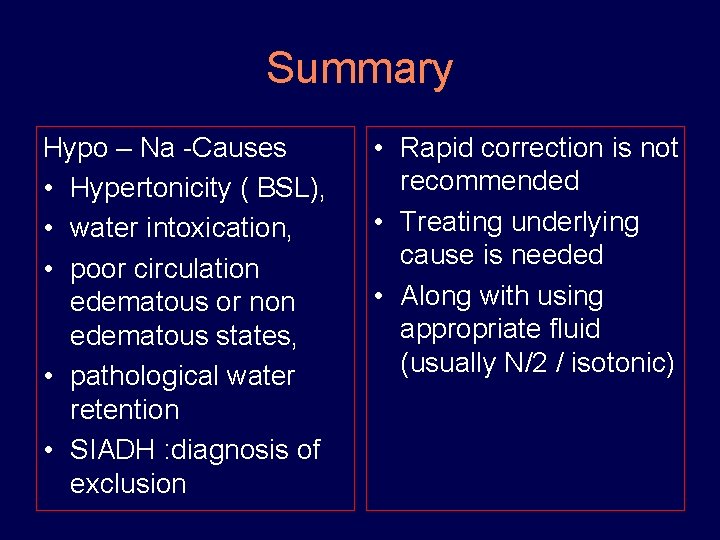
Summary Hypo – Na -Causes • Hypertonicity ( BSL), • water intoxication, • poor circulation edematous or non edematous states, • pathological water retention • SIADH : diagnosis of exclusion • Rapid correction is not recommended • Treating underlying cause is needed • Along with using appropriate fluid (usually N/2 / isotonic)
One size does not fit all !
Thank You