
Na I calibration and neutron observation during the
Na. I calibration and neutron observation during the charge exchange experiment Giovanni Signorelli, INFN Pisa MEG collaboration meeting, PSI 9 Feb 2004 1. Improving the Na. I energy resolution (as low as reasonably achievable!) • • • Common noise reduction Intercalibration Clustering algorithm 2. Observation of the prompt signal of “high energy” neutrons (8. 9 Me. V) • • • A “matter-of-fact” evidence, in Xe and in Na. I Comparison with cross sections First look at and requirements of a MC for neutrons in LXe. 1
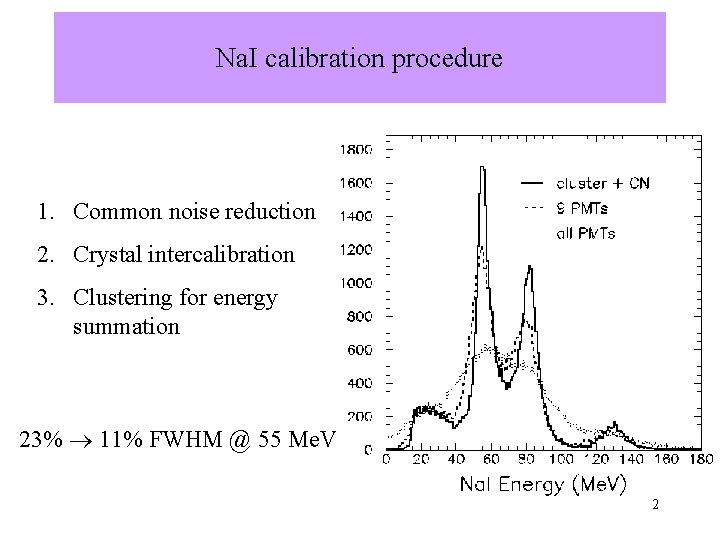
Na. I calibration procedure 1. Common noise reduction 2. Crystal intercalibration 3. Clustering for energy summation 23% 11% FWHM @ 55 Me. V 2
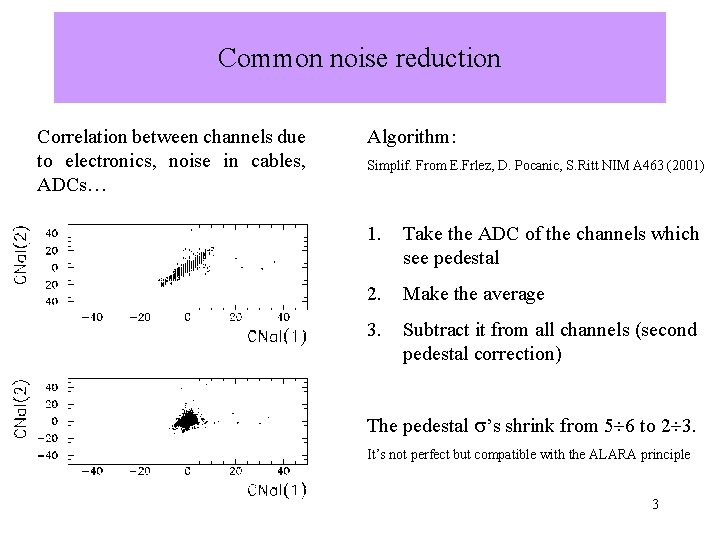
Common noise reduction Correlation between channels due to electronics, noise in cables, ADCs… Algorithm: Simplif. From E. Frlez, D. Pocanic, S. Ritt NIM A 463 (2001) 1. Take the ADC of the channels which see pedestal 2. Make the average 3. Subtract it from all channels (second pedestal correction) The pedestal ’s shrink from 5 6 to 2 3. It’s not perfect but compatible with the ALARA principle 3
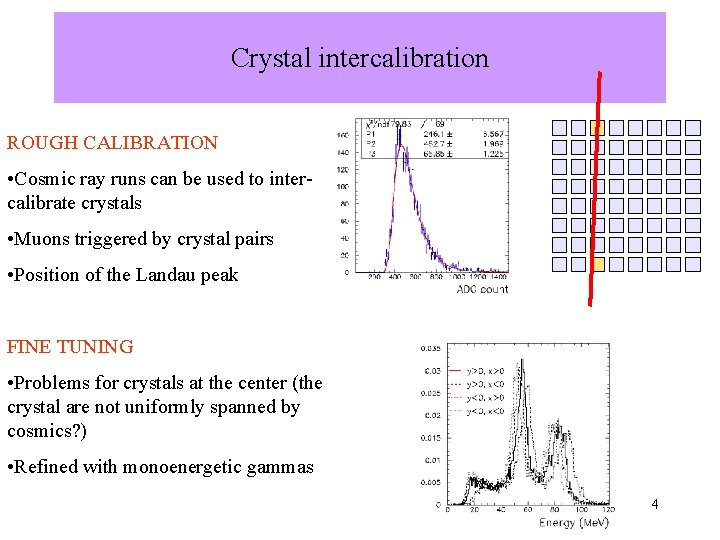
Crystal intercalibration ROUGH CALIBRATION • Cosmic ray runs can be used to intercalibrate crystals • Muons triggered by crystal pairs • Position of the Landau peak FINE TUNING • Problems for crystals at the center (the crystal are not uniformly spanned by cosmics? ) • Refined with monoenergetic gammas 4
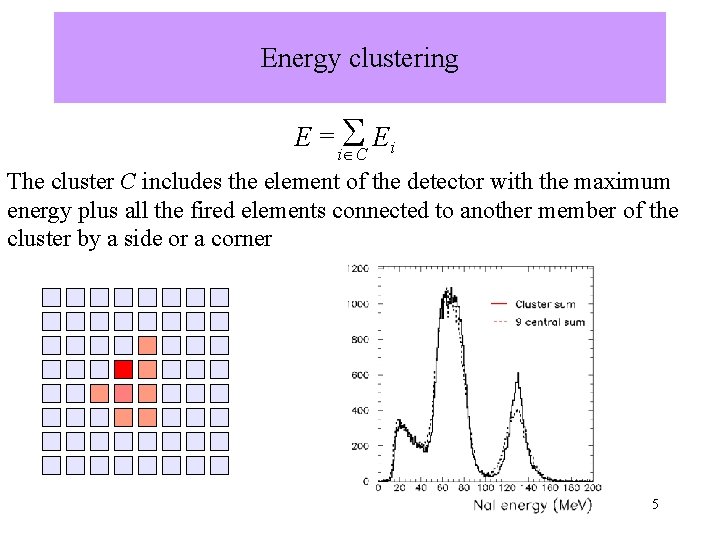
Energy clustering E = i C Ei The cluster C includes the element of the detector with the maximum energy plus all the fired elements connected to another member of the cluster by a side or a corner 5
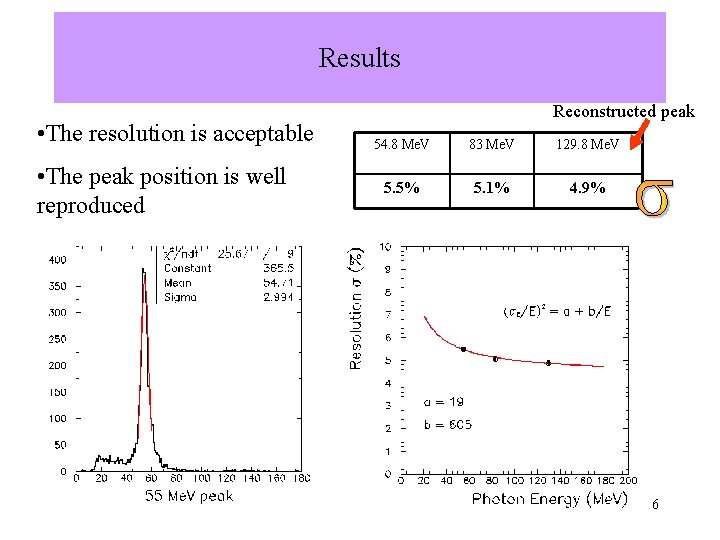
Results • The resolution is acceptable • The peak position is well reproduced Reconstructed peak 54. 8 Me. V 83 Me. V 129. 8 Me. V 5. 5% 5. 1% 4. 9% 6
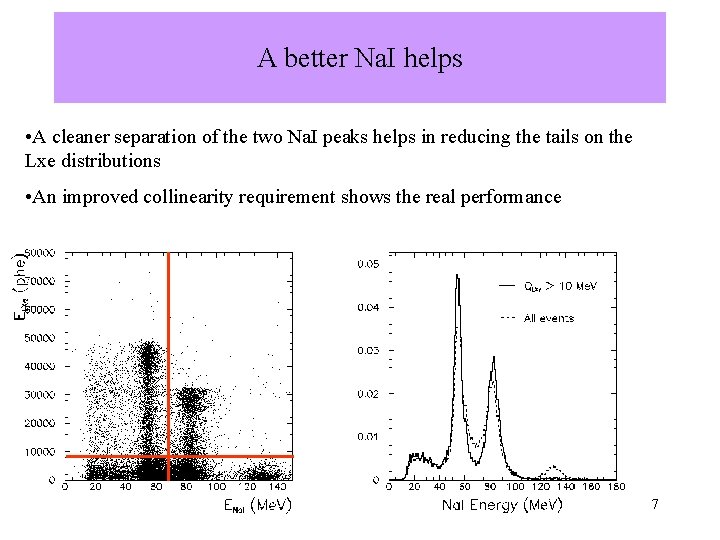
A better Na. I helps • A cleaner separation of the two Na. I peaks helps in reducing the tails on the Lxe distributions • An improved collinearity requirement shows the real performance 7
Neutron observation during the experiment • Evidence for a prompt signal from neutrons • 8. 9 Me. V neutron in coincidence with the 129 Me. V gamma • Neutrons from the Am/Be source ( 10 Me. V) • Comparison with cross sections (physics) • Inelastic scattering • Xe level excitation • First look at and requirements of a MC for neutrons in LXe. • Geant 3. 21 + GCALOR • Geant 4 • Possible use of neutrons for calibration/monitoring purposes ( Angela) • Availability – switchability • Probe of the entire detector 8
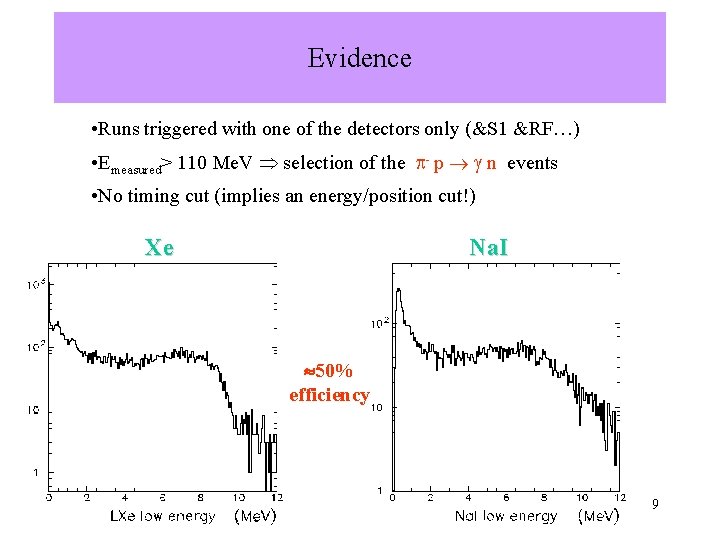
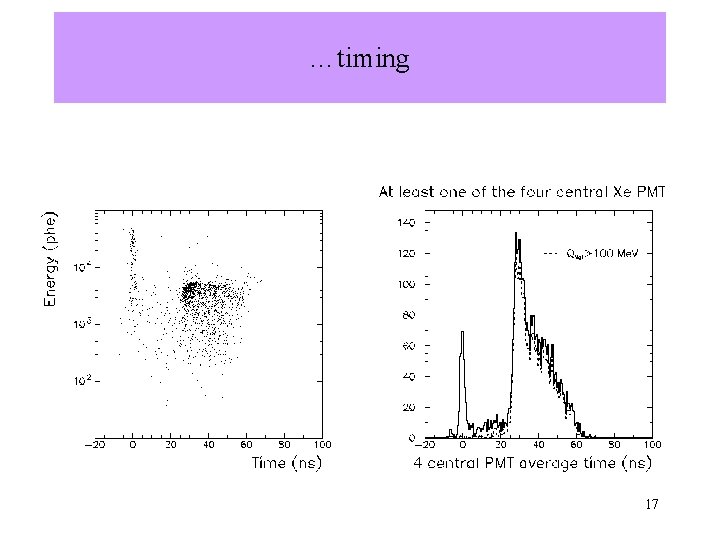
Evidence • Runs triggered with one of the detectors only (&S 1 &RF…) • Emeasured> 110 Me. V selection of the - p n events • No timing cut (implies an energy/position cut!) Xe Na. I 50% efficiency 9
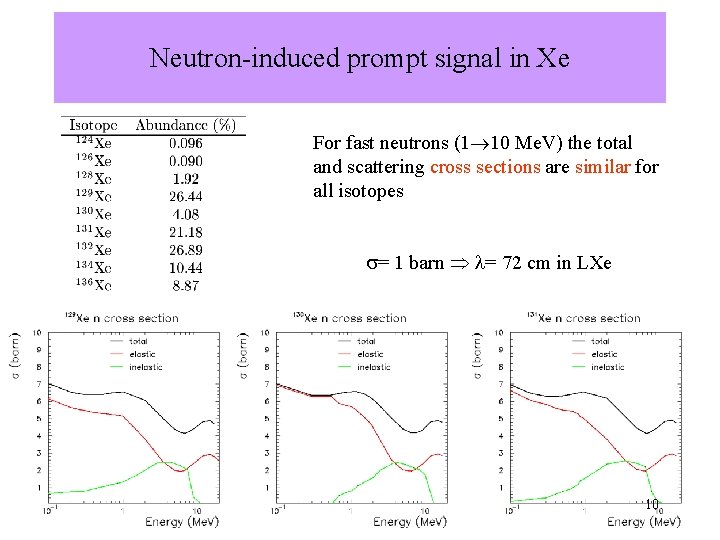
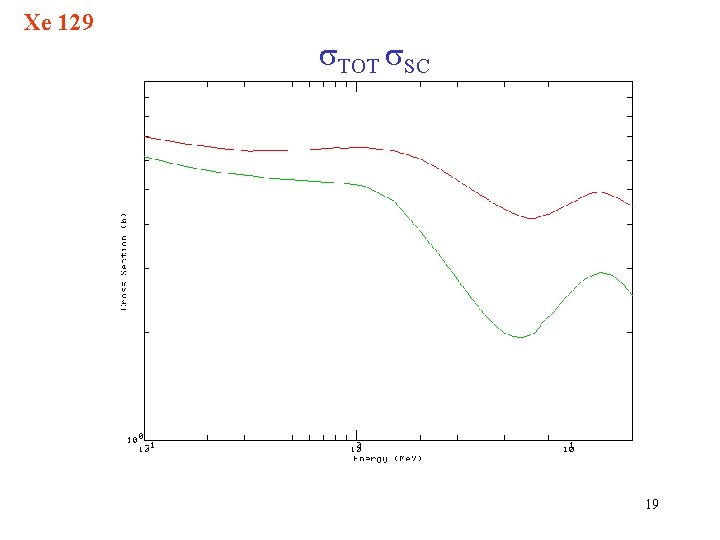
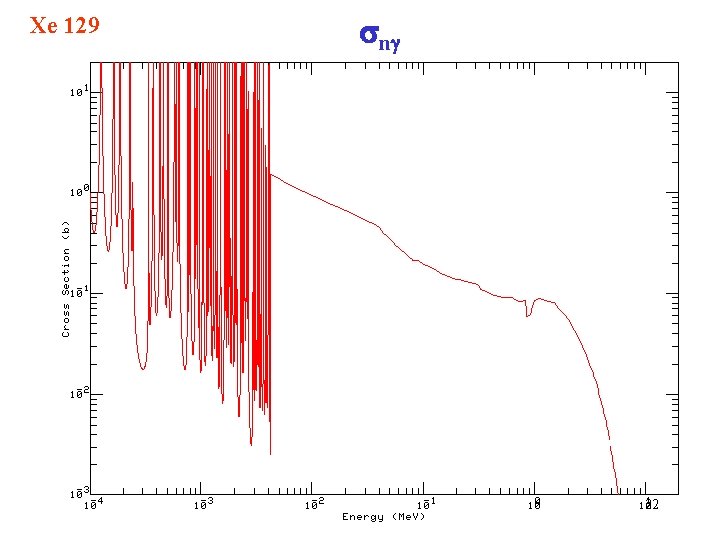
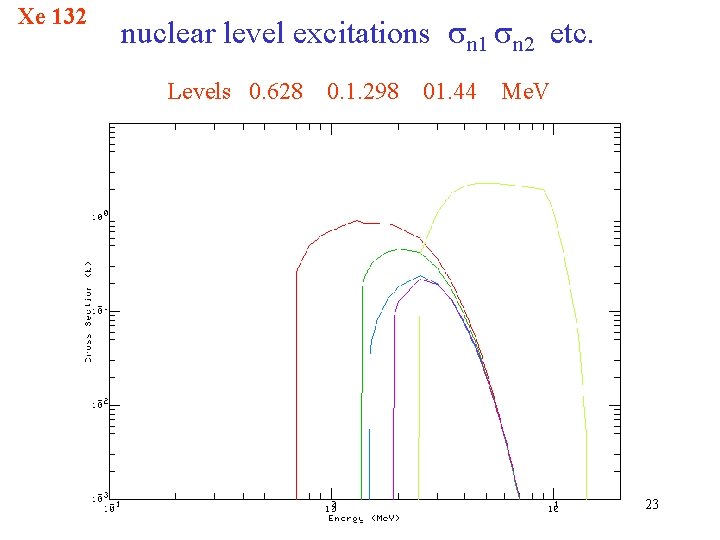
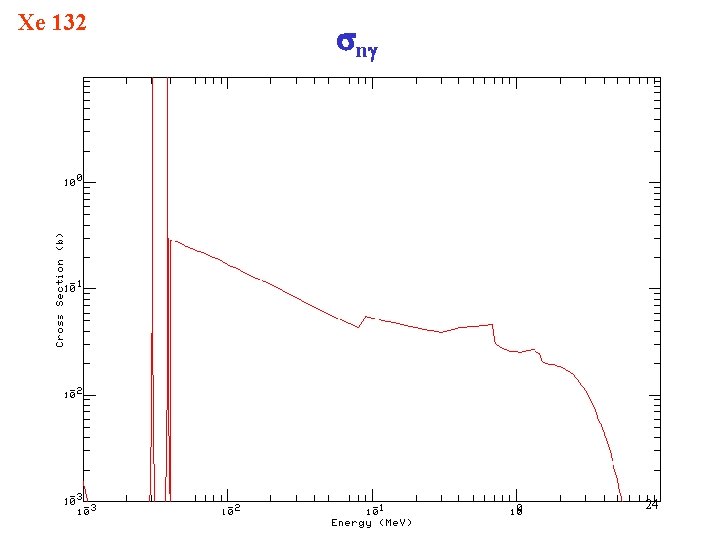
Neutron-induced prompt signal in Xe For fast neutrons (1 10 Me. V) the total and scattering cross sections are similar for all isotopes = 1 barn = 72 cm in LXe 10

Neutron cross section 11
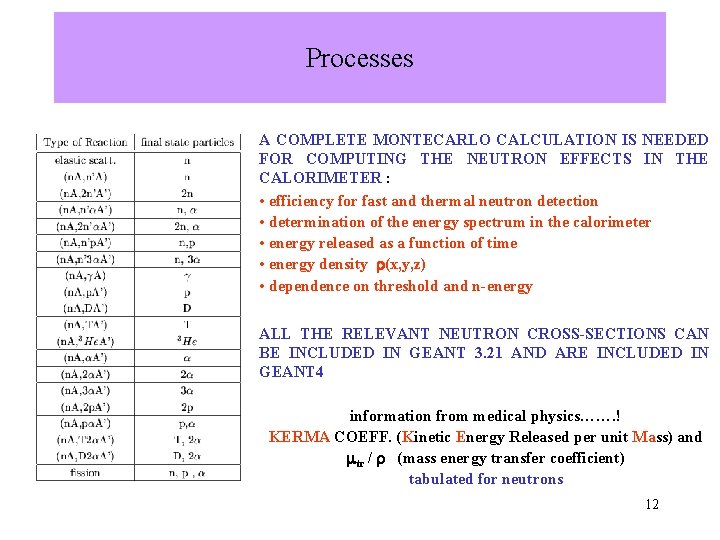
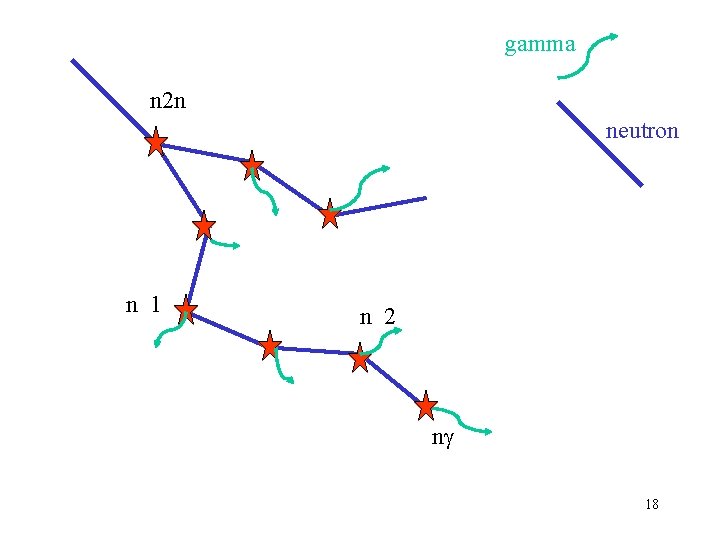
Processes A COMPLETE MONTECARLO CALCULATION IS NEEDED FOR COMPUTING THE NEUTRON EFFECTS IN THE CALORIMETER : • efficiency for fast and thermal neutron detection • determination of the energy spectrum in the calorimeter • energy released as a function of time • energy density (x, y, z) • dependence on threshold and n-energy ALL THE RELEVANT NEUTRON CROSS-SECTIONS CAN BE INCLUDED IN GEANT 3. 21 AND ARE INCLUDED IN GEANT 4 information from medical physics……. ! KERMA COEFF. (Kinetic Energy Released per unit Mass) and tr / (mass energy transfer coefficient) tabulated for neutrons 12
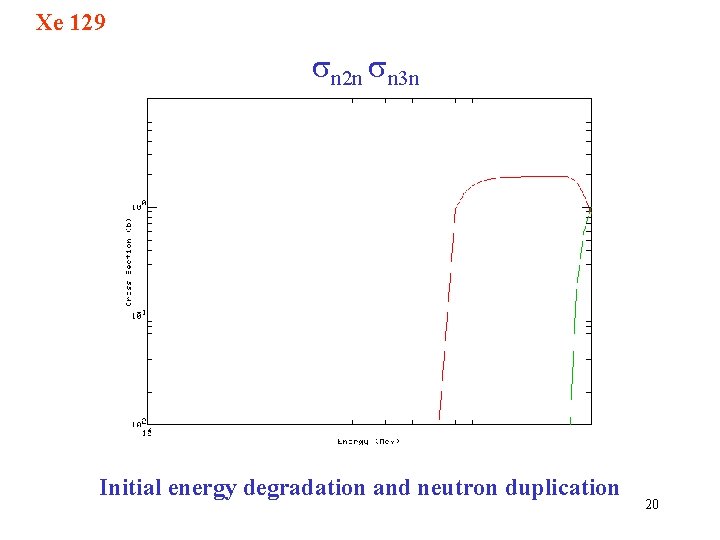
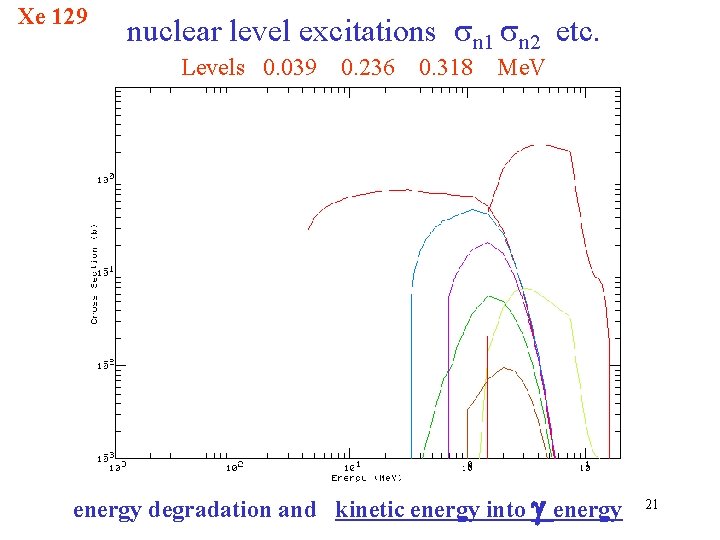
MC for neutrons in liquid Xenon Though the most reliable simulation today is GEANT 4, some quick results were obtained with GEANT 3. 21 + GCALOR • 8. 9 Me. V neutron simulated impinging a 10 x 10 cm 2 window of the Lproto (time cut-off at 600 ns) coming from the LH 2 target • GCALOR (MICAP, En < 20 Me. V) takes care of n cross sections (ENDF VI B) • N, n n, 2 n … • If the residual nucleus is left in an excited state the deexcitation photon is generated (this is not done in the n, Xe n’Xe case. Bug? We generated these photons by hand) • Some refinement still possible • In GEANT 4 the code for the neutron transportation is automatically embedded in the package and is “benchmarked” with a comparison to real data! 13
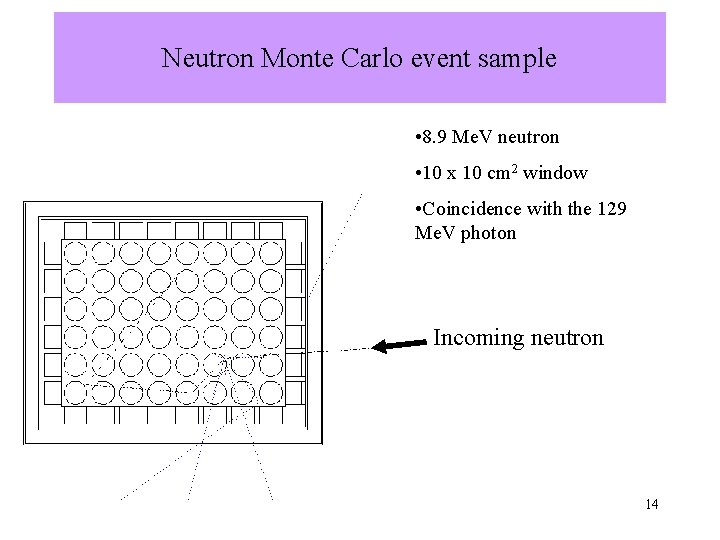
Neutron Monte Carlo event sample • 8. 9 Me. V neutron • 10 x 10 cm 2 window • Coincidence with the 129 Me. V photon Incoming neutron 14
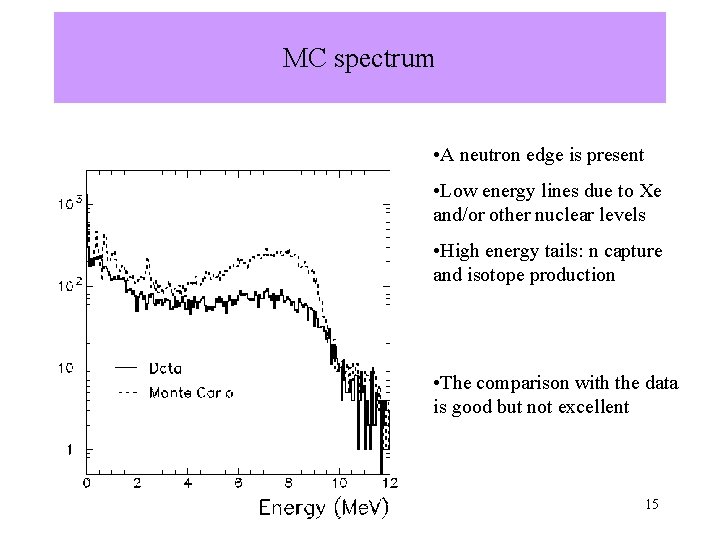
MC spectrum • A neutron edge is present Xe levels 2. 2 Me. V capture on protons • Low energy lines due to Xe and/or other nuclear levels • High energy tails: n capture and isotope production • The comparison with the data is good but not excellent 15
Conclusion • A calibration procedure for the Na. I has been estabilished and coded in the (Pisa version of the) analyzer, obtaining a fairly good E resolution for this detector • The neutron prompt signal was identified in Xe and Na. I and the understanding of the process is under way. We’ll do our best to reproduce the experimental result… • A new window is open, a new handle is present. To us the difficult task to exploit it (calibration, monitoring…)! 16
…timing 17
gamma n 2 n neutron n 1 n 2 n 18
Xe 129 TOT SC 19
Xe 129 n 2 n n 3 n Initial energy degradation and neutron duplication 20
Xe 129 nuclear level excitations n 1 n 2 etc. Levels 0. 039 0. 236 0. 318 Me. V energy degradation and kinetic energy into energy 21
Xe 129 n 22
Xe 132 nuclear level excitations n 1 n 2 etc. Levels 0. 628 0. 1. 298 01. 44 Me. V 23
Xe 132 n 24
- Slides: 24