
n Machine Learning with WEKA n WEKA A

- Slides: 49
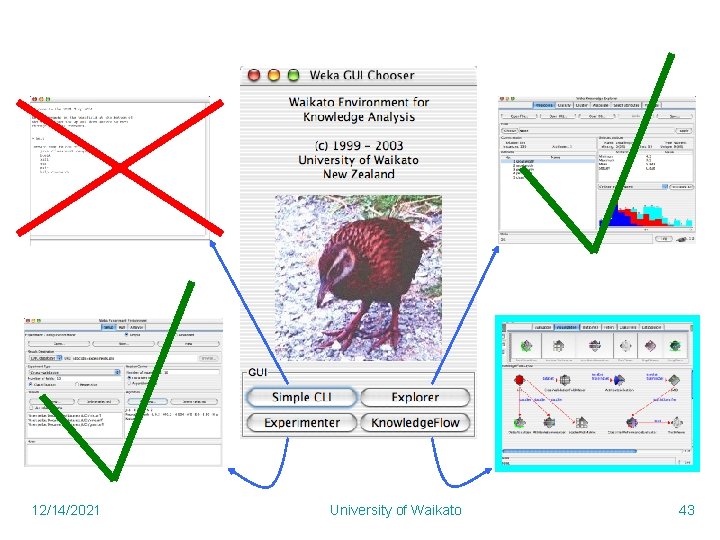
n Machine Learning with WEKA n WEKA: A Machine Learning Toolkit The Explorer • • Eibe Frank • • Department of Computer Science, University of Waikato, New Zealand • n n n Classification and Regression Clustering Association Rules Attribute Selection Data Visualization The Experimenter The Knowledge Flow GUI Conclusions
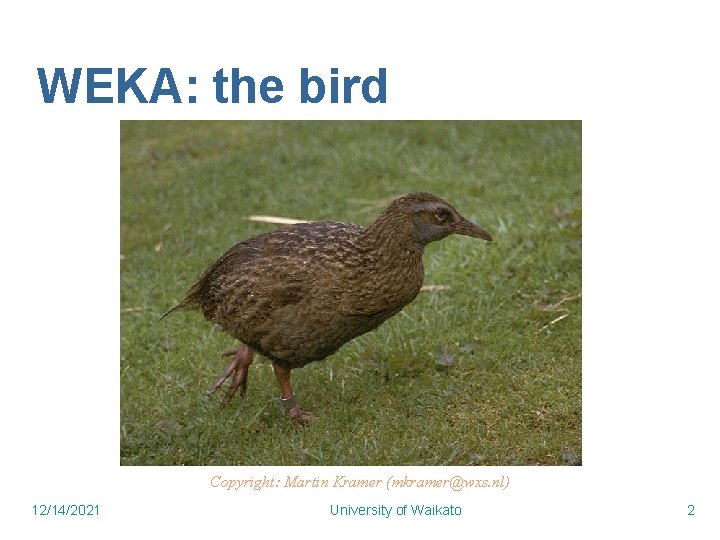
WEKA: the bird Copyright: Martin Kramer (mkramer@wxs. nl) 12/14/2021 University of Waikato 2
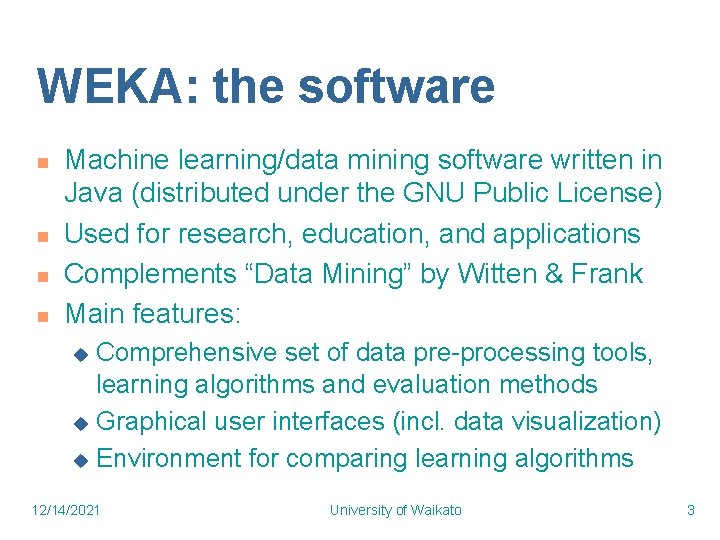
WEKA: the software n n Machine learning/data mining software written in Java (distributed under the GNU Public License) Used for research, education, and applications Complements “Data Mining” by Witten & Frank Main features: Comprehensive set of data pre-processing tools, learning algorithms and evaluation methods u Graphical user interfaces (incl. data visualization) u Environment for comparing learning algorithms u 12/14/2021 University of Waikato 3
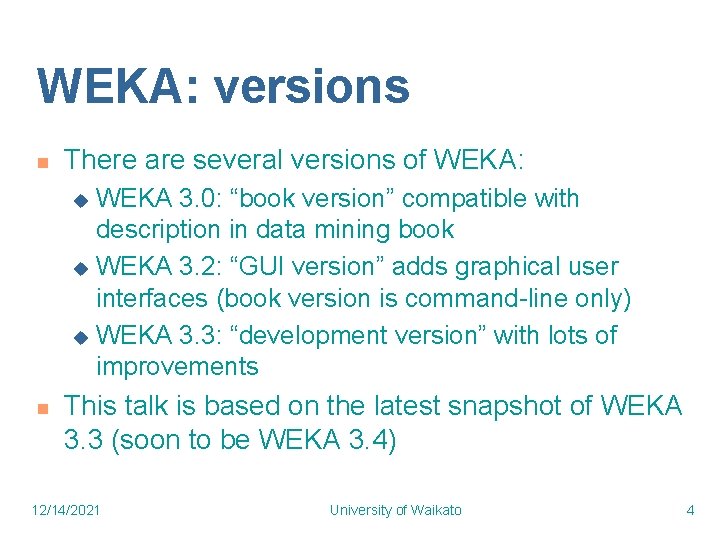
WEKA: versions n There are several versions of WEKA: WEKA 3. 0: “book version” compatible with description in data mining book u WEKA 3. 2: “GUI version” adds graphical user interfaces (book version is command-line only) u WEKA 3. 3: “development version” with lots of improvements u n This talk is based on the latest snapshot of WEKA 3. 3 (soon to be WEKA 3. 4) 12/14/2021 University of Waikato 4
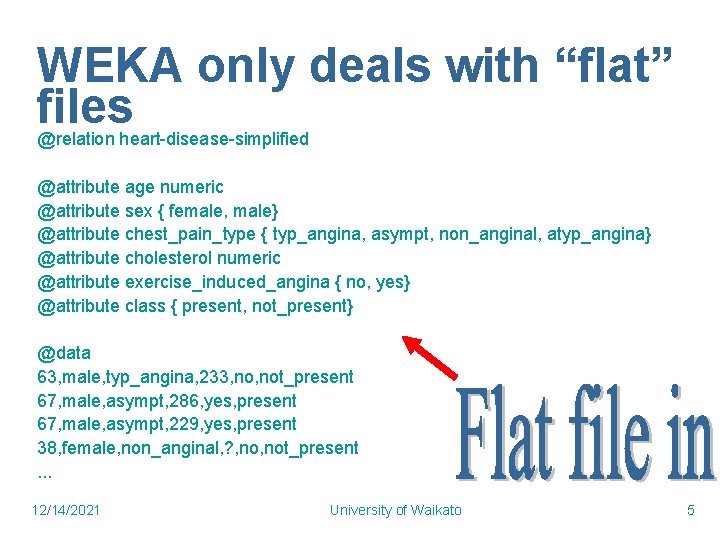
WEKA only deals with “flat” files @relation heart-disease-simplified @attribute age numeric @attribute sex { female, male} @attribute chest_pain_type { typ_angina, asympt, non_anginal, atyp_angina} @attribute cholesterol numeric @attribute exercise_induced_angina { no, yes} @attribute class { present, not_present} @data 63, male, typ_angina, 233, not_present 67, male, asympt, 286, yes, present 67, male, asympt, 229, yes, present 38, female, non_anginal, ? , not_present. . . 12/14/2021 University of Waikato 5
WEKA only deals with “flat” files @relation heart-disease-simplified @attribute age numeric @attribute sex { female, male} @attribute chest_pain_type { typ_angina, asympt, non_anginal, atyp_angina} @attribute cholesterol numeric @attribute exercise_induced_angina { no, yes} @attribute class { present, not_present} @data 63, male, typ_angina, 233, not_present 67, male, asympt, 286, yes, present 67, male, asympt, 229, yes, present 38, female, non_anginal, ? , not_present. . . 12/14/2021 University of Waikato 6
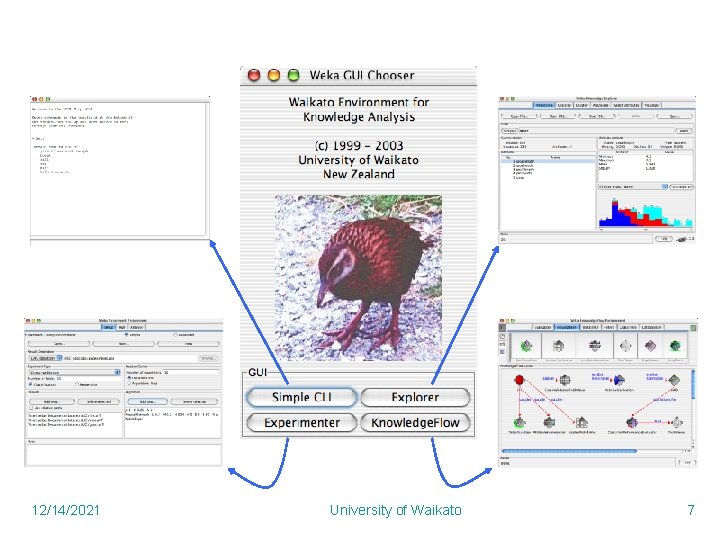
12/14/2021 University of Waikato 7
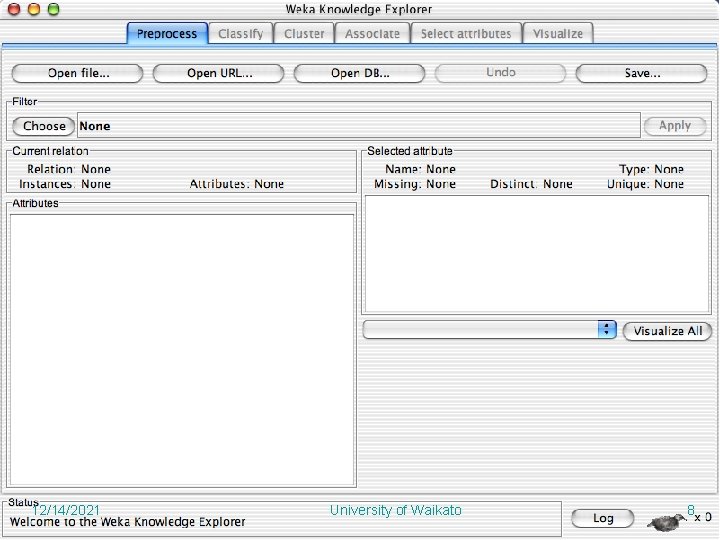
12/14/2021 University of Waikato 8
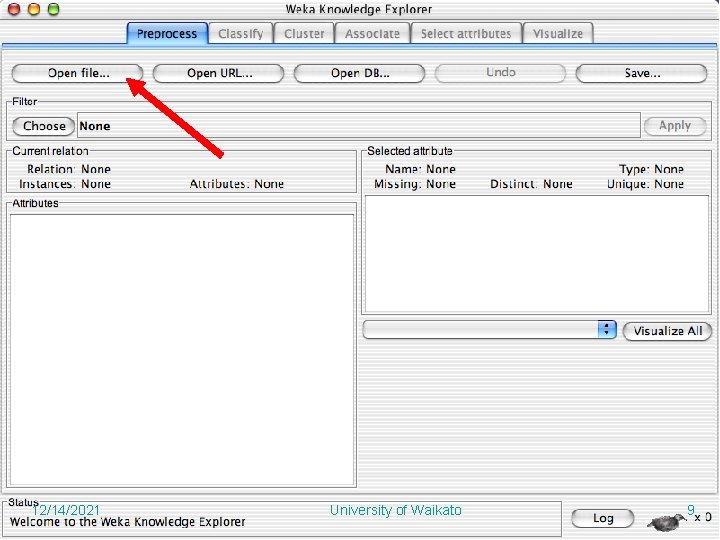
12/14/2021 University of Waikato 9
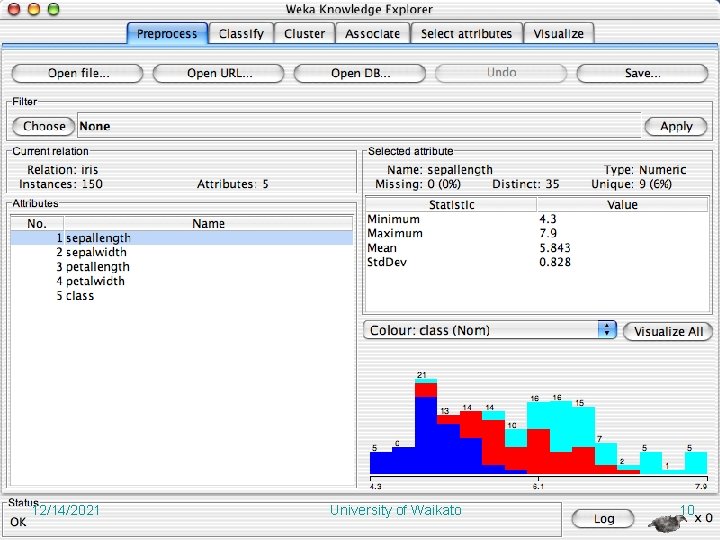
12/14/2021 University of Waikato 10
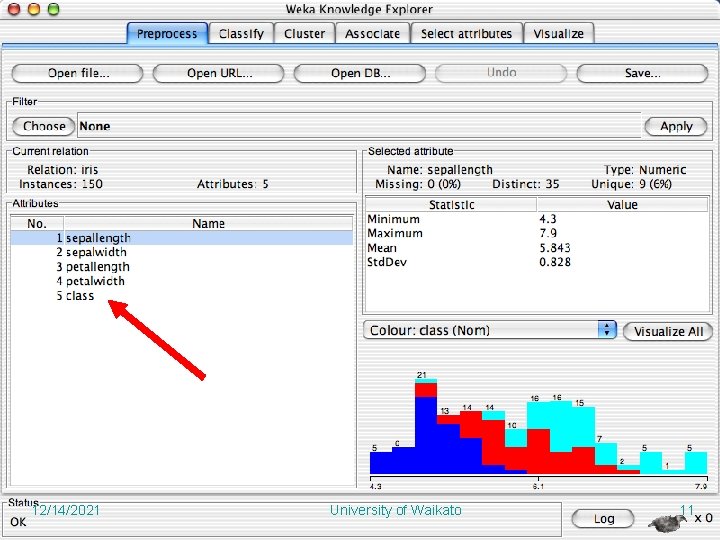
12/14/2021 University of Waikato 11
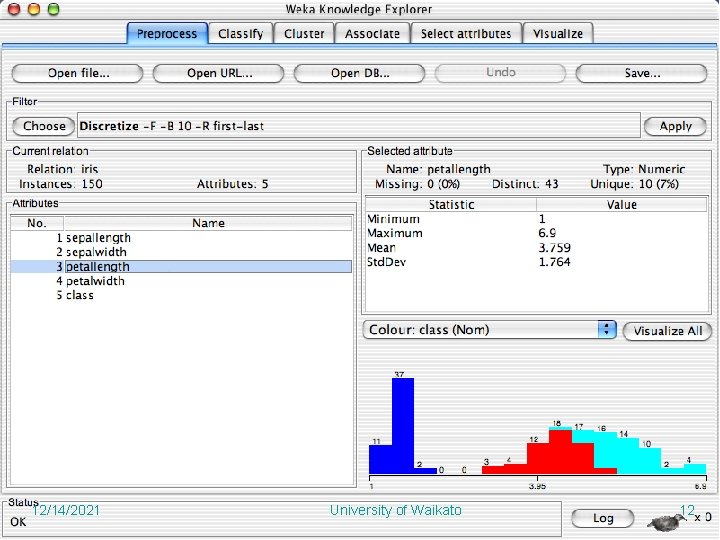
12/14/2021 University of Waikato 12
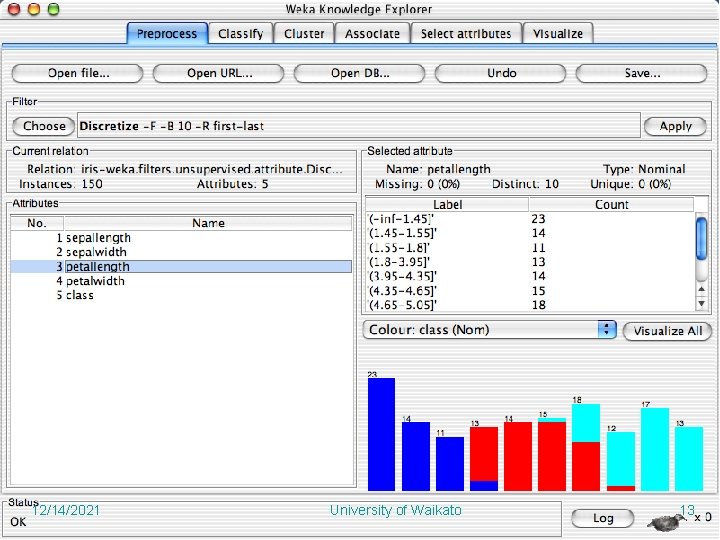
12/14/2021 University of Waikato 13
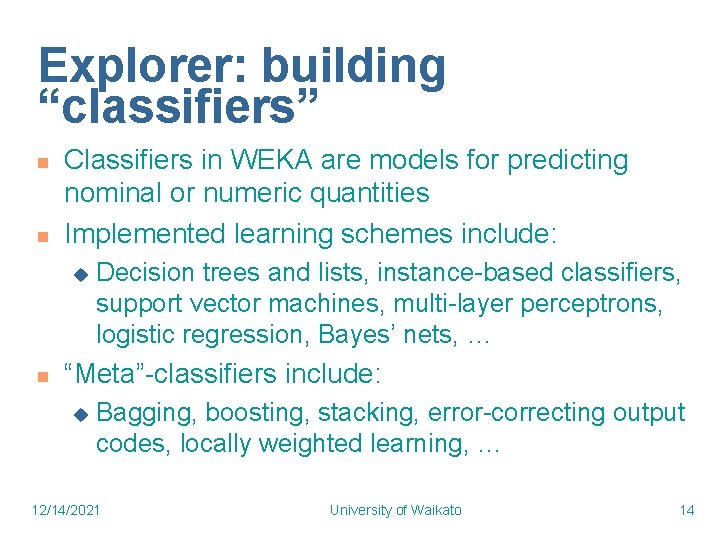
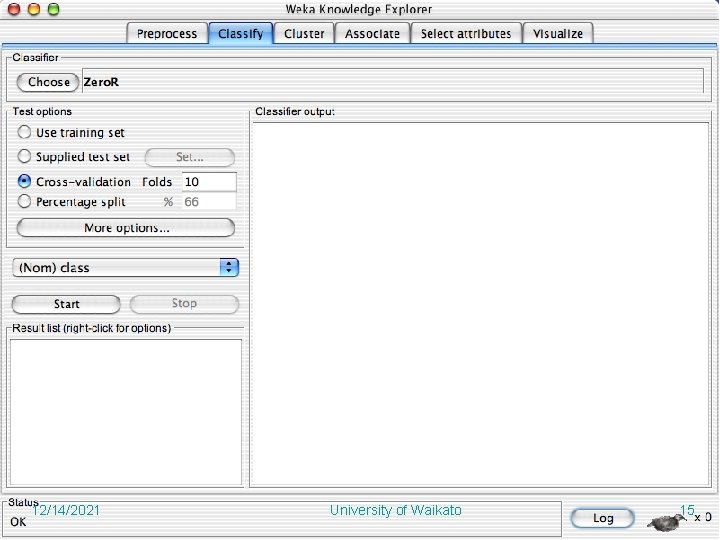
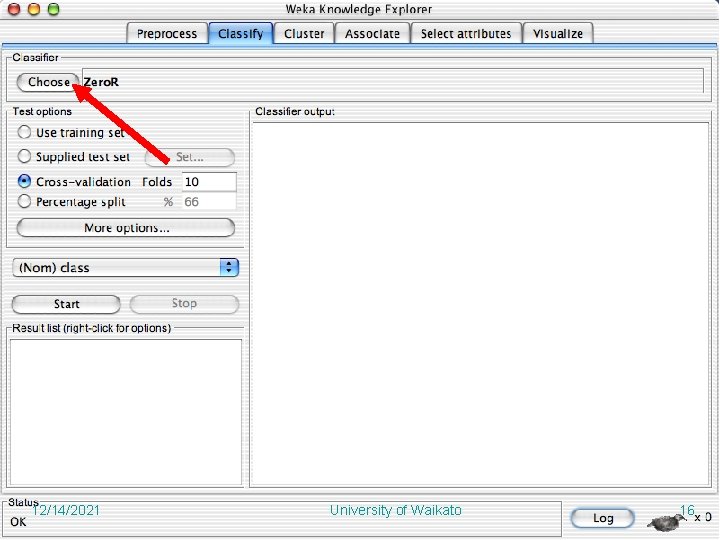
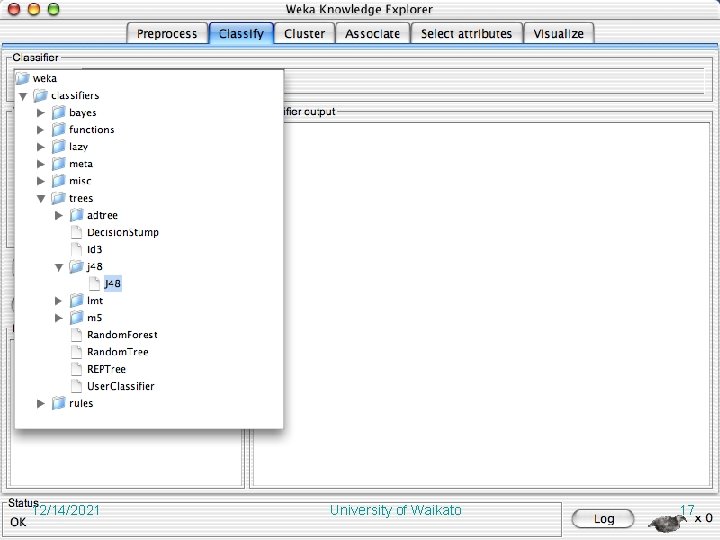
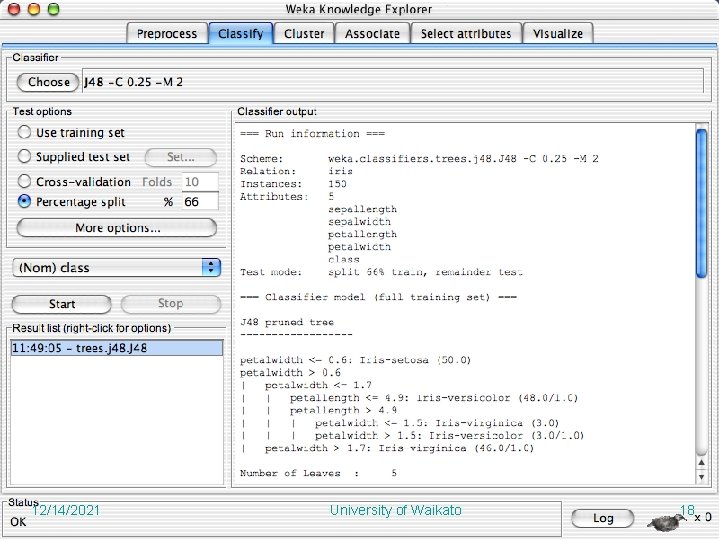
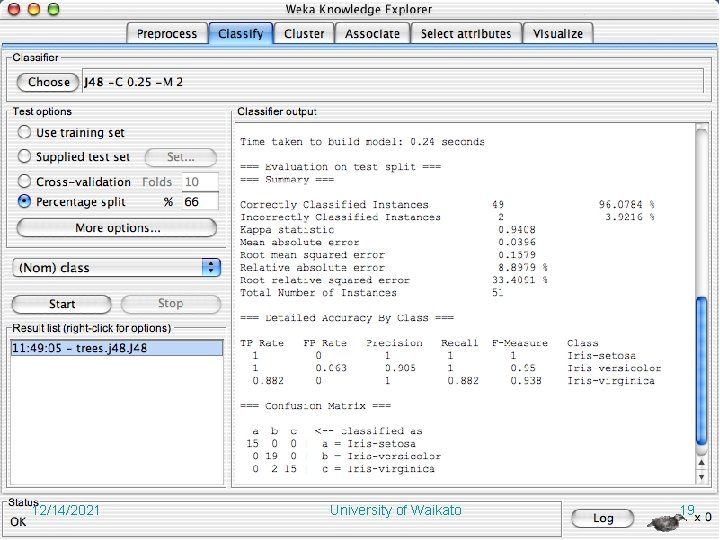
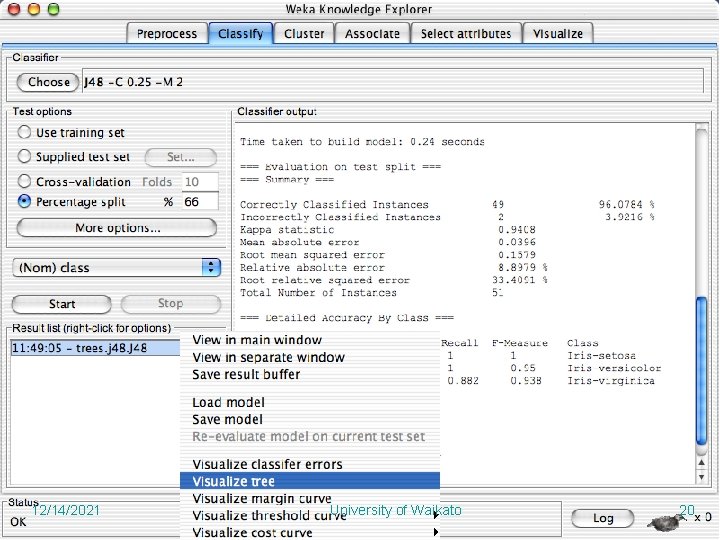
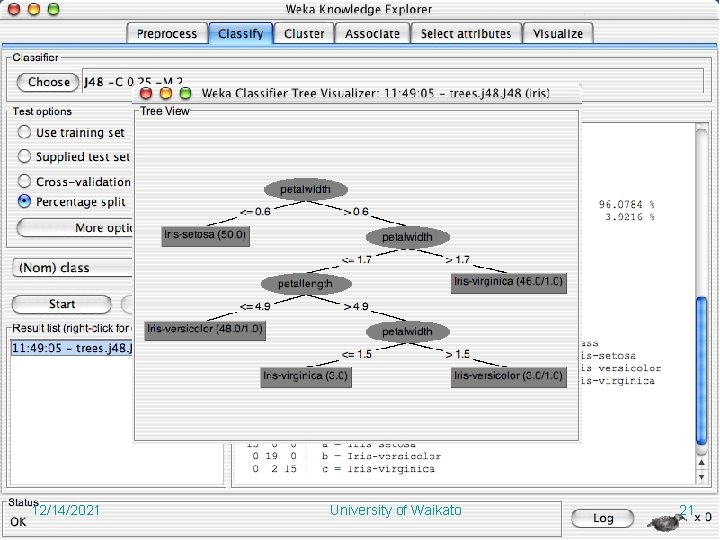
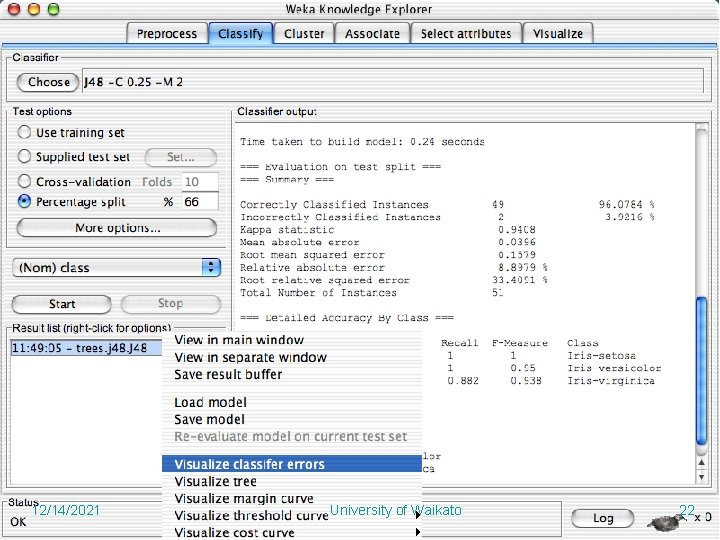
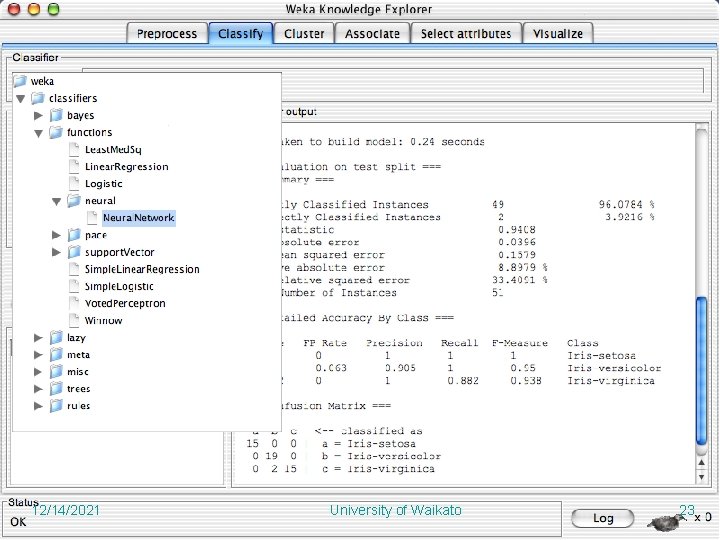
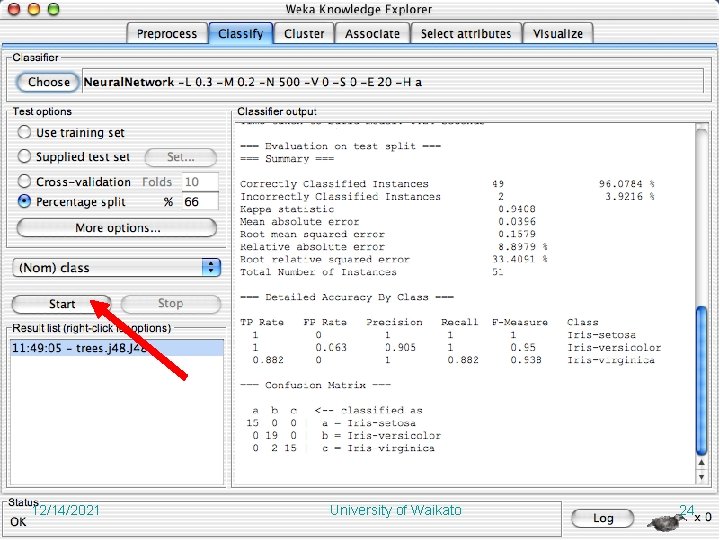
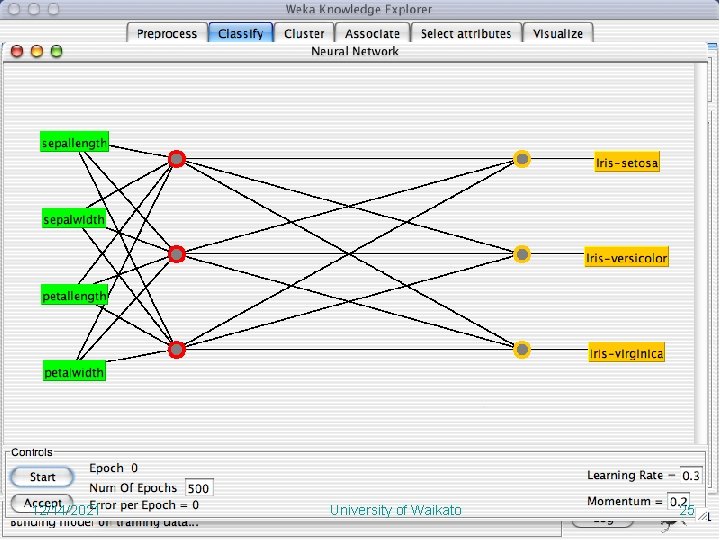
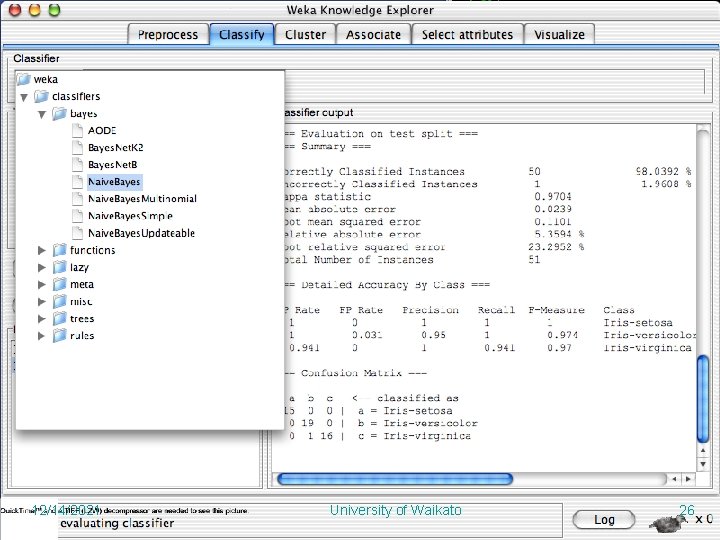
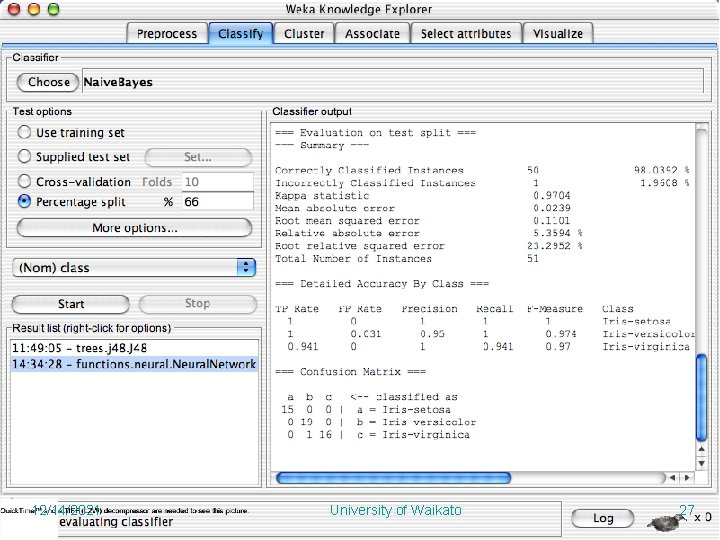
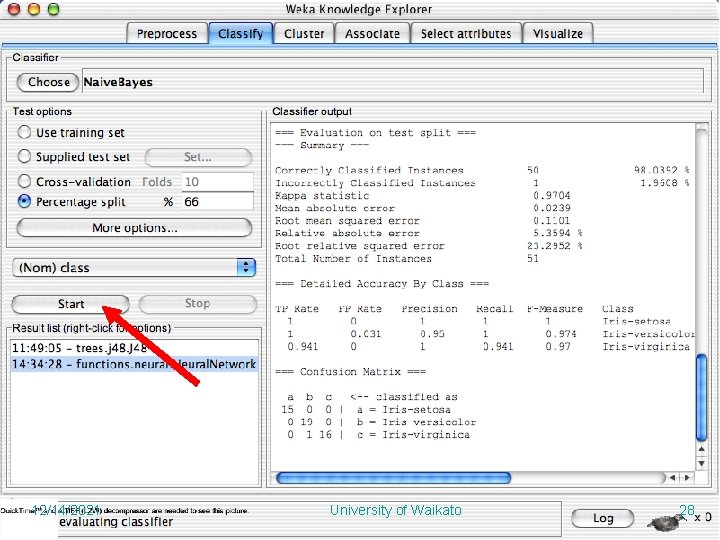
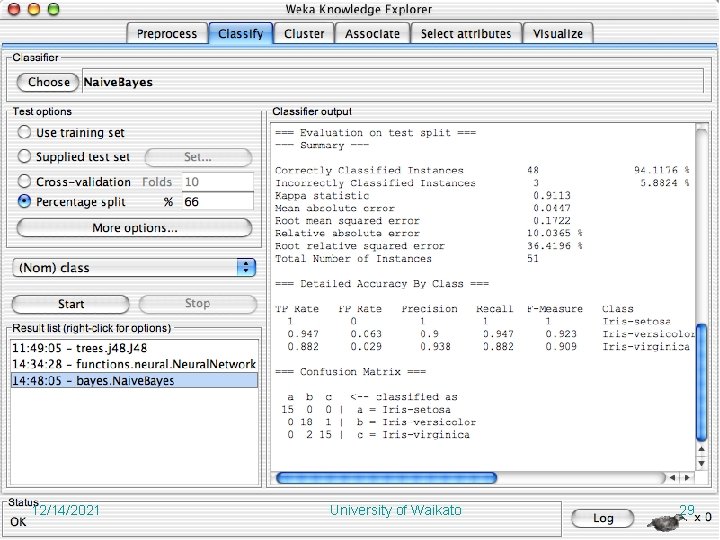
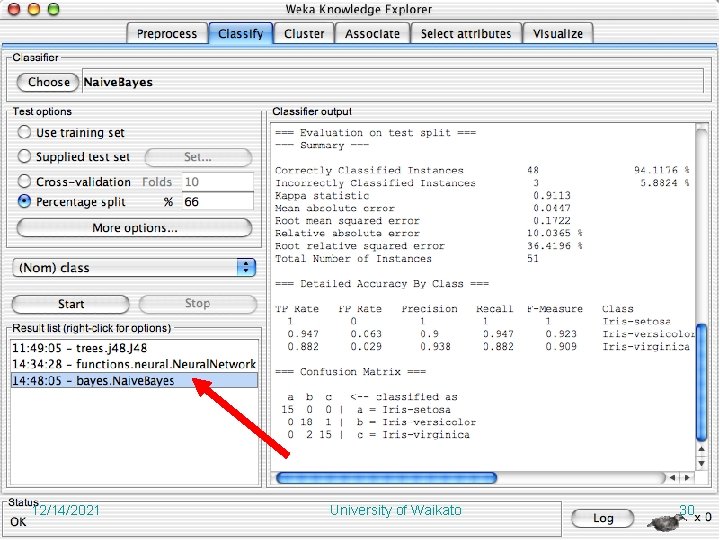
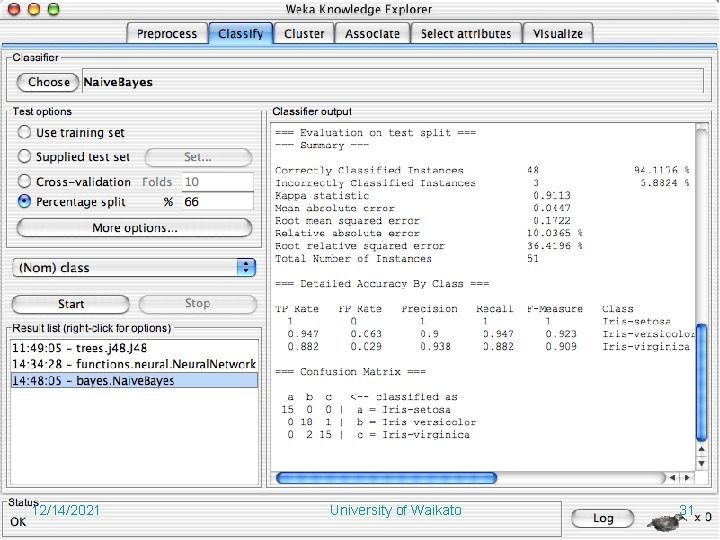
Explorer: building “classifiers” n n Classifiers in WEKA are models for predicting nominal or numeric quantities Implemented learning schemes include: u n Decision trees and lists, instance-based classifiers, support vector machines, multi-layer perceptrons, logistic regression, Bayes’ nets, … “Meta”-classifiers include: u Bagging, boosting, stacking, error-correcting output codes, locally weighted learning, … 12/14/2021 University of Waikato 14
12/14/2021 University of Waikato 15
12/14/2021 University of Waikato 16
12/14/2021 University of Waikato 17
12/14/2021 University of Waikato 18
12/14/2021 University of Waikato 19
12/14/2021 University of Waikato 20
12/14/2021 University of Waikato 21
12/14/2021 University of Waikato 22
12/14/2021 University of Waikato 23
12/14/2021 University of Waikato 24
12/14/2021 University of Waikato 25
12/14/2021 University of Waikato 26
12/14/2021 University of Waikato 27
12/14/2021 University of Waikato 28
12/14/2021 University of Waikato 29
12/14/2021 University of Waikato 30
12/14/2021 University of Waikato 31
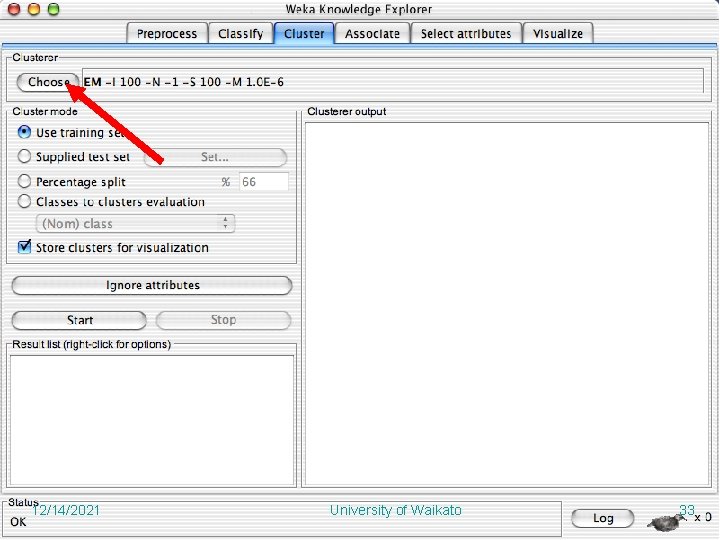
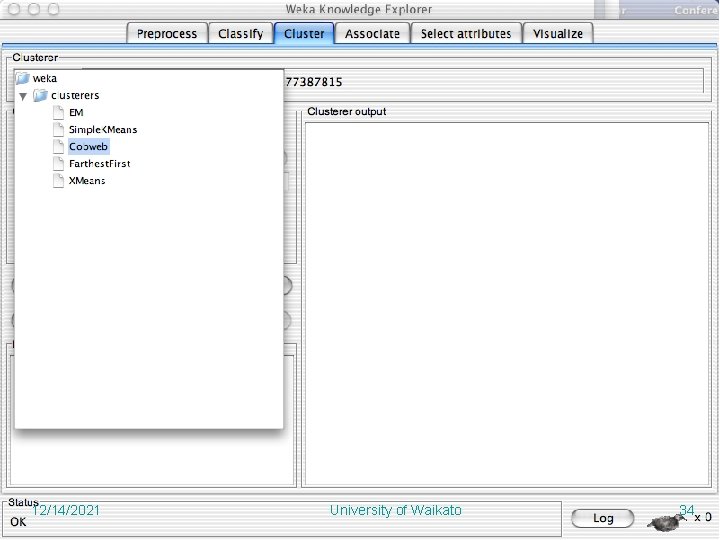
Explorer: clustering data n n WEKA contains “clusterers” for finding groups of similar instances in a dataset Implemented schemes are: u n n k-Means, EM, Cobweb, X-means, Farthest. First Clusters can be visualized and compared to “true” clusters (if given) Evaluation based on loglikelihood if clustering scheme produces a probability distribution 12/14/2021 University of Waikato 32
12/14/2021 University of Waikato 33
12/14/2021 University of Waikato 34
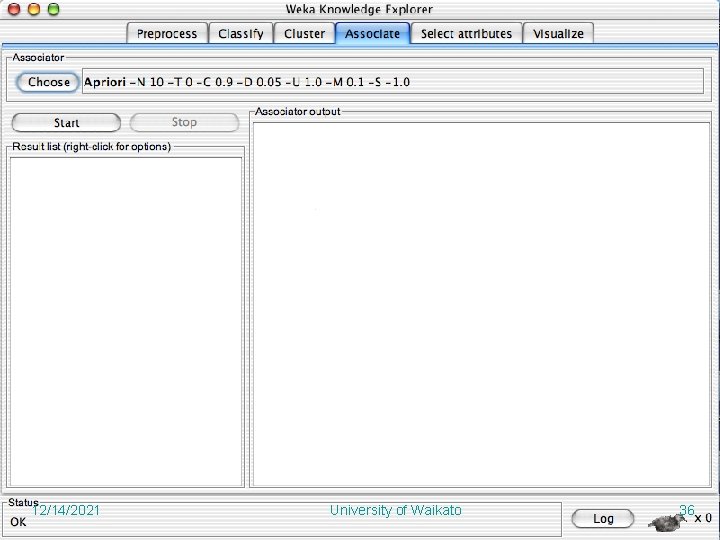
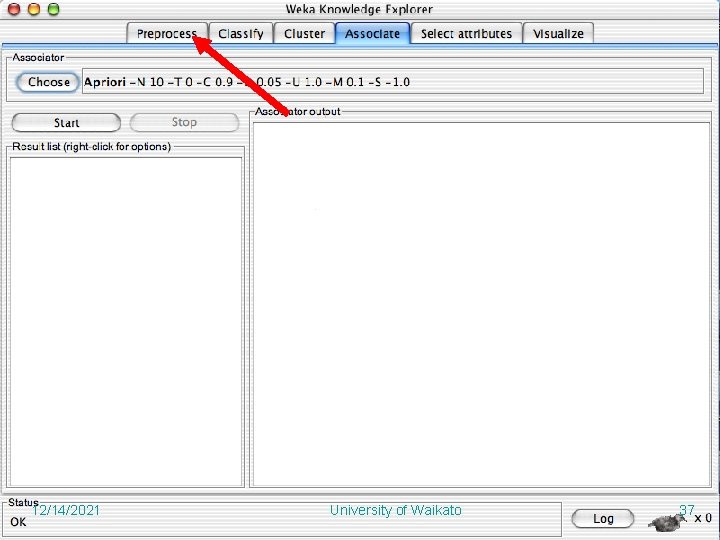
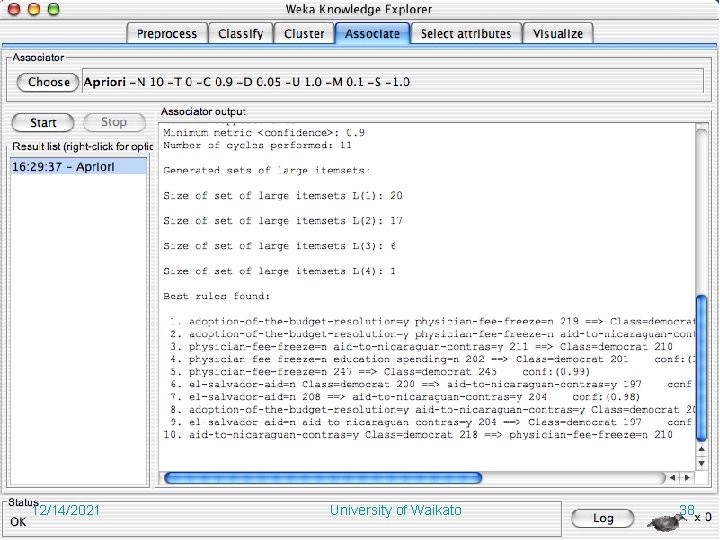
Explorer: finding associations n WEKA contains an implementation of the Apriori algorithm for learning association rules u n Can identify statistical dependencies between groups of attributes: u n Works only with discrete data milk, butter bread, eggs (with confidence 0. 9 and support 2000) Apriori can compute all rules that have a given minimum support and exceed a given confidence 12/14/2021 University of Waikato 35
12/14/2021 University of Waikato 36
12/14/2021 University of Waikato 37
12/14/2021 University of Waikato 38
Explorer: attribute selection n n Panel that can be used to investigate which (subsets of) attributes are the most predictive ones Attribute selection methods contain two parts: A search method: best-first, forward selection, random, exhaustive, genetic algorithm, ranking u An evaluation method: correlation-based, wrapper, information gain, chi-squared, … u n Very flexible: WEKA allows (almost) arbitrary combinations of these two 12/14/2021 University of Waikato 39
Explorer: data visualization n n Visualization very useful in practice: e. g. helps to determine difficulty of the learning problem WEKA can visualize single attributes (1 -d) and pairs of attributes (2 -d) u n n n To do: rotating 3 -d visualizations (Xgobi-style) Color-coded class values “Jitter” option to deal with nominal attributes (and to detect “hidden” data points) “Zoom-in” function 12/14/2021 University of Waikato 40
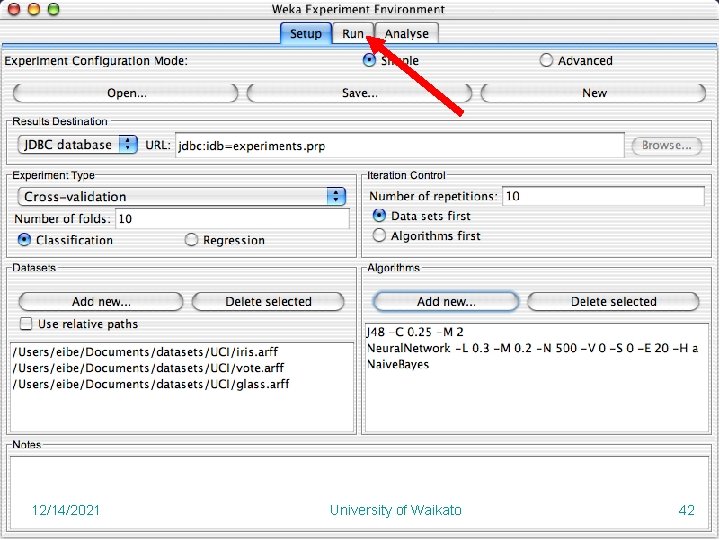
Performing experiments n n n Experimenter makes it easy to compare the performance of different learning schemes For classification and regression problems Results can be written into file or database Evaluation options: cross-validation, learning curve, hold-out Can also iterate over different parameter settings Significance-testing built in! 12/14/2021 University of Waikato 41
12/14/2021 University of Waikato 42
12/14/2021 University of Waikato 43
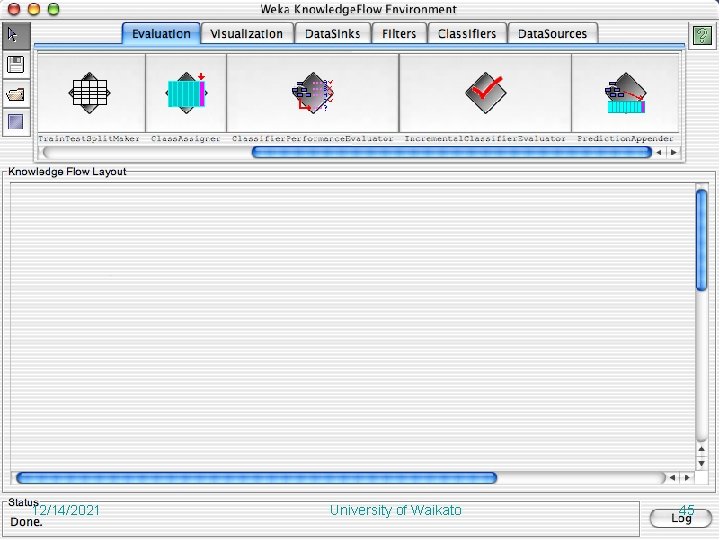
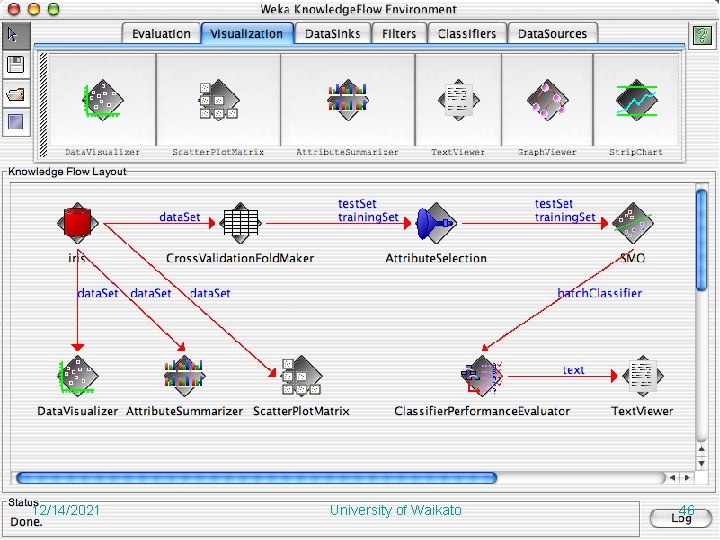
The Knowledge Flow GUI n n n New graphical user interface for WEKA Java-Beans-based interface for setting up and running machine learning experiments Data sources, classifiers, etc. are beans and can be connected graphically Data “flows” through components: e. g. , “data source” -> “filter” -> “classifier” -> “evaluator” Layouts can be saved and loaded again later 12/14/2021 University of Waikato 44
12/14/2021 University of Waikato 45
12/14/2021 University of Waikato 46
12/14/2021 University of Waikato 47
12/14/2021 University of Waikato 48
Conclusion: try it yourself! n § § WEKA is available at http: //www. cs. waikato. ac. nz/ml/weka Also has a list of projects based on WEKA contributors: Abdelaziz Mahoui, Alexander K. Seewald, Ashraf M. Kibriya, Bernhard Pfahringer , Brent Martin, Peter Flach, Eibe Frank , Gabi Schmidberger , Ian H. Witten , J. Lindgren, Janice Boughton, Jason Wells, Len Trigg, Lucio de Souza Coelho, Malcolm Ware, Mark Hall , Remco Bouckaert , Richard Kirkby, Shane Butler, Shane Legg, Stuart Inglis, Sylvain Roy, Tony Voyle, Xin Xu, Yong Wang, Zhihai Wang 12/14/2021 University of Waikato 49