
n John Doll n Commissioner for Patents USPTO
- Slides: 58
n John Doll n Commissioner for Patents
USPTO Request for Public Input: Strategic Planning u Agency developing new strategic plan § § Part of budget process Planning for at least six-year period Anticipate, plan for USPTO role in changing environment Seeking broad perspective: § § u input from interested persons, stakeholders, including Industries (large and small business), inventors, employees, practitioners Please send ideas/thoughts/suggestions to Strategic. Planning 1@uspto. gov 2
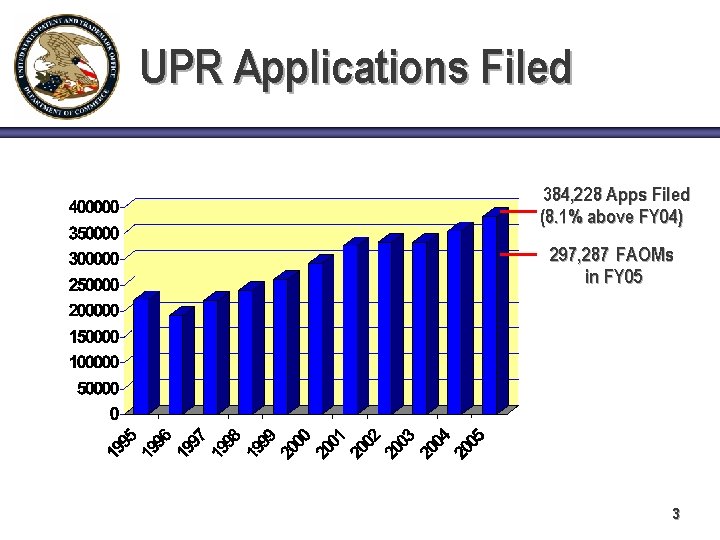
UPR Applications Filed 384, 228 Apps Filed (8. 1% above FY 04) 297, 287 FAOMs in FY 05 3
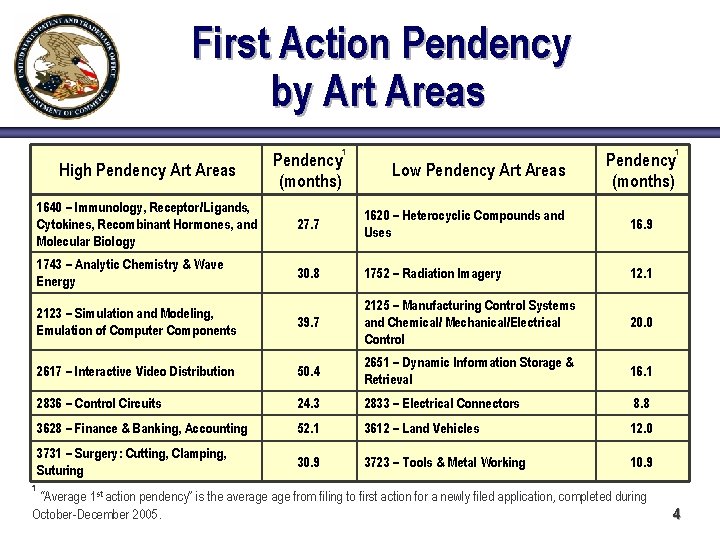
First Action Pendency by Art Areas 1 1 High Pendency Art Areas Pendency (months) 1640 – Immunology, Receptor/ Ligands, Cytokines, Recombinant Hormones, and Molecular Biology 27. 7 1620 – Heterocyclic Compounds and Uses 16. 9 1743 – Analytic Chemistry & Wave Energy 30. 8 1752 – Radiation Imagery 12. 1 2123 – Simulation and Modeling, Emulation of Computer Components 39. 7 2125 – Manufacturing Control Systems and Chemical/ Mechanical/Electrical Control 20. 0 2617 – Interactive Video Distribution 50. 4 2651 – Dynamic Information Storage & Retrieval 16. 1 2836 – Control Circuits 24. 3 2833 – Electrical Connectors 8. 8 3628 – Finance & Banking, Accounting 52. 1 3612 – Land Vehicles 12. 0 3731 – Surgery: Cutting, Clamping, Suturing 30. 9 3723 – Tools & Metal Working 10. 9 Low Pendency Art Areas Pendency (months) 1 “Average 1 st action pendency” is the average from filing to first action for a newly filed application, completed during October-December 2005. 4
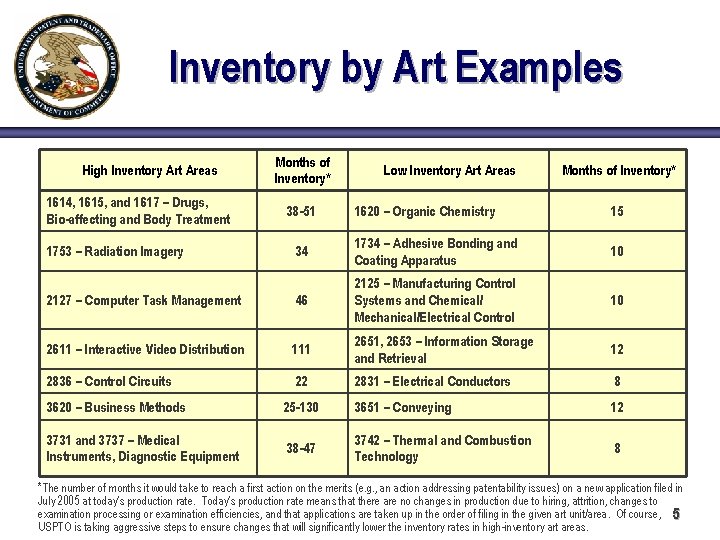
Inventory by Art Examples High Inventory Art Areas 1614, 1615, and 1617 – Drugs, Bio-affecting and Body Treatment Months of Inventory* 1620 – Organic Chemistry 15 34 1734 – Adhesive Bonding and Coating Apparatus 10 2127 – Computer Task Management 46 2125 – Manufacturing Control Systems and Chemical/ Mechanical/Electrical Control 10 2611 – Interactive Video Distribution 111 2651, 2653 – Information Storage and Retrieval 12 2836 – Control Circuits 22 2831 – Electrical Conductors 8 1753 – Radiation Imagery 38 -51 Low Inventory Art Areas 3620 – Business Methods 25 -130 3651 – Conveying 12 3731 and 3737 – Medical Instruments, Diagnostic Equipment 38 -47 3742 – Thermal and Combustion Technology 8 *The number of months it would take to reach a first action on the merits (e. g. , an action addressing patentability issues) on a new application filed in July 2005 at today’s production rate. Today’s production rate means that there are no changes in production due to hiring, attrition, changes to examination processing or examination efficiencies, and that applications are taken up in the order of filing in the given art unit/area. Of course, USPTO is taking aggressive steps to ensure changes that will significantly lower the inventory rates in high-inventory art areas. 5
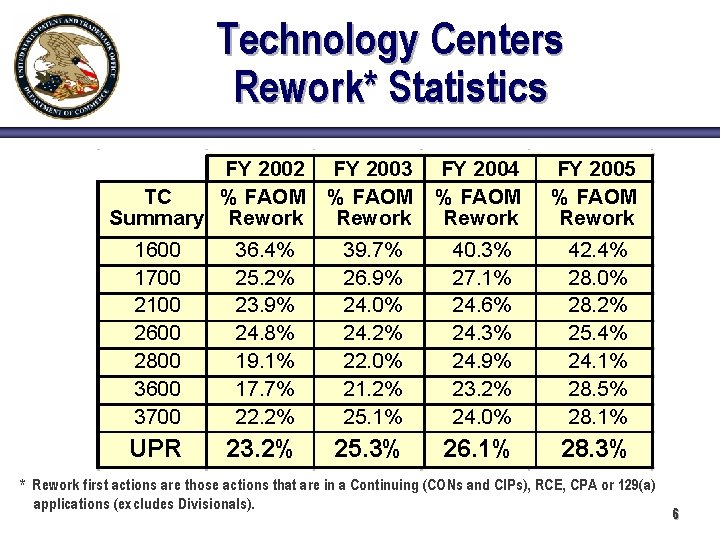
Technology Centers Rework* Statistics FY 2002 TC % FAOM Summary Rework 1600 36. 4% 1700 25. 2% 2100 23. 9% 2600 24. 8% 2800 19. 1% 3600 17. 7% 3700 22. 2% UPR 23. 2% FY 2003 % FAOM Rework 39. 7% 26. 9% 24. 0% 24. 2% 22. 0% 21. 2% 25. 1% FY 2004 % FAOM Rework 40. 3% 27. 1% 24. 6% 24. 3% 24. 9% 23. 2% 24. 0% FY 2005 % FAOM Rework 42. 4% 28. 0% 28. 2% 25. 4% 24. 1% 28. 5% 28. 1% 25. 3% 26. 1% 28. 3% * Rework first actions are those actions that are in a Continuing (CONs and CIPs), RCE, CPA or 129(a) applications (excludes Divisionals). 6
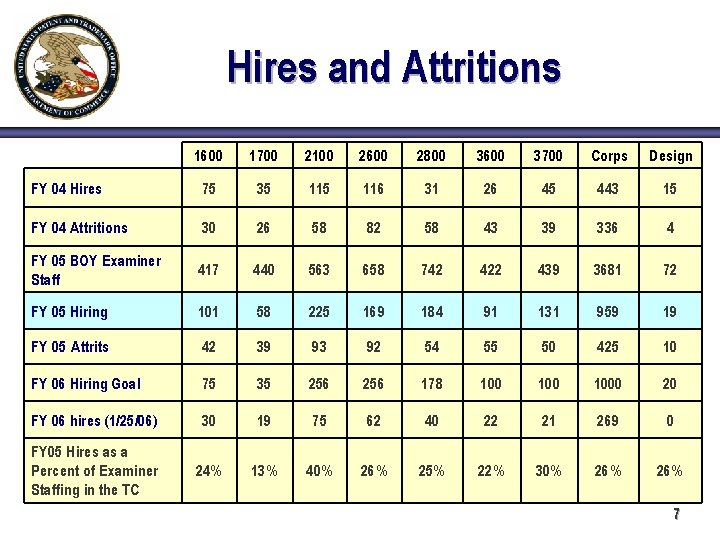
Hires and Attritions 1600 1700 2100 2600 2800 3600 3700 Corps Design FY 04 Hires 75 35 116 31 26 45 443 15 FY 04 Attritions 30 26 58 82 58 43 39 336 4 FY 05 BOY Examiner Staff 417 440 563 658 742 422 439 3681 72 FY 05 Hiring 101 58 225 169 184 91 131 959 19 FY 05 Attrits 42 39 93 92 54 55 50 425 10 FY 06 Hiring Goal 75 35 256 178 100 1000 20 FY 06 hires (1/25/06) 30 19 75 62 40 22 21 269 0 FY 05 Hires as a Percent of Examiner Staffing in the TC 24% 13% 40% 26% 25% 22% 30% 26% 7
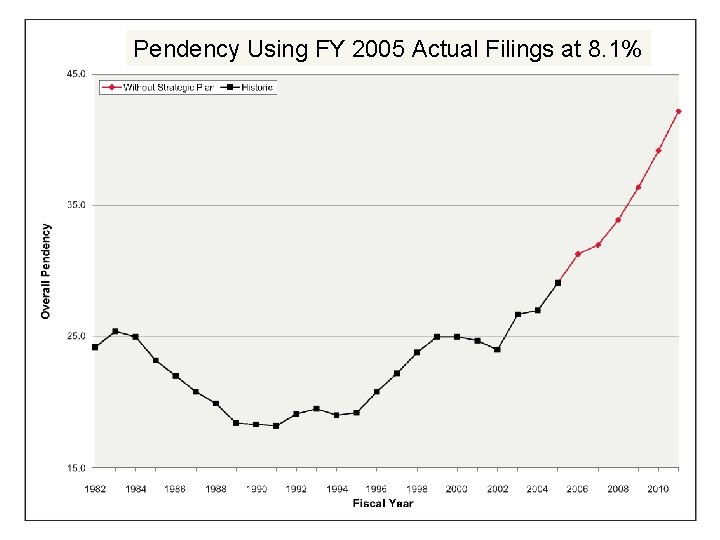
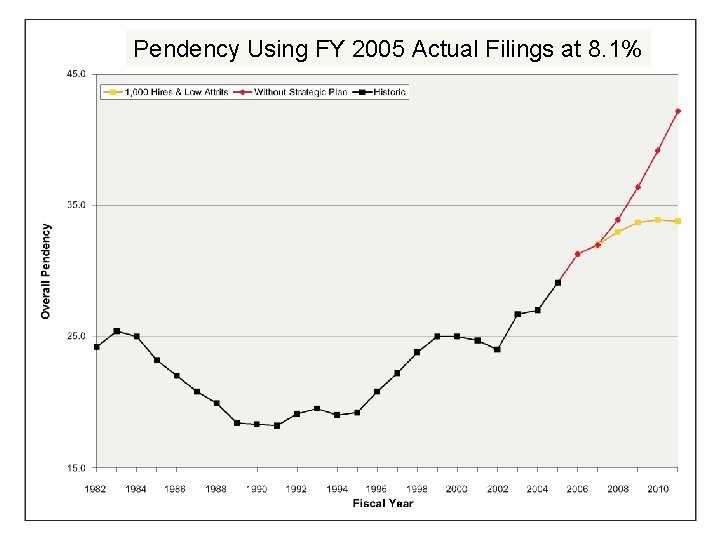
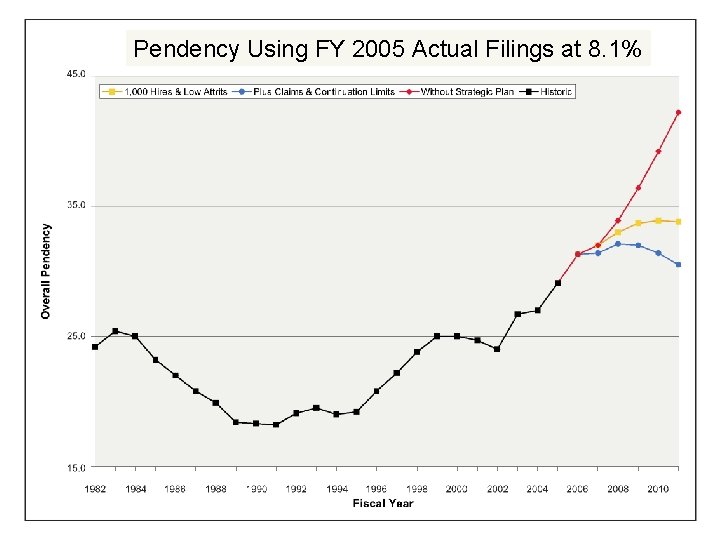
Pendency Using FY 2005 Actual Filings at 8. 1%
Pendency Using FY 2005 Actual Filings at 8. 1%
Summary of Proposed Rule Changes to Continuations and Double Patenting
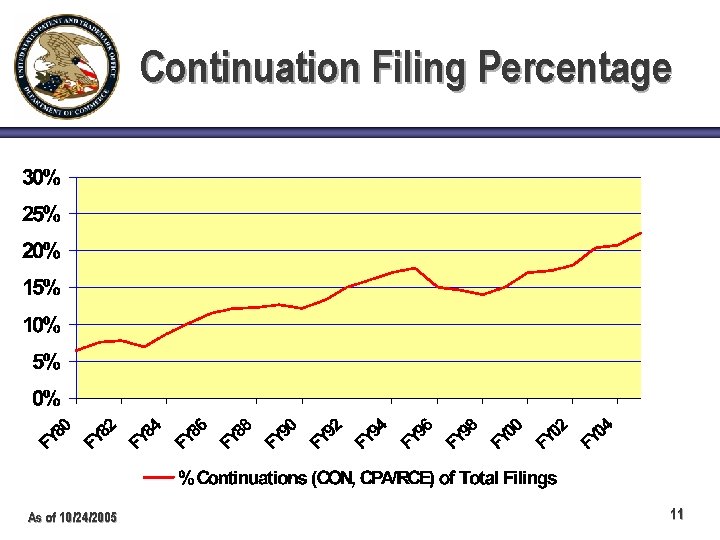
Continuation Filing Percentage As of 10/24/2005 11
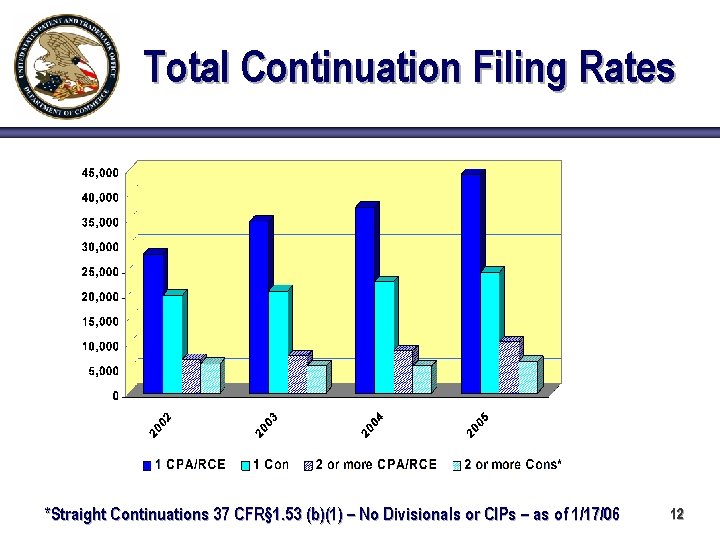
Total Continuation Filing Rates *Straight Continuations 37 CFR§ 1. 53 (b)(1) – No Divisionals or CIPs – as of 1/17/06 12
Continuations/Double Patenting Proposed Rulemaking n Main objectives: É É Assure adequate opportunity for prosecution to provide appropriate invention protection Limit the “recycling” of old applications to permit the USPTO to focus examining resources on “new” applications Create greater public certainty on scope of patent protection Reduce the burden on the USPTO to review applications for double patenting 13
Central Provisions on Continuation Practice n No change for the vast majority of applications n One continuation (broadly defined) always available as of right, whether in the form of É É n continuation application, or a request for continued examination (RCE); but with special rules fordivisionalsand continuations-in-part (CIPs) Additional continuations available if applicant can show that the amendment, argument or evidence could not have been earlier submitted 14
Divisionals n Only involuntarydivisionalsto be permitted: É É n Prior application subject to unity of invention (PCT Rule 13) requirement or restriction requirement (35 USC 121); and Divisional contains only claims to inventions identified in the requirement and not elected in prior-filed application Divisional application may claim the benefit of only a single prior-filednonprovisionalapplication. 15
Continuations-in-Part n Identify what claims are supported by the parent’s disclosure É É n Identified claims (which are supported by parent’s disclosure) are given the earlier filing date Claims not identified are only entitled to the filing date of the CIP A continuation of the CIP is permitted but all claims only entitled to benefit of filing date of CIP É Practice consequence: Only include “new matter” claims in continuation from CIP 16
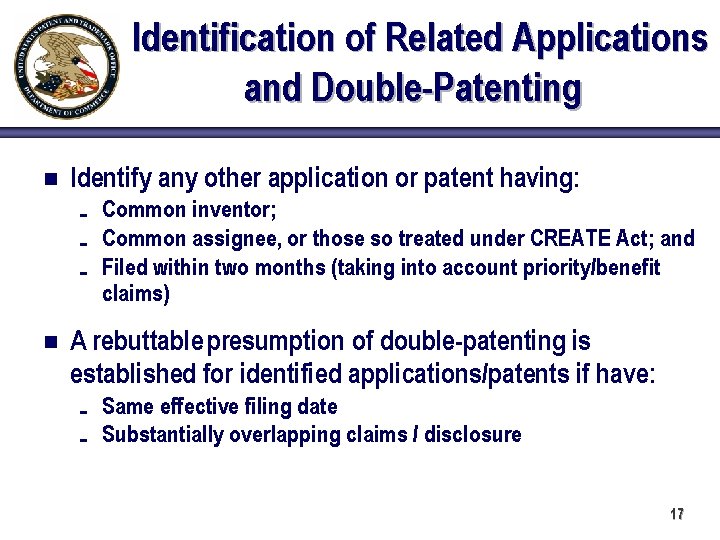
Identification of Related Applications and Double-Patenting n Identify any other application or patent having: É É É n Common inventor; Common assignee, or those so treated under CREATE Act; and Filed within two months (taking into account priority/benefit claims) A rebuttable presumption of double-patenting is established for identified applications/patents if have: É É Same effective filing date Substantially overlapping claims / disclosure 17
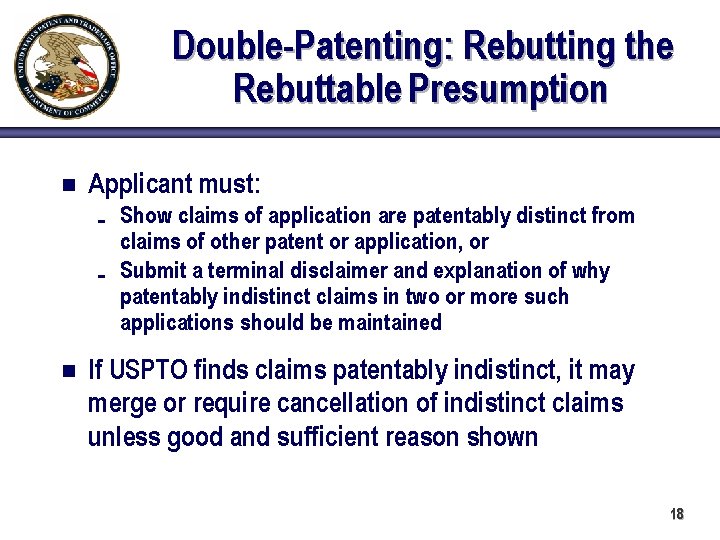
Double-Patenting: Rebutting the Rebuttable Presumption n Applicant must: É É n Show claims of application are patentably distinct from claims of other patent or application, or Submit a terminal disclaimer and explanation of why patentably indistinct claims in two or more such applications should be maintained If USPTO finds claims patentably indistinct, it may merge or require cancellation of indistinct claims unless good and sufficient reason shown 18
Summary of Proposed Rule Changes to Claims
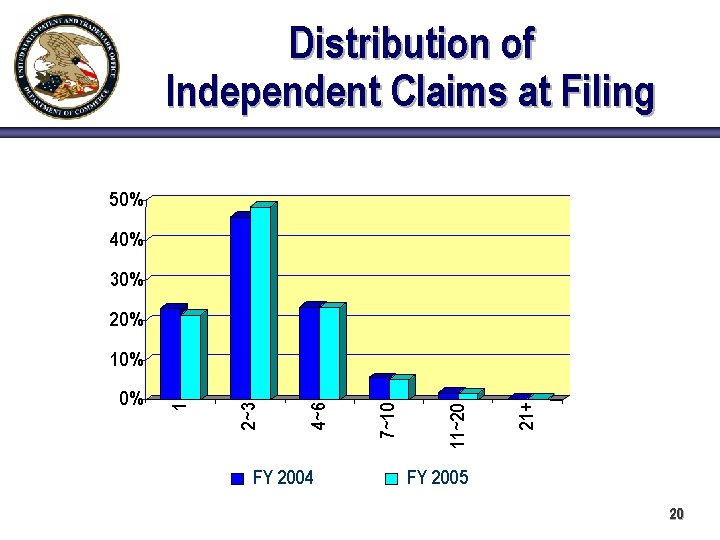
Distribution of Independent Claims at Filing 50% 40% 30% 20% FY 2004 21+ 11~20 7~10 4~6 2~3 0% 1 10% FY 2005 20
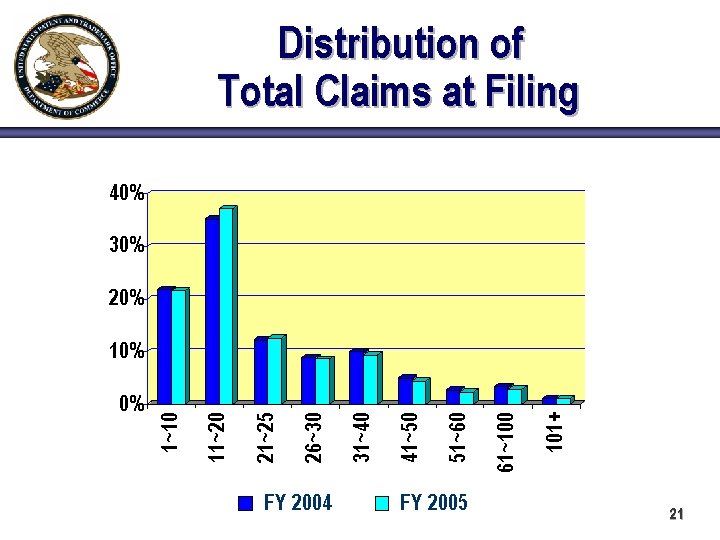
Distribution of Total Claims at Filing 40% 30% 20% FY 2004 FY 2005 101+ 61~100 51~60 41~50 31~40 26~30 21~25 11~20 0% 1~10 10% 21
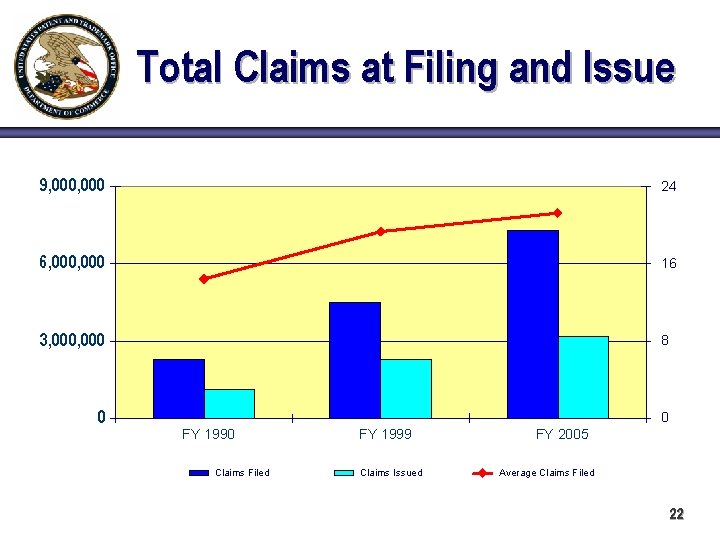
Total Claims at Filing and Issue 9, 000 24 6, 000 16 3, 000 8 0 0 FY 1990 Claims Filed FY 1999 Claims Issued FY 2005 Average Claims Filed 22
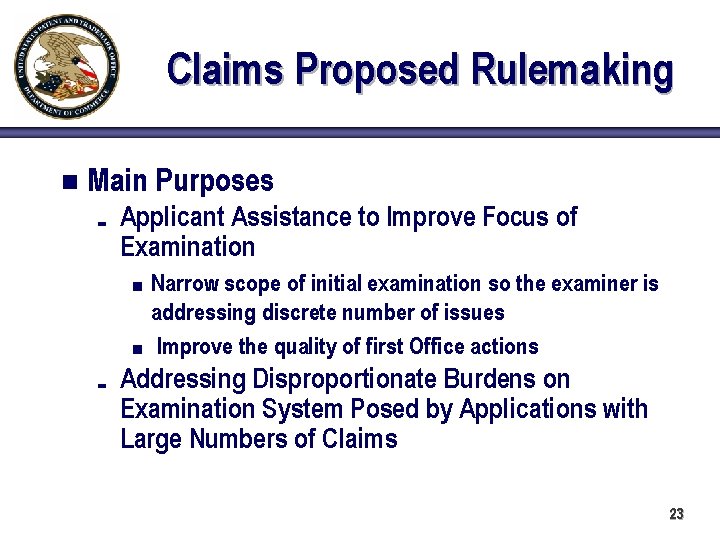
Claims Proposed Rulemaking n Main Purposes É Applicant Assistance to Improve Focus of Examination n n É Narrow scope of initial examination so the examiner is addressing discrete number of issues Improve the quality of first Office actions Addressing Disproportionate Burdens on Examination System Posed by Applications with Large Numbers of Claims 23
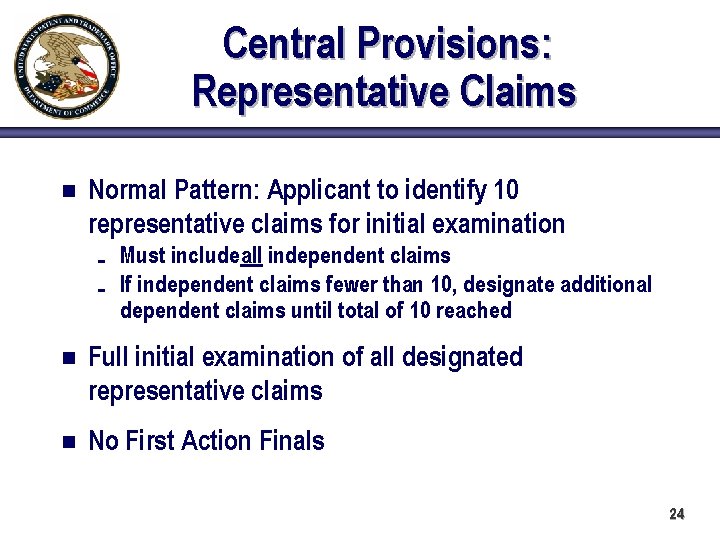
Central Provisions: Representative Claims n Normal Pattern: Applicant to identify 10 representative claims for initial examination É É Must include all independent claims If independent claims fewer than 10, designate additional dependent claims until total of 10 reached n Full initial examination of all designated representative claims n No First Action Finals 24
Non-Designated Dependent Claims n If representative claim is allowed, all its nondesignated dependent claims will be examined for compliance with 35 USC 101 and 112 n If representative claim is rejected, applicant may, for example: É É É Traverse rejection; or Amend the claim, including adding subject matter from a non-designated dependent claim; or Submit substitute representative claim 25
Beyond 10 Claims: When Initial Examination of 10 Isn’t Enough n Circumstance should arise rarely n Circumstance may arise: É É where Applicant needs more than 10 independent claims if Applicant cannot prioritize dependent claims so that there are only 10 representative (all independent and designated dependent) claims 26
Beyond the 10 Claims: Assistance to Examination Document Required n Applicant must: É Provide Patentability Report of all claims É Identify all limitations of representative claims that are disclosed by cited prior art references É Explain how all representative claims are patentable over the cited references 27
Strategic Choices: Before or During Prosecution n Decision may be made in course of prosecution É n Applicant may choose additional representative claims after first action. If total available representative claims exceeds 10, Patentability Report is required. Rather than provide the Patentability Report if there are more than 10 representative claims, applicant may: É É Cancel designated (or independent) claims Remove designation of dependent claims to bring total representative claims to 10 or less 28
Pendency Using FY 2005 Actual Filings at 8. 1%
Advanced Notice of Proposed Rule Changes for Patentability Reports
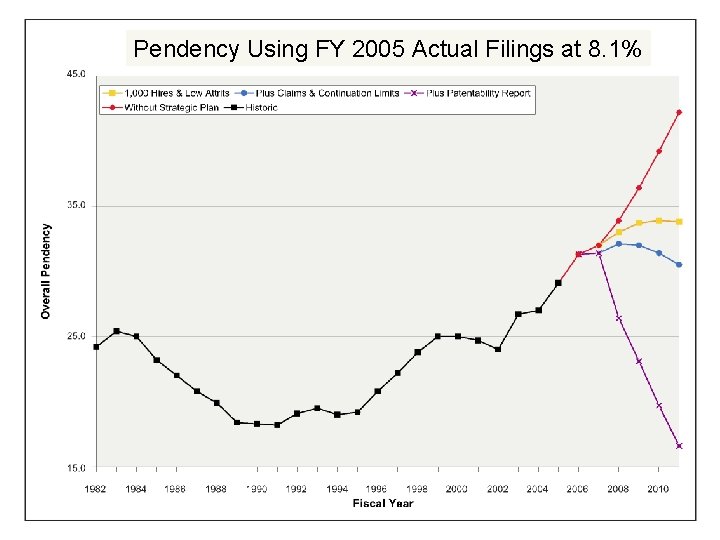
Pendency Using FY 2005 Actual Filings at 8. 1%
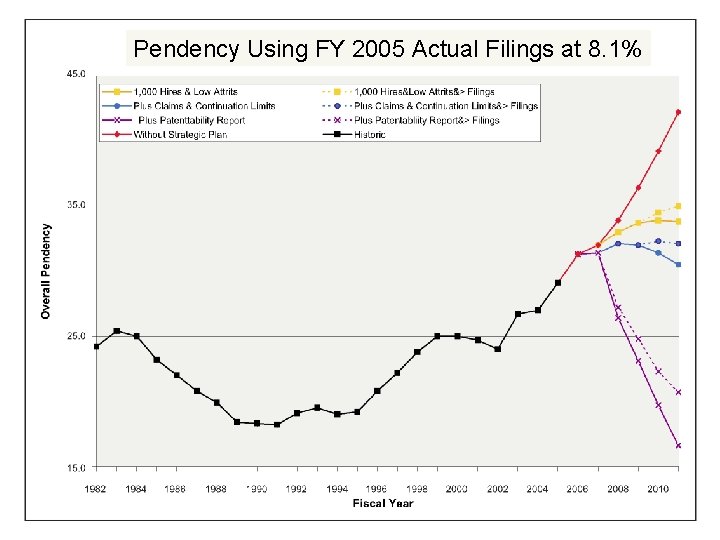
Pendency Using FY 2005 Actual Filings at 8. 1%
Comments Appreciated n Proposed Rules published in January 3, 2006, Federal Register É É n Continuations: 71 Fed. Reg. 48 Claims: 71 Fed. Reg. 61 120 -day comment period É É Comments due May 3, 2006 File by fax, e-mail, mail or Internet 33
To Submit Comments: Comments should be sent by electronic mail to the following addresses: n Continuations – AB 93 Comments@uspto. gov n Claims – AB 94 Comments@uspto. gov 34
n Changes to Practice for the Examination of n Claims in Patent Applications n Examples
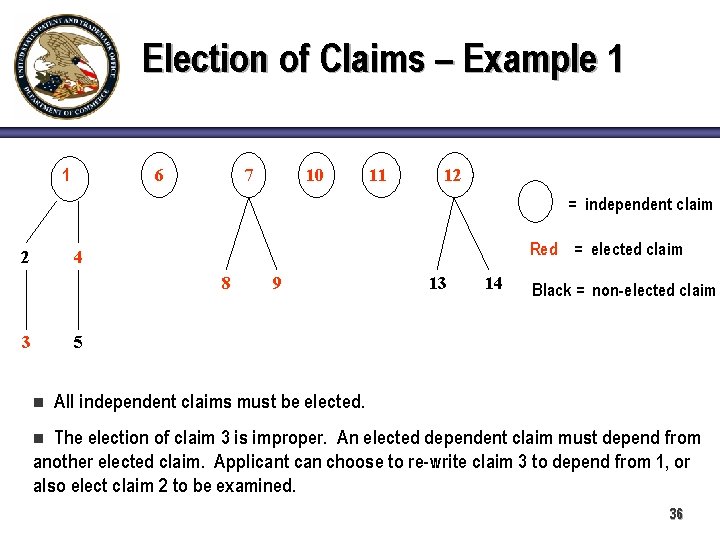
Election of Claims – Example 1 1 6 7 10 11 12 = independent claim 2 Red = elected claim 4 8 3 9 13 14 Black = non-elected claim 5 n All independent claims must be elected. The election of claim 3 is improper. An elected dependent claim must depend from another elected claim. Applicant can choose to re-write claim 3 to depend from 1, or also elect claim 2 to be examined. n 36
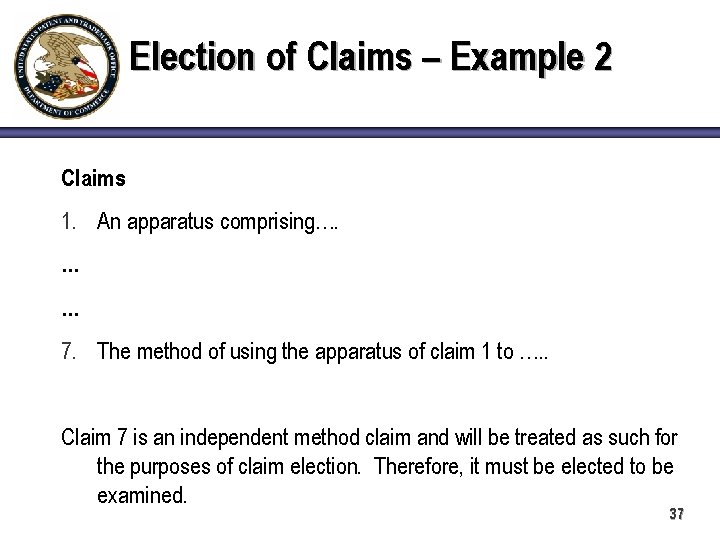
Election of Claims – Example 2 Claims 1. An apparatus comprising…. … … 7. The method of using the apparatus of claim 1 to …. . Claim 7 is an independent method claim and will be treated as such for the purposes of claim election. Therefore, it must be elected to be examined. 37
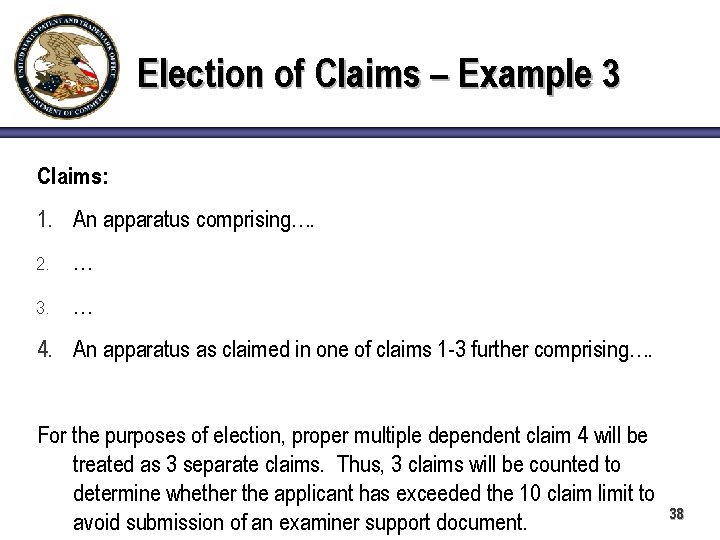
Election of Claims – Example 3 Claims: 1. An apparatus comprising…. 2. … 3. … 4. An apparatus as claimed in one of claims 1 -3 further comprising…. For the purposes of election, proper multiple dependent claim 4 will be treated as 3 separate claims. Thus, 3 claims will be counted to determine whether the applicant has exceeded the 10 claim limit to avoid submission of an examiner support document. 38
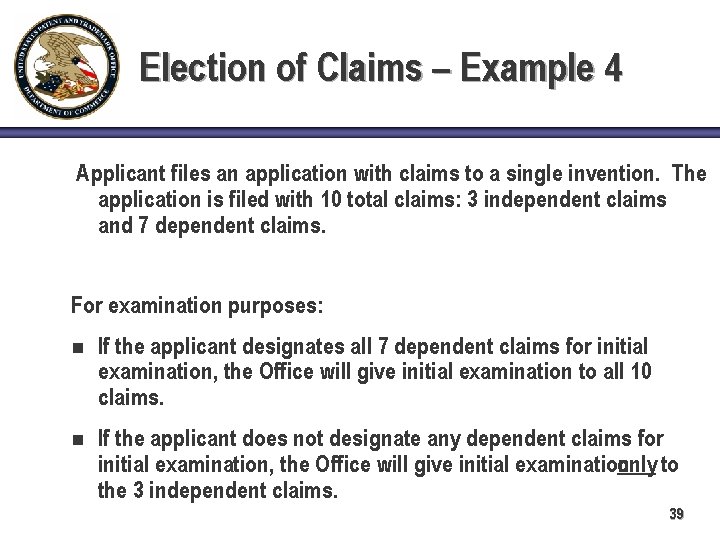
Election of Claims – Example 4 Applicant files an application with claims to a single invention. The application is filed with 10 total claims: 3 independent claims and 7 dependent claims. For examination purposes: n If the applicant designates all 7 dependent claims for initial examination, the Office will give initial examination to all 10 claims. n If the applicant does not designate any dependent claims for initial examination, the Office will give initial examination only to the 3 independent claims. 39
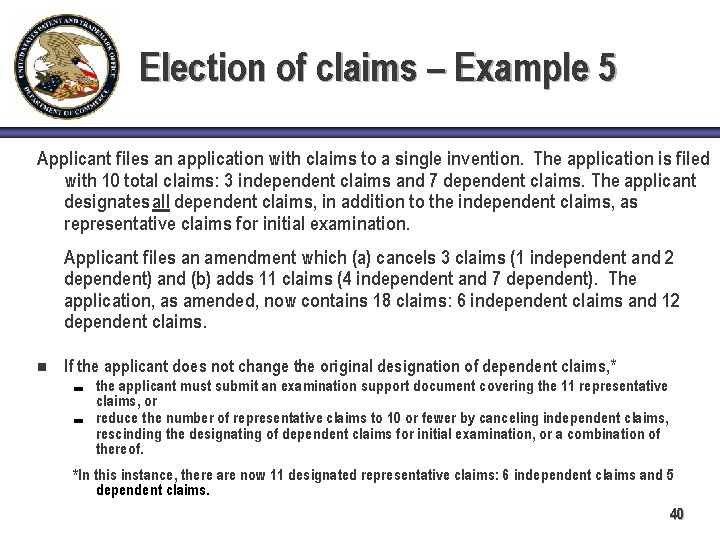
Election of claims – Example 5 Applicant files an application with claims to a single invention. The application is filed with 10 total claims: 3 independent claims and 7 dependent claims. The applicant designates all dependent claims, in addition to the independent claims, as representative claims for initial examination. Applicant files an amendment which (a) cancels 3 claims (1 independent and 2 dependent) and (b) adds 11 claims (4 independent and 7 dependent). The application, as amended, now contains 18 claims: 6 independent claims and 12 dependent claims. n If the applicant does not change the original designation of dependent claims, * É the applicant must submit an examination support document covering the 11 representative claims, or É reduce the number of representative claims to 10 or fewer by canceling independent claims, rescinding the designating of dependent claims for initial examination, or a combination of thereof. *In this instance, there are now 11 designated representative claims: 6 independent claims and 5 dependent claims. 40
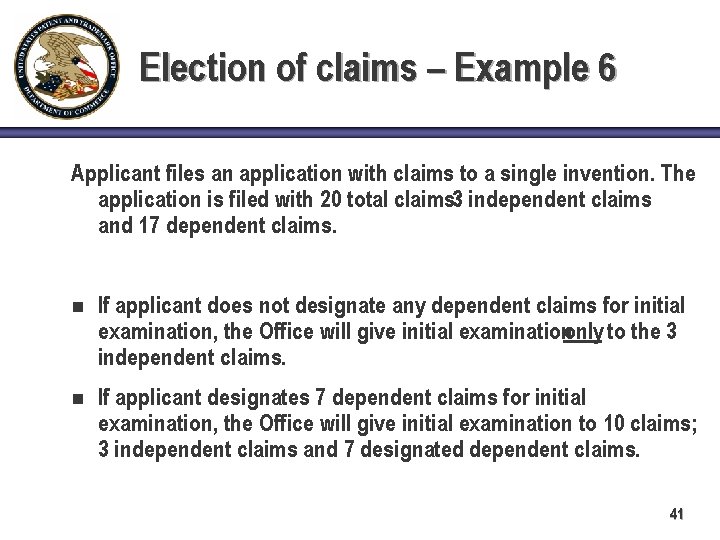
Election of claims – Example 6 Applicant files an application with claims to a single invention. The application is filed with 20 total claims: 3 independent claims and 17 dependent claims. n If applicant does not designate any dependent claims for initial examination, the Office will give initial examinationonly to the 3 independent claims. n If applicant designates 7 dependent claims for initial examination, the Office will give initial examination to 10 claims; 3 independent claims and 7 designated dependent claims. 41
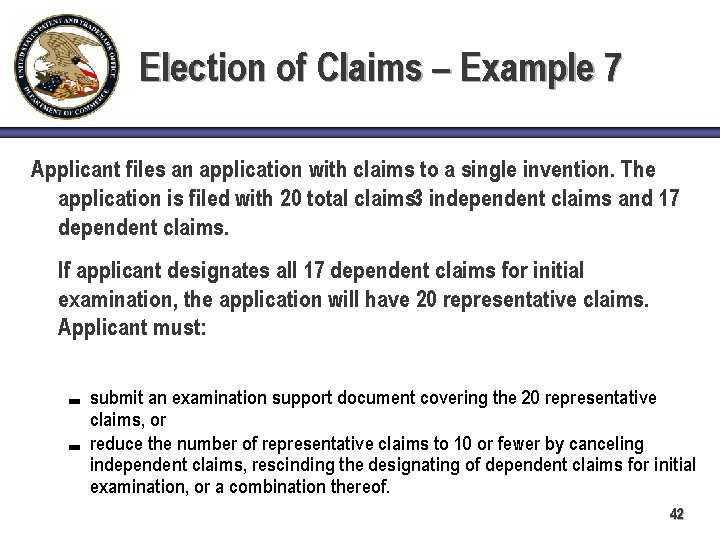
Election of Claims – Example 7 Applicant files an application with claims to a single invention. The application is filed with 20 total claims: 3 independent claims and 17 dependent claims. If applicant designates all 17 dependent claims for initial examination, the application will have 20 representative claims. Applicant must: É submit an examination support document covering the 20 representative claims, or É reduce the number of representative claims to 10 or fewer by canceling independent claims, rescinding the designating of dependent claims for initial examination, or a combination thereof. 42
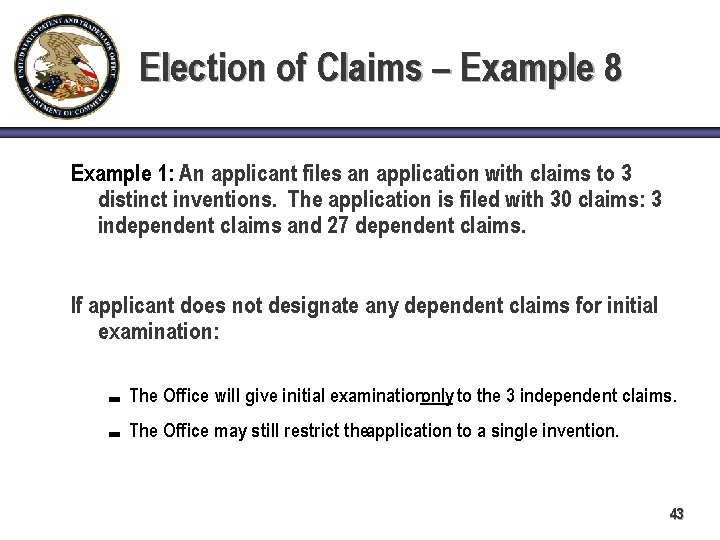
Election of Claims – Example 8 Example 1: An applicant files an application with claims to 3 distinct inventions. The application is filed with 30 claims: 3 independent claims and 27 dependent claims. If applicant does not designate any dependent claims for initial examination: É The Office will give initial examinationonly to the 3 independent claims. É The Office may still restrict theapplication to a single invention 43
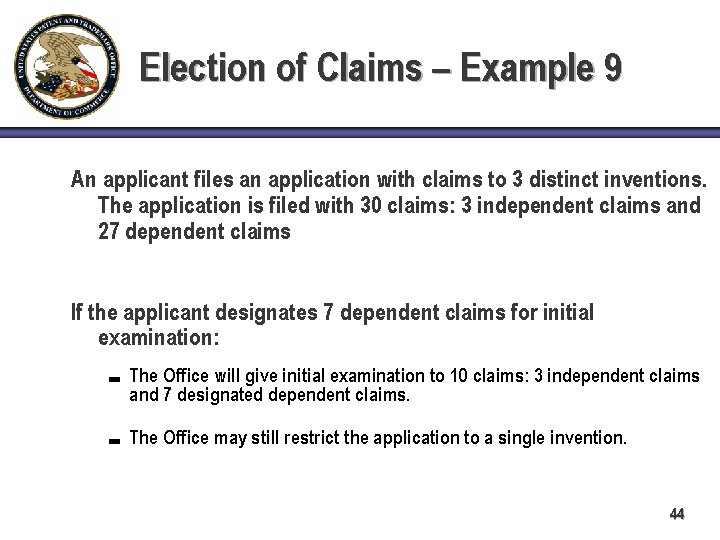
Election of Claims – Example 9 An applicant files an application with claims to 3 distinct inventions. The application is filed with 30 claims: 3 independent claims and 27 dependent claims If the applicant designates 7 dependent claims for initial examination: É The Office will give initial examination to 10 claims: 3 independent claims and 7 designated dependent claims. É The Office may still restrict the application to a single invention. 44
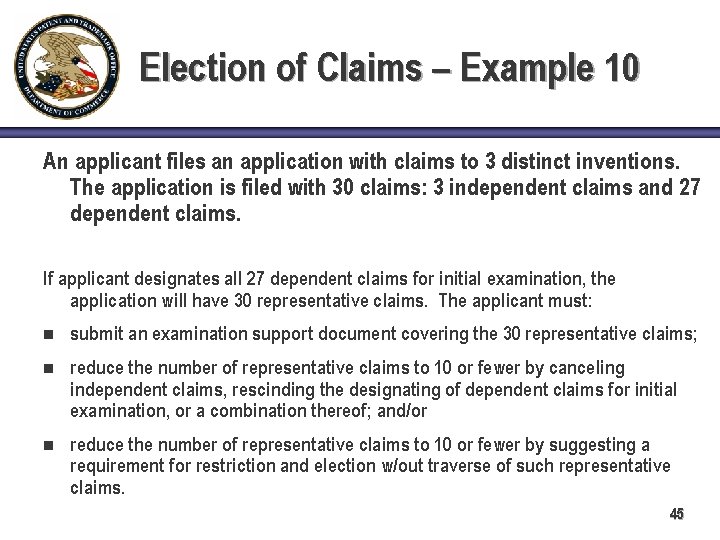
Election of Claims – Example 10 An applicant files an application with claims to 3 distinct inventions. The application is filed with 30 claims: 3 independent claims and 27 dependent claims. If applicant designates all 27 dependent claims for initial examination, the application will have 30 representative claims. The applicant must: n submit an examination support document covering the 30 representative claims; n reduce the number of representative claims to 10 or fewer by canceling independent claims, rescinding the designating of dependent claims for initial examination, or a combination thereof; and/or n reduce the number of representative claims to 10 or fewer by suggesting a requirement for restriction and election w/out traverse of such representative claims. 45
n Changes to Practice for Continuing Applications n Examples
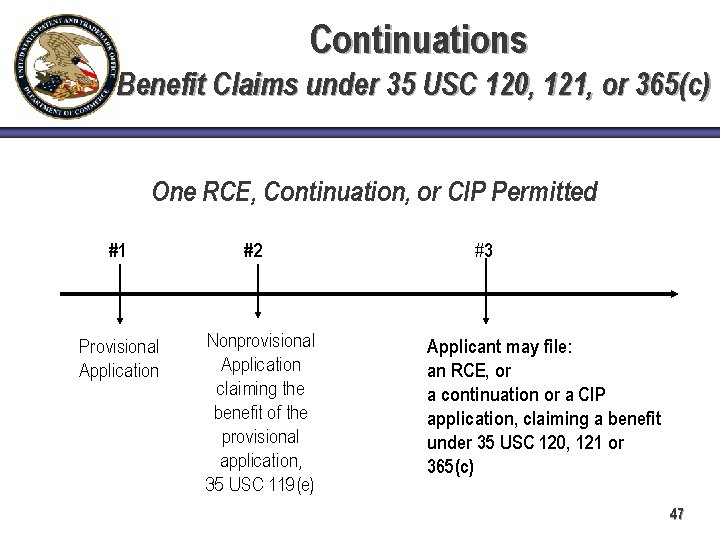
Continuations Benefit Claims under 35 USC 120, 121, or 365(c) One RCE, Continuation, or CIP Permitted #1 Provisional Application #2 Nonprovisional Application claiming the benefit of the provisional application, 35 USC 119(e) #3 Applicant may file: an RCE, or a continuation or a CIP application, claiming a benefit under 35 USC 120, 121 or 365(c) 47
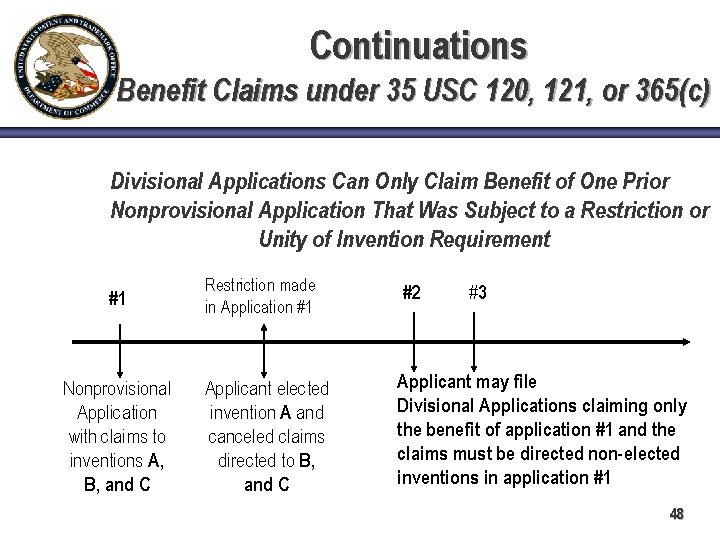
Continuations Benefit Claims under 35 USC 120, 121, or 365(c) Divisional Applications Can Only Claim Benefit of One Prior Nonprovisional Application That Was Subject to a Restriction or Unity of Invention Requirement #1 Nonprovisional Application with claims to inventions A, B, and C Restriction made in Application #1 Applicant elected invention A and canceled claims directed to B, and C #2 #3 Applicant may file Divisional Applications claiming only the benefit of application #1 and the claims must be directed non-elected inventions in application #1 48
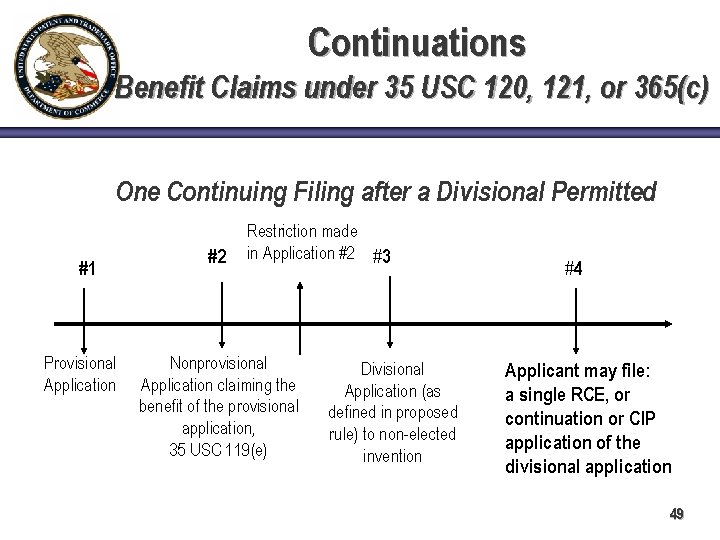
Continuations Benefit Claims under 35 USC 120, 121, or 365(c) One Continuing Filing after a Divisional Permitted #1 Provisional Application #2 Restriction made in Application #2 #3 Nonprovisional Application claiming the benefit of the provisional application, 35 USC 119(e) Divisional Application (as defined in proposed rule) to non-elected invention #4 Applicant may file: a single RCE, or continuation or CIP application of the divisional application 49
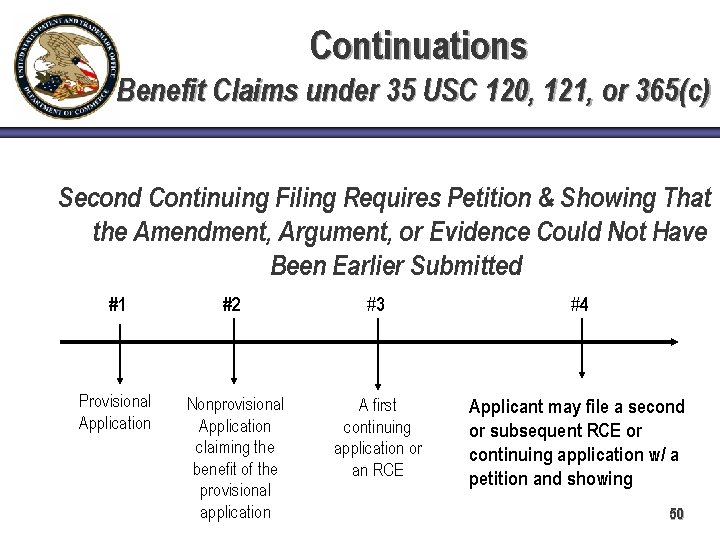
Continuations Benefit Claims under 35 USC 120, 121, or 365(c) Second Continuing Filing Requires Petition & Showing That the Amendment, Argument, or Evidence Could Not Have Been Earlier Submitted #1 #2 #3 #4 Provisional Application Nonprovisional Application claiming the benefit of the provisional application A first continuing application or an RCE Applicant may file a second or subsequent RCE or continuing application w/ a petition and showing 50
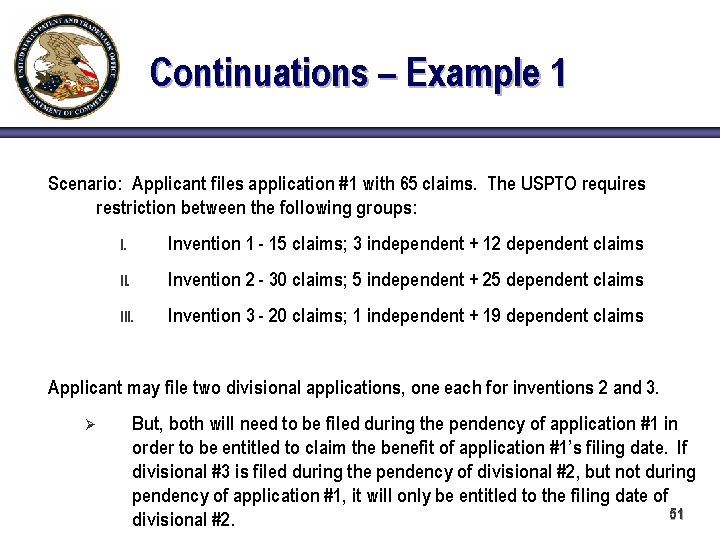
Continuations – Example 1 Scenario: Applicant files application #1 with 65 claims. The USPTO requires restriction between the following groups: I. Invention 1 - 15 claims; 3 independent + 12 dependent claims II. Invention 2 - 30 claims; 5 independent + 25 dependent claims III. Invention 3 - 20 claims; 1 independent + 19 dependent claims Applicant may file two divisional applications, one each for inventions 2 and 3. Ø But, both will need to be filed during the pendency of application #1 in order to be entitled to claim the benefit of application #1’s filing date. If divisional #3 is filed during the pendency of divisional #2, but not during pendency of application #1, it will only be entitled to the filing date of 51 divisional #2.
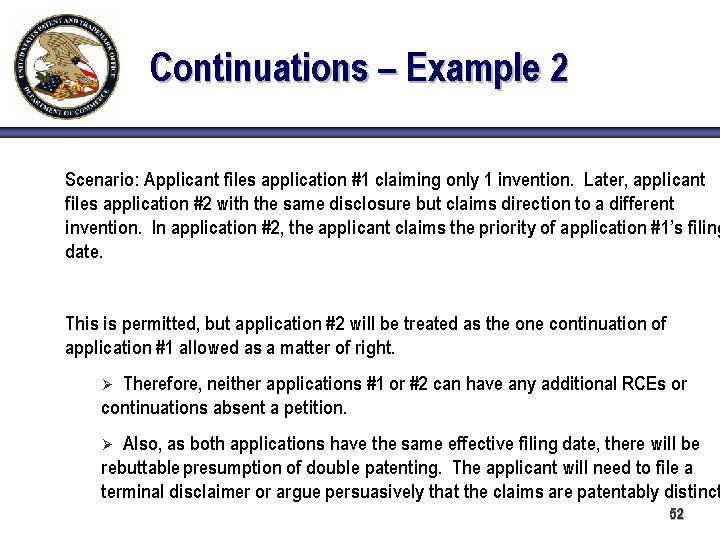
Continuations – Example 2 Scenario: Applicant files application #1 claiming only 1 invention. Later, applicant files application #2 with the same disclosure but claims direction to a different invention. In application #2, the applicant claims the priority of application #1’s filing date. This is permitted, but application #2 will be treated as the one continuation of application #1 allowed as a matter of right. Therefore, neither applications #1 or #2 can have any additional RCEs or continuations absent a petition. Ø Also, as both applications have the same effective filing date, there will be rebuttable presumption of double patenting. The applicant will need to file a terminal disclaimer or argue persuasively that the claims are patentably distinct Ø 52
Examples of a Showing for Filing a Second Continuing Application Example 1: In a continuation application, n An interference is declared in an application containing both claims corresponding to the count(s) and claims not corresponding to the count(s), and n The APJ suggests that the claims not corresponding to the count(s) be canceled from the application in interference and pursued in a separate application. 53
Examples of a Showing for Filing a Second Continuing Application Example 2: In a continuation application, n Data necessary to support a showing of unexpected results just became available to overcome a final rejection under 35 U. S. C. 103, and n The data is the result of a lengthy experimentation that was started after applicant received the rejection for the first time. 54
Examples of a Showing for Filing a Second Continuing Application Example 3: In a continuation application, n The final rejection contains a new ground of rejection that could not have been anticipated by the applicant, and n The applicant seeks to submit evidence which could not have been submitted earlier to overcome this new rejection. 55
Examples of Unacceptable Showing for Filin a Second Continuing Application Example 1: n An argument that a final rejection in one of the prior applications was premature. n Applicant should address the propriety of the final rejection during prosecution of the prior application, and not collaterally in a petition for a continuation application. 56
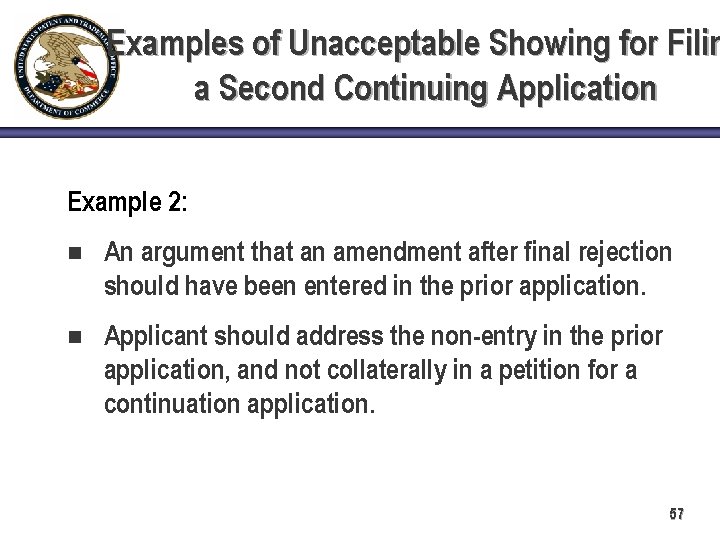
Examples of Unacceptable Showing for Filin a Second Continuing Application Example 2: n An argument that an amendment after final rejection should have been entered in the prior application. n Applicant should address the non-entry in the prior application, and not collaterally in a petition for a continuation application. 57
Contact Information n John Doll Commissioner for Patents e-mail: john. doll@uspto. gov Phone: 571 272 8250 58