
n Find the distance between points A1 4
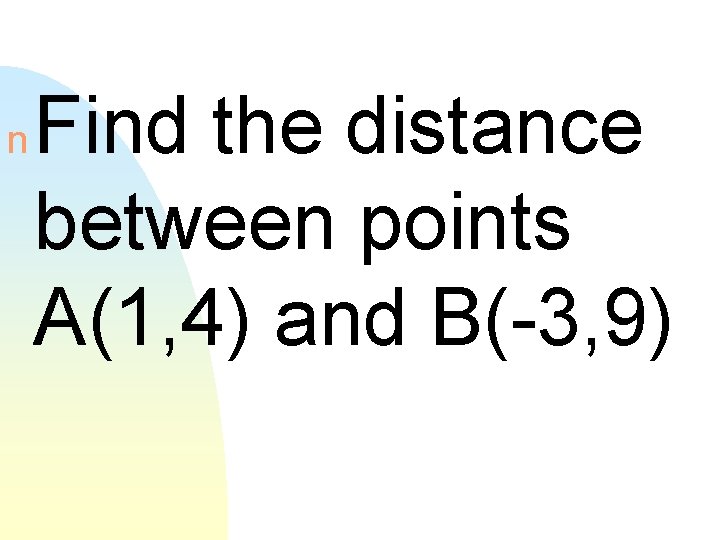
n Find the distance between points A(1, 4) and B(-3, 9)
Objective n SW recall area and perimeter formulas so that they can find the area and perimeter of irregular regions.
Compare: n Regular polygons vs. polygons
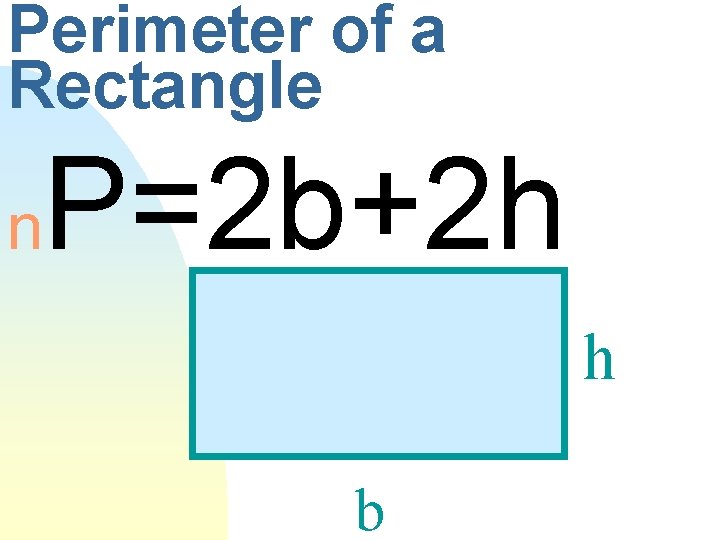
Perimeter of a Rectangle n P=2 b+2 h h b
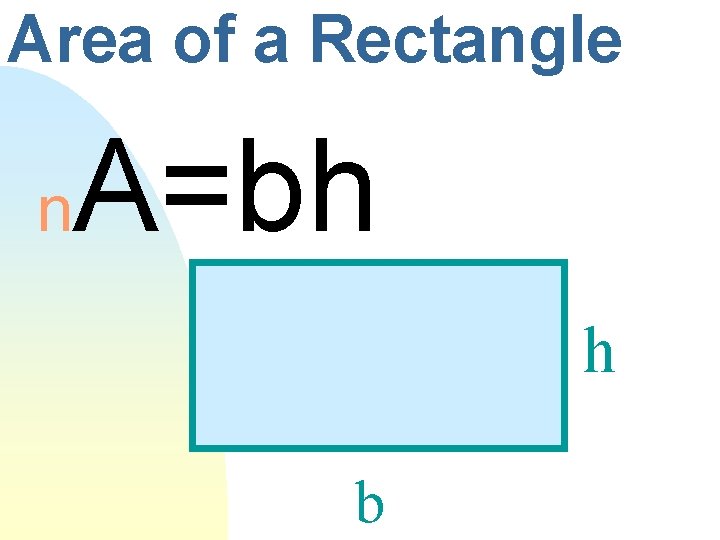
Area of a Rectangle n A=bh h b
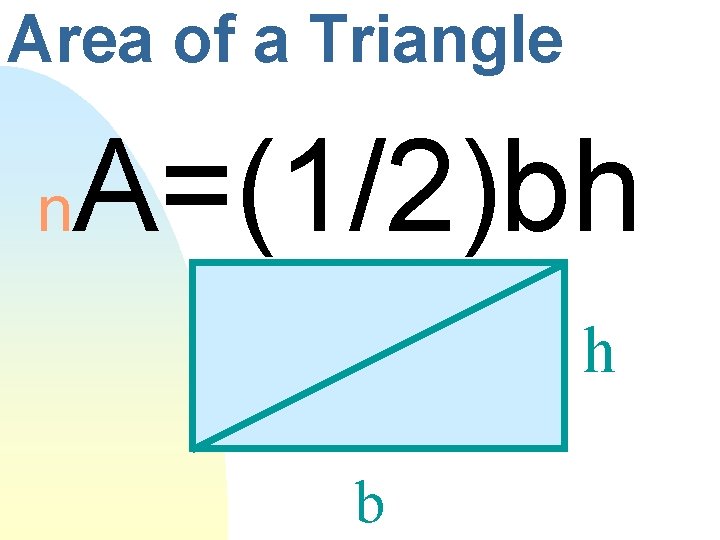
Area of a Triangle n A=(1/2)bh h b
Irregular Region n A region(shape) composed of many smaller regions(shapes)
Area of an Irregular Region n The sum of the areas of all the nonoverlapping parts of the region
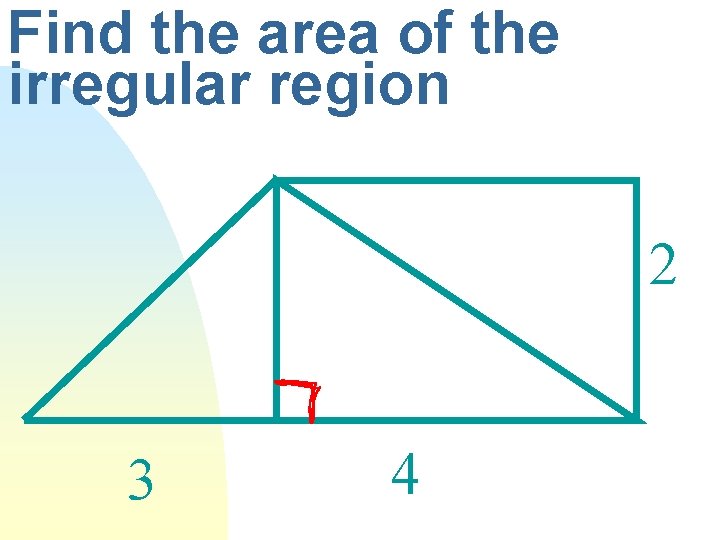
Find the area of the irregular region 2 3 4
Perimeter of an Irregular Region n The distance around the region.
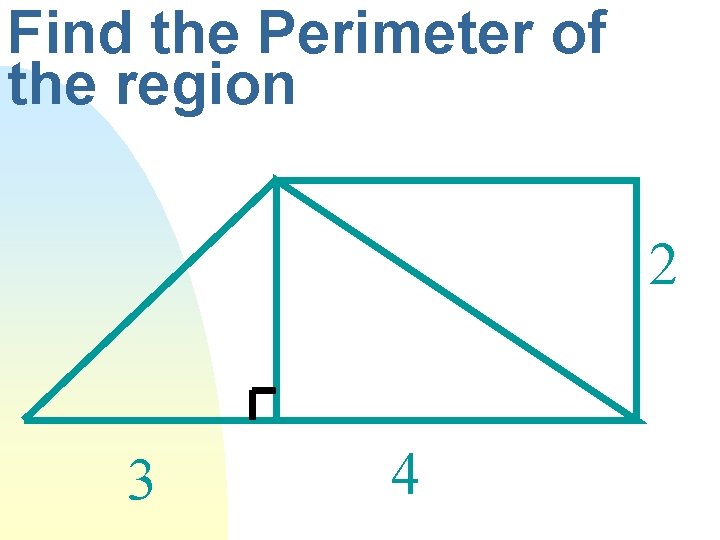
Find the Perimeter of the region 2 3 4
Conclusions n 1) To find the area of an irregular region, find the areas of its smaller _____ and find their _____.
Conclusions n 1) To find the area of an irregular region, find the areas of its smaller parts and find their _____. sum
Conclusions n 2) To find the perimeter of an irregular region, find the ____ around the region.
Conclusions n 2) To find the perimeter of an irregular region, find the ____ distance around the region.
CW/HW n Practice 5 -1 odd problems
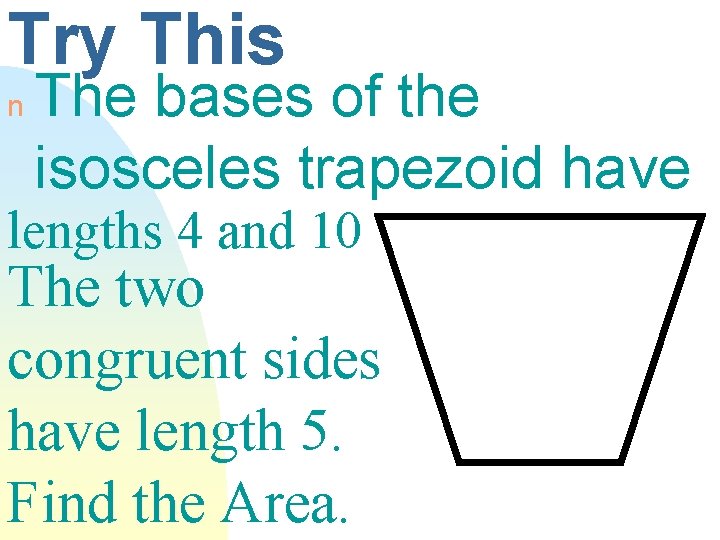
Try This n The bases of the isosceles trapezoid have lengths 4 and 10 The two congruent sides have length 5. Find the Area.
Objective n SW define and apply the Pythagorean Theorem so that they can find the dimensions of geometric figures.
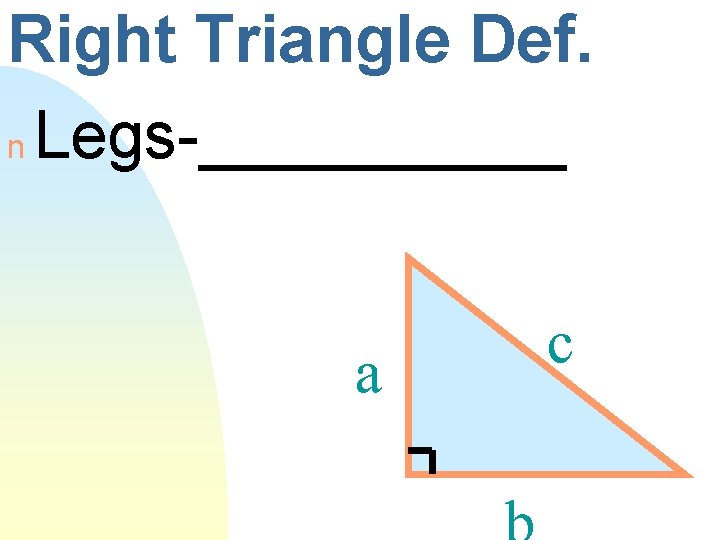
Right Triangle Def. n Legs-_____ a c
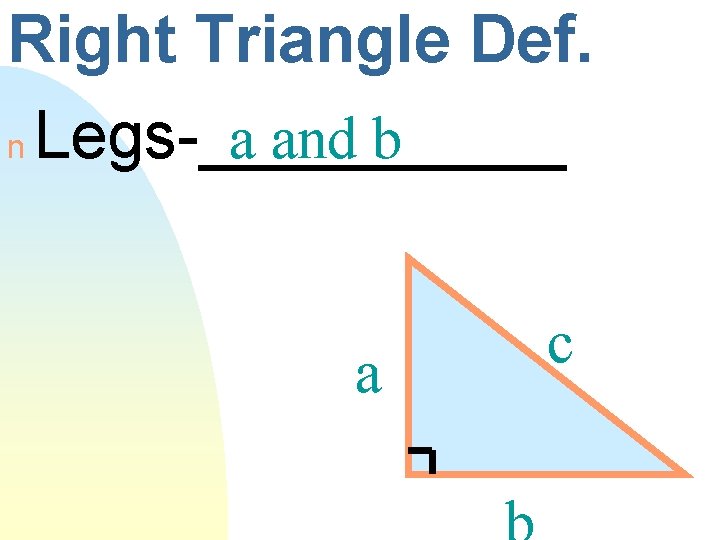
Right Triangle Def. a and b n Legs-_____ a c
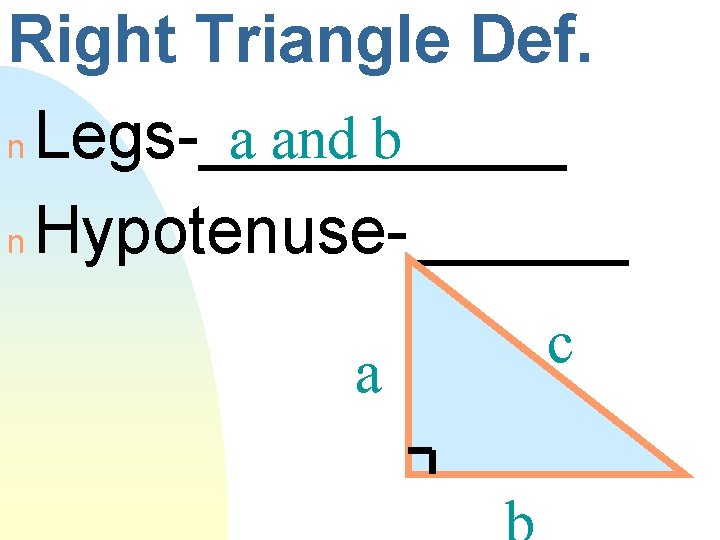
Right Triangle Def. a and b n Legs-_____ n Hypotenuse-______ a c
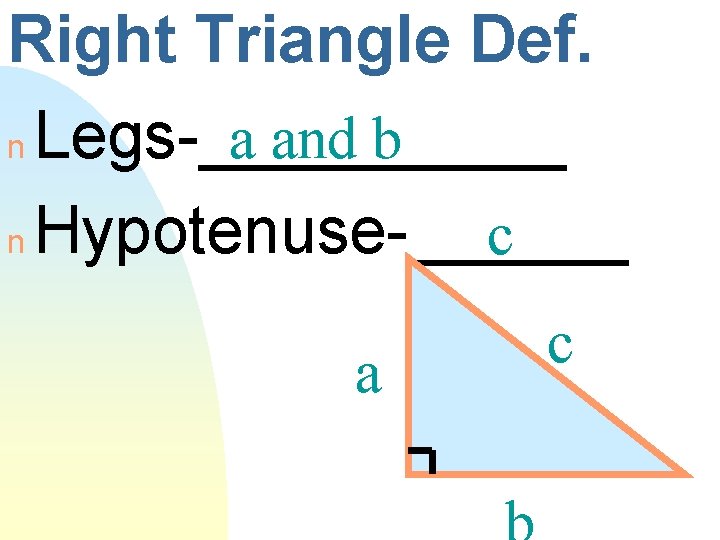
Right Triangle Def. a and b n Legs-_____ n Hypotenuse-______ c a c
Hypotenuse n The ____ side of a right triangle across from the ____ angle.
Hypotenuse n longest The ____ side of a right triangle right across from the ____ angle.
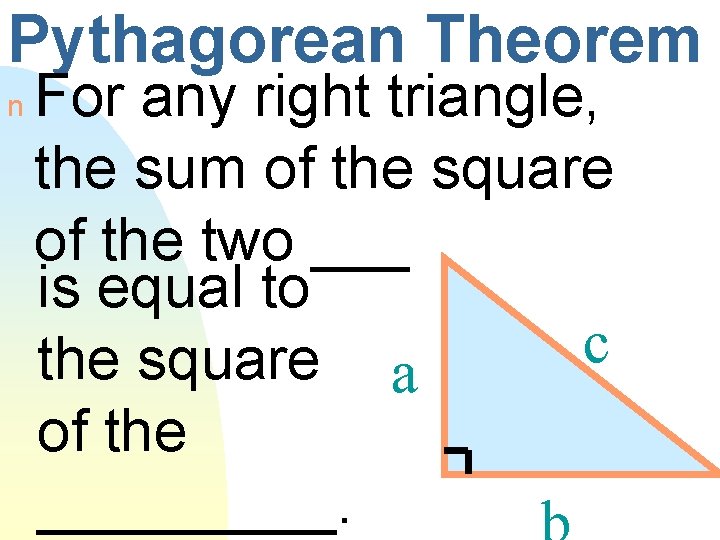
Pythagorean Theorem n For any right triangle, the sum of the square of the two ___ is equal to c the square a of the _____.
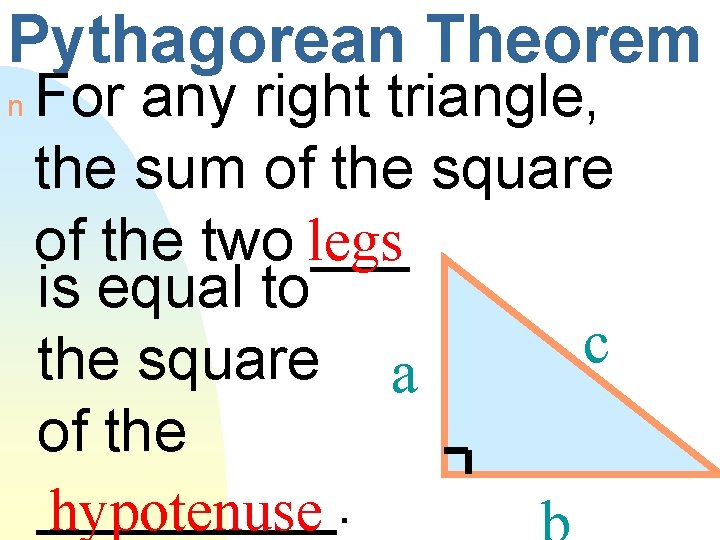
Pythagorean Theorem n For any right triangle, the sum of the square of the two legs ___ is equal to c the square a of the _____. hypotenuse
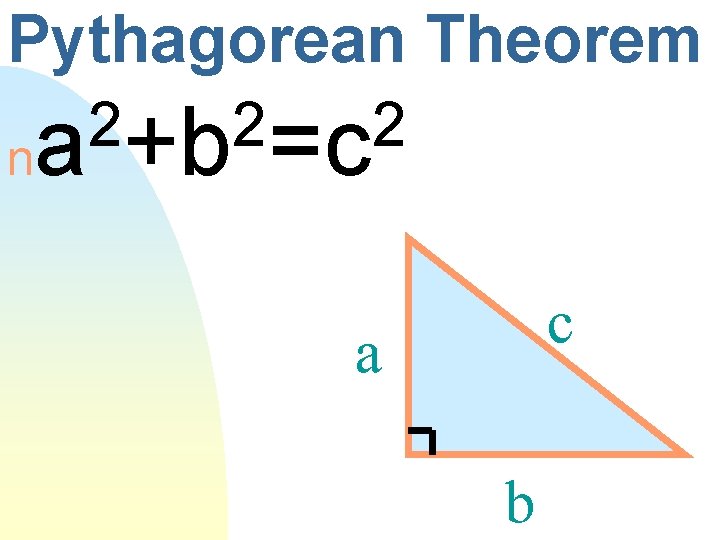
Pythagorean Theorem 2 2 2 na +b =c c a b
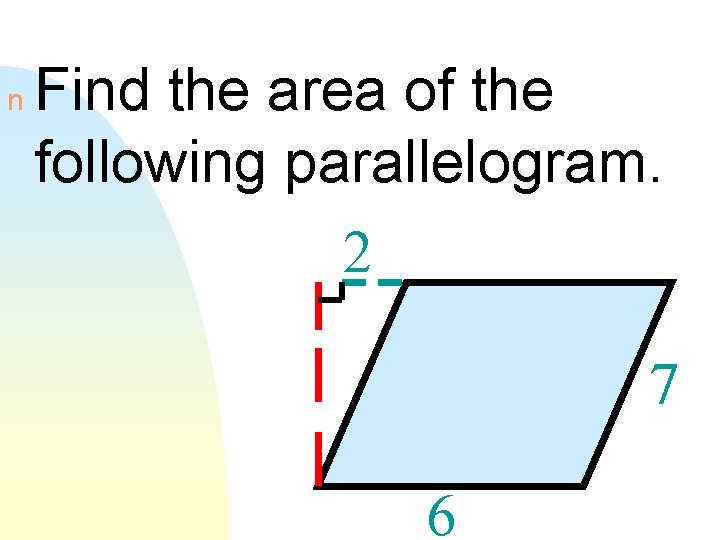
n Find the area of the following parallelogram. 2 7 6
How do I determine if a triangle is acute, obtuse or right, given its side lengths?
Corollary to the Pythagorean Theorem n If the sum of the squares of the two shorter sides of a triangle is less than the square of the longest side, then the triangle is
Corollary to the Pythagorean Theorem n If the sum of the squares of the two shorter sides of a triangle is less than the square of the longest obtusethen the triangle is side,
Corollary to the Pythagorean Theorem n If the sum of the squares of the two shorter sides of a triangle is greater than the square of the longest side, then the triangle is
Corollary to the Pythagorean Theorem n If the sum of the squares of the two shorter sides of a triangle is greater than the square of the longest acute side, then the triangle is
Corollary to the Pythagorean Theorem n If the sum of the squares of the two shorter sides of a triangle is equal to the square of the longest side, then the triangle is
Corollary to the Pythagorean Theorem n If the sum of the squares of the two shorter sides of a triangle is equal to the square of the longest right then the triangle is side,
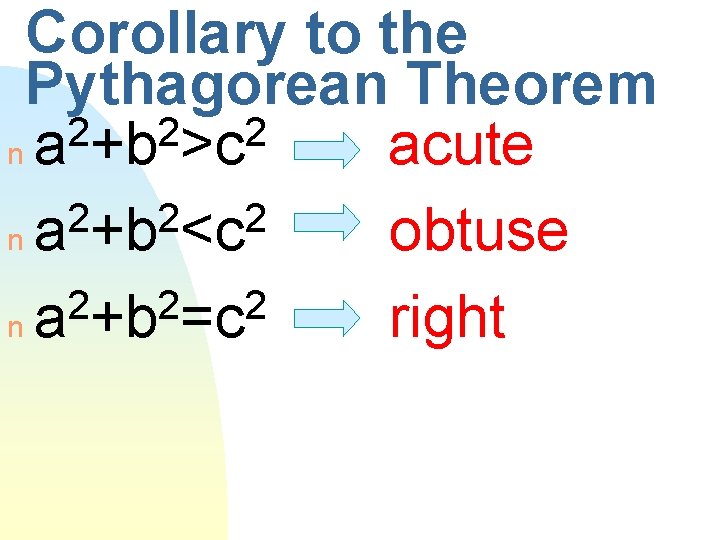
Corollary to the Pythagorean Theorem 2 2 2 n a +b >c acute 2 2 2 n a +b <c obtuse 2 2 2 n a +b =c right
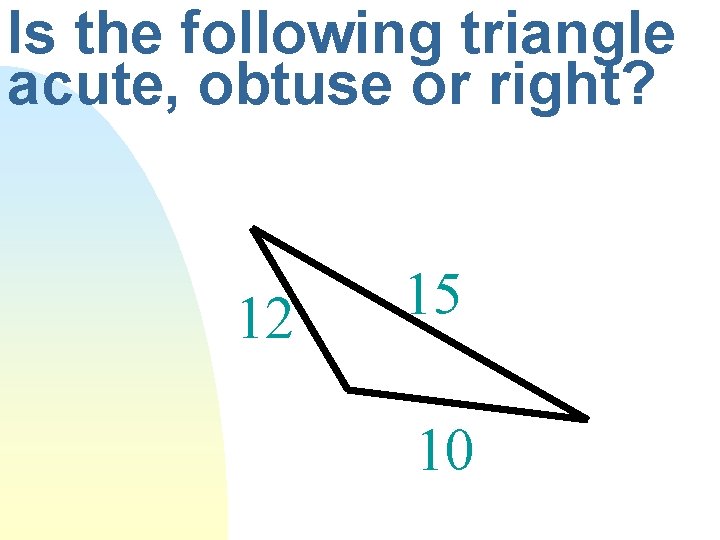
Is the following triangle acute, obtuse or right? 12 15 10
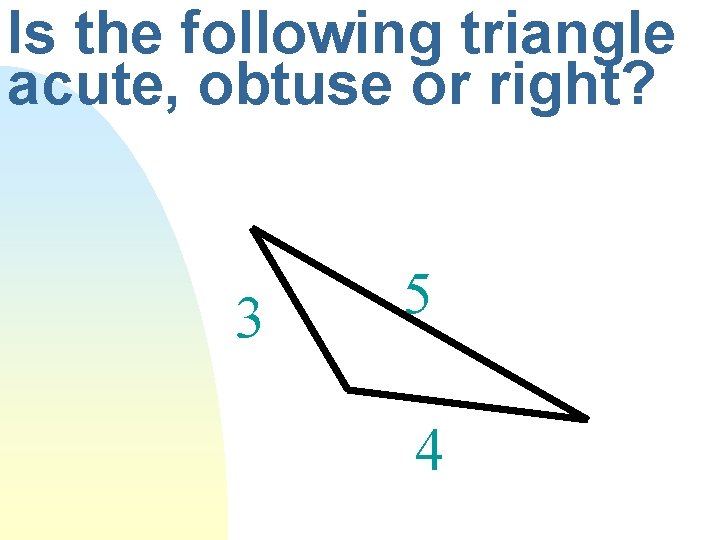
Is the following triangle acute, obtuse or right? 3 5 4
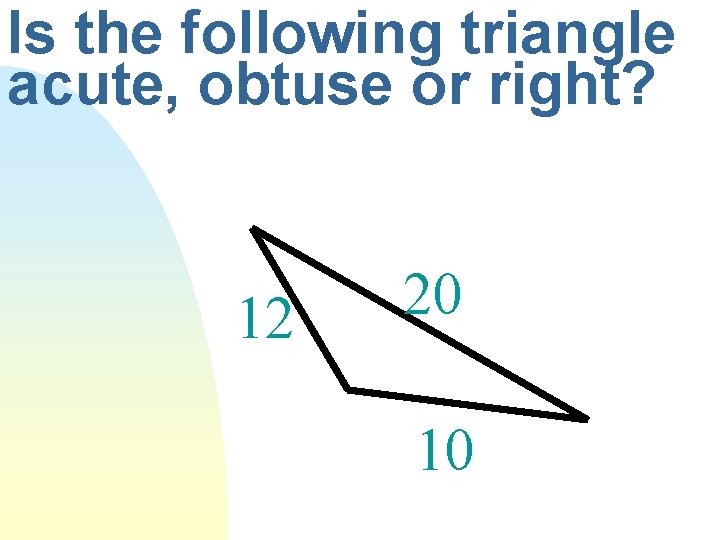
Is the following triangle acute, obtuse or right? 12 20 10
Try These n P 259 #’s 1 -10; 11 -21 odd, 25 -29 odd; 33 -36 all
- Slides: 40