
N efficiency decreasing Tilman et al 2002 Potentially
- Slides: 51
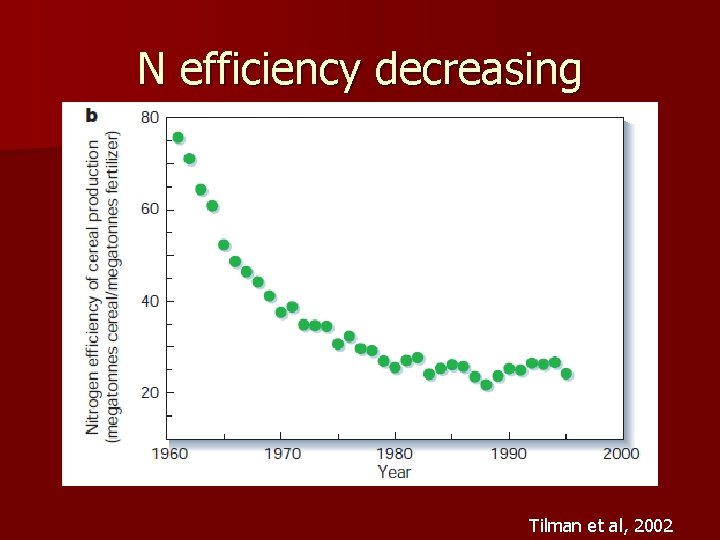
N efficiency decreasing Tilman et al, 2002
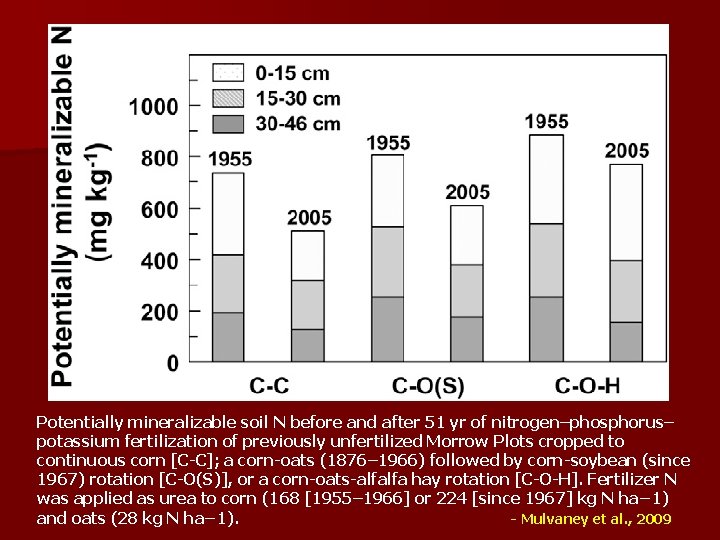
Potentially mineralizable soil N before and after 51 yr of nitrogen–phosphorus– potassium fertilization of previously unfertilized Morrow Plots cropped to continuous corn [C-C]; a corn-oats (1876– 1966) followed by corn-soybean (since 1967) rotation [C-O(S)], or a corn-oats-alfalfa hay rotation [C-O-H]. Fertilizer N was applied as urea to corn (168 [1955– 1966] or 224 [since 1967] kg N ha− 1) and oats (28 kg N ha− 1). - Mulvaney et al. , 2009
Soil Health Planning Principles “a practical approach to Farming in the 21 st Century” Mark Henning Area Agronomist Miles City, MT
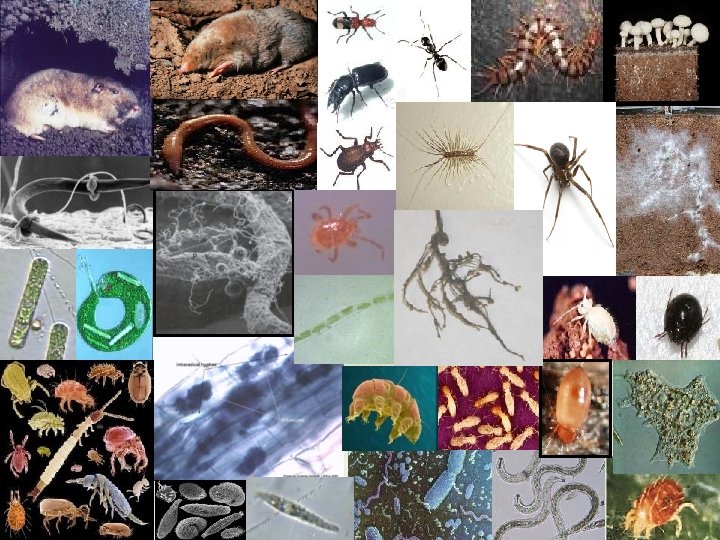
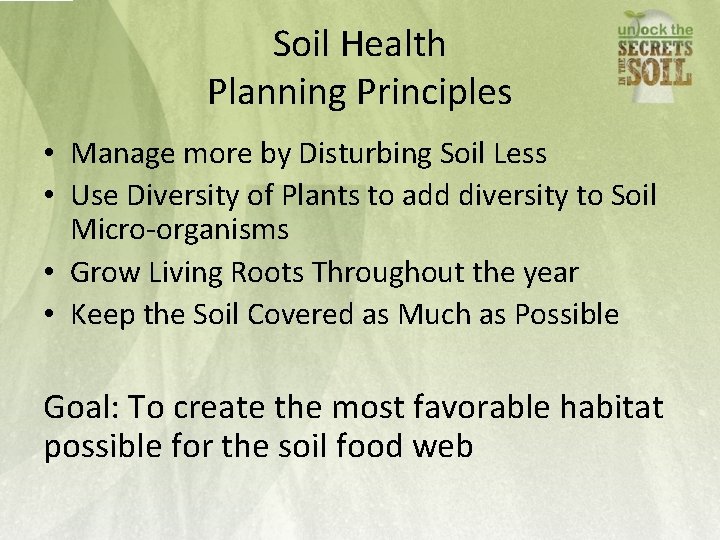
Soil Health Planning Principles • Manage more by Disturbing Soil Less • Use Diversity of Plants to add diversity to Soil Micro-organisms • Grow Living Roots Throughout the year • Keep the Soil Covered as Much as Possible Goal: To create the most favorable habitat possible for the soil food web
Soil Health Principle 1 Manage More by Disturbing Soil Less • Agricultural Disturbance Destroys Dynamic Soil Properties • Destroys “Habitat” for Soil Organisms • Creates a “Hostile” Environment • Three Types of Disturbance – Physical (tillage) – Chemical (Fertilizer) – Biological (overgrazing)
What things change when you stop tilling the soil? • • Soil pores remain continuous Soil aggregates form and are not destroyed Soil Food Web increases and diversifies Weed seeds are not planted Water is captured and stored Bulk density increases slightly; then stabilizes Soil fungi and earthworms increase Microarthropods increase (>20% of nutrient cycle)
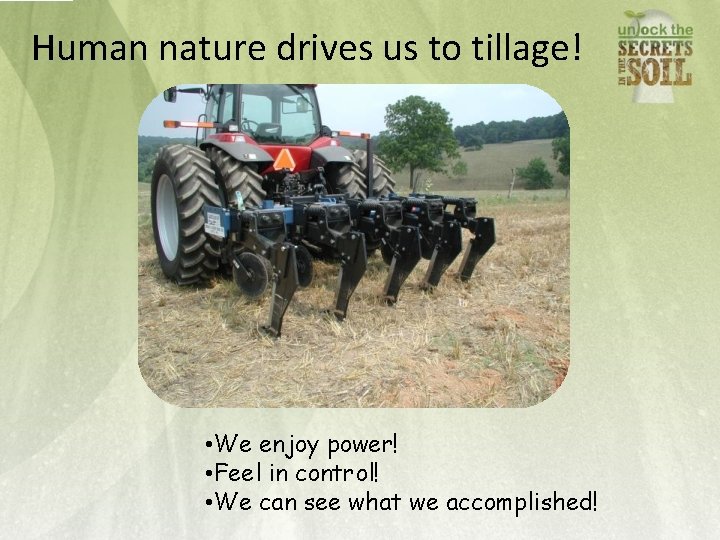
Human nature drives us to tillage! • We enjoy power! • Feel in control! • We can see what we accomplished!
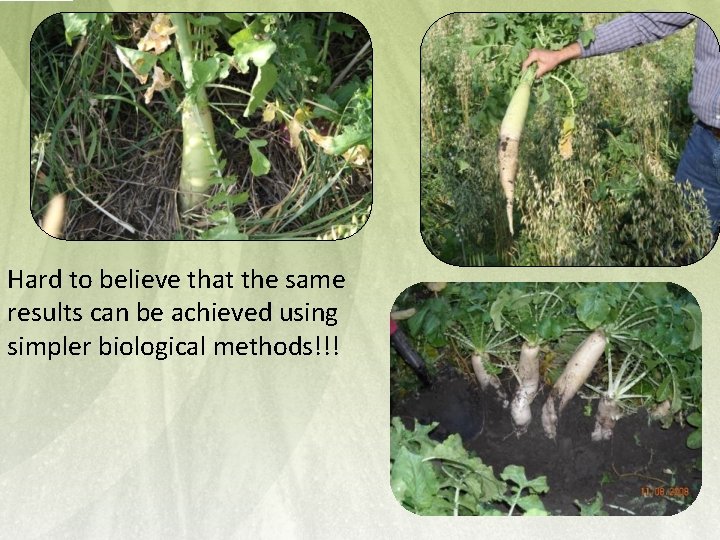
Hard to believe that the same results can be achieved using simpler biological methods!!!
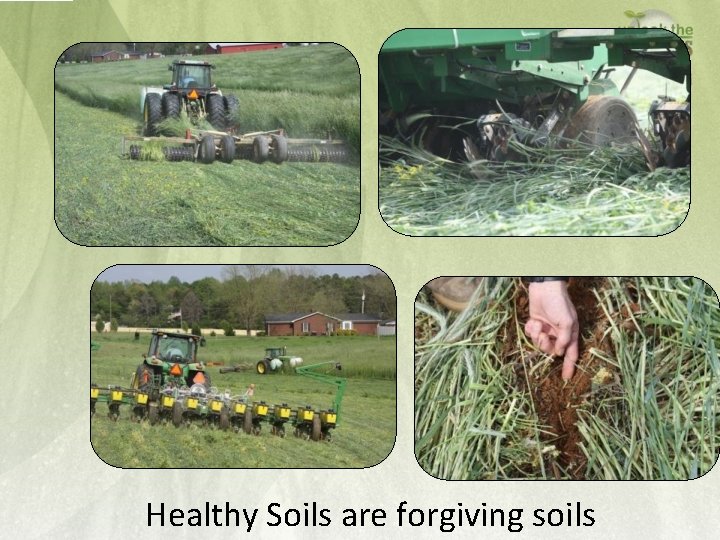
Healthy Soils are forgiving soils
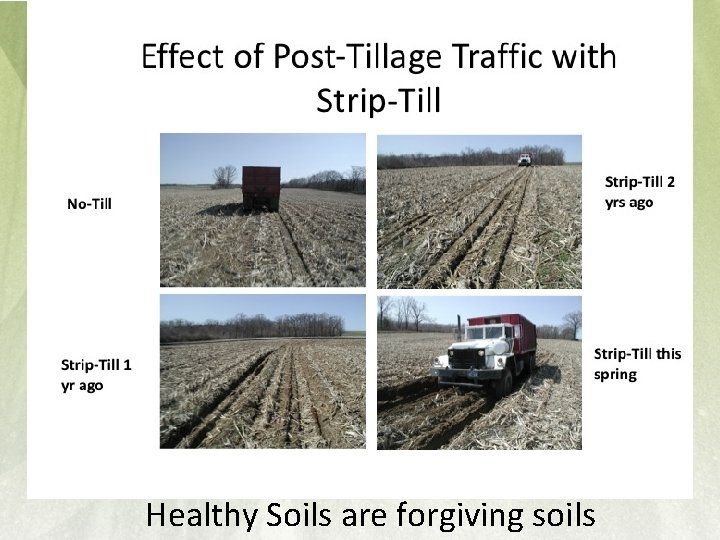
Healthy Soils are forgiving soils
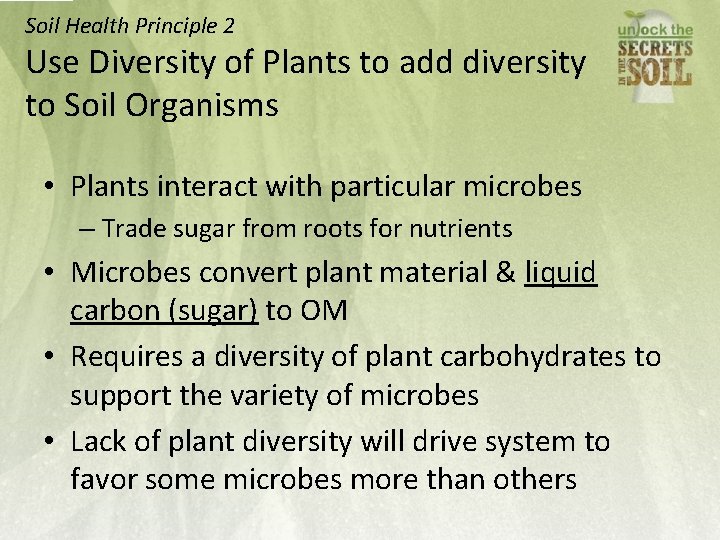
Soil Health Principle 2 Use Diversity of Plants to add diversity to Soil Organisms • Plants interact with particular microbes – Trade sugar from roots for nutrients • Microbes convert plant material & liquid carbon (sugar) to OM • Requires a diversity of plant carbohydrates to support the variety of microbes • Lack of plant diversity will drive system to favor some microbes more than others
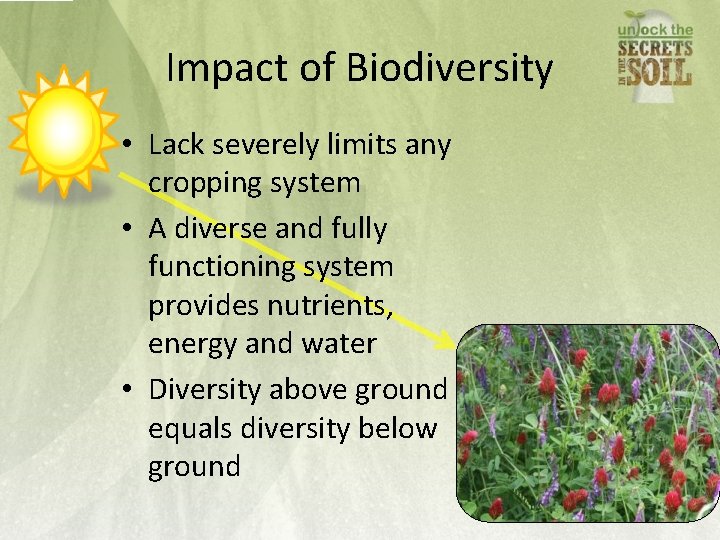
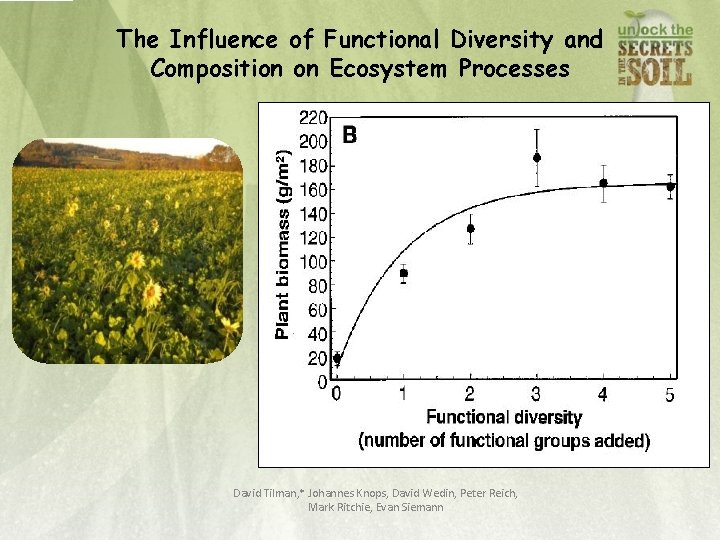
Impact of Biodiversity • Lack severely limits any cropping system • A diverse and fully functioning system provides nutrients, energy and water • Diversity above ground equals diversity below ground
How to Increasing Diversity in a Crop Rotation • Lengthen the rotation by adding more crops – Increases soil organic matter – Breaks pest cycles – Improves nutrient utilization and availability – Utilize available water deeper in the soil profile – Provide windows for management • Spread manure • Plant & harvest crops • Add more plants in the current crop rotation – Utilize cover crops during non-cropping part of the year
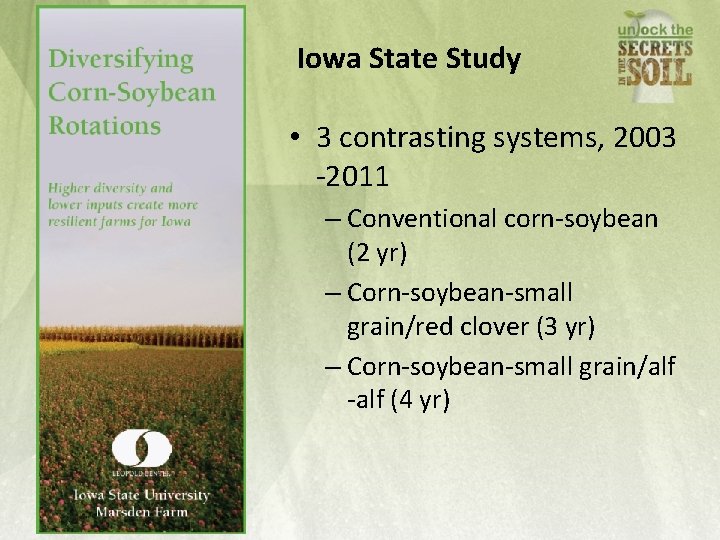
Iowa State Study • 3 contrasting systems, 2003 -2011 – Conventional corn-soybean (2 yr) – Corn-soybean-small grain/red clover (3 yr) – Corn-soybean-small grain/alf -alf (4 yr)
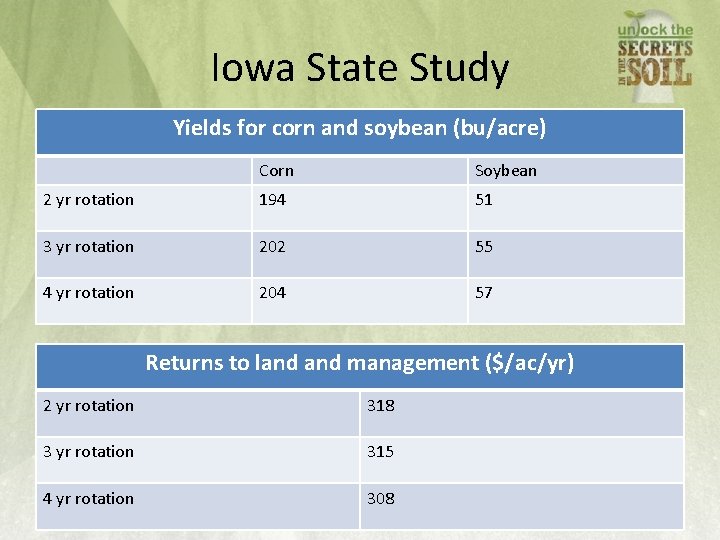
Iowa State Study Yields for corn and soybean (bu/acre) Corn Soybean 2 yr rotation 194 51 3 yr rotation 202 55 4 yr rotation 204 57 Returns to land management ($/ac/yr) 2 yr rotation 318 3 yr rotation 315 4 yr rotation 308
Iowa State Study • Diverse rotations- Input benefits – Herbicide use- 88% less vs conventional system – Synthetic N- 80% lower in 3 yr rotation, 86% lower in 4 yr rotation, versus conventional system – Can use non-GE varieties without impacting net returns
Iowa State Study • Diverse rotations- Environmental benfits – Herbicide related freshwater toxicity- 200 x lower vs conventional systems – 48 -51% less energy used in diverse system vs conventional system
Cover Crop Role in Diversity 1. Allow you to look at cropping periods rather than years 2. Can be used to accelerate rejuvenating soil health 3. Getting 6 to 8 weeks of growth is adequate to get some of the “rotation” effect benefits! 4. Will increase soil biological diversity “Diversity above = diversity below”
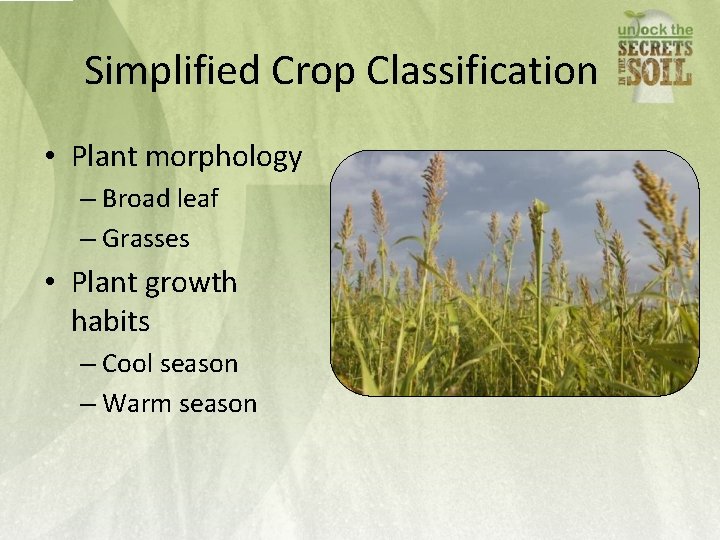
Simplified Crop Classification • Plant morphology – Broad leaf – Grasses • Plant growth habits – Cool season – Warm season
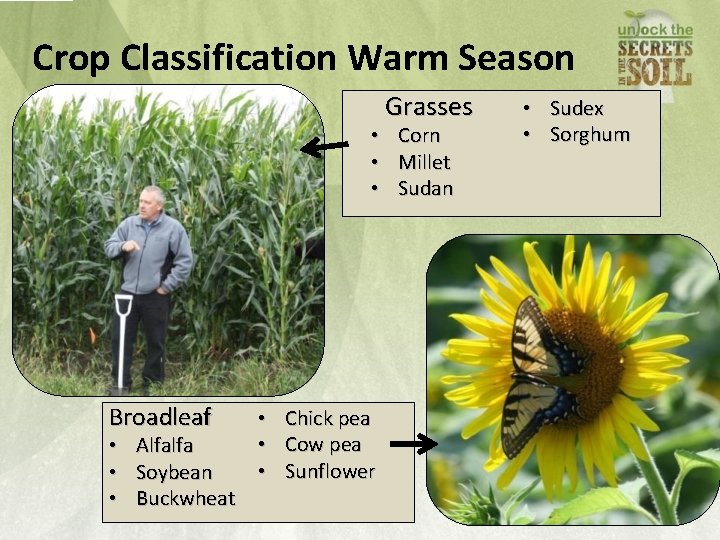
Crop Classification Warm Season Grasses • Corn • Millet • Sudan Broadleaf • Alfalfa • Soybean • Buckwheat • • • Chick pea Cow pea Sunflower • Sudex • Sorghum
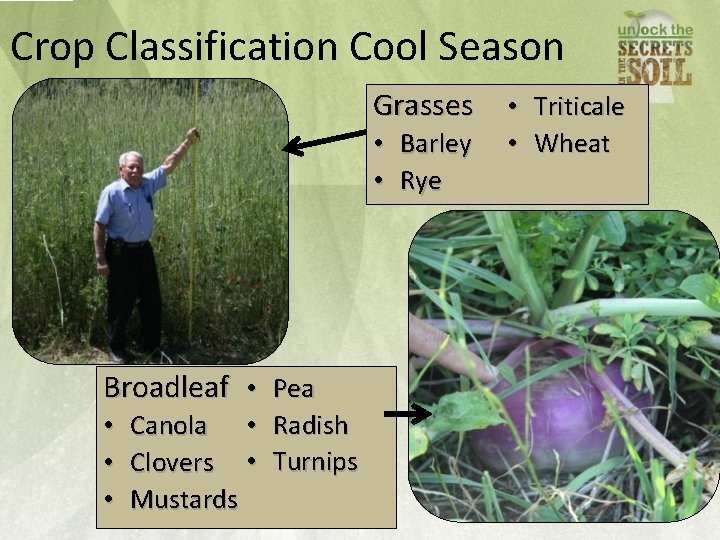
Crop Classification Cool Season Grasses • Barley • Rye Broadleaf • Pea • • • Canola • Radish Clovers • Turnips Mustards • Triticale • Wheat
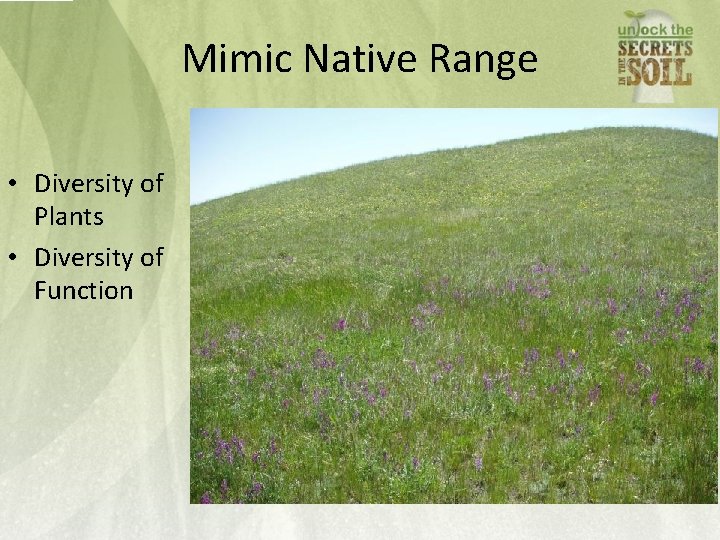
Mimic Native Range • Diversity of Plants • Diversity of Function
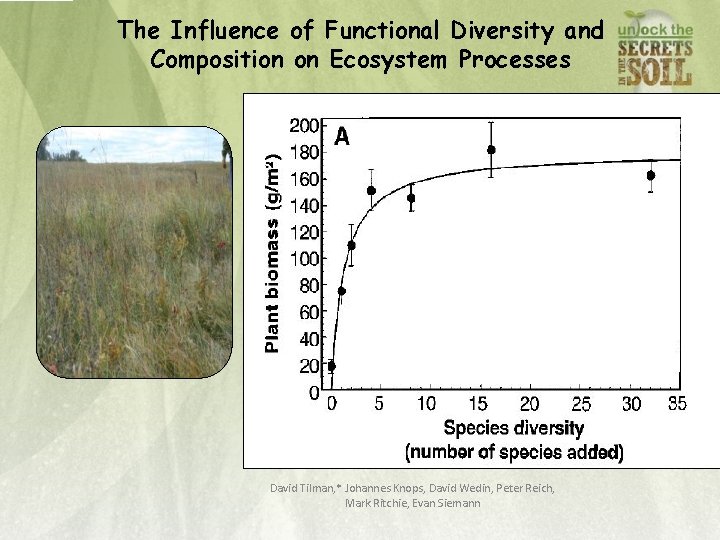
The Influence of Functional Diversity and Composition on Ecosystem Processes David Tilman, * Johannes Knops, David Wedin, Peter Reich, Mark Ritchie, Evan Siemann
The Influence of Functional Diversity and Composition on Ecosystem Processes David Tilman, * Johannes Knops, David Wedin, Peter Reich, Mark Ritchie, Evan Siemann
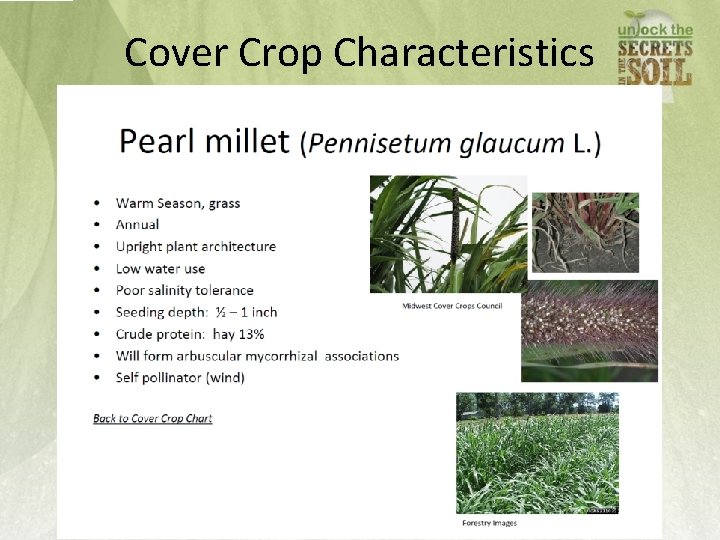
Cover Crop Characteristics
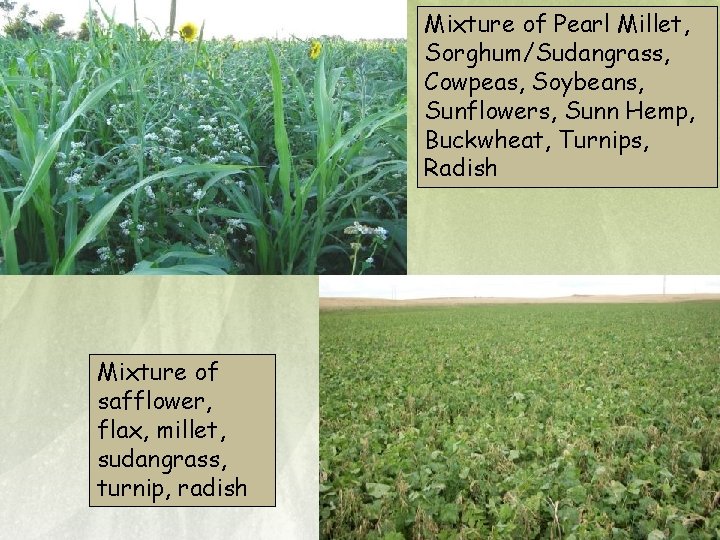
Mixture of Pearl Millet, Sorghum/Sudangrass, Cowpeas, Soybeans, Sunflowers, Sunn Hemp, Buckwheat, Turnips, Radish Mixture of safflower, flax, millet, sudangrass, turnip, radish
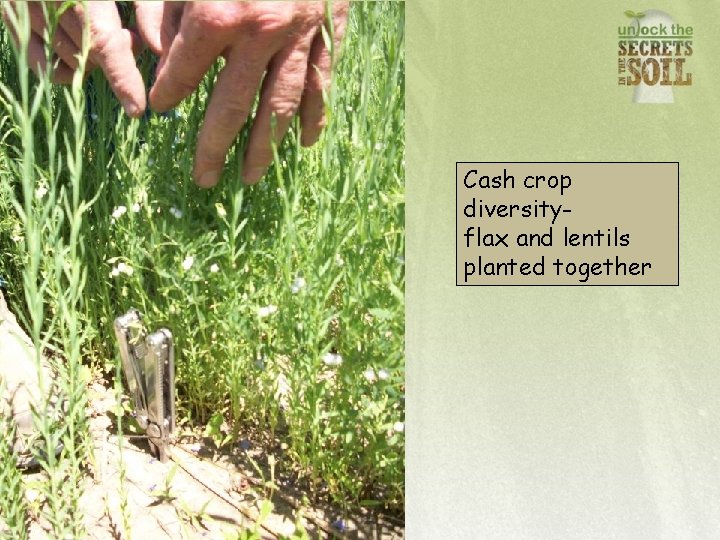
Cash crop diversityflax and lentils planted together
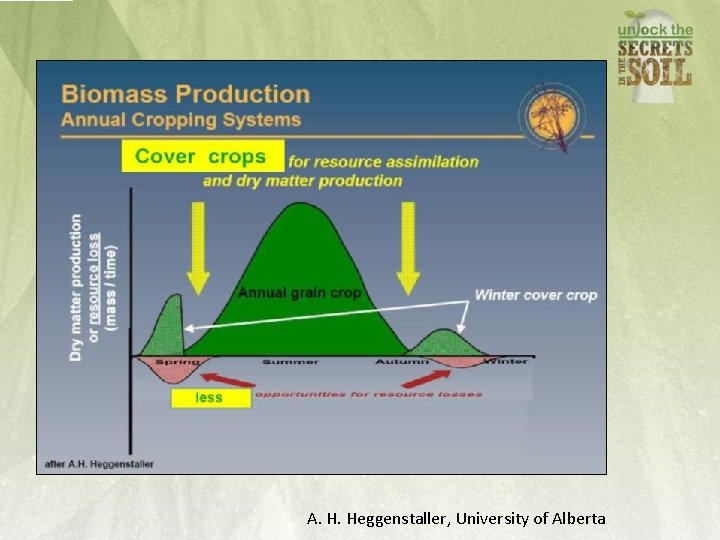
Soil Health Principle 3 Grow Living Roots Throughout the Year Benefits: • Increases microbial activity, influences N mineralization and immobilization • Increases plant nutrient/vitamin uptake/ concentrations with mycorrhizal and bacteria associations • Increases biodiversity and biomass of soil organisms • Improves physical, chemical and biological properties of soils • Sequesters and redeposit nutrients • Increases OM
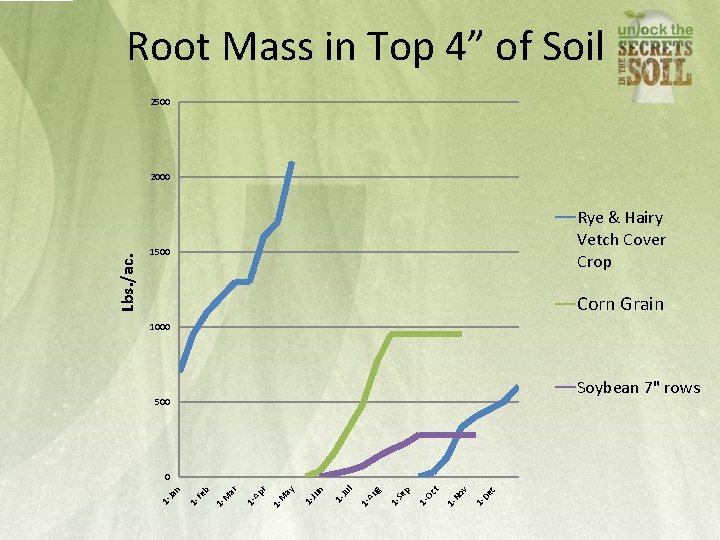
Root Mass in Top 4” of Soil 2500 Rye & Hairy Vetch Cover Crop 1500 Corn Grain 1000 Soybean 7" rows 500 1 Oc t 1 No v 1 De c p Se 1 - ug 1 A l 1 Ju n 1 Ju r ay 1 M 1 Ap b ar 1 M Fe 1 - n 0 1 Ja Lbs. /ac. 2000
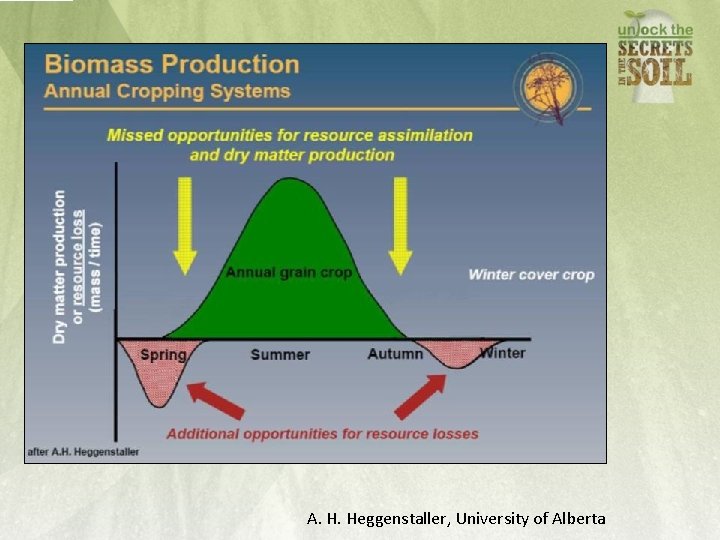
A. H. Heggenstaller, University of Alberta
A. H. Heggenstaller, University of Alberta
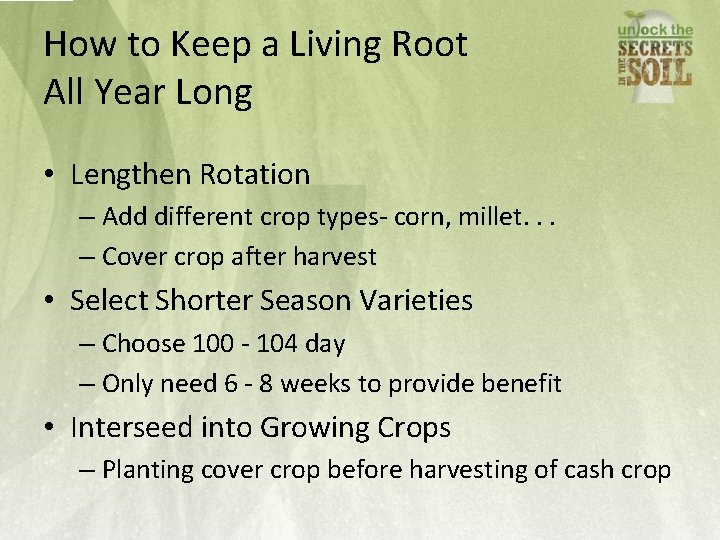
How to Keep a Living Root All Year Long • Lengthen Rotation – Add different crop types- corn, millet. . . – Cover crop after harvest • Select Shorter Season Varieties – Choose 100 - 104 day – Only need 6 - 8 weeks to provide benefit • Interseed into Growing Crops – Planting cover crop before harvesting of cash crop
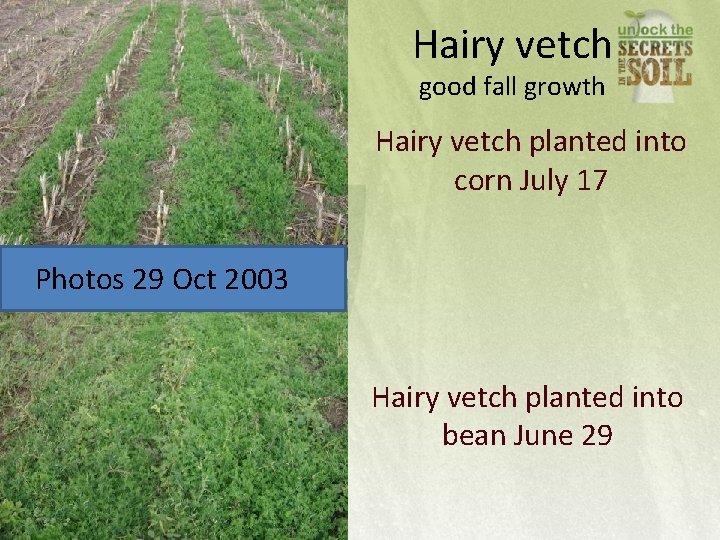
Hairy vetch good fall growth Hairy vetch planted into corn July 17 Photos 29 Oct 2003 Hairy vetch planted into bean June 29
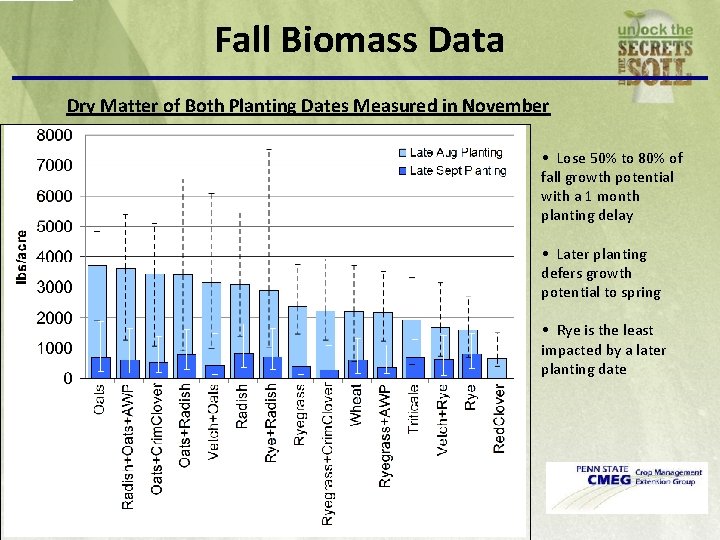
Fall Biomass Data Dry Matter of Both Planting Dates Measured in November • Lose 50% to 80% of fall growth potential with a 1 month planting delay • Later planting defers growth potential to spring • Rye is the least impacted by a later planting date
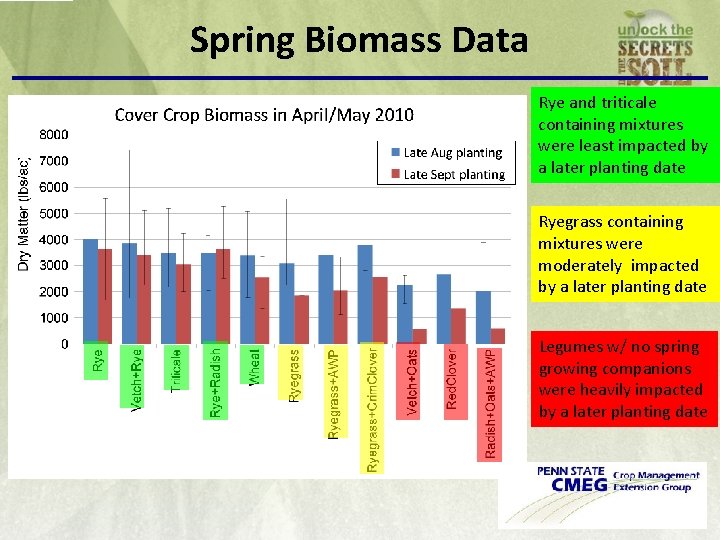
Spring Biomass Data Rye and triticale containing mixtures were least impacted by a later planting date Ryegrass containing mixtures were moderately impacted by a later planting date Legumes w/ no spring growing companions were heavily impacted by a later planting date
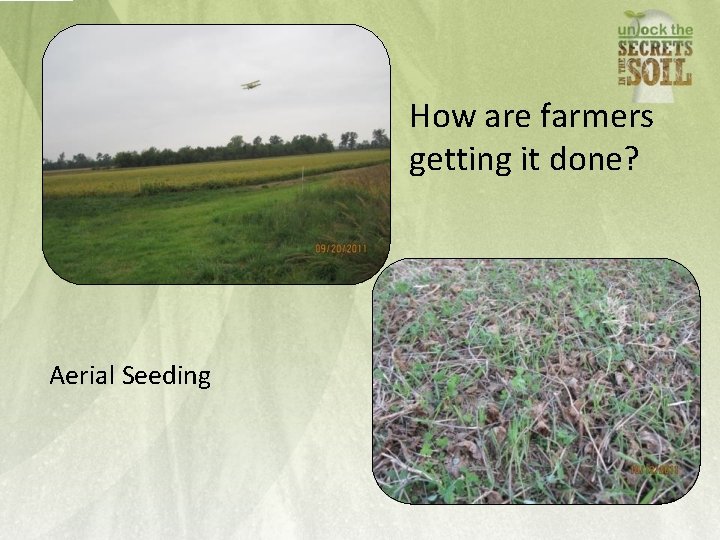
How are farmers getting it done? Aerial Seeding
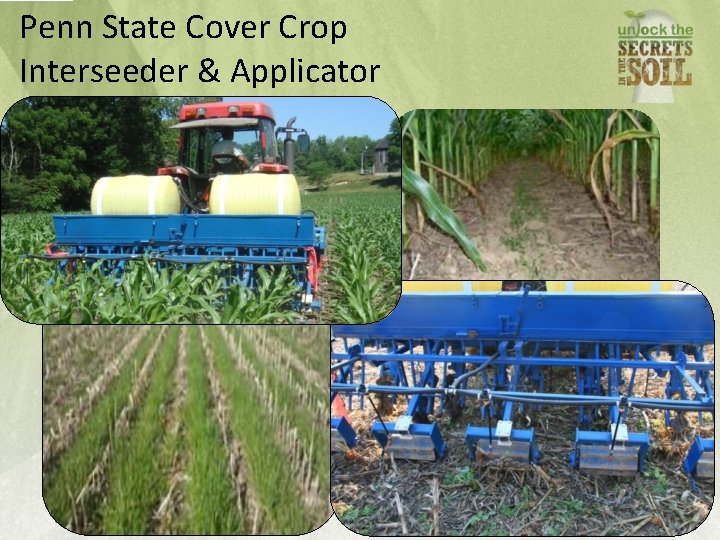
Penn State Cover Crop Interseeder & Applicator
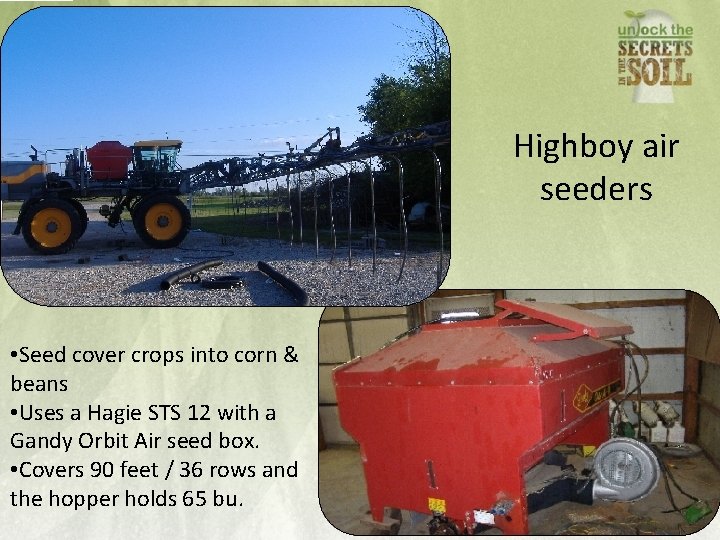
Highboy air seeders • Seed cover crops into corn & beans • Uses a Hagie STS 12 with a Gandy Orbit Air seed box. • Covers 90 feet / 36 rows and the hopper holds 65 bu.
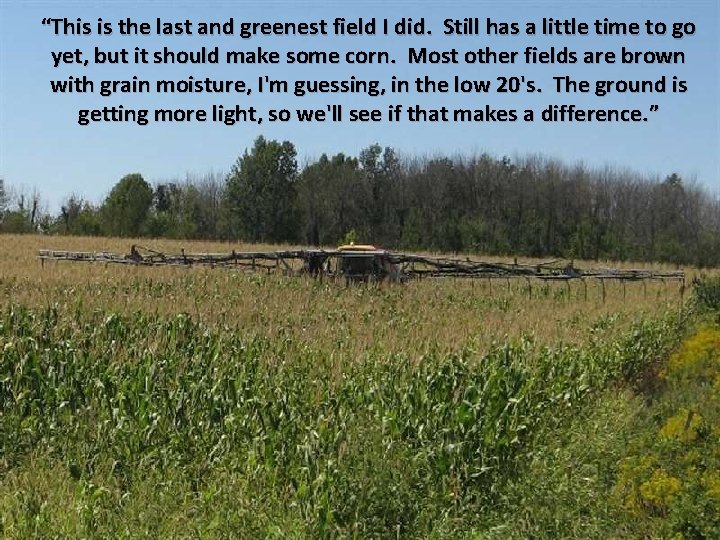
“This is the last and greenest field I did. Still has a little time to go yet, but it should make some corn. Most other fields are brown with grain moisture, I'm guessing, in the low 20's. The ground is getting more light, so we'll see if that makes a difference. ”
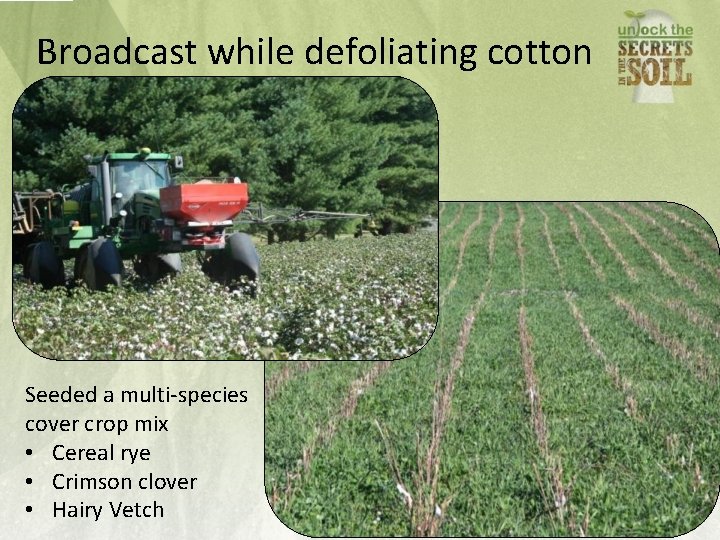
Broadcast while defoliating cotton Seeded a multi-species cover crop mix • Cereal rye • Crimson clover • Hairy Vetch
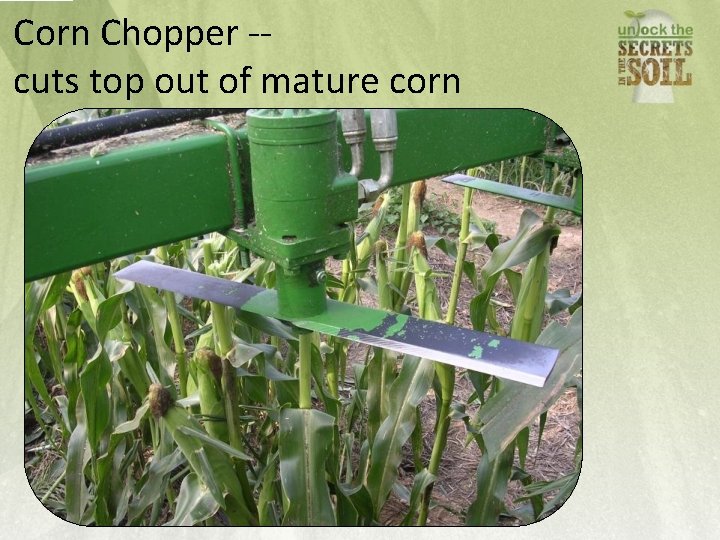
Corn Chopper -cuts top out of mature corn
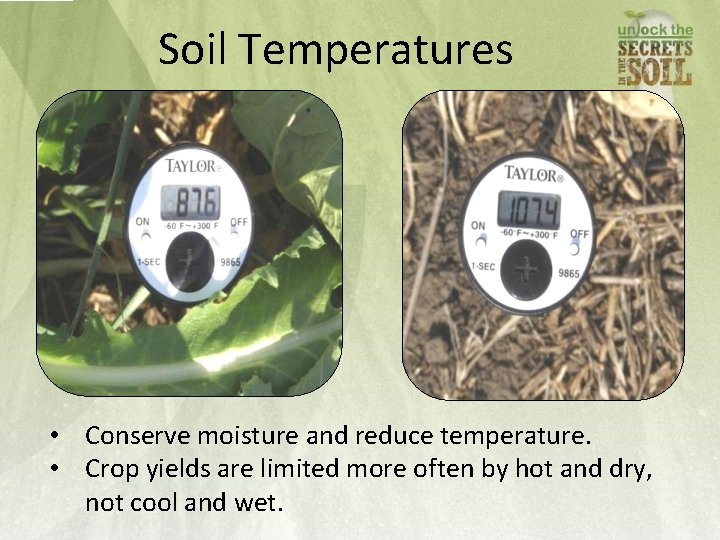
Soil Health Principle 4 Keep it Covered as Much as Possible Benefits: • Control Erosion • Protect Soil Aggregates • Suppresses Weeds • Conserves Moisture • Cools the Soil • Provides Habitat for Soil Organisms
Soil Temperatures • Conserve moisture and reduce temperature. • Crop yields are limited more often by hot and dry, not cool and wet.
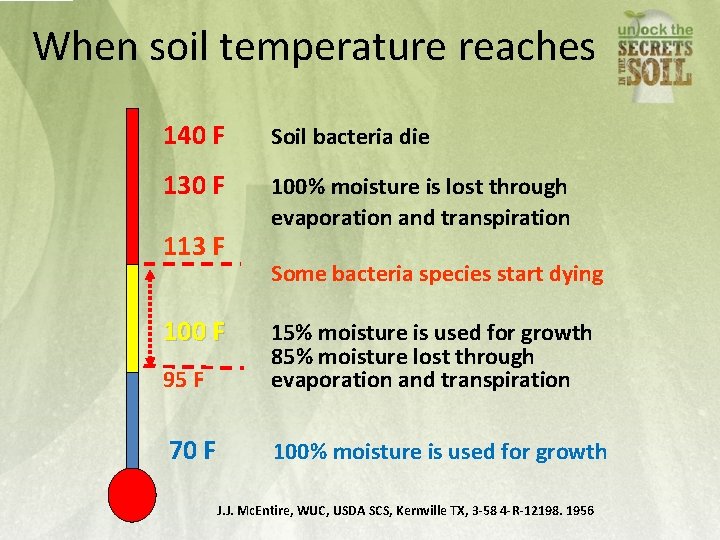
When soil temperature reaches 140 F Soil bacteria die 130 F 100% moisture is lost through evaporation and transpiration 113 F 100 F 95 F Some bacteria species start dying 15% moisture is used for growth 85% moisture lost through evaporation and transpiration 70 F 100% moisture is used for growth J. J. Mc. Entire, WUC, USDA SCS, Kernville TX, 3 -58 4 -R-12198. 1956
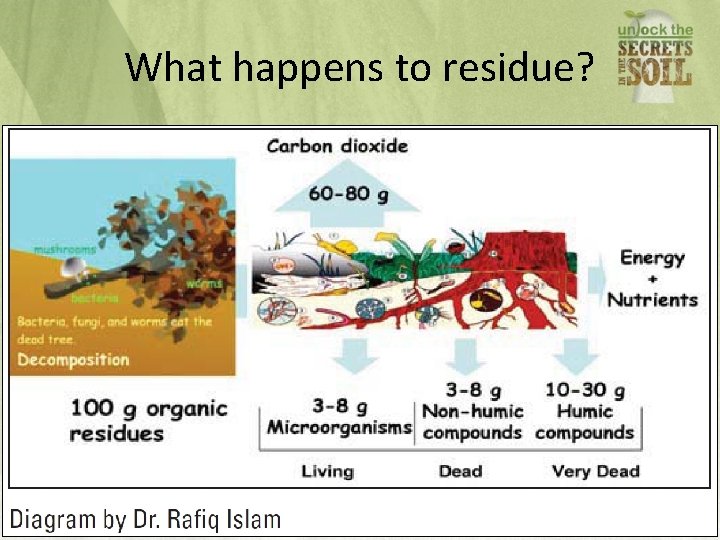
What happens to residue?
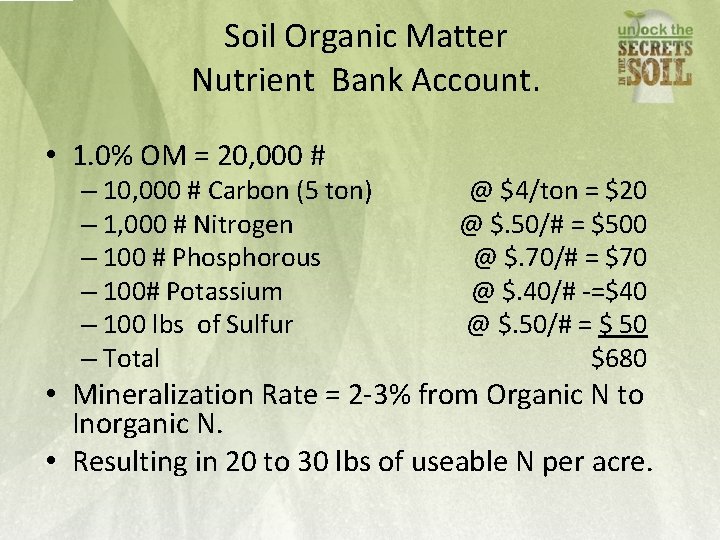
Soil Organic Matter Nutrient Bank Account. • 1. 0% OM = 20, 000 # – 10, 000 # Carbon (5 ton) – 1, 000 # Nitrogen – 100 # Phosphorous – 100# Potassium – 100 lbs of Sulfur – Total @ $4/ton = $20 @ $. 50/# = $500 @ $. 70/# = $70 @ $. 40/# -=$40 @ $. 50/# = $ 50 $680 • Mineralization Rate = 2 -3% from Organic N to Inorganic N. • Resulting in 20 to 30 lbs of useable N per acre.
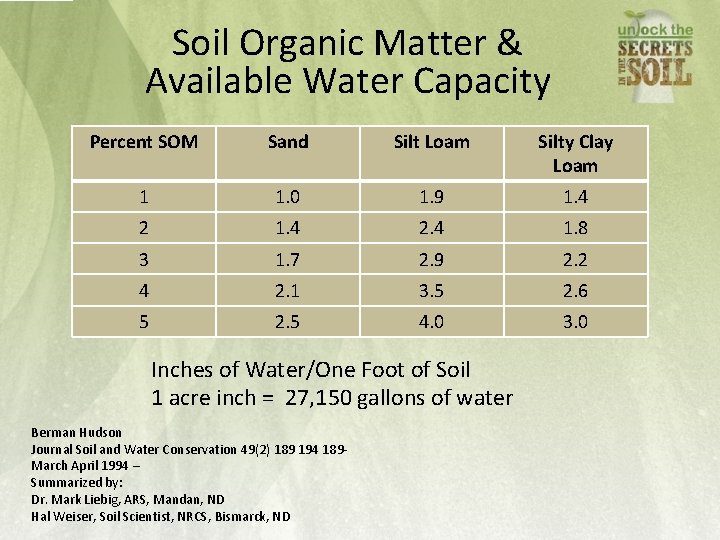
Soil Organic Matter & Available Water Capacity Percent SOM Sand Silt Loam Silty Clay Loam 1 1. 0 1. 9 1. 4 2. 4 1. 8 3 1. 7 2. 9 2. 2 4 2. 1 3. 5 2. 6 5 2. 5 4. 0 3. 0 Inches of Water/One Foot of Soil 1 acre inch = 27, 150 gallons of water Berman Hudson Journal Soil and Water Conservation 49(2) 189 194 189 March April 1994 – Summarized by: Dr. Mark Liebig, ARS, Mandan, ND Hal Weiser, Soil Scientist, NRCS, Bismarck, ND
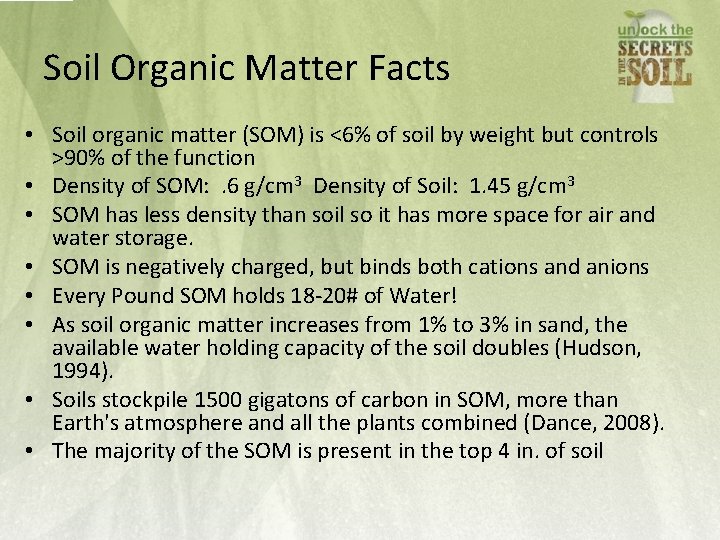
Soil Organic Matter Facts • Soil organic matter (SOM) is <6% of soil by weight but controls >90% of the function • Density of SOM: . 6 g/cm 3 Density of Soil: 1. 45 g/cm 3 • SOM has less density than soil so it has more space for air and water storage. • SOM is negatively charged, but binds both cations and anions • Every Pound SOM holds 18 -20# of Water! • As soil organic matter increases from 1% to 3% in sand, the available water holding capacity of the soil doubles (Hudson, 1994). • Soils stockpile 1500 gigatons of carbon in SOM, more than Earth's atmosphere and all the plants combined (Dance, 2008). • The majority of the SOM is present in the top 4 in. of soil
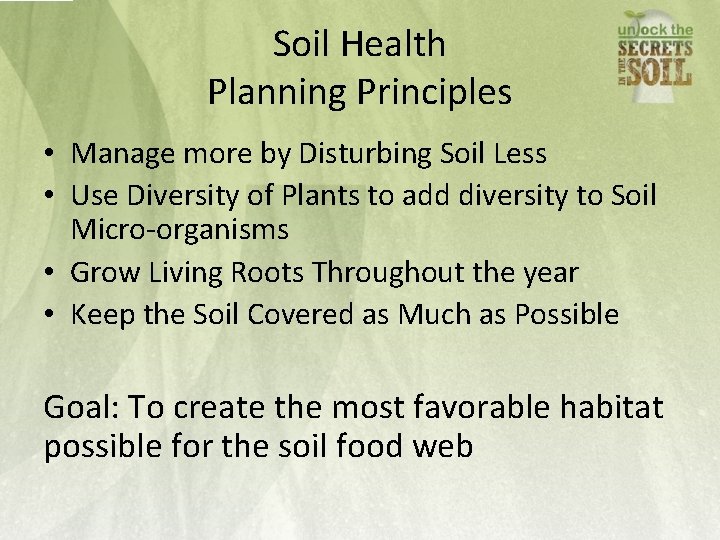
Soil Health Planning Principles • Manage more by Disturbing Soil Less • Use Diversity of Plants to add diversity to Soil Micro-organisms • Grow Living Roots Throughout the year • Keep the Soil Covered as Much as Possible Goal: To create the most favorable habitat possible for the soil food web