
n Chapter 7 Membrane Structure and Function Membrane

n Chapter 7 – Membrane Structure and Function
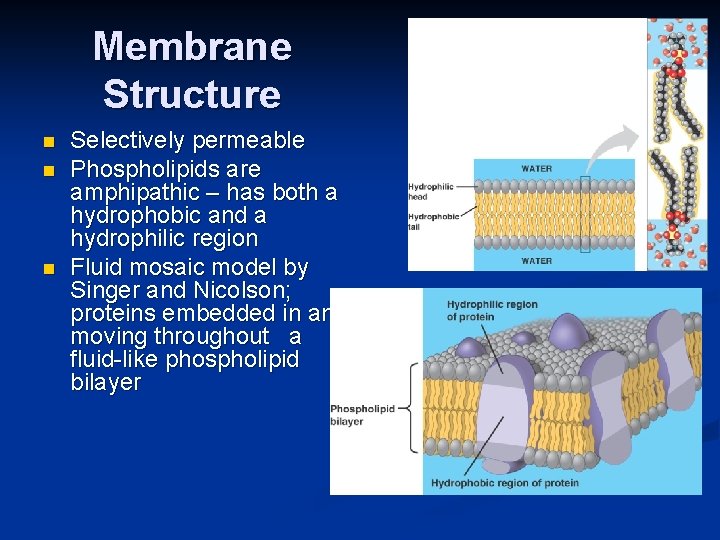
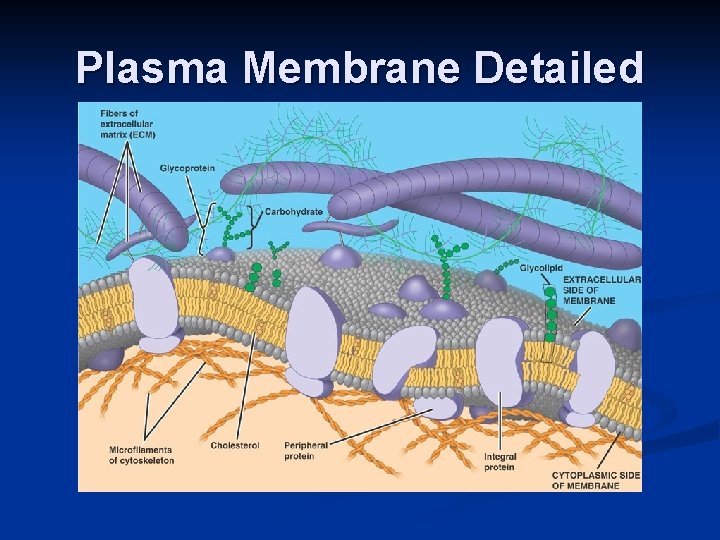
Membrane Structure n n n Selectively permeable Phospholipids are amphipathic – has both a hydrophobic and a hydrophilic region Fluid mosaic model by Singer and Nicolson; proteins embedded in and moving throughout a fluid-like phospholipid bilayer
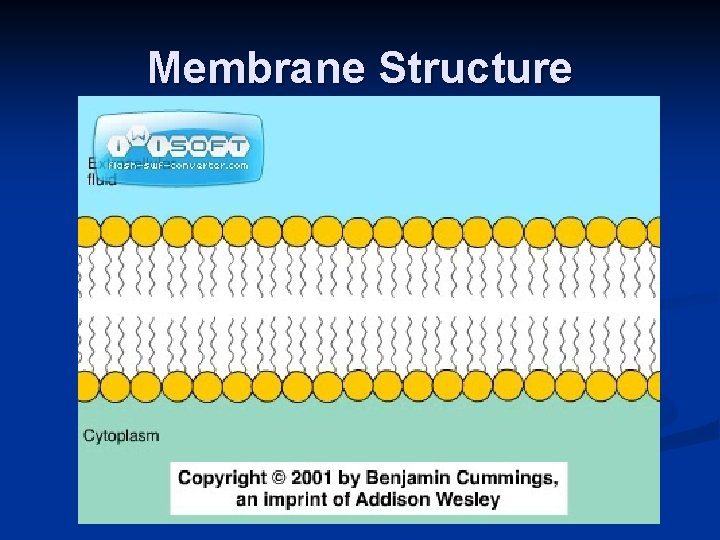
Membrane Structure
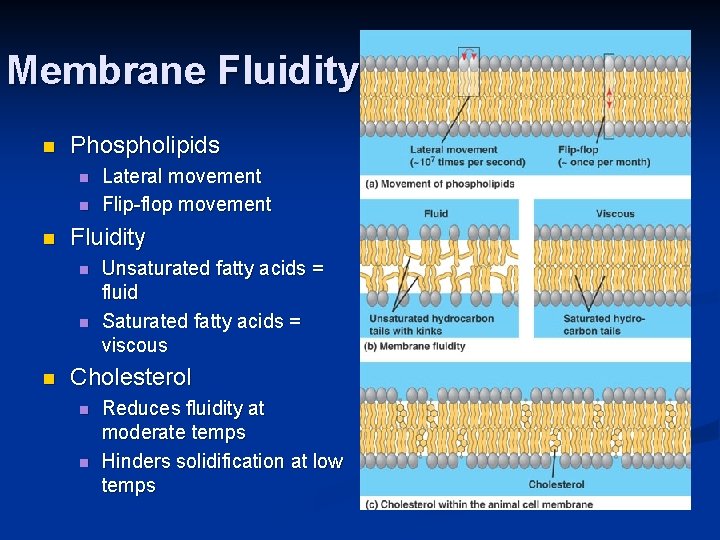
Membrane Fluidity n Phospholipids n n n Fluidity n n n Lateral movement Flip-flop movement Unsaturated fatty acids = fluid Saturated fatty acids = viscous Cholesterol n n Reduces fluidity at moderate temps Hinders solidification at low temps
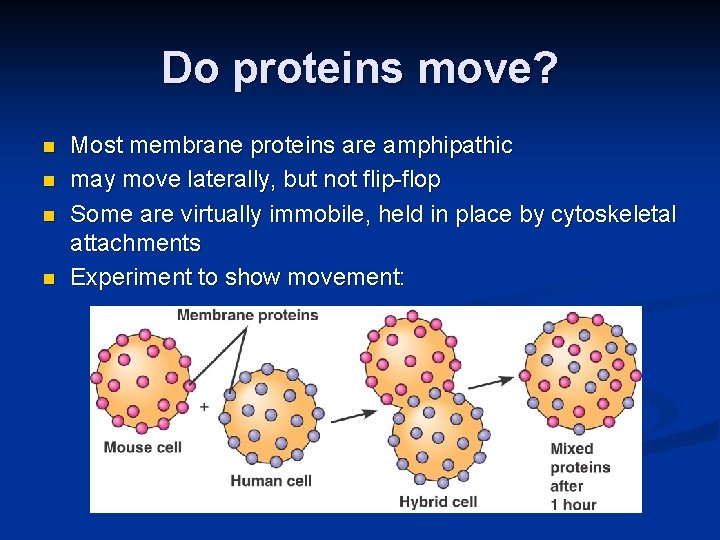
Do proteins move? n n Most membrane proteins are amphipathic may move laterally, but not flip-flop Some are virtually immobile, held in place by cytoskeletal attachments Experiment to show movement:
Plasma Membrane Detailed
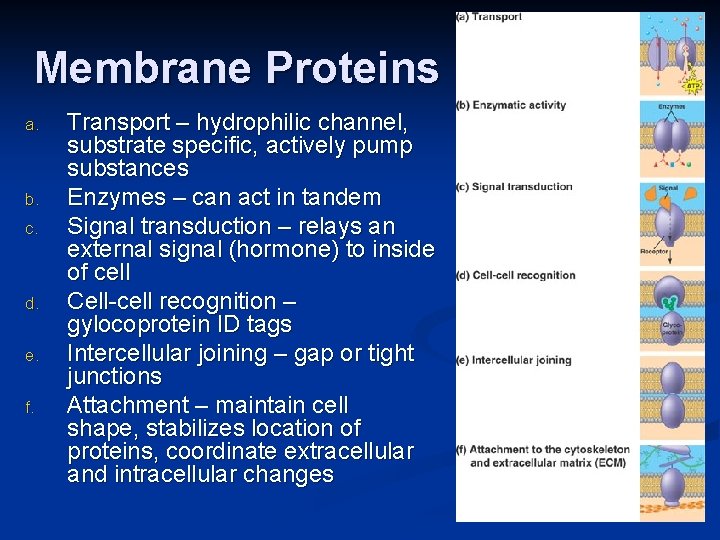
Membrane Proteins a. b. c. d. e. f. Transport – hydrophilic channel, substrate specific, actively pump substances Enzymes – can act in tandem Signal transduction – relays an external signal (hormone) to inside of cell Cell-cell recognition – gylocoprotein ID tags Intercellular joining – gap or tight junctions Attachment – maintain cell shape, stabilizes location of proteins, coordinate extracellular and intracellular changes
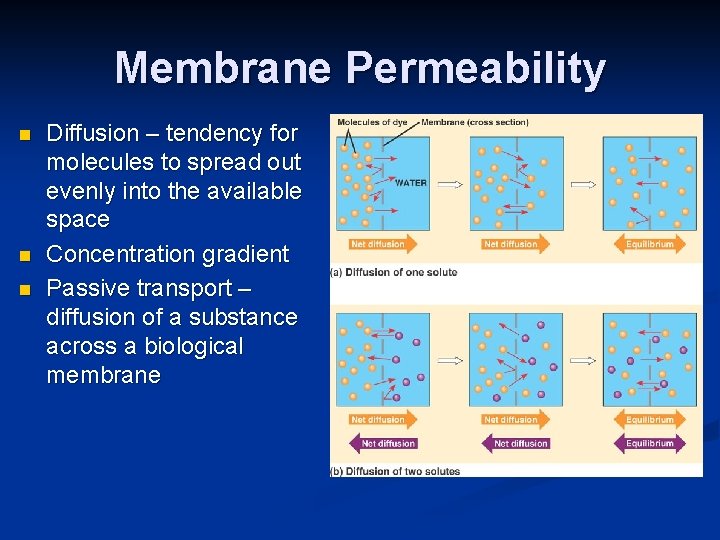
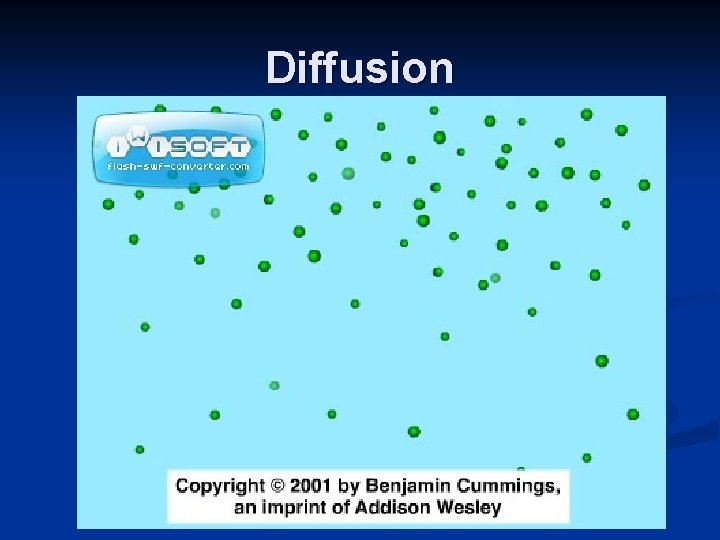
Membrane Permeability n n n Diffusion – tendency for molecules to spread out evenly into the available space Concentration gradient Passive transport – diffusion of a substance across a biological membrane
Diffusion
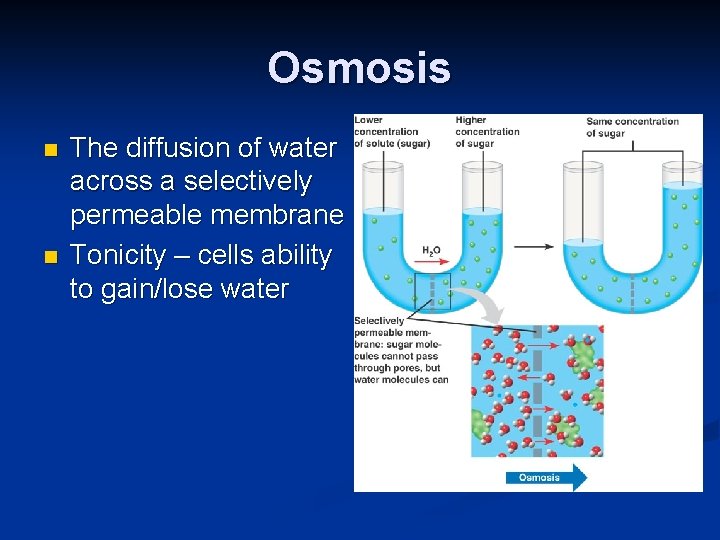
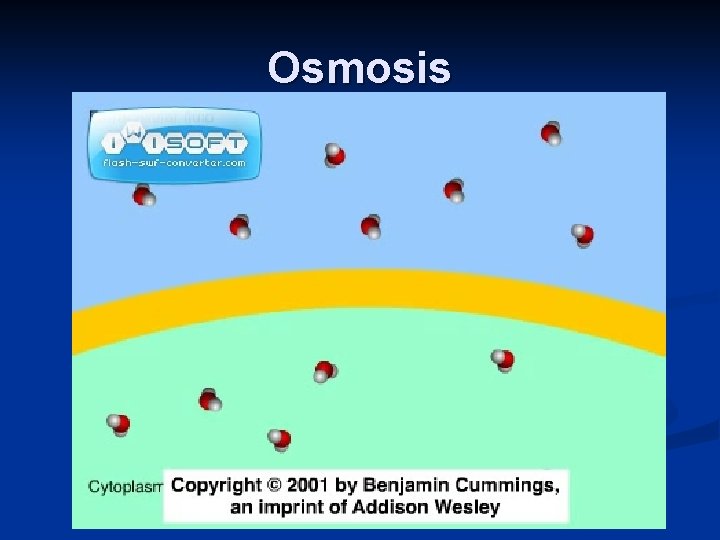
Osmosis n n The diffusion of water across a selectively permeable membrane Tonicity – cells ability to gain/lose water
Osmosis
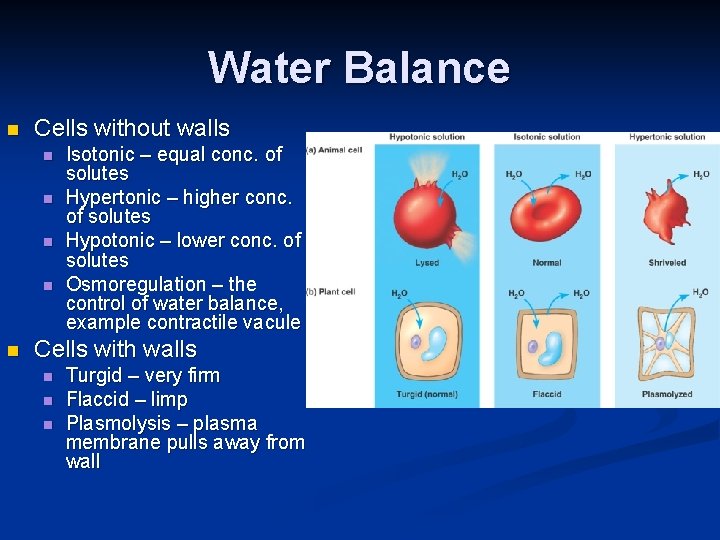
Water Balance n Cells without walls n n n Isotonic – equal conc. of solutes Hypertonic – higher conc. of solutes Hypotonic – lower conc. of solutes Osmoregulation – the control of water balance, example contractile vacule Cells with walls n n n Turgid – very firm Flaccid – limp Plasmolysis – plasma membrane pulls away from wall
Osmoregulation
Plasmolysis
Turgid
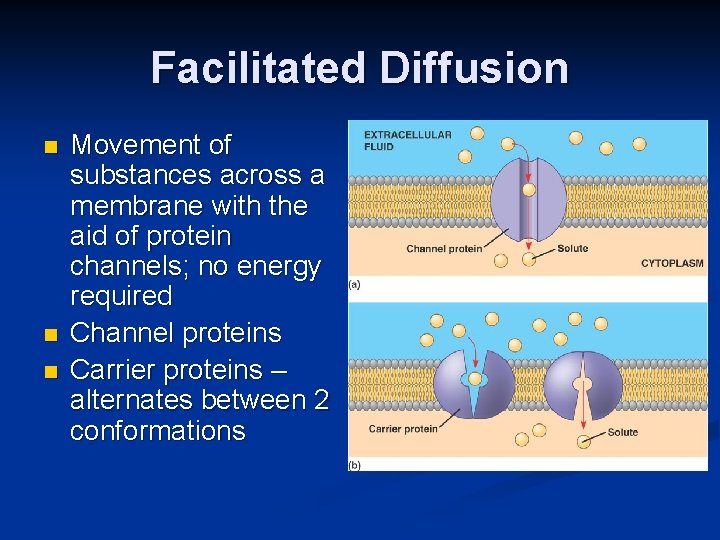
Facilitated Diffusion n Movement of substances across a membrane with the aid of protein channels; no energy required Channel proteins Carrier proteins – alternates between 2 conformations
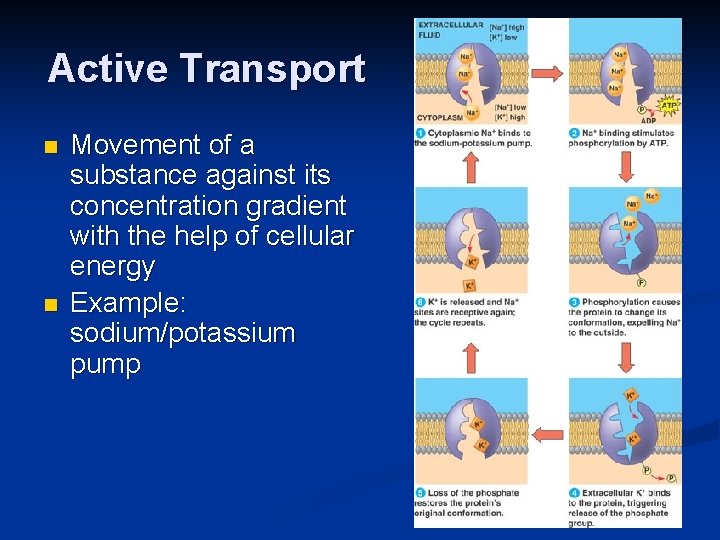
Active Transport n n Movement of a substance against its concentration gradient with the help of cellular energy Example: sodium/potassium pump
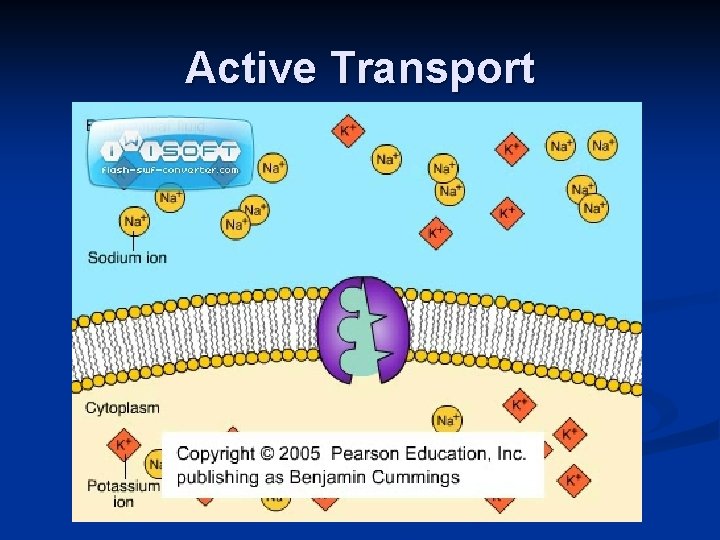
Active Transport
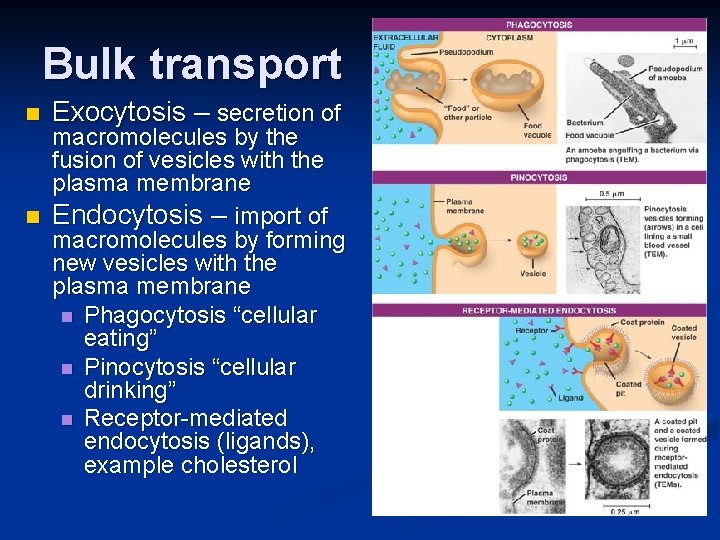
Bulk transport n Exocytosis – secretion of macromolecules by the fusion of vesicles with the plasma membrane n Endocytosis – import of macromolecules by forming new vesicles with the plasma membrane n Phagocytosis “cellular eating” n Pinocytosis “cellular drinking” n Receptor-mediated endocytosis (ligands), example cholesterol
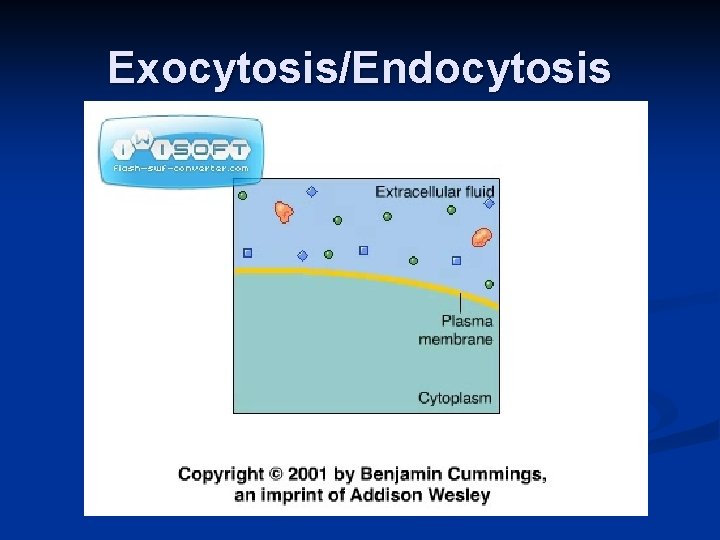
Exocytosis/Endocytosis
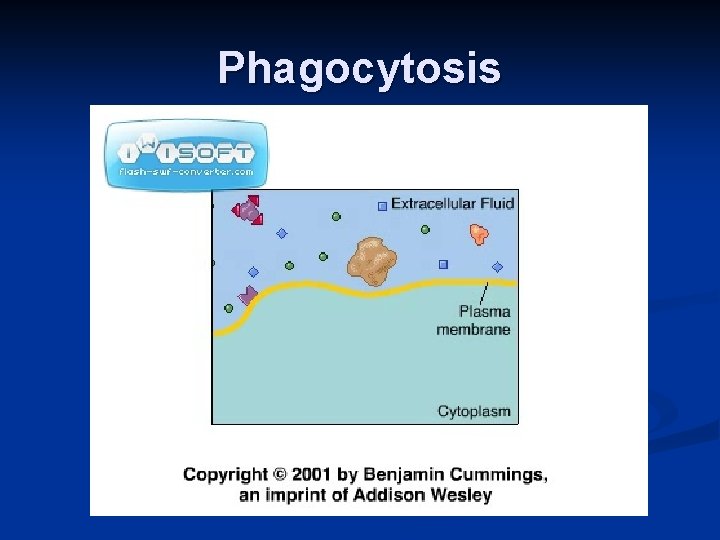
Phagocytosis
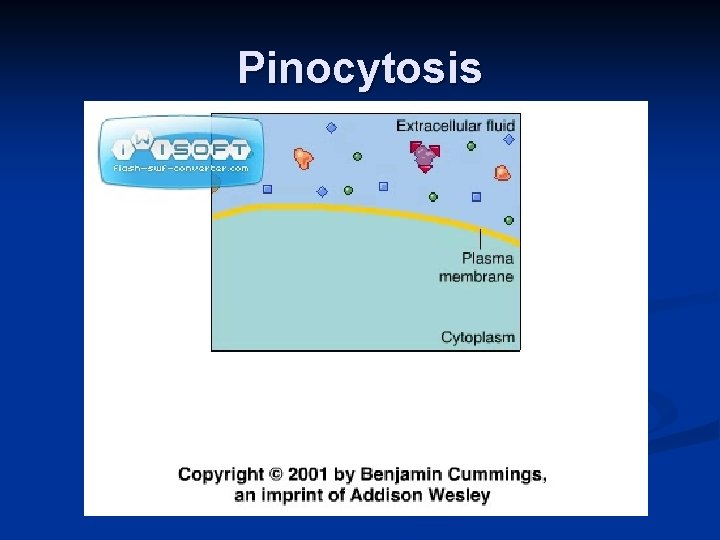
Pinocytosis
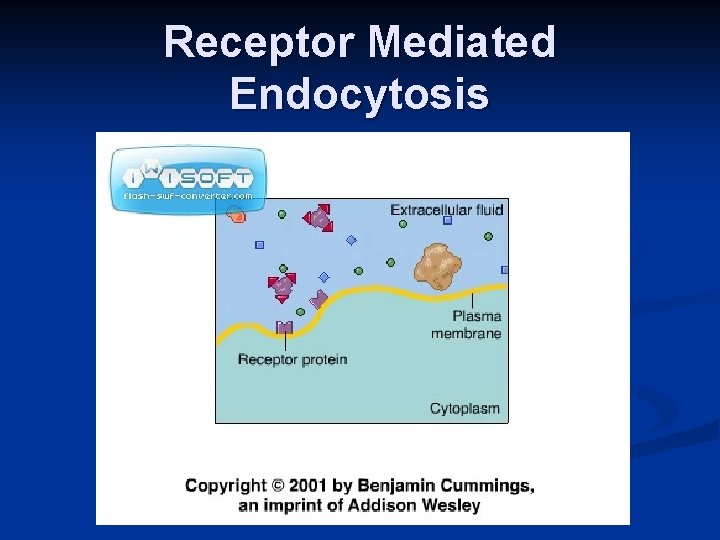
Receptor Mediated Endocytosis
- Slides: 23