
N 5 Exam paper Section 1 Expressive Art
- Slides: 39
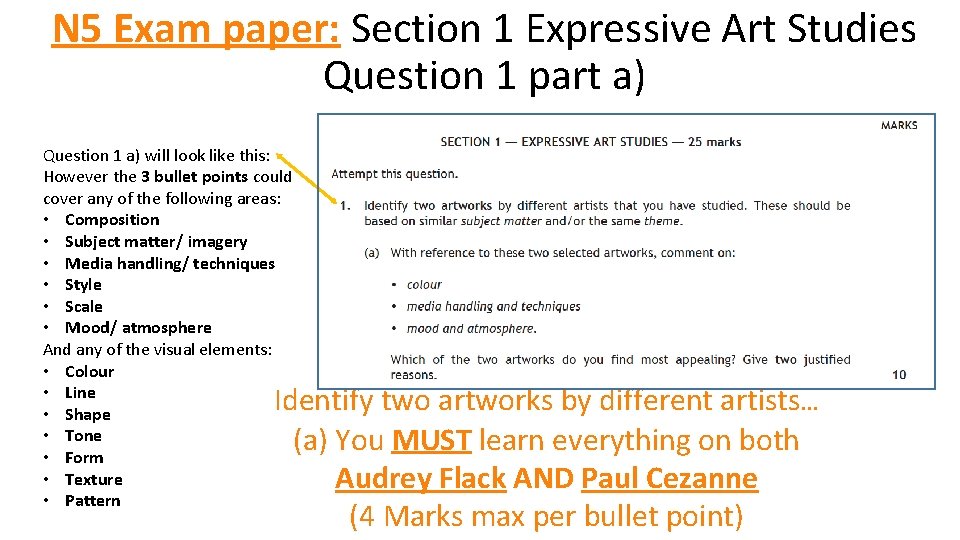
N 5 Exam paper: Section 1 Expressive Art Studies Question 1 part a) Question 1 a) will look like this: However the 3 bullet points could cover any of the following areas: • Composition • Subject matter/ imagery • Media handling/ techniques • Style • Scale • Mood/ atmosphere And any of the visual elements: • Colour • Line • Shape • Tone • Form • Texture • Pattern Identify two artworks by different artists… (a) You MUST learn everything on both Audrey Flack AND Paul Cezanne (4 Marks max per bullet point)
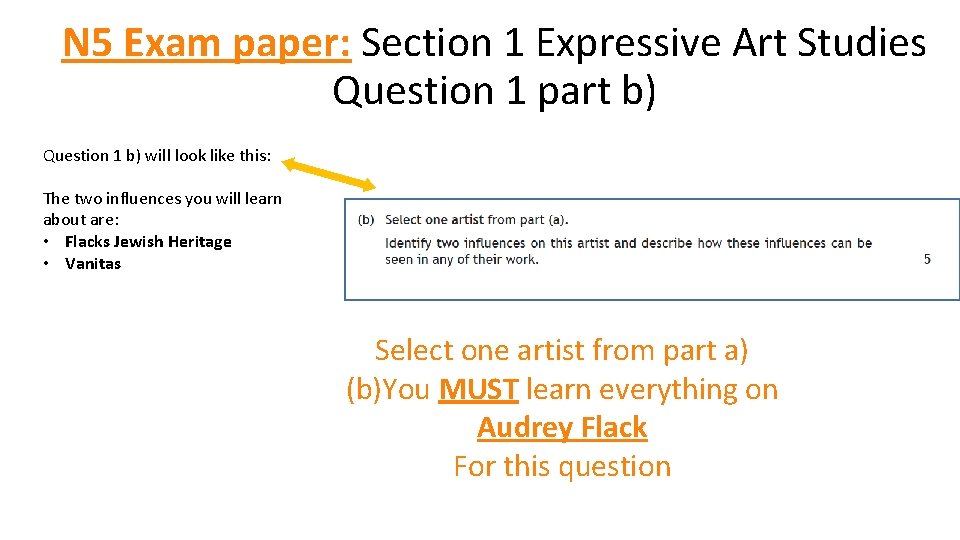
N 5 Exam paper: Section 1 Expressive Art Studies Question 1 part b) Question 1 b) will look like this: The two influences you will learn about are: • Flacks Jewish Heritage • Vanitas Select one artist from part a) (b)You MUST learn everything on Audrey Flack For this question
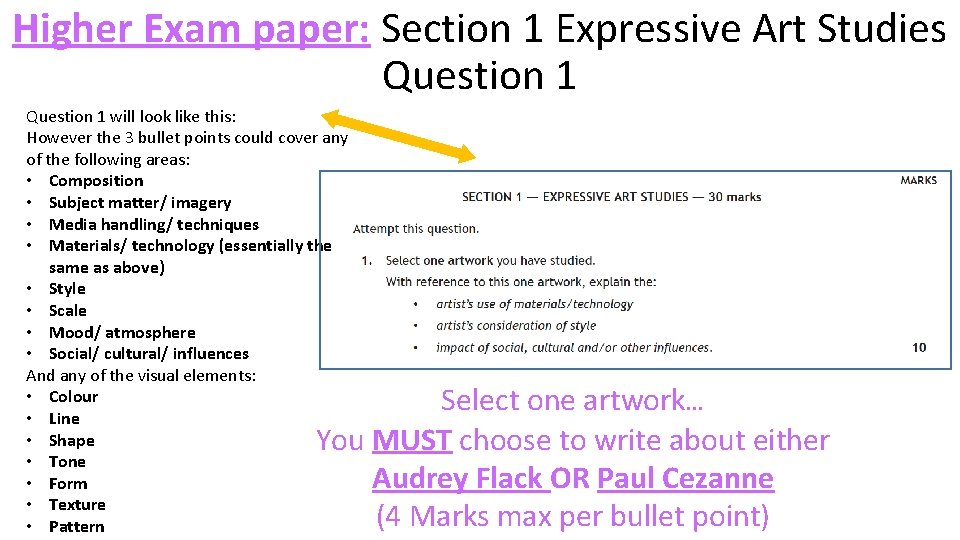
Higher Exam paper: Section 1 Expressive Art Studies Question 1 will look like this: However the 3 bullet points could cover any of the following areas: • Composition • Subject matter/ imagery • Media handling/ techniques • Materials/ technology (essentially the same as above) • Style • Scale • Mood/ atmosphere • Social/ cultural/ influences And any of the visual elements: • Colour • Line • Shape • Tone • Form • Texture • Pattern Select one artwork… You MUST choose to write about either Audrey Flack OR Paul Cezanne (4 Marks max per bullet point)
2020 -21 exam update N 5 Exam Cancelled You must complete all learning mats Higher Exam Candidates will choose to respond to either the Expressive Art studies OR Design Studies section. You must complete all learning mats Revise either 1 expressive artist (Audrey Flack OR Paul Cezanne) OR Revise 1 designer (AM Cassandra OR Milton Glaser) All expressive learning mats due from everyone by friday 27 th November
To be awarded marks in the written exam you must Describe + Effect + Justify = 1 MARK • Describe - What do you want the examiner to look at within the artwork? • Effect - what does this do? • Justify - explain why you think this was done - how does it benefit or not benefit the piece?
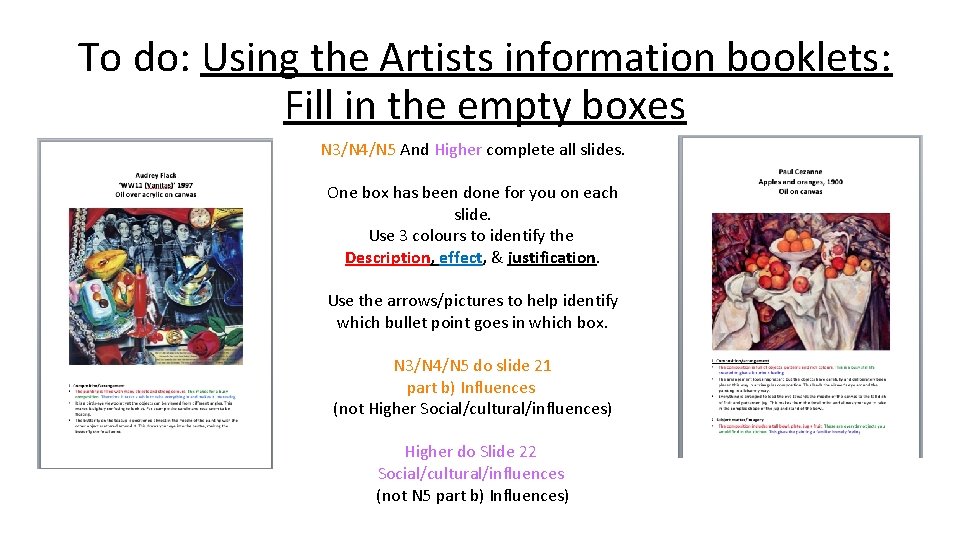
To do: Using the Artists information booklets: Fill in the empty boxes N 3/N 4/N 5 And Higher complete all slides. One box has been done for you on each slide. Use 3 colours to identify the Description, effect, & justification. Use the arrows/pictures to help identify which bullet point goes in which box. N 3/N 4/N 5 do slide 21 part b) Influences (not Higher Social/cultural/influences) Higher do Slide 22 Social/cultural/influences (not N 5 part b) Influences)
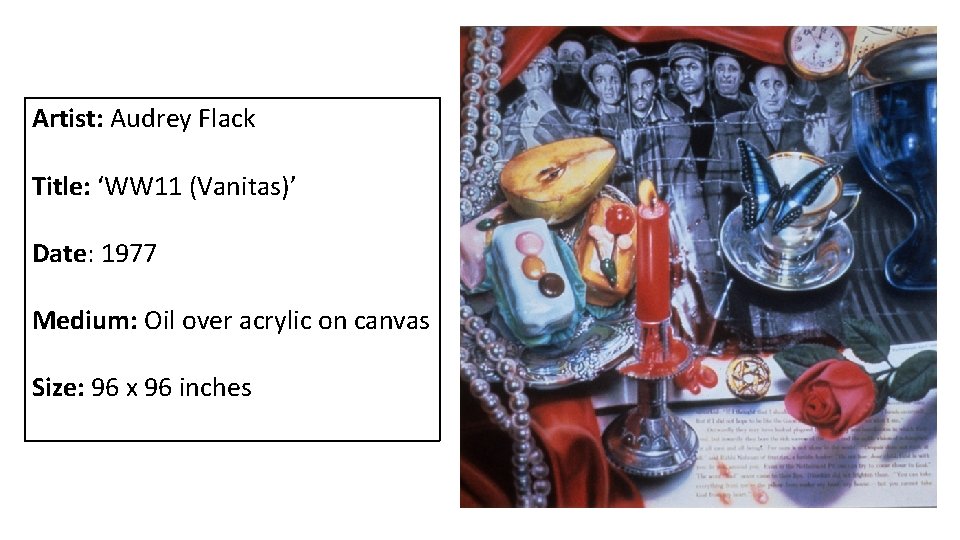
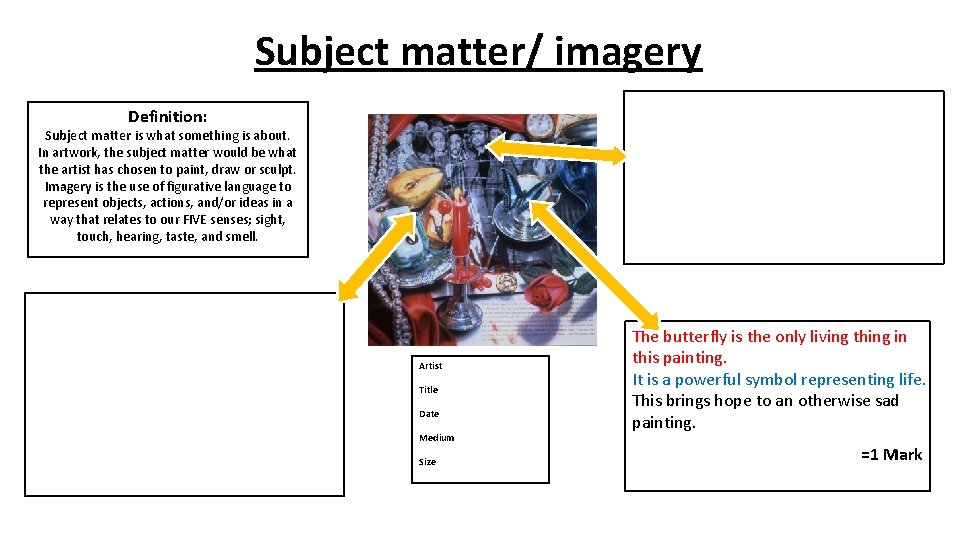
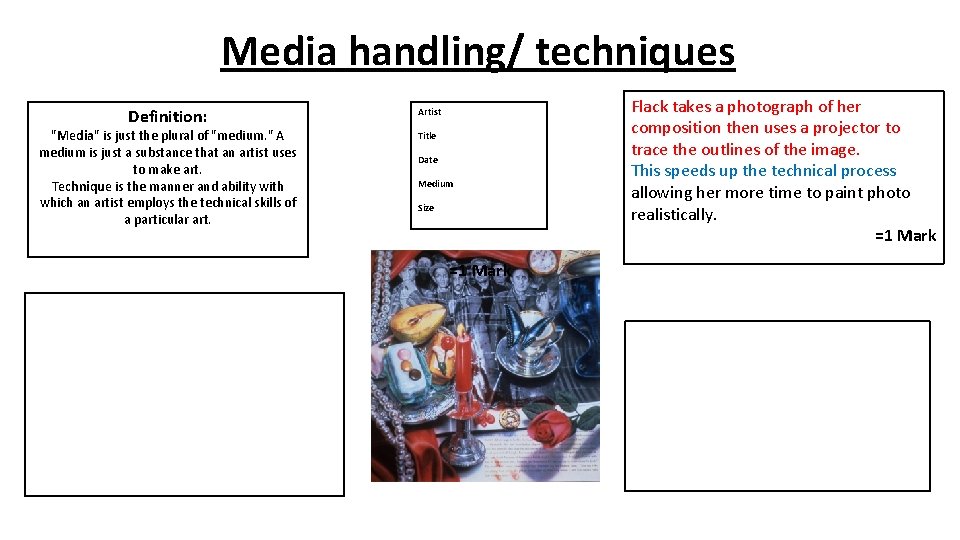
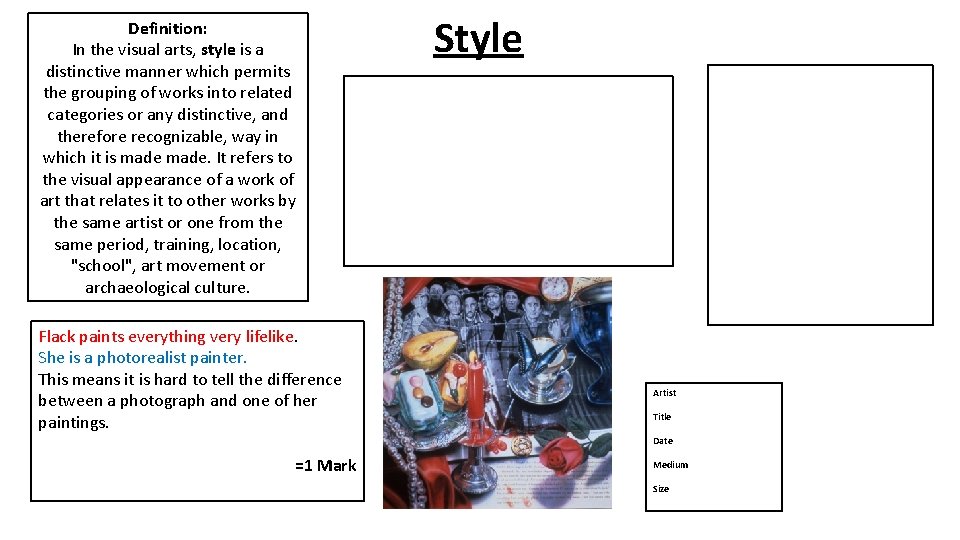
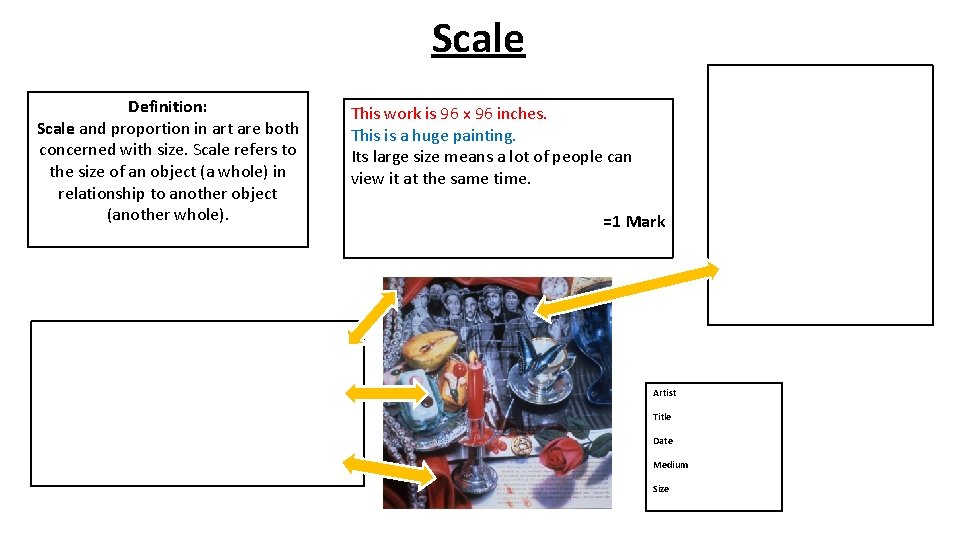
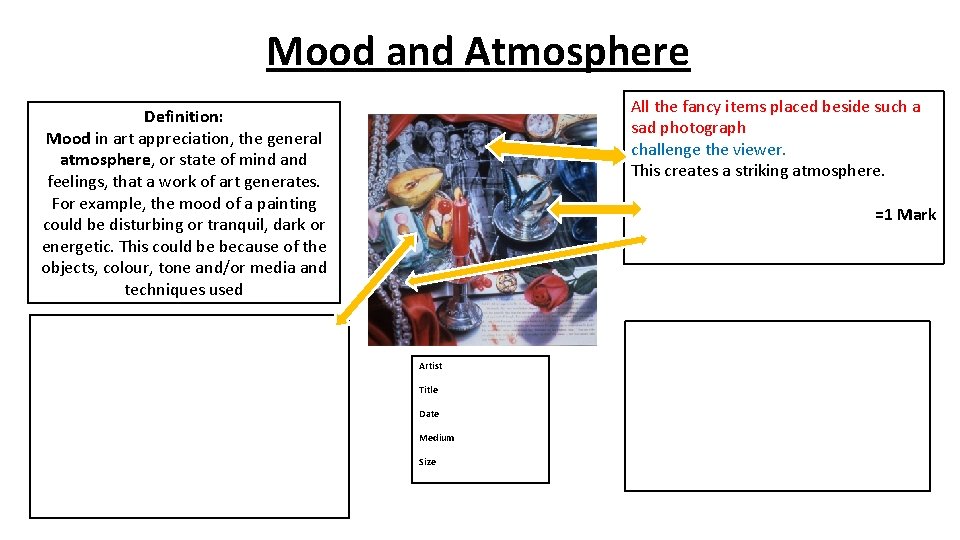
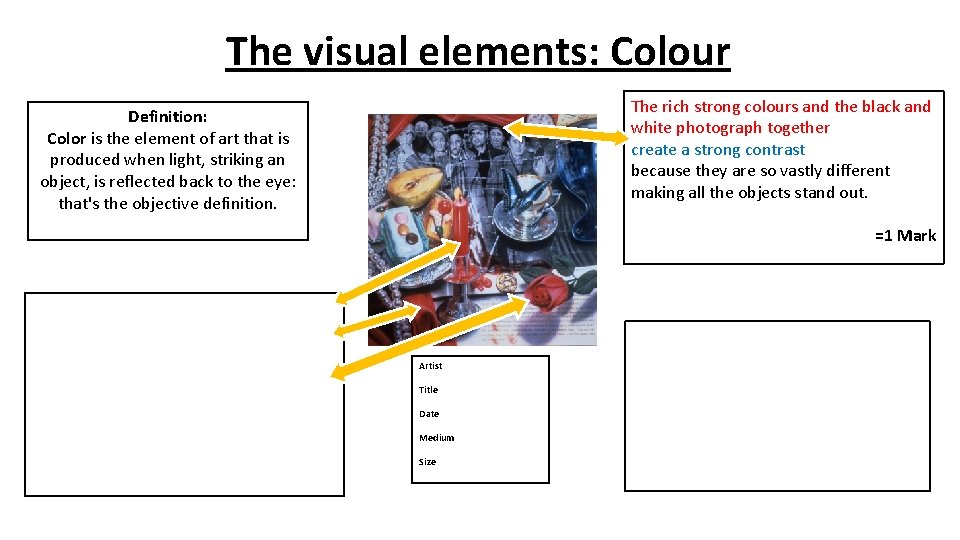
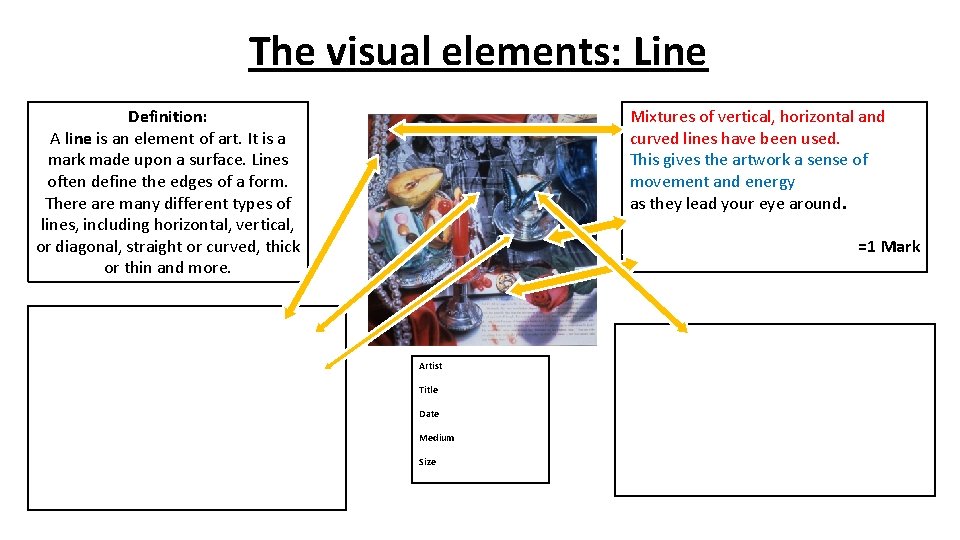
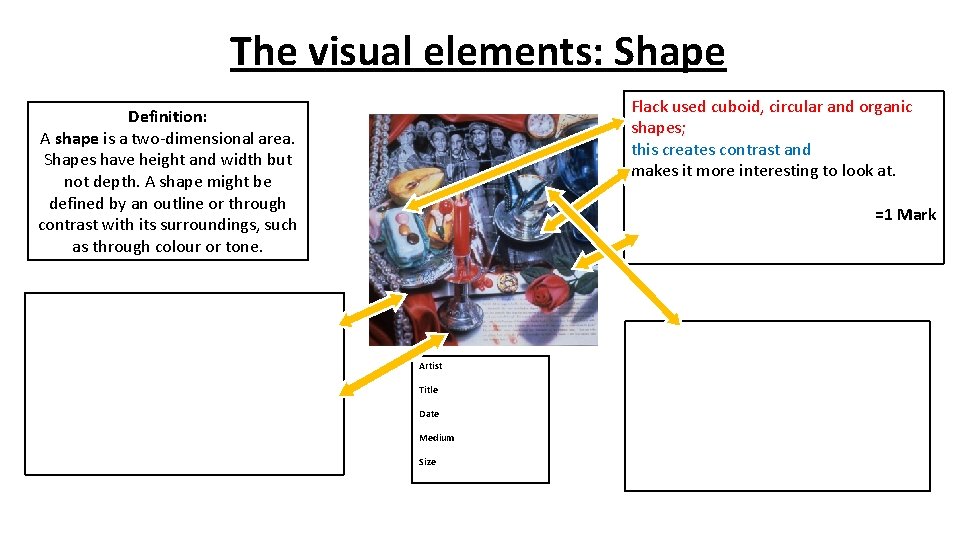
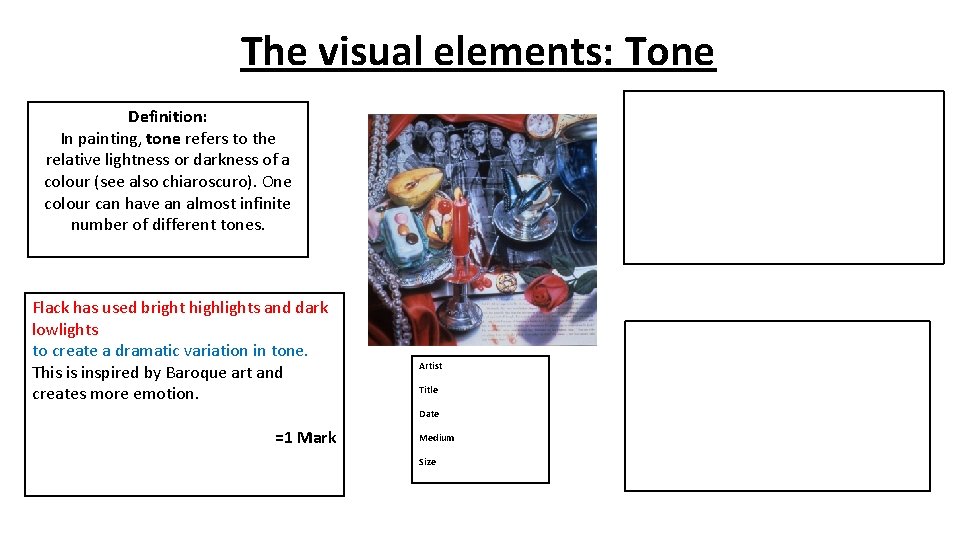
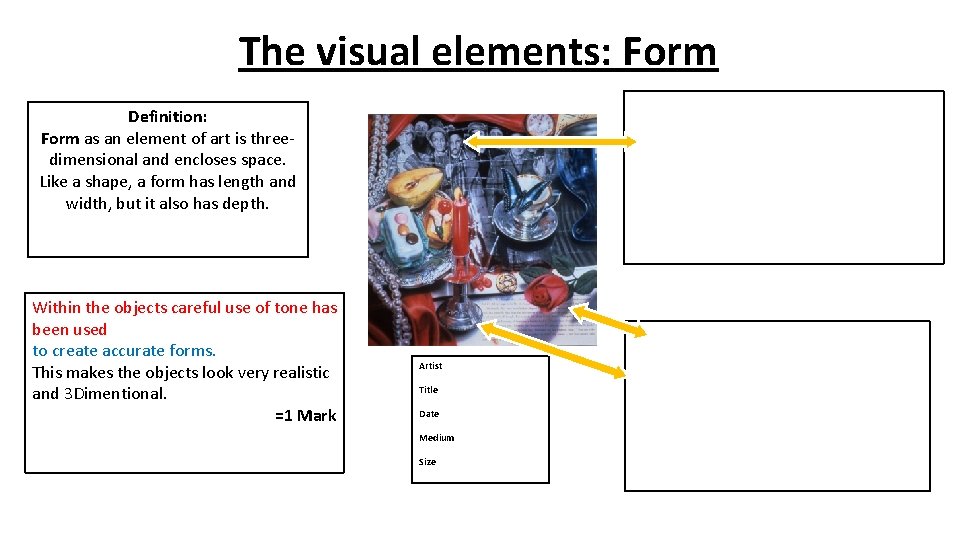
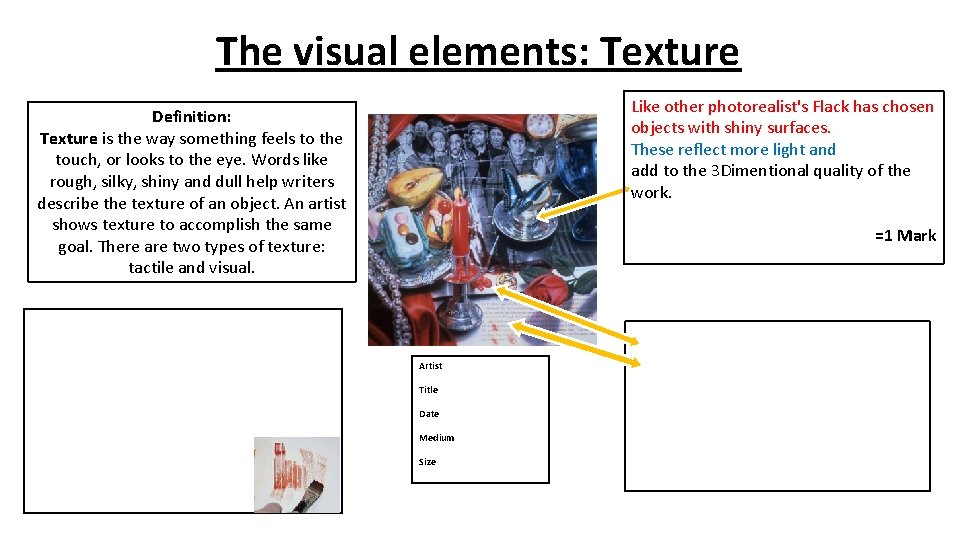
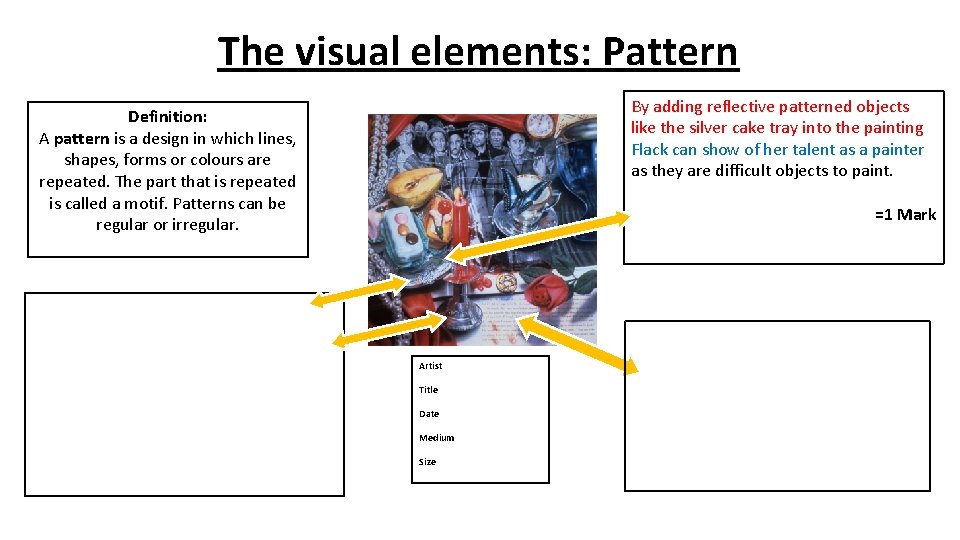
Artist: Audrey Flack Title: ‘WW 11 (Vanitas)’ Date: 1977 Medium: Oil over acrylic on canvas Size: 96 x 96 inches
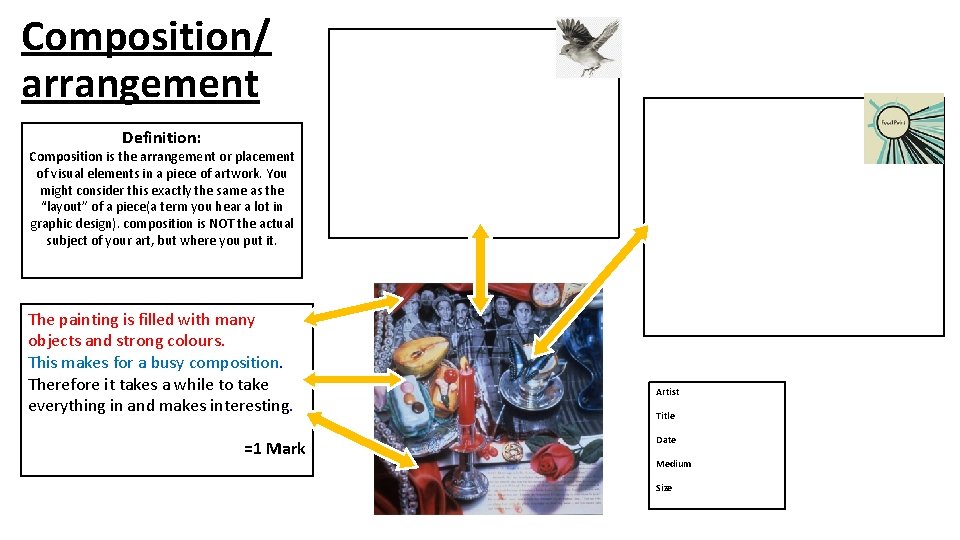
Composition/ arrangement Definition: Composition is the arrangement or placement of visual elements in a piece of artwork. You might consider this exactly the same as the “layout” of a piece(a term you hear a lot in graphic design). composition is NOT the actual subject of your art, but where you put it. The painting is filled with many objects and strong colours. This makes for a busy composition. Therefore it takes a while to take everything in and makes interesting. =1 Mark Artist Title Date Medium Size
Subject matter/ imagery Definition: Subject matter is what something is about. In artwork, the subject matter would be what the artist has chosen to paint, draw or sculpt. Imagery is the use of figurative language to represent objects, actions, and/or ideas in a way that relates to our FIVE senses; sight, touch, hearing, taste, and smell. Artist Title Date Medium Size The butterfly is the only living thing in this painting. It is a powerful symbol representing life. This brings hope to an otherwise sad painting. =1 Mark
Media handling/ techniques Definition: "Media" is just the plural of "medium. " A medium is just a substance that an artist uses to make art. Technique is the manner and ability with which an artist employs the technical skills of a particular art. Artist Title Date Medium Size =1 Mark Flack takes a photograph of her composition then uses a projector to trace the outlines of the image. This speeds up the technical process allowing her more time to paint photo realistically. =1 Mark
Definition: In the visual arts, style is a distinctive manner which permits the grouping of works into related categories or any distinctive, and therefore recognizable, way in which it is made. It refers to the visual appearance of a work of art that relates it to other works by the same artist or one from the same period, training, location, "school", art movement or archaeological culture. Flack paints everything very lifelike. She is a photorealist painter. This means it is hard to tell the difference between a photograph and one of her paintings. Style Artist Title Date =1 Mark Medium Size
Scale Definition: Scale and proportion in art are both concerned with size. Scale refers to the size of an object (a whole) in relationship to another object (another whole). This work is 96 x 96 inches. This is a huge painting. Its large size means a lot of people can view it at the same time. =1 Mark Artist Title Date Medium Size
Mood and Atmosphere All the fancy items placed beside such a sad photograph challenge the viewer. This creates a striking atmosphere. Definition: Mood in art appreciation, the general atmosphere, or state of mind and feelings, that a work of art generates. For example, the mood of a painting could be disturbing or tranquil, dark or energetic. This could be because of the objects, colour, tone and/or media and techniques used =1 Mark Artist Title Date Medium Size
The visual elements: Colour The rich strong colours and the black and white photograph together create a strong contrast because they are so vastly different making all the objects stand out. Definition: Color is the element of art that is produced when light, striking an object, is reflected back to the eye: that's the objective definition. =1 Mark Artist Title Date Medium Size
The visual elements: Line Mixtures of vertical, horizontal and curved lines have been used. This gives the artwork a sense of movement and energy as they lead your eye around. Definition: A line is an element of art. It is a mark made upon a surface. Lines often define the edges of a form. There are many different types of lines, including horizontal, vertical, or diagonal, straight or curved, thick or thin and more. =1 Mark Artist Title Date Medium Size
The visual elements: Shape Flack used cuboid, circular and organic shapes; this creates contrast and makes it more interesting to look at. Definition: A shape is a two-dimensional area. Shapes have height and width but not depth. A shape might be defined by an outline or through contrast with its surroundings, such as through colour or tone. =1 Mark Artist Title Date Medium Size
The visual elements: Tone Definition: In painting, tone refers to the relative lightness or darkness of a colour (see also chiaroscuro). One colour can have an almost infinite number of different tones. Flack has used bright highlights and dark lowlights to create a dramatic variation in tone. This is inspired by Baroque art and creates more emotion. Artist Title Date =1 Mark Medium Size
The visual elements: Form Definition: Form as an element of art is threedimensional and encloses space. Like a shape, a form has length and width, but it also has depth. Within the objects careful use of tone has been used to create accurate forms. This makes the objects look very realistic and 3 Dimentional. =1 Mark Artist Title Date Medium Size
The visual elements: Texture Like other photorealist's Flack has chosen objects with shiny surfaces. These reflect more light and add to the 3 Dimentional quality of the work. Definition: Texture is the way something feels to the touch, or looks to the eye. Words like rough, silky, shiny and dull help writers describe the texture of an object. An artist shows texture to accomplish the same goal. There are two types of texture: tactile and visual. =1 Mark Artist Title Date Medium Size
The visual elements: Pattern By adding reflective patterned objects like the silver cake tray into the painting Flack can show of her talent as a painter as they are difficult objects to paint. Definition: A pattern is a design in which lines, shapes, forms or colours are repeated. The part that is repeated is called a motif. Patterns can be regular or irregular. =1 Mark Artist Title Date Medium Size
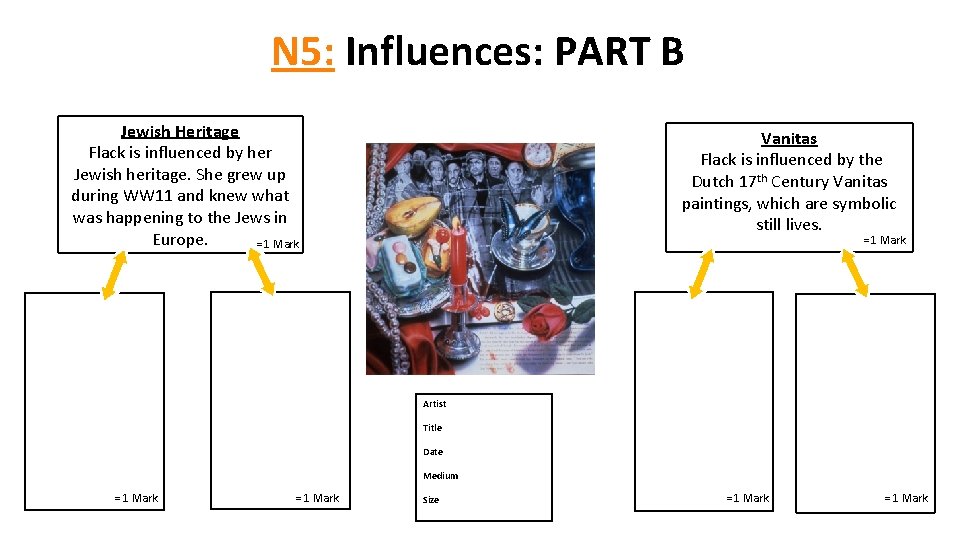
N 5: Influences: PART B Jewish Heritage Flack is influenced by her Jewish heritage. She grew up during WW 11 and knew what was happening to the Jews in Europe. = 1 Mark Vanitas Flack is influenced by the Dutch 17 th Century Vanitas paintings, which are symbolic still lives. = 1 Mark Artist Title Date Medium = 1 Mark Size = 1 Mark
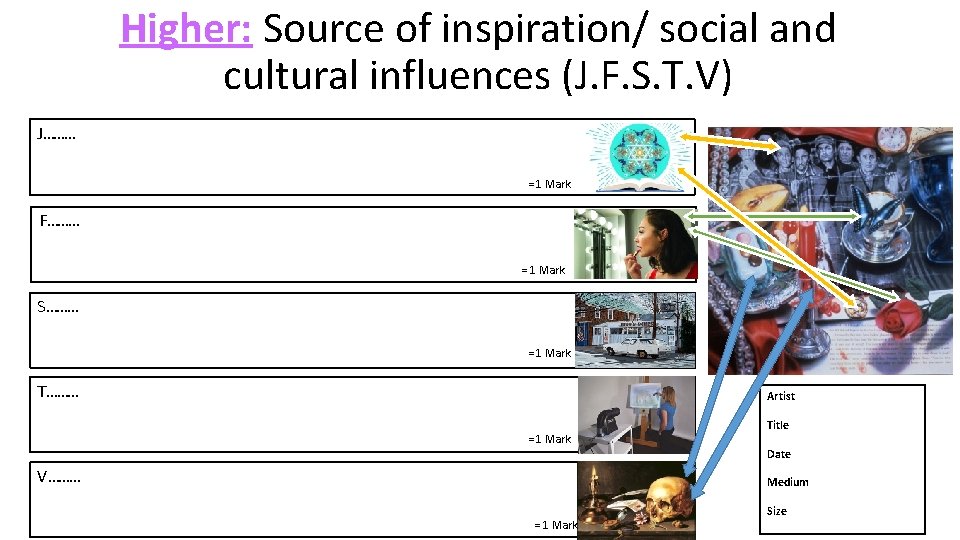
Higher: Source of inspiration/ social and cultural influences (J. F. S. T. V) J……… = 1 Mark F……… = 1 Mark S……… = 1 Mark T……… Artist = 1 Mark V……… Title Date Medium = 1 Mark Size
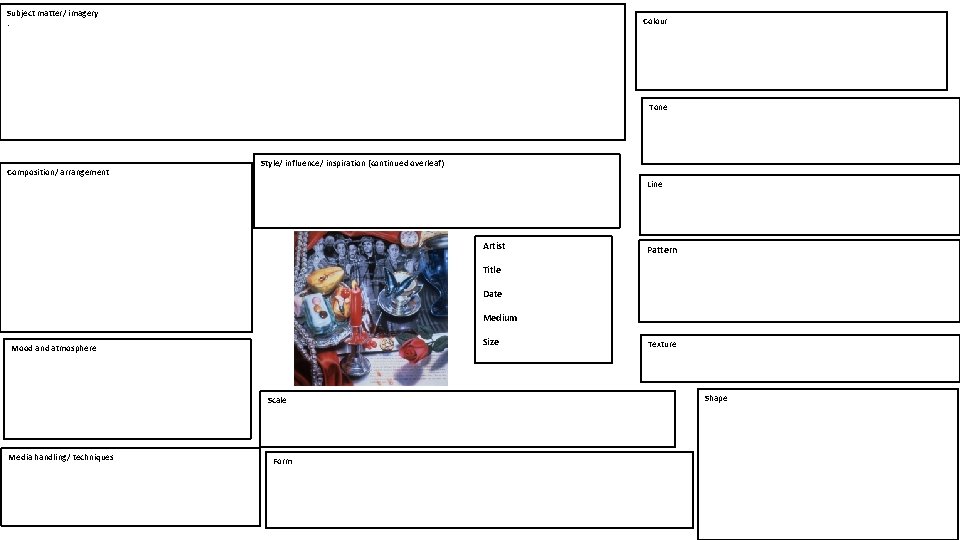
Subject matter/ imagery. Colour Tone Composition/ arrangement Style/ influence/ inspiration (continued overleaf) Line Artist Pattern Title Date Medium Size Mood and atmosphere Scale Media handling/ techniques Form Texture Shape
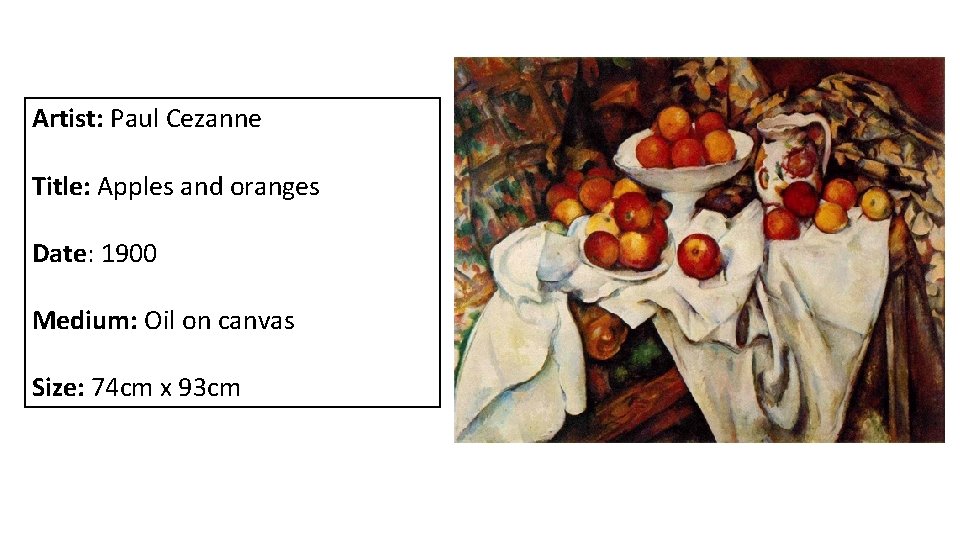
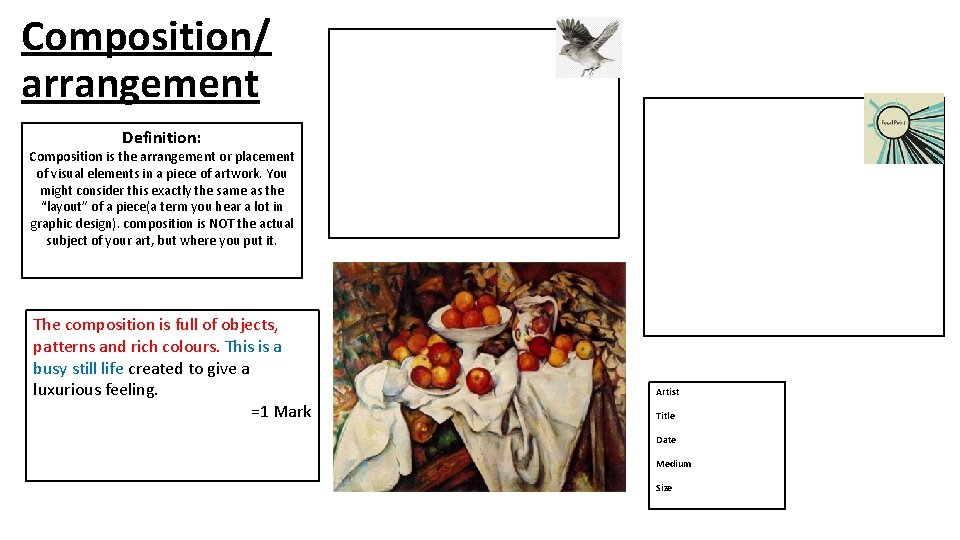
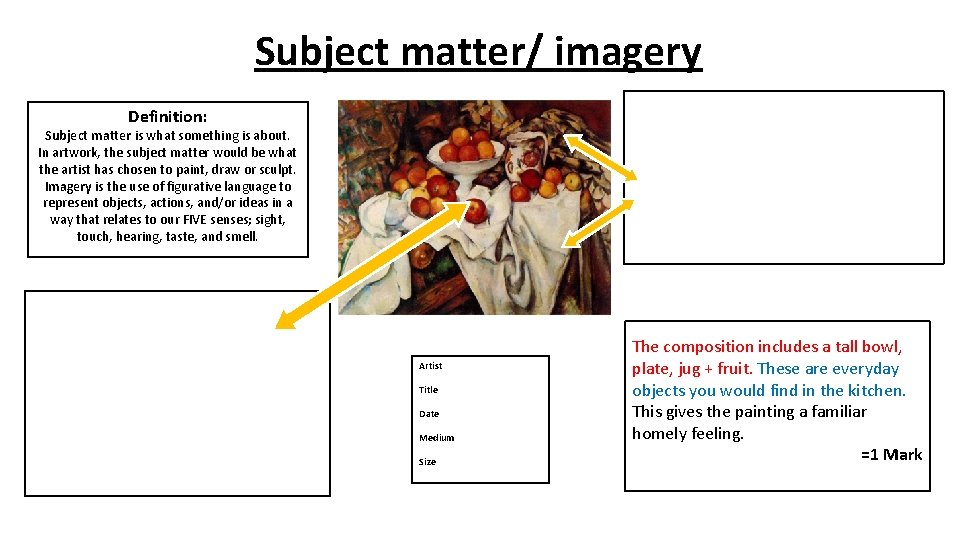
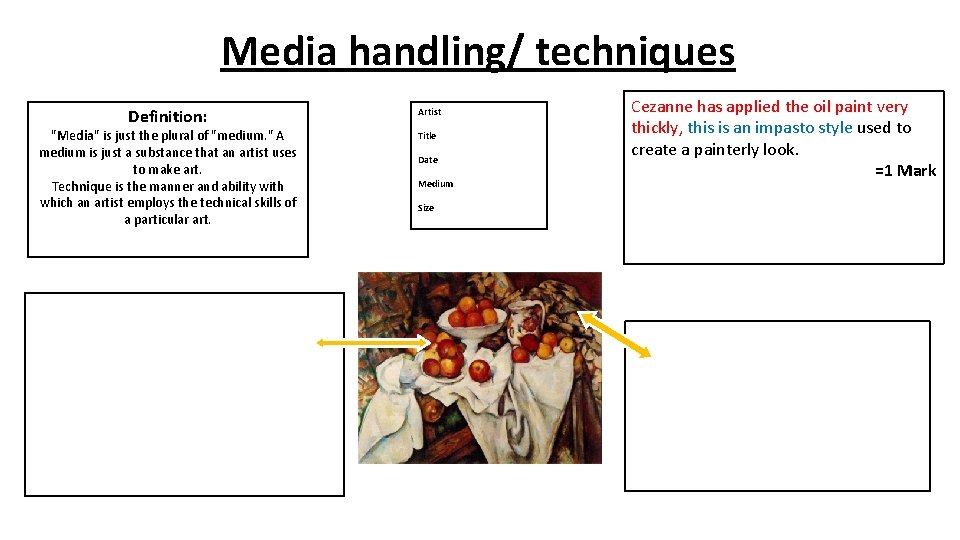
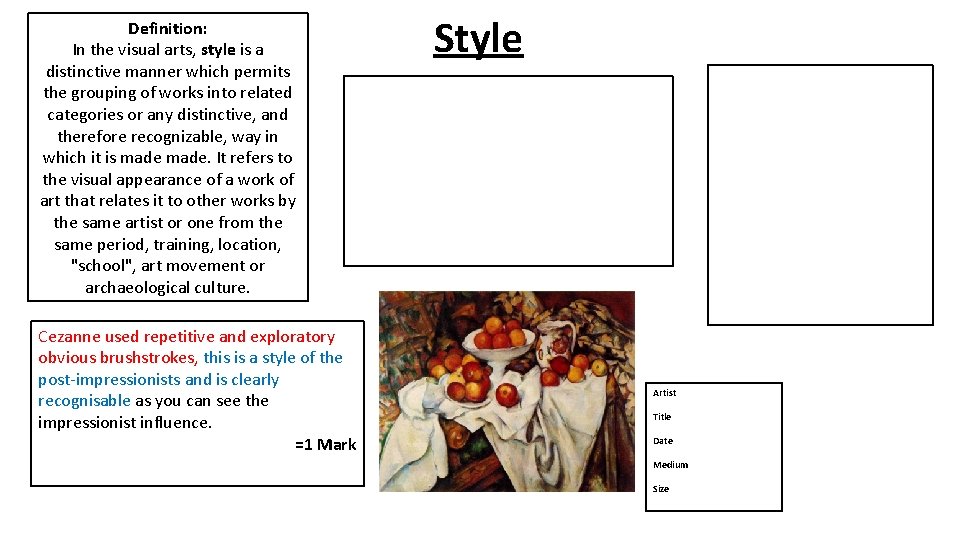
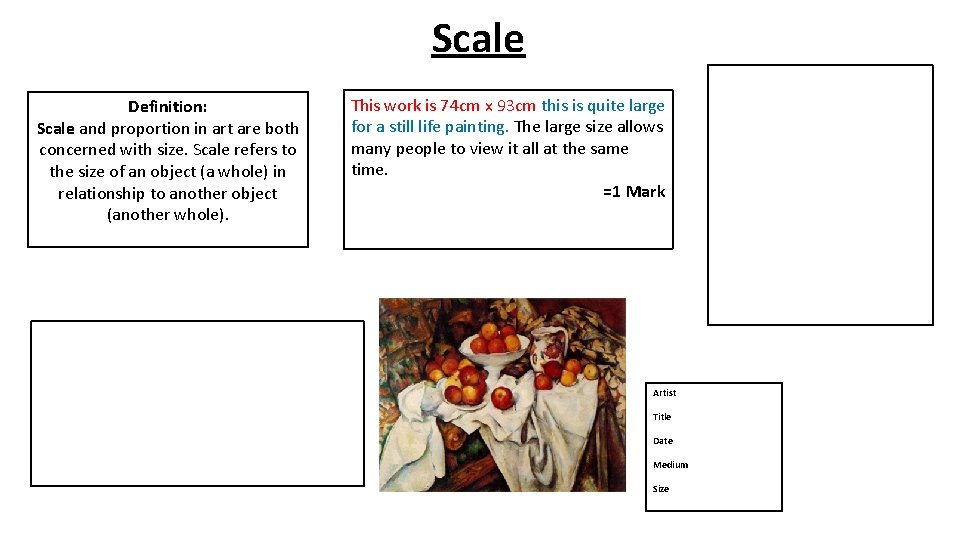
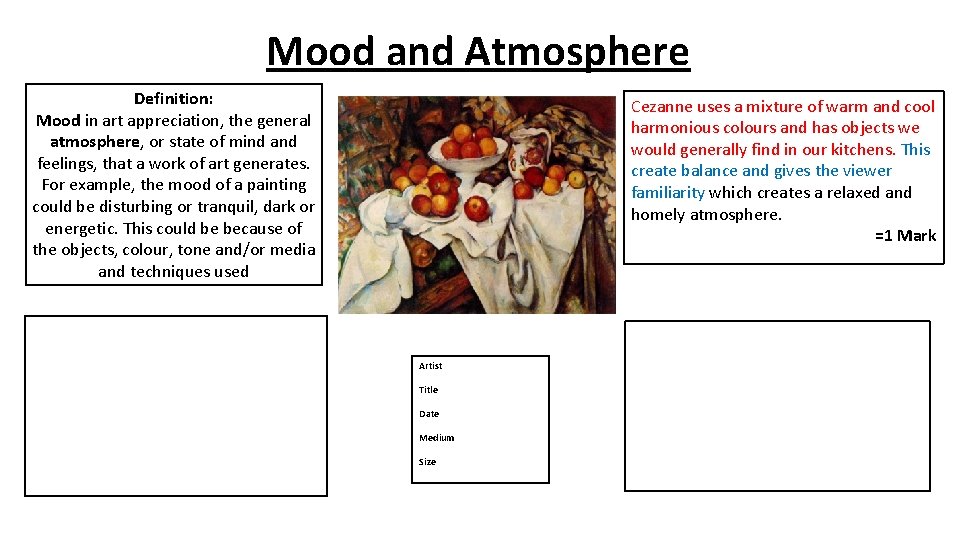
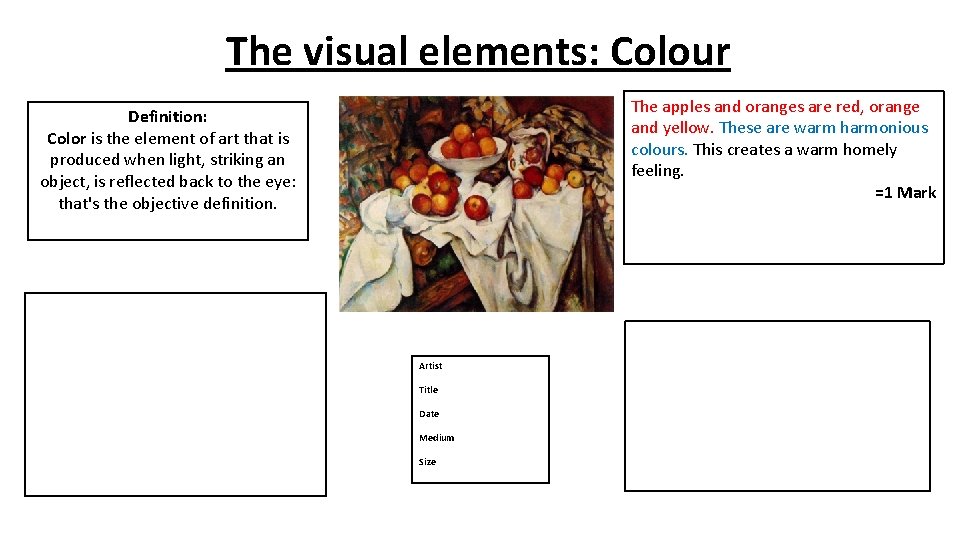
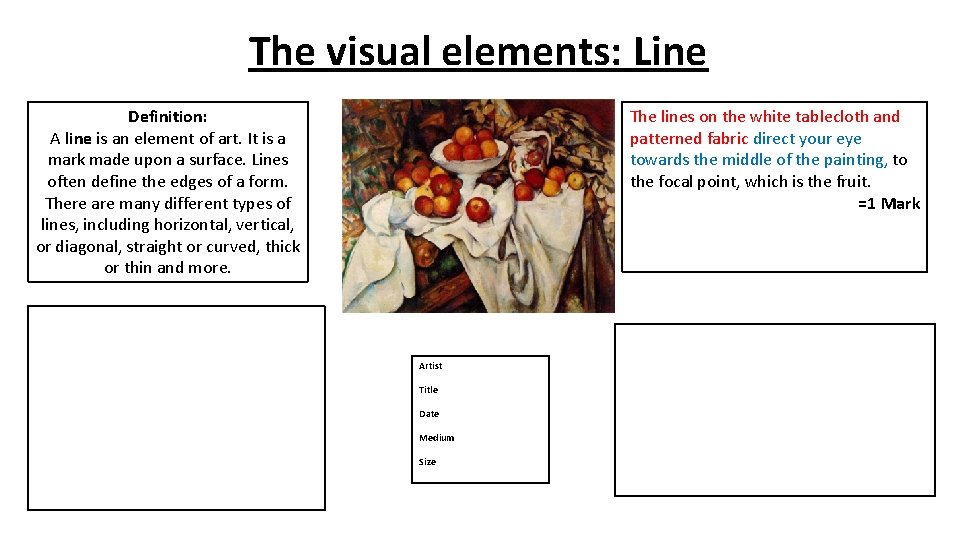
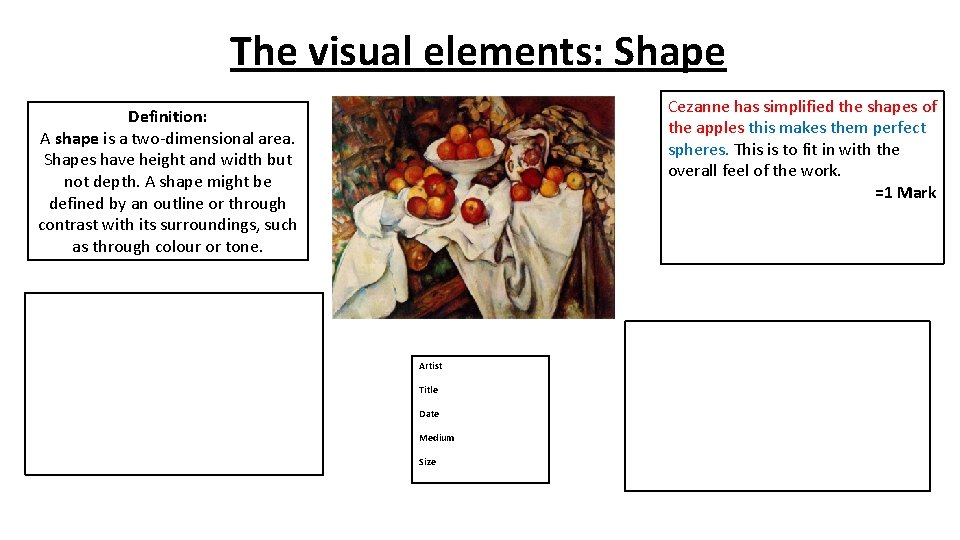
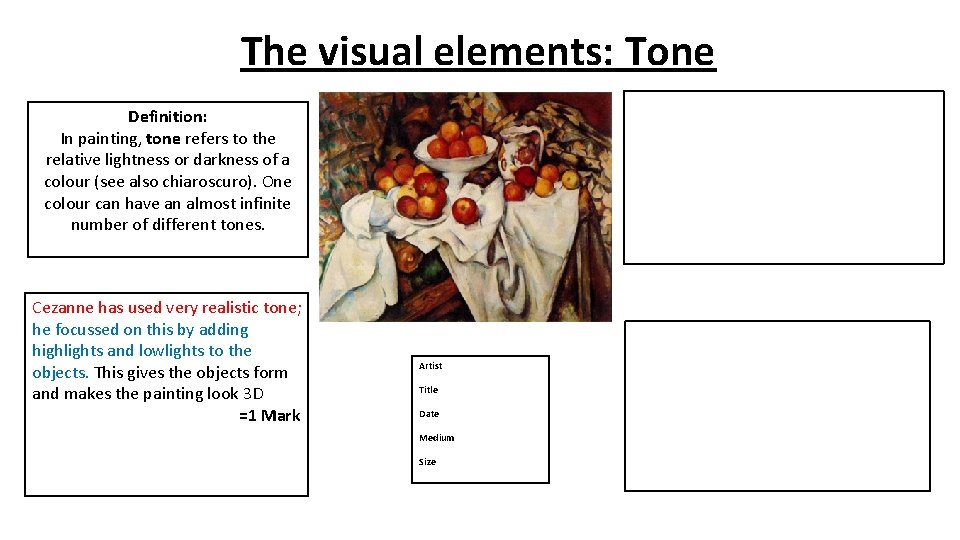
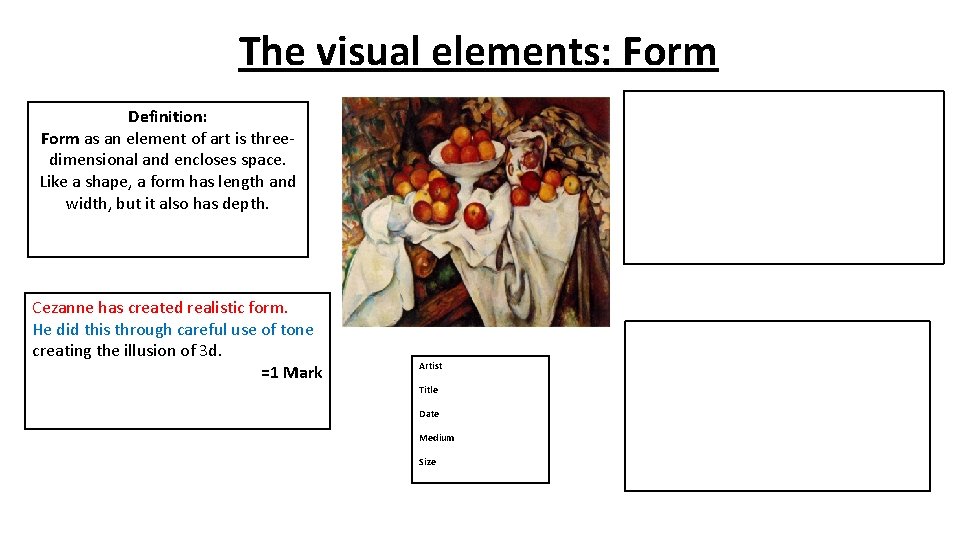
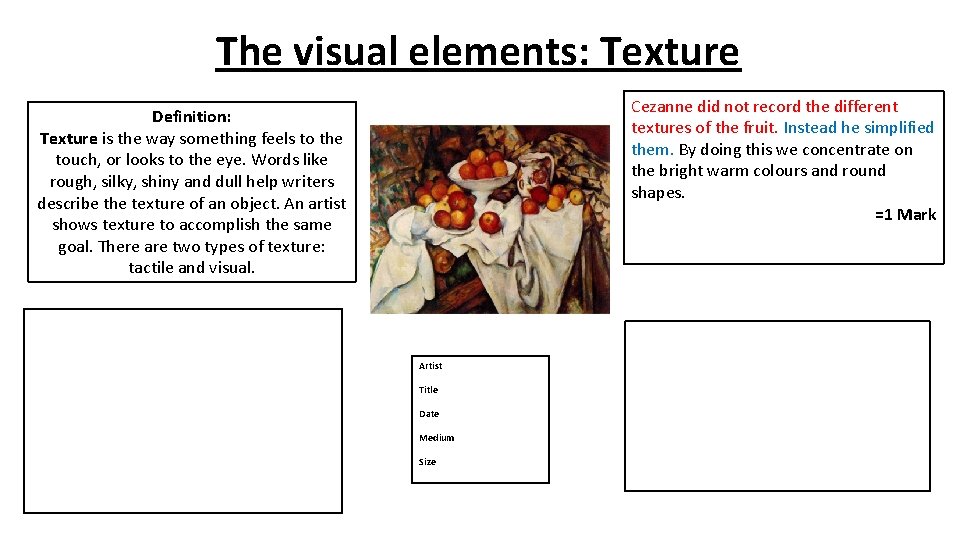
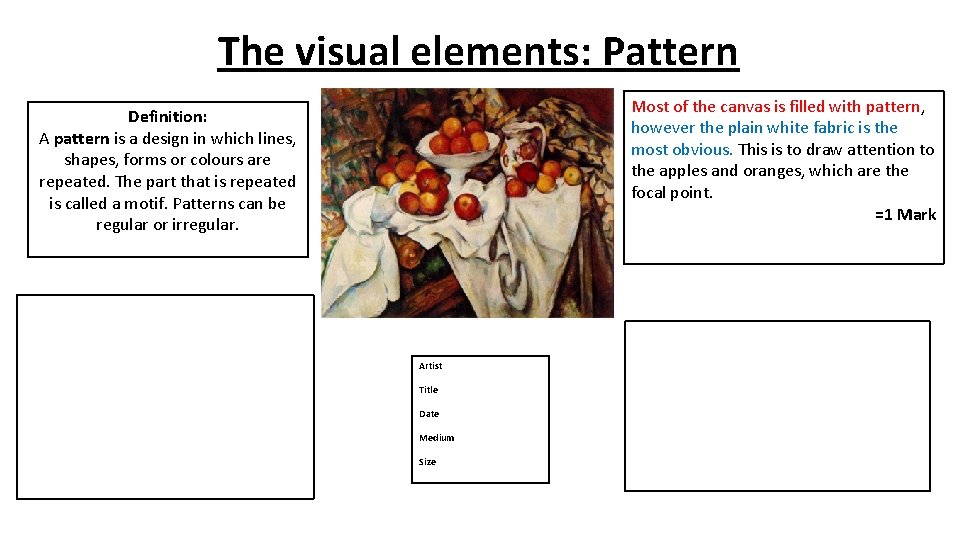
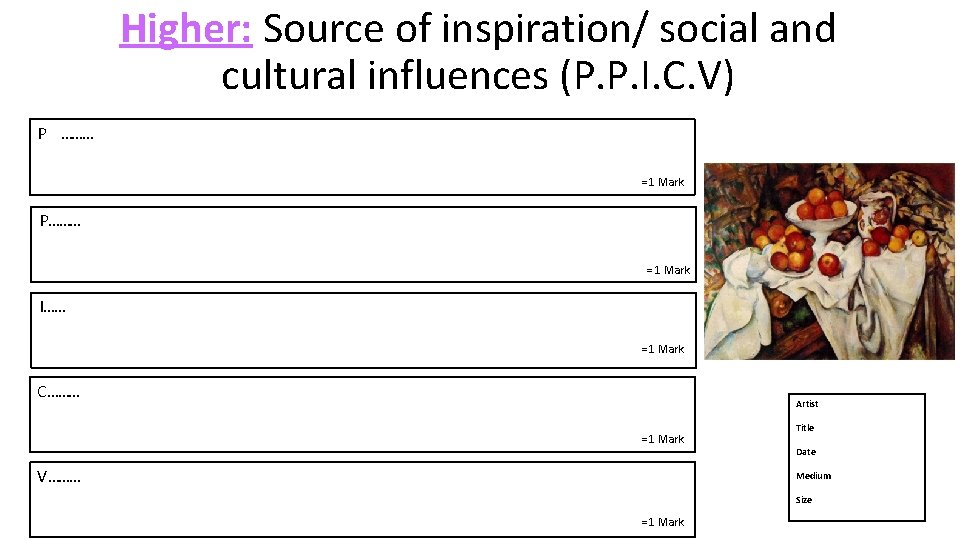
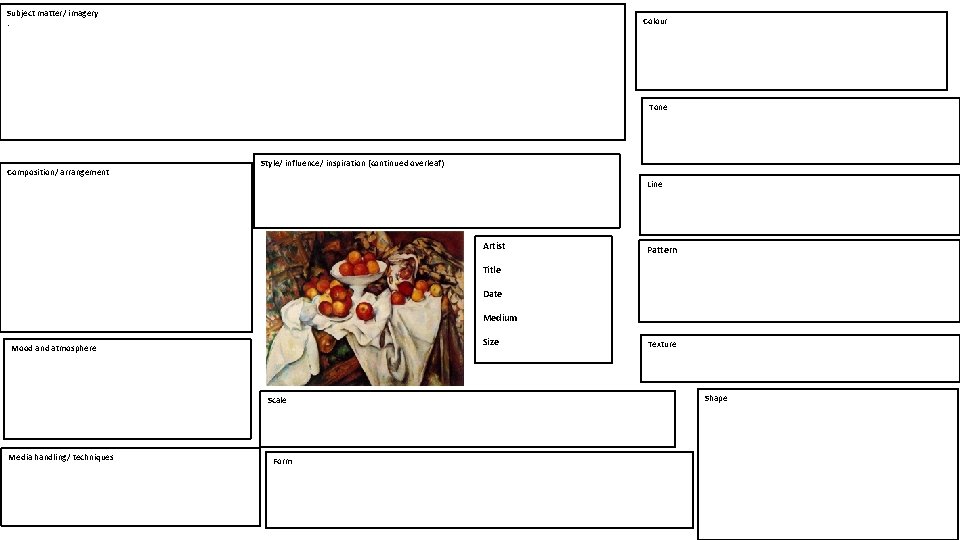
Artist: Paul Cezanne Title: Apples and oranges Date: 1900 Medium: Oil on canvas Size: 74 cm x 93 cm
Composition/ arrangement Definition: Composition is the arrangement or placement of visual elements in a piece of artwork. You might consider this exactly the same as the “layout” of a piece(a term you hear a lot in graphic design). composition is NOT the actual subject of your art, but where you put it. The composition is full of objects, patterns and rich colours. This is a busy still life created to give a luxurious feeling. =1 Mark Artist Title Date Medium Size
Subject matter/ imagery Definition: Subject matter is what something is about. In artwork, the subject matter would be what the artist has chosen to paint, draw or sculpt. Imagery is the use of figurative language to represent objects, actions, and/or ideas in a way that relates to our FIVE senses; sight, touch, hearing, taste, and smell. Artist Title Date Medium Size The composition includes a tall bowl, plate, jug + fruit. These are everyday objects you would find in the kitchen. This gives the painting a familiar homely feeling. =1 Mark
Media handling/ techniques Definition: "Media" is just the plural of "medium. " A medium is just a substance that an artist uses to make art. Technique is the manner and ability with which an artist employs the technical skills of a particular art. Artist Title Date Medium Size Cezanne has applied the oil paint very thickly, this is an impasto style used to create a painterly look. =1 Mark
Definition: In the visual arts, style is a distinctive manner which permits the grouping of works into related categories or any distinctive, and therefore recognizable, way in which it is made. It refers to the visual appearance of a work of art that relates it to other works by the same artist or one from the same period, training, location, "school", art movement or archaeological culture. Cezanne used repetitive and exploratory obvious brushstrokes, this is a style of the post-impressionists and is clearly recognisable as you can see the impressionist influence. =1 Mark Style Artist Title Date Medium Size
Scale Definition: Scale and proportion in art are both concerned with size. Scale refers to the size of an object (a whole) in relationship to another object (another whole). This work is 74 cm x 93 cm this is quite large for a still life painting. The large size allows many people to view it all at the same time. =1 Mark Artist Title Date Medium Size
Mood and Atmosphere Definition: Mood in art appreciation, the general atmosphere, or state of mind and feelings, that a work of art generates. For example, the mood of a painting could be disturbing or tranquil, dark or energetic. This could be because of the objects, colour, tone and/or media and techniques used Cezanne uses a mixture of warm and cool harmonious colours and has objects we would generally find in our kitchens. This create balance and gives the viewer familiarity which creates a relaxed and homely atmosphere. =1 Mark Artist Title Date Medium Size
The visual elements: Colour The apples and oranges are red, orange and yellow. These are warm harmonious colours. This creates a warm homely feeling. =1 Mark Definition: Color is the element of art that is produced when light, striking an object, is reflected back to the eye: that's the objective definition. Artist Title Date Medium Size
The visual elements: Line The lines on the white tablecloth and patterned fabric direct your eye towards the middle of the painting, to the focal point, which is the fruit. =1 Mark Definition: A line is an element of art. It is a mark made upon a surface. Lines often define the edges of a form. There are many different types of lines, including horizontal, vertical, or diagonal, straight or curved, thick or thin and more. Artist Title Date Medium Size
The visual elements: Shape Cezanne has simplified the shapes of the apples this makes them perfect spheres. This is to fit in with the overall feel of the work. =1 Mark Definition: A shape is a two-dimensional area. Shapes have height and width but not depth. A shape might be defined by an outline or through contrast with its surroundings, such as through colour or tone. Artist Title Date Medium Size
The visual elements: Tone Definition: In painting, tone refers to the relative lightness or darkness of a colour (see also chiaroscuro). One colour can have an almost infinite number of different tones. Cezanne has used very realistic tone; he focussed on this by adding highlights and lowlights to the objects. This gives the objects form and makes the painting look 3 D =1 Mark Artist Title Date Medium Size
The visual elements: Form Definition: Form as an element of art is threedimensional and encloses space. Like a shape, a form has length and width, but it also has depth. Cezanne has created realistic form. He did this through careful use of tone creating the illusion of 3 d. =1 Mark Artist Title Date Medium Size
The visual elements: Texture Cezanne did not record the different textures of the fruit. Instead he simplified them. By doing this we concentrate on the bright warm colours and round shapes. =1 Mark Definition: Texture is the way something feels to the touch, or looks to the eye. Words like rough, silky, shiny and dull help writers describe the texture of an object. An artist shows texture to accomplish the same goal. There are two types of texture: tactile and visual. Artist Title Date Medium Size
The visual elements: Pattern Most of the canvas is filled with pattern, however the plain white fabric is the most obvious. This is to draw attention to the apples and oranges, which are the focal point. =1 Mark Definition: A pattern is a design in which lines, shapes, forms or colours are repeated. The part that is repeated is called a motif. Patterns can be regular or irregular. Artist Title Date Medium Size
Higher: Source of inspiration/ social and cultural influences (P. P. I. C. V) P ……… = 1 Mark P……… = 1 Mark I…… = 1 Mark C……… Artist = 1 Mark V……… Title Date Medium Size = 1 Mark
Subject matter/ imagery. Colour Tone Composition/ arrangement Style/ influence/ inspiration (continued overleaf) Line Artist Pattern Title Date Medium Size Mood and atmosphere Scale Media handling/ techniques Form Texture Shape