
N 4 Biology Unit 3 Life on Earth

N 4 Biology Unit 3 Life on Earth KA 3. 1 Biomes and ecosystems
World Biomes Learning Intention: Identify and describe how ecosystems are different across the world. Success Criteria: • Define the term biome. • Describe the global distribution of world biomes. • Describe how temperature and rainfall affect the distribution of world biomes. • Present detailed information about one world biome.
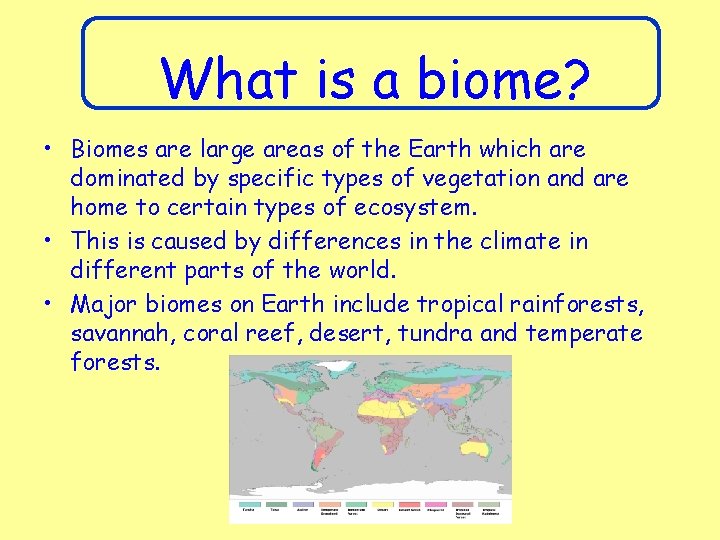
What is a biome? • Biomes are large areas of the Earth which are dominated by specific types of vegetation and are home to certain types of ecosystem. • This is caused by differences in the climate in different parts of the world. • Major biomes on Earth include tropical rainforests, savannah, coral reef, desert, tundra and temperate forests.
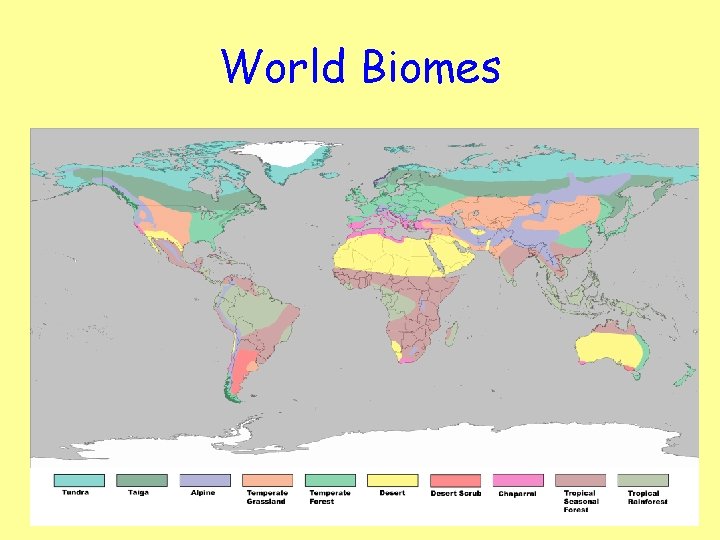
World Biomes
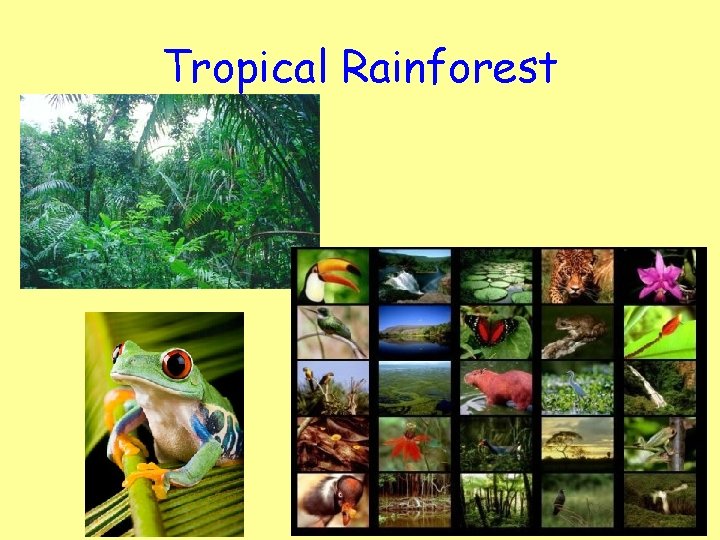
Tropical Rainforest
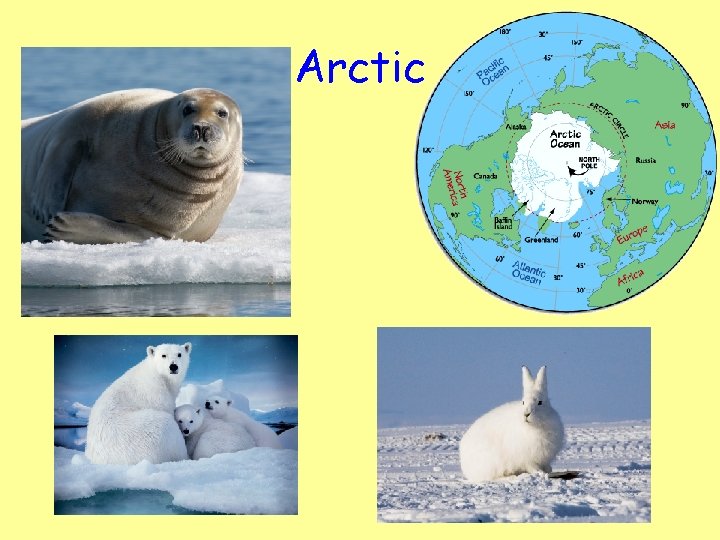
Arctic
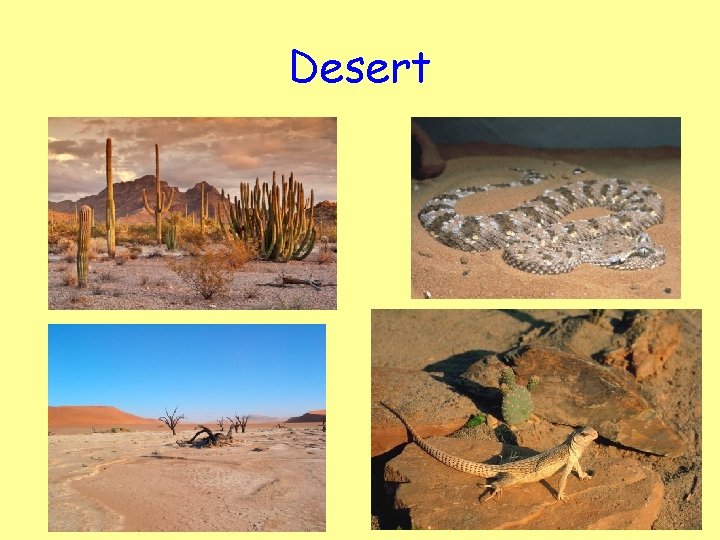
Desert
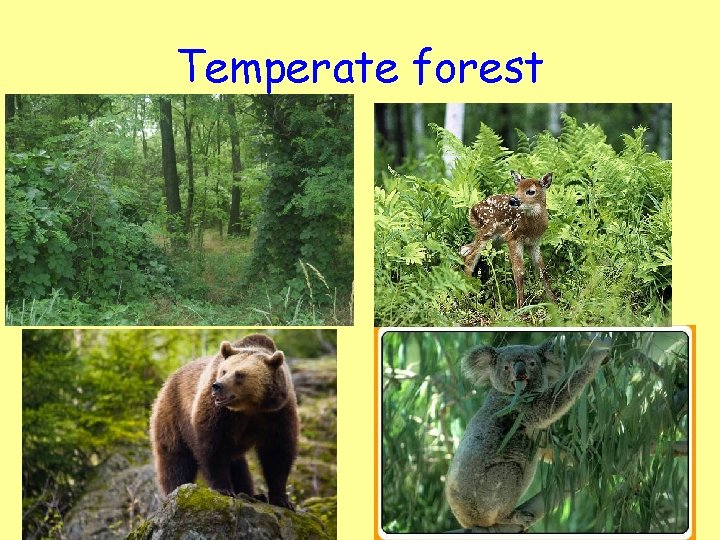
Temperate forest
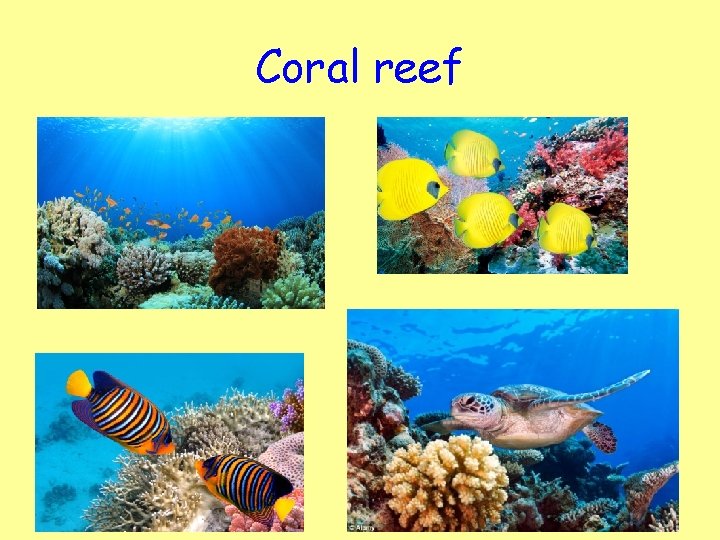
Coral reef
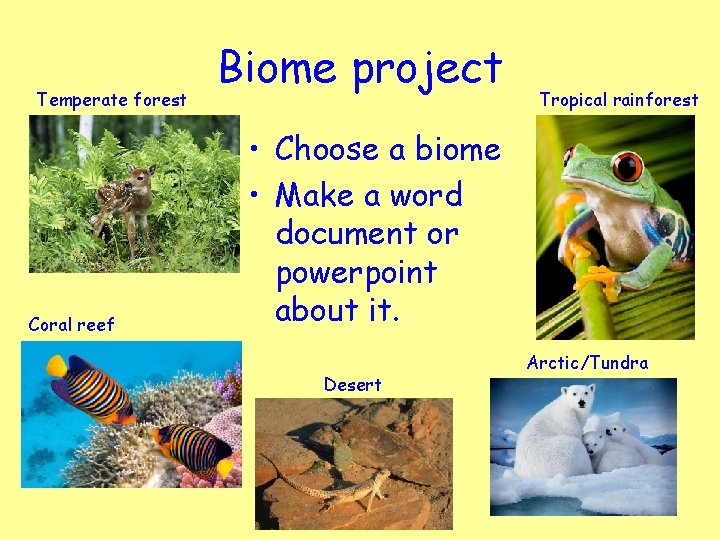
Temperate forest Coral reef Biome project Tropical rainforest • Choose a biome • Make a word document or powerpoint about it. Desert Arctic/Tundra
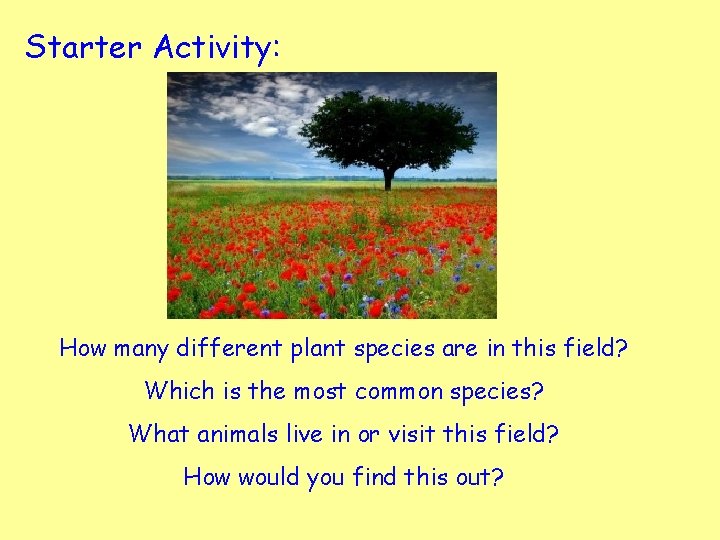
Starter Activity: How many different plant species are in this field? Which is the most common species? What animals live in or visit this field? How would you find this out?
Appropriate Clip art to topic Sampling Techniques Learning Intention: • Using practical techniques to sample plants and animals. Success Criteria: • Describe ways to measure abundance of plants in an ecosystem. • Describe ways to sample animals in an area.
Studying ecosystems • Ecosystems are smaller areas within the biomes. • Examples could be a woodland, a pond or a river. • Studying an ecosystem involves: – Finding out what plants and animals live there. – Finding out how many of them live there. – Finding out why they live there.
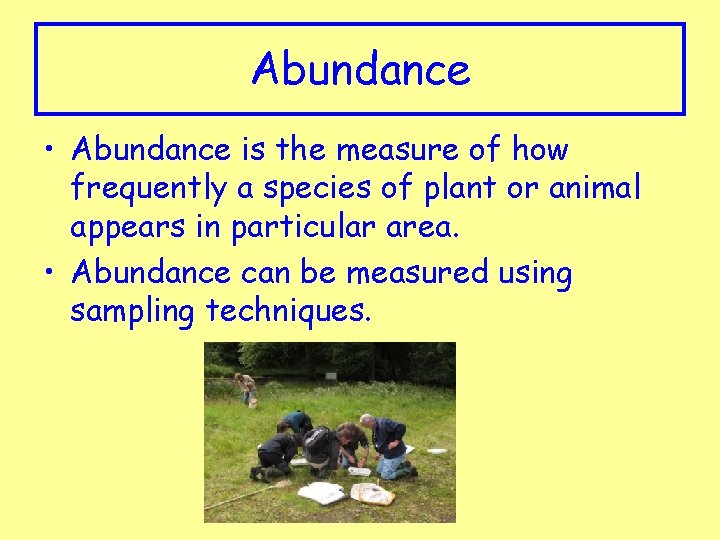
Abundance • Abundance is the measure of how frequently a species of plant or animal appears in particular area. • Abundance can be measured using sampling techniques.
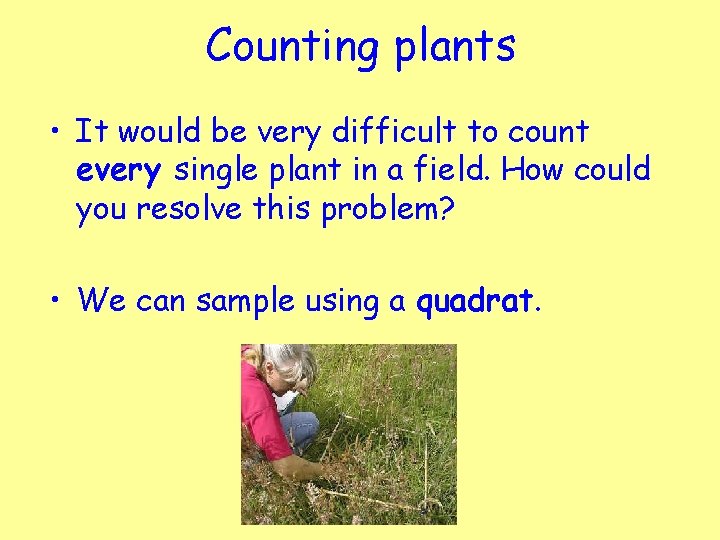
Counting plants • It would be very difficult to count every single plant in a field. How could you resolve this problem? • We can sample using a quadrat.
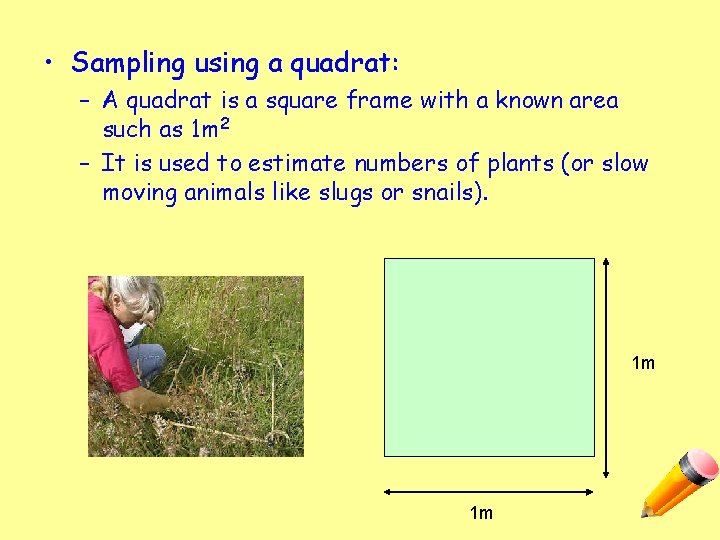
• Sampling using a quadrat: – A quadrat is a square frame with a known area such as 1 m 2 – It is used to estimate numbers of plants (or slow moving animals like slugs or snails). 1 m 1 m
How to sample using a quadrat Estimating the number of thistles in a field: • Quadrat placed at random and number of thistles in quadrat counted. • Repeated several times. • Average number per square metre is calculated. • Area of whole field measured • Estimate of total number of thistles in field calculated
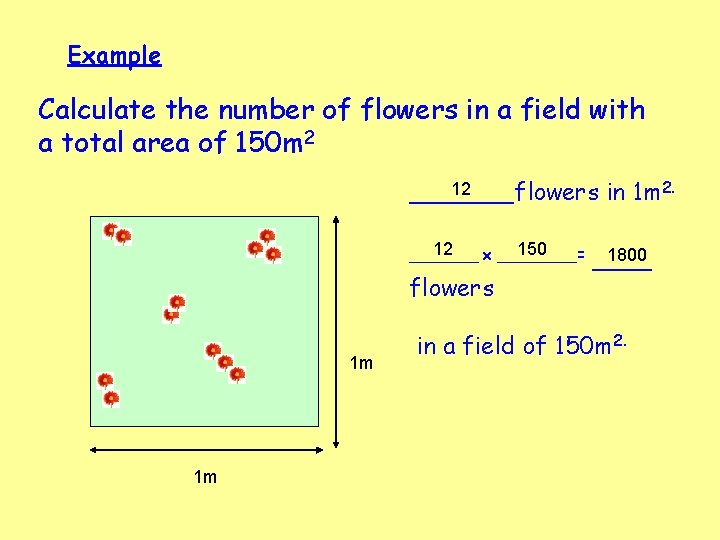
Example Calculate the number of flowers in a field with a total area of 150 m 2 12 _______flowers in 1 m 2. 12 150 _______ x ____= flowers 1 m 1 m 1800 ____ in a field of 150 m 2.
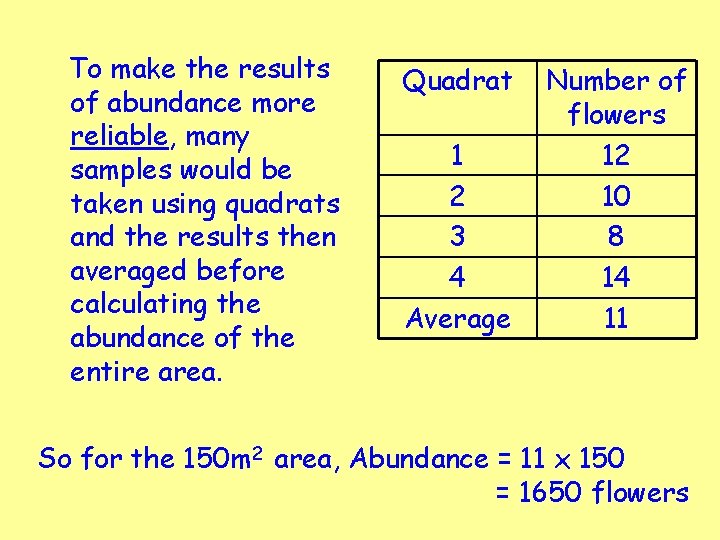
To make the results of abundance more reliable, many samples would be taken using quadrats and the results then averaged before calculating the abundance of the entire area. Quadrat 1 2 3 4 Average Number of flowers 12 10 8 14 11 So for the 150 m 2 area, Abundance = 11 x 150 = 1650 flowers
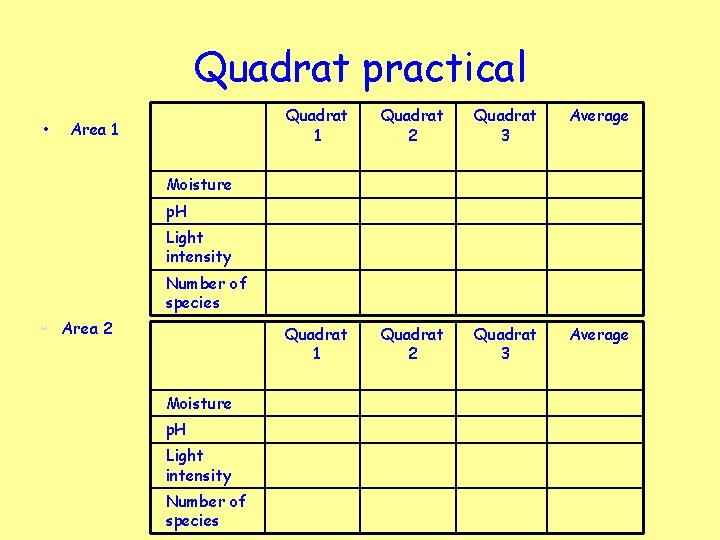
Quadrat practical • Area 1 Quadrat 2 Quadrat 3 Average Quadrat 1 Quadrat 2 Quadrat 3 Average Moisture p. H Light intensity Number of species Area 2 Moisture p. H Light intensity Number of species
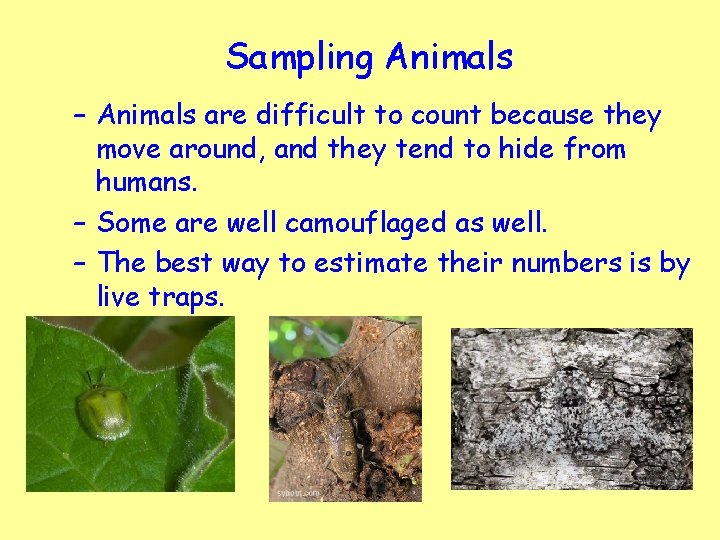
Sampling Animals – Animals are difficult to count because they move around, and they tend to hide from humans. – Some are well camouflaged as well. – The best way to estimate their numbers is by live traps.
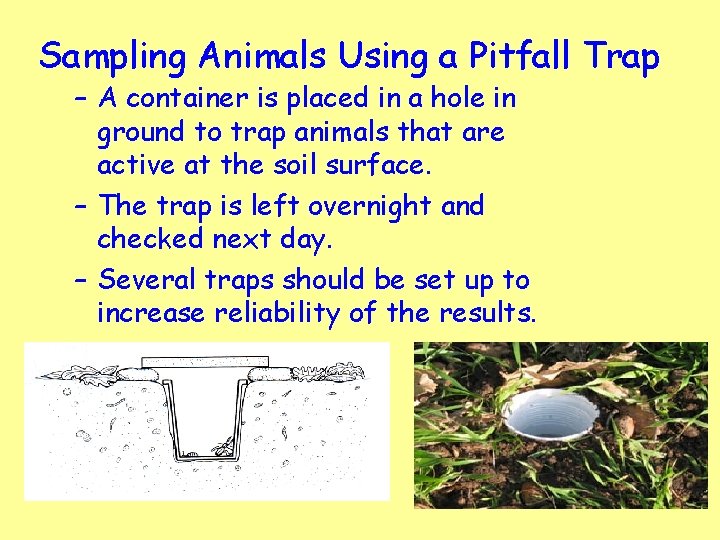
Sampling Animals Using a Pitfall Trap – A container is placed in a hole in ground to trap animals that are active at the soil surface. – The trap is left overnight and checked next day. – Several traps should be set up to increase reliability of the results.
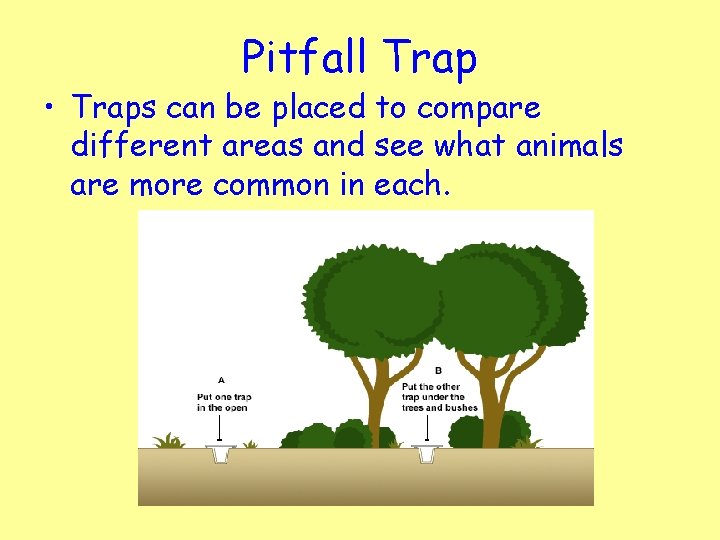
Pitfall Trap • Traps can be placed to compare different areas and see what animals are more common in each.

Other Methods of Sampling • • Tullgren funnel Tree beating Sweep netting Pond netting
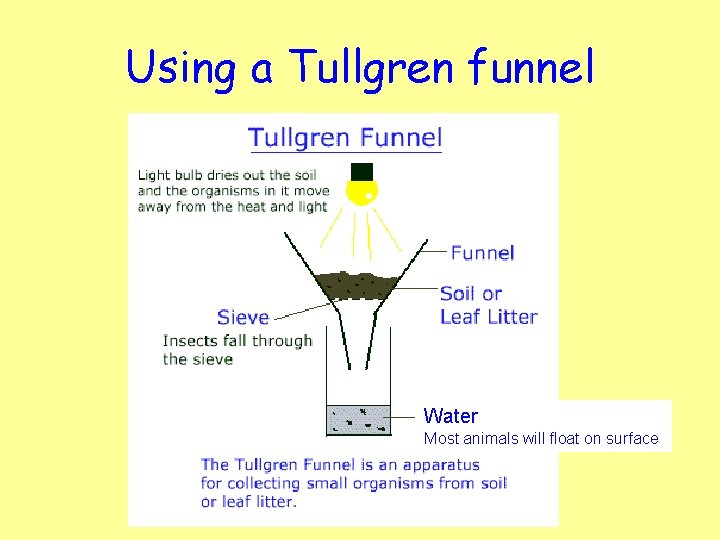
Using a Tullgren funnel Water Most animals will float on surface
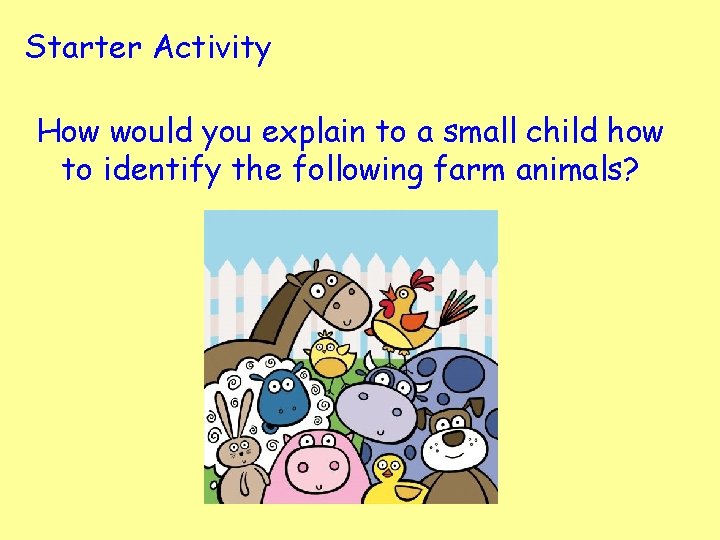
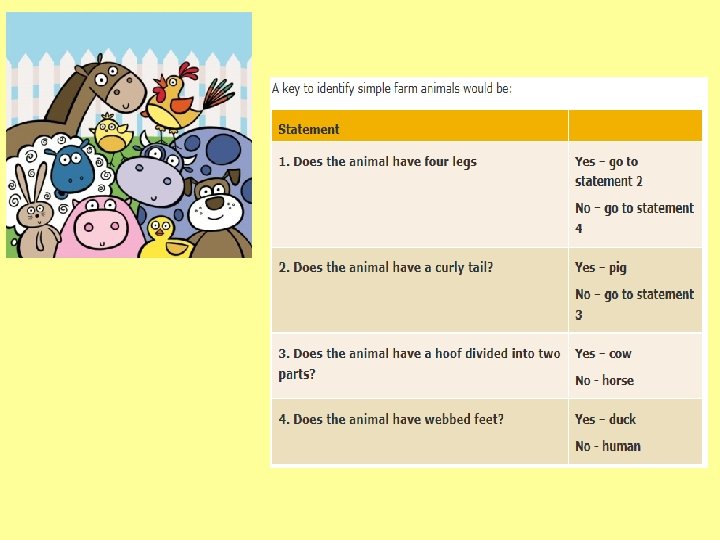
Starter Activity How would you explain to a small child how to identify the following farm animals?
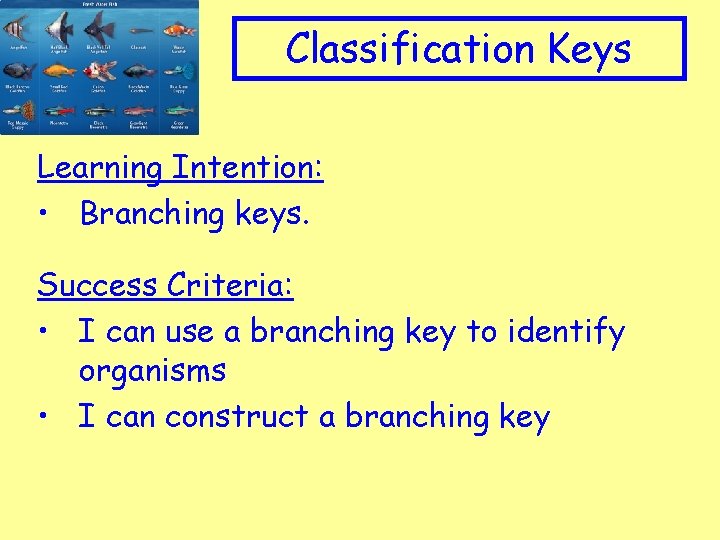
Appropriate Clip art to topic Classification Keys Learning Intention: • Branching keys. Success Criteria: • I can use a branching key to identify organisms • I can construct a branching key
Classification Keys • When using sampling methods, it is important that you are able to identify the plants or animals you have found. • One method of identification is to use a key.
Keys • Used to identify organisms while sampling. • There are two types – Branching keys – Paired Statement keys
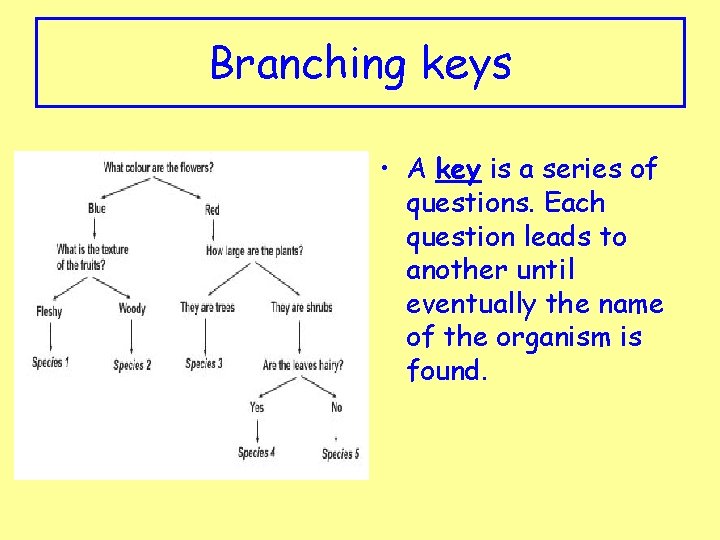
Branching keys • A key is a series of questions. Each question leads to another until eventually the name of the organism is found.
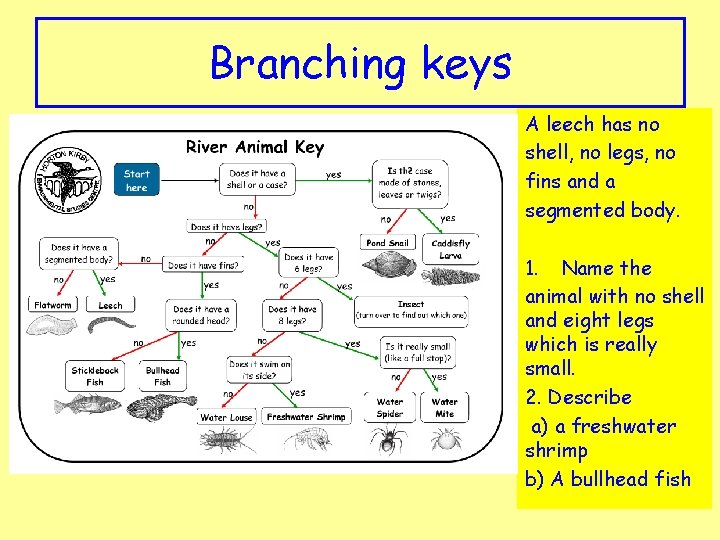
Branching keys A leech has no shell, no legs, no fins and a segmented body. 1. Name the animal with no shell and eight legs which is really small. 2. Describe a) a freshwater shrimp b) A bullhead fish
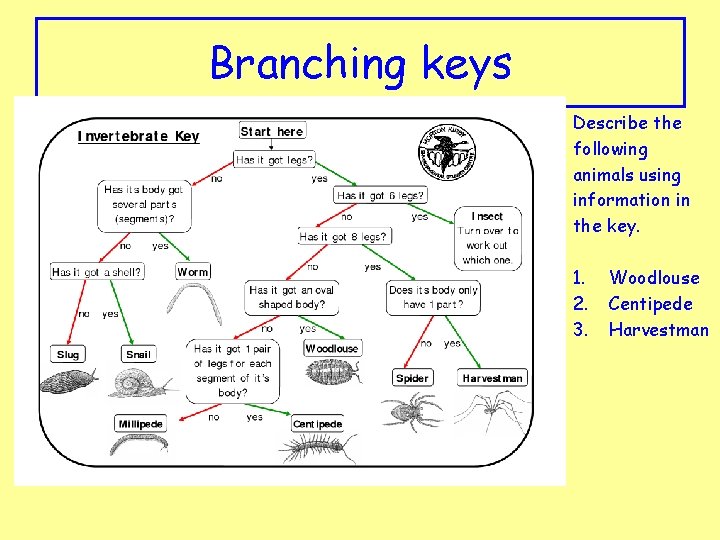
Branching keys Describe the following animals using information in the key. 1. 2. 3. Woodlouse Centipede Harvestman
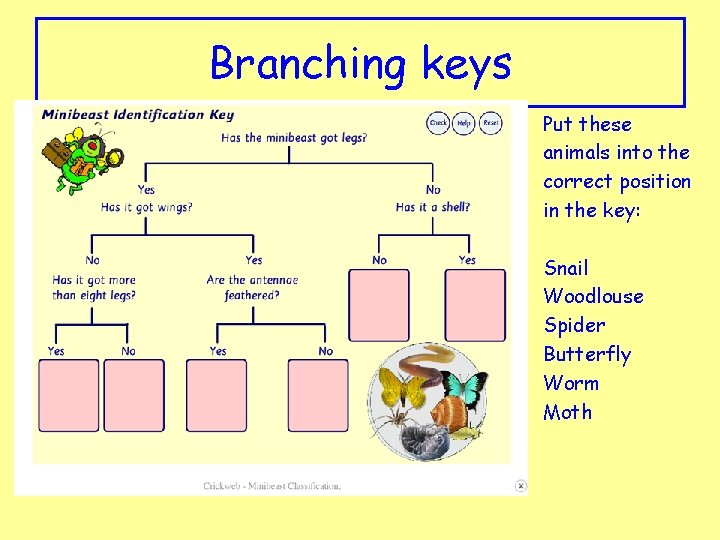
Branching keys Put these animals into the correct position in the key: Snail Woodlouse Spider Butterfly Worm Moth
Paired Statement Key • In this type of key, instead of asking questions at branching points on a diagram, you are asked to choose between two statements. • Each pair of statements is numbered and the instructions send you to the next relevant pair of statements.
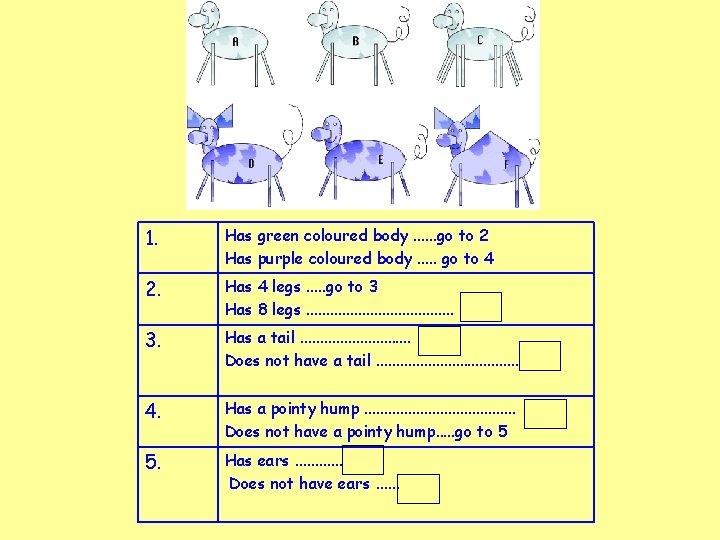
1. Has green coloured body. . . go to 2 Has purple coloured body. . . go to 4 2. Has 4 legs. . . go to 3 Has 8 legs. . . . . 3. Has a tail. . . . Does not have a tail. . . . . 4. Has a pointy hump. . . . . Does not have a pointy hump. . . go to 5 5. Has ears. . . Does not have ears. . .
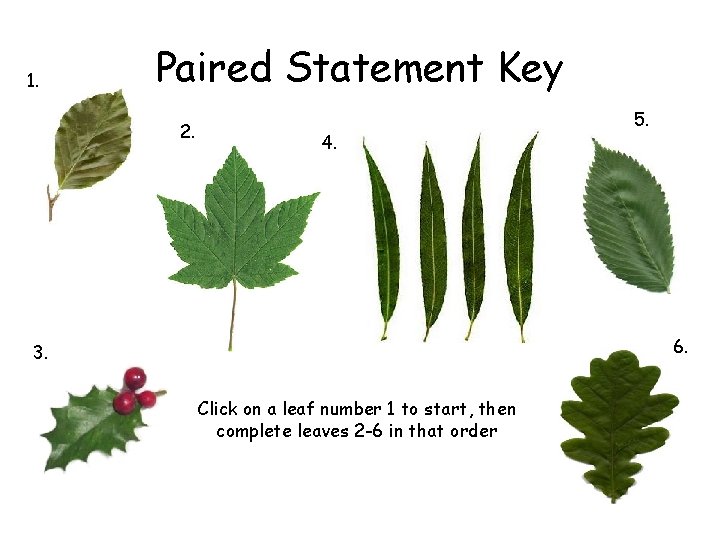
1. Paired Statement Key 2. 4. 5. 6. 3. Click on a leaf number 1 to start, then complete leaves 2 -6 in that order
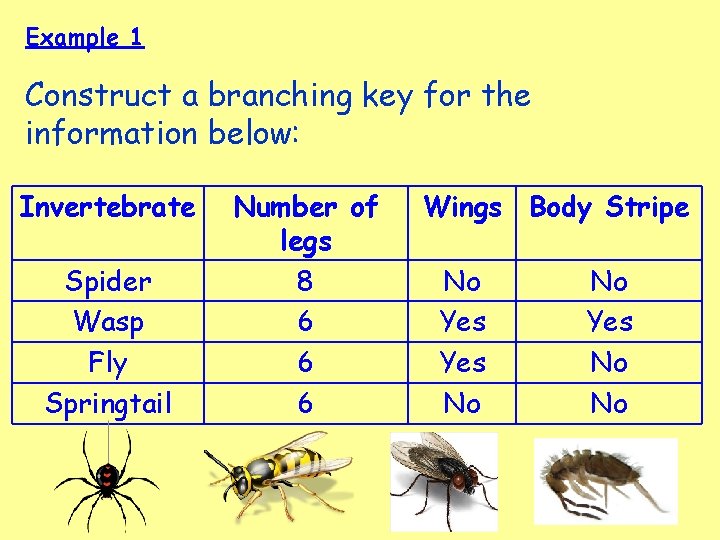
Example 1 Construct a branching key for the information below: Invertebrate Spider Wasp Fly Springtail Number of legs 8 6 6 6 Wings Body Stripe No Yes No No
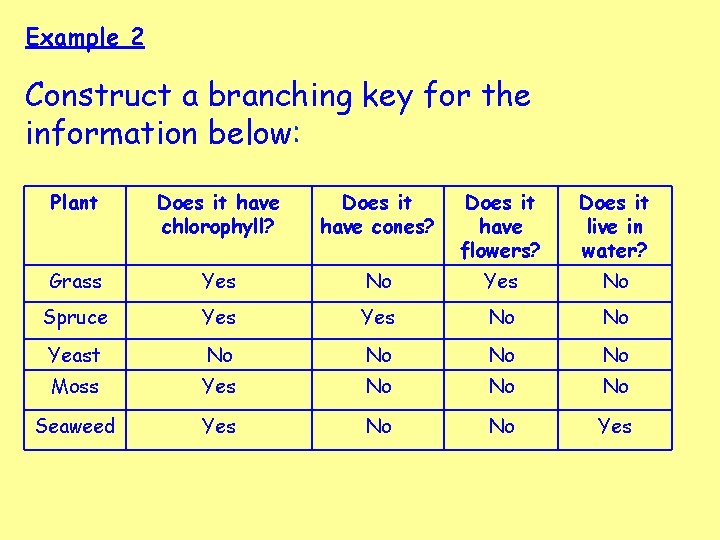
Example 2 Construct a branching key for the information below: Plant Does it have chlorophyll? Does it have cones? Does it have flowers? Does it live in water? Grass Yes No Spruce Yes No No Yeast No No Moss Yes No No No Seaweed Yes No No Yes
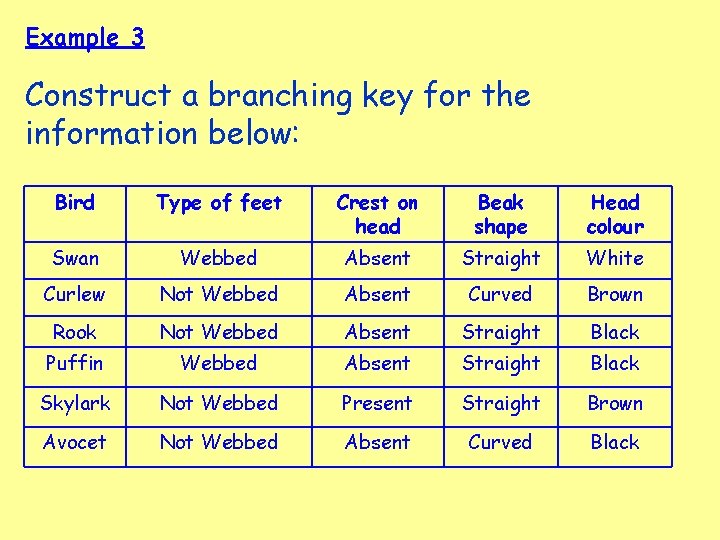
Example 3 Construct a branching key for the information below: Bird Type of feet Crest on head Beak shape Head colour Swan Webbed Absent Straight White Curlew Not Webbed Absent Curved Brown Rook Not Webbed Absent Straight Black Puffin Webbed Absent Straight Black Skylark Not Webbed Present Straight Brown Avocet Not Webbed Absent Curved Black
What is biodiversity? Biodiversity is the variety of different species in an area, or on the planet as a whole. It is important to maintain biodiversity to ensure that important species do not become extinct.
What can affect biodiversity? The following factors can affect levels of biodiversity: • Abiotic factors- these are non-living factors like light, temperature, water, p. H etc. • Biotic factors- these are factors to do with other living things, like predators, food, competition and disease. Watch the following Glow video clips Abiotic Factors Biotic Factors
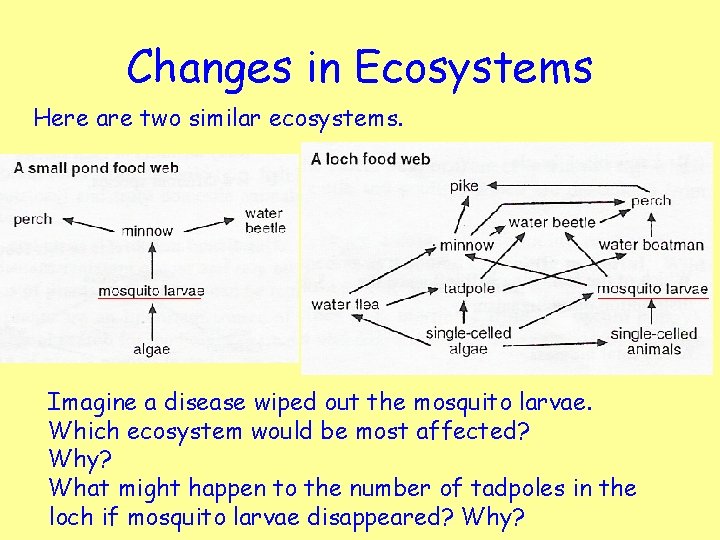
Changes in Ecosystems Here are two similar ecosystems. Imagine a disease wiped out the mosquito larvae. Which ecosystem would be most affected? Why? What might happen to the number of tadpoles in the loch if mosquito larvae disappeared? Why?
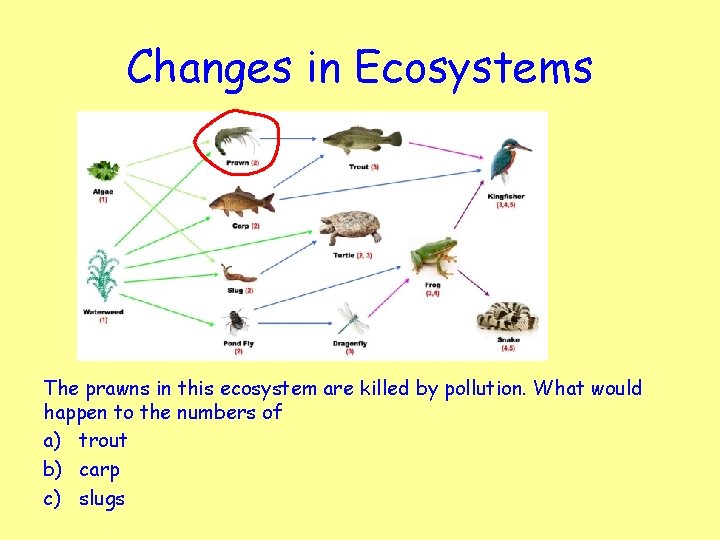
Changes in Ecosystems The prawns in this ecosystem are killed by pollution. What would happen to the numbers of a) trout b) carp c) slugs
- Slides: 44