
Myths Symbolism A symbol is often an ordinary
Myths: Symbolism A symbol is often an ordinary object, event, person, or animal to which we have attached extraordinary meaning and significance.
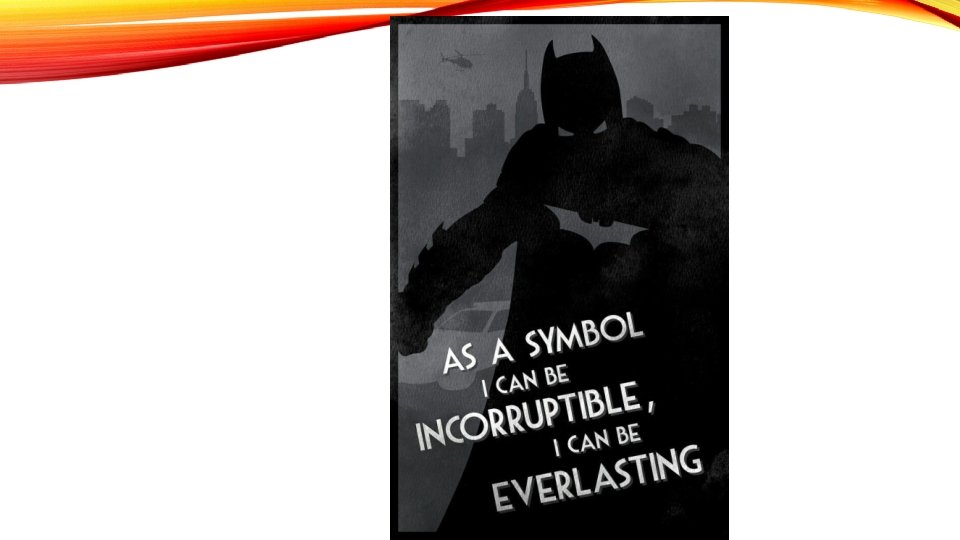
Myths: Symbolism The Power of a Symbol “People need dramatic examples to shake them out of apathy and I can’t do that as Bruce Wayne. As a man, I’m flesh and blood—I can be ignored; I can be destroyed—but as a symbol? As a symbol I can be incorruptible. I can be everlasting. ” “What symbol? ” “Something. . . elemental; something terrifying. ”
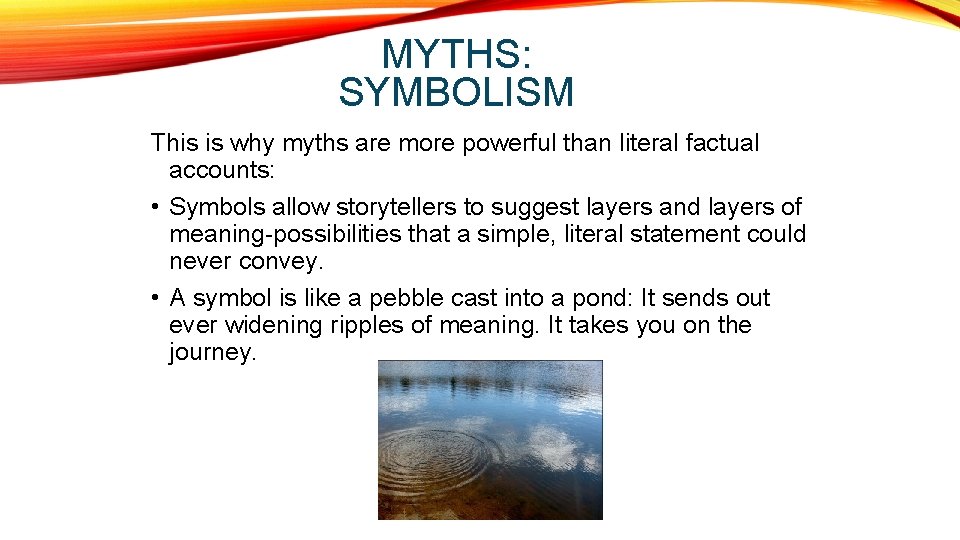
MYTHS: SYMBOLISM This is why myths are more powerful than literal factual accounts: • Symbols allow storytellers to suggest layers and layers of meaning-possibilities that a simple, literal statement could never convey. • A symbol is like a pebble cast into a pond: It sends out ever widening ripples of meaning. It takes you on the journey.
Individuation and Connection Individuation is the process by which an individual becomes a distinct (and mature) individual. Maturity=Finding a healthy way to accept the full reality of yourself. (The Shadow and the Self) Individuation distinguishes you from everybody else.
Individuation and Connection The word individual is a good clue to the meaning of individuation, which is how a being becomes an independent, separate entity. This usually refers to a psychological process described by Carl Jung, which involves becoming your own person, with your own beliefs and ideals that might be separate from those of your parents and society.
Individuation and Connection BUT Individuation is the flip side of our personal coin: It is a need that seems to conflict with our need to belong. We need to be individuals, and we need to connect meaningfully with others.
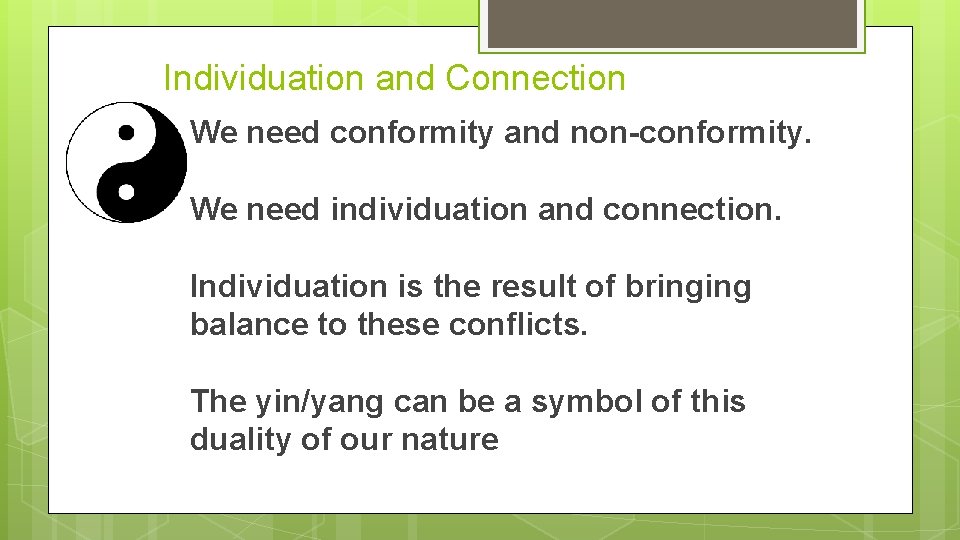
Individuation and Connection We need conformity and non-conformity. We need individuation and connection. Individuation is the result of bringing balance to these conflicts. The yin/yang can be a symbol of this duality of our nature
Symbols for You Take a few minutes and think of three symbols that represent the following: Your Past (Who you’ve been) A personal symbol (Your Present—Who you are) Your Hopes/Goals for your future (Who you want to be) Look for tension and conflict with yourself. In the first two symbols try to represent some part of your Shadow—symbolize something you want to grow out of. The future symbol is looking toward the Self—the mature person you hope to become.
Symbols for Your Culture(s) Now think of at least one symbol that represents tension you feel from some outside pressure. Symbolize some expectation others. (PRESSURE ) you feel from
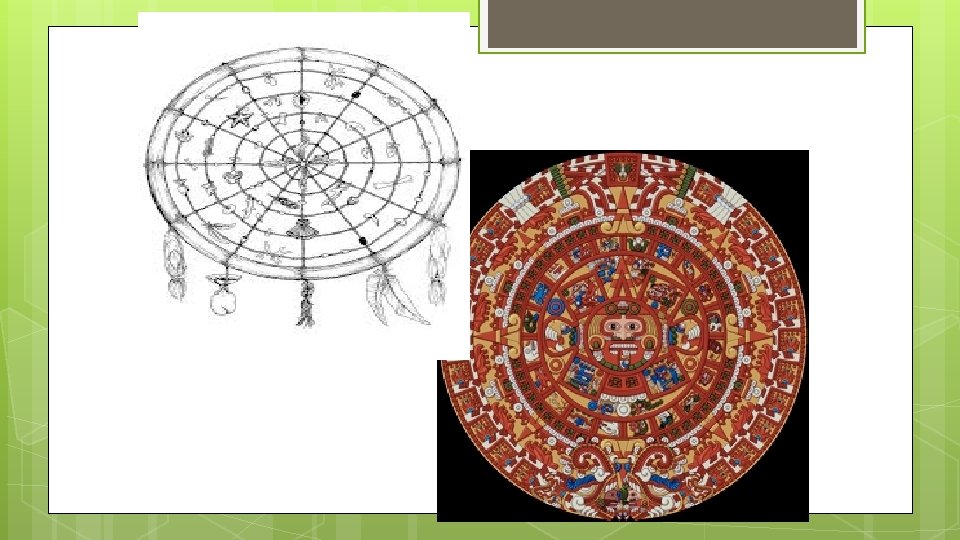
Mandalas (Zendalas) Sanskrit, "magic circle. " An archetypal image representing contact with, or a presentiment of, the Self. The basic mandala is a circle with a square or other fourfold structure superimposed. Mandalas are found in cultural products of all races. They seem to represent a central integrating principle which lies at the root of the psyche.
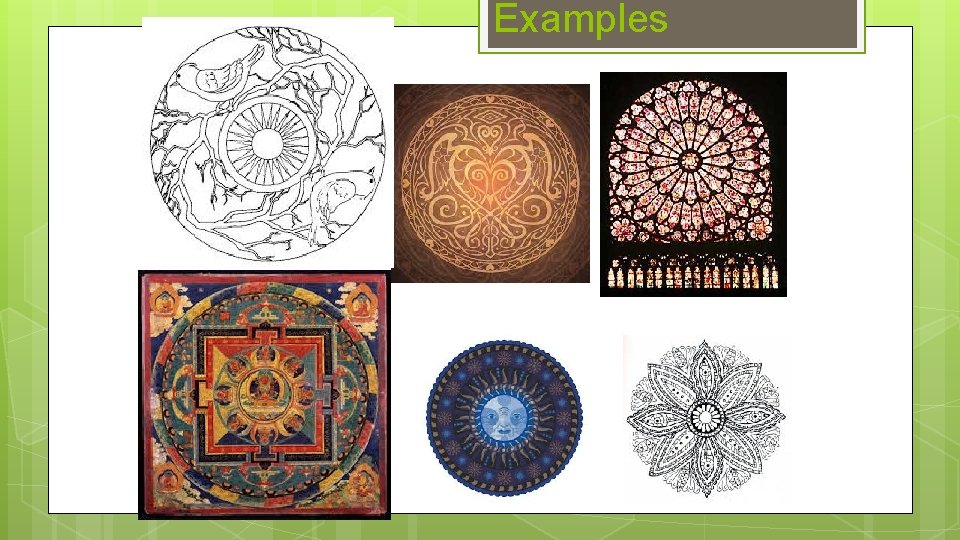
Examples
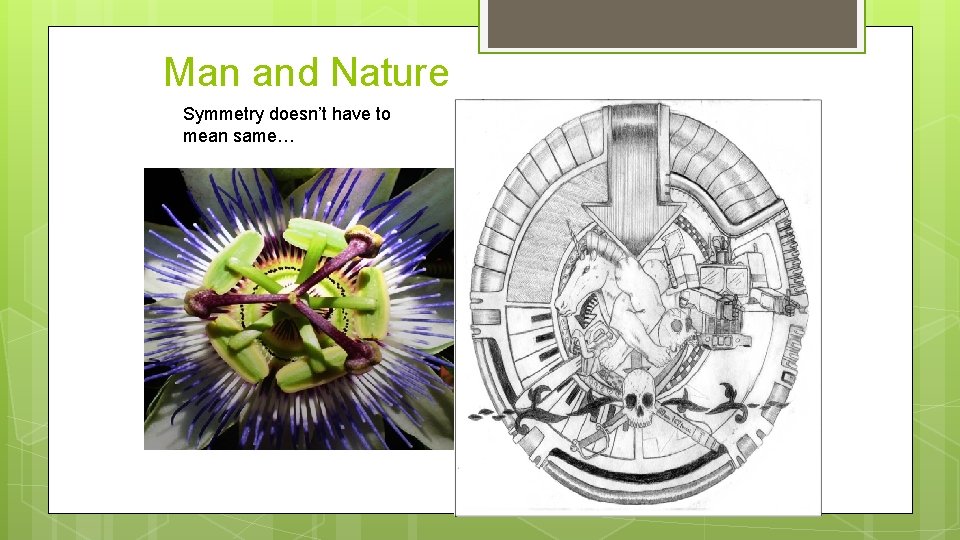
Man and Nature Symmetry doesn’t have to mean same…
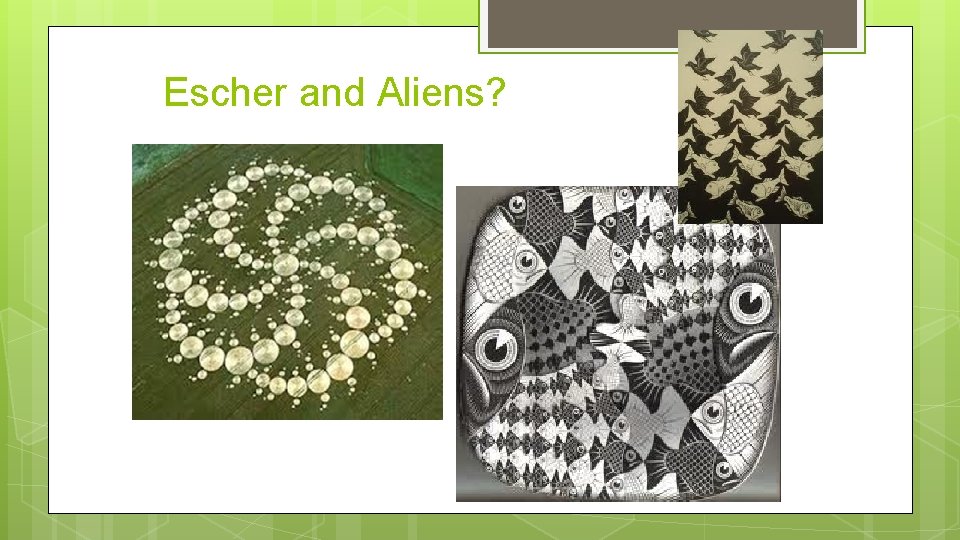
Escher and Aliens?
Buddhist Mandala
Mandalas Assignment Create a Mandala: Incorporate your three individual symbols AND your cultural symbol On the back, write about your symbols and the meanings behind them. (don’t use dark pens since they may bleed through the paper and ruin your lovely Mandalas)
Mandalas Assignment Create a Mandala: You may ultimately make it out of whatever material you choose, but plot it out on the paper provided as you begin work in class today.
- Slides: 18