
MYTHOS AND LOGOS Mythos and Logos Early Greeks
- Slides: 7
MYTHOS AND LOGOS
Mythos and Logos § Early Greeks divided thought into two categories – Mythos and Logos § Both essential in order to understand the world § Attempt to explain different aspects of life in different ways § Neither was superior to the other
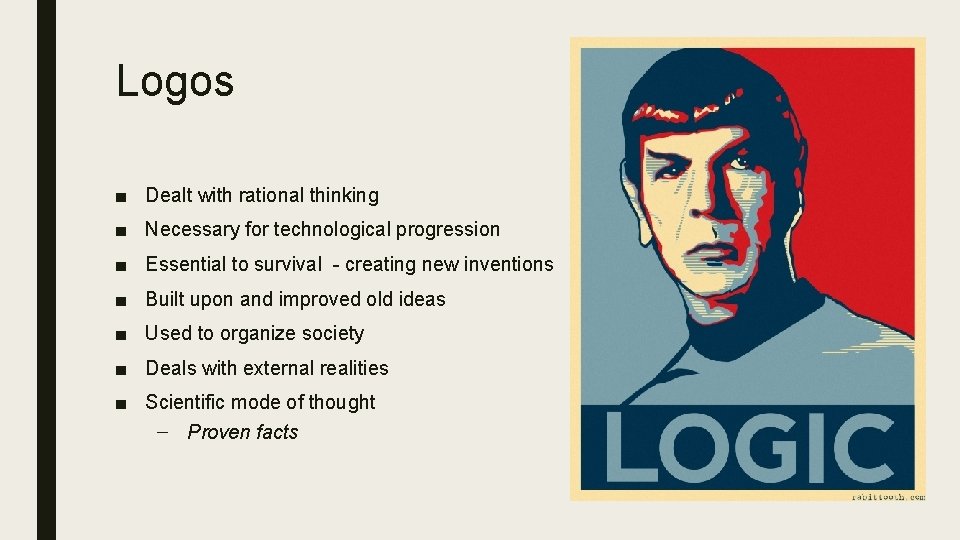
Logos ■ Dealt with rational thinking ■ Necessary for technological progression ■ Essential to survival - creating new inventions ■ Built upon and improved old ideas ■ Used to organize society ■ Deals with external realities ■ Scientific mode of thought – Proven facts
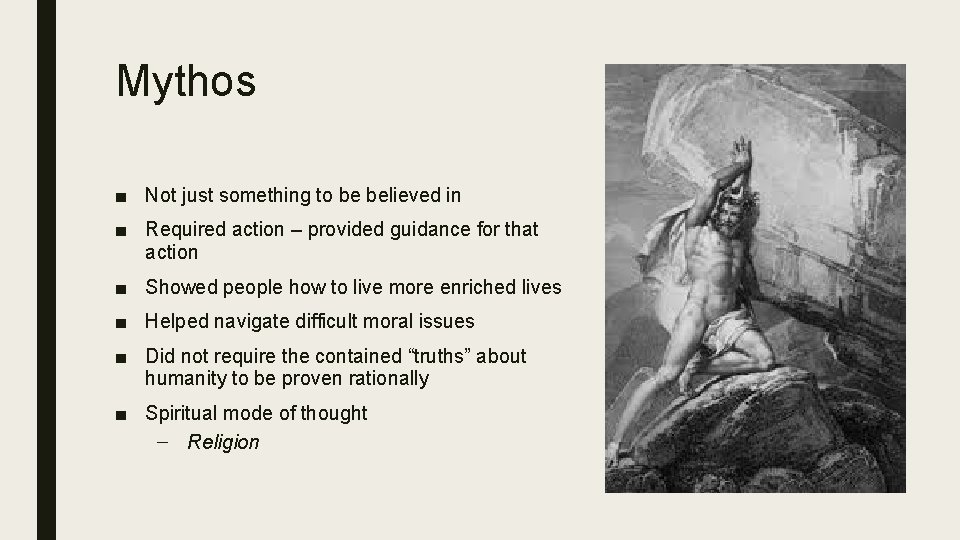
Mythos ■ Not just something to be believed in ■ Required action – provided guidance for that action ■ Showed people how to live more enriched lives ■ Helped navigate difficult moral issues ■ Did not require the contained “truths” about humanity to be proven rationally ■ Spiritual mode of thought – Religion
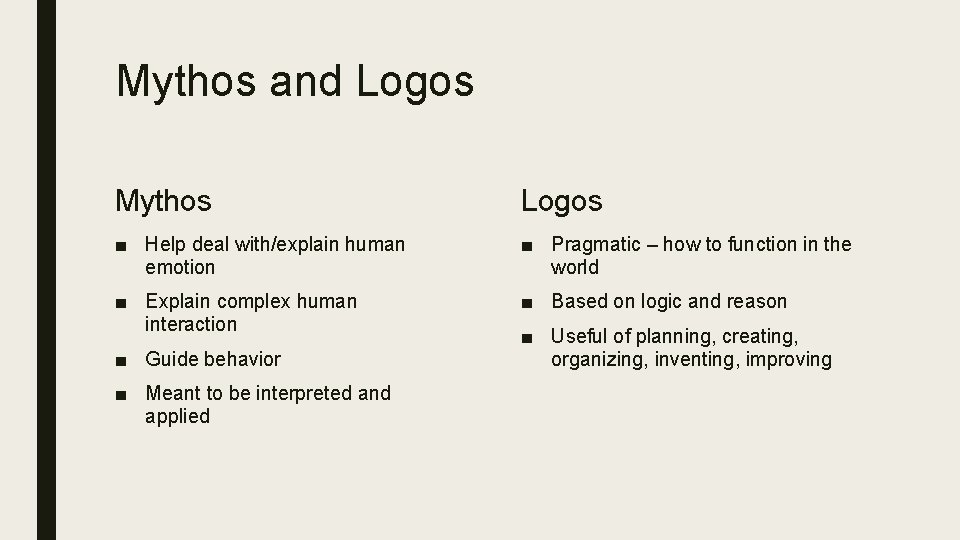
Mythos and Logos Mythos Logos ■ Help deal with/explain human emotion ■ Pragmatic – how to function in the world ■ Explain complex human interaction ■ Based on logic and reason ■ Guide behavior ■ Meant to be interpreted and applied ■ Useful of planning, creating, organizing, inventing, improving
Myth ■ A traditional story explaining some natural or social phenomenon, typically involving supernatural beings or events ■ They help people cope with life - myths reveal aspects about human experiences ■ No difference between the sacred world & the material world; they were one in the same ■ Early attempts to answer difficult philosophical questions
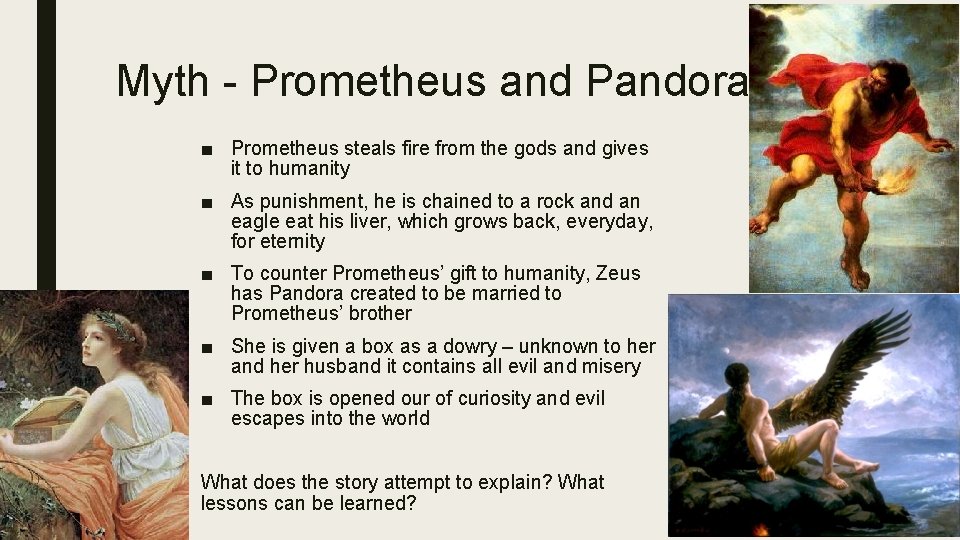
Myth - Prometheus and Pandora ■ Prometheus steals fire from the gods and gives it to humanity ■ As punishment, he is chained to a rock and an eagle eat his liver, which grows back, everyday, for eternity ■ To counter Prometheus’ gift to humanity, Zeus has Pandora created to be married to Prometheus’ brother ■ She is given a box as a dowry – unknown to her and her husband it contains all evil and misery ■ The box is opened our of curiosity and evil escapes into the world What does the story attempt to explain? What lessons can be learned?