
Myers PSYCHOLOGY 6 th Ed Perception A mental

- Slides: 38
Myers’ PSYCHOLOGY (6 th Ed) Perception: A mental process that elaborates and assigns meaning to the incoming sensory patterns. Perception brings meaning to sensation. It produces an interpretation of the world, but it isn’t a perfect representation.
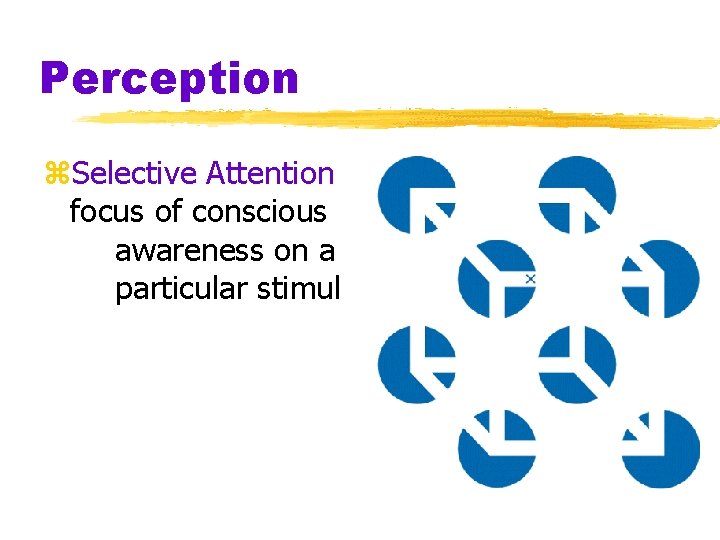
Perception z. Selective Attention focus of conscious awareness on a particular stimulus
Testing Selective Attention http: //www. youtube. co m/watch? v=v. JG 698 U 2 Mvo
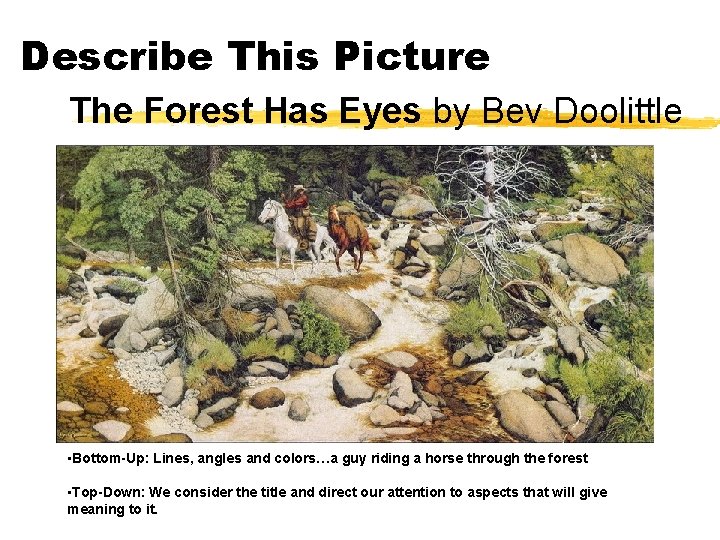
Bottom-Up and Top-Down z Bottom-Up processing: Analysis that emphasizes the characteristics of the stimuli rather than our concepts and expectations. z Top-Down perception: Analysis that emphasizes the perceiver’s expectations, rather than individual characteristics.
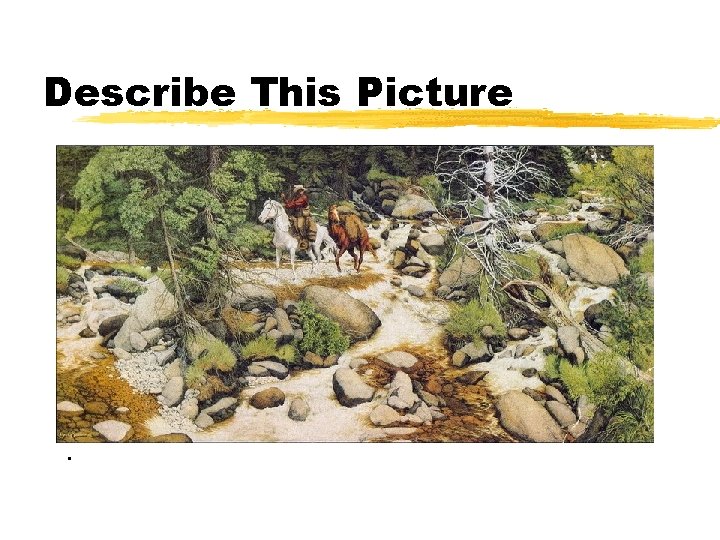
Describe This Picture •
Describe This Picture The Forest Has Eyes by Bev Doolittle • Bottom-Up: Lines, angles and colors…a guy riding a horse through the forest • Top-Down: We consider the title and direct our attention to aspects that will give meaning to it.
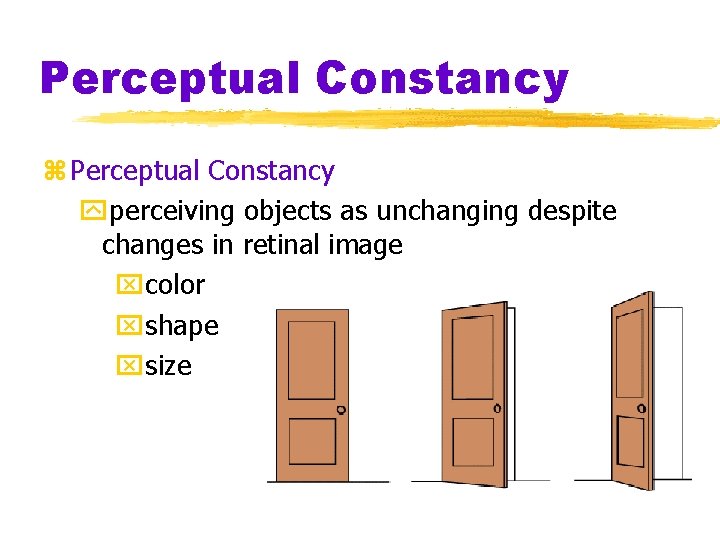
Perceptual Constancy z Perceptual Constancy yperceiving objects as unchanging despite changes in retinal image xcolor xshape xsize
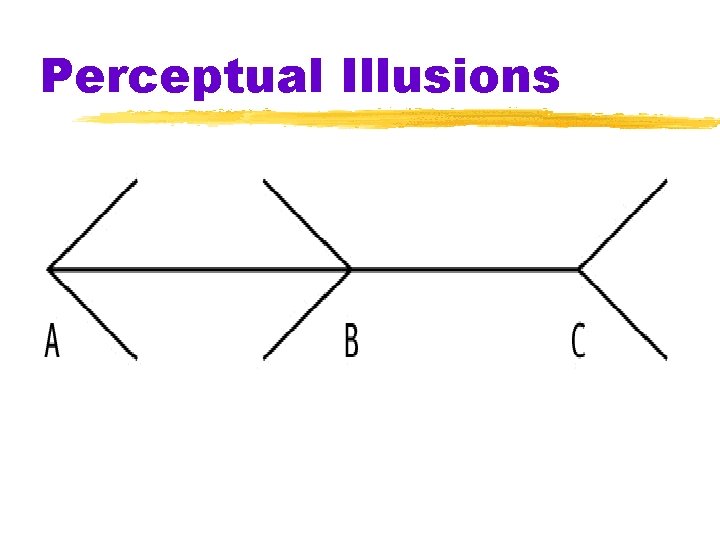
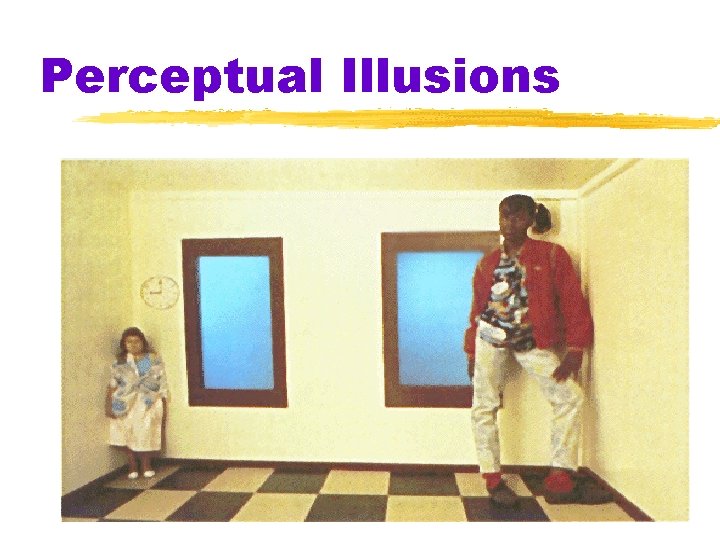
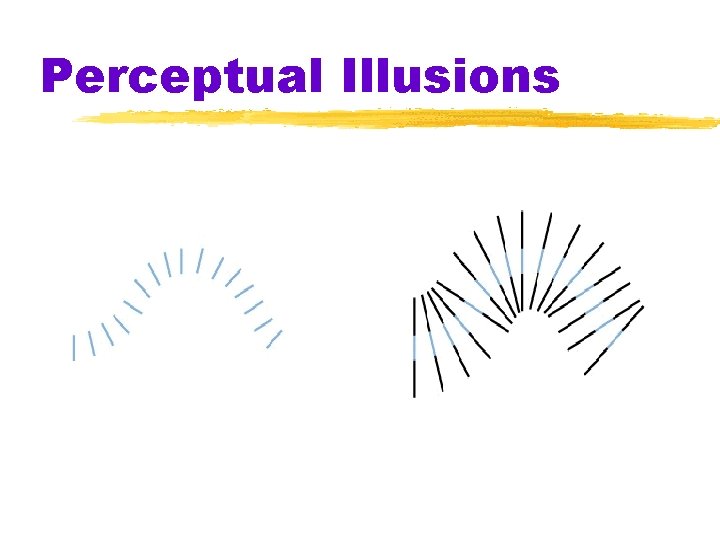
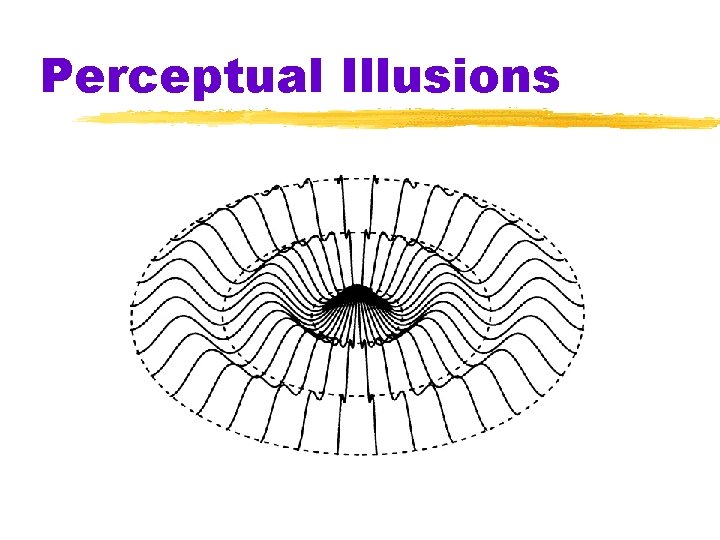
Perceptual Illusions
Perceptual Illusions
Perceptual Illusions
Perceptual Illusions
Perceptual Organization. Gestalt z. Visual Capture ytendency for vision to dominate the other senses z. Grouping ythe perceptual tendency to organize stimuli into coherent groups
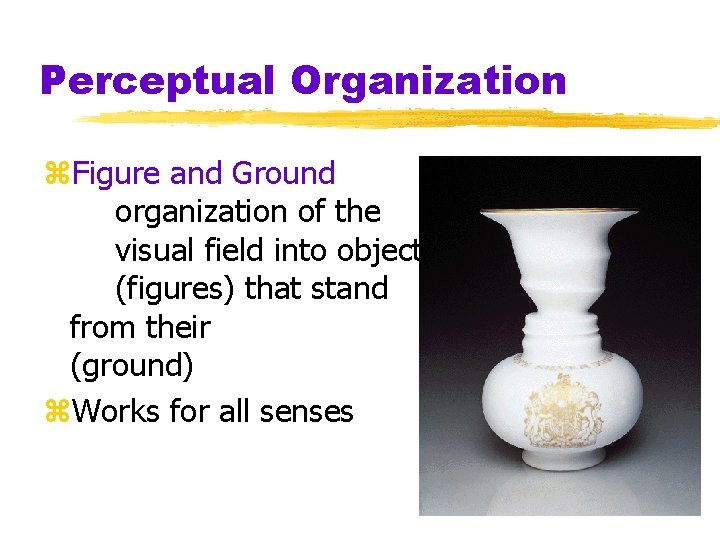
Perceptual Organization z. Figure and Ground organization of the visual field into objects (figures) that stand from their (ground) z. Works for all senses out surroundings
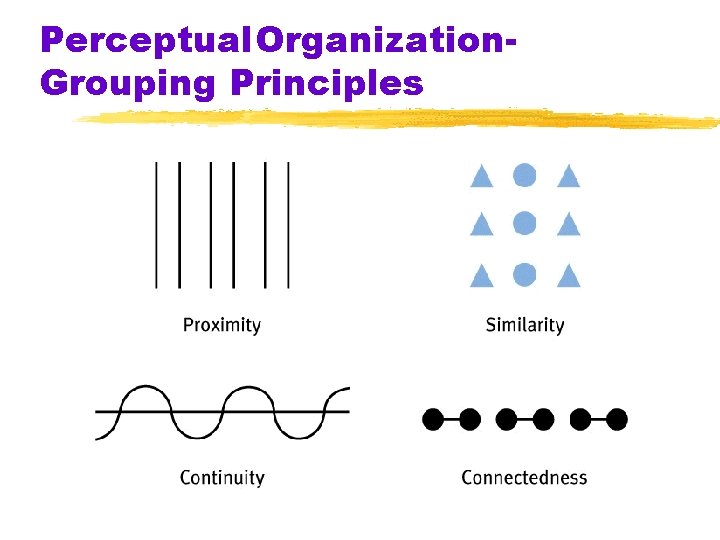
Perceptual Organization. Gestalt z. Gestalt- an organized whole ytendency to integrate pieces of information into meaningful wholes z. Grouping Principles yproximity- group nearby figures together ysimilarity- group figures that are similar ycontinuity- perceive continuous patterns yclosure- fill in gaps yconnectedness- spots, lines and areas are seen as unit when connected
Perceptual. Organization. Grouping Principles
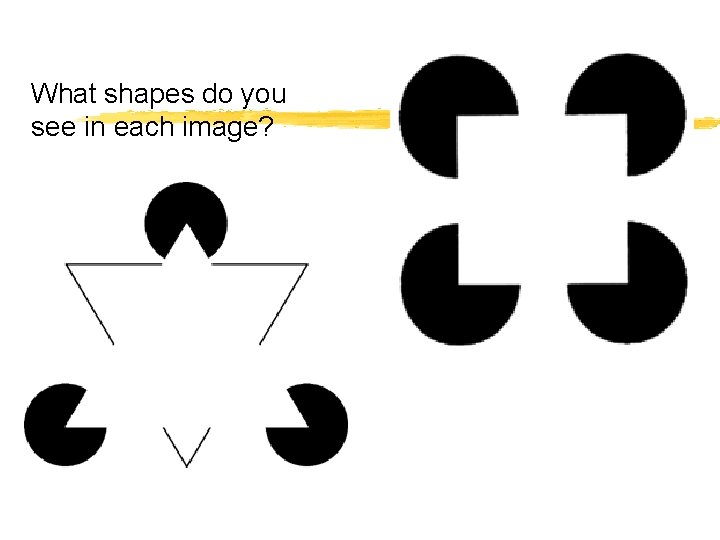
What shapes do you see in each image?
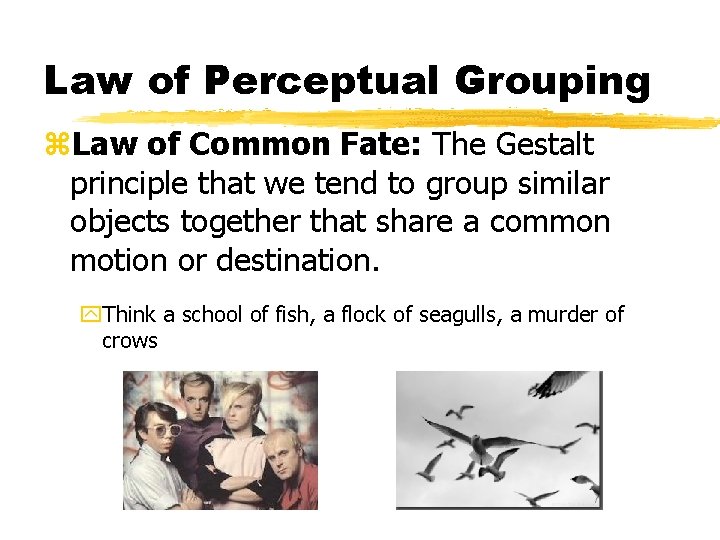
Law of Perceptual Grouping z. Law of Common Fate: The Gestalt principle that we tend to group similar objects together that share a common motion or destination. y. Think a school of fish, a flock of seagulls, a murder of crows
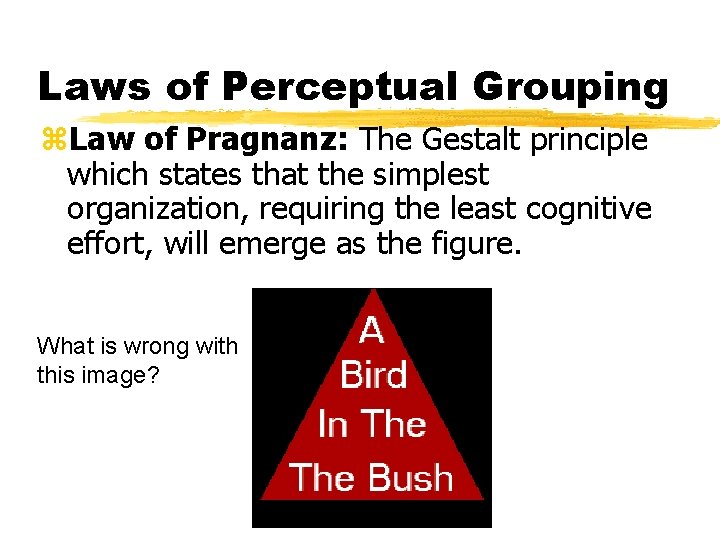
Laws of Perceptual Grouping z. Law of Pragnanz: The Gestalt principle which states that the simplest organization, requiring the least cognitive effort, will emerge as the figure. What is wrong with this image?
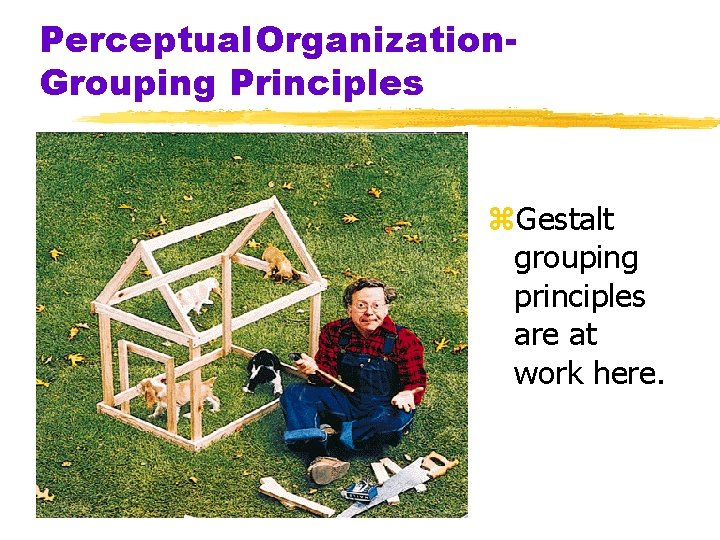
Perceptual. Organization. Grouping Principles z. Gestalt grouping principles are at work here.
Perceptual Organization. Depth Perception z. Depth Perception yability to see objects in three dimensions yallows us to judge distance z. Binocular cues yretinal disparity ximages from the two eyes differ xcloser the object, the larger the disparity yconvergence xneuromuscular cue xtwo eyes move inward for near objects
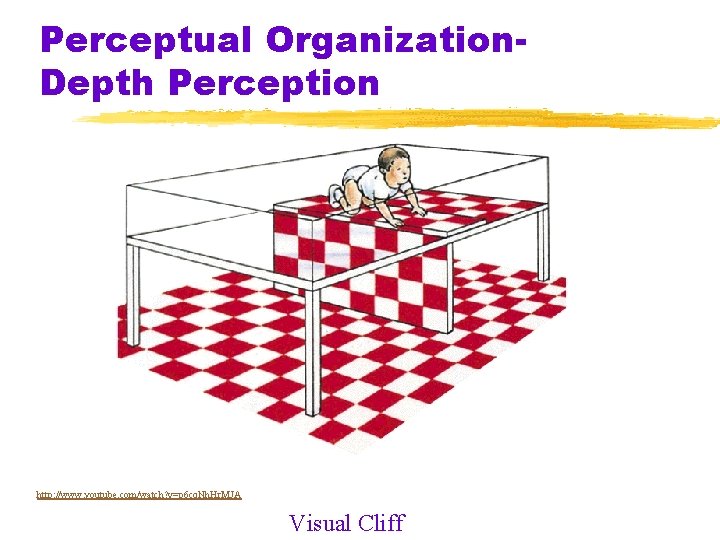
Perceptual Organization. Depth Perception http: //www. youtube. com/watch? v=p 6 cq. Nh. Hr. MJA Visual Cliff
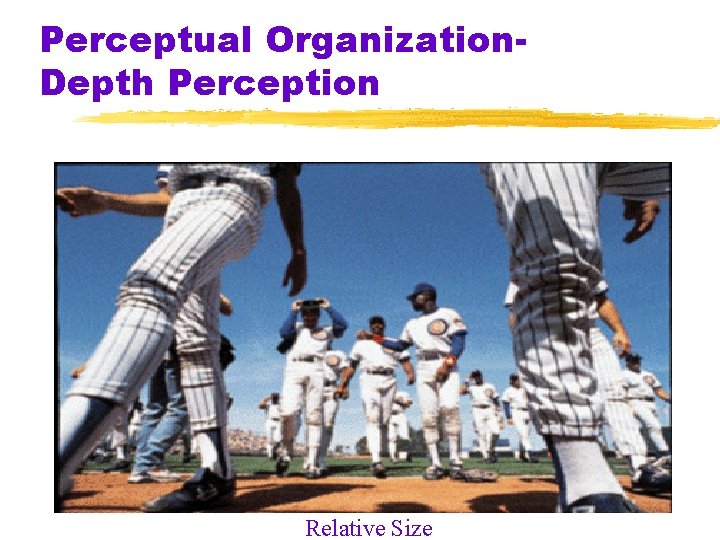
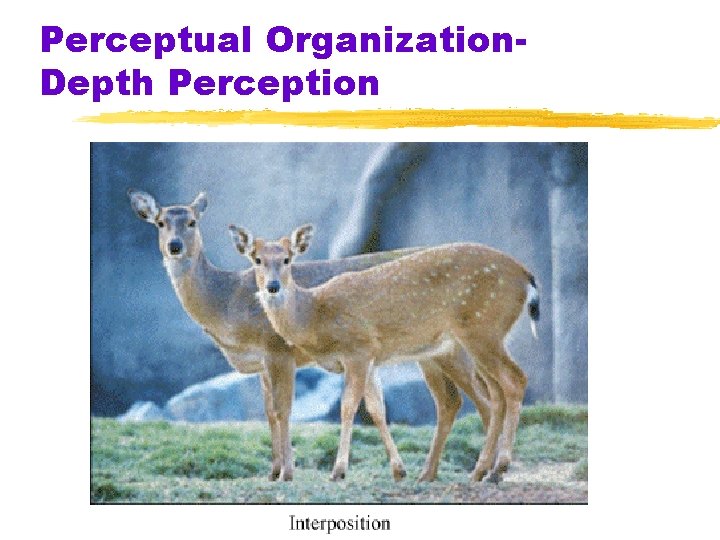
Perceptual Organization. Depth Perception z. Monocular Cues yrelative size xsmaller image is more distant yinterposition xcloser object blocks distant object yrelative clarity xhazy object seen as more distant ytexture coarse --> close fine --> distant
Perceptual Organization. Depth Perception Relative Size
Perceptual Organization. Depth Perception
Perceptual Organization. Depth Perception z. Monocular Cues (cont. ) yrelative height xhigher objects seen as more distant yrelative motion xcloser objects seem to move faster ylinear perspective xparallel lines converge with distance yrelative brightness xcloser objects appear brighter
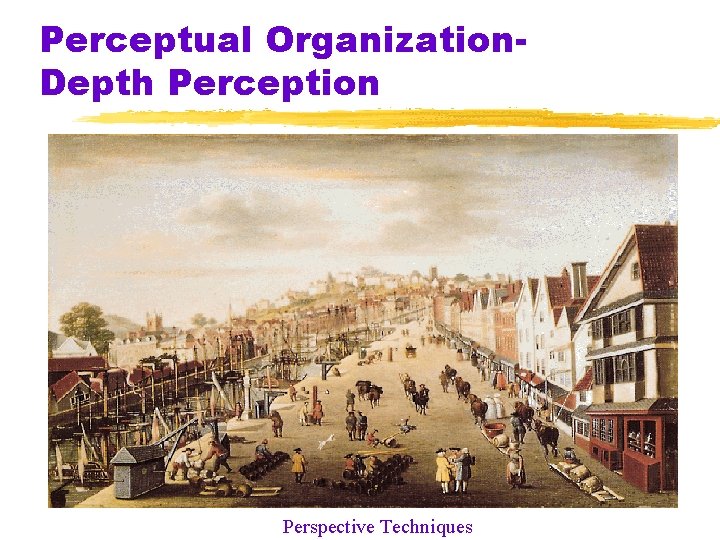
Perceptual Organization. Depth Perception Perspective Techniques
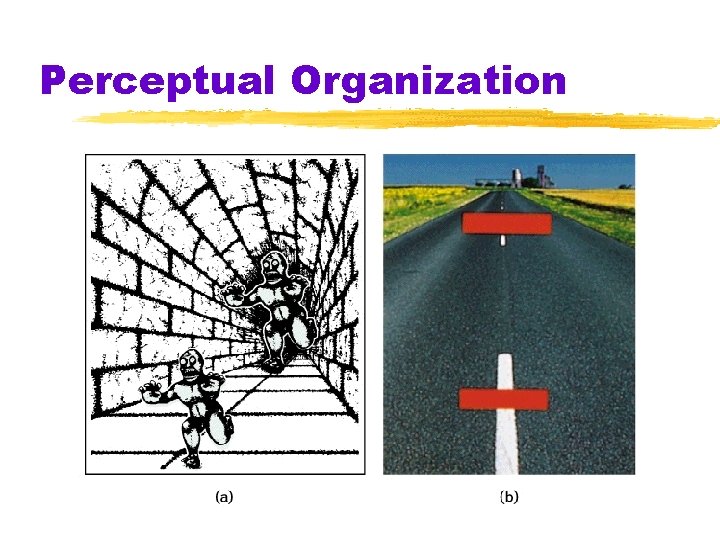
Perceptual Organization
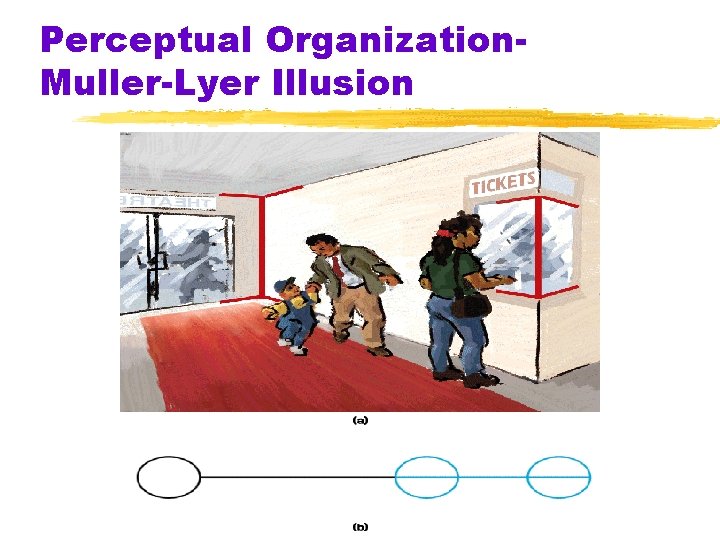
Perceptual Organization. Muller-Lyer Illusion
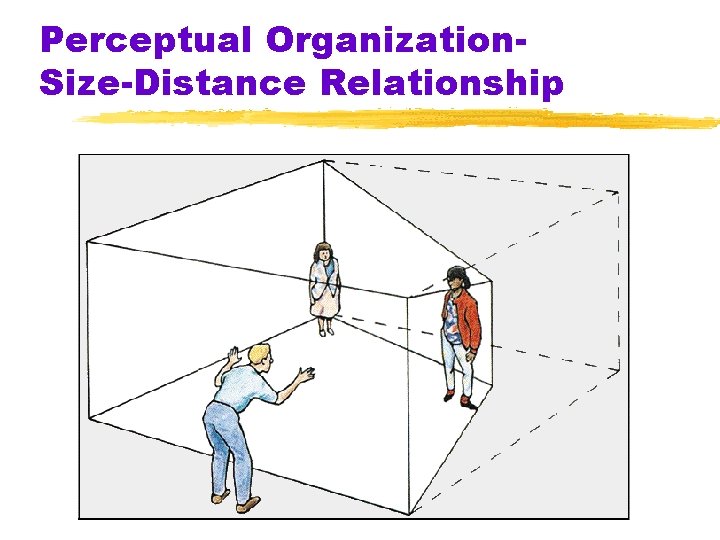
Perceptual Organization. Size-Distance Relationship
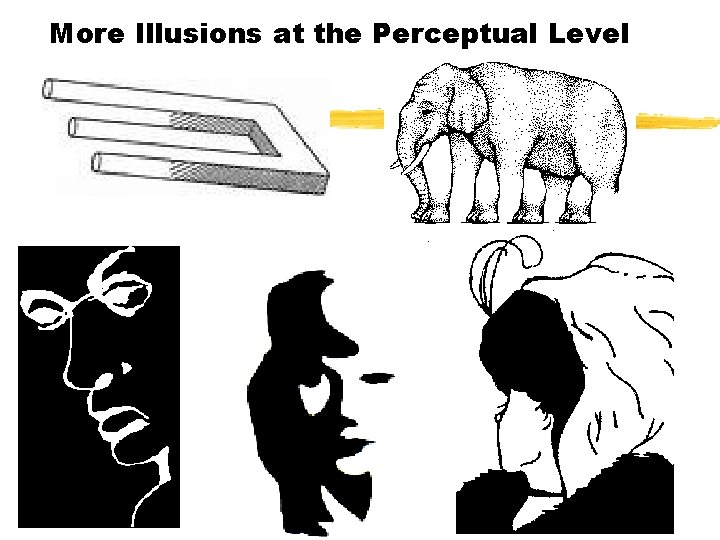
More Illusions at the Perceptual Level
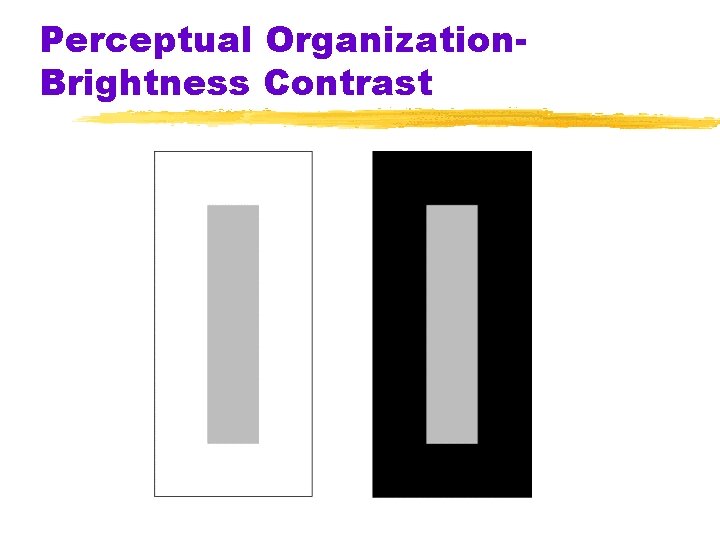
Perceptual Organization. Brightness Contrast
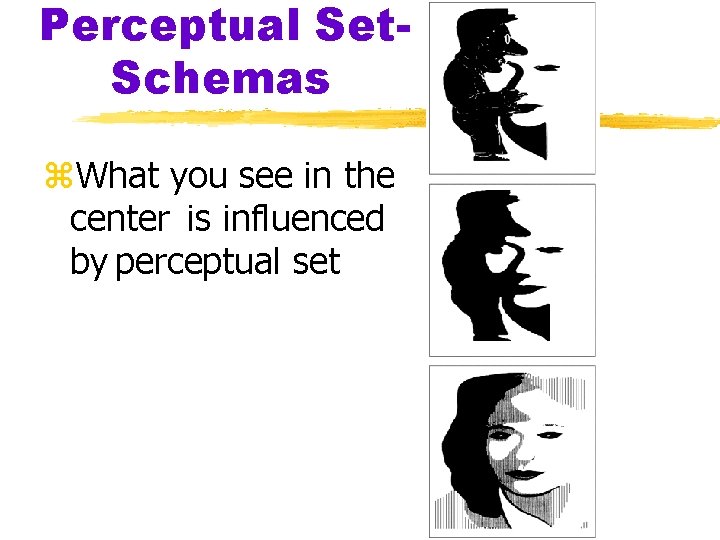
Perceptual Interpretation z. Perceptual Adaptation y(vision) ability to adjust to an artificially displaced visual field xprism glasses z. Perceptual Set ya mental predisposition to perceive one thing and not another
Perceptual Set. Schemas z. What you see in the center is influenced by perceptual set
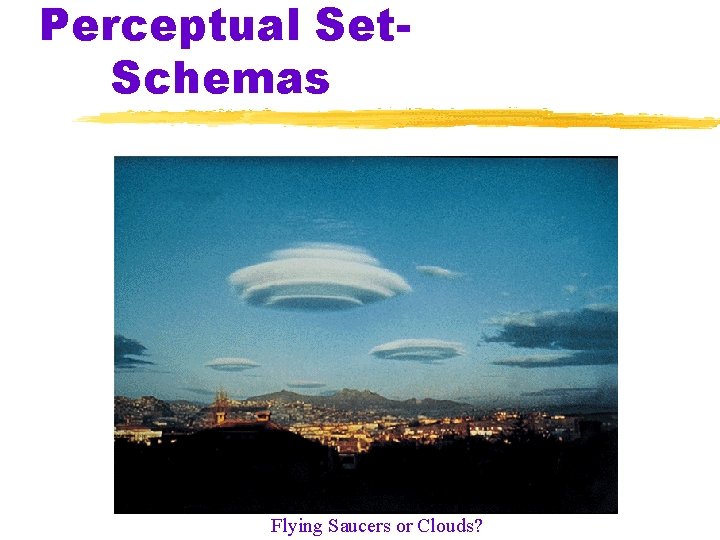
Perceptual Set. Schemas Flying Saucers or Clouds?
Perception without Sensation? z. Extrasensory Perception ycontroversial claim that perception can occur apart from sensory input xtelepathy xclairvoyance xprecognition z. Parapsychology ythe study of paranormal phenomena x. ESP xpsychokinesis
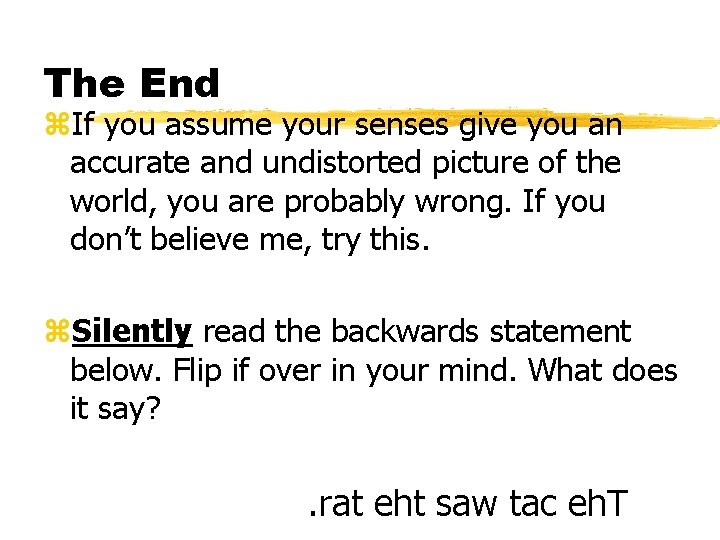
The End z. If you assume your senses give you an accurate and undistorted picture of the world, you are probably wrong. If you don’t believe me, try this. z. Silently read the backwards statement below. Flip if over in your mind. What does it say? . rat eht saw tac eh. T
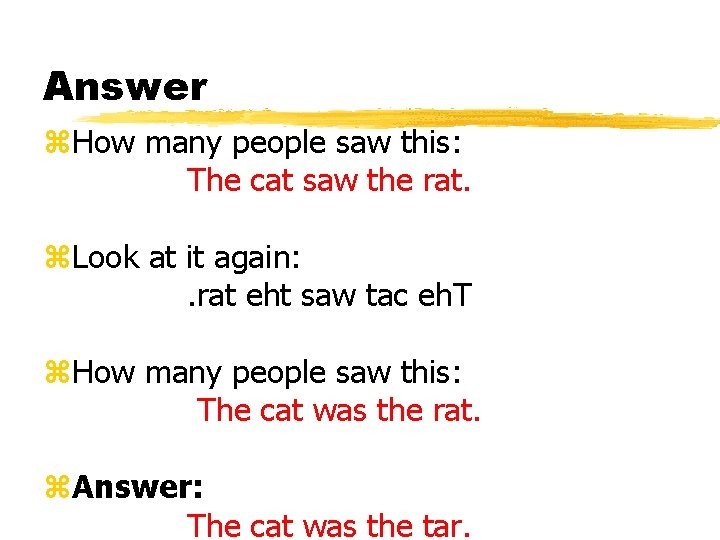
Answer z. How many people saw this: The cat saw the rat. z. Look at it again: . rat eht saw tac eh. T z. How many people saw this: The cat was the rat. z. Answer: The cat was the tar.