
Myers EXPLORING PSYCHOLOGY 6 th Edition in Modules
- Slides: 19
Myers EXPLORING PSYCHOLOGY (6 th Edition in Modules) Module 26 Introduction to Motivation: Hunger James A. Mc. Cubbin, Ph. D Clemson University Worth Publishers
Motivation § a need or desire that energizes and directs behavior § Instinct § complex behavior that is rigidly patterned throughout a species and is unlearned
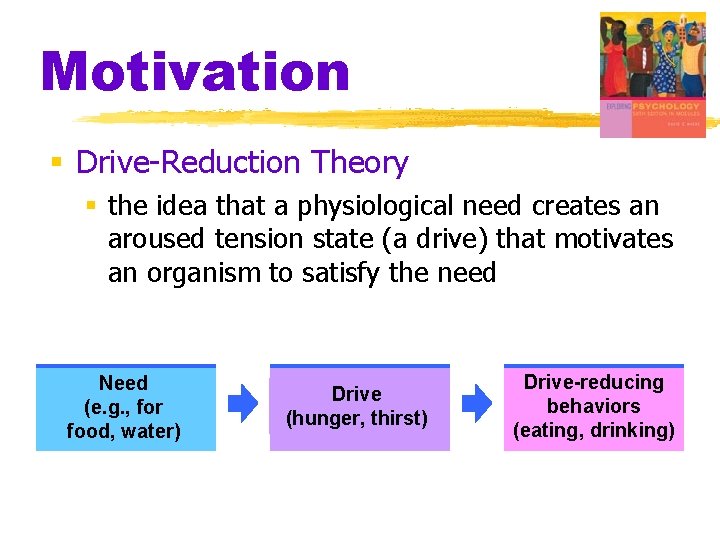
Motivation § Drive-Reduction Theory § the idea that a physiological need creates an aroused tension state (a drive) that motivates an organism to satisfy the need Need (e. g. , for food, water) Drive (hunger, thirst) Drive-reducing behaviors (eating, drinking)
Motivation § Homeostasis § tendency to maintain a balanced or constant internal state § regulation of any aspect of body chemistry around a particular level § Incentive § a positive or negative environmental stimulus that motivates behavior
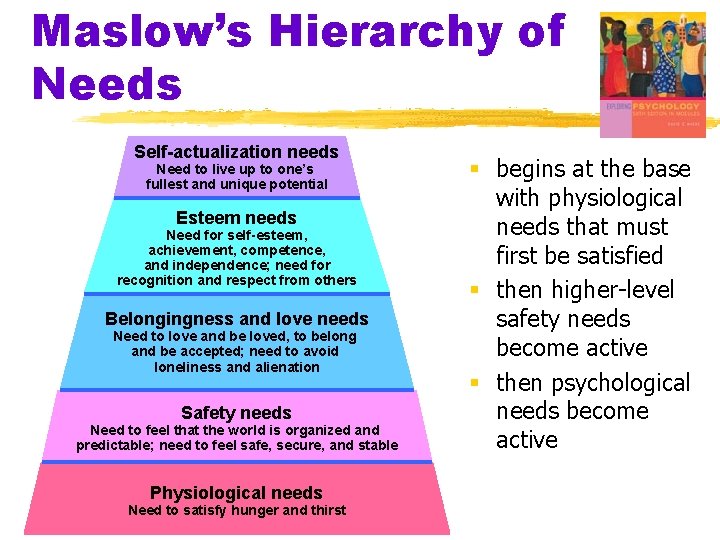
Maslow’s Hierarchy of Needs Self-actualization needs Need to live up to one’s fullest and unique potential Esteem needs Need for self-esteem, achievement, competence, and independence; need for recognition and respect from others Belongingness and love needs Need to love and be loved, to belong and be accepted; need to avoid loneliness and alienation Safety needs Need to feel that the world is organized and predictable; need to feel safe, secure, and stable Physiological needs Need to satisfy hunger and thirst § begins at the base with physiological needs that must first be satisfied § then higher-level safety needs become active § then psychological needs become active
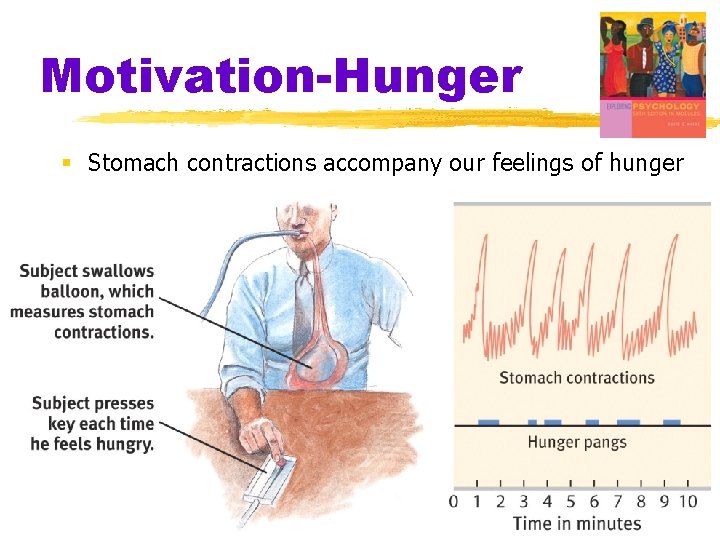
Motivation-Hunger § Stomach contractions accompany our feelings of hunger
Motivation-Hunger § Glucose § the form of sugar that circulates in the blood § provides the major source of energy for body tissues § when its level is low, we feel hunger
Motivation-Hunger § Set Point § the point at which an individual’s “weight thermostat” is supposedly set § when the body falls below this weight, an increase in hunger and a lowered metabolic rate may act to restore the lost weight § Basal Metabolic Rate § body’s base rate of energy expenditure
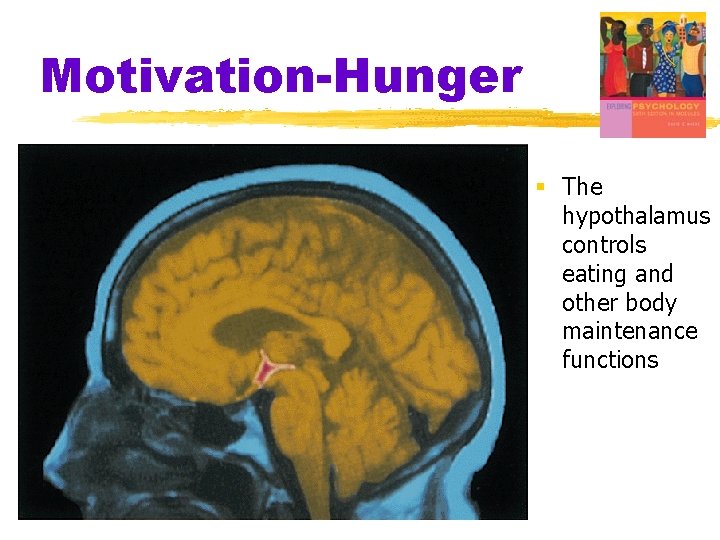
Motivation-Hunger § The hypothalamus controls eating and other body maintenance functions
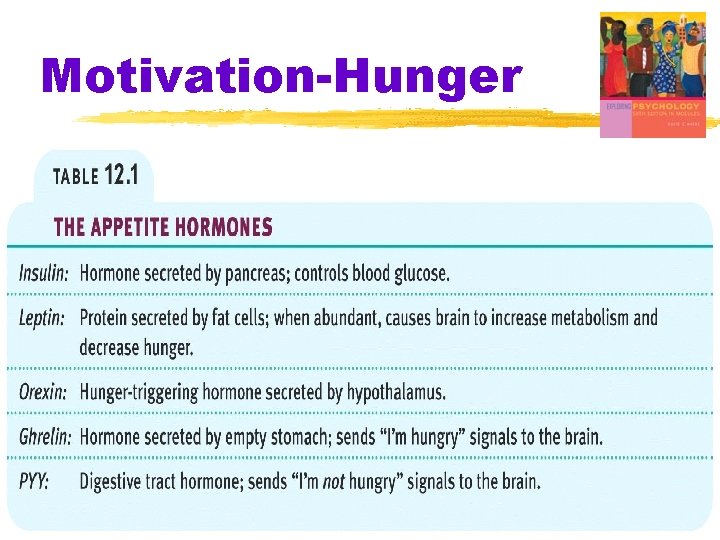
Motivation-Hunger
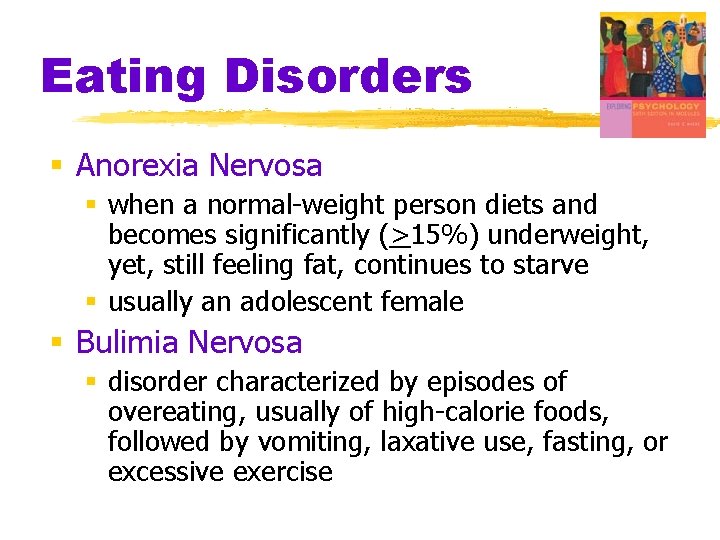
Eating Disorders § Anorexia Nervosa § when a normal-weight person diets and becomes significantly (>15%) underweight, yet, still feeling fat, continues to starve § usually an adolescent female § Bulimia Nervosa § disorder characterized by episodes of overeating, usually of high-calorie foods, followed by vomiting, laxative use, fasting, or excessive exercise
Anorexia was identified and named in the 1870 s, when it appeared among affluent, adolescent girls.
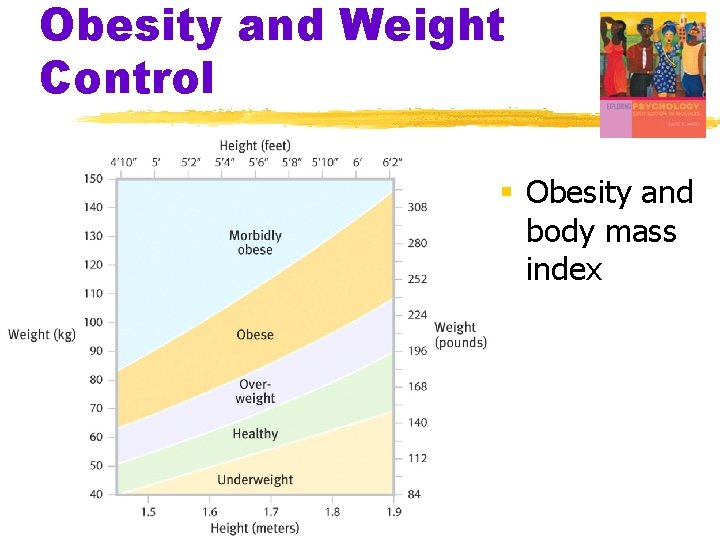
Obesity and Weight Control § Obesity and body mass index
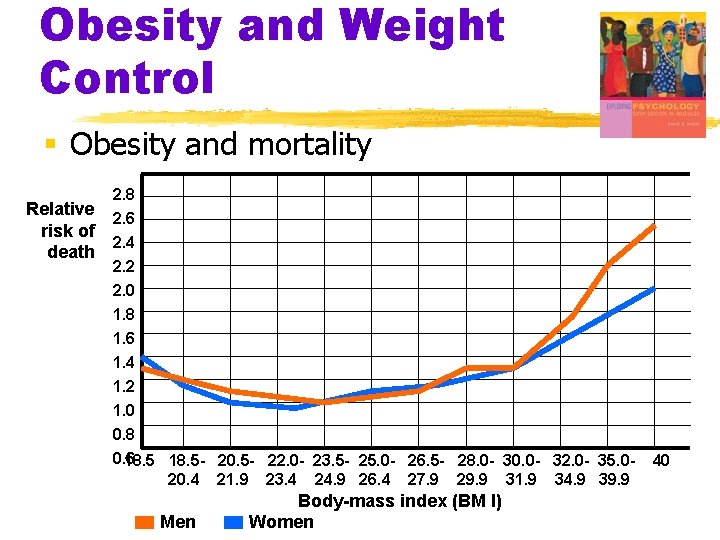
Obesity and Weight Control § Obesity and mortality Relative risk of death 2. 8 2. 6 2. 4 2. 2 2. 0 1. 8 1. 6 1. 4 1. 2 1. 0 0. 8 0. 6 18. 5 - 20. 5 - 22. 0 - 23. 5 - 25. 0 - 26. 5 - 28. 0 - 30. 0 - 32. 0 - 35. 020. 4 21. 9 23. 4 24. 9 26. 4 27. 9 29. 9 31. 9 34. 9 39. 9 Men Body-mass index (BM I) Women 40
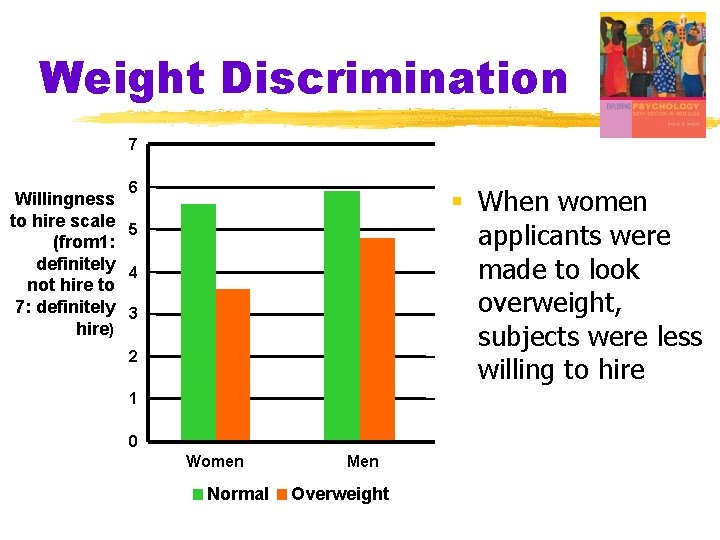
Weight Discrimination 7 6 § When women applicants were made to look overweight, subjects were less willing to hire Willingness to hire scale 5 (from 1: definitely 4 not hire to 7: definitely 3 hire) 2 1 0 Women Normal Men Overweight
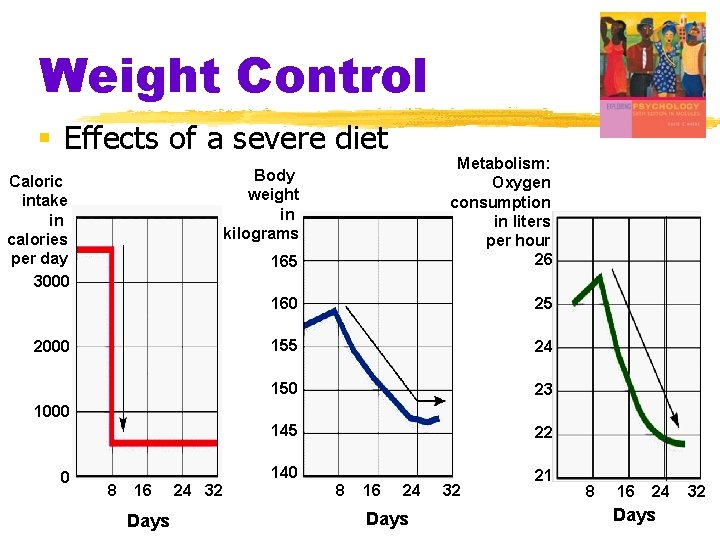
Weight Control § Effects of a severe diet 165 Metabolism: Oxygen consumption in liters per hour 26 160 25 155 24 150 23 145 22 Body weight in kilograms Caloric intake in calories per day 3000 2000 1000 0 8 16 Days 24 32 140 8 16 24 Days 32 21 8 16 24 Days 32
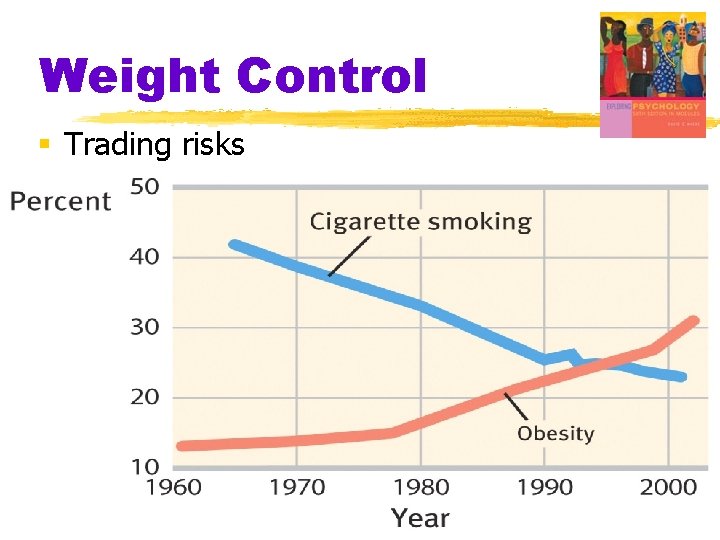
Weight Control § Trading risks
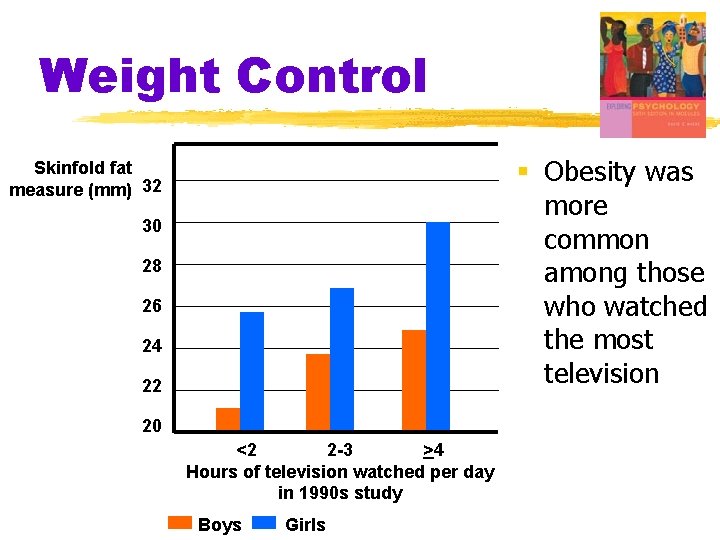
Weight Control § Obesity was more common among those who watched the most television Skinfold fat measure (mm) 32 30 28 26 24 22 20 <2 2 -3 >4 Hours of television watched per day in 1990 s study Boys Girls
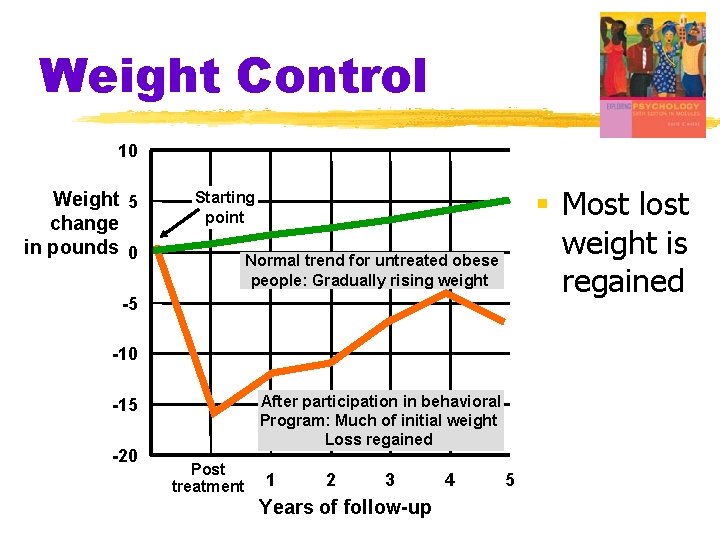
Weight Control 10 Weight 5 change in pounds 0 § Most lost weight is regained Starting point Normal trend for untreated obese people: Gradually rising weight -5 -10 After participation in behavioral Program: Much of initial weight Loss regained -15 -20 Post treatment 1 2 3 Years of follow-up 4 5