
Myers EXPLORING PSYCHOLOGY 4 th Ed Chapter 12

- Slides: 31
Myers’ EXPLORING PSYCHOLOGY (4 th Ed) Chapter 12 Psychological Disorders James A. Mc. Cubbin, Ph. D Clemson University Worth Publishers
Psychological Disorders z. Psychological Disorder ya condition in which behavior is judged: xatypical- not enough in itself xdisturbing- varies with time & culture xmaladaptive- harmful xunjustifiable- sometimes there’s a good reason
Historical Perspective z. Perceived Causes ymovements of sun or moon xlunacy- full moon yevil spirits z. Ancient Treatments yexorcism, caged like animals, beaten, burned, castrated, mutilated, blood replaced with animal’s blood
Psychological Disorders z. Medical Model yconcept that diseases have physical causes ycan be diagnosed, treated, and in most cases, cured yassumes that these “mental” illnesses can be diagnosed on the basis of their symptoms and cured through therapy, which may include treatment in a psychiatric hospital
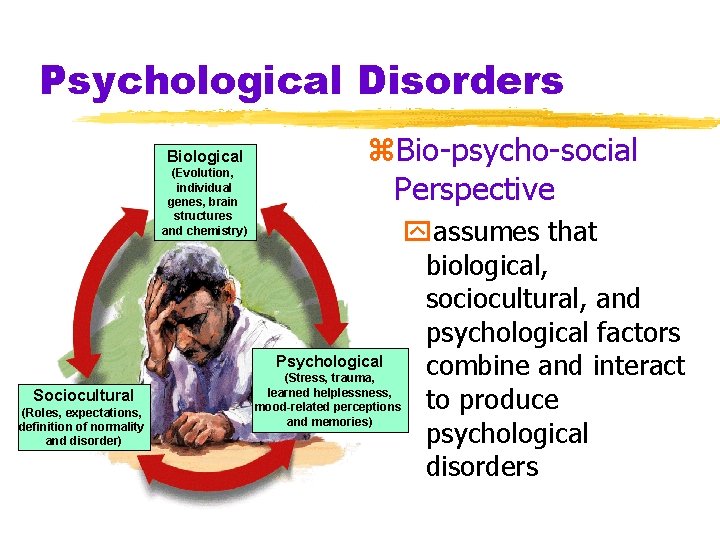
Psychological Disorders Biological (Evolution, individual genes, brain structures and chemistry) Sociocultural (Roles, expectations, definition of normality and disorder) z. Bio-psycho-social Perspective yassumes that biological, sociocultural, and psychological factors Psychological combine and interact (Stress, trauma, learned helplessness, to produce mood-related perceptions and memories) psychological disorders
Psychological Disorders - Etiology z. DSM-IV y. American Psychiatric Association’s Diagnostic and Statistical Manual of Mental Disorders (Fourth Edition) ya widely used system for classifying psychological disorders
Psychological Disorders - Etiology z. Neurotic disorder (term seldom used now) yusually distressing but that allows one to think rationally and function socially y. Freud saw the neurotic disorders as ways of dealing with anxiety z. Psychotic disorder yperson loses contact with reality yexperiences irrational ideas and distorted perceptions
Anxiety Disorders z. Anxiety Disorders ydistressing, persistent anxiety or maladaptive behaviors that reduce anxiety z. Generalized Anxiety Disorder yclient is tense, apprehensive, and in a state of autonomic nervous system arousal z. Phobia ypersistent, irrational fear of a specific object or situation
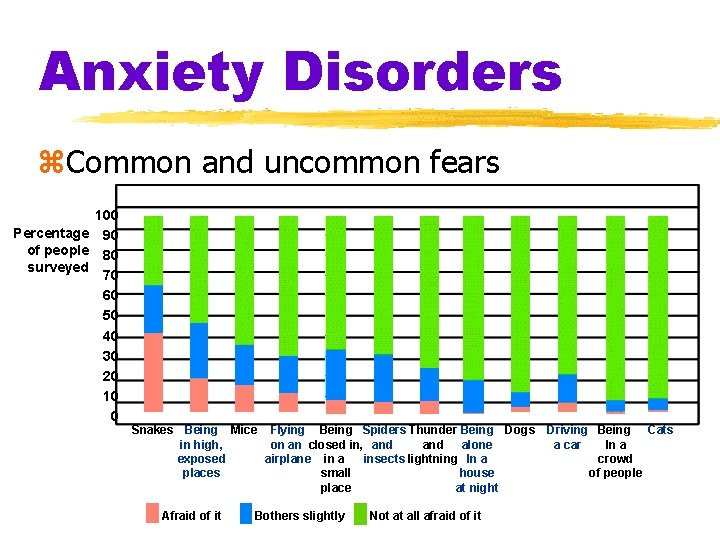
Anxiety Disorders z. Common and uncommon fears 100 Percentage 90 of people 80 surveyed 70 60 50 40 30 20 10 0 Snakes Being Mice Flying Being Spiders Thunder Being Dogs in high, on an closed in, and alone exposed airplane in a insects lightning In a places small house place at night Afraid of it Bothers slightly Not at all afraid of it Driving Being Cats In a a car crowd of people
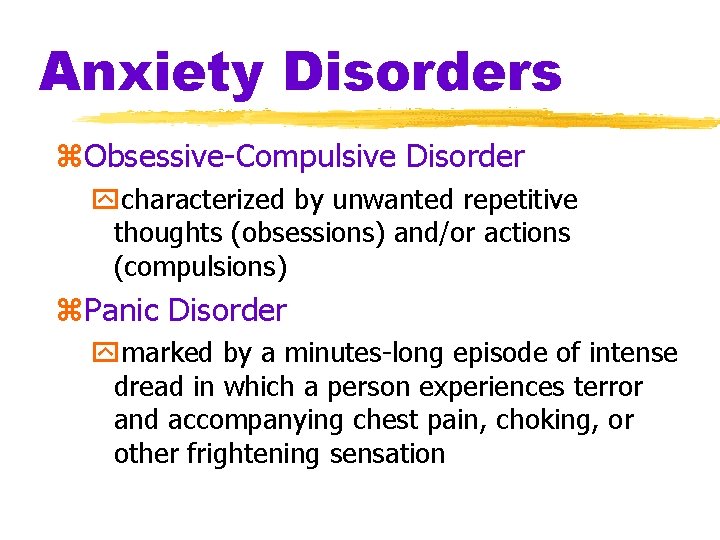
Anxiety Disorders z. Obsessive-Compulsive Disorder ycharacterized by unwanted repetitive thoughts (obsessions) and/or actions (compulsions) z. Panic Disorder ymarked by a minutes-long episode of intense dread in which a person experiences terror and accompanying chest pain, choking, or other frightening sensation
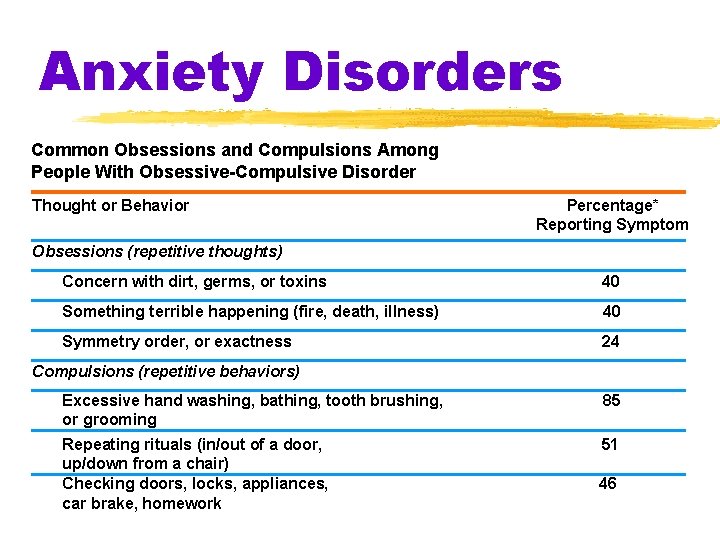
Anxiety Disorders Common Obsessions and Compulsions Among People With Obsessive-Compulsive Disorder Thought or Behavior Percentage* Reporting Symptom Obsessions (repetitive thoughts) Concern with dirt, germs, or toxins 40 Something terrible happening (fire, death, illness) 40 Symmetry order, or exactness 24 Compulsions (repetitive behaviors) Excessive hand washing, bathing, tooth brushing, or grooming 85 Repeating rituals (in/out of a door, up/down from a chair) Checking doors, locks, appliances, car brake, homework 51 46
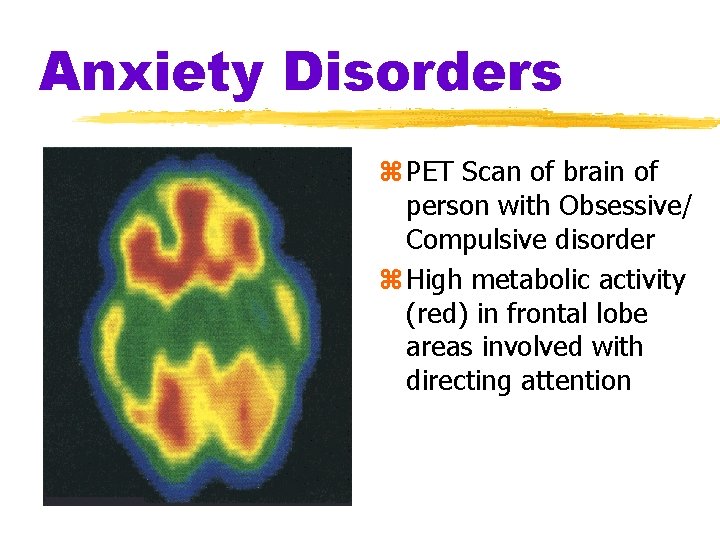
Anxiety Disorders z PET Scan of brain of person with Obsessive/ Compulsive disorder z High metabolic activity (red) in frontal lobe areas involved with directing attention
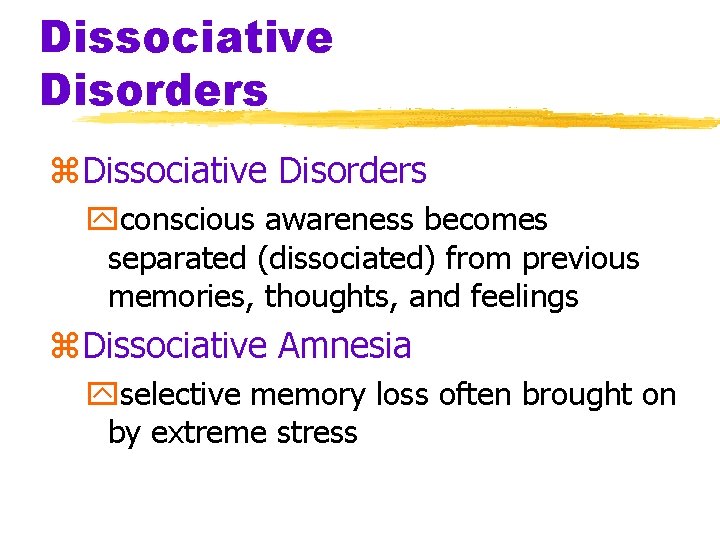
Dissociative Disorders z. Dissociative Disorders yconscious awareness becomes separated (dissociated) from previous memories, thoughts, and feelings z. Dissociative Amnesia yselective memory loss often brought on by extreme stress
Dissociative Disorders z. Dissociative Fugue yflight from one’s home and identity accompanies amnesia z. Dissociative Identity Disorder yrare dissociative disorder in which a person exhibits two or more distinct and alternating personalities yformerly called multiple personality disorder
Mood Disorders z. Mood Disorders ycharacterized by emotional extremes z. Major Depressive Disorder ya mood disorder in which a person, for no apparent reason, experiences two or more weeks of depressed moods, feelings of worthlessness, and diminished interest or pleasure in most activities
Mood Disorders z. Mania ya mood disorder marked by a hyperactive, wildly optimistic state z. Bipolar Disorder ya mood disorder in which the person alternates between the hopelessness and lethargy of depression and the overexcited state of mania yformerly called manic-depressive disorder
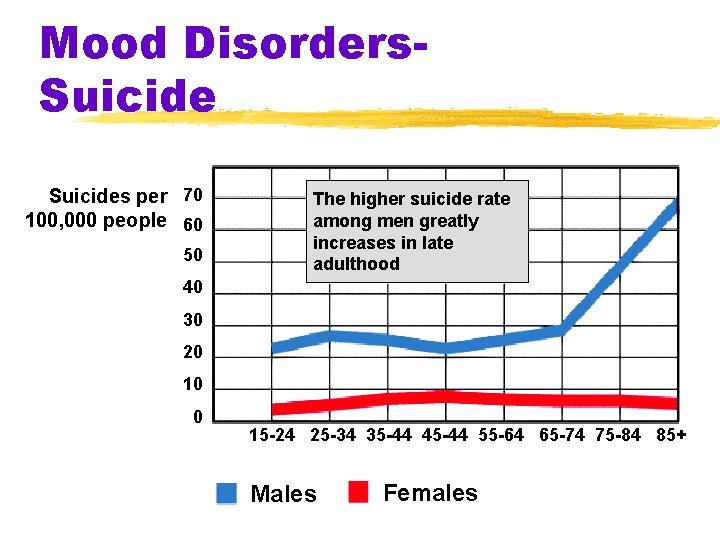
Mood Disorders. Suicides per 70 100, 000 people 60 50 The higher suicide rate among men greatly increases in late adulthood 40 30 20 10 0 15 -24 25 -34 35 -44 45 -44 55 -64 65 -74 75 -84 85+ Males Females
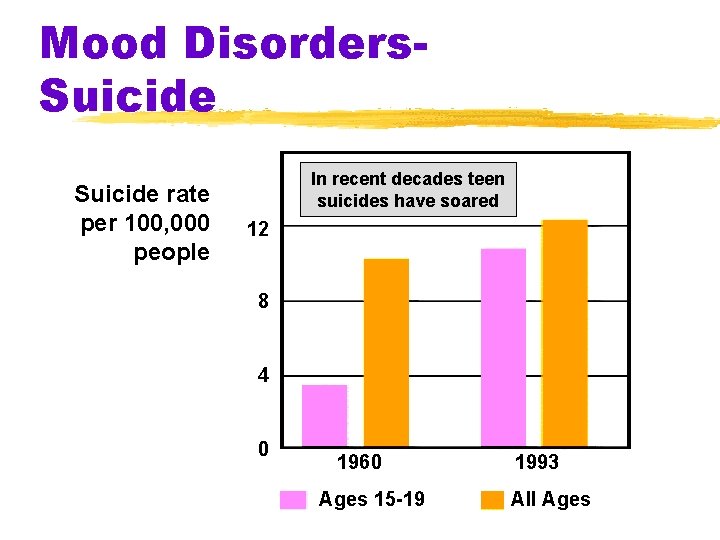
Mood Disorders. Suicide rate per 100, 000 people In recent decades teen suicides have soared 12 8 4 0 1960 Ages 15 -19 1993 All Ages
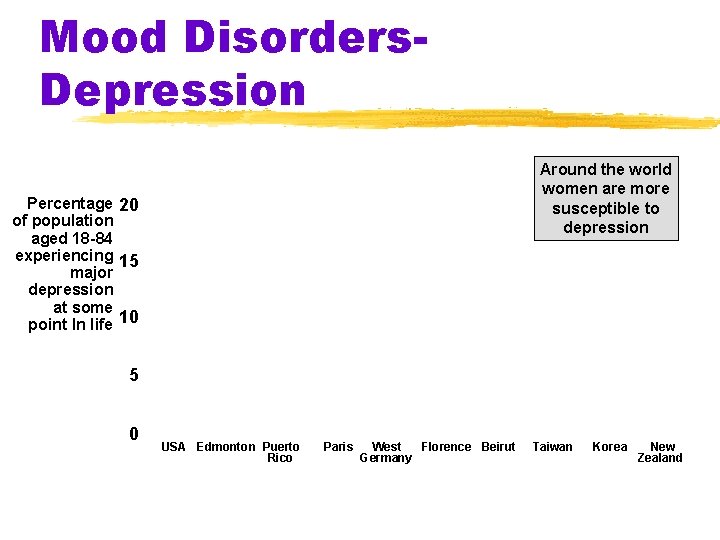
Mood Disorders. Depression Around the world women are more susceptible to depression Percentage 20 of population aged 18 -84 experiencing 15 major depression at some point In life 10 5 0 USA Edmonton Puerto Rico Paris West Florence Beirut Germany Taiwan Korea New Zealand
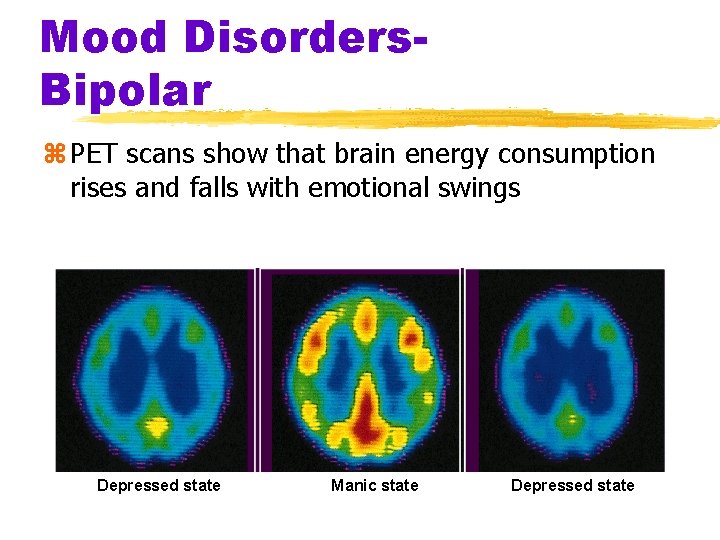
Mood Disorders. Bipolar z PET scans show that brain energy consumption rises and falls with emotional swings Depressed state Manic state Depressed state
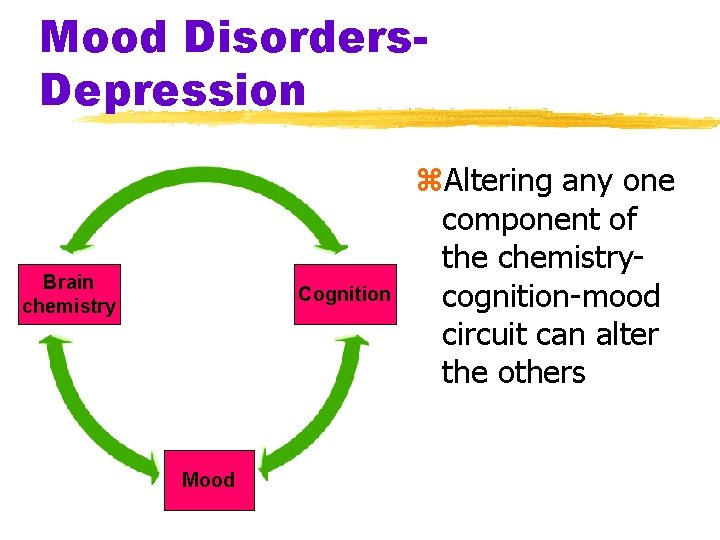
Mood Disorders. Depression Brain chemistry Cognition Mood z. Altering any one component of the chemistrycognition-mood circuit can alter the others
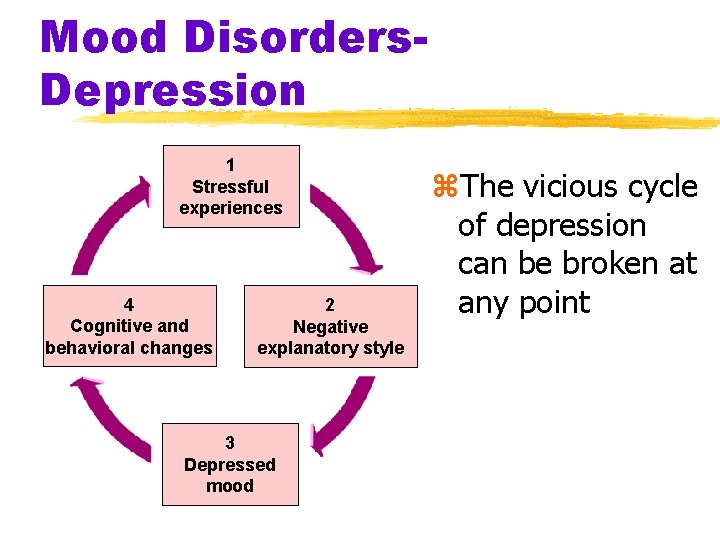
Mood Disorders. Depression 1 Stressful experiences 4 Cognitive and behavioral changes 2 Negative explanatory style 3 Depressed mood z. The vicious cycle of depression can be broken at any point
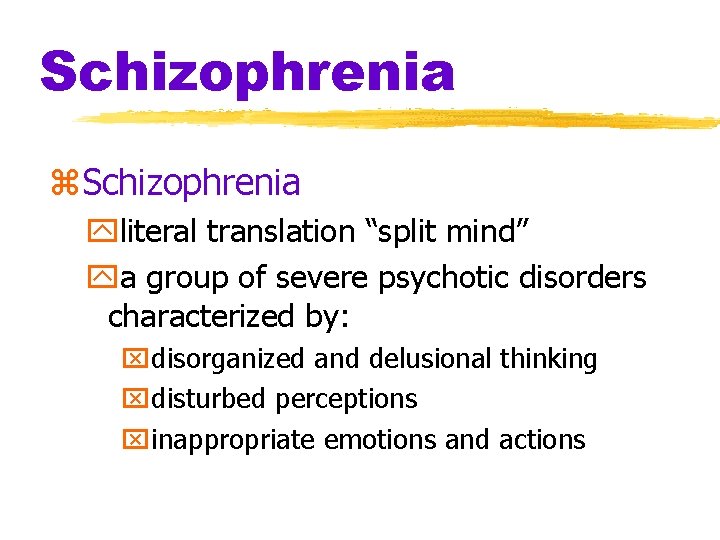
Schizophrenia z. Schizophrenia yliteral translation “split mind” ya group of severe psychotic disorders characterized by: xdisorganized and delusional thinking xdisturbed perceptions xinappropriate emotions and actions
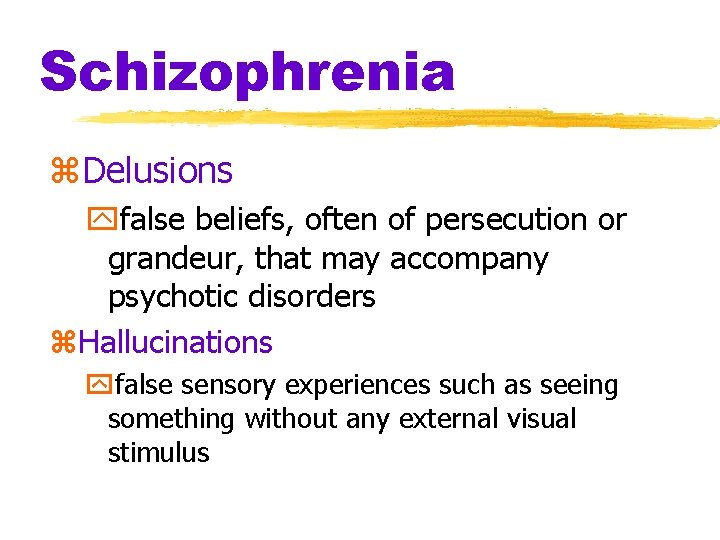
Schizophrenia z. Delusions yfalse beliefs, often of persecution or grandeur, that may accompany psychotic disorders z. Hallucinations yfalse sensory experiences such as seeing something without any external visual stimulus
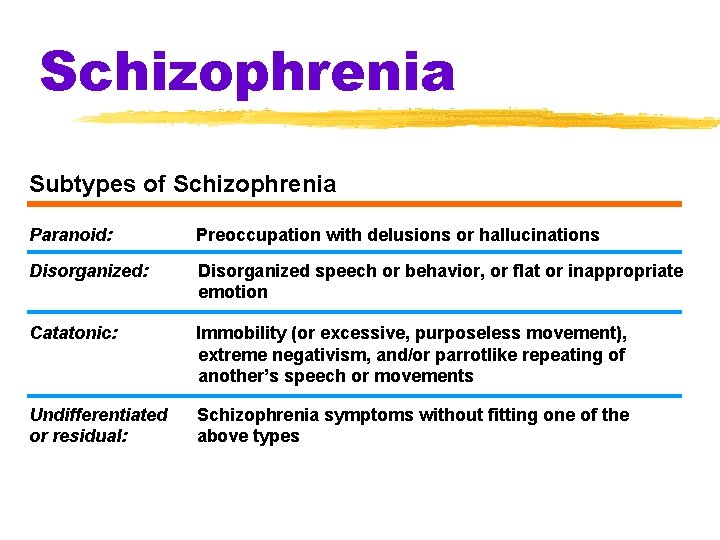
Schizophrenia Subtypes of Schizophrenia Paranoid: Preoccupation with delusions or hallucinations Disorganized: Disorganized speech or behavior, or flat or inappropriate emotion Catatonic: Immobility (or excessive, purposeless movement), extreme negativism, and/or parrotlike repeating of another’s speech or movements Undifferentiated or residual: Schizophrenia symptoms without fitting one of the above types
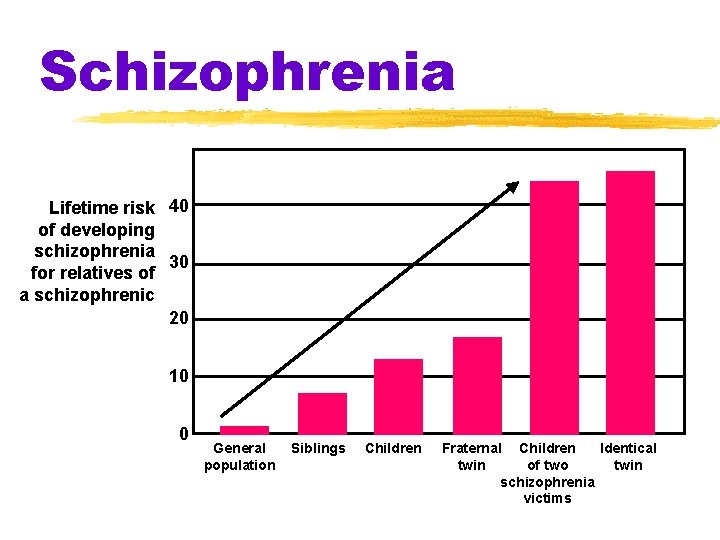
Schizophrenia Lifetime risk 40 of developing schizophrenia 30 for relatives of a schizophrenic 20 10 0 General population Siblings Children Fraternal Children Identical twin of two twin schizophrenia victims
Personality Disorders z. Personality Disorders ydisorders characterized by inflexible and enduring behavior patterns that impair social functioning yusually without anxiety, depression, or delusions
Personality Disorders z. Antisocial Personality Disorder ydisorder in which the person (usually male) exhibits a lack of conscience for wrongdoing, even toward friends and family members ymay be aggressive and ruthless or a clever con artist
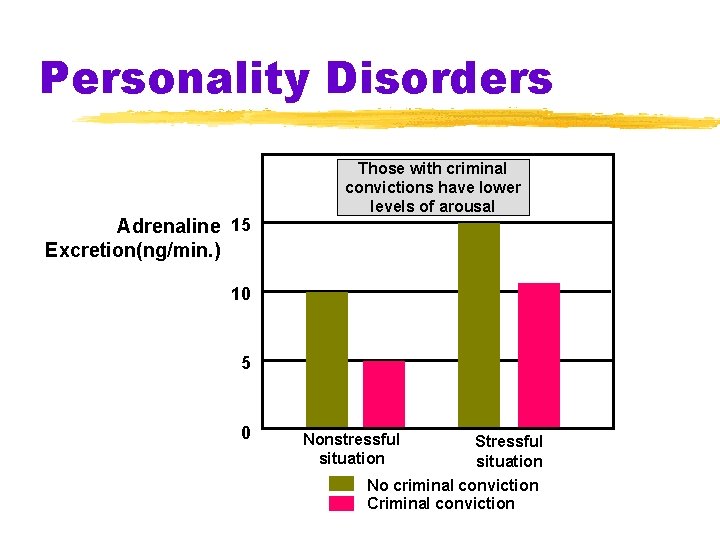
Personality Disorders Adrenaline 15 Excretion(ng/min. ) Those with criminal convictions have lower levels of arousal 10 5 0 Nonstressful situation Stressful situation No criminal conviction Criminal conviction
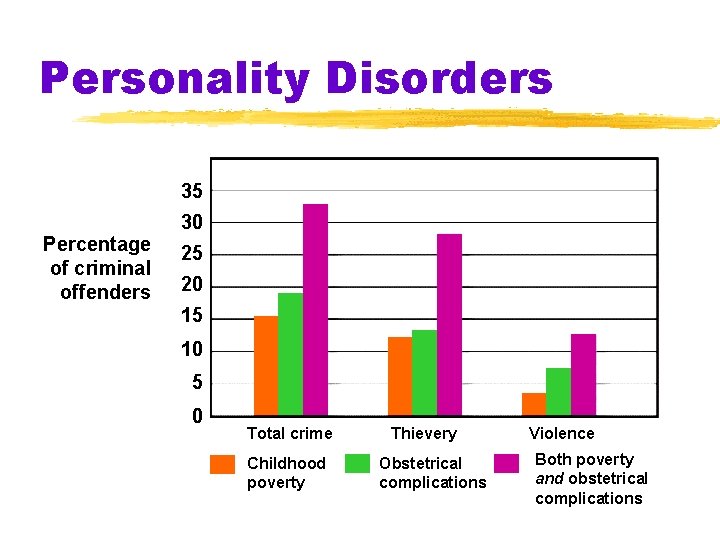
Personality Disorders 35 Percentage of criminal offenders 30 25 20 15 10 5 0 Total crime Childhood poverty Thievery Obstetrical complications Violence Both poverty and obstetrical complications
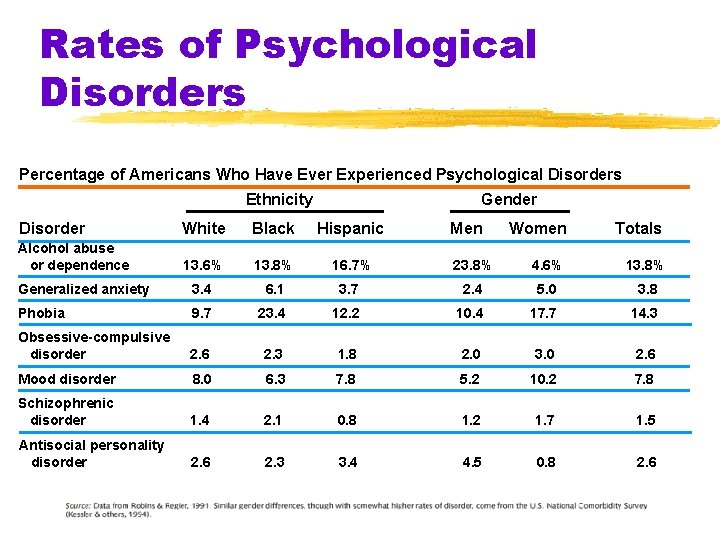
Rates of Psychological Disorders Percentage of Americans Who Have Ever Experienced Psychological Disorders Ethnicity Gender Disorder White Black Hispanic Alcohol abuse or dependence 13. 6% 13. 8% 16. 7% Generalized anxiety 3. 4 6. 1 Phobia 9. 7 Obsessive-compulsive disorder Men Women Totals 23. 8% 4. 6% 13. 8% 3. 7 2. 4 5. 0 3. 8 23. 4 12. 2 10. 4 17. 7 14. 3 2. 6 2. 3 1. 8 2. 0 3. 0 2. 6 Mood disorder 8. 0 6. 3 7. 8 5. 2 10. 2 7. 8 Schizophrenic disorder 1. 4 2. 1 0. 8 1. 2 1. 7 1. 5 Antisocial personality disorder 2. 6 2. 3 3. 4 4. 5 0. 8 2. 6