
Mycorrhizae Plant roots and fungi Mycorrhizae Widespread interactions
- Slides: 42
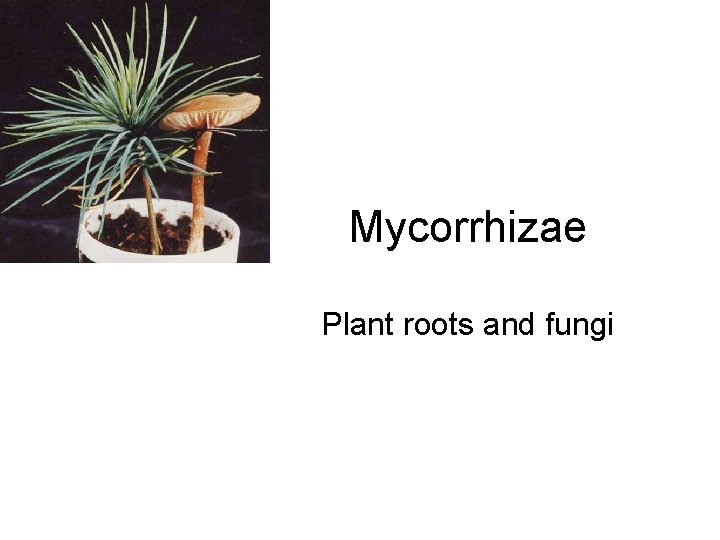
Mycorrhizae Plant roots and fungi
Mycorrhizae • Widespread interactions between fungi and plant (primarily vascular plants) roots • For angiosperms, gymnosperms, ferns and some mosses – mycorrhizal association appears to be the norm • Range over broad spectrum of interactions – Fungus parasitizes plant – Plant parasitizes fungus – Most cases – mutualistic – both benefit
Types of mycorrhizae • Ectomycorrhizae (ectotrophic, sheathing) – hyphae of fungus do not penetrate cells of plant root • Endomycorrhizae – hyphae penetrate cells of plant – Arbuscular mycorrhizae (AM) – aseptate hyphae, most widespread – Septate hyphae • Ericoid, Arbutoid & Monotropoid – plants are Ericales • Orchid – plants are orchids
Ectomycorrhizae • Most conspicuous and easily recognized • Best characterized • Plant roots are enclosed by a sheath of fungal hyphae – fungal mycelium penetrates between cells in cortex of the root • Fungal tissue may account for up to 40% mass of root • Hyphae also extend out into the soil – extramatrical hyphae
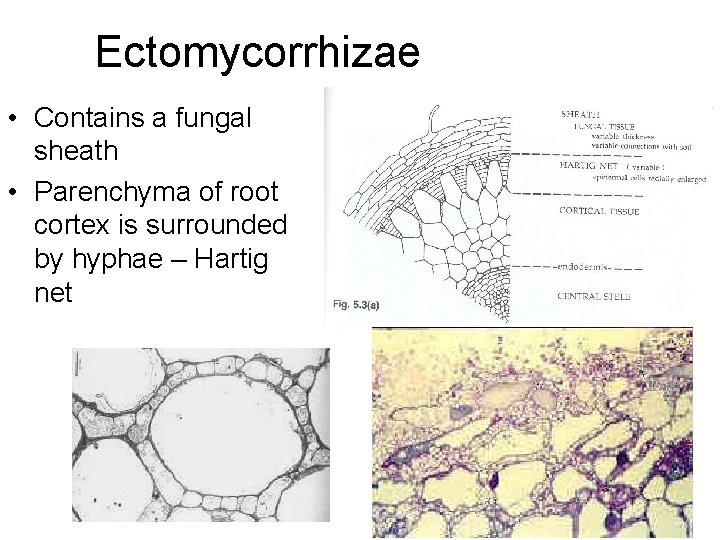
Ectomycorrhizae • Contains a fungal sheath • Parenchyma of root cortex is surrounded by hyphae – Hartig net
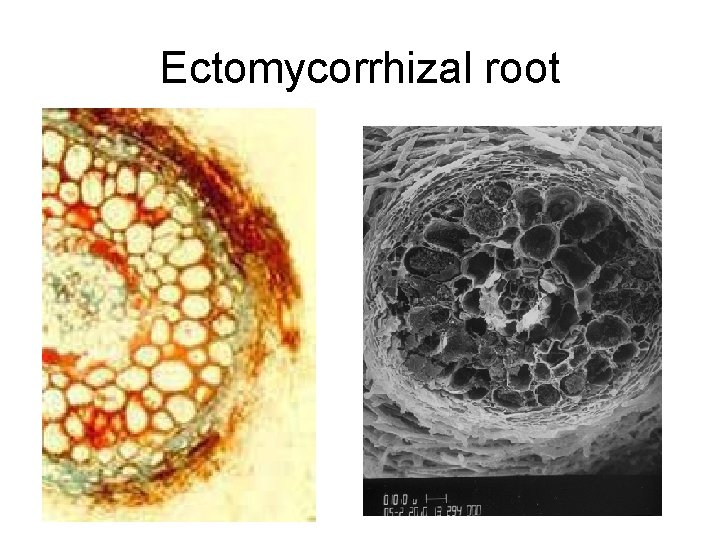
Ectomycorrhizal root
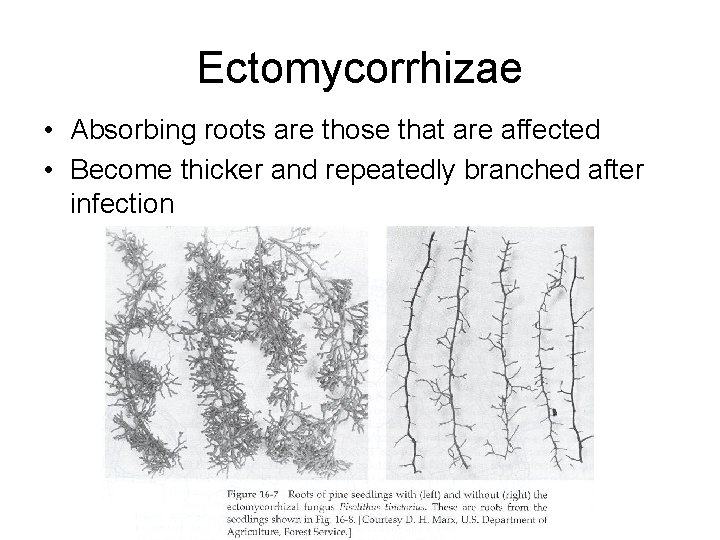
Ectomycorrhizae • Absorbing roots are those that are affected • Become thicker and repeatedly branched after infection
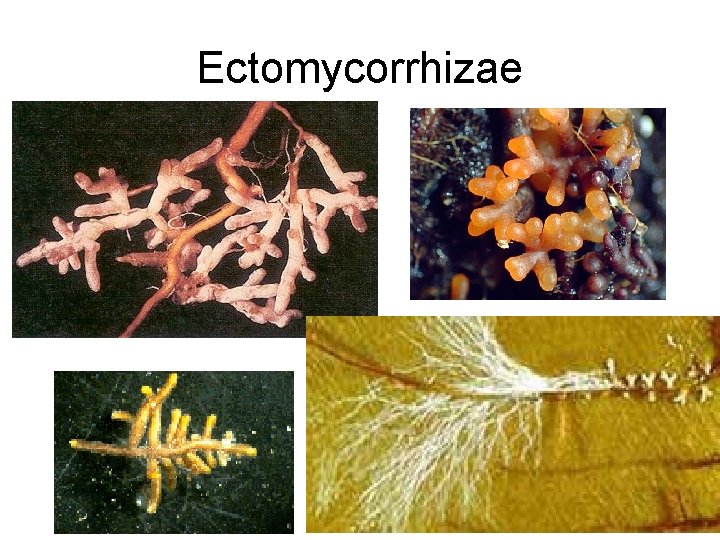
Ectomycorrhizae
Ectomycorrhizae Symbionts • 2000 plant species – primarily temperate trees and eucalyptus • Major species of coniferous and deciduous trees • Rare to find uninfected trees • In some trees, the association is obligate, in others facultative • Mycorrhizal association important in forestry
Ectomycorrhizae Symbionts • Basidiomycetes – Agaricales (many mushroom species), Lycoperdales, Sclerodermatales, few Aphyllophorales – Pisolithus tinctorus – used to form commercial inoculum for nursery trees, common in southern pine • Ascomycota – Pezizales – cup fungi and truffles • Over 5000 species of fungi have been shown to form ectomycorrhizae
Specificity of association • Great deal of variability • Most tree species form mycorrhizal associations with a number of different fungal species • May have different mycorrhizal fungi on roots of one plant • Some fungi are fairly specific and will form associations with only one plant species – these mushrooms are common in stands of that tree • Others are not specific
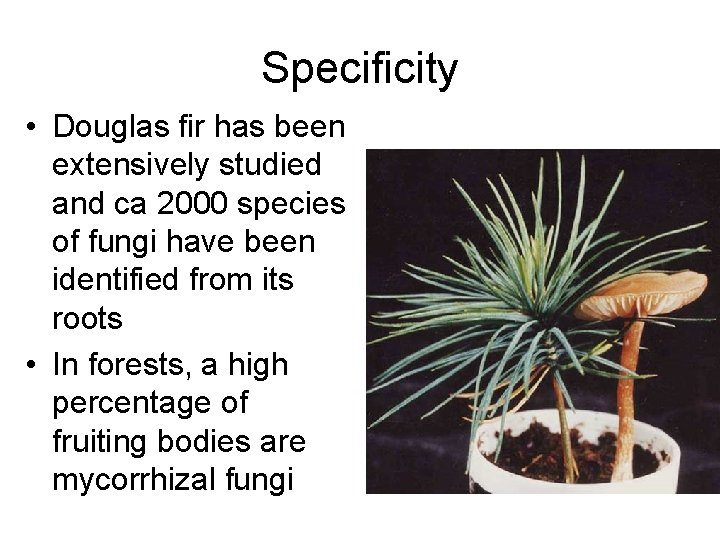
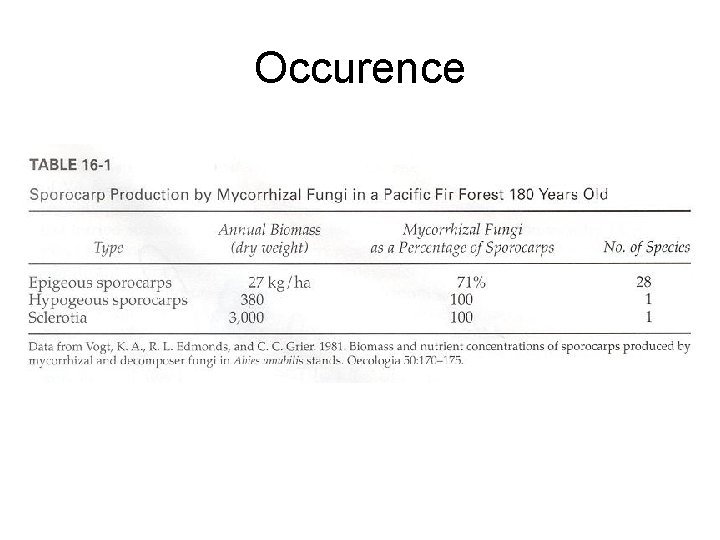
Specificity • Douglas fir has been extensively studied and ca 2000 species of fungi have been identified from its roots • In forests, a high percentage of fruiting bodies are mycorrhizal fungi
Occurence
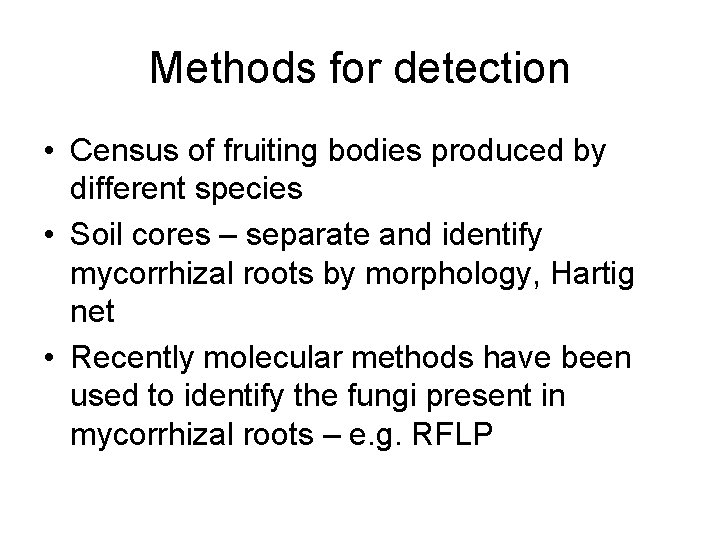
Methods for detection • Census of fruiting bodies produced by different species • Soil cores – separate and identify mycorrhizal roots by morphology, Hartig net • Recently molecular methods have been used to identify the fungi present in mycorrhizal roots – e. g. RFLP
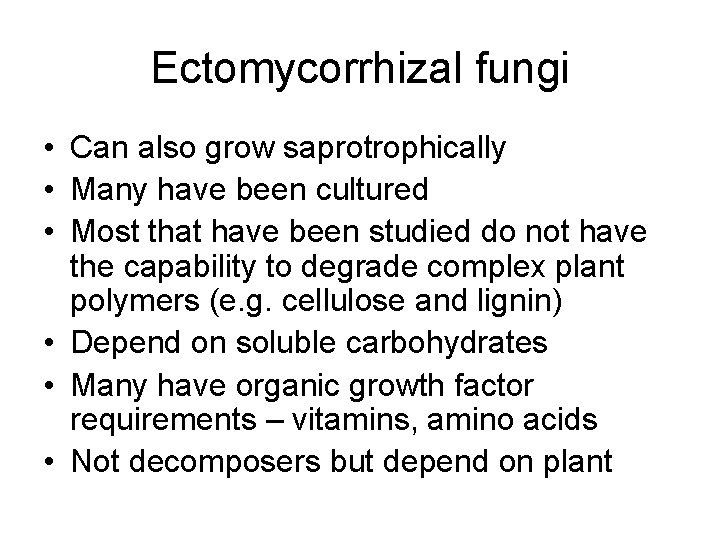
Ectomycorrhizal fungi • Can also grow saprotrophically • Many have been cultured • Most that have been studied do not have the capability to degrade complex plant polymers (e. g. cellulose and lignin) • Depend on soluble carbohydrates • Many have organic growth factor requirements – vitamins, amino acids • Not decomposers but depend on plant
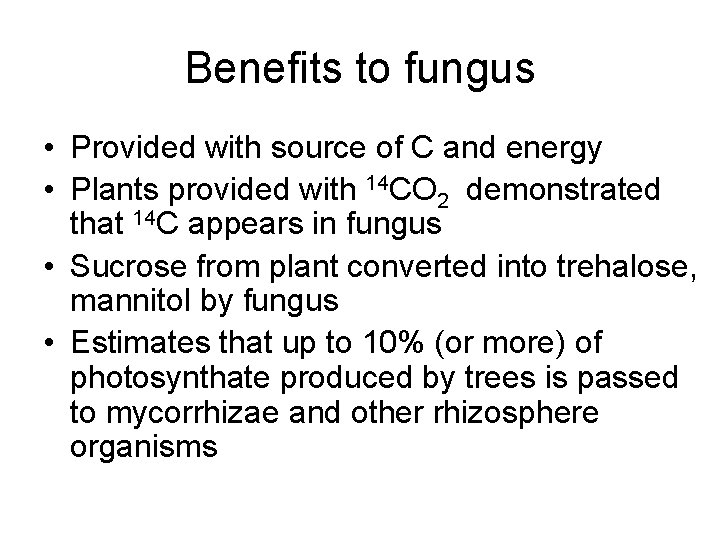
Benefits to fungus • Provided with source of C and energy • Plants provided with 14 CO 2 demonstrated that 14 C appears in fungus • Sucrose from plant converted into trehalose, mannitol by fungus • Estimates that up to 10% (or more) of photosynthate produced by trees is passed to mycorrhizae and other rhizosphere organisms
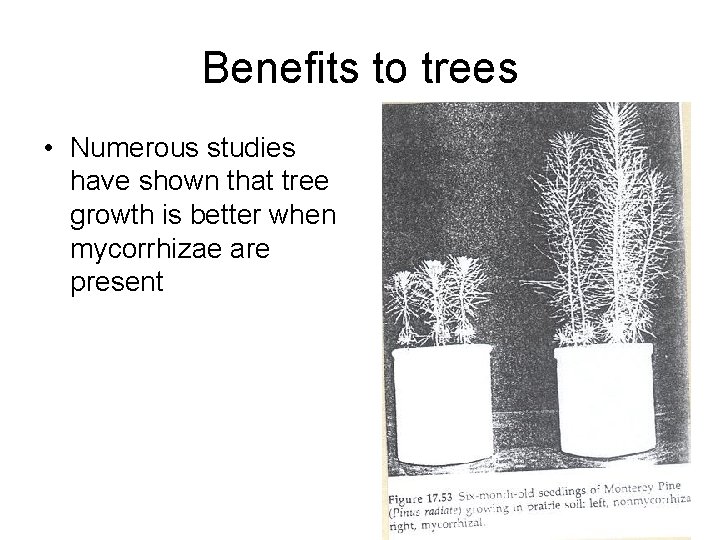
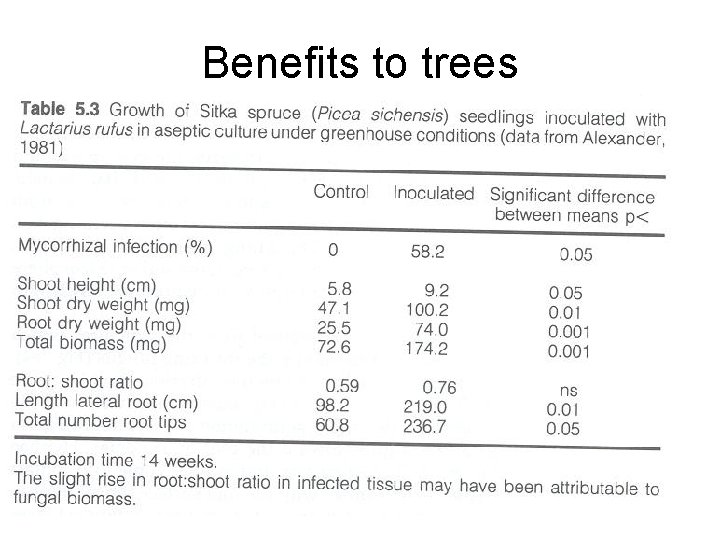
Benefits to trees • Numerous studies have shown that tree growth is better when mycorrhizae are present
Benefits to trees
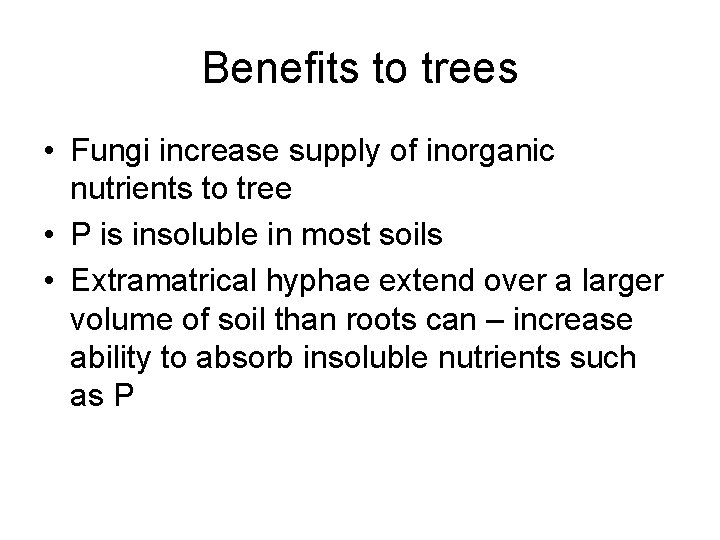
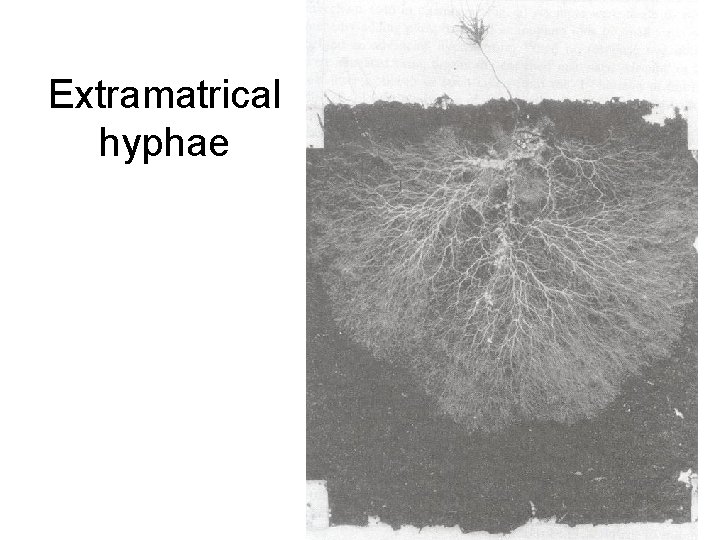
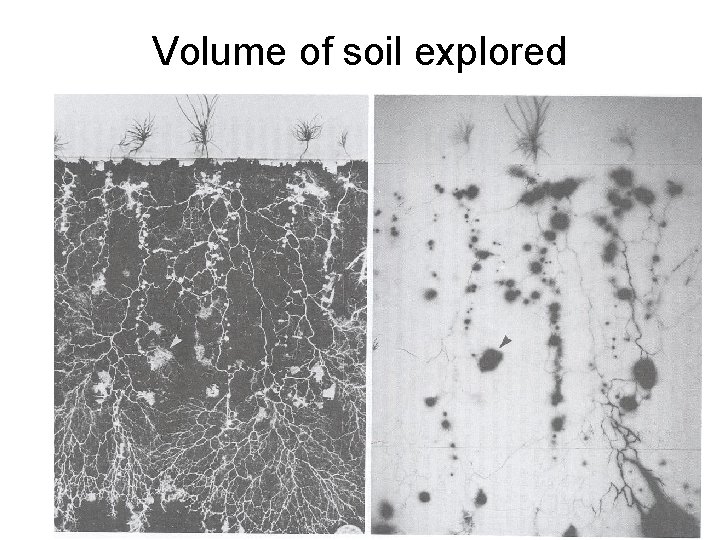
Benefits to trees • Fungi increase supply of inorganic nutrients to tree • P is insoluble in most soils • Extramatrical hyphae extend over a larger volume of soil than roots can – increase ability to absorb insoluble nutrients such as P
Extramatrical hyphae
Volume of soil explored
Benefits to trees • Plant hormones produced by fungus changes the physiological state of roots – physiologically active root area for nutrient and water absorption is increased • Increases tolerance of plant to drought, high temperatures, p. H extremes, heavy metals • Increases resistance to infection by root pathogens – provides a physical barrier
Ectomycorrhizae • Mutualistic symbioses – both organisms benefit from association • Currently, seedlings in nurseries inoculated with fungi so that when planted, they will have better chance of success
Arbuscular mycorrhizae • AM – much less known about these associations than about ectomycorrhizae • Appear to be the most common type of mycorrhizal association with respect to the number of plant species that form them • Found in species in all divisions of terrestrial plants – widely distributed in annuals, perennials, temperate and tropical trees, crop and wild plants • Estimated to occur on 300, 000 plant spp.
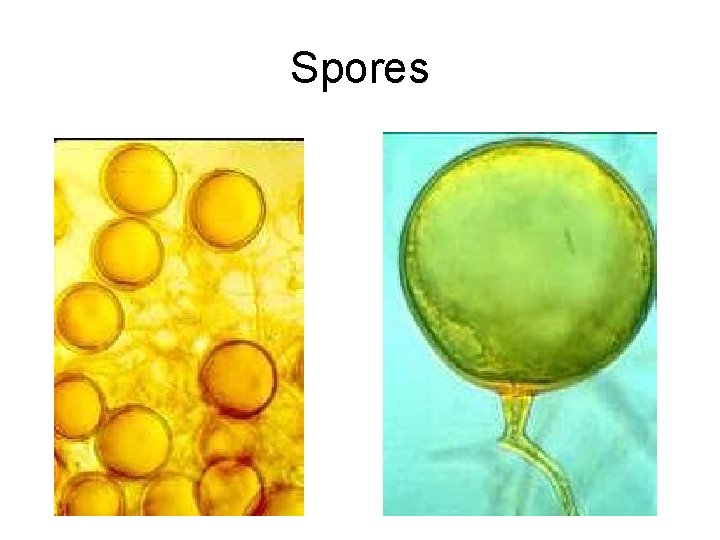
Arbuscular mycorrhizal fungi • All are in the newly proposed phylum Glomeromycota • Include ca 130 species in 6 genera • All are obligate biotrophs • Form large spores that superficially resemble zygospores, but not formed from fusion of gametangia – azygospores or chlamydospores • Spore diameters range from 50 to 400 μm
Spores
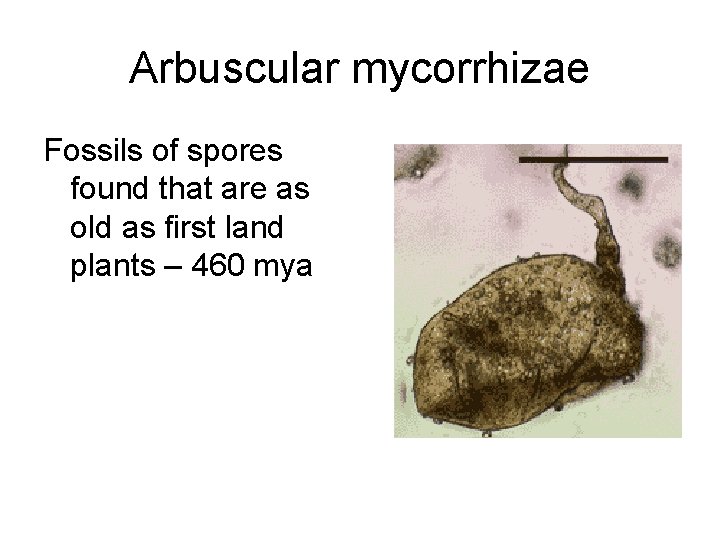
Arbuscular mycorrhizae Fossils of spores found that are as old as first land plants – 460 mya
Specificity • Few species of fungi and many species of plants – very low specificity • One fungal species may form association with many different plant species • Much different than biotrophic parasites that have a limited host range
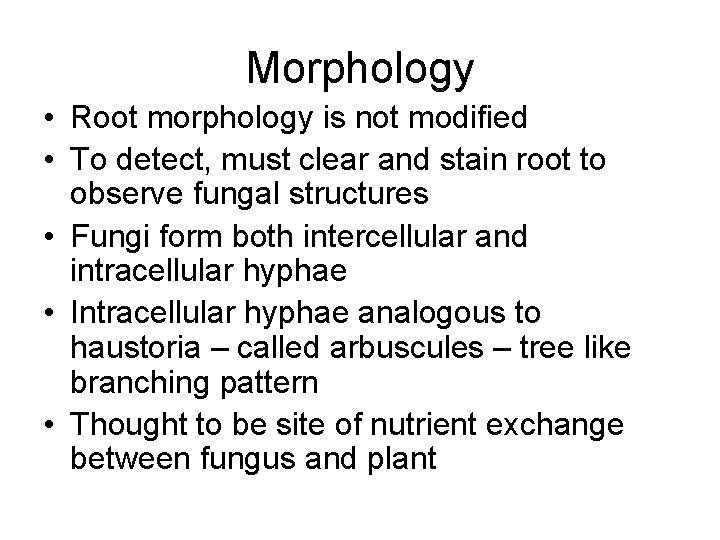
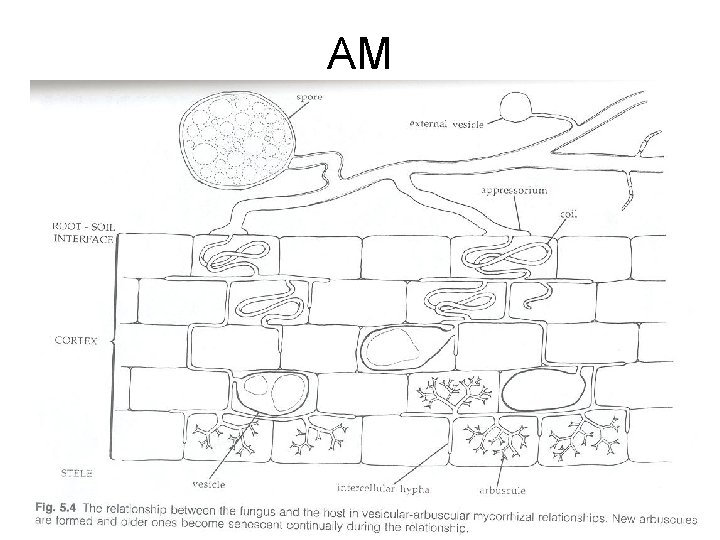
Morphology • Root morphology is not modified • To detect, must clear and stain root to observe fungal structures • Fungi form both intercellular and intracellular hyphae • Intracellular hyphae analogous to haustoria – called arbuscules – tree like branching pattern • Thought to be site of nutrient exchange between fungus and plant
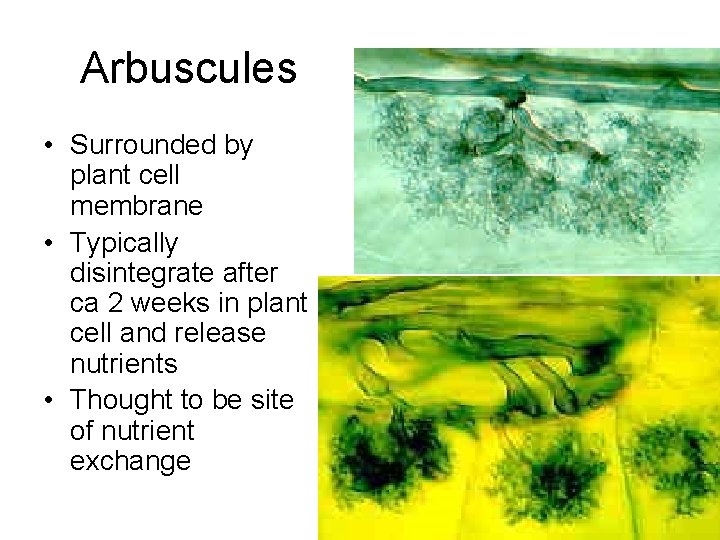
Arbuscules • Surrounded by plant cell membrane • Typically disintegrate after ca 2 weeks in plant cell and release nutrients • Thought to be site of nutrient exchange
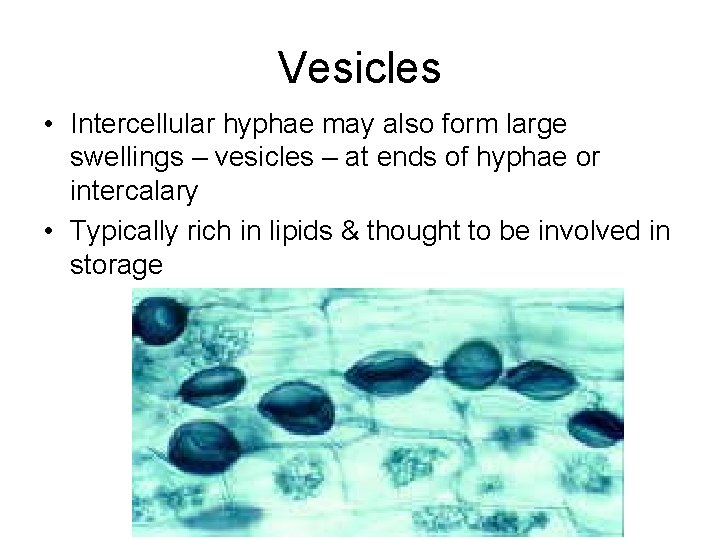
Vesicles • Intercellular hyphae may also form large swellings – vesicles – at ends of hyphae or intercalary • Typically rich in lipids & thought to be involved in storage
AM
Arbuscular mycorrhizae • Not as well characterized as ectomycorrhizae • Root is not altered in morphology – difficult to determine when roots are infected – must clear and stain followed by microscopic examination • Fungi are obligate biotrophs – cannot be grown in axenic culture – so difficult to conduct experiments
Interaction • Fungus receives organic nutrition from plant – since they are biotrophs, don’t know what their requirements are • Fungus produces extramatrical hyphae that take up inorganic nutrients from soil – particularly P, may also supply N as they may produce proteinases • Increase drought tolerance – many common desert plants are heavily mycorrhizal • May also increase resistance to root pathogens
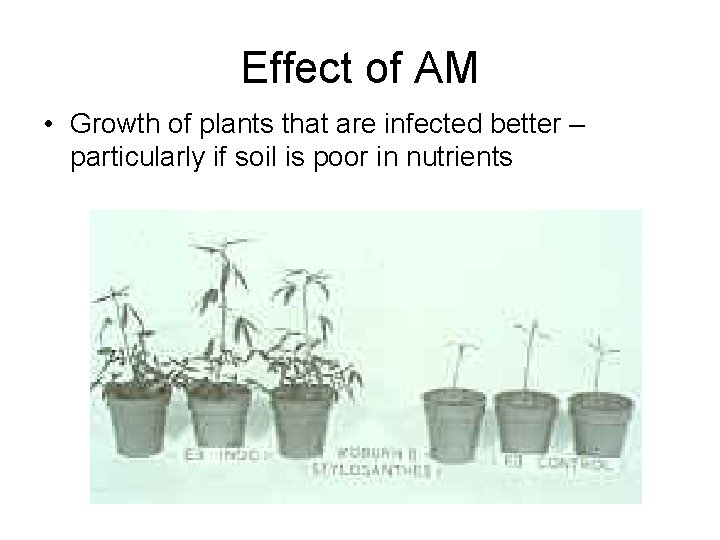
Effect of AM • Growth of plants that are infected better – particularly if soil is poor in nutrients
Other types of mycorrhizae • Orchids – orchid seeds are very small and do not contain enough organic reserves to allow development of the plant • Must be infected soon after germination – fungus provides seedling with carbohydrates • Basidiomycetes involved in this mycorrhiza are litter decomposing species of Rhizoctonia, Armillaria that produce cellulases
Orchid mycorrhizae • Fungi are widely distributed outside the symbiosis – some are plant pathogens, others are saprotrophs • Appears to be a delicate balance between plant and fungus • Orchid keeps fungus in check by digesting intracellular hyphal coils, production of antifungal substances so fungus doesn’t kill the orchid
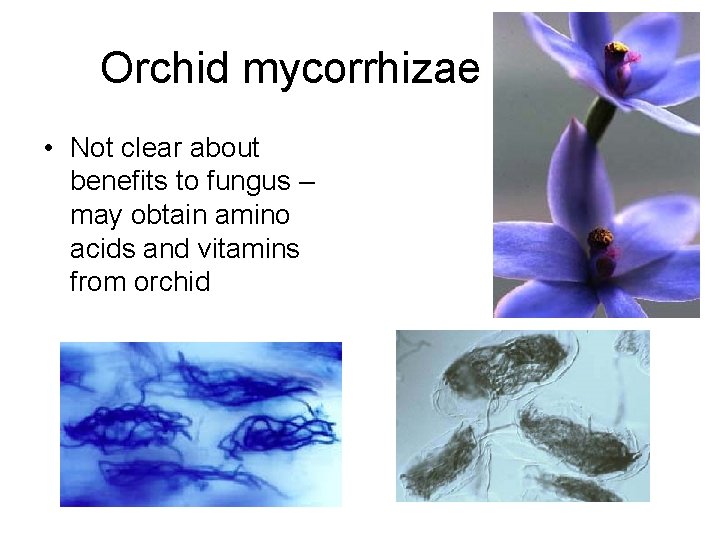
Orchid mycorrhizae • Not clear about benefits to fungus – may obtain amino acids and vitamins from orchid
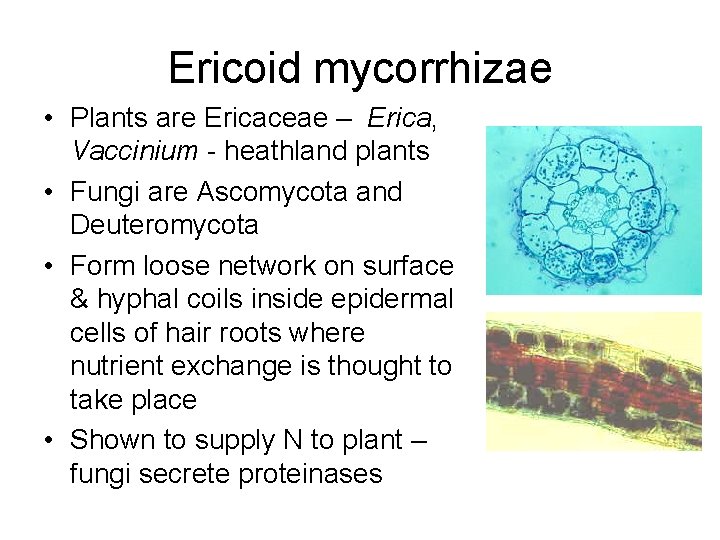
Ericoid mycorrhizae • Plants are Ericaceae – Erica, Vaccinium - heathland plants • Fungi are Ascomycota and Deuteromycota • Form loose network on surface & hyphal coils inside epidermal cells of hair roots where nutrient exchange is thought to take place • Shown to supply N to plant – fungi secrete proteinases
Arbutoid mycorrhizae • Plant are also Ericaceae – Arbutus, Arctostaphylose, Pyrola • Fungi are basidiomycetes that also form ectomycorrhizae • Fungi form sheath and Hartig net, hyphae also penetrate outer cortical cells
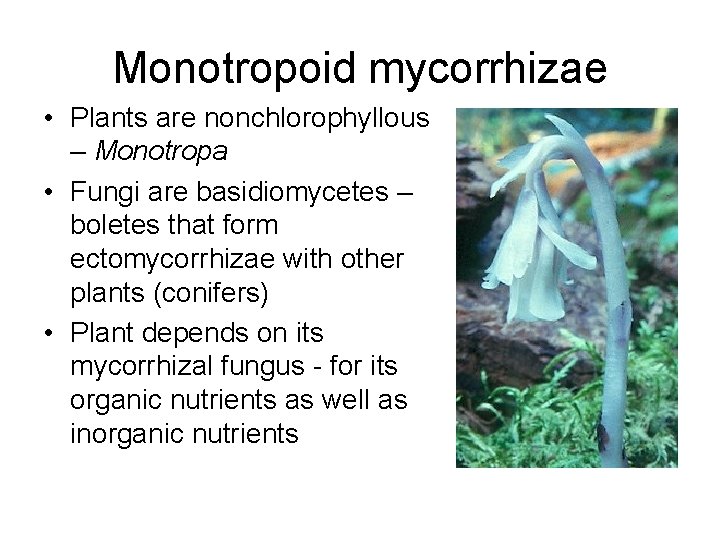
Monotropoid mycorrhizae • Plants are nonchlorophyllous – Monotropa • Fungi are basidiomycetes – boletes that form ectomycorrhizae with other plants (conifers) • Plant depends on its mycorrhizal fungus - for its organic nutrients as well as inorganic nutrients
Mycorrhizae • Key components of ecosystems - through fungi on roots, they form “world wide web” • Link plants within a habitat • Labelled CO 2 fed to tree can be found in seedlings growing nearby • Retain and conserve mineral nutrients