
Mycobacterium tuberculosis Evolution of Functional Diversity Douglas Young
Mycobacterium tuberculosis Evolution of Functional Diversity Douglas Young A new horizon for preventive vaccines against tuberculosis Madrid 7 th May 2014
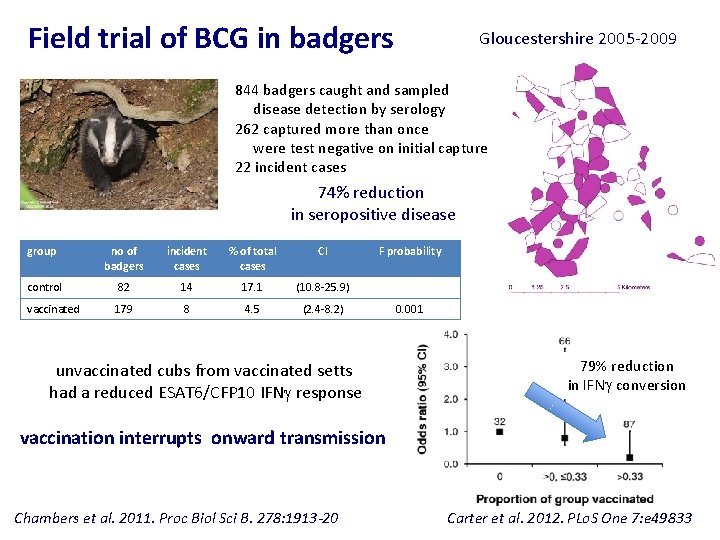
Field trial of BCG in badgers Gloucestershire 2005 -2009 844 badgers caught and sampled disease detection by serology 262 captured more than once were test negative on initial capture 22 incident cases 74% reduction in seropositive disease group no of badgers incident cases % of total cases CI control 82 14 17. 1 (10. 8 -25. 9) vaccinated 179 8 4. 5 (2. 4 -8. 2) F probability unvaccinated cubs from vaccinated setts had a reduced ESAT 6/CFP 10 IFNg response 0. 001 79% reduction in IFNg conversion vaccination interrupts onward transmission Chambers et al. 2011. Proc Biol Sci B. 278: 1913 -20 Carter et al. 2012. PLo. S One 7: e 49833
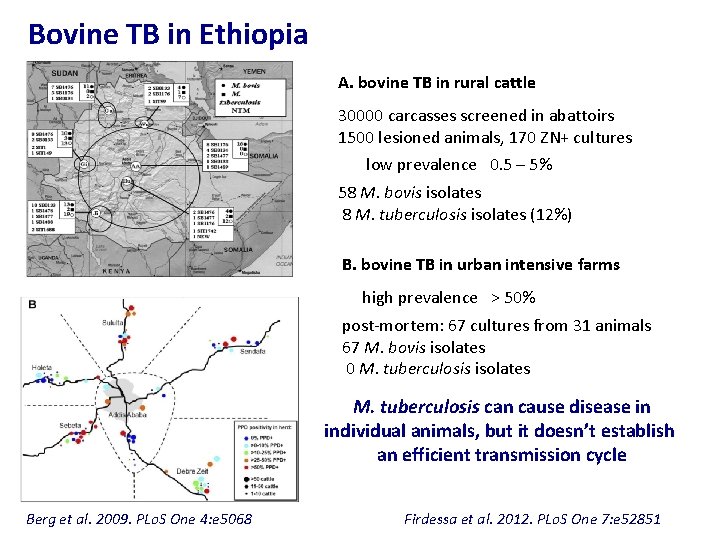
Bovine TB in Ethiopia A. bovine TB in rural cattle 30000 carcasses screened in abattoirs 1500 lesioned animals, 170 ZN+ cultures low prevalence 0. 5 – 5% 58 M. bovis isolates 8 M. tuberculosis isolates (12%) B. bovine TB in urban intensive farms high prevalence > 50% post-mortem: 67 cultures from 31 animals 67 M. bovis isolates 0 M. tuberculosis isolates M. tuberculosis can cause disease in individual animals, but it doesn’t establish an efficient transmission cycle Berg et al. 2009. PLo. S One 4: e 5068 Firdessa et al. 2012. PLo. S One 7: e 52851
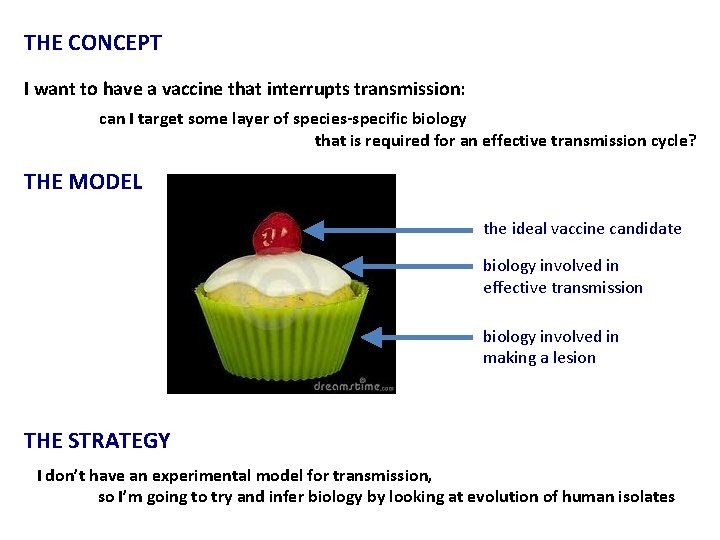
THE CONCEPT I want to have a vaccine that interrupts transmission: can I target some layer of species-specific biology that is required for an effective transmission cycle? THE MODEL the ideal vaccine candidate biology involved in effective transmission biology involved in making a lesion THE STRATEGY I don’t have an experimental model for transmission, so I’m going to try and infer biology by looking at evolution of human isolates

Global phylogeny of M. tuberculosis Lineage 7 Lineage 4 Lineage 1 Lineage 3 Lineage 5 Lineage 2 Lineage 6 Comas et al. 2013. Nat Genet 45: 1176 animal strains
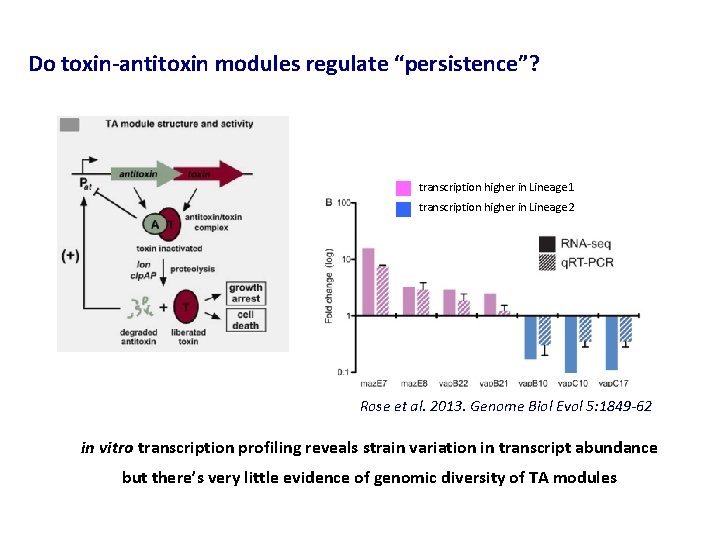
Do toxin-antitoxin modules regulate “persistence”? transcription higher in Lineage 1 transcription higher in Lineage 2 Rose et al. 2013. Genome Biol Evol 5: 1849 -62 in vitro transcription profiling reveals strain variation in transcript abundance but there’s very little evidence of genomic diversity of TA modules
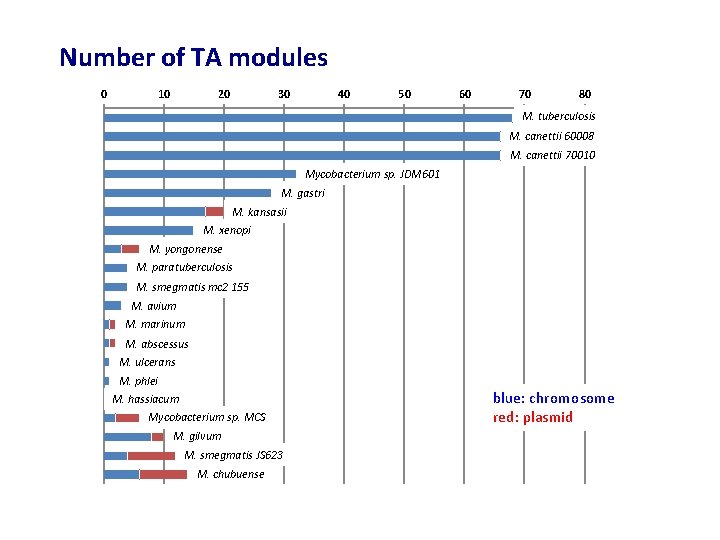
Number of TA modules 0 10 20 30 40 50 60 70 80 M. tuberculosis M. canettii 60008 M. canettii 70010 Mycobacterium sp. JDM 601 M. gastri M. kansasii M. xenopi M. yongonense M. paratuberculosis M. smegmatis mc 2 155 M. avium M. marinum M. abscessus M. ulcerans M. phlei M. hassiacum Mycobacterium sp. MCS M. gilvum M. smegmatis JS 623 M. chubuense blue: chromosome red: plasmid
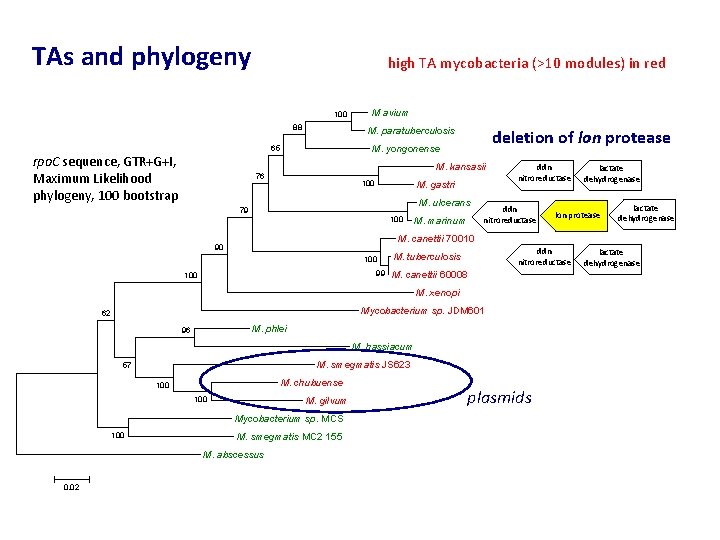
TAs and phylogeny high TA mycobacteria (>10 modules) in red 100 88 M. paratuberculosis deletion of lon protease M. yongonense 65 rpo. C sequence, GTR+G+I, Maximum Likelihood phylogeny, 100 bootstrap M avium M. kansasii 76 100 M. gastri M. ulcerans 79 100 M. marinum ddn nitroreductase 100 99 100 ddn nitroreductase M. tuberculosis M. canettii 60008 M. xenopi Mycobacterium sp. JDM 601 62 M. phlei M. hassiacum M. smegmatis JS 623 57 M. chubuense 100 M. gilvum Mycobacterium sp. MCS 100 M. smegmatis MC 2 155 M. abscessus 0. 02 lon protease lactate dehydrogenase M. canettii 70010 90 96 lactate dehydrogenase plasmids lactate dehydrogenase
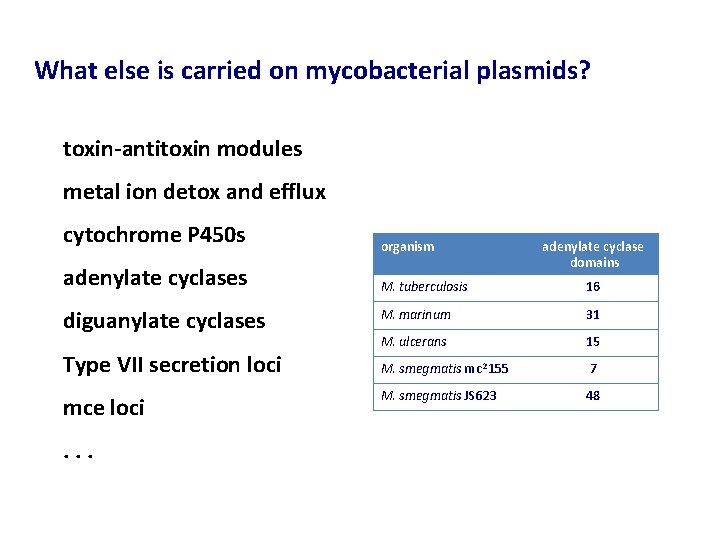
What else is carried on mycobacterial plasmids? toxin-antitoxin modules metal ion detox and efflux cytochrome P 450 s organism adenylate cyclases M. tuberculosis 16 diguanylate cyclases M. marinum 31 Type VII secretion loci M. ulcerans 15 M. smegmatis mc 2 155 7 M. smegmatis JS 623 48 mce loci. . . adenylate cyclase domains
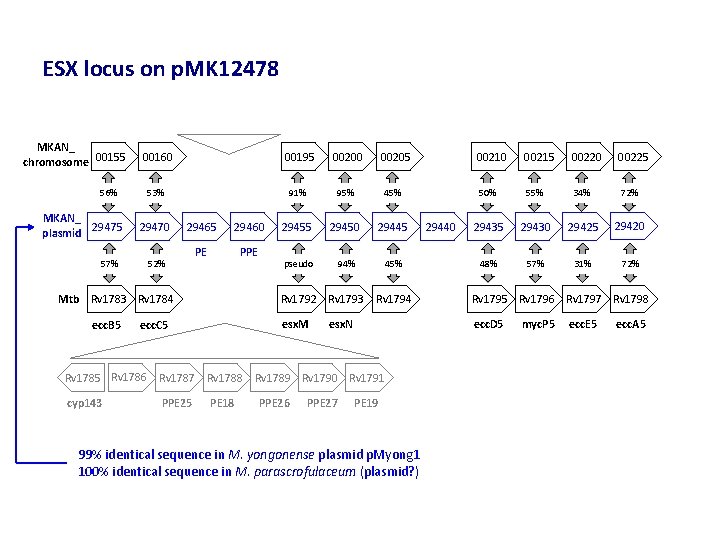
ESX locus on p. MK 12478 MKAN_ chromosome 00155 56% MKAN_ plasmid 29475 57% 00210 00215 00220 00225 95% 45% 50% 55% 34% 72% 29455 29450 29445 29430 29425 29420 pseudo 94% 45% 48% 57% 31% 72% 00195 53% 91% 29470 29465 29460 PE PPE 52% Mtb Rv 1783 Rv 1784 ecc. B 5 00205 00160 00200 Rv 1792 Rv 1793 Rv 1794 esx. M ecc. C 5 PPE 25 PE 18 PPE 26 PPE 27 Rv 1795 Rv 1796 Rv 1797 Rv 1798 ecc. D 5 esx. N Rv 1785 Rv 1786 Rv 1787 Rv 1788 Rv 1789 Rv 1790 Rv 1791 cyp 143 29440 PE 19 99% identical sequence in M. yongonense plasmid p. Myong 1 100% identical sequence in M. parascrofulaceum (plasmid? ) myc. P 5 ecc. E 5 ecc. A 5
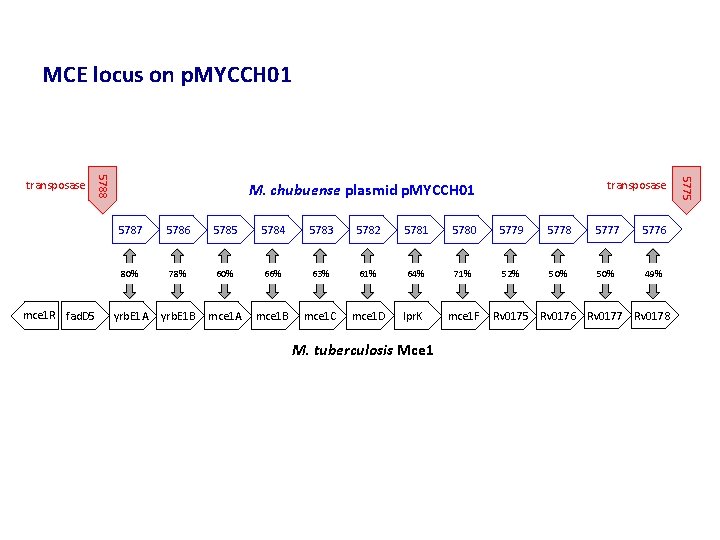
MCE locus on p. MYCCH 01 transposase M. chubuense plasmid p. MYCCH 01 5787 5786 5785 5784 5783 5782 5781 5780 5779 5778 5777 5776 80% 78% 60% 66% 63% 61% 64% 71% 52% 50% 49% yrb. E 1 A yrb. E 1 B mce 1 A mce 1 B mce 1 C mce 1 D lpr. K mce 1 F M. tuberculosis Mce 1 Rv 0175 Rv 0176 Rv 0177 Rv 0178 5775 mce 1 R fad. D 5 5788 transposase
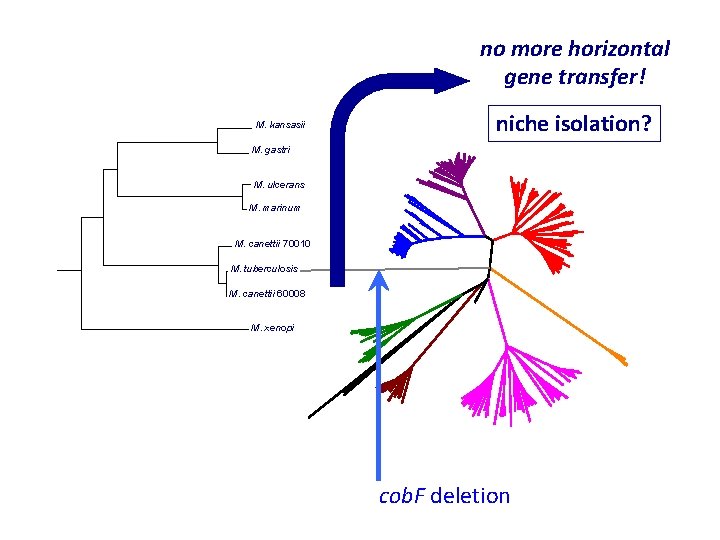
no more horizontal gene transfer! M. kansasii niche isolation? M. gastri M. ulcerans M. marinum M. canettii 70010 M. tuberculosis M. canettii 60008 M. xenopi cob. F deletion
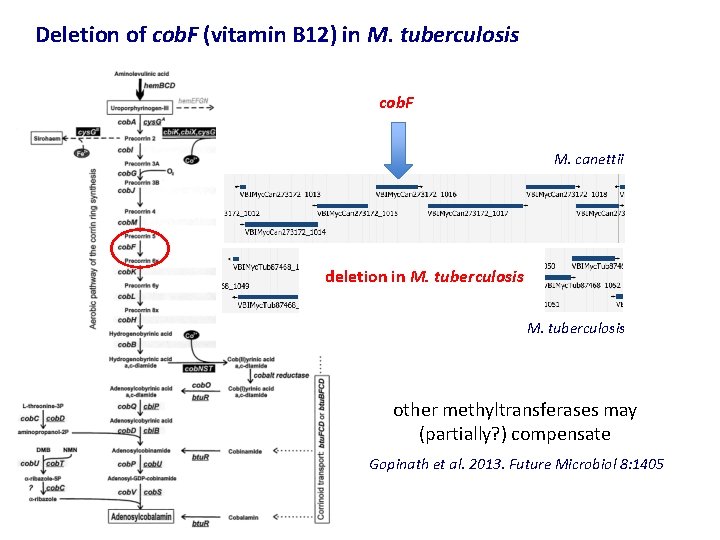
Deletion of cob. F (vitamin B 12) in M. tuberculosis cob. F M. canettii deletion in M. tuberculosis other methyltransferases may (partially? ) compensate Gopinath et al. 2013. Future Microbiol 8: 1405
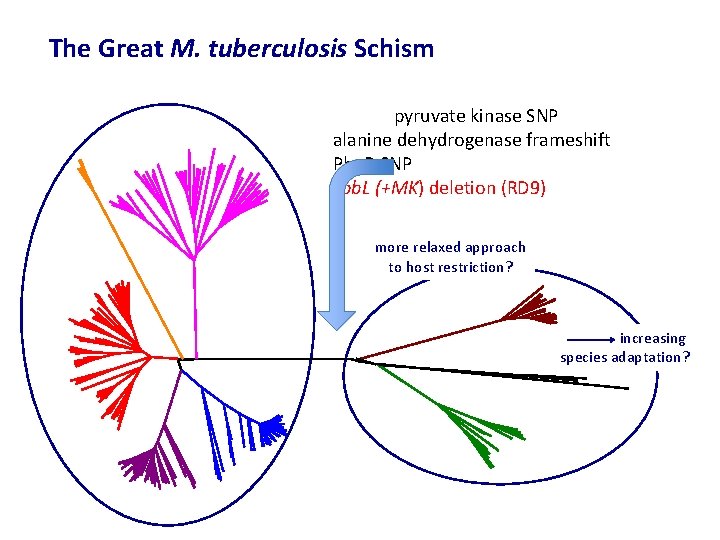
The Great M. tuberculosis Schism pyruvate kinase SNP alanine dehydrogenase frameshift Pho. R SNP cob. L (+MK) deletion (RD 9) more relaxed approach to host restriction? increasing species adaptation?
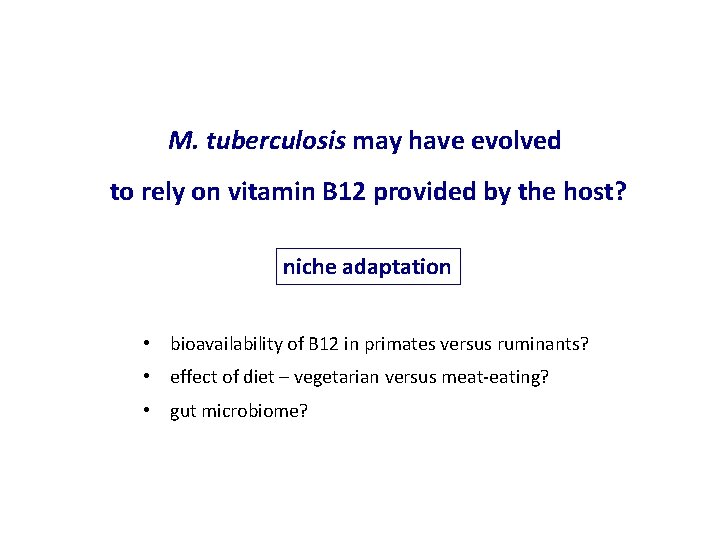
M. tuberculosis may have evolved to rely on vitamin B 12 provided by the host? niche adaptation • bioavailability of B 12 in primates versus ruminants? • effect of diet – vegetarian versus meat-eating? • gut microbiome?
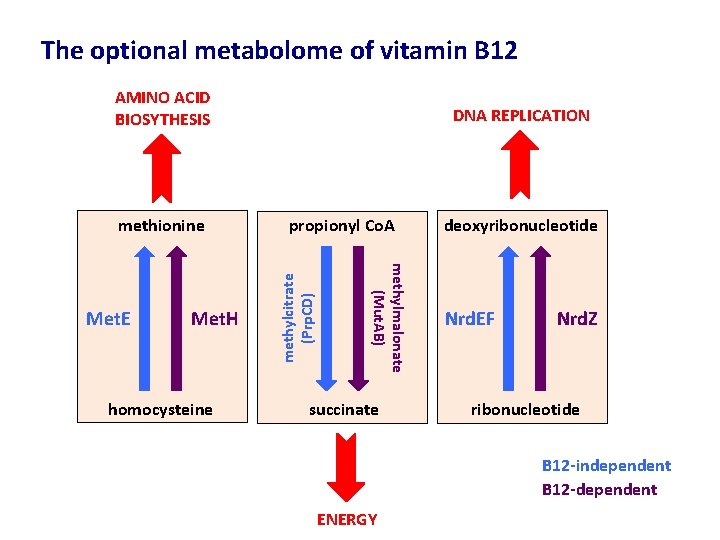
The optional metabolome of vitamin B 12 AMINO ACID BIOSYTHESIS Met. H homocysteine methylmalonate (Mut. AB) Met. E propionyl Co. A methylcitrate (Prp. CD) methionine DNA REPLICATION succinate deoxyribonucleotide Nrd. EF Nrd. Z ribonucleotide B 12 -independent B 12 -dependent ENERGY
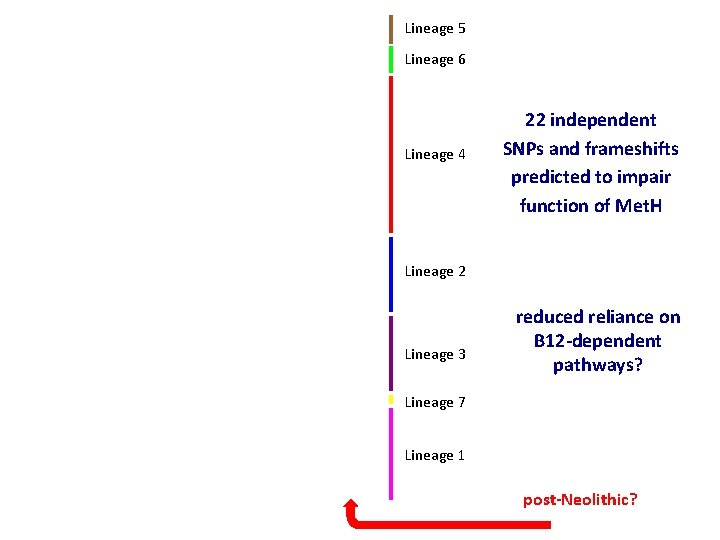
Lineage 5 Lineage 6 Lineage 4 22 independent SNPs and frameshifts predicted to impair function of Met. H Lineage 2 Lineage 3 reduced reliance on B 12 -dependent pathways? Lineage 7 Lineage 1 post-Neolithic?
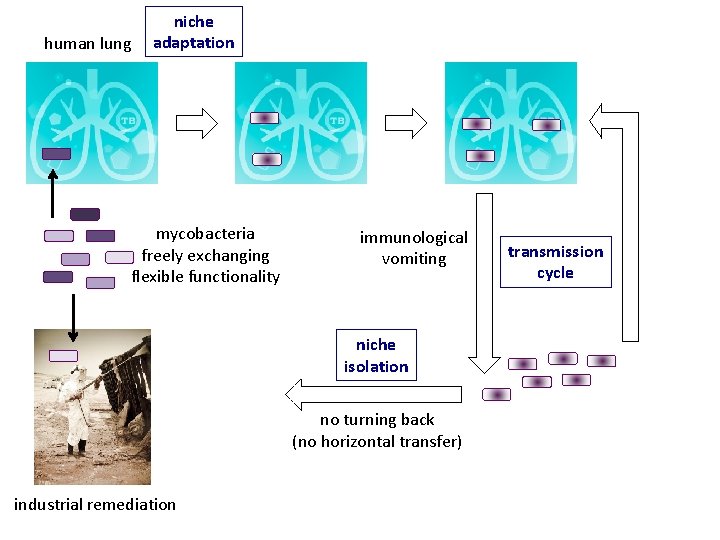
human lung niche adaptation mycobacteria freely exchanging flexible functionality immunological vomiting niche isolation no turning back (no horizontal transfer) industrial remediation transmission cycle
- Slides: 18