
MYCOBACTERIAL DISEASES Mycobacterium tuberculosis Obligate aerobe acidfast rods

MYCOBACTERIAL DISEASES

Mycobacterium tuberculosis Obligate aerobe acid-fast rods
TUBERCULOSIS OVERVIEW, CAUSE, AND PATHOGENESIS �Tuberculosis, MTB, or TB (short for tubercle bacillus) � common, and in many cases lethal infectious disease � caused by various strains of mycobacteria � usually Mycobacterium tuberculosis �Mycobacterium tuberculosis, was identified and described on 24 March 1882 by Robert Koch �Tuberculosis may infect any part of the body � most commonly occurs in the lungs � pulmonary tuberculosis
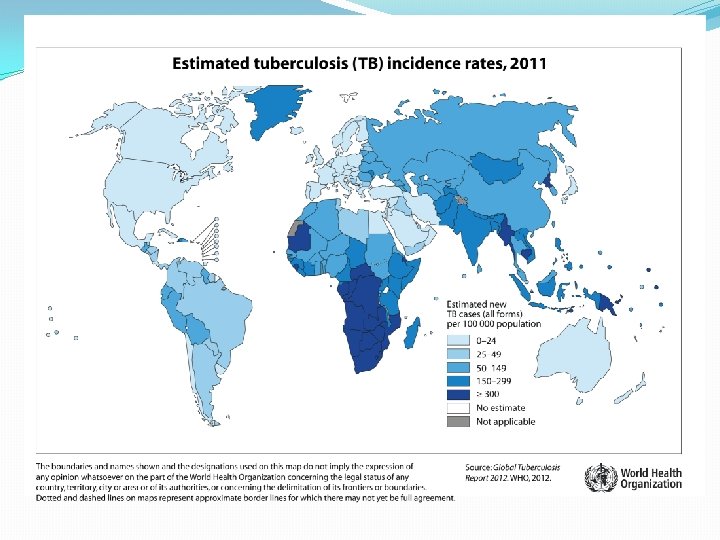
�Tuberculosis holds a special place in medical history �Can humble master clinicians �challenge public health authorities �treatable and preventable �WHO �over 8 million cases � 2 million deaths occur worldwide each year � 25% to 33% of the world’s population with silent latent infection with M. tuberculosis

�Tuberculosis in the United States is now largely a disease of the disadvantaged �In 2006, there were 13, 767 reported cases of TB in the United States �cases were reported in every state �drug-resistant cases �co-infection with M. tuberculosis and HIV �estimated 10 to 15 million persons remain latently infected
�Mycobacterium tuberculosis �slightly curved or straight rod-shaped bacillus �requires special acid-fast stains to be visualized �It is closely related to M. bovis �primarily pathogen of cattle and related animals �M. tuberculosis is also related to M. leprae �leprosy
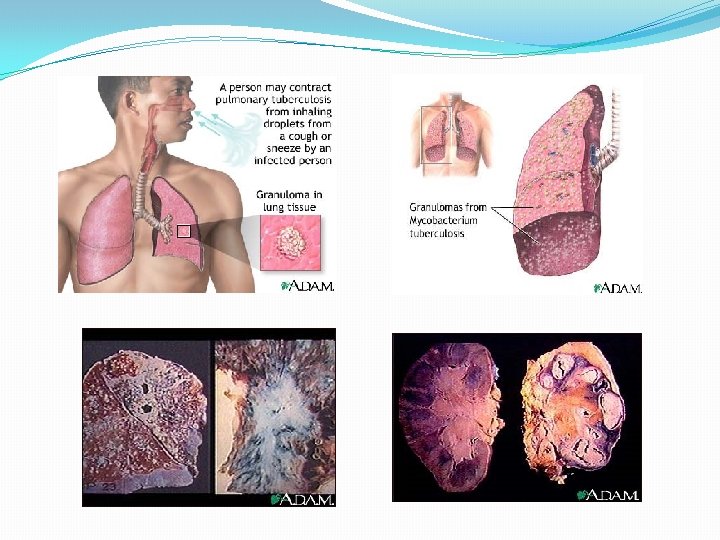
�Tuberculosis is spread from person to person �through the air by droplet nuclei � 1 to 5 m in diameter that have been expulsed into the air �Cough is the primary means by which tubercle bacilli are aerosolized �singing, sneezing, or speaking may contribute to a lesser extent �Droplet nuclei �small enough to remain suspended in the air for long time �The probability of transmission depends on numerous factors �source case �exposed contact �air space shared
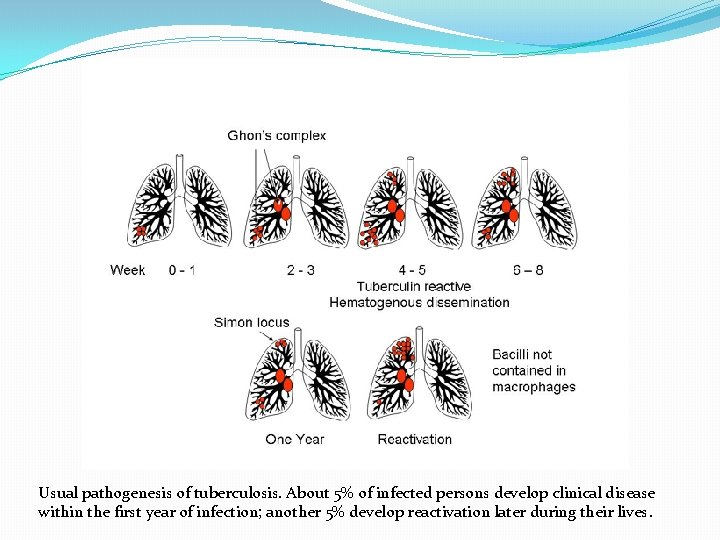
Usual pathogenesis of tuberculosis. About 5% of infected persons develop clinical disease within the first year of infection; another 5% develop reactivation later during their lives.
� TB pathogenesis begins when a droplet containing viable tubercle bacilli is inhaled � Bacilli then spread through the pulmonary lymphatics � reach lymph nodes � may become enlarged � Efferent lymphatics then carry bacilli into the systemic circulation � the lungs, the brain, kidneys, and bones � Tubercle bacilli replicate relatively slowly � dividing time within 18 to 24 hours � 20 minutes for most common pathogens � Thus, the process of local, lymphatic, and eventual systemic spread described above typically requires several weeks
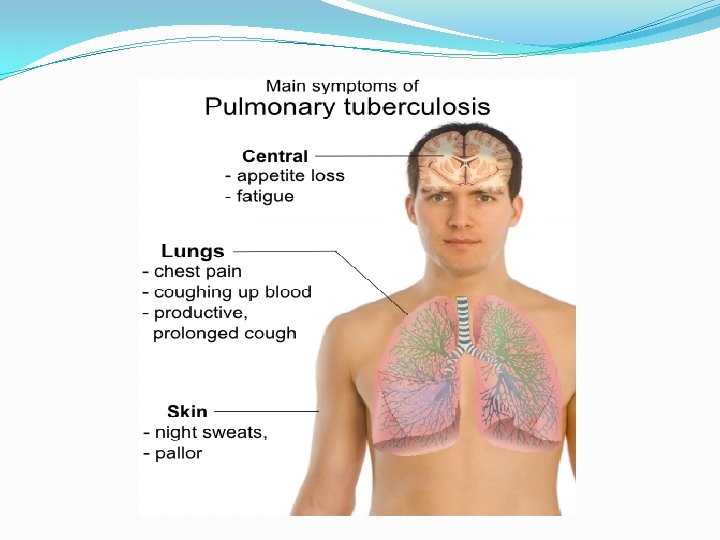
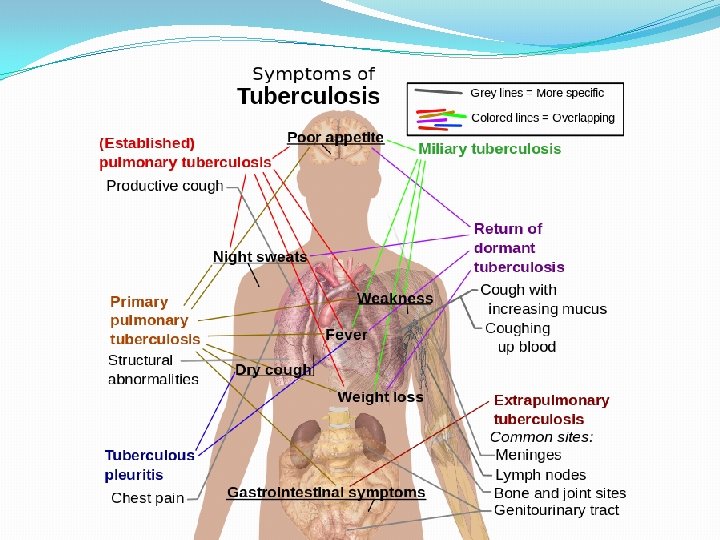
PULMONARY TUBERCULOSIS �Worldwide, tuberculosis remains the most common cause of death �Pulmonary tuberculosis is the most common manifestation and the form of the disease usually responsible for its transmission �The usual patient with pulmonary tuberculosis presents with a history of several weeks of a progressive illness �The most important pulmonary symptom is cough �Constitutional complaints coexist and may predominate � fever, chills, night sweats, weight loss, appetite loss, and easy fatigability
HIV and TB �HIV has greatly increasing the risk of TB �Diagnosis of TB in patients with HIV can be difficult �Suspicion of TB is an indication for HIV antibody testing
Laboratory diagnosis 1 - Mantoux skin test (Tuberculin) 2 - Chest X-ray 3 - Isolation of Mycobacterium species �Löwenstein–Jensen medium (L. J medium) �microscopic positive results for acid-fast bacilli 4 - Identification of microbial genetic material � molecular methods such as PCR
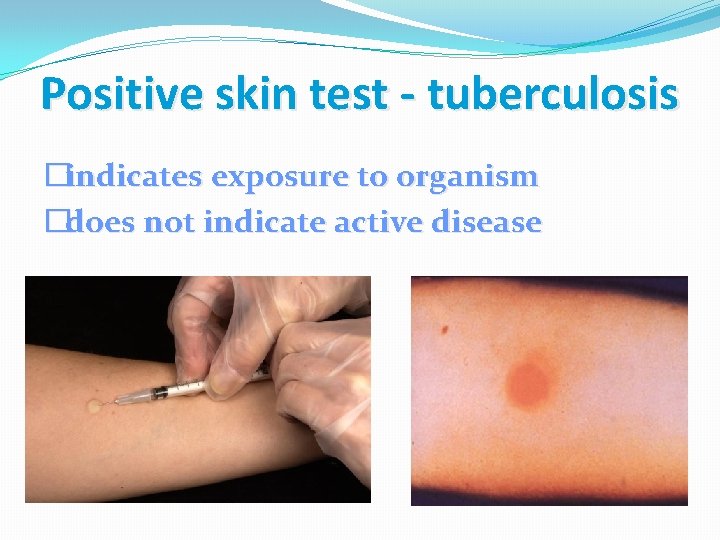
Positive skin test - tuberculosis �indicates exposure to organism �does not indicate active disease

The Mantoux skin test consists of an intradermal injection of one-tenth of a milliliter (ml) of PPD tuberculin.
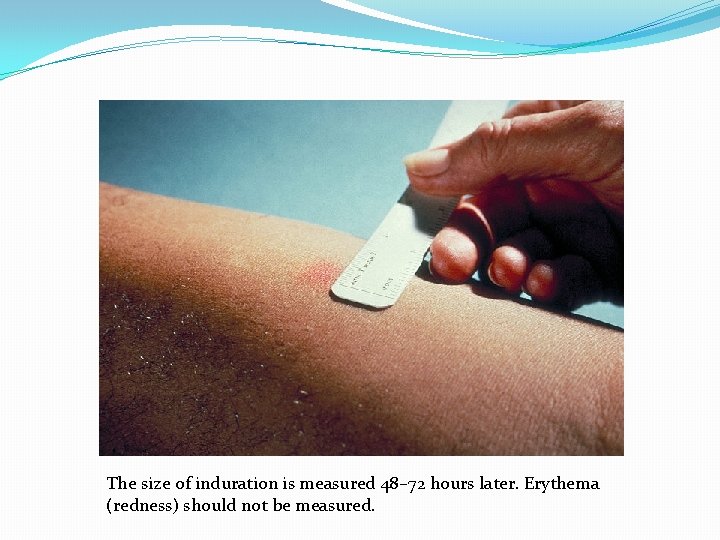
The size of induration is measured 48– 72 hours later. Erythema (redness) should not be measured.
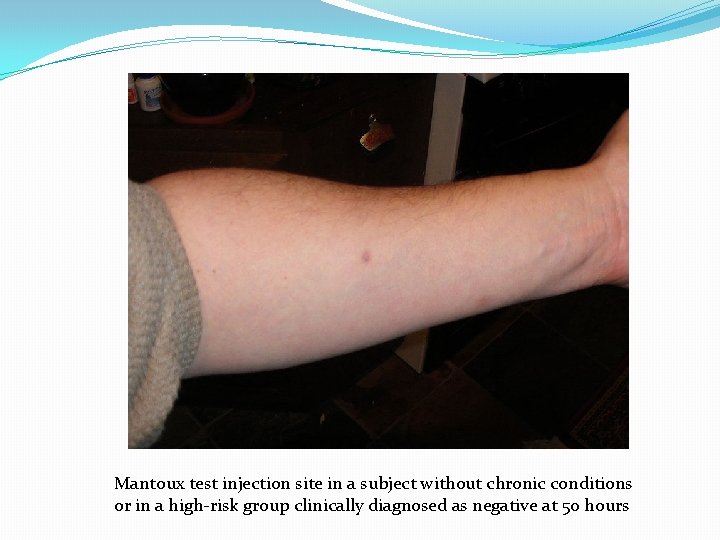
Mantoux test injection site in a subject without chronic conditions or in a high-risk group clinically diagnosed as negative at 50 hours
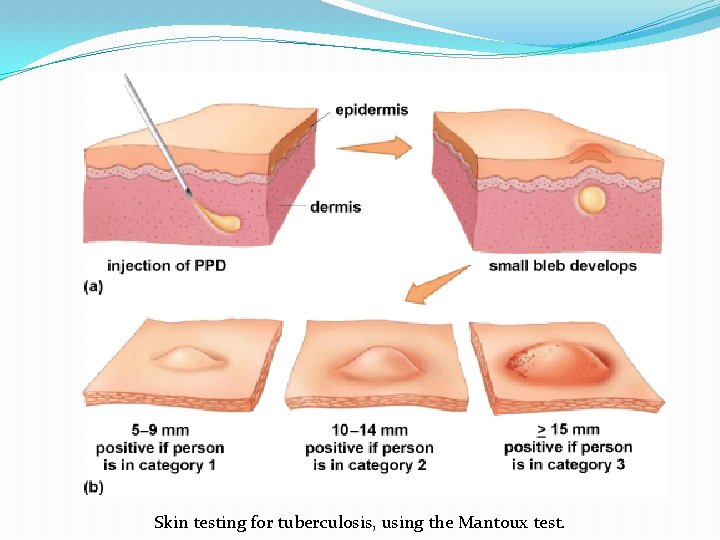
Skin testing for tuberculosis, using the Mantoux test.
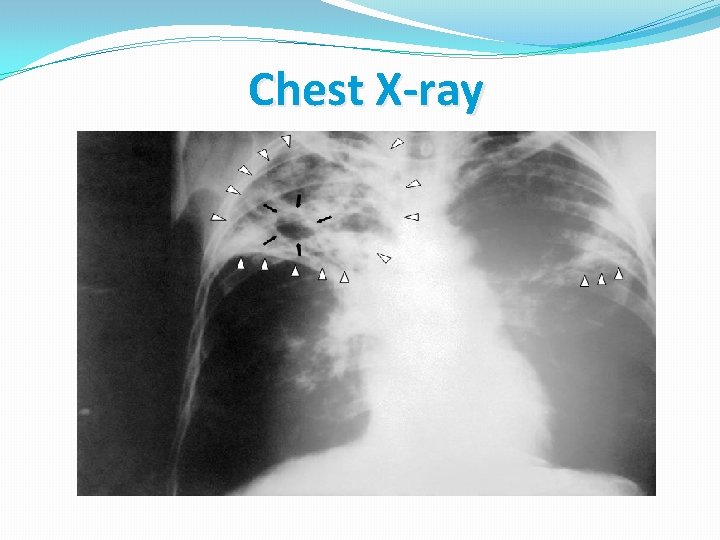
Chest X-ray
Microscopic Examination of Mycobacterium �The Mycobacteria are aerobic acid fast, non-motile, nonspore forming rods �M. tuberculosis is a non-spore forming, non capsulated straight or slightly curved rod, measuring 1 -4µm x 0. 2 -0. 6 µm �The most common pathogens that cause disease to man are �M. tuberculosis, M. bovis, M. africanum, and M. microti
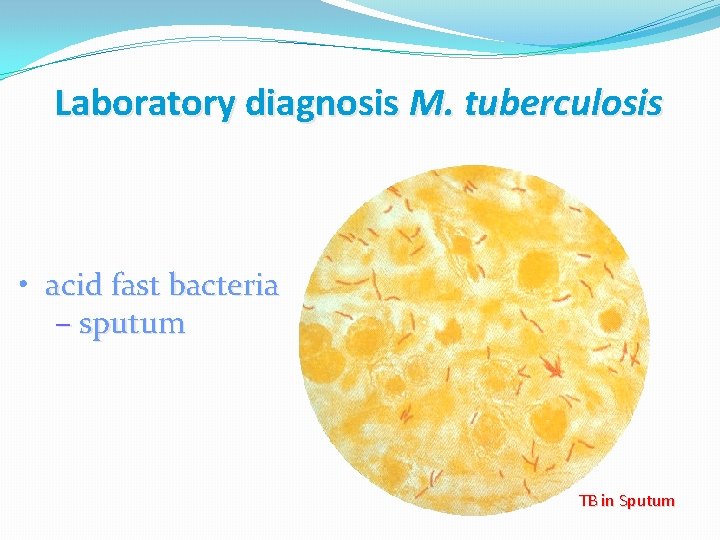
Laboratory diagnosis M. tuberculosis • acid fast bacteria – sputum TB in Sputum
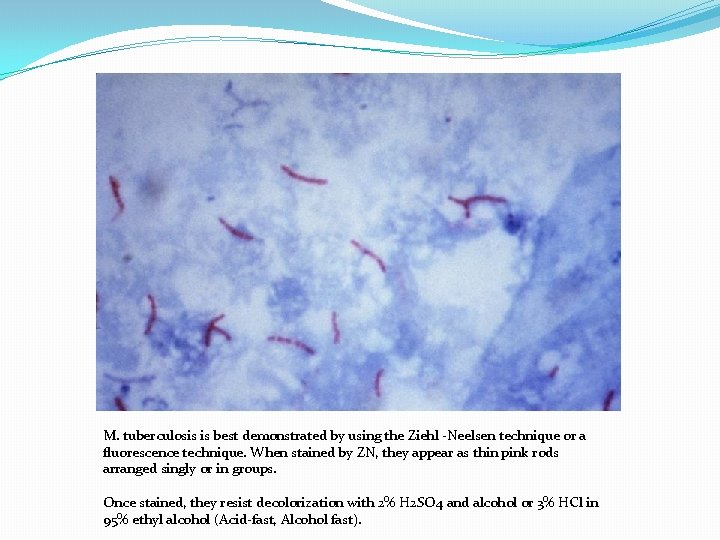
M. tuberculosis is best demonstrated by using the Ziehl -Neelsen technique or a fluorescence technique. When stained by ZN, they appear as thin pink rods arranged singly or in groups. Once stained, they resist decolorization with 2% H 2 SO 4 and alcohol or 3% HCl in 95% ethyl alcohol (Acid-fast, Alcohol fast).
Cultural Characteristics and colony morphology �M. tuberculosis is strict aerobic � grows very slowly (2 -4 weeks) � egg enriched medium � Lowenstein-Jensen medium � giving dry creamy colored colonies �Other selective media as Middlebrook 7 H 10, 7 H 11 agar and 7 H 9 broth � used for primary isolation � antibiotic susceptibility testing �M. tuberculosis is a non chromogen � does not grow on media contain p-nitrobenzoic acid � these characteristics help to differentiate them from M. avium, M. intracellulare, and M. kansasii
�The optimum temperature for growth is at 37 C �The culture must be incubated up to 12 weeks �M. tuberculosis produces rough, and tough colonies on glycerol and pyruvate egg media �They are niacin producers and grow under aerobic conditions at 37 C
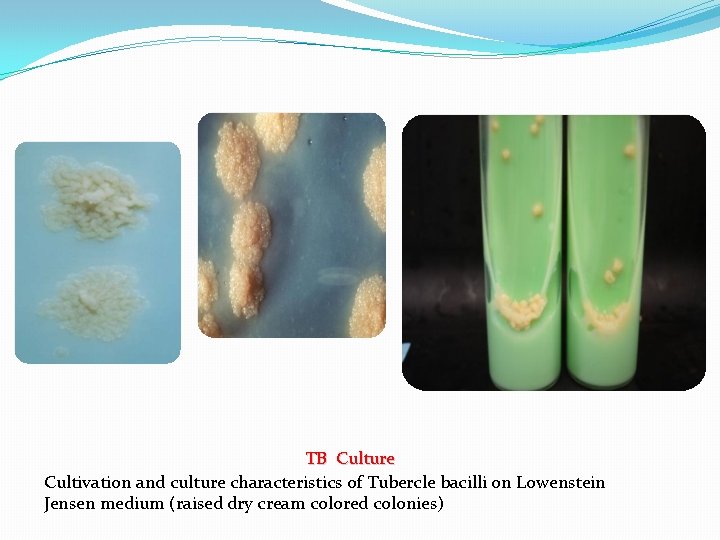
TB Culture Cultivation and culture characteristics of Tubercle bacilli on Lowenstein Jensen medium (raised dry cream colored colonies)

Tuberculosis �polymerase chain amplification �rapid diagnosis

Antibotic treatment - tuberculosis �extensive time periods (e. g. 9 months) �organism grows slowly, or dormant �two or more antibiotics �e. g. rifampin and isoniazid �resistance minimized
Tuberculosis and Drug resistance �Multiple drug resistant (MDR) �resistant to first line drugs �Extremely drug resistant (XDR) �Resistant to some of the second line drugs �Nearly un-treatable
Transmission -tuberculosis �M. tuberculosis causes disease – healthy individuals �transmitted man-man �airborne droplets
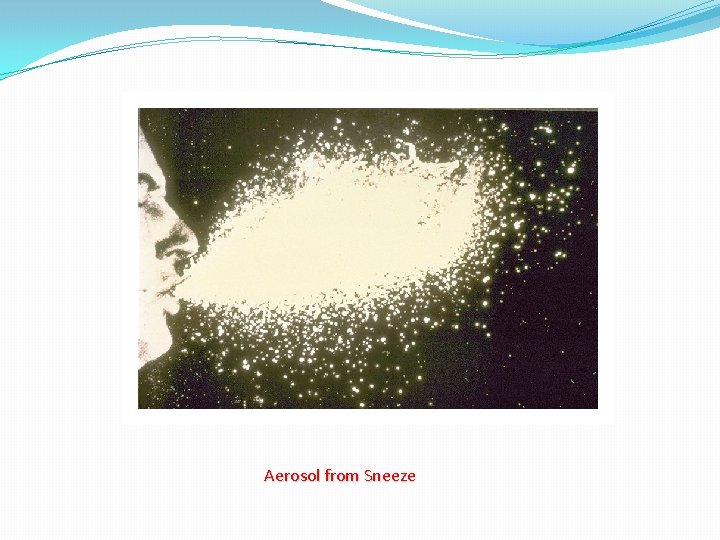
Aerosol from Sneeze
Vaccination • BCG vaccine – an attenuated strain of M. bovis – not effective • in US, – incidence is low – vaccination not practiced – immunization interferes with diagnosis
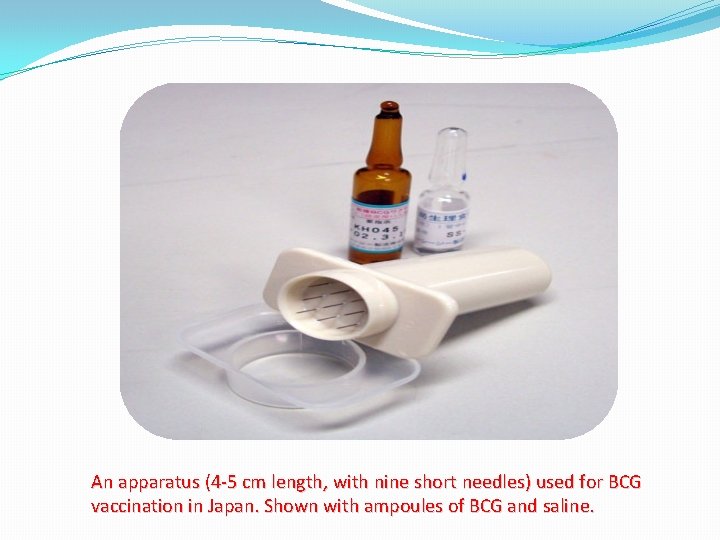
An apparatus (4 -5 cm length, with nine short needles) used for BCG vaccination in Japan. Shown with ampoules of BCG and saline.
M. avium- M. intracellulare complex (M. avium) • non-AIDS – infection almost never • AIDS – major bacterial opportunist • multiple drug-resistance

M. bovis • spread from cattle • infected cattle are culled – positive skin test • rarely seen in US
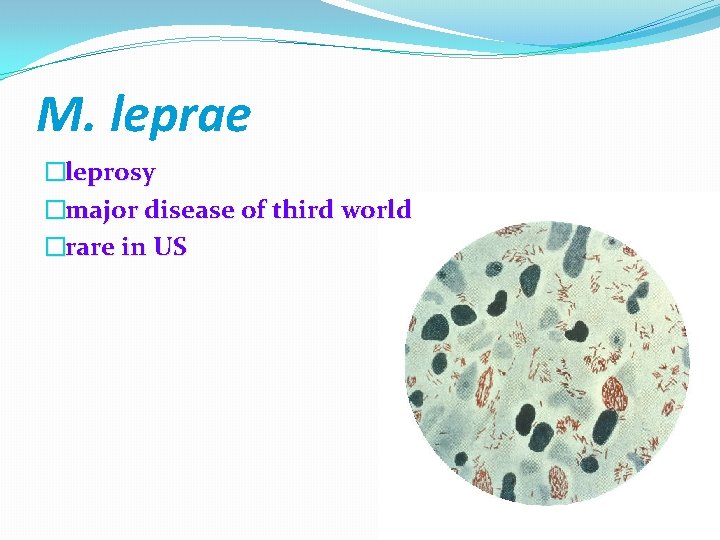
M. leprae �leprosy �major disease of third world �rare in US
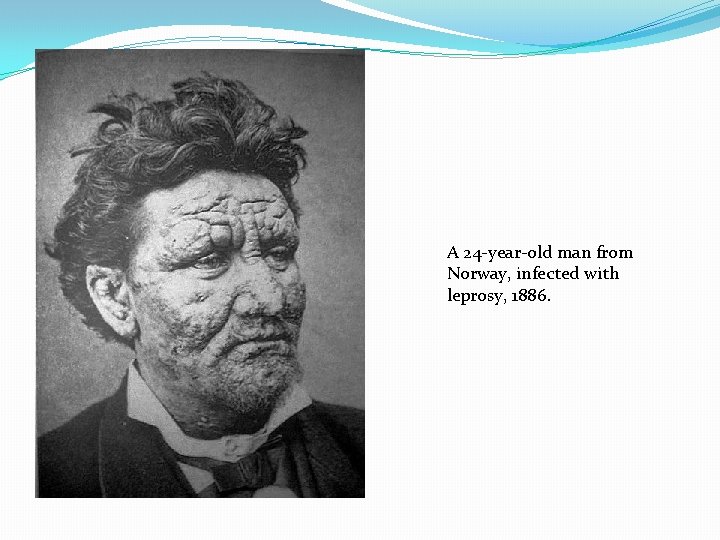
A 24 -year-old man from Norway, infected with leprosy, 1886.
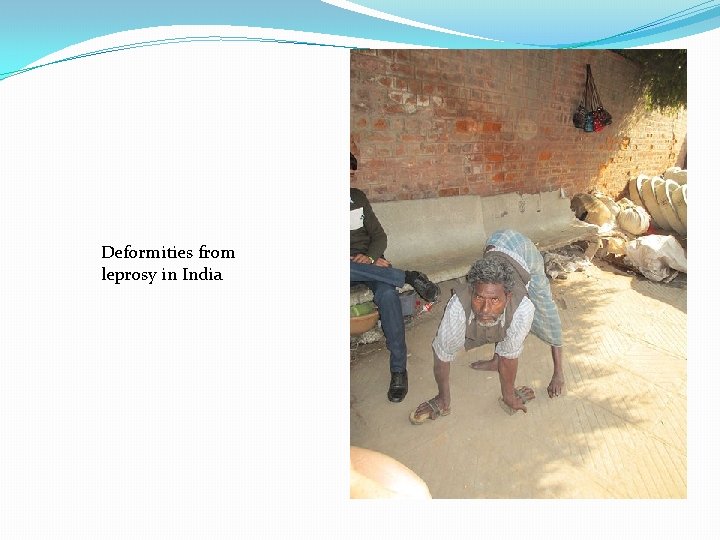
Deformities from leprosy in India
- Slides: 40