
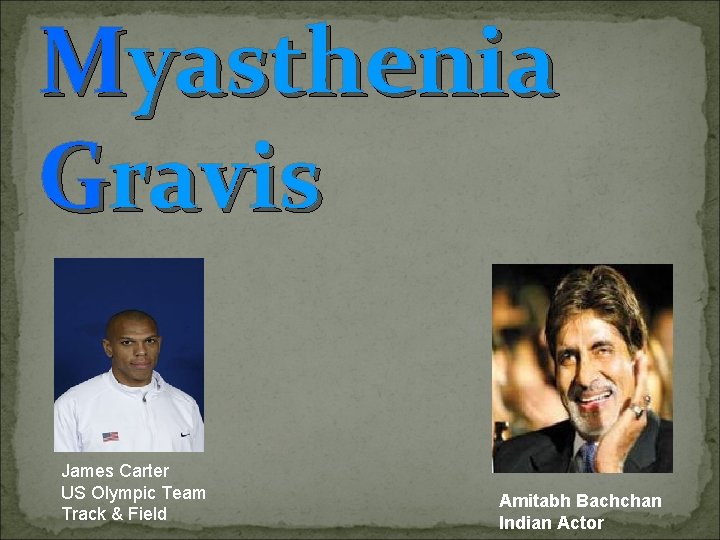
Myasthenia Gravis James Carter US Olympic Team Track
- Slides: 22
Myasthenia Gravis James Carter US Olympic Team Track & Field Amitabh Bachchan Indian Actor
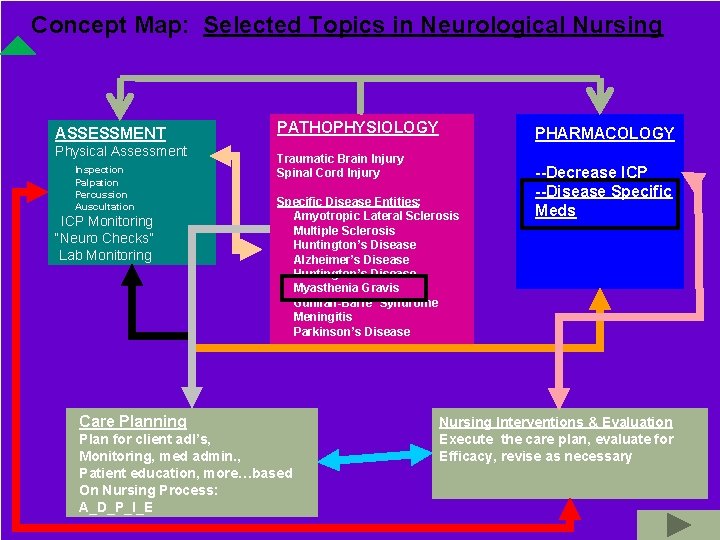
Concept Map: Selected Topics in Neurological Nursing ASSESSMENT Physical Assessment Inspection Palpation Percussion Auscultation ICP Monitoring “Neuro Checks” Lab Monitoring PATHOPHYSIOLOGY PHARMACOLOGY Traumatic Brain Injury Spinal Cord Injury Specific Disease Entities: Amyotropic Lateral Sclerosis Multiple Sclerosis Huntington’s Disease Alzheimer’s Disease Huntington’s Disease Myasthenia Gravis Guillian-Barre’ Syndrome Meningitis Parkinson’s Disease Care Planning Plan for client adl’s, Monitoring, med admin. , Patient education, more…based On Nursing Process: A_D_P_I_E --Decrease ICP --Disease Specific Meds Nursing Interventions & Evaluation Execute the care plan, evaluate for Efficacy, revise as necessary
Myasthenia Gravis § Neuromuscular disease (no changes in the ability to feel things) § Defect in transmission of nerve impulses
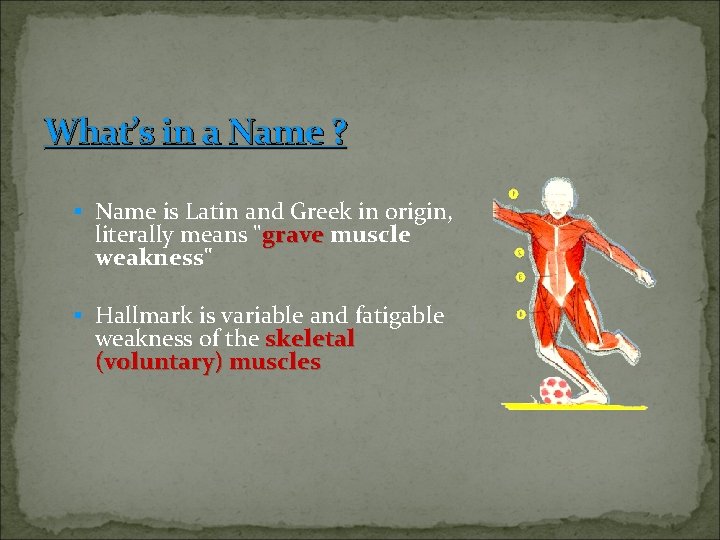
What’s in a Name ? § Name is Latin and Greek in origin, literally means "grave muscle weakness" § Hallmark is variable and fatigable weakness of the skeletal (voluntary) muscles
MG § Uncommon § Chronic § Autoimmune § Women tend to get it earlier (20 – 40) § Men get it later (70 – 80)
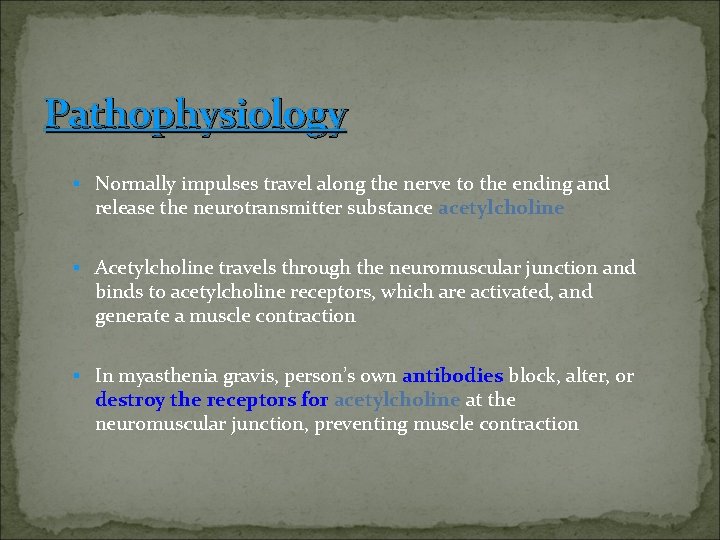
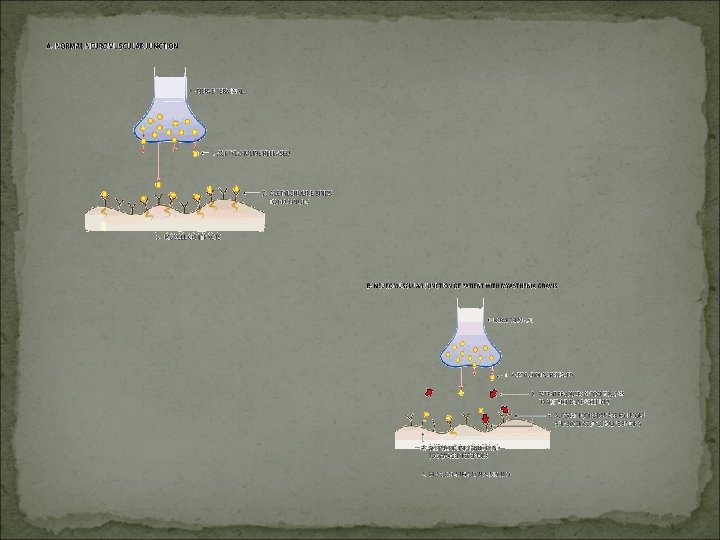
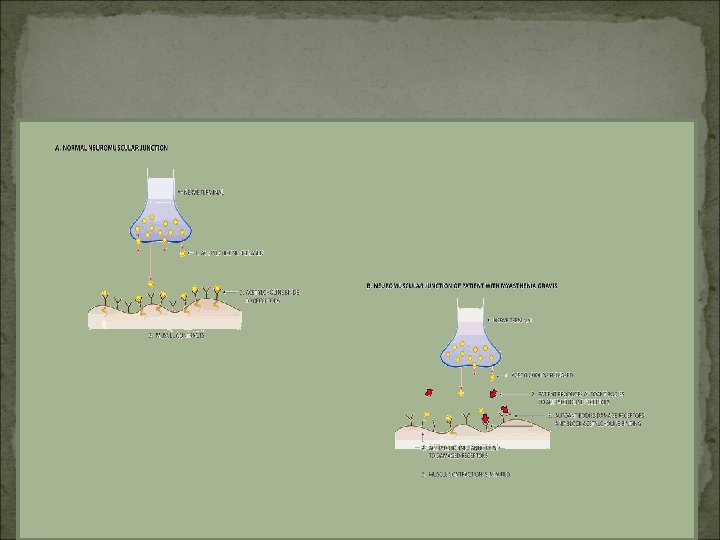
Pathophysiology § Normally impulses travel along the nerve to the ending and release the neurotransmitter substance acetylcholine § Acetylcholine travels through the neuromuscular junction and binds to acetylcholine receptors, which are activated, and generate a muscle contraction § In myasthenia gravis, person’s own antibodies block, alter, or destroy the receptors for acetylcholine at the neuromuscular junction, preventing muscle contraction
Why …? § Thymus believed to be the site of antibody production § 80% of MG people have thymus hyperplasia or thymus tumor § 80 – 90% of MG people have auto-antibodies directed at acetylcholine receptor sites
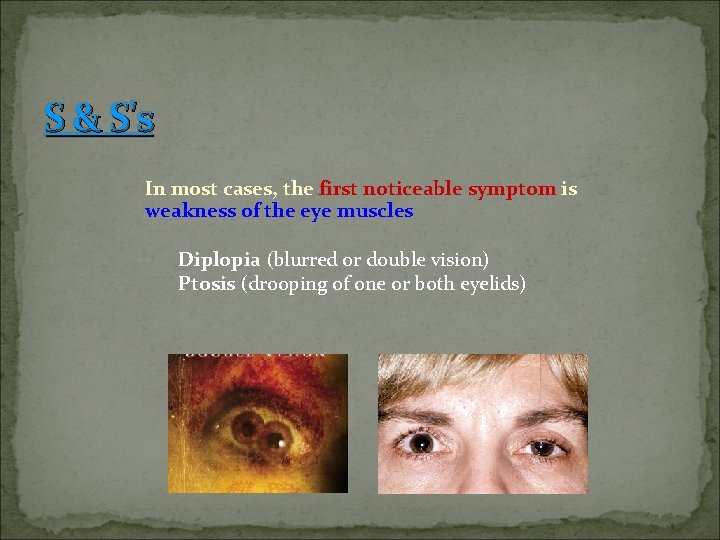
S & S's In most cases, the first noticeable symptom is weakness of the eye muscles Diplopia (blurred or double vision) Ptosis (drooping of one or both eyelids)
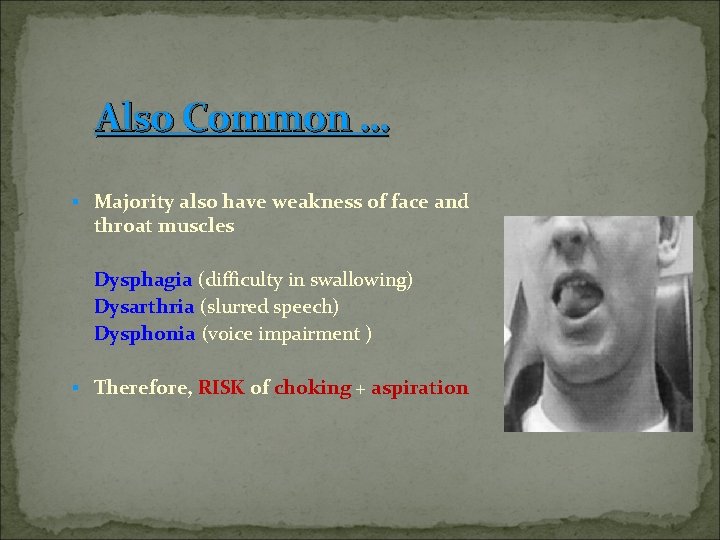
Also Common … § Majority also have weakness of face and throat muscles Dysphagia (difficulty in swallowing) Dysarthria (slurred speech) Dysphonia (voice impairment ) § Therefore, RISK of choking + aspiration
Always A B Cs … The degree of muscle weakness involved in MG varies greatly among patients Within a year of onset, approximately 85– 90% will develop Generalized myasthenia gravis, which is characterized by weakness in the trunk, arms, and legs May lose muscle strength for breathing and need ventilator
Diagnostics § EMG (nerve conduction) tests for specific muscle "fatigue" by repetitive nerve stimulation, and may demonstrate decrements of the muscle action potential due to impaired nerve-to-muscle transmission
Diagnosis § ANA (Anti. Nuclear Antibody) blood test for presence of immune molecules or acetylcholine receptor antibodies § Tensilon IV (edrophonium chloride) blocks the degradation of acetylcholine and temporarily increases the levels of acetylcholine at the neuromuscular junction ***Significant but temporary**** temporary increased muscle strength within minutes
Collaborative Tx Goals § Control symptoms § Maintain functional ability (PT, OT, Speech) § Prevent complications: - Cholinergic crisis - Myasthenic crisis - Respiratory distress - Aspiration pneumonia - Malnutrition
Treatment § Physical and Occupational Therapy: help maintain daily activities during almost all phases of the disease by reducing and improving muscle weakness § Thymectomy: surgical removal of thymus gland (reduces symptoms in more than 70 % of clients without thymoma, and may cure some individuals, possibly by re-balancing the immune system) § Plasmapheresis: abnormal antibodies are removed from the blood § High-dose IV Immune Globulin: temporarily modifies immune system and provides body with normal antibodies from donated blood * (Last 2 therapies may be used to help individuals during especially difficult periods of weakness)
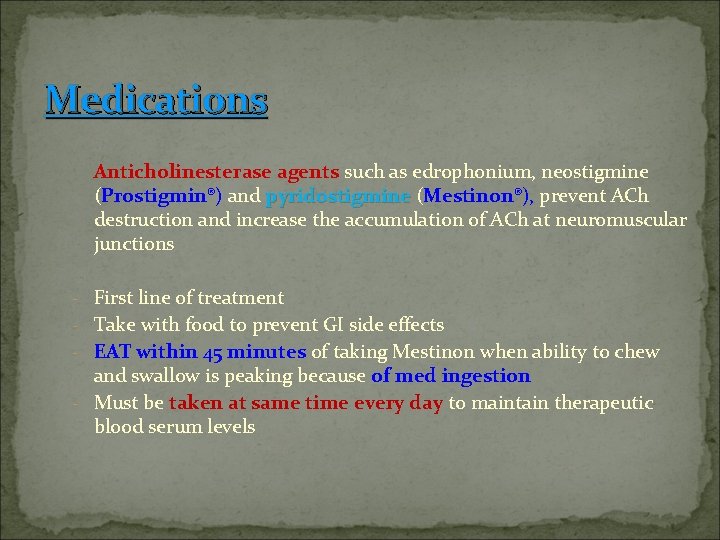
Medications Anticholinesterase agents such as edrophonium, neostigmine (Prostigmin®) and pyridostigmine (Mestinon®), prevent ACh destruction and increase the accumulation of ACh at neuromuscular junctions - First line of treatment - Take with food to prevent GI side effects - EAT within 45 minutes of taking Mestinon when ability to chew and swallow is peaking because of med ingestion - Must be taken at same time every day to maintain therapeutic blood serum levels
Medications Corticosteroids suppress antibodies that block ACh. R at neuromuscular junction and may be used in conjunction with anticholinesterase. Corticosteroids improve symptoms within a few weeks and once improvement stabilizes, the dose is slowly decreased Immunosuppressants such as azathioprine (Imuran®) and prednisone (Deltasone) used to treat generalized MG when other medications fail to reduce symptoms
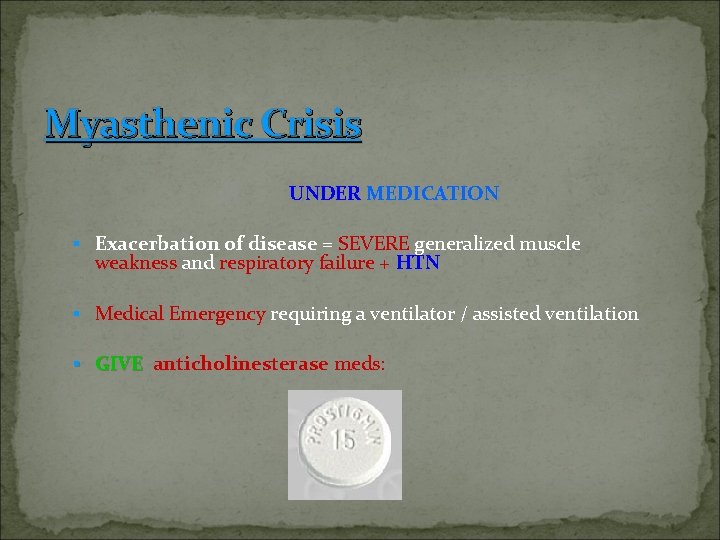
Myasthenic Crisis UNDER MEDICATION § Exacerbation of disease = SEVERE generalized muscle weakness and respiratory failure + HTN § Medical Emergency requiring a ventilator / assisted ventilation § GIVE anticholinesterase meds:
Cholinergic Crisis OVER MEDICATION § Too high a dose of cholinergic treatment meds § Muscles stop responding to the bombardment of ACh, leading to flaccid paralysis and respiratory failure and LOW BP § Cholinergic Sx: hypersecretions / hypermotility § STOP all anticholinesterase meds § Treat with Atropine (anticholinergic)
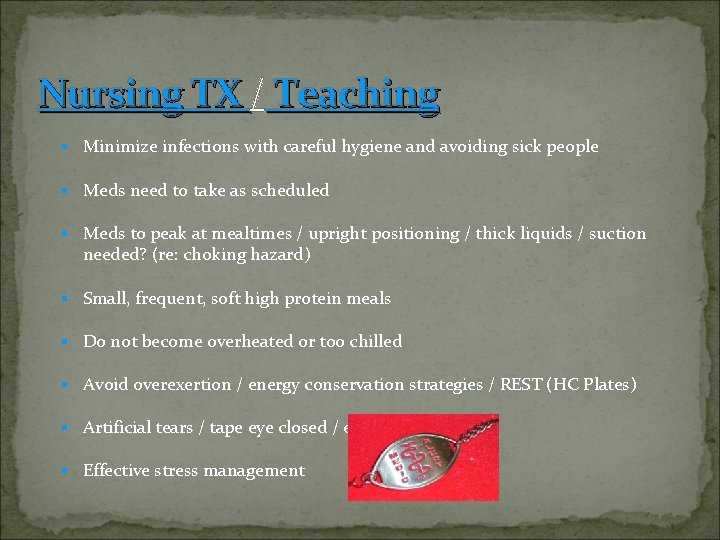
Nursing TX / Teaching § Minimize infections with careful hygiene and avoiding sick people § Meds need to take as scheduled § Meds to peak at mealtimes / upright positioning / thick liquids / suction needed? (re: choking hazard) § Small, frequent, soft high protein meals § Do not become overheated or too chilled § Avoid overexertion / energy conservation strategies / REST (HC Plates) § Artificial tears / tape eye closed / eye patch § Effective stress management
Prognosis § Symptoms usually progress in severity during first couple of years, then may stabilize, go into remission, or be fatal § Patients over the age of 40, those with a short history of severe disease, and those with thymoma have a worse prognosis