
MYANMAR PERSPECTIVES ON URBAN SYSTEMS AND DEVELOPMENT STRATEGIES
MYANMAR PERSPECTIVES ON URBAN SYSTEMS AND DEVELOPMENT STRATEGIES Presented by THE GMS URBAN DEVELOPMENT TASK FORCE OF THE REPUBLIC OF THE UNION OF MYANMAR Disclaimer: The views expressed in this document are those of the author, and do not necessarily reflect the views and policies of the Asian Development Bank (ADB), its Board of Directors, or the governments they represent. ADB does not guarantee the accuracy of the data included in this document, and accept no responsibility for any consequence of their use. By making any designation or reference to a particular territory or geographical area, or by using the term “country” in this document, ADB does not intend to make any judgments as to the legal or other status of any territory or area.
THE NATIONAL URBAN SYSTEM OF MYANMAR

URBAN SYSTEM IN MYANMAR Urban Areas in Myanmar are by Notification regardless of size. Altogether 366 Notified towns in 2009 Total Population (Oct. 2010) = 59. 78 million Population Growth Rate = 1. 1% Urban Population (Oct. 2010) = 18. 34 million % Urban (Source: = 30. 68% Statistical Year Book 2011, CSO, Nay Pyi Taw, Myanmar, 2012)
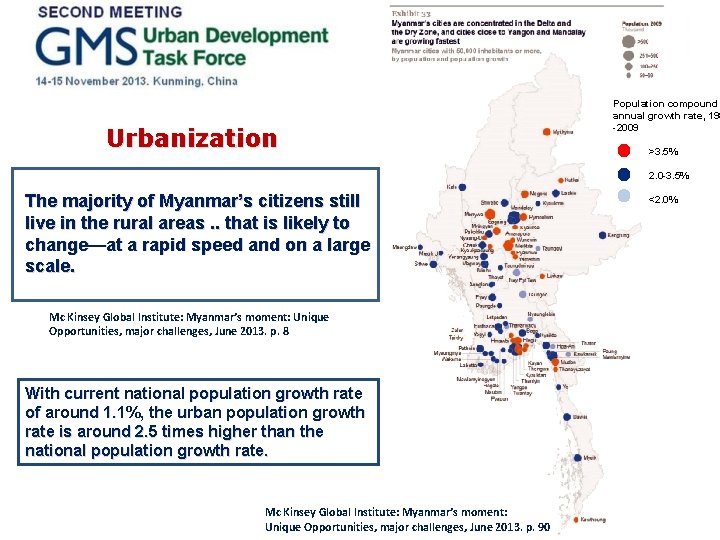
Urbanization Population compound annual growth rate, 198 -2009 >3. 5% 2. 0 -3. 5% The majority of Myanmar’s citizens still live in the rural areas. . that is likely to change—at a rapid speed and on a large scale. Mc Kinsey Global Institute: Myanmar’s moment: Unique Opportunities, major challenges, June 2013. p. 8 With current national population growth rate of around 1. 1%, the urban population growth rate is around 2. 5 times higher than the national population growth rate. Mc Kinsey Global Institute: Myanmar’s moment: Unique Opportunities, major challenges, June 2013. p. 90 <2. 0%
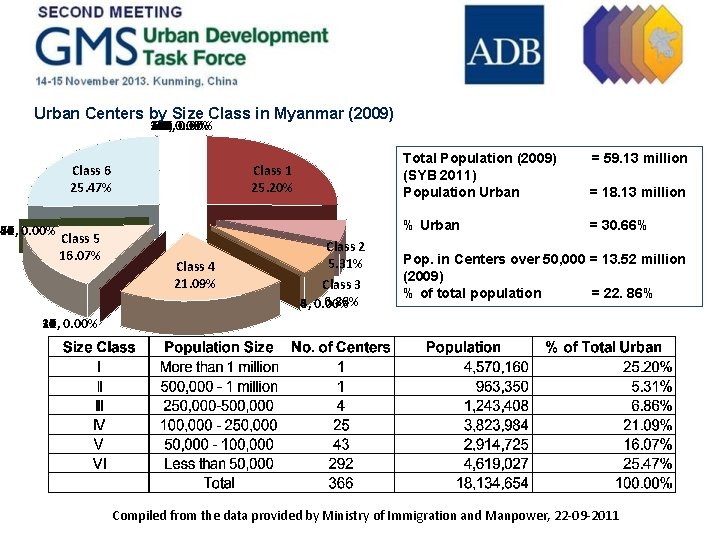
Urban Centers by Size Class in Myanmar (2009) 100, 101, 102, 103, 104, 105, 106, 107, 108, 109, 110, 111, 112, 113, 114, 115, 116, 117, 118, 119, 120, 121, 122, 123, 124, 125, 126, 127, 128, 129, 130, 131, 132, 133, 134, 135, 136, 137, 138, 139, 140, 141, 142, 143, 144, 145, 146, 147, 148, 149, 150, 151, 152, 153, 154, 155, 156, 157, 158, 159, 160, 161, 162, 163, 164, 165, 166, 167, 168, 169, 170, 171, 172, 173, 174, 175, 176, 177, 178, 179, 180, 181, 182, 183, 184, 185, 186, 187, 188, 189, 190, 191, 192, 193, 194, 195, 196, 197, 198, 199, 200, 201, 202, 203, 204, 205, 206, 207, 208, 209, 210, 211, 212, 213, 214, 215, 216, 217, 218, 219, 220, 221, 222, 223, 224, 225, 226, 227, 228, 229, 230, 231, 232, 233, 234, 235, 236, 237, 238, 239, 240, 241, 242, 243, 244, 245, 246, 247, 248, 249, 250, 251, 252, 253, 254, 255, 256, 257, 258, 259, 260, 261, 262, 263, 264, 265, 266, 267, 268, 269, 270, 271, 272, 273, 274, 275, 276, 277, 278, 279, 280, 281, 282, 283, 284, 285, 286, 287, 288, 289, 290, 291, 292, 293, 294, 295, 296, 297, 298, 299, 300, 301, 302, 303, 304, 305, 306, 307, 308, 309, 310, 311, 312, 313, 314, 315, 316, 317, 318, 319, 320, 321, 322, 323, 324, 325, 326, 327, 328, 329, 330, 331, 332, 333, 334, 335, 336, 337, 338, 339, 340, 341, 342, 343, 344, 345, 346, 347, 348, 349, 350, 351, 352, 353, 354, 355, 356, 357, 358, 359, 360, 361, 362, 363, 364, 365, 366, 76, 0. 00% 77, 78, 79, 80, 81, 82, 83, 84, 85, 86, 87, 88, 89, 90, 91, 92, 93, 94, 95, 96, 97, 98, 99, 0. 00% Class 6 25. 47% 33, 0. 00% 34, 35, 36, 37, 38, 39, 40, 41, 42, 43, 44, 45, 46, 47, 48, 49, 50, 51, 52, 53, 54, 55, 56, 57, 58, 59, 60, 61, 62, 63, 64, 65, 66, 67, 68, 69, 70, 71, 72, 73, 74, Class 5 16. 07% Class 1 25. 20% Class 4 21. 09% Class 2 5. 31% Class 3 6. 86% 4, 0. 00% 5, 6, Total Population (2009) (SYB 2011) Population Urban = 59. 13 million = 18. 13 million % Urban = 30. 66% Pop. in Centers over 50, 000 = 13. 52 million (2009) % of total population = 22. 86% 10, 11, 12, 13, 14, 15, 16, 17, 18, 19, 20, 21, 22, 23, 24, 25, 26, 27, 28, 29, 30, 31, 8, 0. 00% 9, Compiled from the data provided by Ministry of Immigration and Manpower, 22 -09 -2011
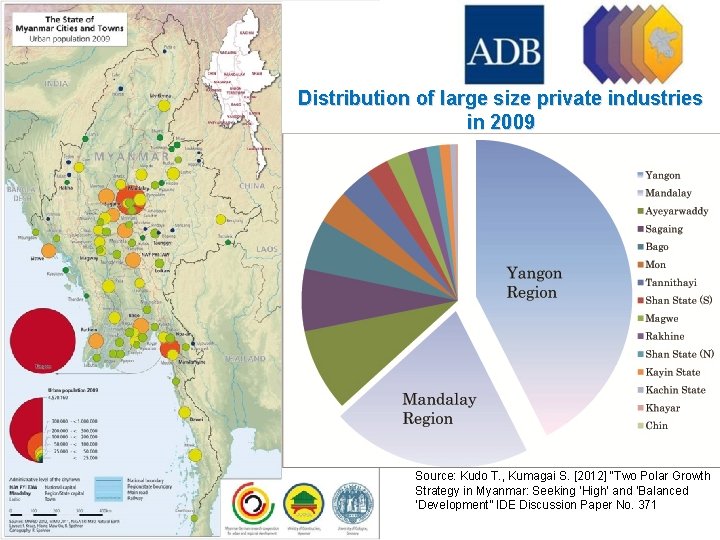
Distribution of large size private industries in 2009 Source: Kudo T. , Kumagai S. [2012] “Two Polar Growth Strategy in Myanmar: Seeking ‘High’ and ‘Balanced ‘Development” IDE Discussion Paper No. 371
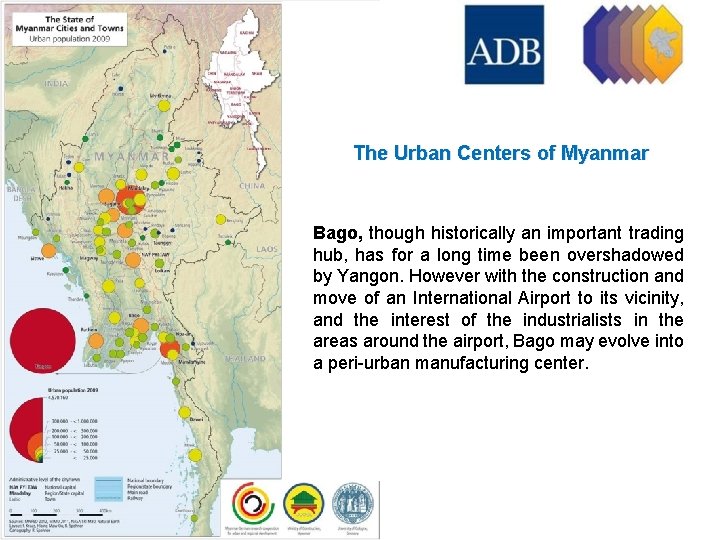
The Urban Centers of Myanmar Bago, though historically an important trading hub, has for a long time been overshadowed by Yangon. However with the construction and move of an International Airport to its vicinity, and the interest of the industrialists in the areas around the airport, Bago may evolve into a peri-urban manufacturing center.

The Urban Centers of Myanmar Mandalay, the second largest city and fast growing region of the nation is gaining more importance and population with the move of the administrative capital to Nay Pyi Taw, and improved connections to China and India. Its population has already crossed the benchmark of 1 million in the recent years.
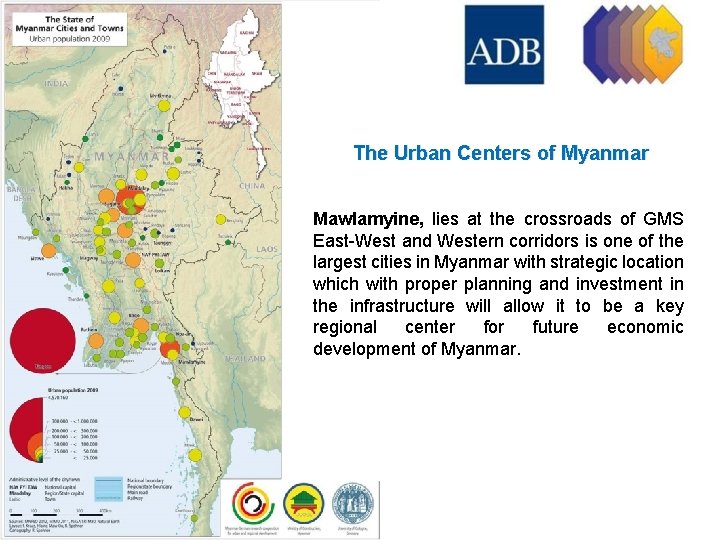
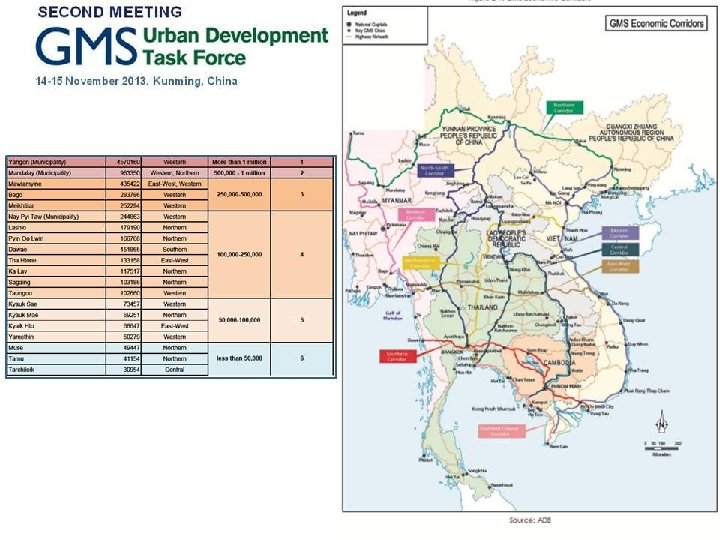
The Urban Centers of Myanmar Mawlamyine, lies at the crossroads of GMS East-West and Western corridors is one of the largest cities in Myanmar with strategic location which with proper planning and investment in the infrastructure will allow it to be a key regional center for future economic development of Myanmar.
SOME ADDITIONAL INFORMATION TO BE TAKEN INTO ACCOUNT IN THE ASSESSMENT OF THE URBANIZATION TREND OF MYANMAR
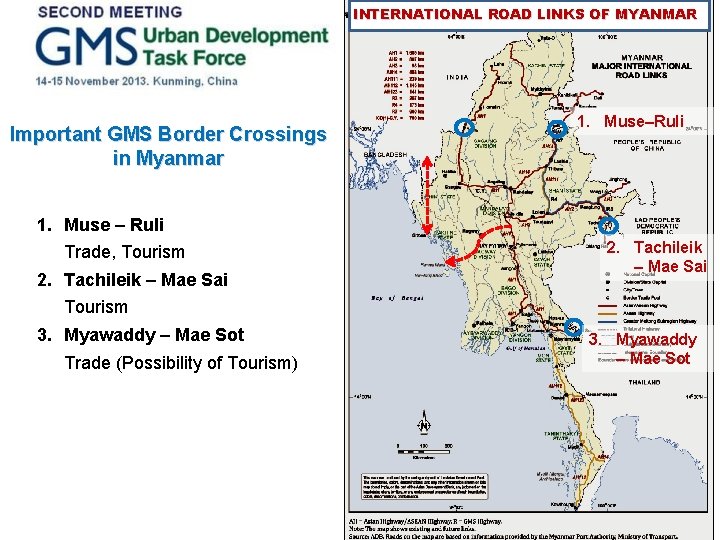
INTERNATIONAL ROAD LINKS OF MYANMAR Important GMS Border Crossings in Myanmar 1. Muse – Ruli Trade, Tourism 2. Tachileik – Mae Sai Tourism 3. Myawaddy – Mae Sot Trade (Possibility of Tourism) 1. Muse–Ruli 2. Tachileik – Mae Sai 3. Myawaddy – Mae Sot
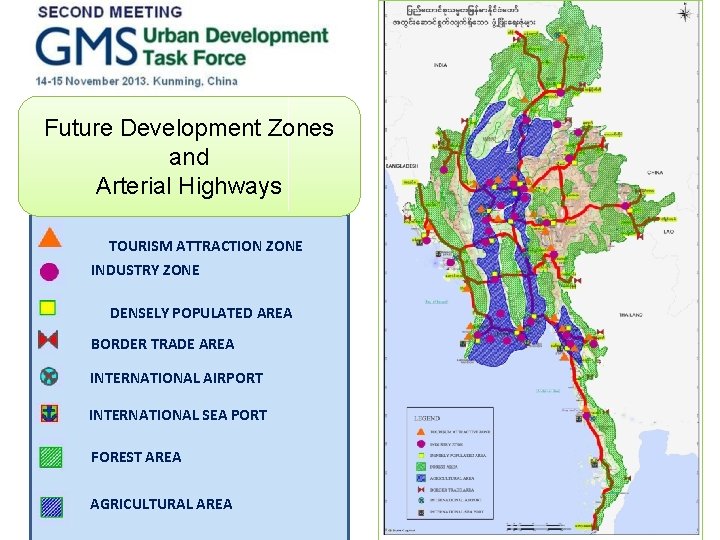
Future Development Zones and Arterial Highways TOURISM ATTRACTION ZONE INDUSTRY ZONE DENSELY POPULATED AREA BORDER TRADE AREA INTERNATIONAL AIRPORT INTERNATIONAL SEA PORT FOREST AREA AGRICULTURAL AREA
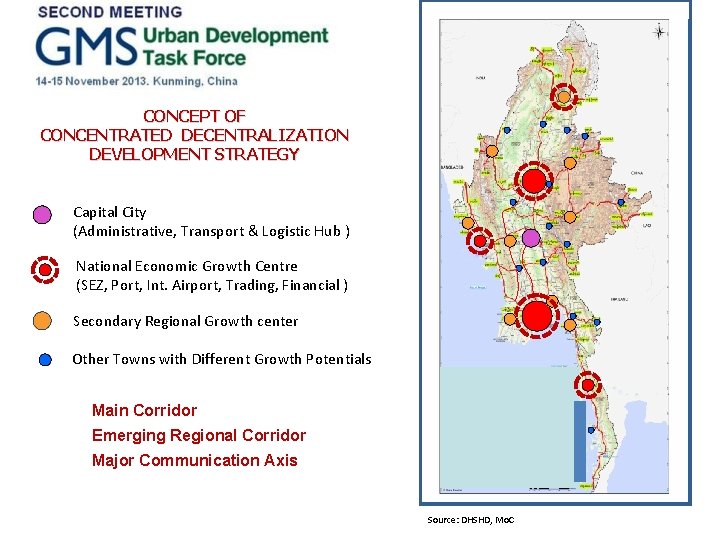
CONCEPT OF CONCENTRATED DECENTRALIZATION DEVELOPMENT STRATEGY Capital City (Administrative, Transport & Logistic Hub ) National Economic Growth Centre (SEZ, Port, Int. Airport, Trading, Financial ) Secondary Regional Growth center Other Towns with Different Growth Potentials Main Corridor Emerging Regional Corridor Major Communication Axis Source: DHSHD, Mo. C
Thank You! For more information: Hlaing Maw Oo Public Works / Department of Human Settlement and Housing Development, Ministry of Construction hlaingmawoohock@gmail. com
- Slides: 15