
My Presentation Who I Am Veterinary Medicine Morphometric



- Slides: 23
My Presentation
Who I Am: Veterinary Medicine
Morphometric Assessment of Concentrationand Time-Dependent Injury in the Nasal Airways of Rats Exposed to Chlorine Gas 1 ANTHONY 1 Department WATKINS, 2 ANNIE JARABEK, 1 JACK HARKEMA of Pathobiology and Diagnostic Investigation, Michigan State University, East Lansing, MI 48824. 2 U. S. Environmental Protection Agency, Research Triangle Park, NC.
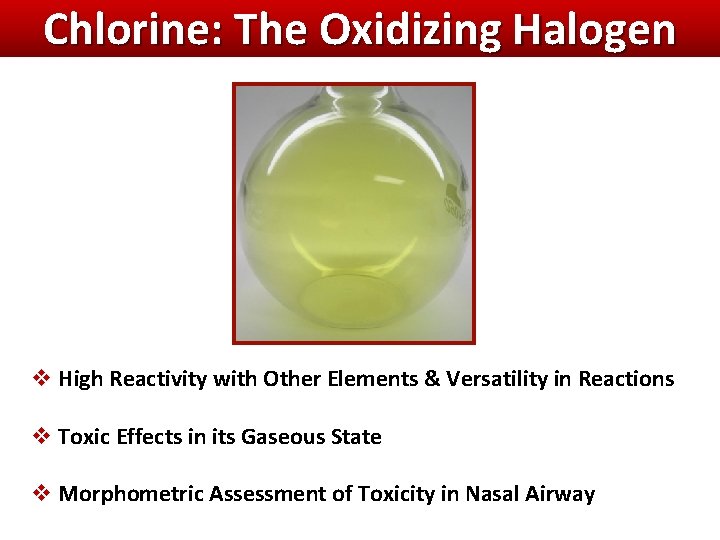
Chlorine: The Oxidizing Halogen v High Reactivity with Other Elements & Versatility in Reactions v Toxic Effects in its Gaseous State v Morphometric Assessment of Toxicity in Nasal Airway
High Reactivity & Reaction Versatility • High solubility in water: Production of Chloride Acids. • Reactions with numerous elements: Hydrogen, oxygen, organic compounds, alkali and transition metals, etc. • Participates in an array of reactions: chlorination, hydrochlorination, etc. , to create chemical intermediates. • Intermediates used to create end-products: disinfectants, aerosols, pesticides, textiles, paint removers, and bleaches. • Used as an effective chemical warfare agent in War World I and the Iraqi War due to its high solubility property. Gori, 1994.
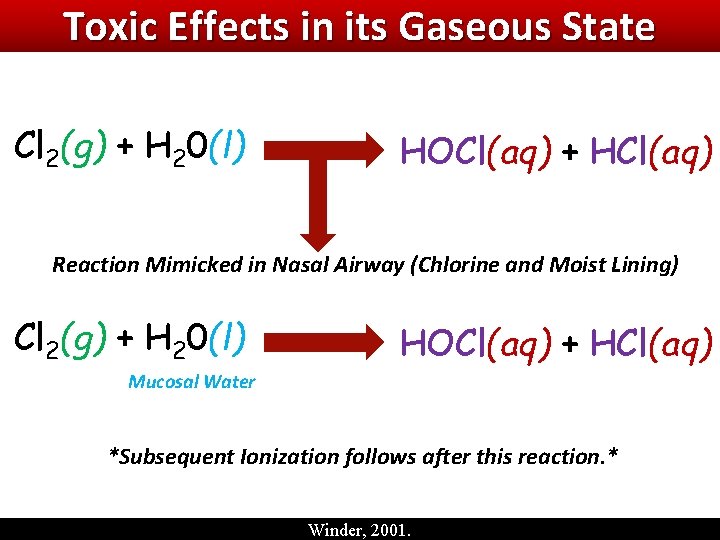
Toxic Effects in its Gaseous State Cl 2(g) + H 20(l) HOCl(aq) + HCl(aq) Reaction Mimicked in Nasal Airway (Chlorine and Moist Lining) Cl 2(g) + H 20(l) HOCl(aq) + HCl(aq) Mucosal Water *Subsequent Ionization follows after this reaction. * Winder, 2001.
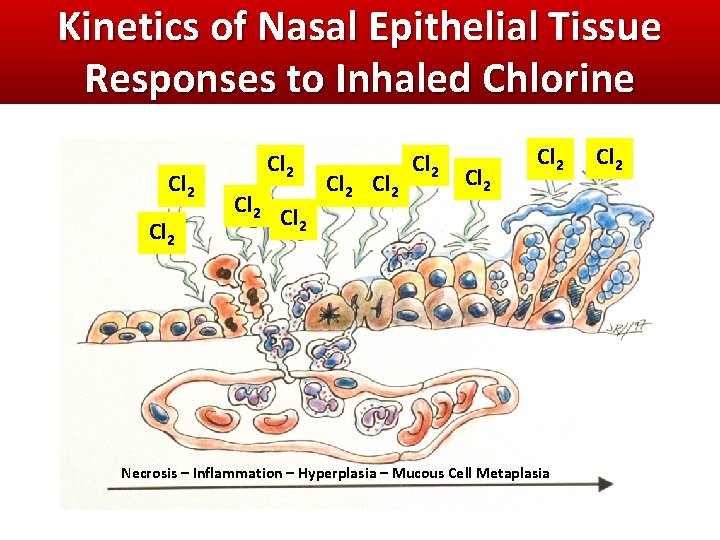
Kinetics of Nasal Epithelial Tissue Responses to Inhaled Chlorine Cl 2 Cl 2 Cl 2 Necrosis – Inflammation – Hyperplasia – Mucous Cell Metaplasia Cl 2
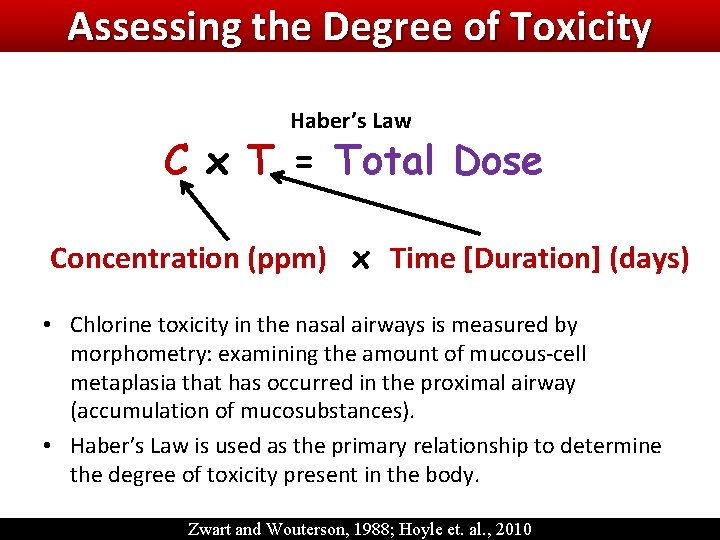
Assessing the Degree of Toxicity Haber’s Law C x T = Total Dose Concentration (ppm) x Time [Duration] (days) • Chlorine toxicity in the nasal airways is measured by morphometry: examining the amount of mucous-cell metaplasia that has occurred in the proximal airway (accumulation of mucosubstances). • Haber’s Law is used as the primary relationship to determine the degree of toxicity present in the body. Zwart and Wouterson, 1988; Hoyle et. al. , 2010
Purpose and Hypothesis • Purpose: To determine the severity of nasal injury in rats exposed to various exposure regimens to evaluate the contribution of concentration (c) and time (t; duration) of exposure. • Hypothesis: The exposure regimen, rather than the total dose, determines the manifestation and magnitude of chlorineinduced nasal pathology.
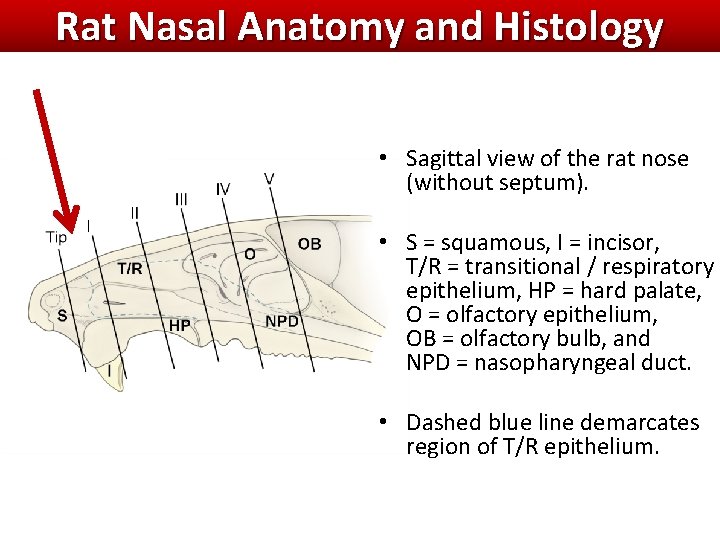
Rat Nasal Anatomy and Histology • Sagittal view of the rat nose (without septum). • S = squamous, I = incisor, T/R = transitional / respiratory epithelium, HP = hard palate, O = olfactory epithelium, OB = olfactory bulb, and NPD = nasopharyngeal duct. • Dashed blue line demarcates region of T/R epithelium.
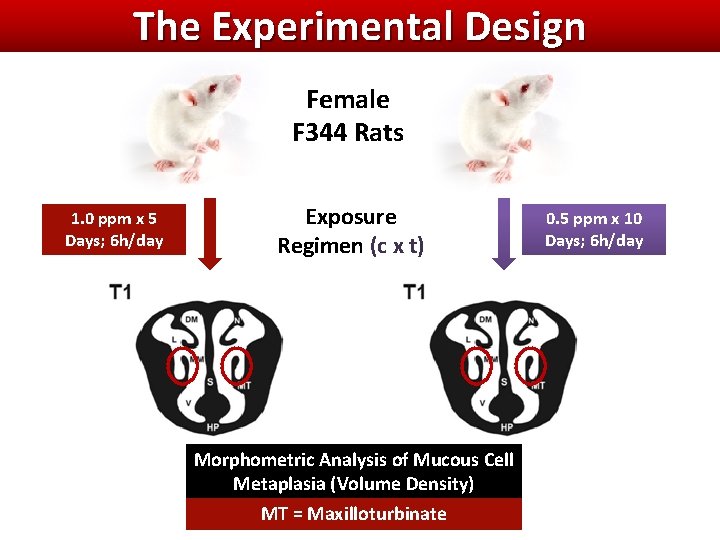
The Experimental Design Female F 344 Rats 1. 0 ppm x 5 Days; 6 h/day Exposure Regimen (c x t) Morphometric Analysis of Mucous Cell Metaplasia (Volume Density) MT = Maxilloturbinate 0. 5 ppm x 10 Days; 6 h/day
Results of Study
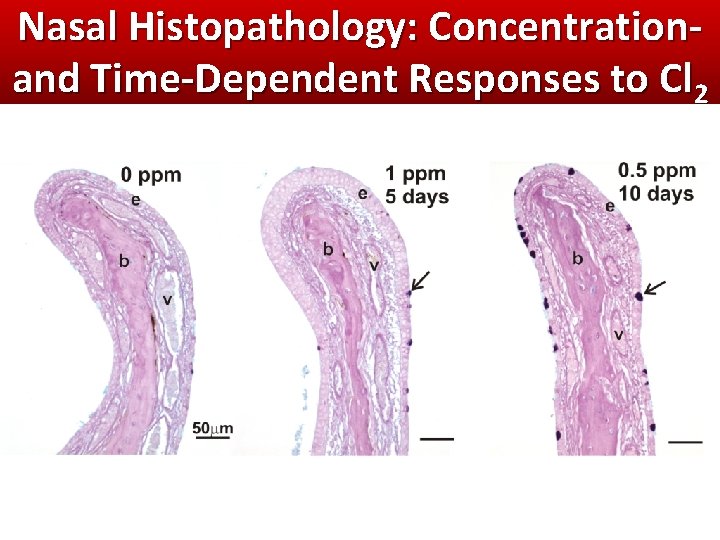
Nasal Histopathology: Concentrationand Time-Dependent Responses to Cl 2
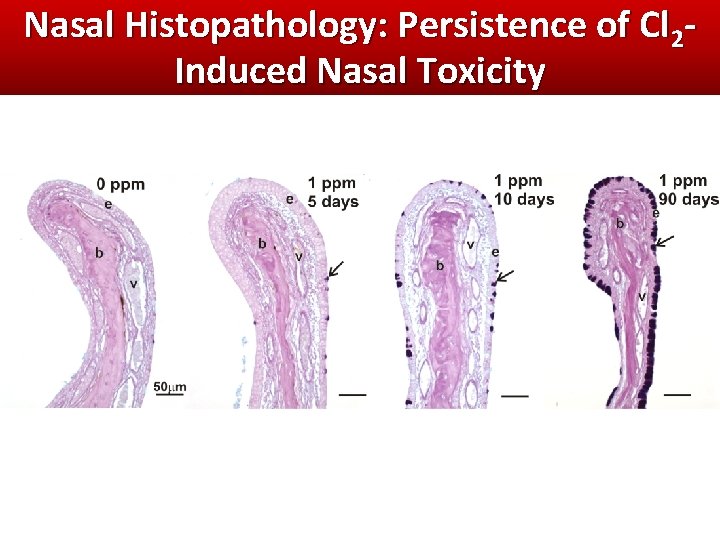
Nasal Histopathology: Persistence of Cl 2 Induced Nasal Toxicity
Dose-Dependent Responses to 5 -Day Cl 2 Exposure: Intraepithelial Mucus in Maxilloturbinates
Dose-Dependent Responses to 10 -Day Cl 2 Exposure: Intraepithelial Mucus in Maxilloturbinates
Time-Dependent Responses to Cl 2 Exposure: Intraepithelial Mucus
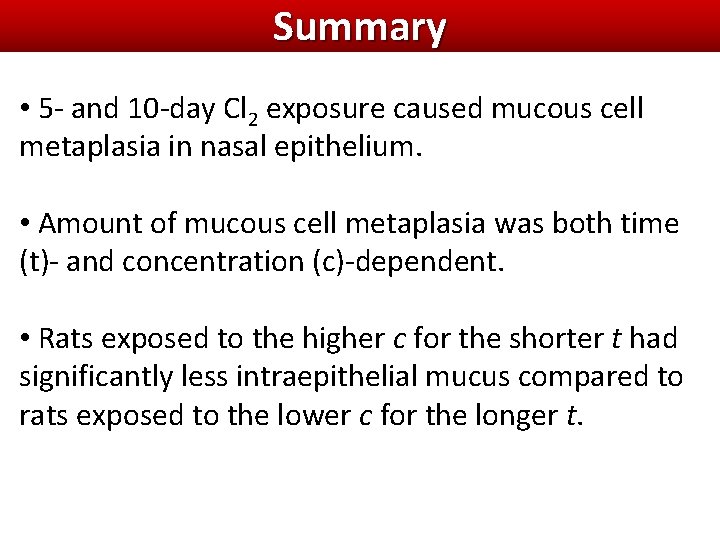
Summary • 5 - and 10 -day Cl 2 exposure caused mucous cell metaplasia in nasal epithelium. • Amount of mucous cell metaplasia was both time (t)- and concentration (c)-dependent. • Rats exposed to the higher c for the shorter t had significantly less intraepithelial mucus compared to rats exposed to the lower c for the longer t.
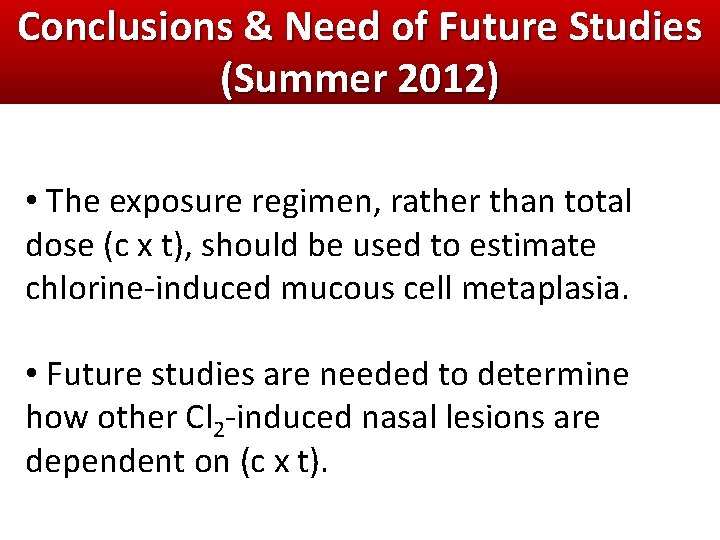
Conclusions & Need of Future Studies (Summer 2012) • The exposure regimen, rather than total dose (c x t), should be used to estimate chlorine-induced mucous cell metaplasia. • Future studies are needed to determine how other Cl 2 -induced nasal lesions are dependent on (c x t).
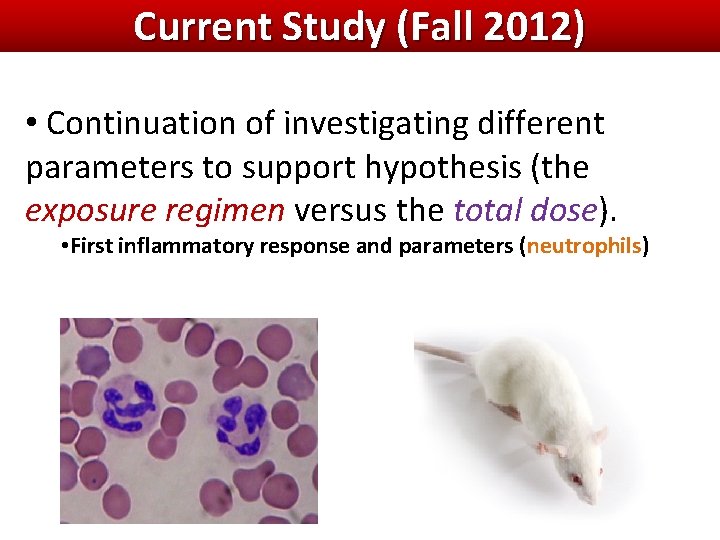
Current Study (Fall 2012) • Continuation of investigating different parameters to support hypothesis (the exposure regimen versus the total dose). • First inflammatory response and parameters (neutrophils)
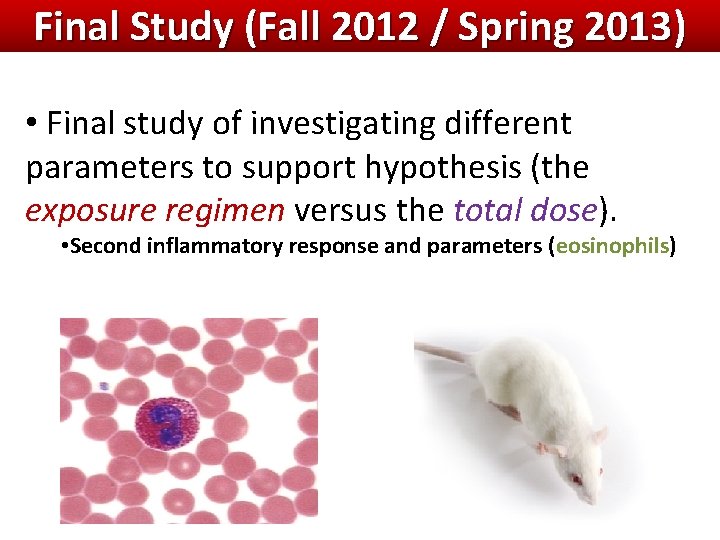
Final Study (Fall 2012 / Spring 2013) • Final study of investigating different parameters to support hypothesis (the exposure regimen versus the total dose). • Second inflammatory response and parameters (eosinophils)
Acknowledgements Dr. Jack Harkema (PI) Annie Jarabek (EPA) Experimental Pathology & Toxicology Lab U. S. Environmental Protection Agency CVM (College of Veterinary Medicine) Summer Research Program • NIH Grant R 25 HL 103156 • • •
References § Gori, G. B. (1994). Chapter 2: Chlorine. Regulatory Toxicology and Pharmacology 20: S 69 -S 125. § Hoyle, G. W. , W. Chang, J. Chen, C. F. Schlueter, and R. J. Rando. (2010). Deviations from Haber’s Law for Multiple Measures of Acute Lung Injury in Chlorine-Exposed Mice. Toxicological Sciences 118: 696 -703. § Winder, C. (2001). The Toxicology of Chlorine. Environmental Research Section A 85: 105 -114. § Zwart, A. and R. A. Woutersen. (1988). Acute inhalation toxicity of chlorine in rats and mice: time-concentrationmortality relationships and effects on respiration. Journal of Hazardous Materials 19: 195 -208.