
My Outer Planets By Max One or more
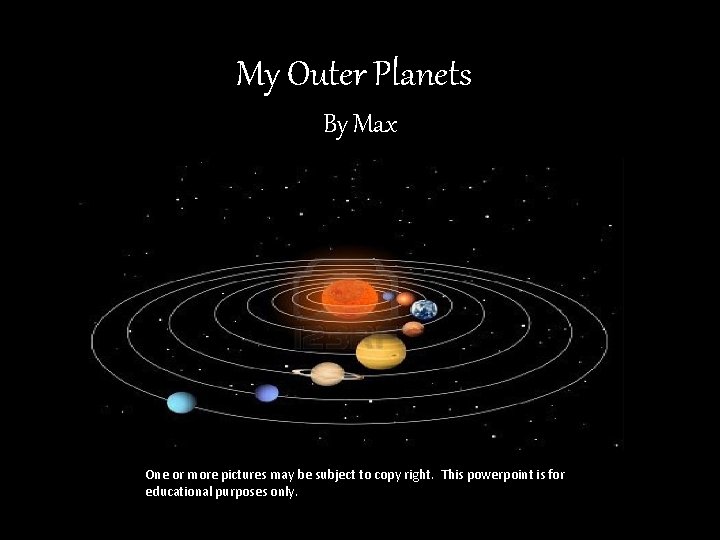
My Outer Planets By Max One or more pictures may be subject to copy right. This powerpoint is for educational purposes only.
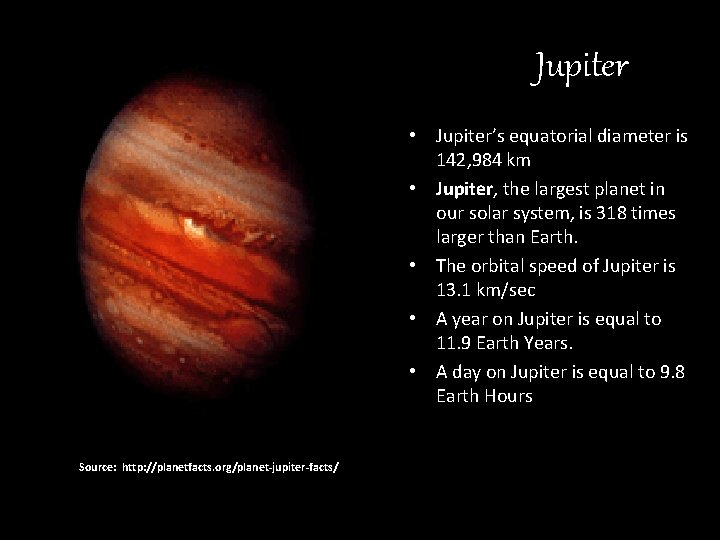
Jupiter • Jupiter’s equatorial diameter is 142, 984 km • Jupiter, the largest planet in our solar system, is 318 times larger than Earth. • The orbital speed of Jupiter is 13. 1 km/sec • A year on Jupiter is equal to 11. 9 Earth Years. • A day on Jupiter is equal to 9. 8 Earth Hours Source: http: //planetfacts. org/planet-jupiter-facts/
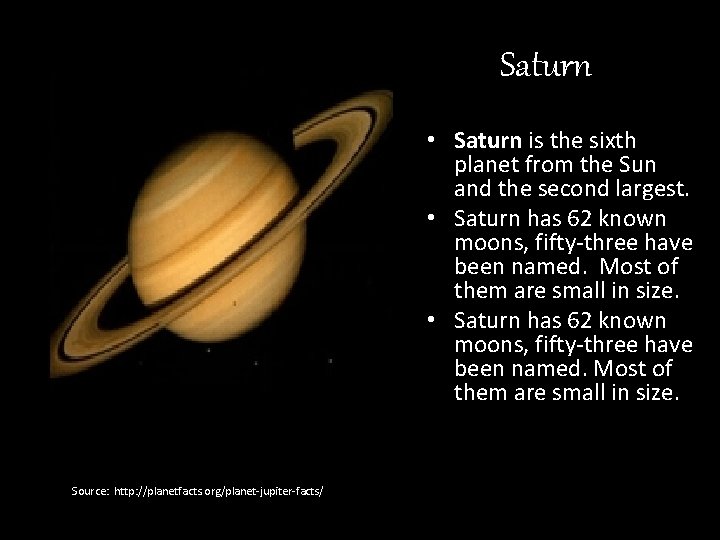
Saturn • Saturn is the sixth planet from the Sun and the second largest. • Saturn has 62 known moons, fifty-three have been named. Most of them are small in size. Source: http: //planetfacts. org/planet-jupiter-facts/
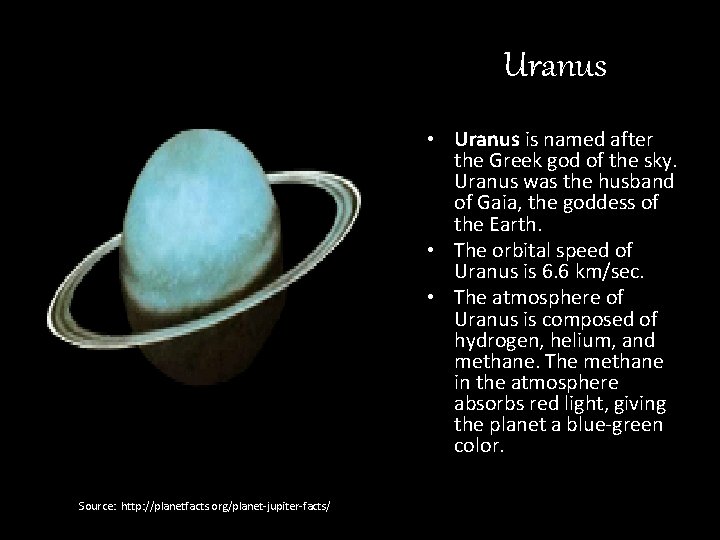
Uranus • Uranus is named after the Greek god of the sky. Uranus was the husband of Gaia, the goddess of the Earth. • The orbital speed of Uranus is 6. 6 km/sec. • The atmosphere of Uranus is composed of hydrogen, helium, and methane. The methane in the atmosphere absorbs red light, giving the planet a blue-green color. Source: http: //planetfacts. org/planet-jupiter-facts/
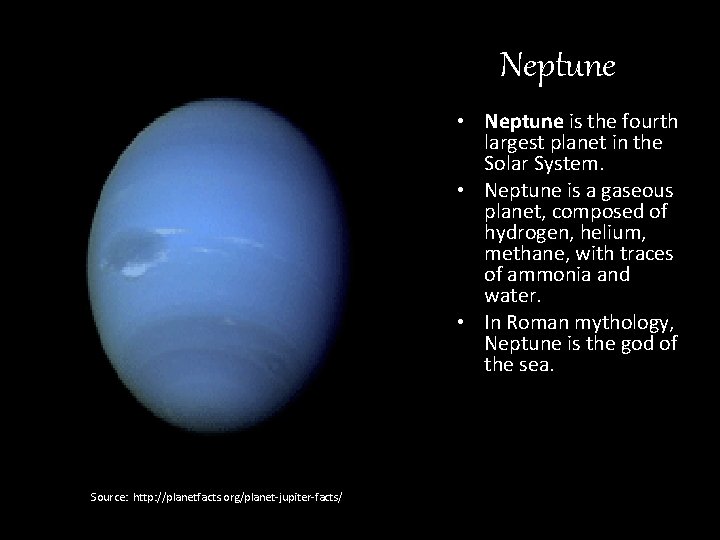
Neptune • Neptune is the fourth largest planet in the Solar System. • Neptune is a gaseous planet, composed of hydrogen, helium, methane, with traces of ammonia and water. • In Roman mythology, Neptune is the god of the sea. Source: http: //planetfacts. org/planet-jupiter-facts/

Pluto • Pluto’s journey around the Sun takes 248 Earth years. • Pluto maximum distance from the Sun is 4. 6 billion miles. Source: http: //planetfacts. org/planet-jupiter-facts/
- Slides: 6