
My Medication Passport e Learning Module Edward Dickinson
- Slides: 16
My Medication Passport e. Learning Module Edward Dickinson Consultant Physician Elderly Medicine Imperial College Healthcare NHS Trust
Overview • Background • Key features • Content • Production
Background: the challenge • Polypharmacy is a major issue – elderly people are on between 4 - 10 medicines • About 35% of all older people admitted to hospital have inappropriate prescribing • ADRs are responsible for 4 -5% of hospital admissions • Up to 70% of patients can have either an error or an unintentional change to their medication when their care is transferred
Background: the Im. PE project • Aims to improve prescribing for the elderly • Evidence based medication review system • Also to provide patients with better information about their medicines • CLAHRC funded
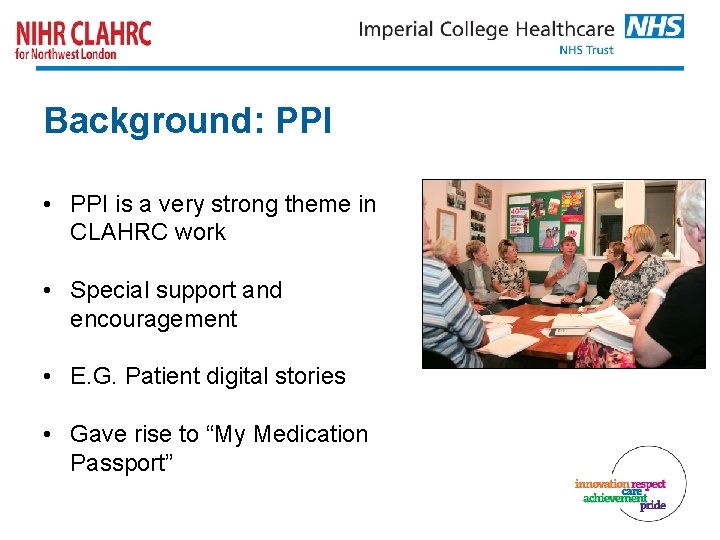
Background: PPI • PPI is a very strong theme in CLAHRC work • Special support and encouragement • E. G. Patient digital stories • Gave rise to “My Medication Passport”
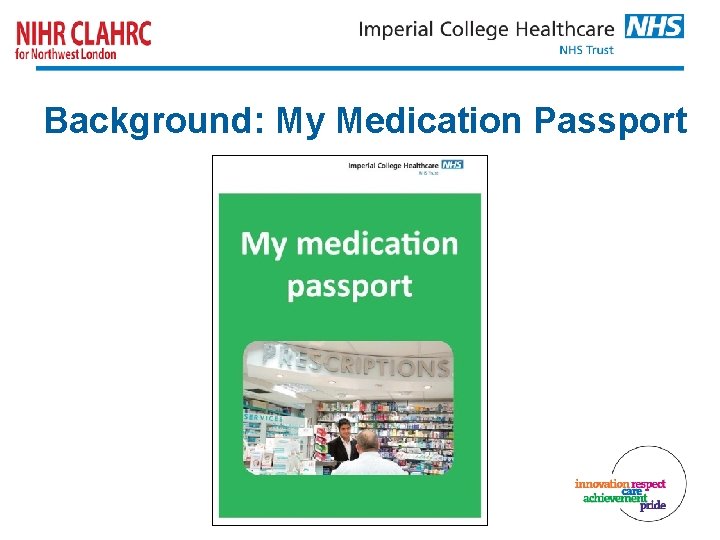
Background: My Medication Passport
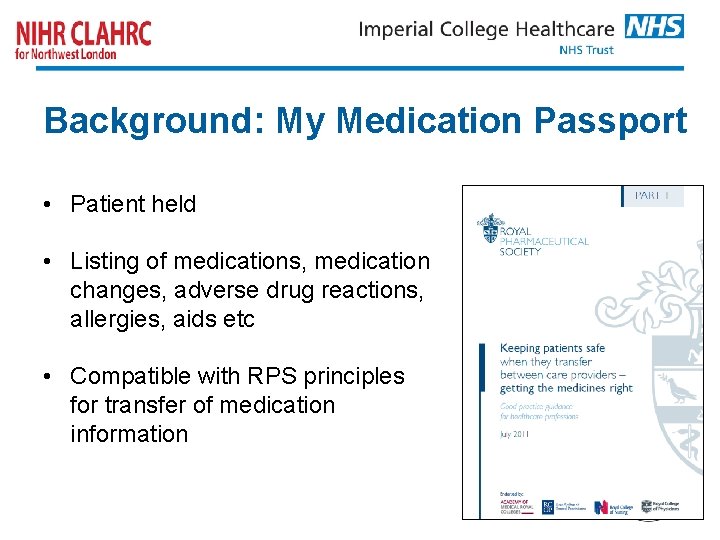
Background: My Medication Passport • Patient held • Listing of medications, medication changes, adverse drug reactions, allergies, aids etc • Compatible with RPS principles for transfer of medication information
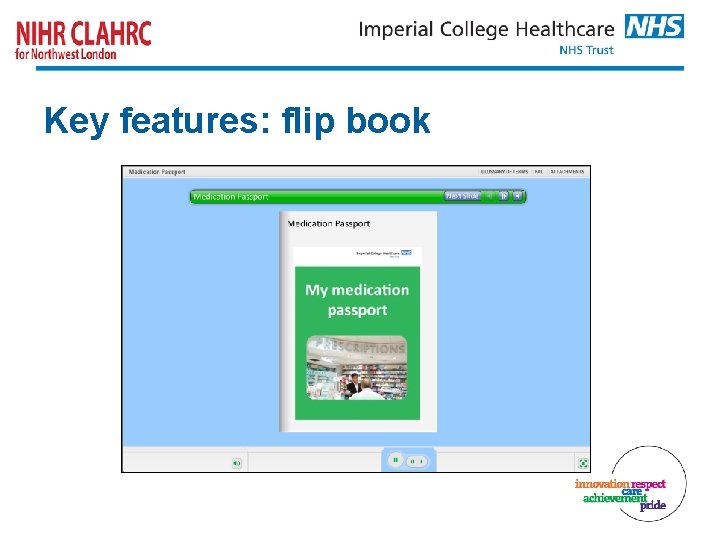
Key features: flip book
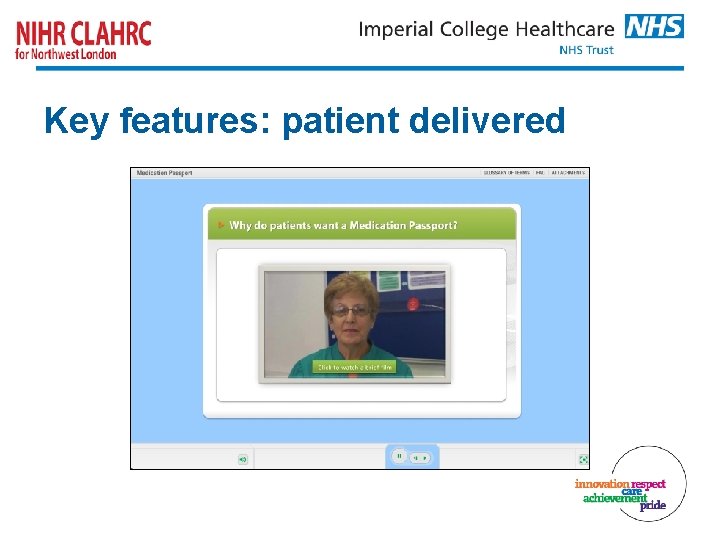
Key features: patient delivered
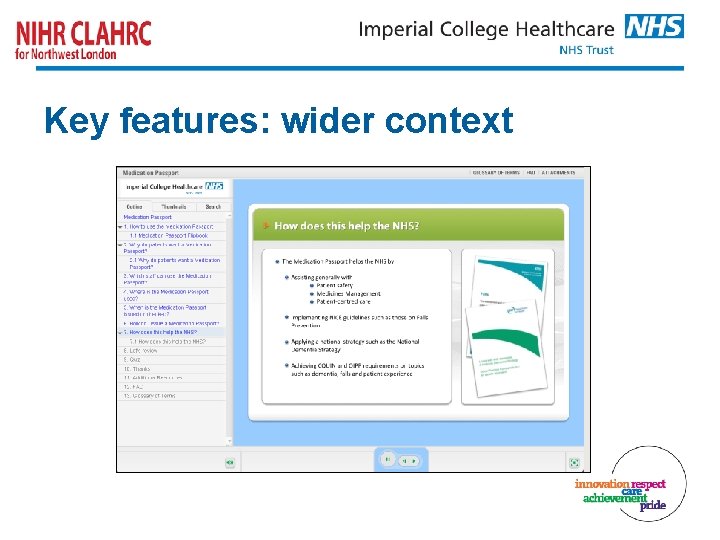
Key features: wider context
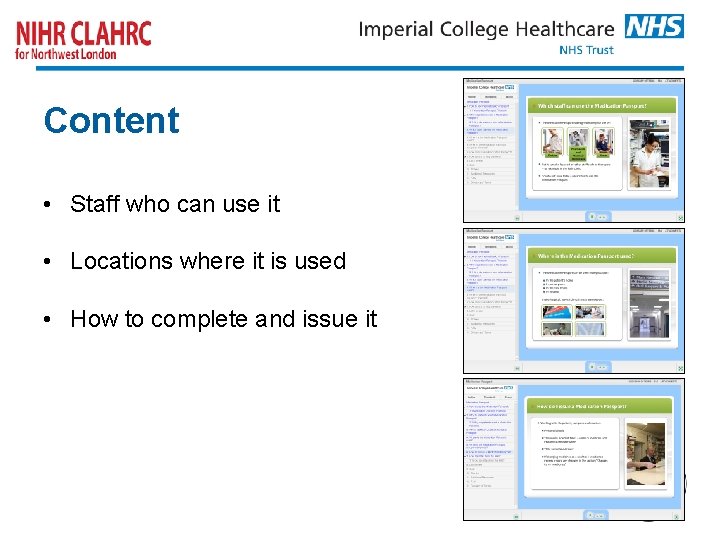
Content • Staff who can use it • Locations where it is used • How to complete and issue it
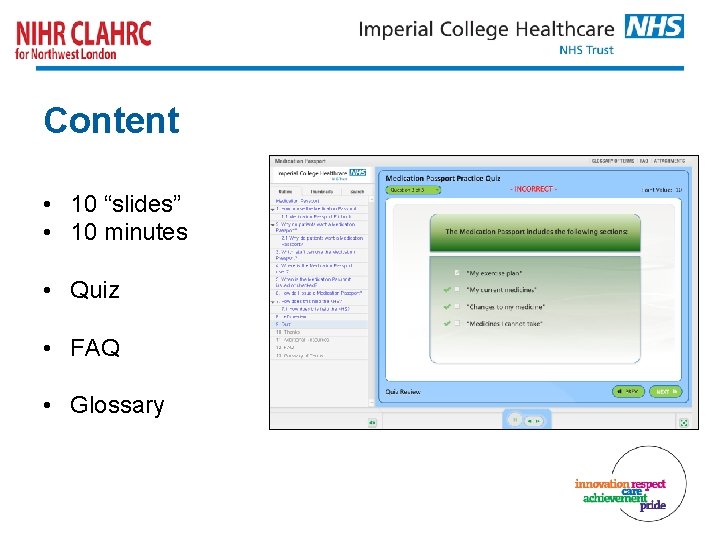
Content • 10 “slides” • 10 minutes • Quiz • FAQ • Glossary
Production • Rapid development – 3 weeks to 1 st working draft • Simple powerpoint presentation • Assembly of resources • Standardised portal • Rapid testing
Overview • Background • Key features • Content • Production
Thanks