
My Lifes a Circle Matter Cycles n the
- Slides: 27
My Life’s a Circle
Matter Cycles n the movement of INORGANIC materials from the atmosphere or soil into living ORGANISMS and back again.
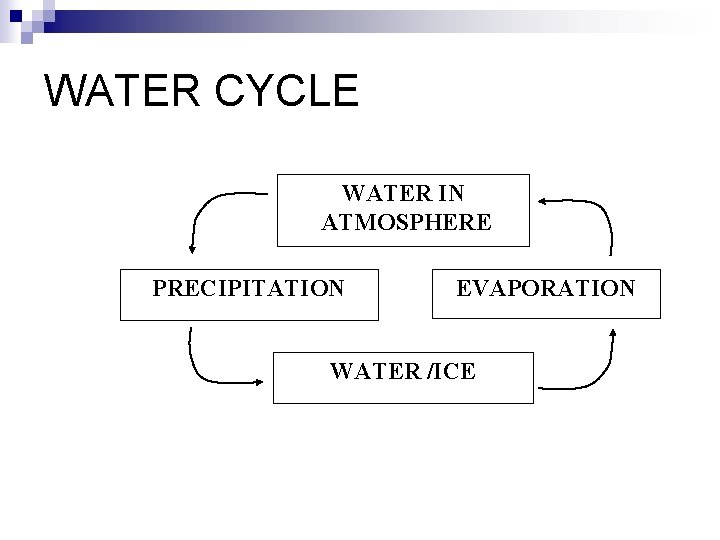
WATER CYCLE WATER IN ATMOSPHERE PRECIPITATION EVAPORATION WATER /ICE
WATER CYCLE EVAPORATION - liquid to gas n PRECIPITATION - gas to liquid n Organisms return water to the atmosphere through TRANSPIRATION, PERSPIRATION, and EXCRETION n
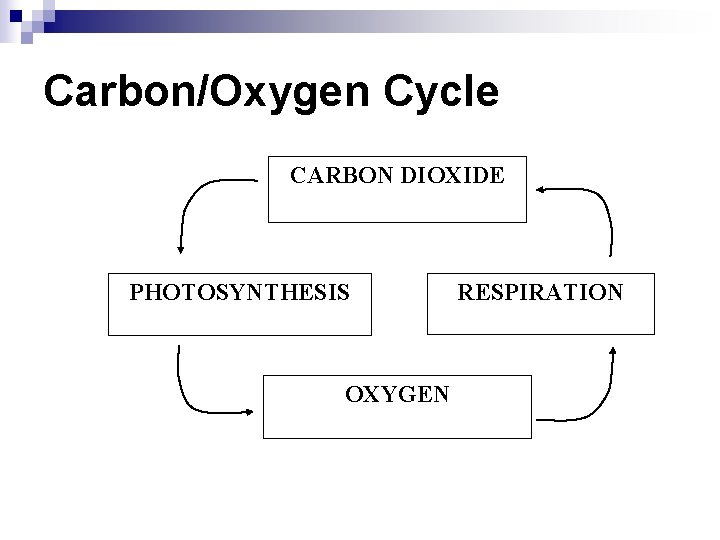
Carbon/Oxygen Cycle CARBON DIOXIDE PHOTOSYNTHESIS OXYGEN RESPIRATION
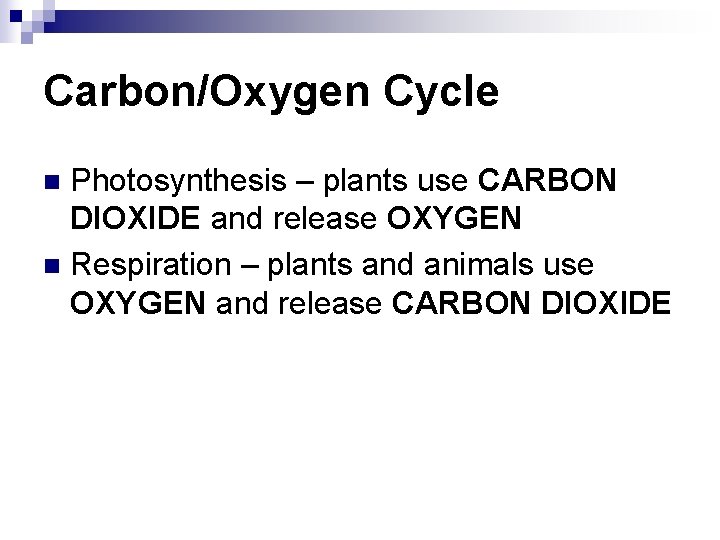
Carbon/Oxygen Cycle Photosynthesis – plants use CARBON DIOXIDE and release OXYGEN n Respiration – plants and animals use OXYGEN and release CARBON DIOXIDE n
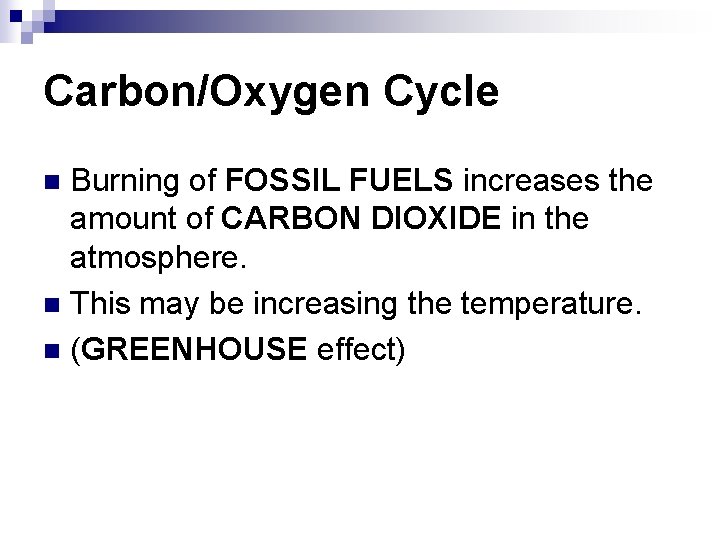
Carbon/Oxygen Cycle Burning of FOSSIL FUELS increases the amount of CARBON DIOXIDE in the atmosphere. n This may be increasing the temperature. n (GREENHOUSE effect) n
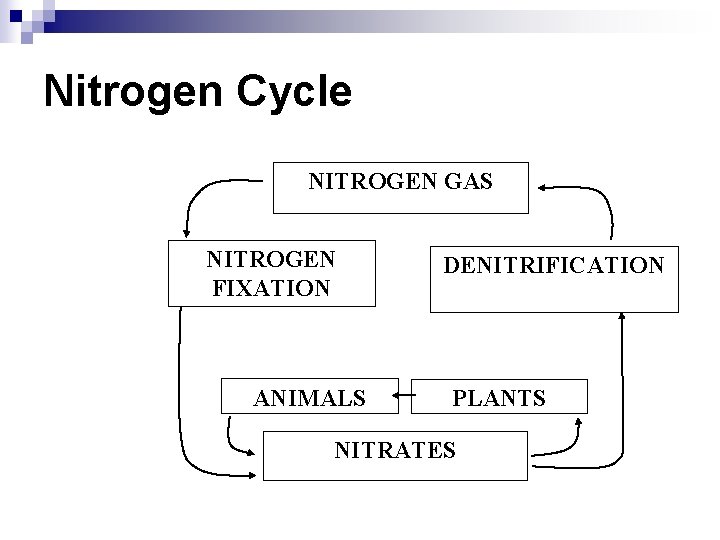
Nitrogen Cycle NITROGEN GAS NITROGEN FIXATION ANIMALS DENITRIFICATION PLANTS NITRATES
Nitrogen Cycle Nitrogen is necessary to make AMINO ACIDS n Nitrogen FIXATION is done by plants containing rhizobium bacteria. n DENITRIFICATION is the returning of nitrogen into the atmosphere n
Biotic Potential n The rate at which a POPULATION will grow if all individuals SURVIVE and REPRODUCE at maximum capacity.
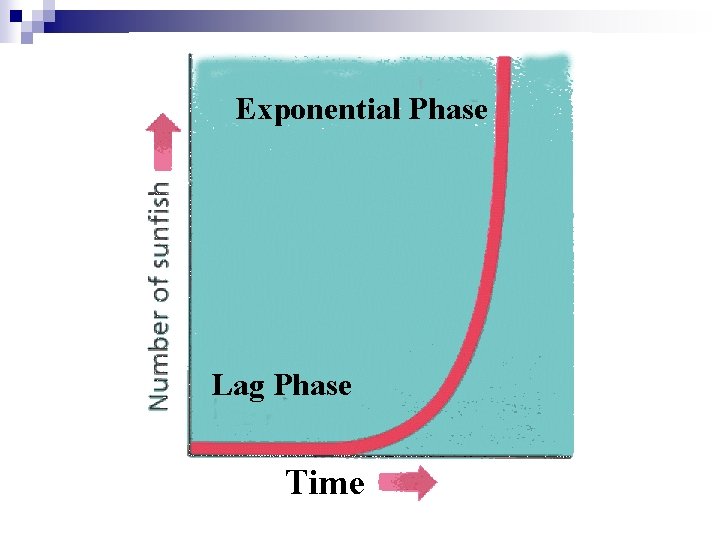
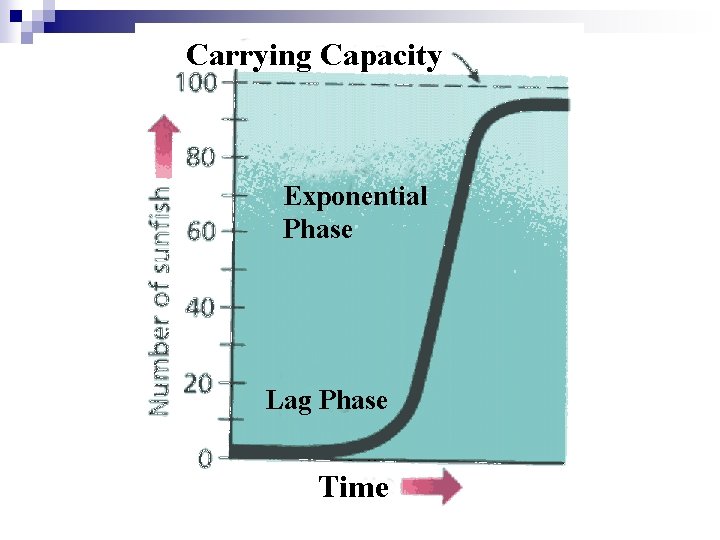
Growth Curve Lag Phase – little or no increase in a population n Exponential Phase – population DOUBLES in a specific time interval and keeps DOUBLING in increasingly shorter periods of time. n
Exponential Phase Lag Phase Time
Carrying Capacity n The MAXIMUM number of individuals that the ecosystem is capable of SUPPORTING.
Carrying Capacity Exponential Phase Lag Phase Time
Limits to Growth Density-dependent factors n Density-independent factors n
Density-dependent factors n As the DENSITY changes, these factors change ¨ Space ¨ Food ¨ Predators
Density-independent factors n Factors that affect population that have nothing to do with DENSITY ¨ Climate changes ¨ Natural disaster
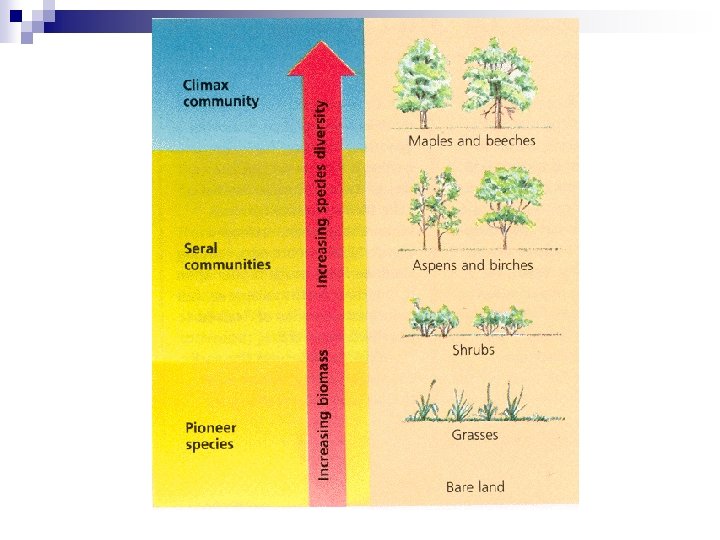
Succession n The gradual, SEQUENTIAL replacement of POPULATIONS in an area
Pioneer Species n The first SPECIES to colonize an area
Seral Community n Intermediate COMMUNITIES
Climax Community n A community that will remain STABLE as long as it is left undisturbed
Primary succession The sequential REPLACEMENT of populations of an area that has not previously supported LIFE n Example: Sand dunes, volcanic rock, glaciers removing soil, pavement n
Secondary succession The sequential REPLACEMENT of populations in DISRUPTED habitats that have not been totally stripped of soil and vegetation. n Example: FOREST FIRE, LOGGING, FARMING, MINING n Old field succession – Replacement of populations in abandoned farm fields n
Succession in lakes n The transformation of CRYSTAL CLEAR BODIES OF WATER to dry LAND
Eutrophication n An increase in the amount of NUTRIENTS in an environment
Eutrophic n A lake with many NUTRIENTS in it.