
Mute Swans Invading Michigans Waters A growing threat

- Slides: 20
Mute Swans Invading Michigan’s Waters A growing threat to native animals, habitat, and humans Photo by Jessie Turner
Definitions Native: species that occur naturally in a given area or region Non-Native: species that, due to direct or indirect human activity, occurs in locations beyond its known historical or potential natural range. Refers to species from another continent, region, ecosystem, or habitat. Invasive: non-native species that become established, spread widely, and cause environmental or economic harm or harm to human health
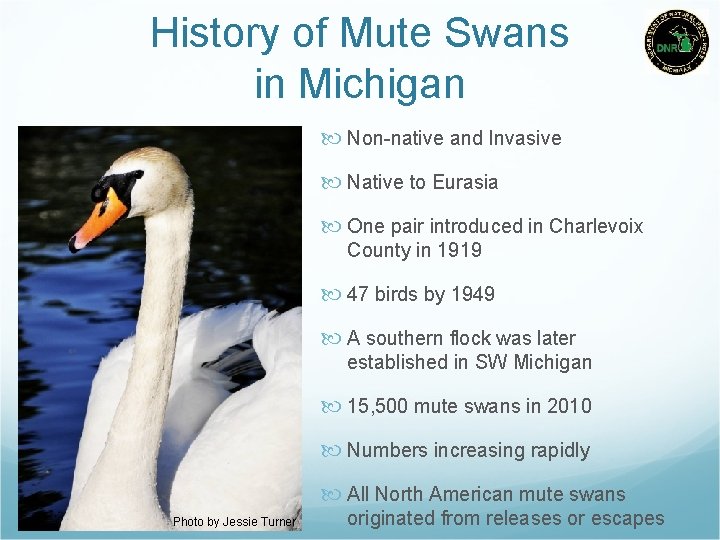
History of Mute Swans in Michigan Non-native and Invasive Native to Eurasia One pair introduced in Charlevoix County in 1919 47 birds by 1949 A southern flock was later established in SW Michigan 15, 500 mute swans in 2010 Numbers increasing rapidly All North American mute swans Photo by Jessie Turner originated from releases or escapes
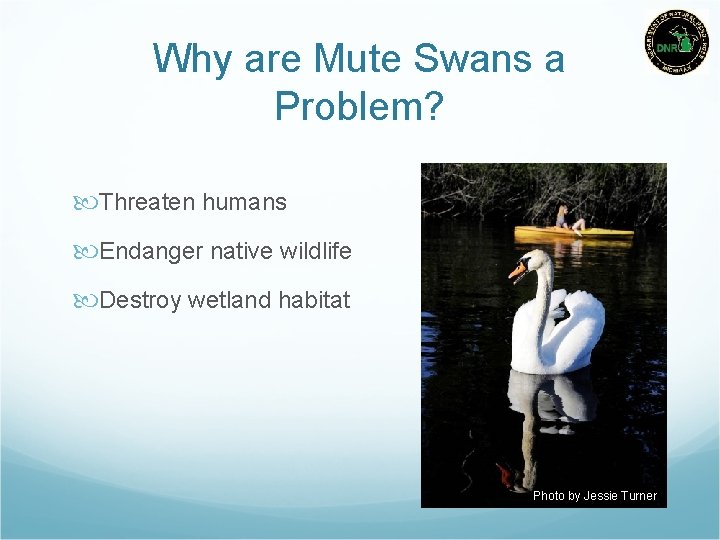
Why are Mute Swans a Problem? Threaten humans Endanger native wildlife Destroy wetland habitat Photo by Jessie Turner
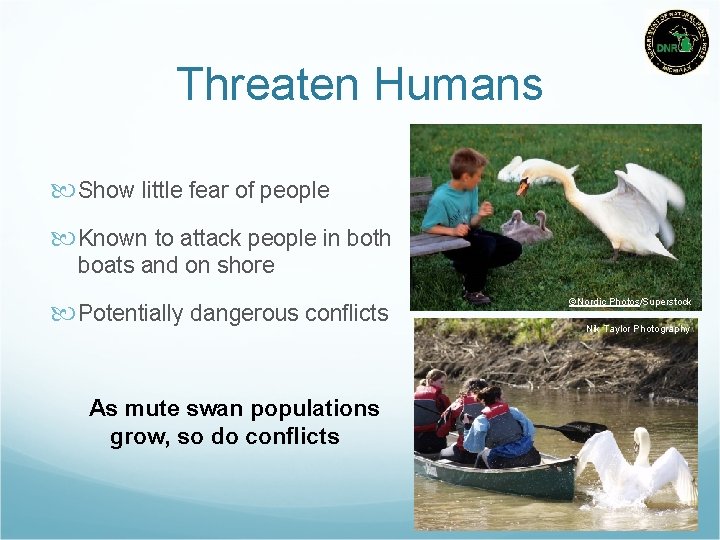
Threaten Humans Show little fear of people Known to attack people in both boats and on shore Potentially dangerous conflicts As mute swan populations grow, so do conflicts Nordic Photos/Superstock Nik Taylor Photography
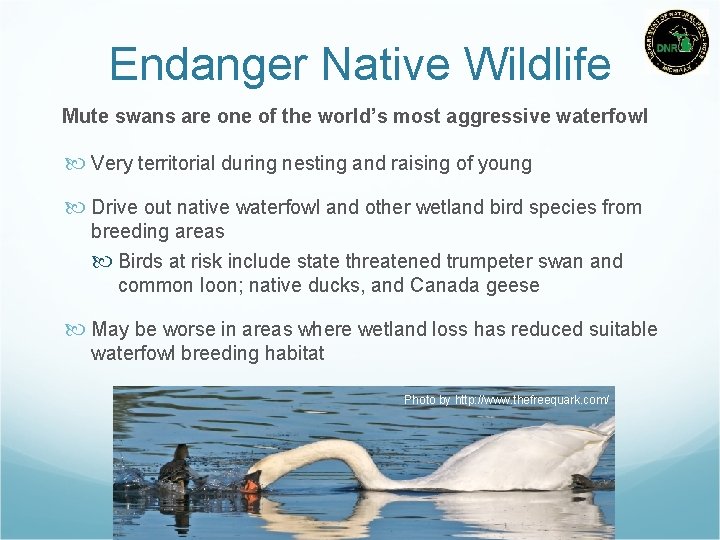
Endanger Native Wildlife Mute swans are one of the world’s most aggressive waterfowl Very territorial during nesting and raising of young Drive out native waterfowl and other wetland bird species from breeding areas Birds at risk include state threatened trumpeter swan and common loon; native ducks, and Canada geese May be worse in areas where wetland loss has reduced suitable waterfowl breeding habitat Photo by http: //www. thefreequark. com/
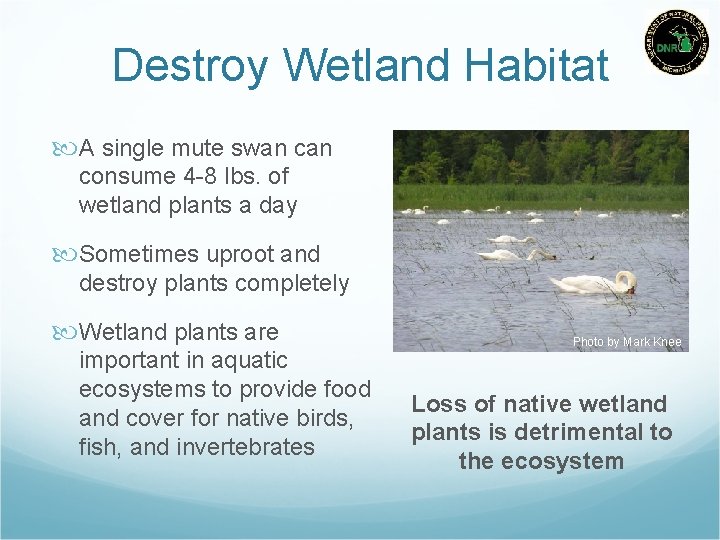
Destroy Wetland Habitat A single mute swan consume 4 -8 lbs. of wetland plants a day Sometimes uproot and destroy plants completely Wetland plants are important in aquatic ecosystems to provide food and cover for native birds, fish, and invertebrates Photo by Mark Knee Loss of native wetland plants is detrimental to the ecosystem
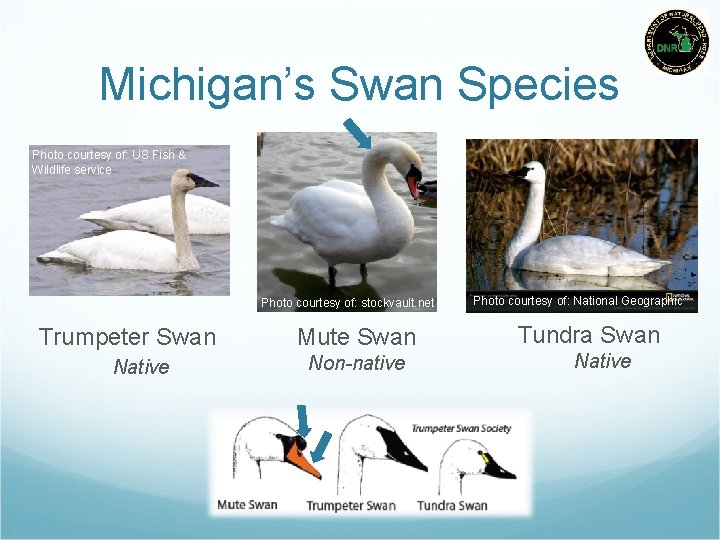
Michigan’s Swan Species Photo courtesy of: US Fish & Wildlife service Photo byof: Jessie Turner Photo courtesy stockvault. net Trumpeter Swan Native Mute Swan Non-native Photo courtesy of: dreamstime. com National Geographic Tundra Swan Native
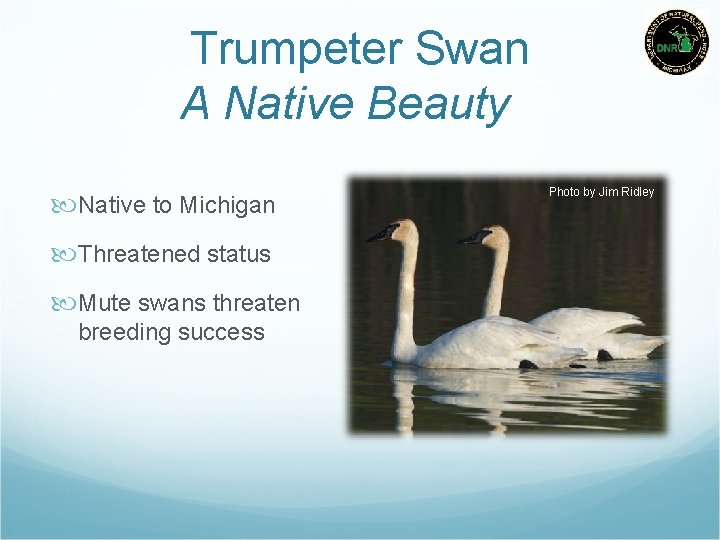
Trumpeter Swan A Native Beauty Native to Michigan Threatened status Mute swans threaten breeding success Photo by Jim Ridley
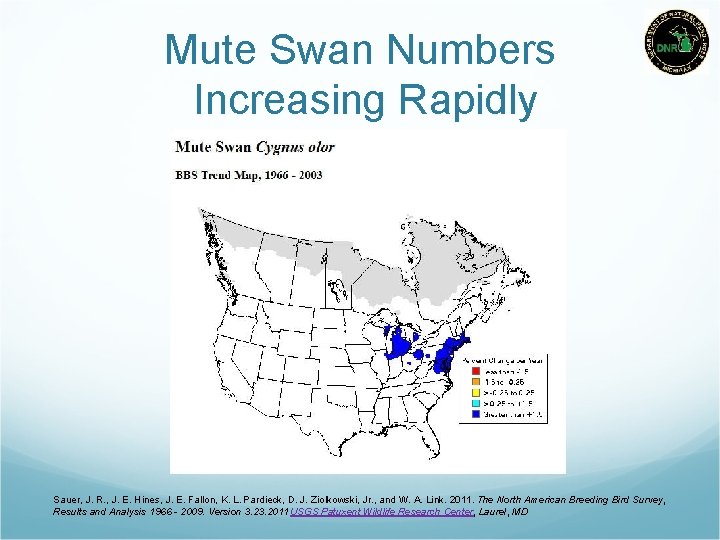
Mute Swan Numbers Increasing Rapidly Sauer, J. R. , J. E. Hines, J. E. Fallon, K. L. Pardieck, D. J. Ziolkowski, Jr. , and W. A. Link. 2011. The North American Breeding Bird Survey, Results and Analysis 1966 - 2009. Version 3. 2011 USGS Patuxent Wildlife Research Center, Laurel, MD
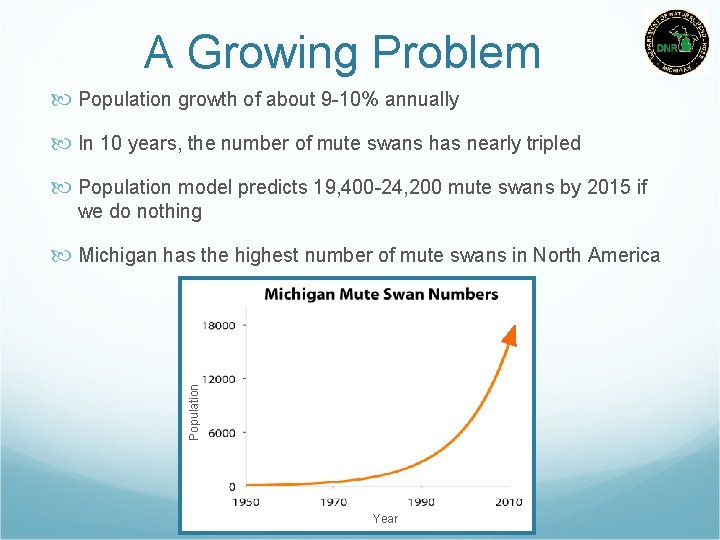
A Growing Problem Population growth of about 9 -10% annually In 10 years, the number of mute swans has nearly tripled Population model predicts 19, 400 -24, 200 mute swans by 2015 if we do nothing Population Michigan has the highest number of mute swans in North America Year
Mute Swan Population Goals Short-term goals (5 -year): Reduce the mute swan population to zero on DNR lands Reduce the statewide mute swan population growth to zero on all other lands Long-term goal (20 -year): To maintain a spring population less than 2, 000 mute swans throughout Michigan
What is the DNR Doing? Began local control activities in the 1960 s due to a growing concern of expanding mute swan numbers Issue permits to remove mute swans and/or their nests and eggs Follow Wildlife-Division’s Mute Swan Management and Control Program Policy and Procedures Brought together a Mute Swan Forum
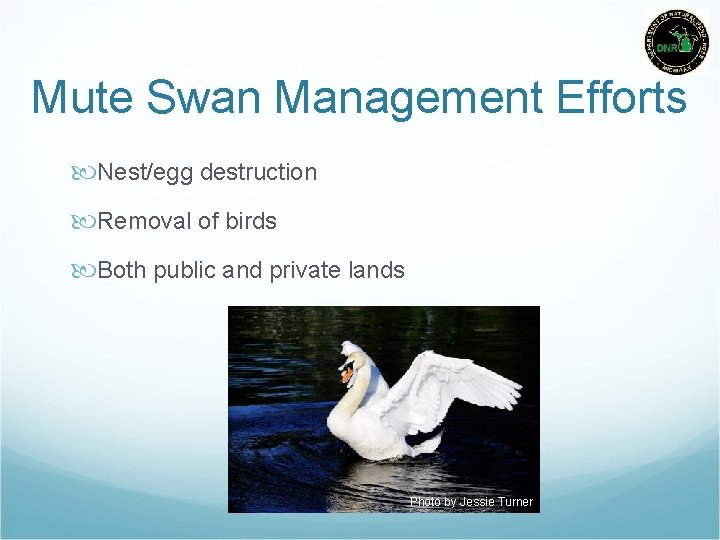
Mute Swan Management Efforts Nest/egg destruction Removal of birds Both public and private lands Photo by Jessie Turner
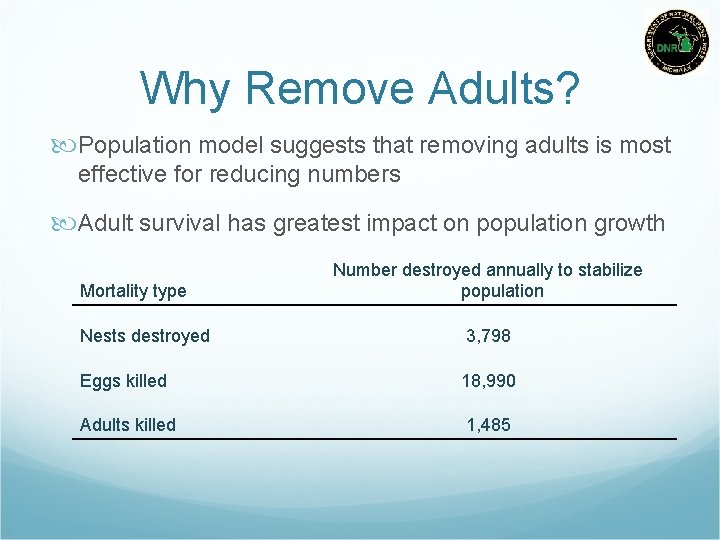
Why Remove Adults? Population model suggests that removing adults is most effective for reducing numbers Adult survival has greatest impact on population growth Mortality type Number destroyed annually to stabilize population Nests destroyed 3, 798 Eggs killed 18, 990 Adults killed 1, 485
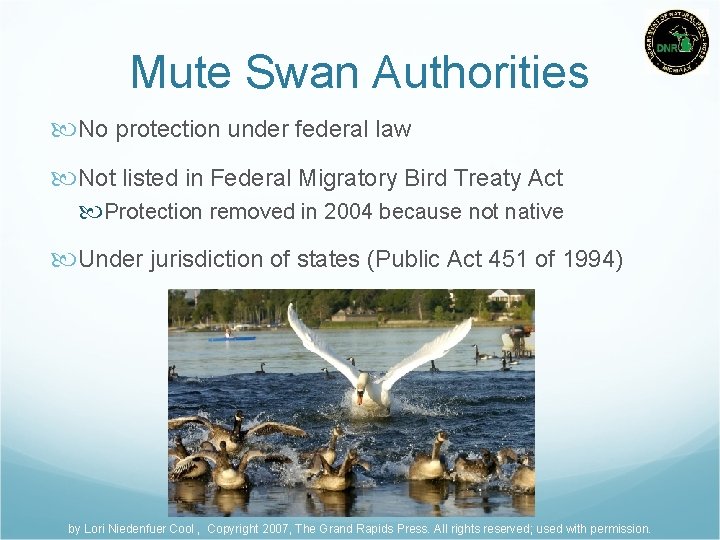
Mute Swan Authorities No protection under federal law Not listed in Federal Migratory Bird Treaty Act Protection removed in 2004 because not native Under jurisdiction of states (Public Act 451 of 1994) by Lori Niedenfuer Cool , Copyright 2007, The Grand Rapids Press. All rights reserved; used with permission.
Mute Swan State Authority Wildlife Conservation Order Protects mute swans Mute swans and their eggs and nests may only be taken under one of the following situations: To stabilize or reduce population levels or prevent establishment of new populations To prevent interference with the establishment, reestablishment, or reproductive success off native wildlife, threatened/endangered species, and native vegetation To protect public health, safety or welfare Mute swans taken shall not be released back into the wild Allows for issuance of damage and nuisance animal control permits Hunting mute swans is not allowed
Support for Mute Swan Management There are many conservation groups that support the drastic reduction of mute swan numbers The National Audubon Society The Michigan Audubon Society Ducks Unlimited The American Bird Conservancy And many more!
What Can You Do? You and your neighbors can help protect Michigan’s natural resources, including the trumpeter swan, by controlling mute swans on your lakes and wetlands. Call your local DNR field office Obtain nest/egg destruction or removal permits For sites with multiple landowners, file a petition or resolution Reaching mute swan goals is only possible with help from local landowners
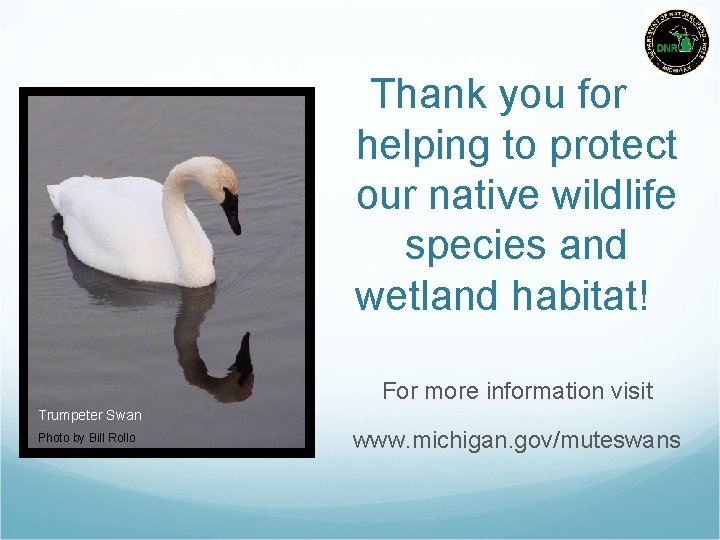
Thank you for helping to protect our native wildlife species and wetland habitat! For more information visit Trumpeter Swan Photo by Bill Rollo www. michigan. gov/muteswans