
Mutations types AP Biology The Story So Far
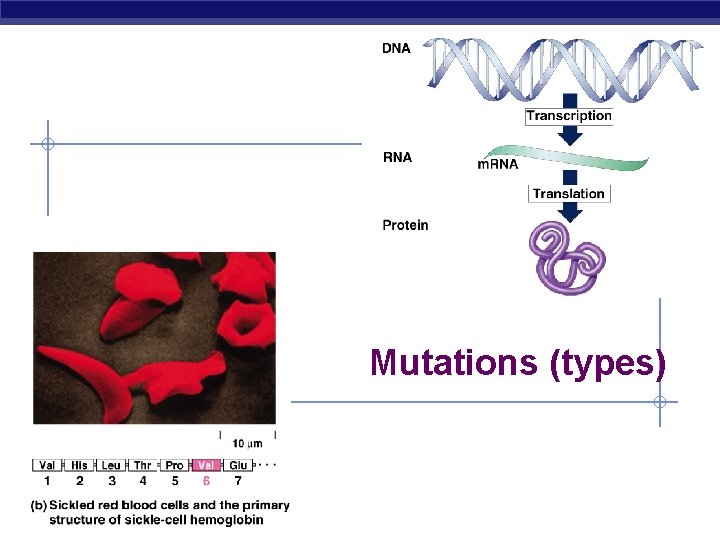
Mutations (types) AP Biology
The Story So Far… n DNA in the nucleus is composed of genes that code for proteins n A-T and G-C n These codes are in triplets AP Biology
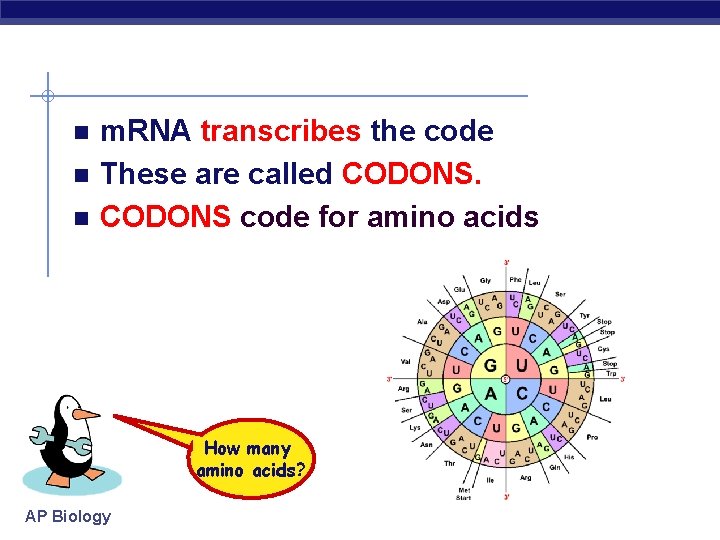
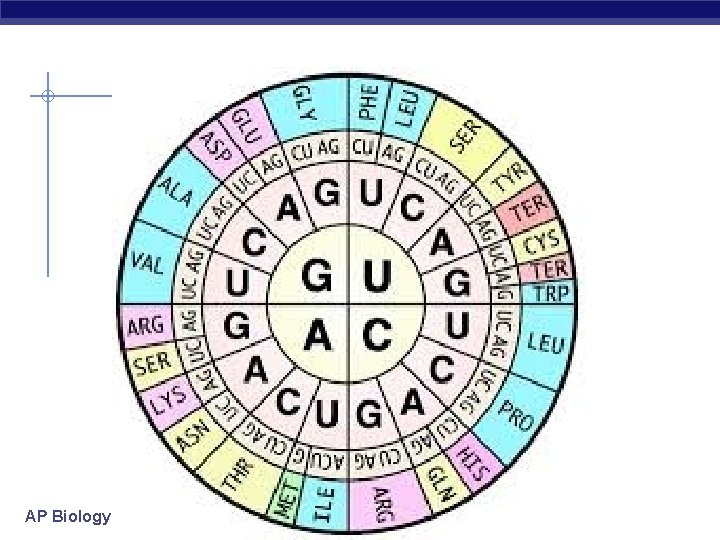
n n n m. RNA transcribes the code These are called CODONS code for amino acids How many amino acids? AP Biology
To the Ribosomes! t. RNA brings amino acids to the ribosome t. RNA has the complimentary sequence to m. RNA (anticodon) The amino acids are bonded by peptide bonds to form the protein AP Biology
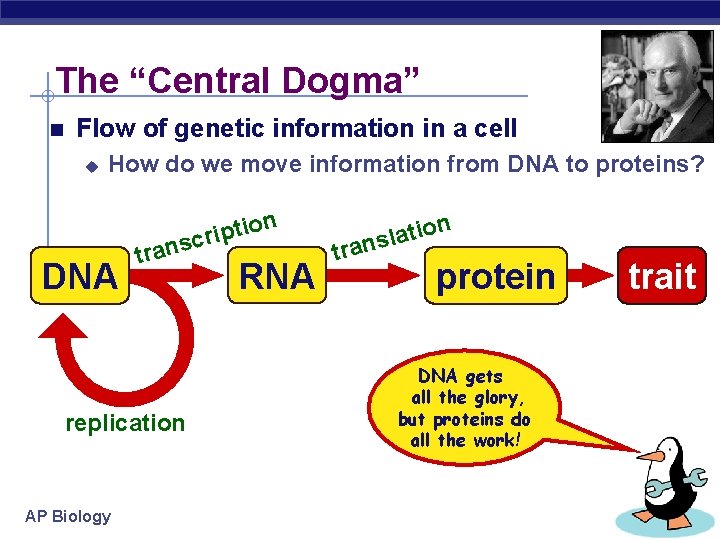
The “Central Dogma” n Flow of genetic information in a cell u How do we move information from DNA to proteins? DNA tran replication AP Biology n io t p i r sc RNA tr on i t a l ans protein DNA gets all the glory, but proteins do all the work! trait
Mutations n A Change in the genetic material u Two main types Point n Chromosomal (we will study this later) n Do you think I just carry this wrench or is it a mutation? AP Biology

Mutations n Point mutations single base change u base-pair substitution u n silent mutation w no amino acid change w redundancy in code w Missense and Nonsense w change amino acid w change to stop codon AP Biology When do mutations affect the next generation?
AP Biology
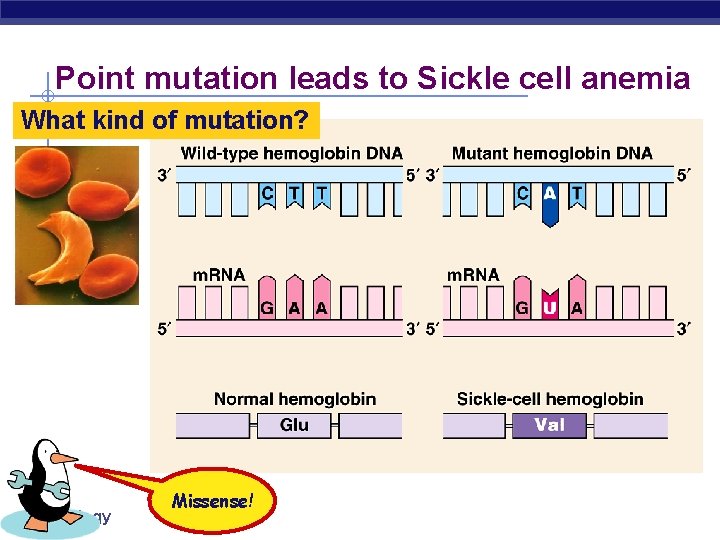
Point mutation leads to Sickle cell anemia What kind of mutation? AP Biology Missense!
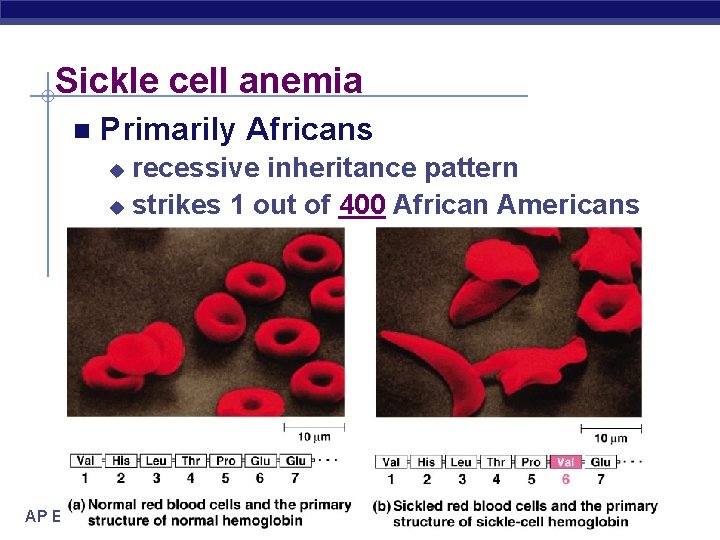
Sickle cell anemia n Primarily Africans recessive inheritance pattern u strikes 1 out of 400 African Americans u AP Biology
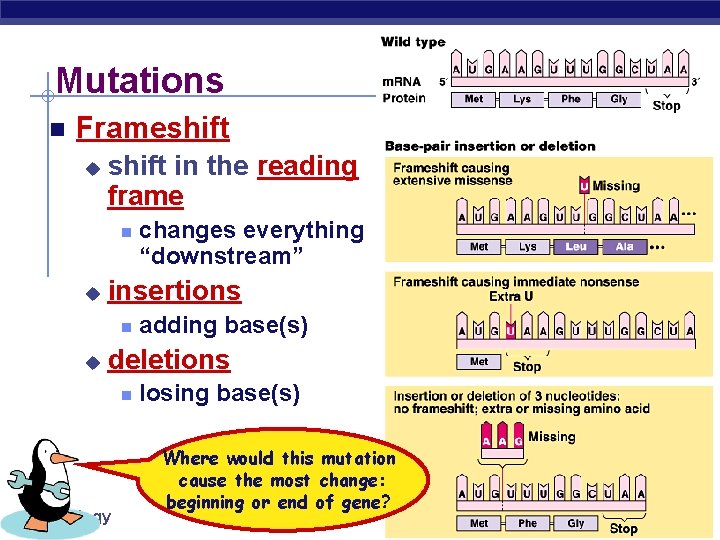
Mutations n Frameshift u shift in the reading frame n u insertions n u changes everything “downstream” adding base(s) deletions n AP Biology losing base(s) Where would this mutation cause the most change: beginning or end of gene?
What’s the value of mutations? AP Biology
Gene Regulation n Every cell in your body has the same DNA, the same instructions for how to make all of the proteins that compose you. Why doesn’t each cell make all of the proteins? Answer – Gene regulation AP Biology
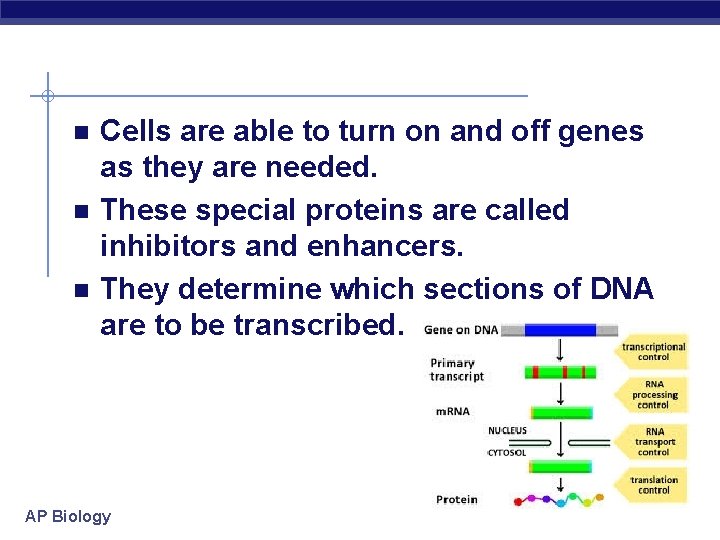
n n n Cells are able to turn on and off genes as they are needed. These special proteins are called inhibitors and enhancers. They determine which sections of DNA are to be transcribed. AP Biology
- Slides: 14