
Mutations Process Result organisms carrying mutation mutants New
- Slides: 49
Mutations • Process • Result – organisms carrying mutation - mutants New genetic variability Material for evolution
Depending of origin • spontaneous (10 -5 – 10 -6) • induced Even "spontaneous" mutations have an inducting factor Mutations: – random – specific (rate, "hot points" etc)
Classification • Direction – direct – reverse • Location – nucleus – cytoplasm • Type of cells – germ-line – somatic
Classification • Interaction in the locus – recessive – dominant (co-dominant, partially dominant) • Influence on fitness – – adaptive negative lethal neutral
Classification • Manifestation – – morphological biochemical chlorophyll …………. . – pleiotropic
Classification • Point – substitution of the one nucleotide • Chromosomal rearrangements – whole caryotype – particular chromosomes – sub microscopic, can be separated from the point mutations only by sequencing
Inducting factors Mutagens • Physical factors – temperature – radiation • X rays • ultraviolet light • neutrons • Chemicals – different types – super mutagens – mutagens in environment, mutagens in the food
Chromosomal rearrangements • Number of whole chromosomal set (euploidy) – haploidy, polyploidy (colchicine) • haploid, triploid, tetraploid • Number of particular chromosomes – aneuploidy (heteroploidy) • nullisomy, trisomy (nullisomics, trisomics) • Changes of the chromosome structure – – duplications deletions inversions translocations
Chromosomal rearrangements • euploidy – changes in number of whole set of chromosomes • euploids – haploidy, polyploidy • haploids – genetic analyse, breeding • triploids, tetraploids – evolution, breeding
Chromosomal rearrangements Aneuploidy (heteroploidy) – alteration in the number of particular chromosomes • aneuploidy – nullisomy, monosomy, trisomy • nullisomic (2 n - 2) can occur only in polyploid species • monosomic (2 n - 1) • trisomic (2 n + 1)
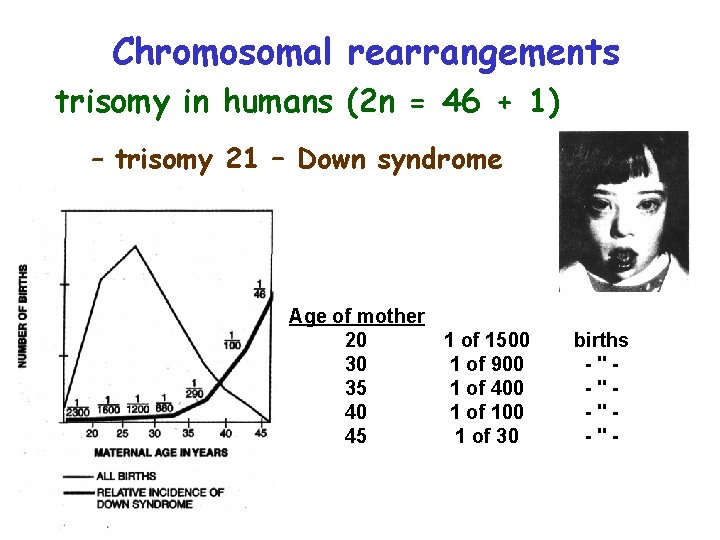
Chromosomal rearrangements trisomy in humans (2 n = 46 + 1) – trisomy 21 – Down syndrome Age of mother 20 1 of 1500 30 1 of 900 35 1 of 400 40 1 of 100 45 1 of 30 births - '' -
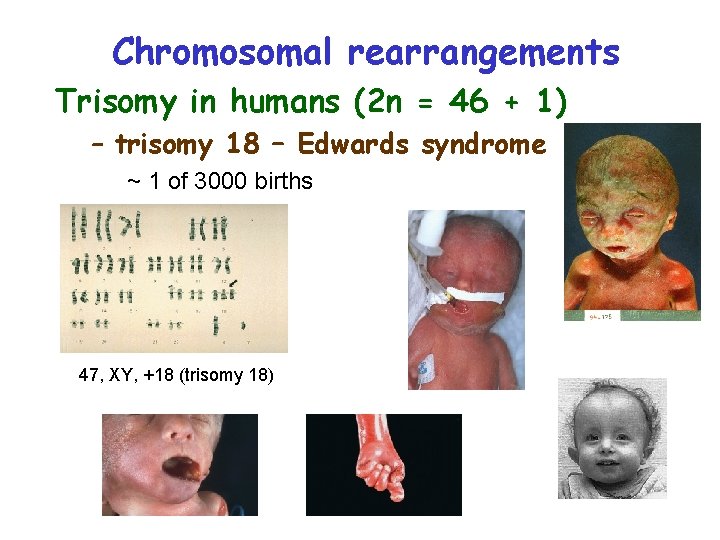
Chromosomal rearrangements Trisomy in humans (2 n = 46 + 1) – trisomy 18 – Edwards syndrome ~ 1 of 3000 births 47, XY, +18 (trisomy 18)
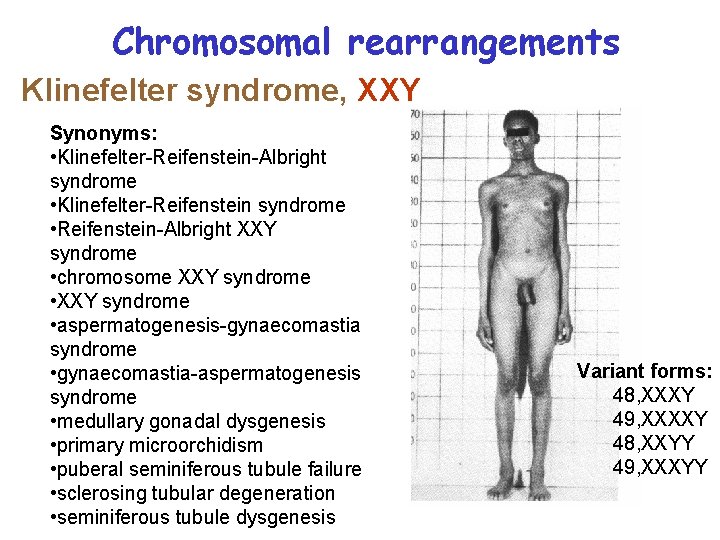
Chromosomal rearrangements Klinefelter syndrome, XXY Synonyms: • Klinefelter-Reifenstein-Albright syndrome • Klinefelter-Reifenstein syndrome • Reifenstein-Albright XXY syndrome • chromosome XXY syndrome • aspermatogenesis-gynaecomastia syndrome • gynaecomastia-aspermatogenesis syndrome • medullary gonadal dysgenesis • primary microorchidism • puberal seminiferous tubule failure • sclerosing tubular degeneration • seminiferous tubule dysgenesis Variant forms: 48, XXXY 49, XXXXY 48, XXYY 49, XXXYY
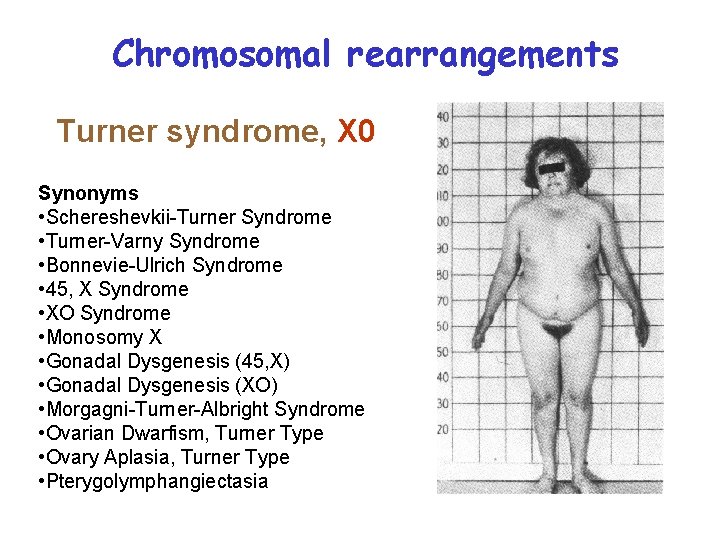
Chromosomal rearrangements Turner syndrome, X 0 Synonyms • Schereshevkii-Turner Syndrome • Turner-Varny Syndrome • Bonnevie-Ulrich Syndrome • 45, X Syndrome • XO Syndrome • Monosomy X • Gonadal Dysgenesis (45, X) • Gonadal Dysgenesis (XO) • Morgagni-Turner-Albright Syndrome • Ovarian Dwarfism, Turner Type • Ovary Aplasia, Turner Type • Pterygolymphangiectasia
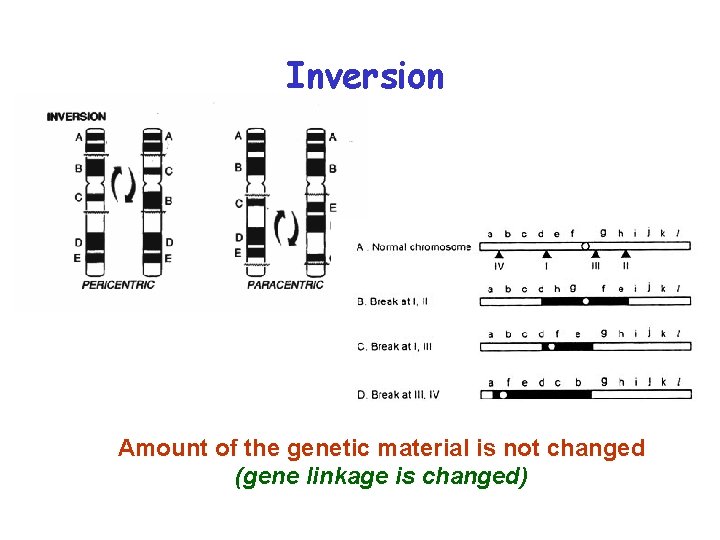
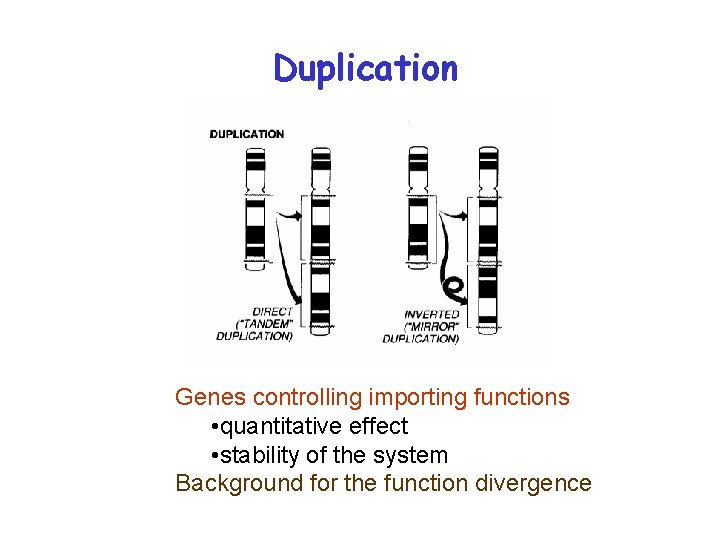
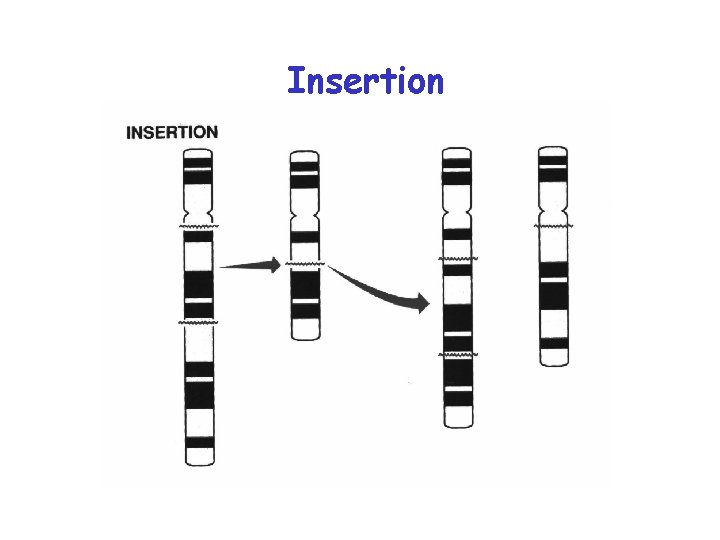
Chromosomal rearrangements Changes in the structure of chromosomes inside a chromosome: – inversions – duplications – deletions – insertions
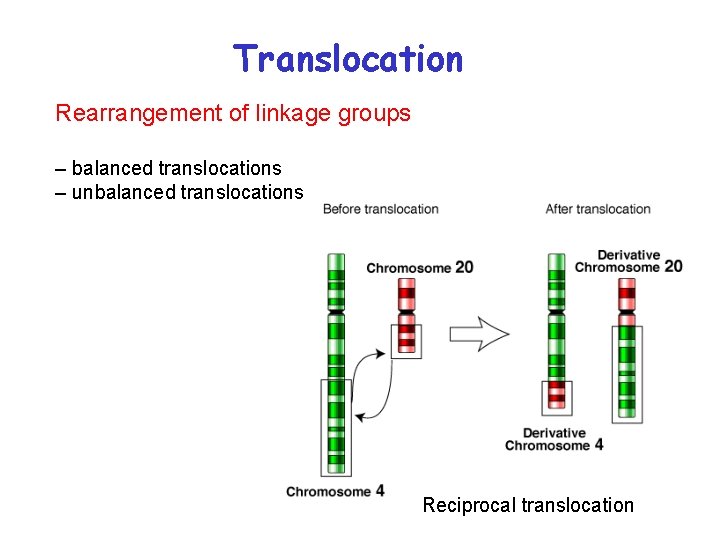
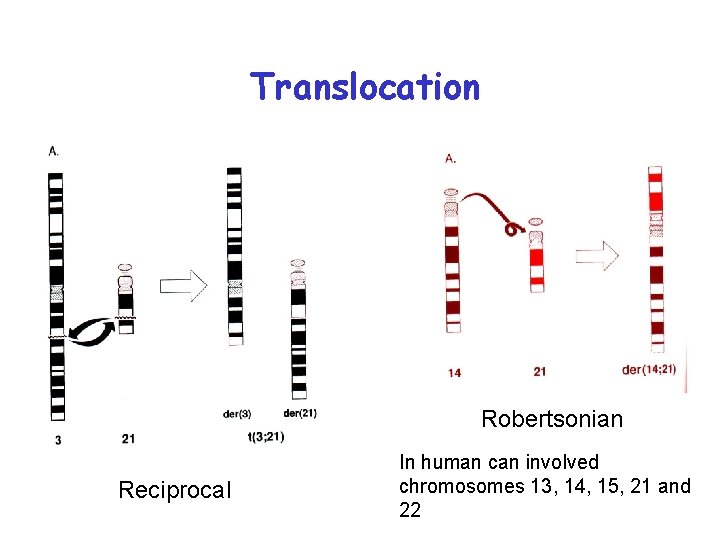
Chromosomal rearrangements Changes in the structure of chromosomes affect two chromosomes – translocations • reciprocal translocations • Robertson translocations
Inversion Amount of the genetic material is not changed (gene linkage is changed)
Duplication Genes controlling importing functions • quantitative effect • stability of the system Background for the function divergence
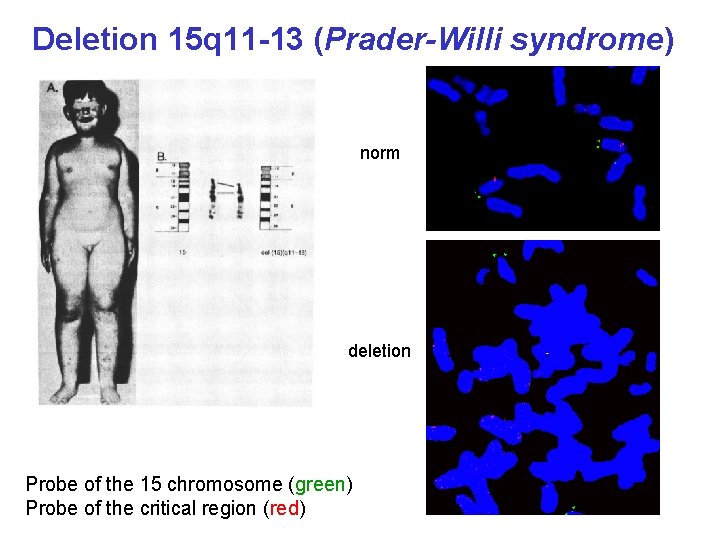
Deletion 15 q 11 -13 (Prader-Willi syndrome) norm deletion Probe of the 15 chromosome (green) Probe of the critical region (red)
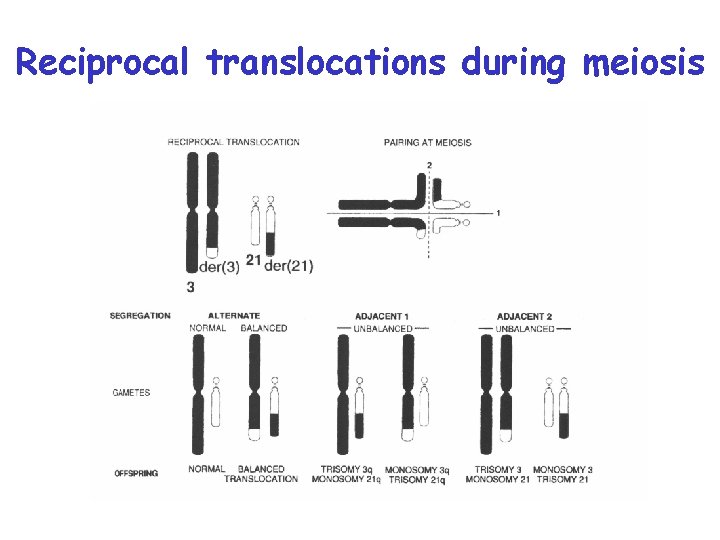
Translocation Rearrangement of linkage groups – balanced translocations – unbalanced translocations Reciprocal translocation
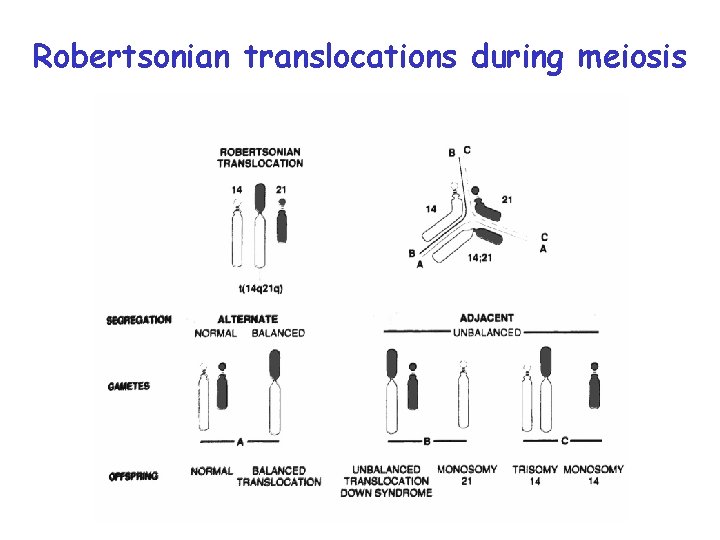
Translocation Robertsonian Reciprocal In human can involved chromosomes 13, 14, 15, 21 and 22
Reciprocal translocations during meiosis
Robertsonian translocations during meiosis
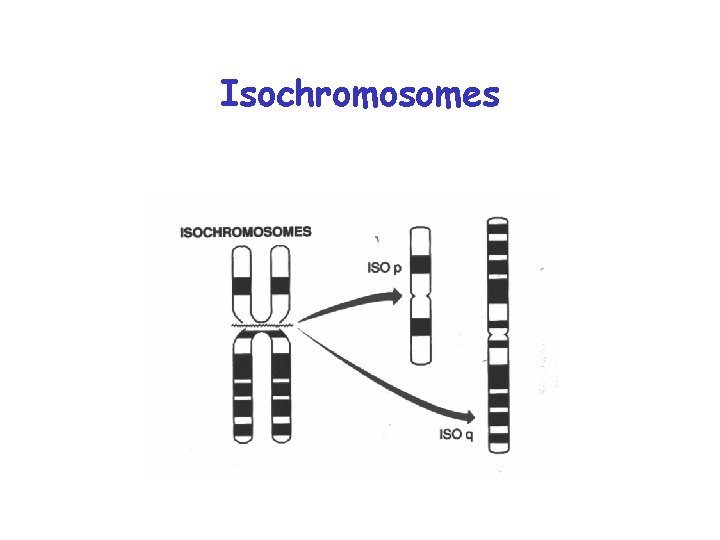
Isochromosomes
Insertion
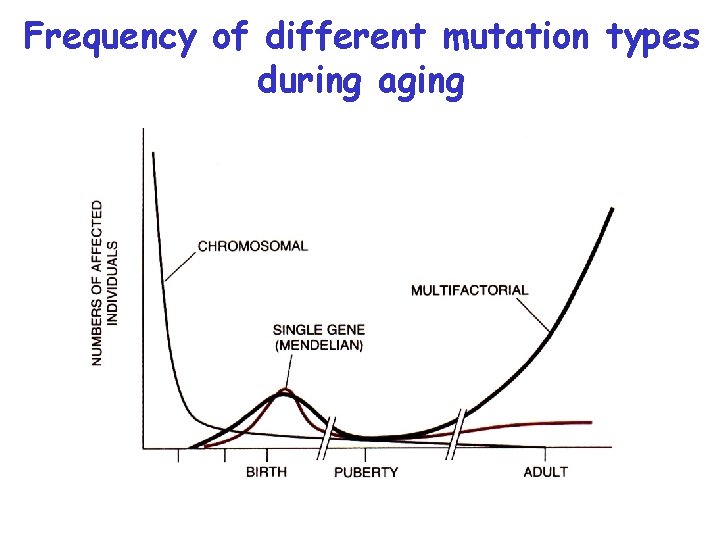
Frequency of different mutation types during aging
Control of mutations • phenotypical • genetic methods • sequencing
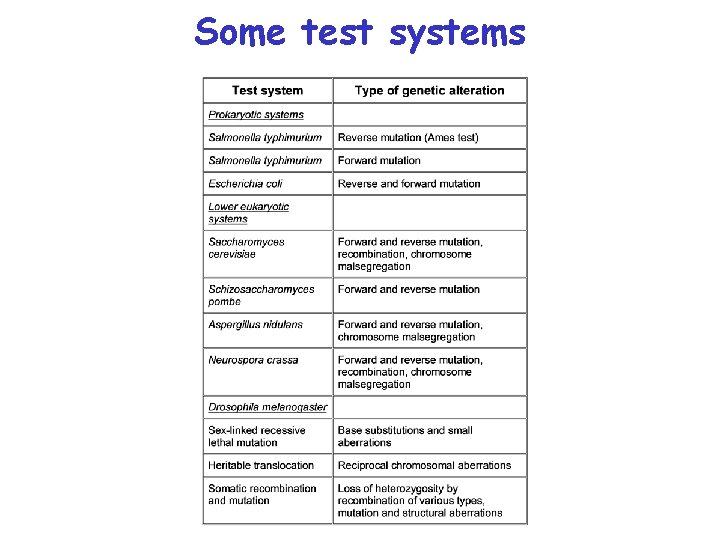
Control of mutagens • test-objects • test systems
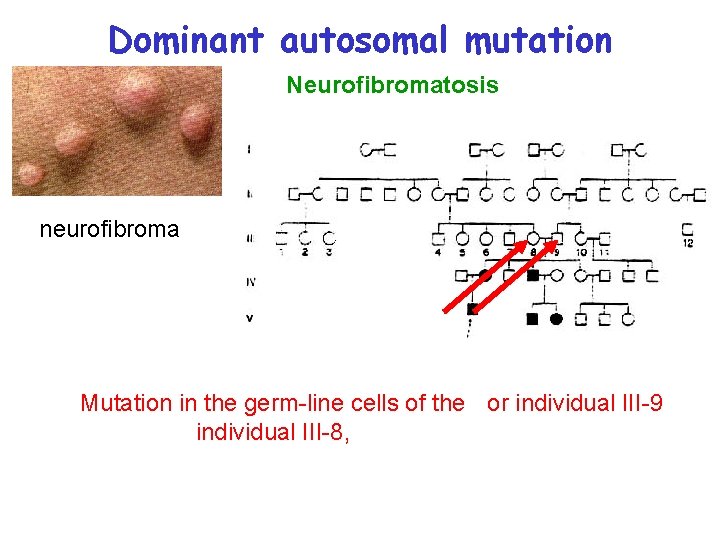
Dominant autosomal mutation Neurofibromatosis neurofibroma Mutation in the germ-line cells of the or individual III-9 individual III-8,
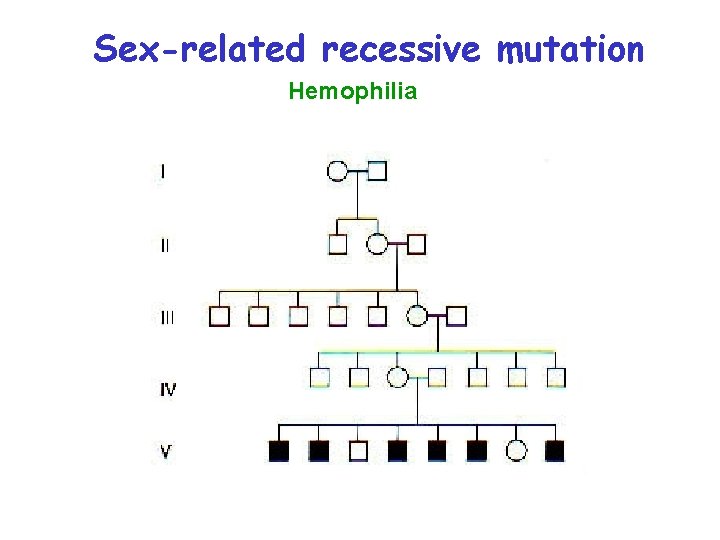
Sex-related recessive mutation Hemophilia
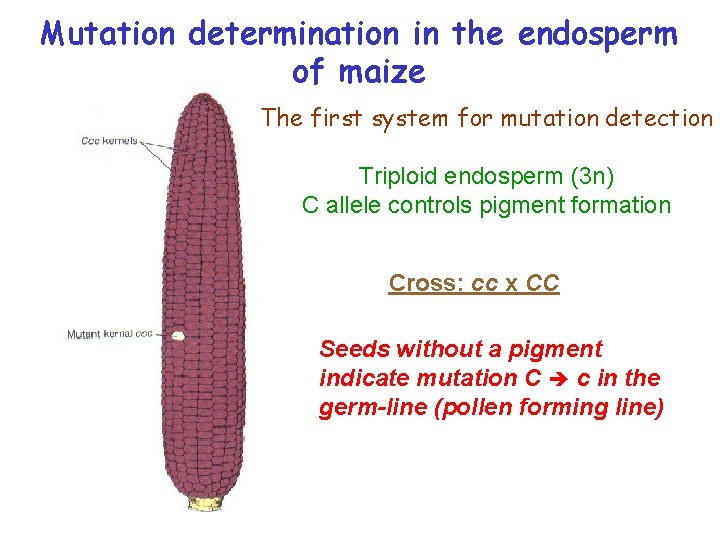
Mutation determination in the endosperm of maize The first system for mutation detection Triploid endosperm (3 n) C allele controls pigment formation Cross: cc x CC Seeds without a pigment indicate mutation C c in the germ-line (pollen forming line)
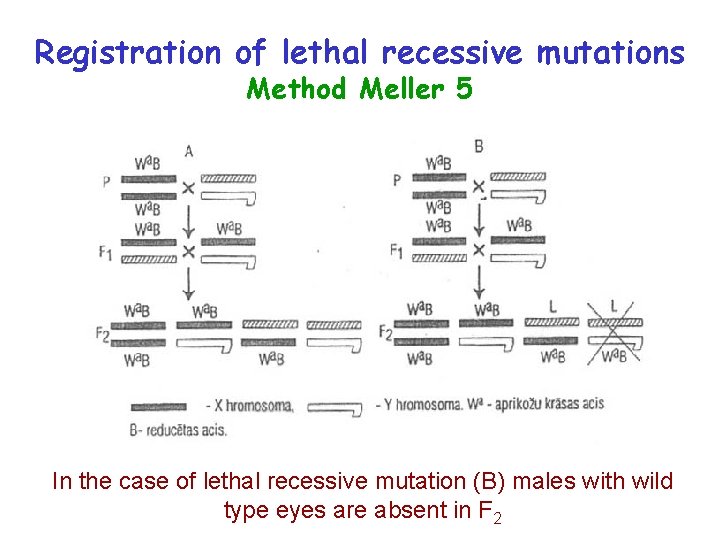
Registration of lethal recessive mutations Method Meller 5 In the case of lethal recessive mutation (B) males with wild type eyes are absent in F 2
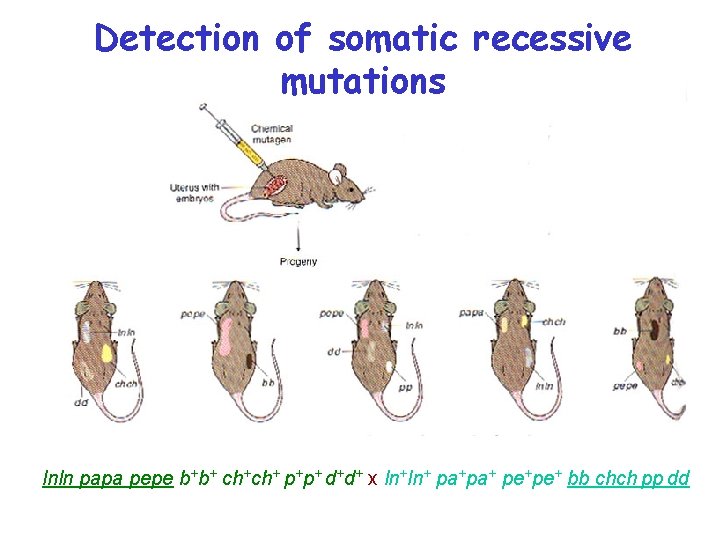
Detection of somatic recessive mutations lnln papa pepe b+b+ ch+ch+ p+p+ d+d+ x ln+ln+ pa+pa+ pe+pe+ bb chch pp dd
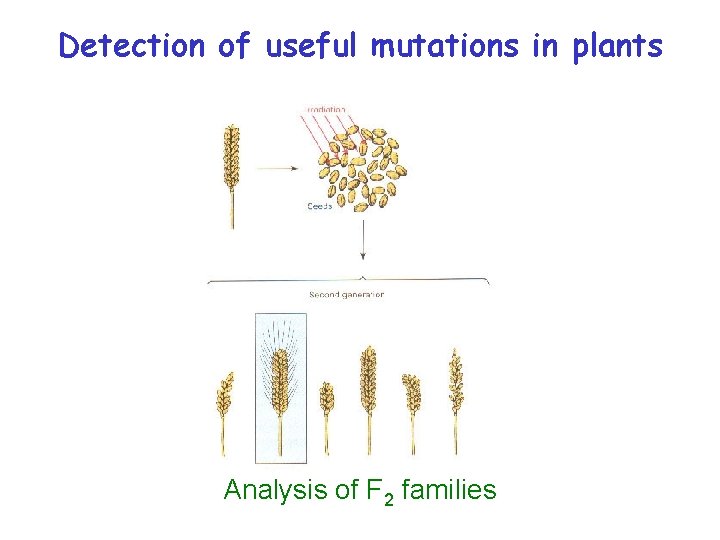
Detection of useful mutations in plants Analysis of F 2 families
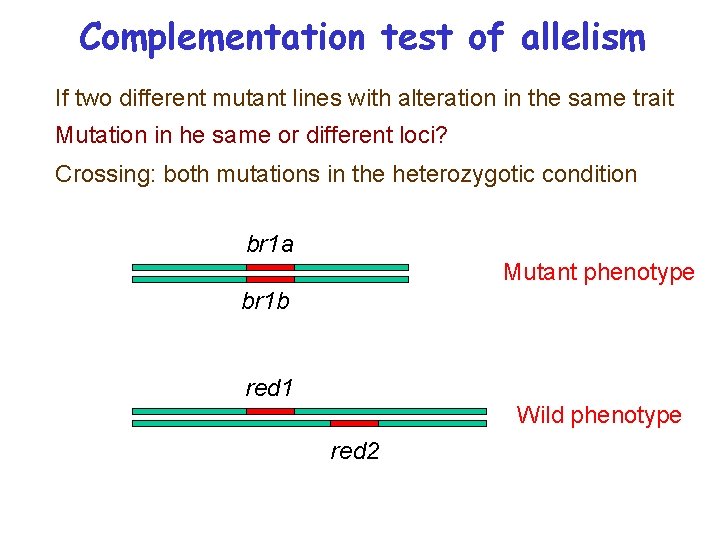
Complementation test of allelism If two different mutant lines with alteration in the same trait Mutation in he same or different loci? Crossing: both mutations in the heterozygotic condition br 1 a Mutant phenotype br 1 b red 1 Wild phenotype red 2
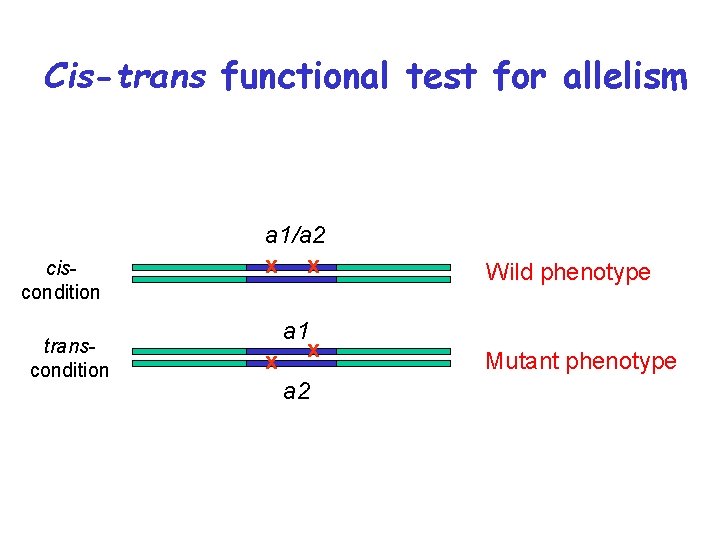
Cis-trans functional test for allelism ciscondition transcondition a 1/a 2 x x Wild phenotype a 1 x x Mutant phenotype a 2
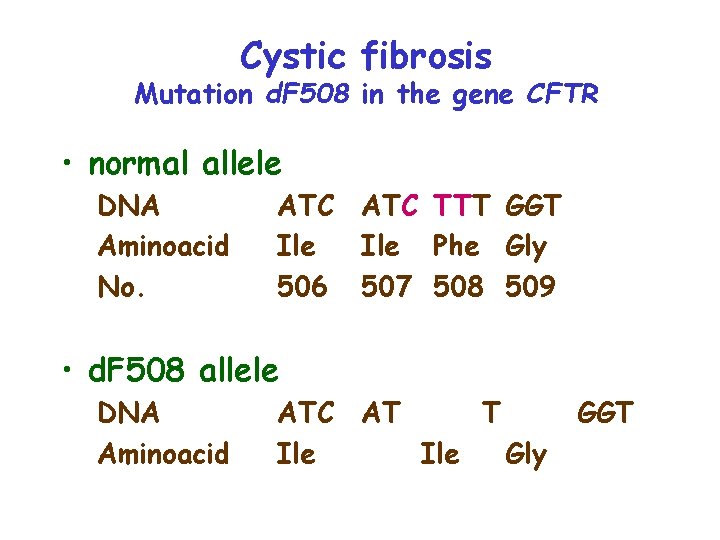
Cystic fibrosis Mutation d. F 508 in the gene CFTR • normal allele DNA Aminoacid No. ATC TTT GGT Ile Phe Gly 506 507 508 509 • d. F 508 allele DNA Aminoacid ATC AT T Ile Gly GGT
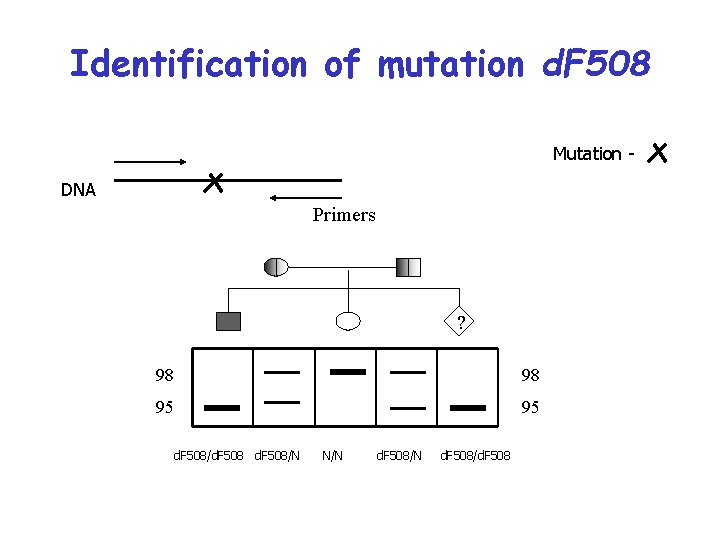
Identification of mutation d. F 508 Mutation DNA Primers ? 98 98 95 95 d. F 508/d. F 508/N N/N d. F 508/d. F 508
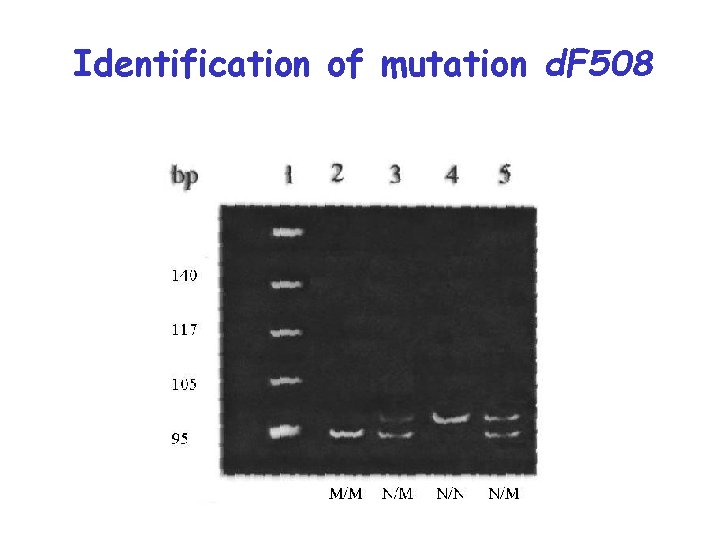
Identification of mutation d. F 508
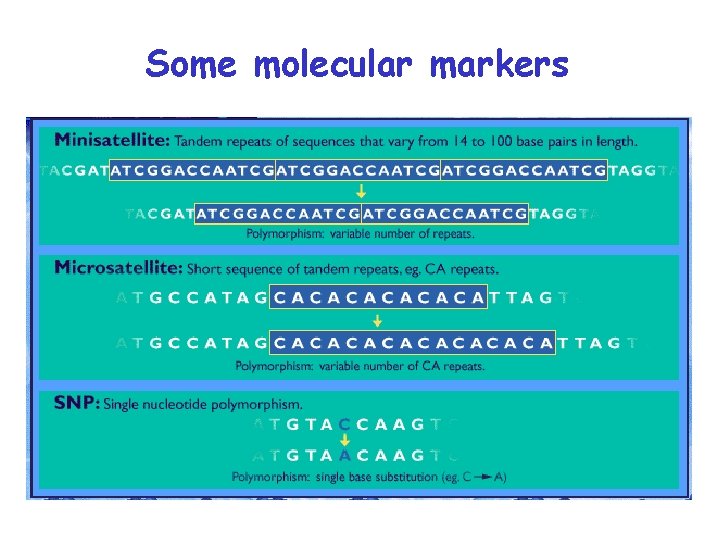
Some molecular markers
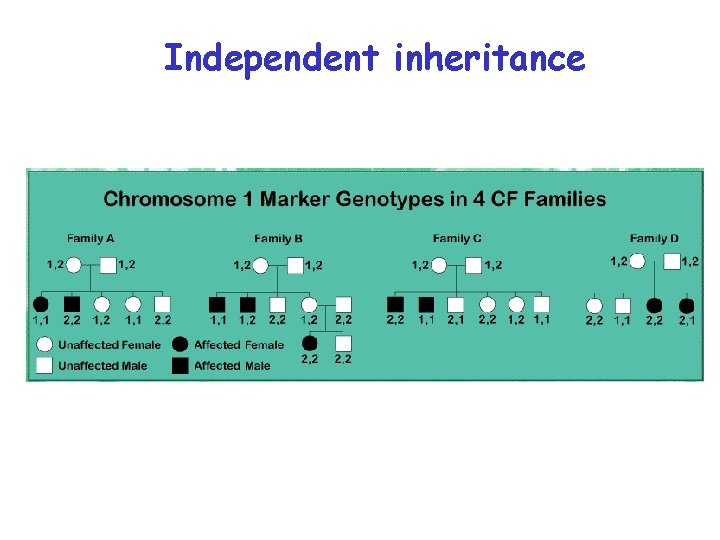
Independent inheritance
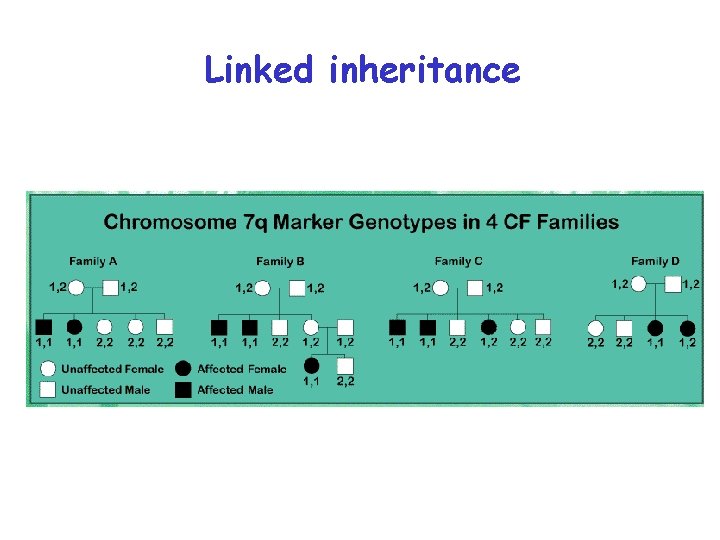
Linked inheritance
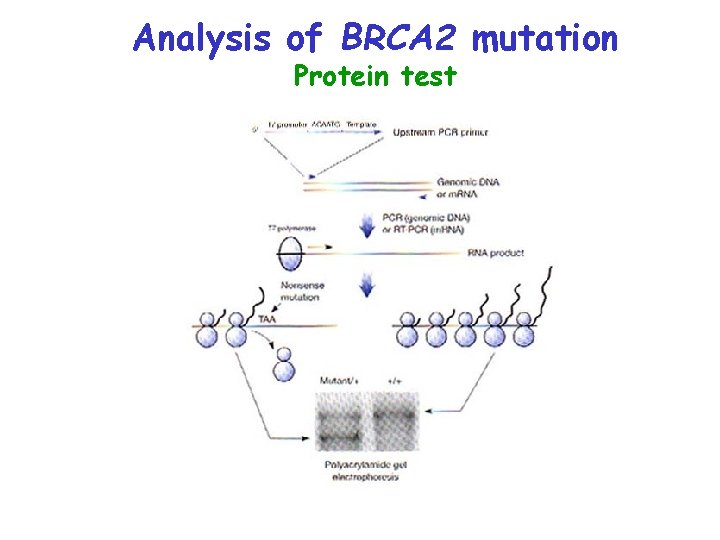
Analysis of BRCA 2 mutation Protein test
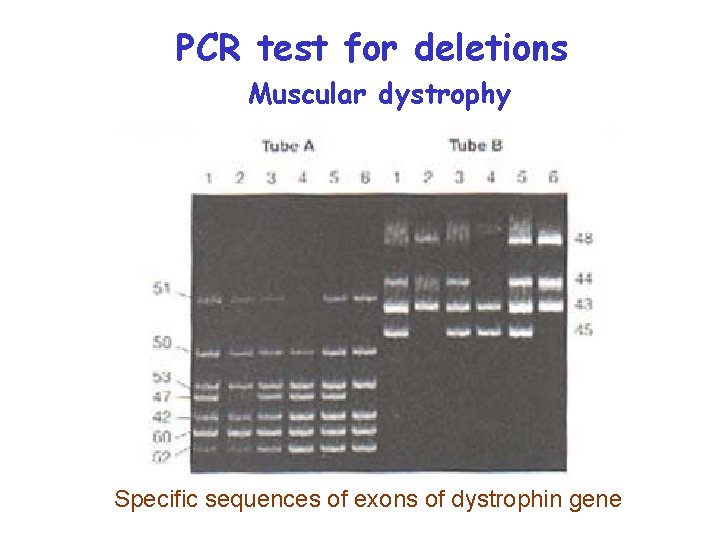
PCR test for deletions Muscular dystrophy Specific sequences of exons of dystrophin gene
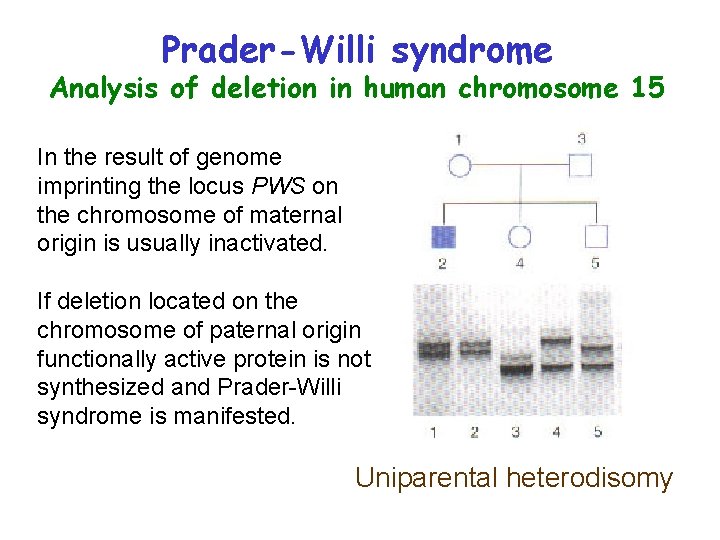
Prader-Willi syndrome Analysis of deletion in human chromosome 15 In the result of genome imprinting the locus PWS on the chromosome of maternal origin is usually inactivated. If deletion located on the chromosome of paternal origin functionally active protein is not synthesized and Prader-Willi syndrome is manifested. Uniparental heterodisomy
Some test systems
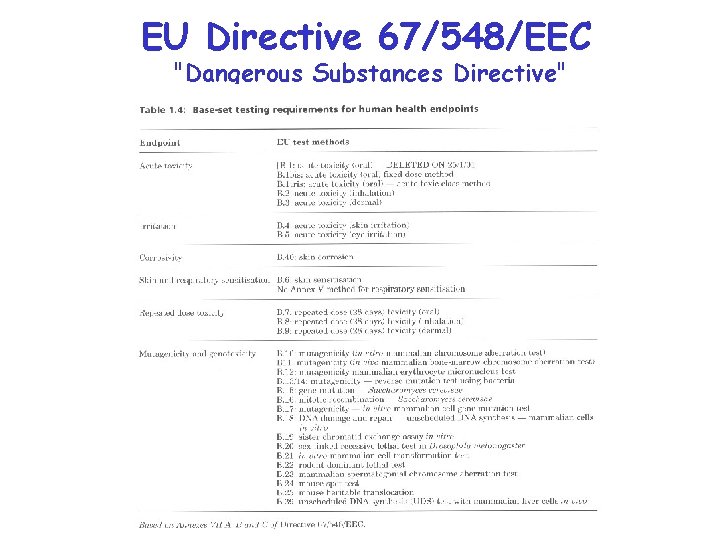
EU Directive 67/548/EEC "Dangerous Substances Directive"
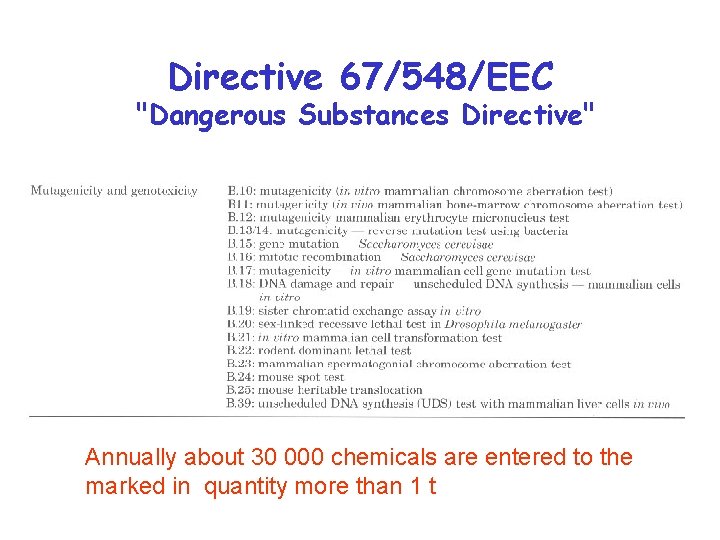
Directive 67/548/EEC "Dangerous Substances Directive" Annually about 30 000 chemicals are entered to the marked in quantity more than 1 t
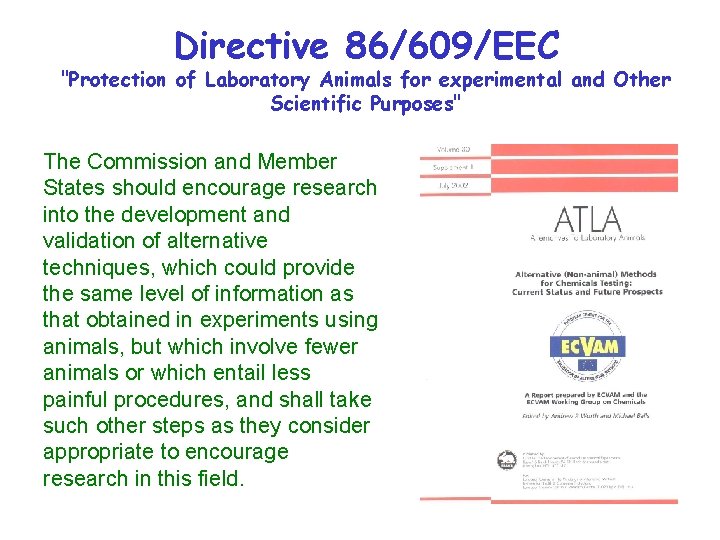
Directive 86/609/EEC "Protection of Laboratory Animals for experimental and Other Scientific Purposes" The Commission and Member States should encourage research into the development and validation of alternative techniques, which could provide the same level of information as that obtained in experiments using animals, but which involve fewer animals or which entail less painful procedures, and shall take such other steps as they consider appropriate to encourage research in this field.