
Mutations Objectives To learn the 2 main types

Mutations
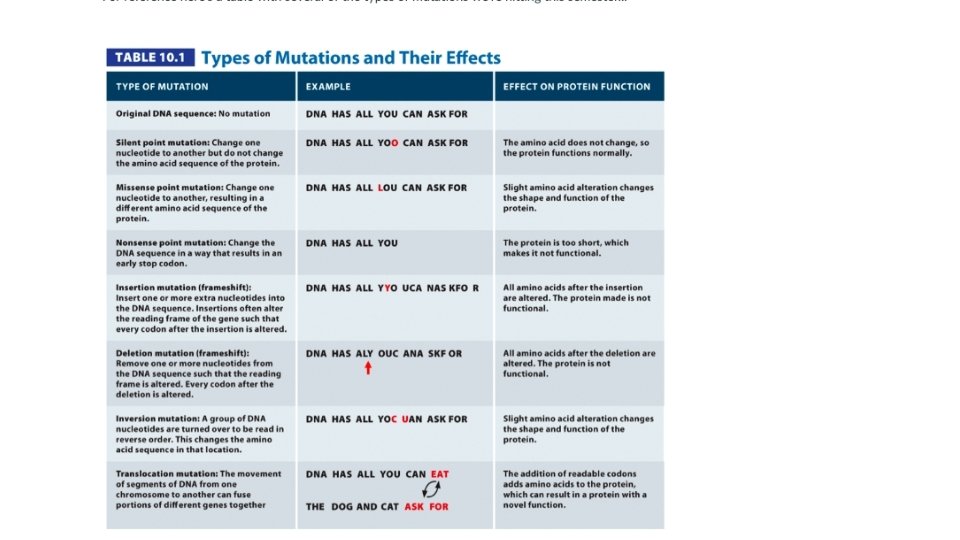
Objectives • To learn the 2 main types of mutations • Given a mutation, identify its type • Predict how a mutation will affect a protein.
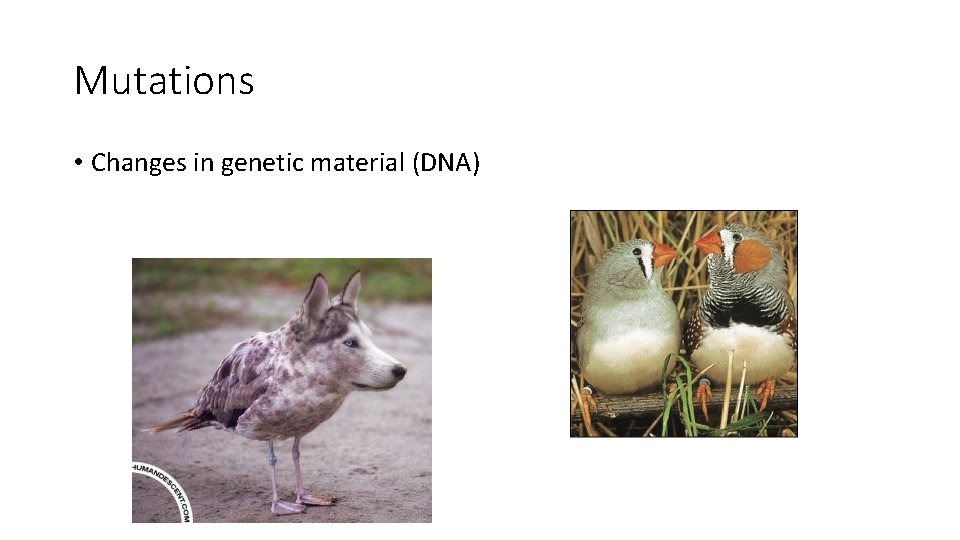
Mutations • Changes in genetic material (DNA)
2 main types of mutations 1) Point mutation- change in one or a few nucleotides (letters) 2) Chromosomal mutation- change in very large section of DNA

Types of Point Mutations 1) Substitution- one base is replaced with another Normal: ATCG Mutation: AGCG 2) Insertion- adds nucleotides Normal: ATCG Mutation: ATCCG 3) Deletion- takes them away Normal: ATCG Mutation: ATG
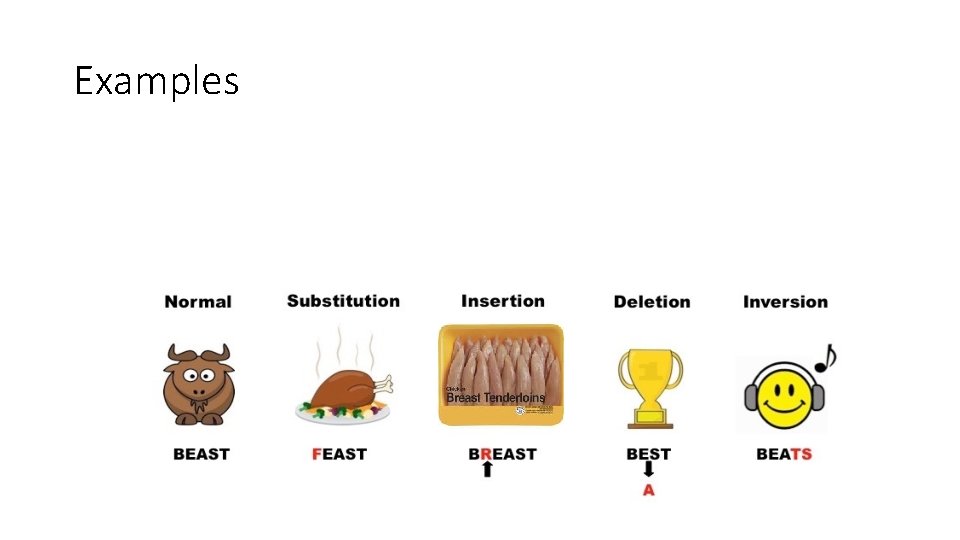
Examples

Frame Shift- when adding or deleting nucleotides changes the codon groupings
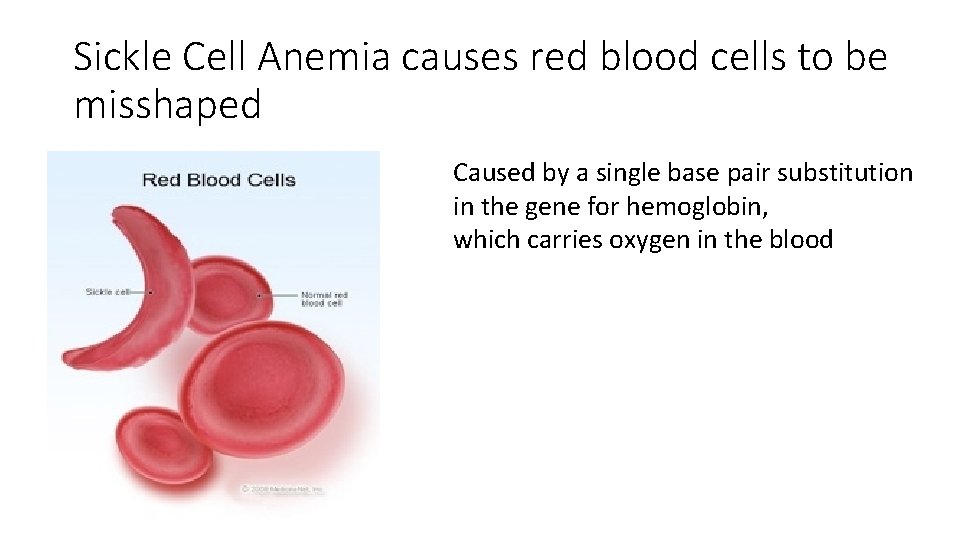
Sickle Cell Anemia causes red blood cells to be misshaped Caused by a single base pair substitution in the gene for hemoglobin, which carries oxygen in the blood
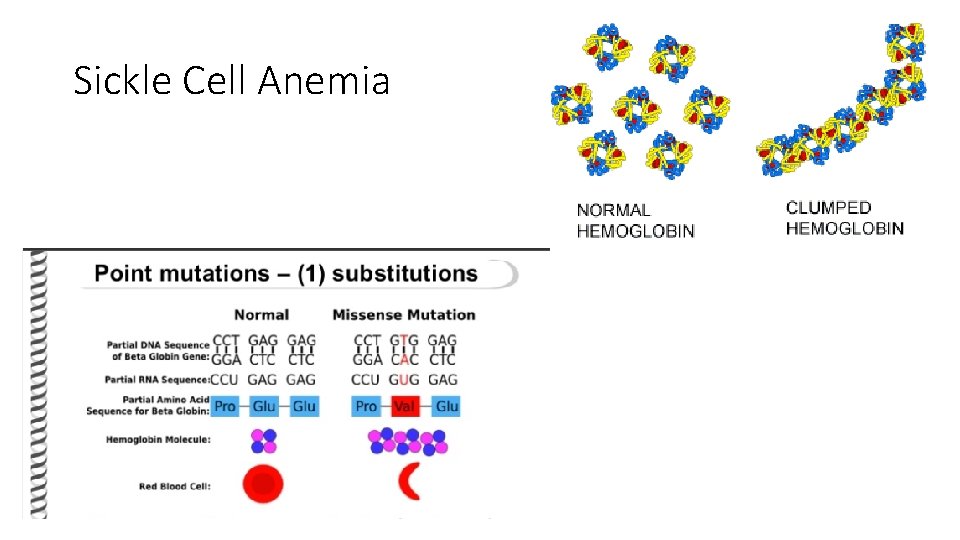
Sickle Cell Anemia
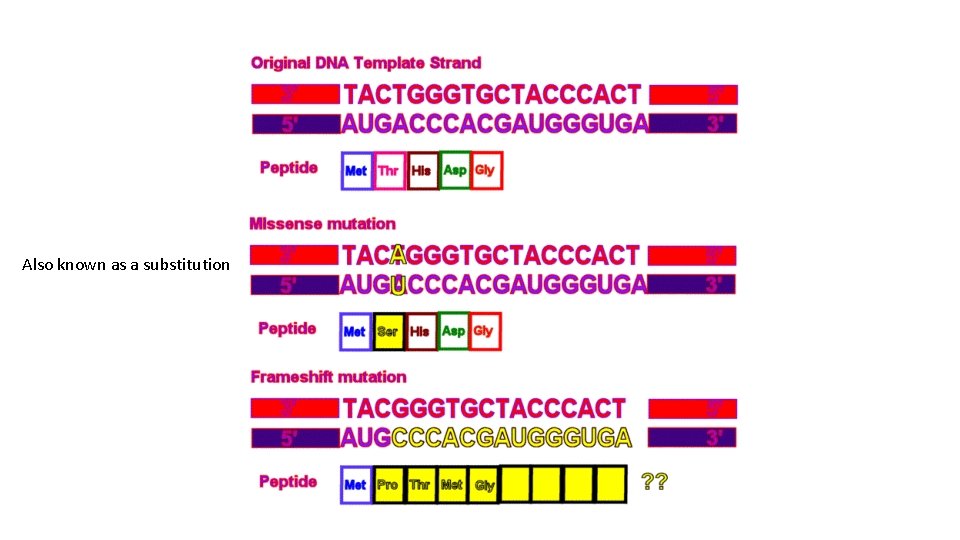
Also known as a substitution
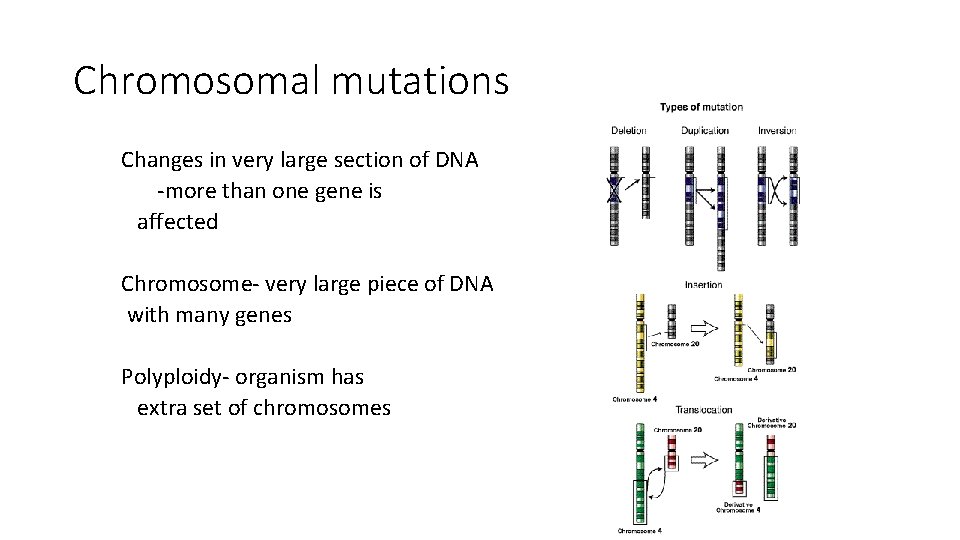
Chromosomal mutations Changes in very large section of DNA -more than one gene is affected Chromosome- very large piece of DNA with many genes Polyploidy- organism has extra set of chromosomes
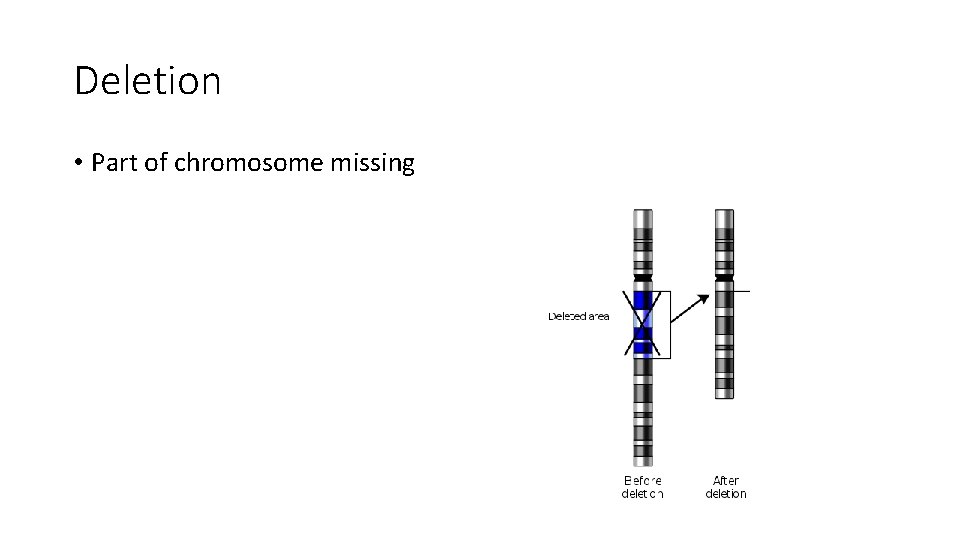
Deletion • Part of chromosome missing
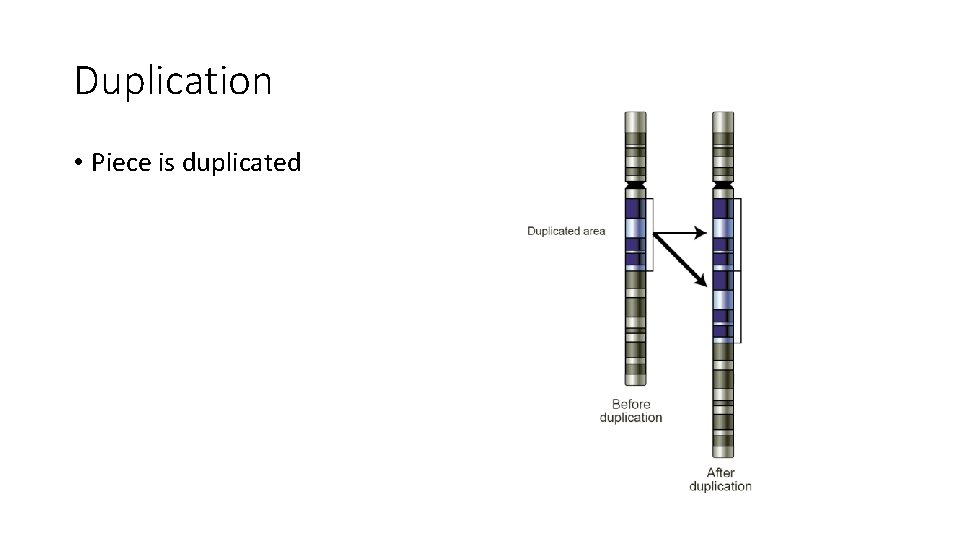
Duplication • Piece is duplicated
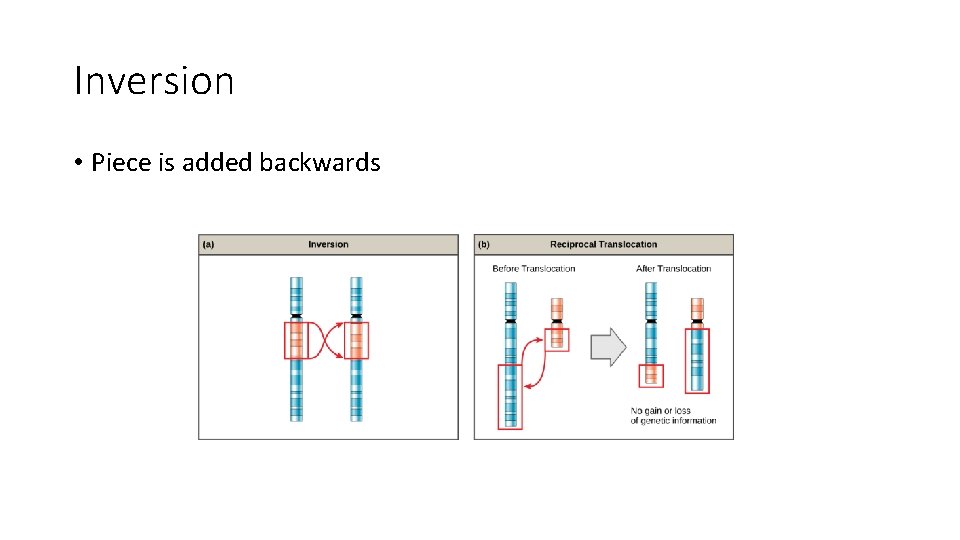
Inversion • Piece is added backwards
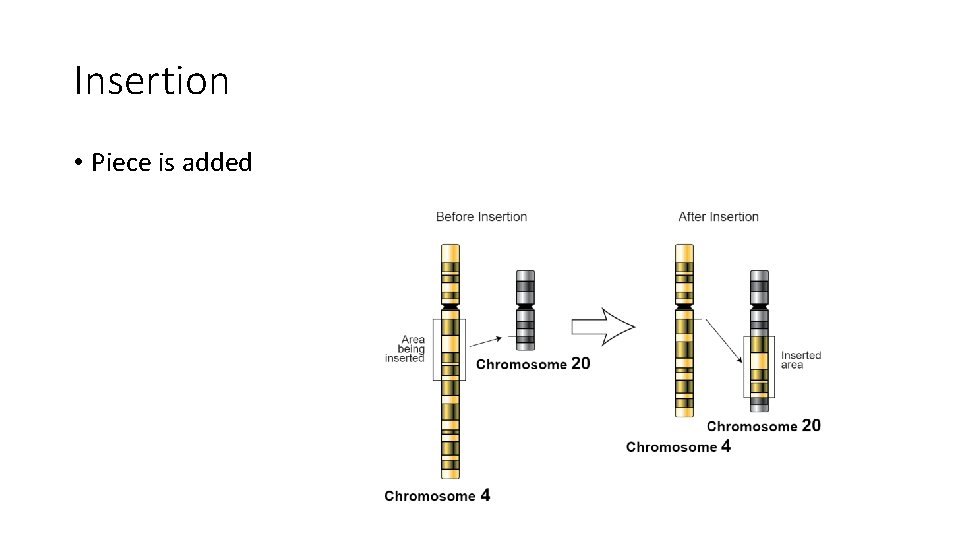
Insertion • Piece is added
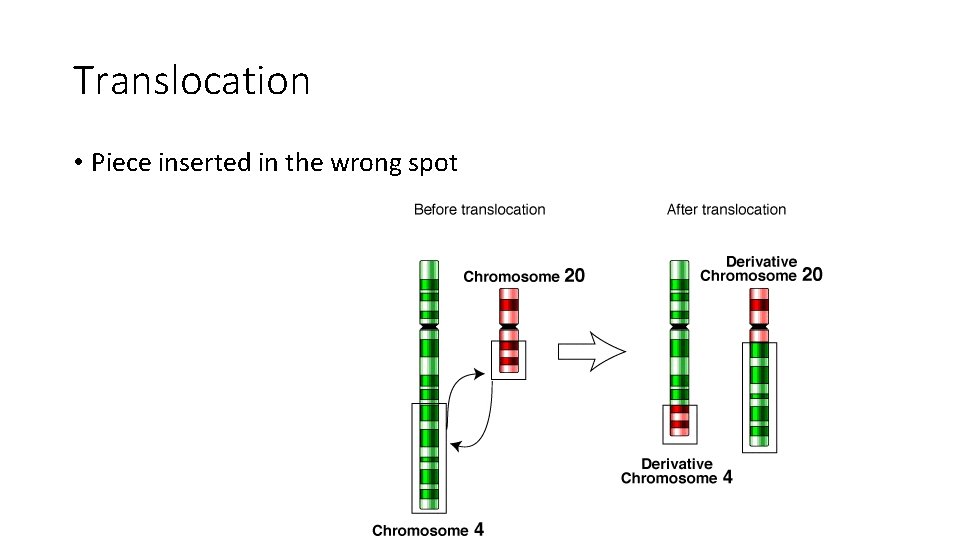
Translocation • Piece inserted in the wrong spot
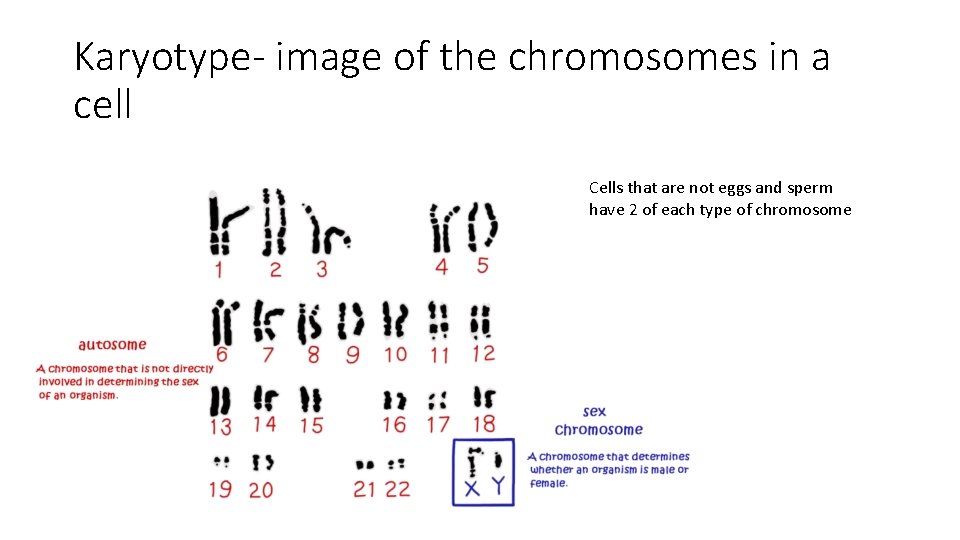
Karyotype- image of the chromosomes in a cell Cells that are not eggs and sperm have 2 of each type of chromosome
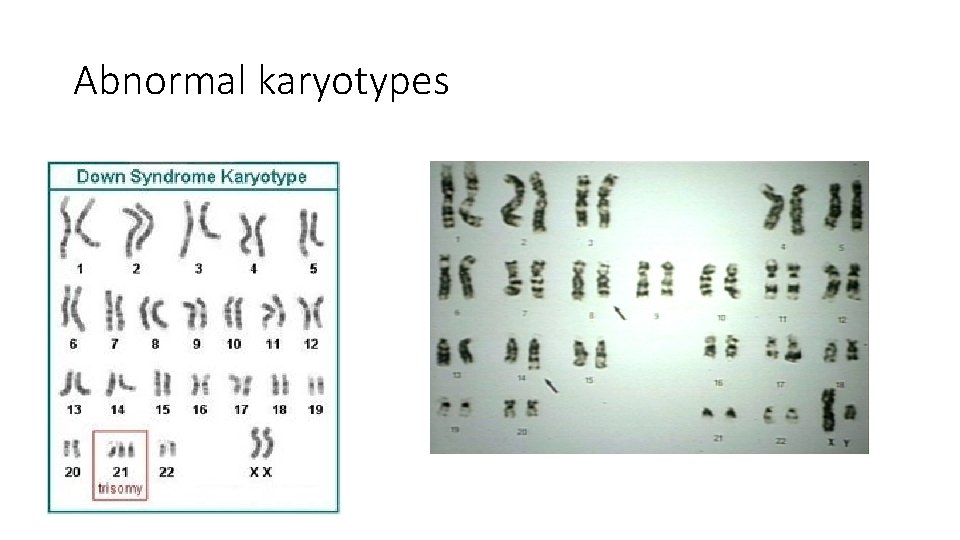
Abnormal karyotypes
- Slides: 20