
Mutations Learning outcomes Define the terms mutation inherited

- Slides: 14
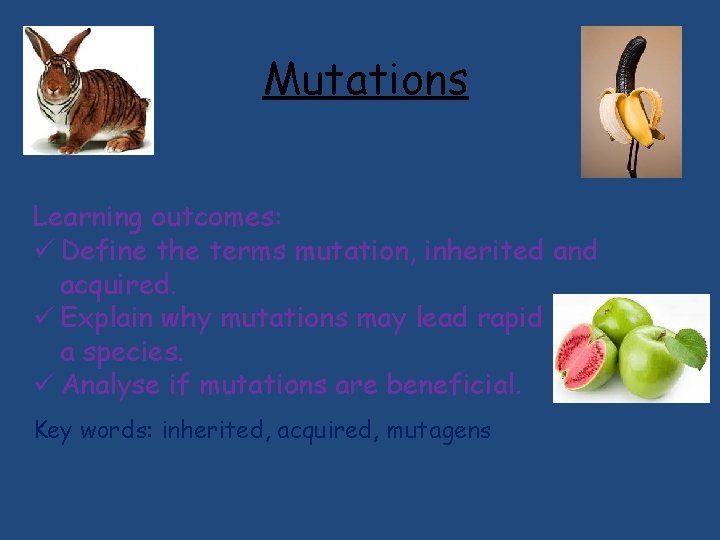
Mutations Learning outcomes: ü Define the terms mutation, inherited and acquired. ü Explain why mutations may lead rapid change in a species. ü Analyse if mutations are beneficial. Key words: inherited, acquired, mutagens
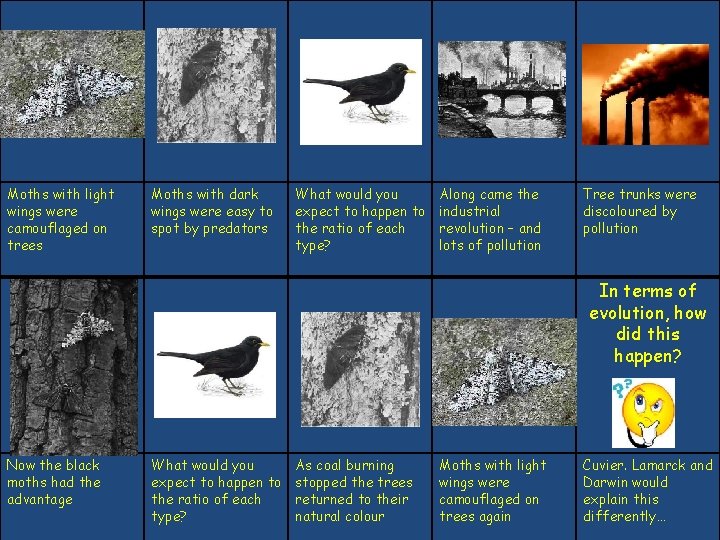
Moths with light wings were camouflaged on trees Moths with dark wings were easy to spot by predators What would you expect to happen to the ratio of each type? Along came the industrial revolution – and lots of pollution Tree trunks were discoloured by pollution In terms of evolution, how did this happen? Now the black moths had the advantage What would you expect to happen to the ratio of each type? As coal burning stopped the trees returned to their natural colour Moths with light wings were camouflaged on trees again Cuvier. Lamarck and Darwin would explain this differently…
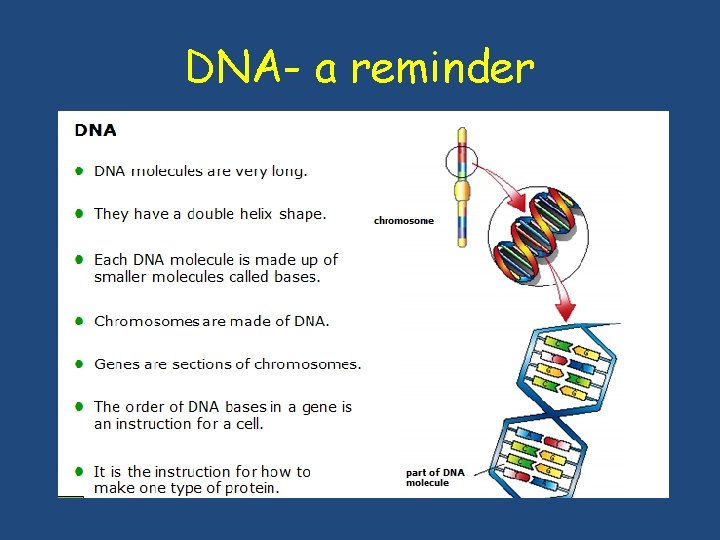
DNA- a reminder
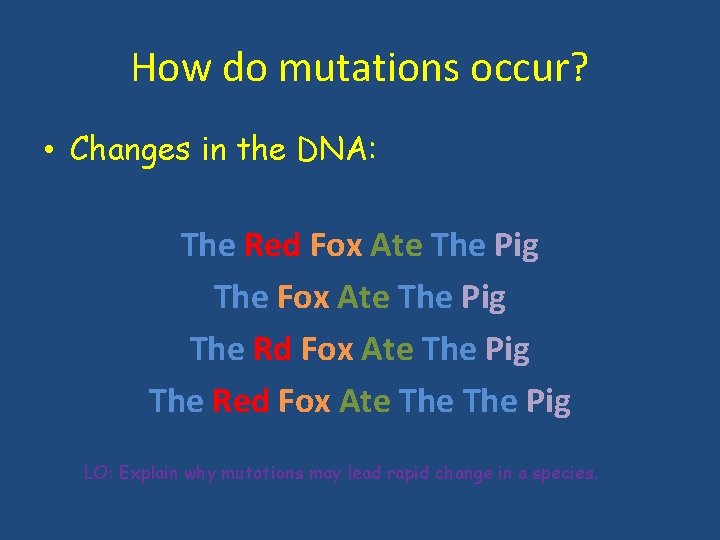
How do mutations occur? • Changes in the DNA: The Red Fox Ate The Pig The Rd Fox Ate The Pig The Red Fox Ate The Pig LO: Explain why mutations may lead rapid change in a species.
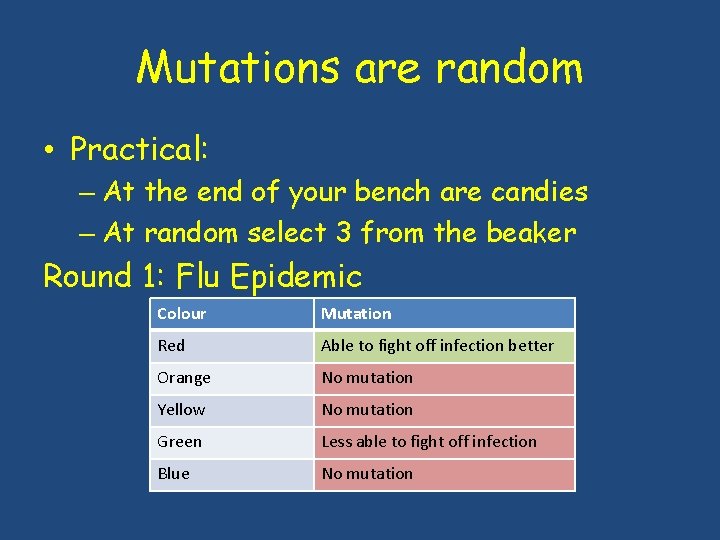
Mutations are random • Practical: – At the end of your bench are candies – At random select 3 from the beaker Round 1: Flu Epidemic Colour Mutation Red Able to fight off infection better Orange No mutation Yellow No mutation Green Less able to fight off infection Blue No mutation
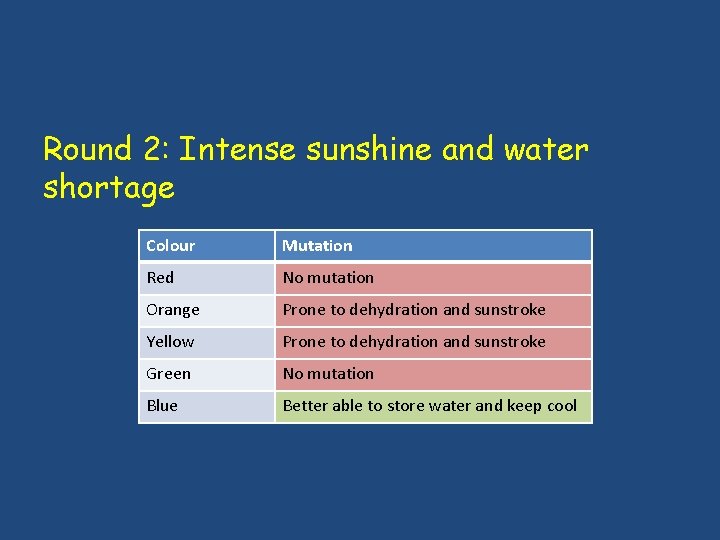
Round 2: Intense sunshine and water shortage Colour Mutation Red No mutation Orange Prone to dehydration and sunstroke Yellow Prone to dehydration and sunstroke Green No mutation Blue Better able to store water and keep cool
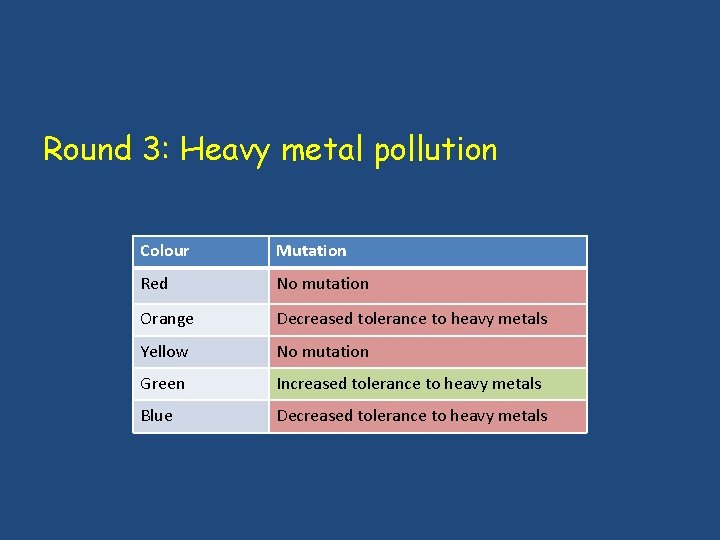
Round 3: Heavy metal pollution Colour Mutation Red No mutation Orange Decreased tolerance to heavy metals Yellow No mutation Green Increased tolerance to heavy metals Blue Decreased tolerance to heavy metals
Complete video response page.
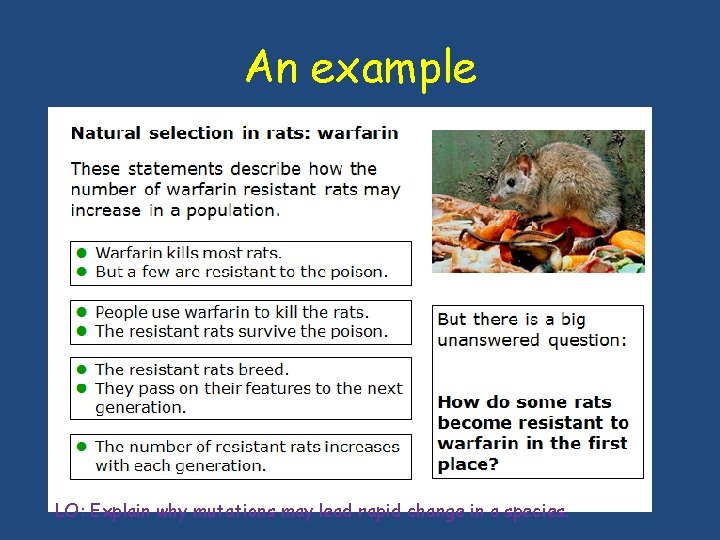
An example LO: Explain why mutations may lead rapid change in a species.
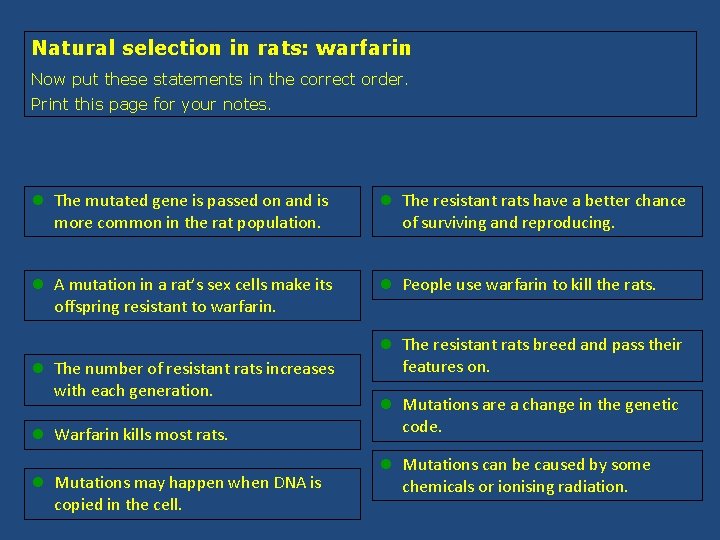
Natural selection in rats: warfarin Now put these statements in the correct order. Print this page for your notes. l The mutated gene is passed on and is more common in the rat population. l The resistant rats have a better chance of surviving and reproducing. l A mutation in a rat’s sex cells make its offspring resistant to warfarin. l People use warfarin to kill the rats. l The number of resistant rats increases with each generation. l Warfarin kills most rats. l Mutations may happen when DNA is copied in the cell. l The resistant rats breed and pass their features on. l Mutations are a change in the genetic code. l Mutations can be caused by some chemicals or ionising radiation.
Find the answers… • Around the room you will find different examples of mutations. • Add the example to your mind map. • You must decide if the mutation is beneficial to the organism and explain how it is or is not beneficial. LO: Analyse if mutations are beneficial.
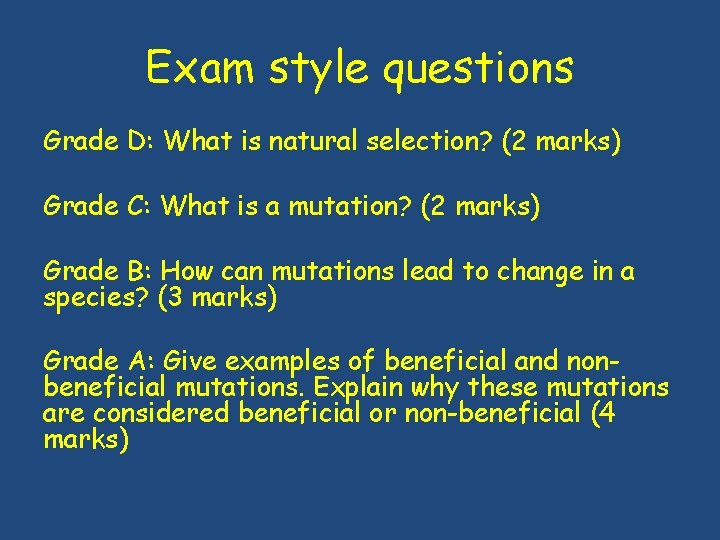
Exam style questions Grade D: What is natural selection? (2 marks) Grade C: What is a mutation? (2 marks) Grade B: How can mutations lead to change in a species? (3 marks) Grade A: Give examples of beneficial and nonbeneficial mutations. Explain why these mutations are considered beneficial or non-beneficial (4 marks)