
Mutations Genetic Code Mutations t RNA Structure Cloverleaf
- Slides: 17
Mutations Genetic Code Mutations
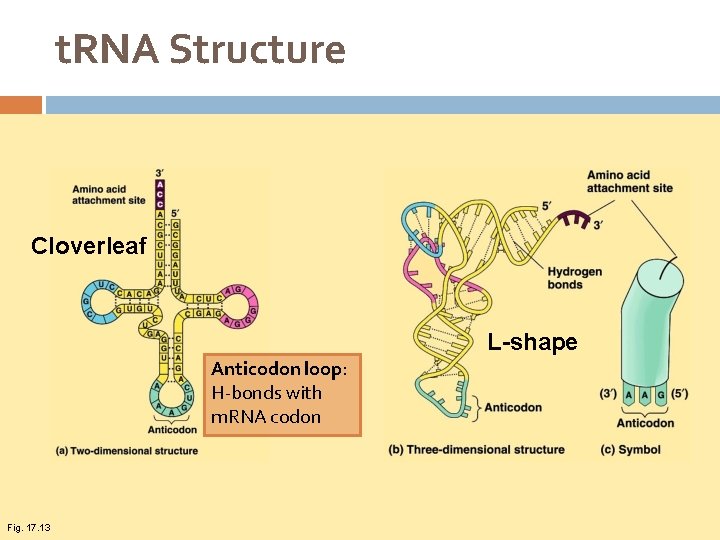
t. RNA Structure Cloverleaf L-shape Anticodon loop: H-bonds with m. RNA codon Fig. 17. 13
Mutation �a change in the genetic material of an organism �genetic disorder or hereditary disease: harmful mutations in gametes that are passed onto the next generation
Origin/Cause of Mutation �Spontaneous: �errors in the genetic machinery during DNA replication (ex. Failure in DNA proofreading) �due to enzymes �Induced: arising from exposure to mutagenic agents (ex. Chemicals and radiation) �Transposable elements: �errors during recombination (crossing over) �transposons
Types of Mutagens �Mutagen: a substance that can cause mutations
Small scale Mutations �Small scale mutations include an individual base pair, called a point mutation. �Substitution of one base for another �Insertion or deletion of a single base pair �Inversion of 2 adjoining base pairs
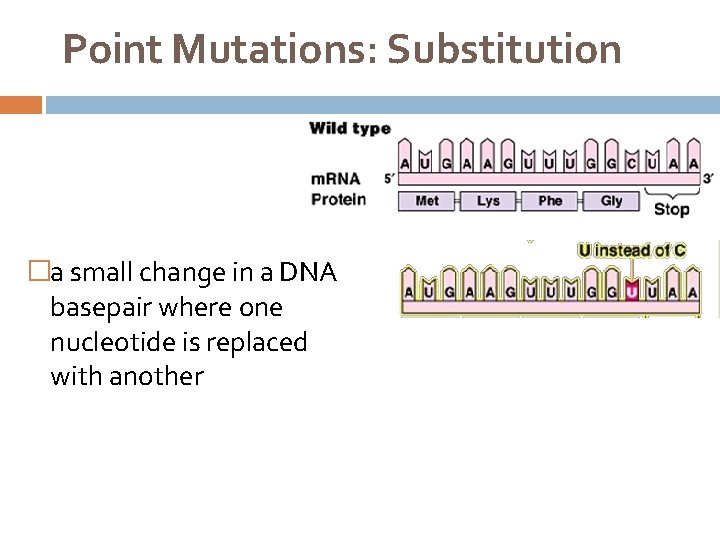
Point Mutations: Substitution �a small change in a DNA basepair where one nucleotide is replaced with another
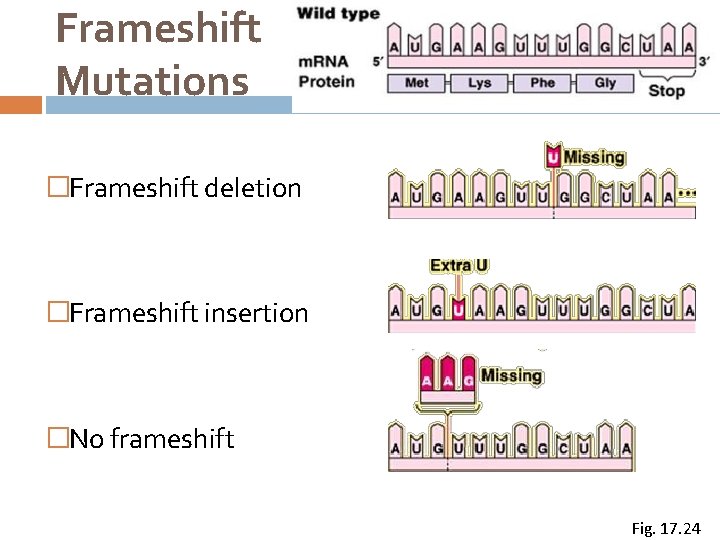
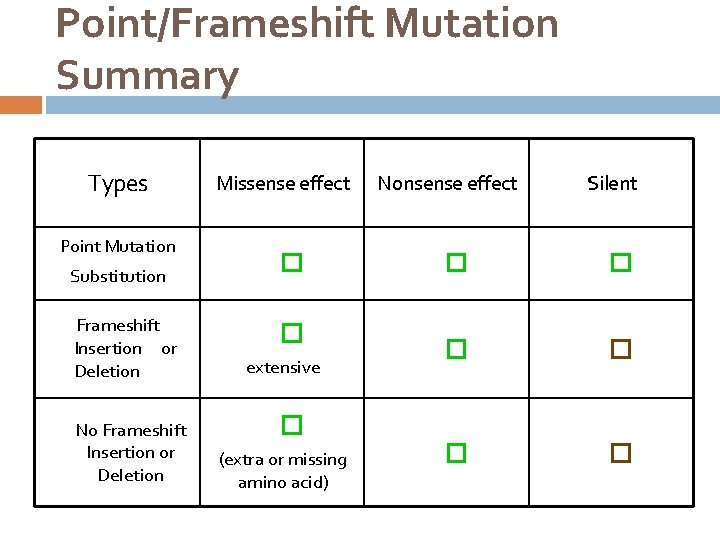
Frameshift Mutation: Insertion & Deletion �Reading frame: triplet grouping (codons) of a genetic message �Frameshift mutation: number of nucleotides added/lost is not a multiple of 3 thus altering the reading frame �Insertion: addition of one or more nucleotide pairs in a gene �Deletion: loss of one of more nucleotide pairs in a gene �No frameshift: number of nucleotides added/lost is a multiple of 3 �Leads to extra or missing amino acid
Frameshift Mutations �Frameshift deletion �Frameshift insertion �No frameshift Fig. 17. 24
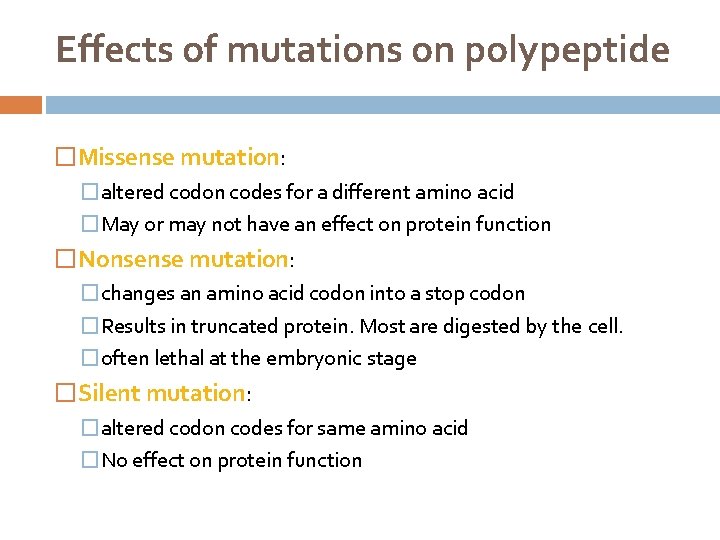
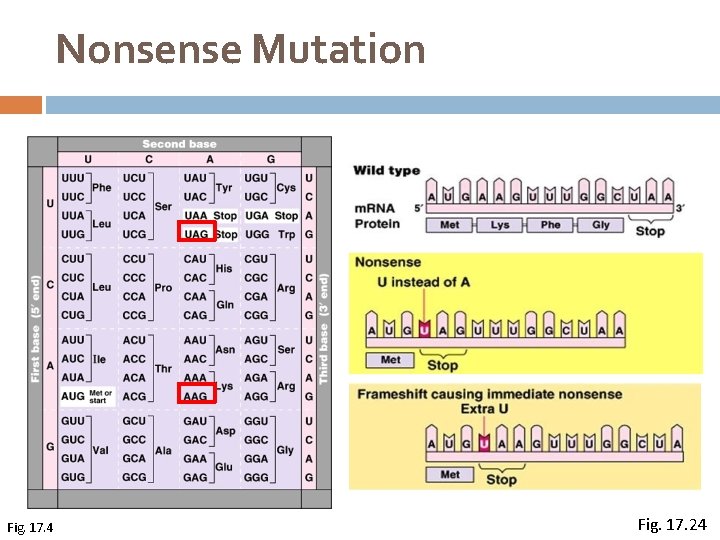
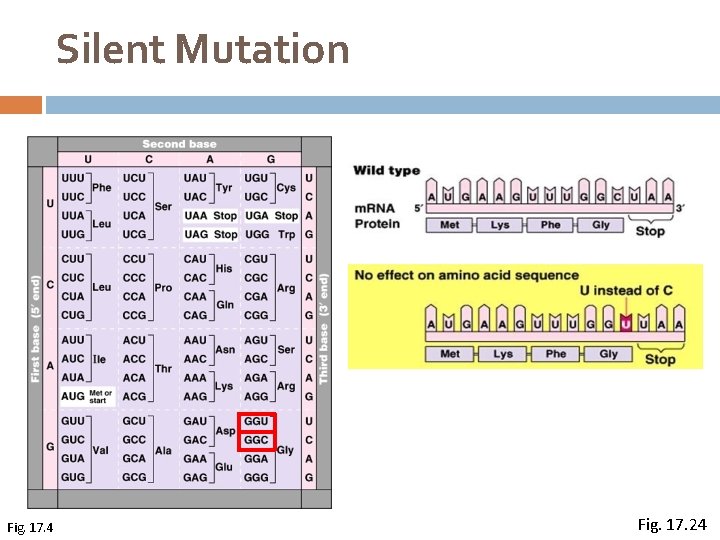
Effects of mutations on polypeptide �Missense mutation: �altered codon codes for a different amino acid �May or may not have an effect on protein function �Nonsense mutation: �changes an amino acid codon into a stop codon �Results in truncated protein. Most are digested by the cell. �often lethal at the embryonic stage �Silent mutation: �altered codon codes for same amino acid �No effect on protein function
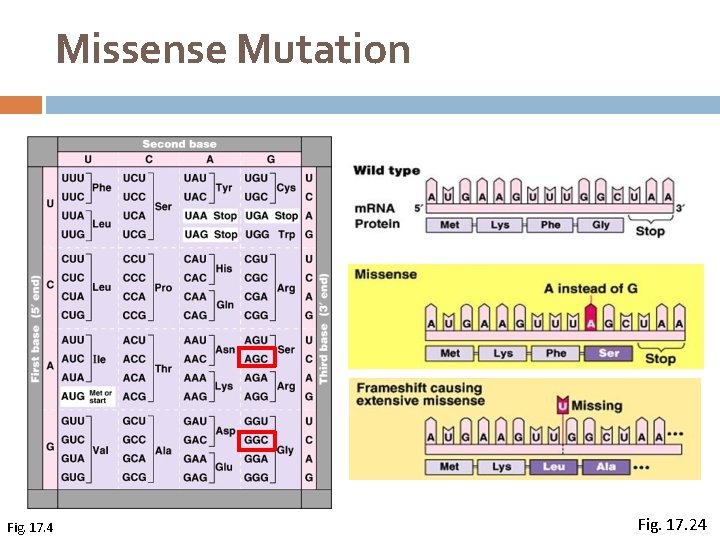
Missense Mutation Fig. 17. 4 Fig. 17. 24
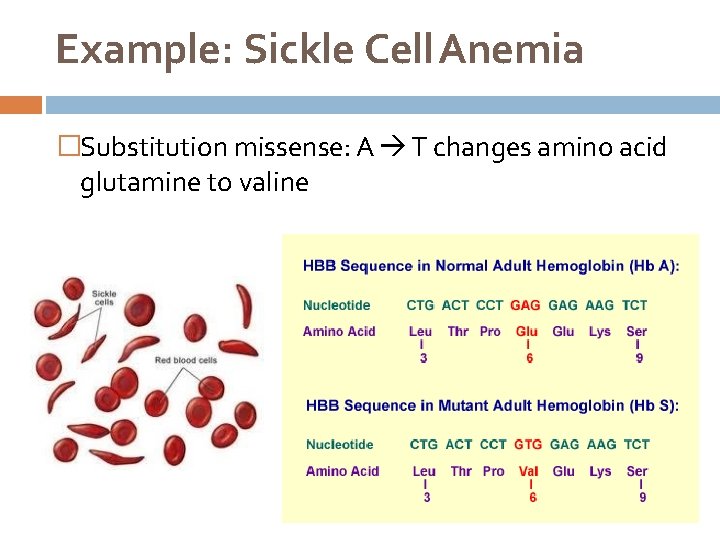
Example: Sickle Cell Anemia �Substitution missense: A T changes amino acid glutamine to valine
Nonsense Mutation Fig. 17. 4 Fig. 17. 24
Silent Mutation Fig. 17. 4 Fig. 17. 24
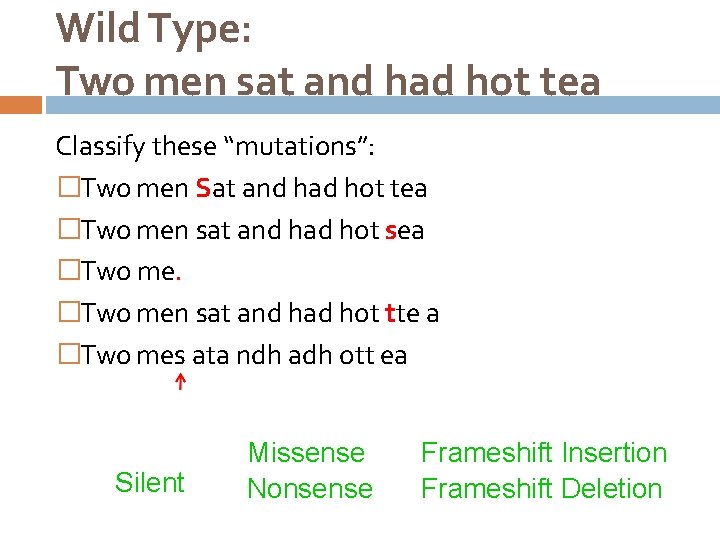
Wild Type: Two men sat and had hot tea Classify these “mutations”: �Two men Sat and had hot tea �Two men sat and had hot sea �Two men sat and had hot tte a �Two mes ata ndh adh ott ea Silent Missense Nonsense Frameshift Insertion Frameshift Deletion
Point/Frameshift Mutation Summary Types Point Mutation Substitution Frameshift Insertion or Deletion No Frameshift Insertion or Deletion Missense effect � � extensive Nonsense effect Silent � � � � (extra or missing amino acid)
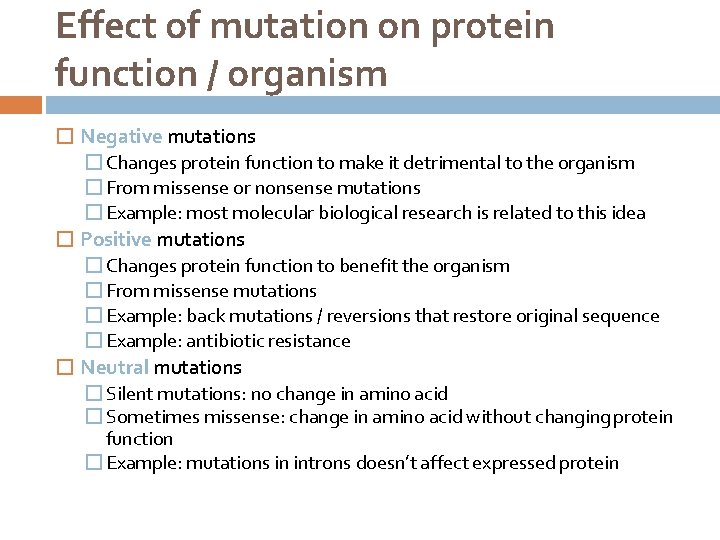
Effect of mutation on protein function / organism � Negative mutations � Changes protein function to make it detrimental to the organism � From missense or nonsense mutations � Example: most molecular biological research is related to this idea � Positive mutations � Changes protein function to benefit the organism � From missense mutations � Example: back mutations / reversions that restore original sequence � Example: antibiotic resistance � Neutral mutations � Silent mutations: no change in amino acid � Sometimes missense: change in amino acid without changing protein function � Example: mutations in introns doesn’t affect expressed protein