
Mutations and other genetic issues Genetics Unit Mutations
- Slides: 40
Mutations and other genetic issues Genetics Unit
Mutations l Changes in the genetic material. l Any deviation from the normal chromosomal compliment l Two types: Spontaneous mutations-occur randomly; no cause can be determined l Induced mutations are caused by some traceable artificial factor: exposure to chemicals, alcohol, drugs, radiation l
Mutations l Mutations that produce changes in a single gene are gene mutations. l Mutations that produce changes in a whole chromosome are chromosomal mutations.
Gene Mutations l Point mutation-change in one or just a few nucleotides. So named because it occurs at a single point. Substitutions l Deletions l Insertions l
Gene Mutations l Frameshift mutation—shift the reading frame of the genetic code l Can alter a protein so much that it can’t perform its job.
Chromosomal Mutations l Involve a change in the number or structure of the chromosome l Some change the location of some genes on the chromosome l Some may change the number of copies of some genes.
Chromosomal Mutations l Four main types of mutations: Deletion l Duplication l Inversion l translocation l
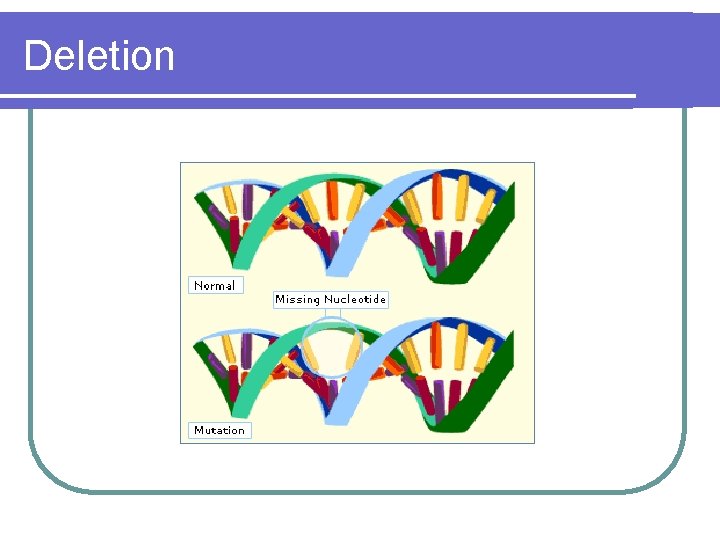
Deletion l The permanent loss of a segment of chromosome l Can be found anywhere on the chromosome l Can be caused by heat, radiation, viruses, chemicals, errors
Deletion
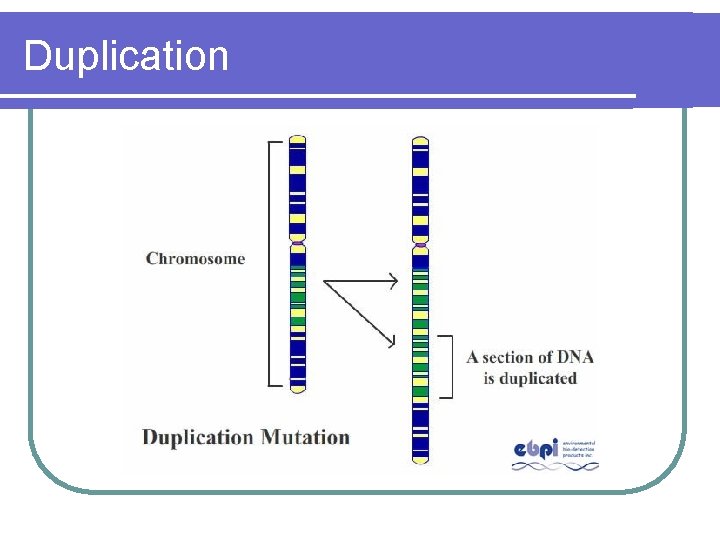
Duplication l Doubles a segment of chromosome l Can be fatal l Can be caused by uneven crossing over during meiosis or replication error before meiosis
Duplication
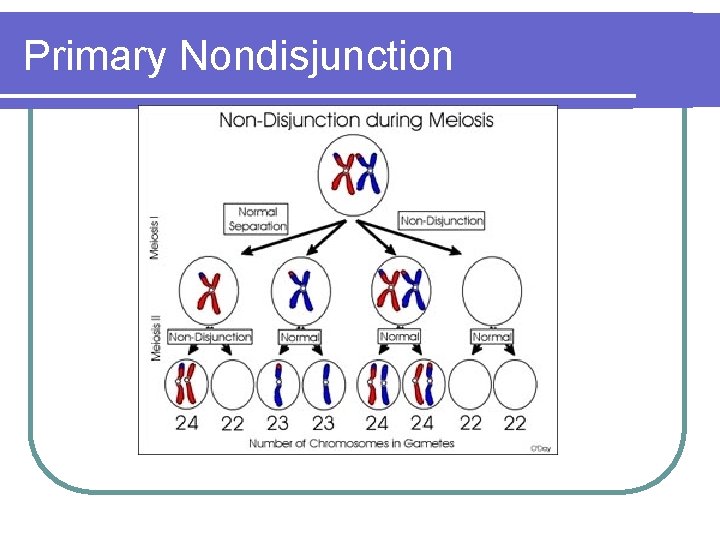
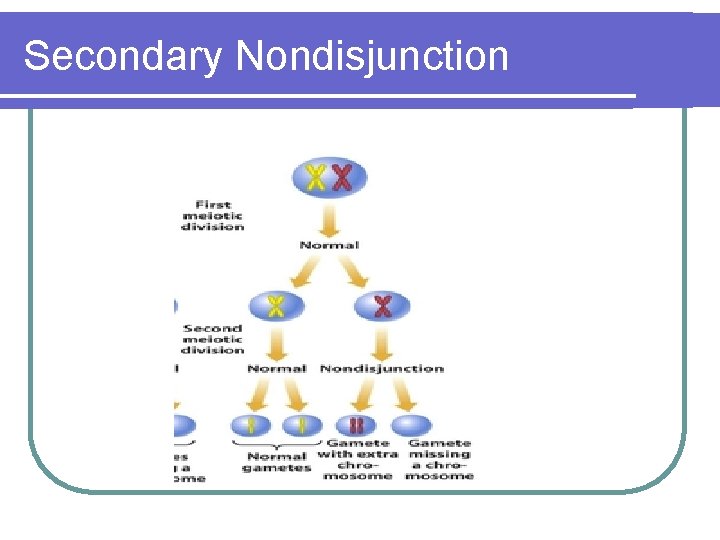
Causes of abnormalities l Nondisjunction The failure of the chromosome pairs to separate during Meiosis I or Meiosis II l Result will be a zygote with too many or too few chromosomes l Two types: Primary and secondary nondisjunction l
Primary Nondisjunction
Secondary Nondisjunction
Types of Genetics Tests l When trying to determine a genetic problem, we can use non-invasive tests such as l Pedigrees l Karyotypes
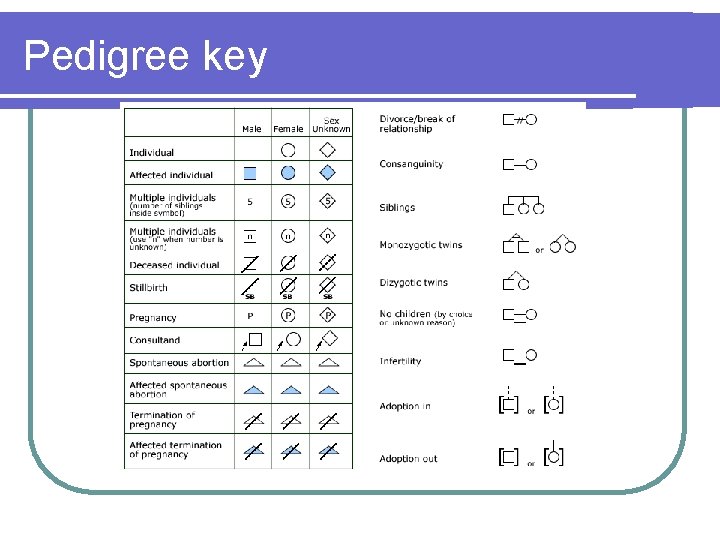
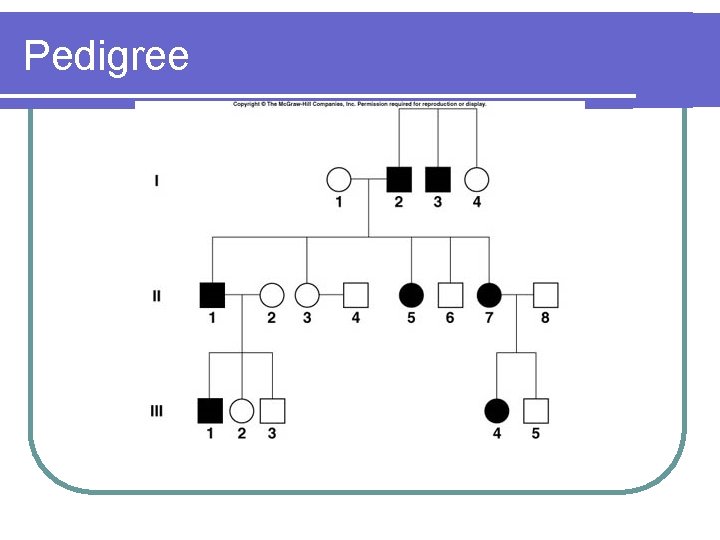
Pedigrees l. A pedigree follows a specific trait through several generations l Resembling a type of map, the pedigree uses symbols to represent certain elements
Pedigree key
Pedigree
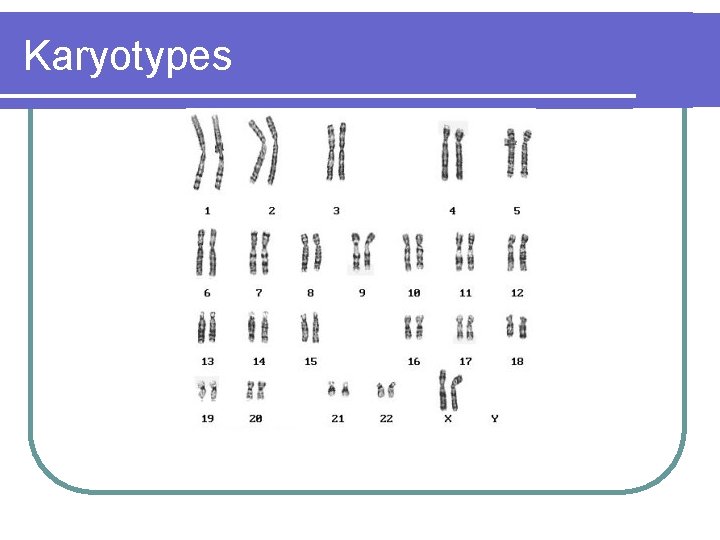
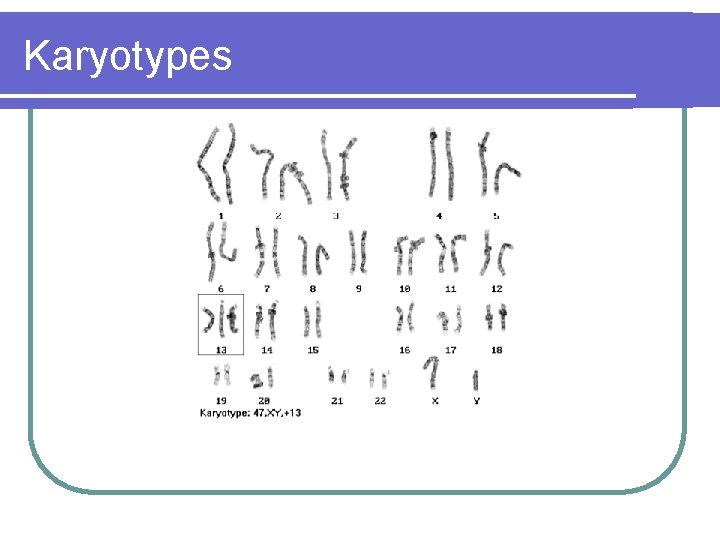
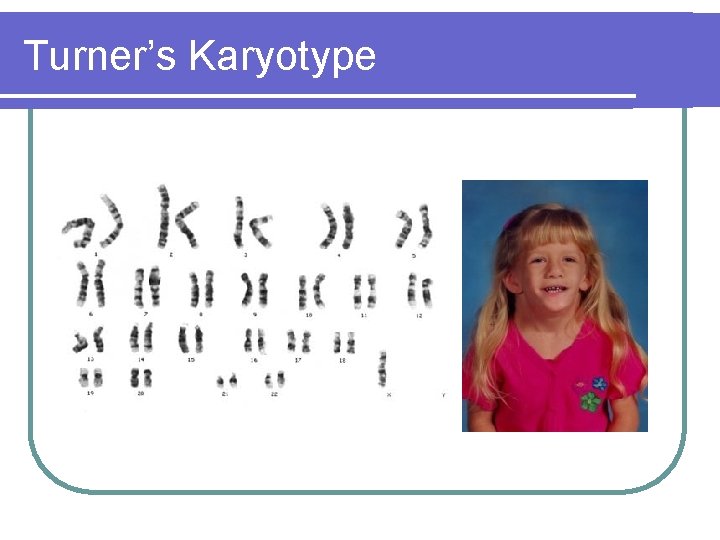
Karyotypes l. A photographic inventory of an individual’s chromosomes l Can show the individual’s gender and any abnormalities in chromosome number or structure
Karyotypes
Karyotypes
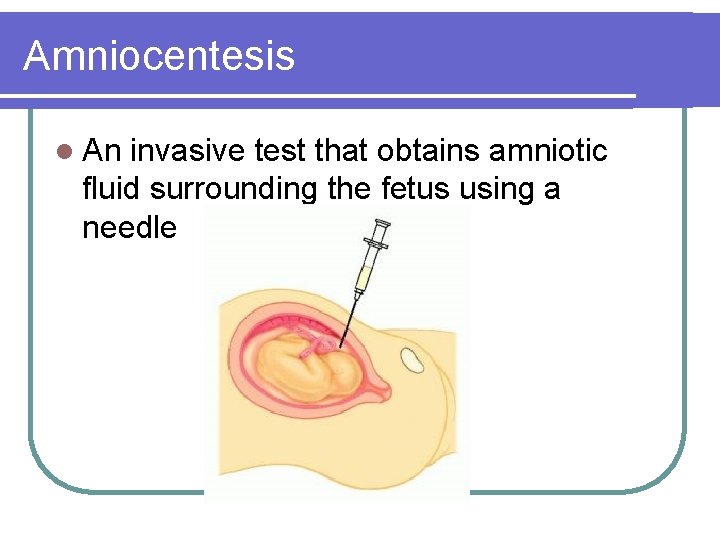
Amniocentesis l An invasive test that obtains amniotic fluid surrounding the fetus using a needle
Amniocentesis Pros and Cons l Able to determine fetus’ gender and/or any abnormalities l Can’t be done before 16 th week of pregnancy l Can cause infection to mother and/or fetus l Can cause premature delivery and birth
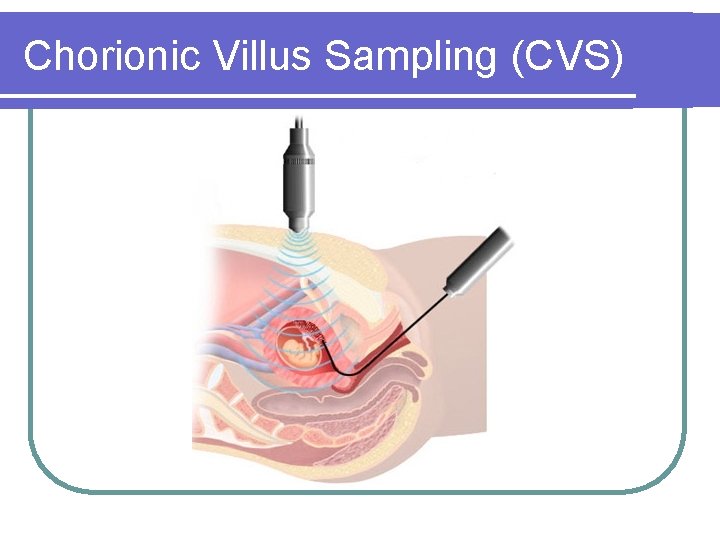
Chorionic Villus Sampling (CVS)
CVS Pros and Cons l Can determine fetus gender and any genetic abnormalities l Can be done after 10 weeks l Can cause leakage of amniotic fluid l Can cause premature labor and delivery
Recessive Disorders l Must be inherited from BOTH parents l Autosomal recessive disorders (non-sex cells) Tay-Sachs l PKU l Cystic fibrosis l
Recessive Disorders Tay-Sachs—lipid accumulation in the brain; mental deficiency; blindness, death in early childhood l PKU-phenylketonuria—accumulation of phenylalanine in tissues; lack of normal skin pigment; mental retardation l Cystic fibrosis—excess mucus in lungs, digestive tract, liver; increased susceptibility to infections; often die young l
Dominant Disorders l Can get the disorder by inheriting only one dominant allele Huntington’s disease l Achondroplasia l
Dominant Disorders l Huntington’s Disease Mental deterioration and uncontrollable movements l Doesn’t appear until middle age l l Achondroplasia l One form of dwarfism
Sex Linked Disorders Is there a pattern of inheritance for genes located on the X or Y chromosome? YES especially on the X l Many times it is male children that inherit these disorders from their mothers because. . . They inherit their X from their mom’s Many sex linked genes are on the X l l Colorblindness Hemophilia Duchenne Muscular Dystrophy
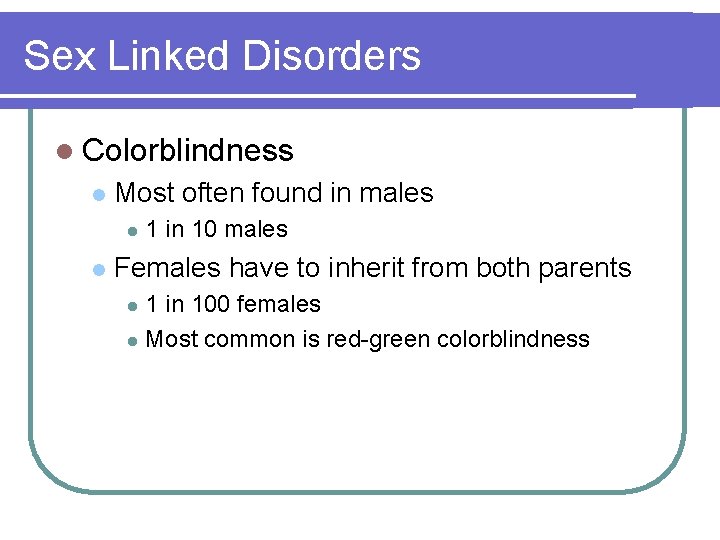
Sex Linked Disorders l Colorblindness l Most often found in males l l 1 in 10 males Females have to inherit from both parents 1 in 100 females l Most common is red-green colorblindness l
Sex Linked Disorders l Hemophilia Two genes on the X chromosome control blood clotting l Many times it is male children that inherit this from their mom’s X chromosome l 1 in 10, 000 males l A bleeding disorder; can cause death in severe cases l
Sex Linked Disorders l Duchenne Muscular Dystrophy 1 in 3000 males l Progressive weakening and loss of skeletal muscle l Caused by defective version of gene that codes for a muscle protein l
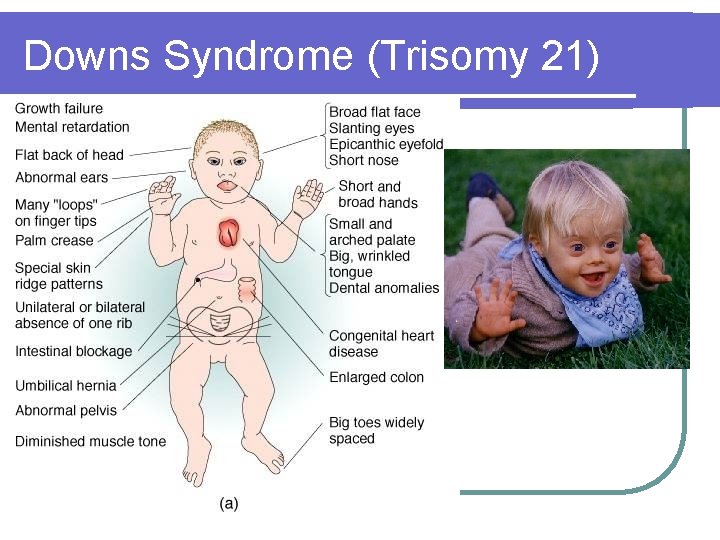
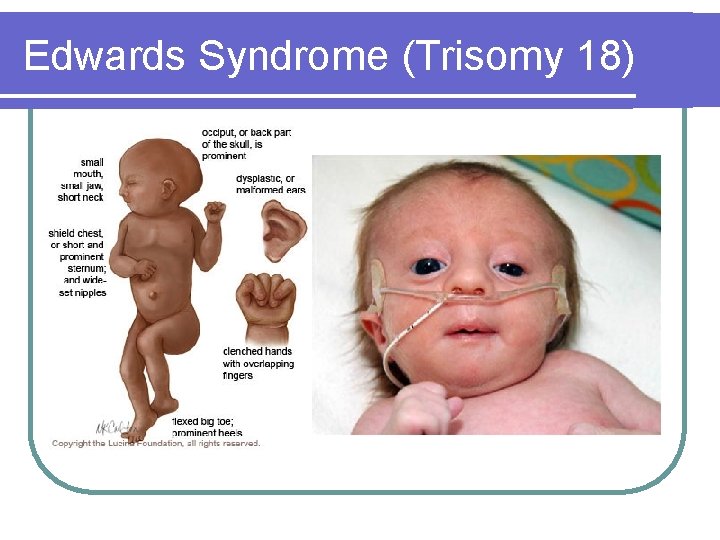
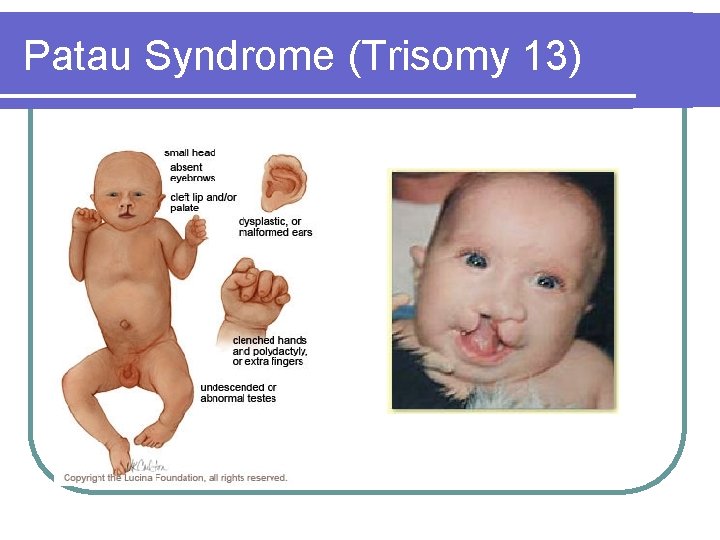
Genetic Disorders l Trisomy Downs Syndrome (extra chromosome 21) l Edwards Syndrome (extra chromosome 18) l Patau Syndrome(extra chromosome 13) l
Downs Syndrome (Trisomy 21)
Edwards Syndrome (Trisomy 18)
Patau Syndrome (Trisomy 13)
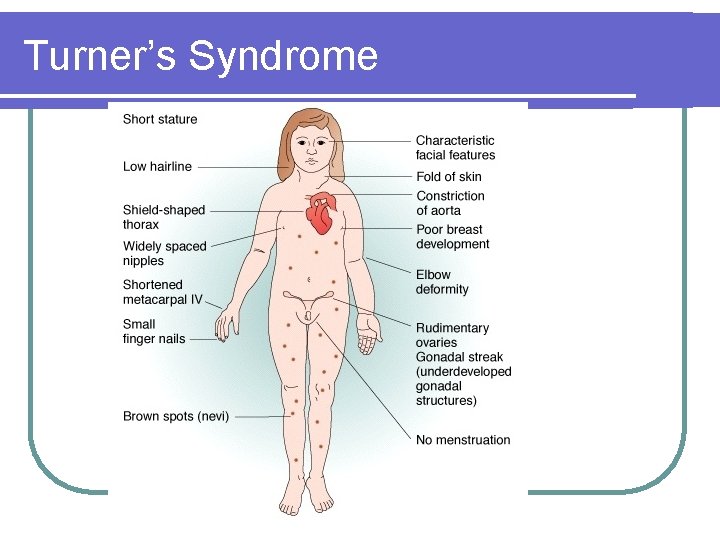
Turner’s Syndrome
Turner’s Karyotype
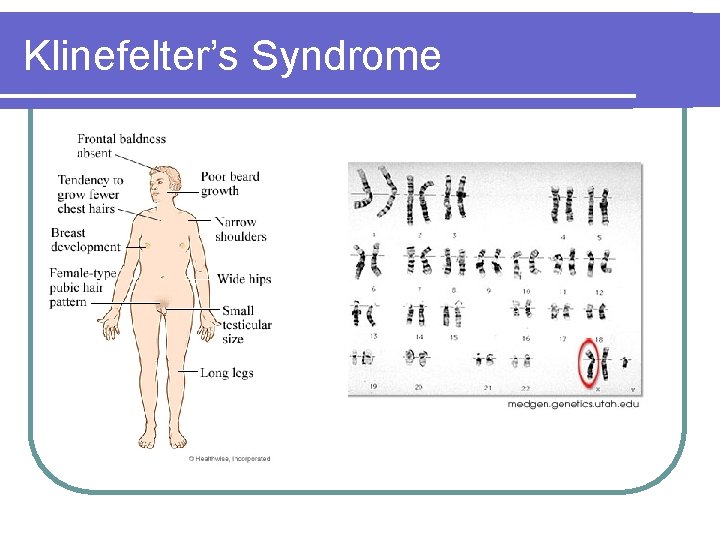
Klinefelter’s Syndrome