
Mutation Notes Chapter 11 Mutations notes outline I

- Slides: 22
Mutation Notes: Chapter 11
Mutations notes outline I. Mutation II. Types at gene level A. Point B. Frameshift which is worse? III. Types at chromosome level A. Deletion B. Insertion C. Inversion D. Translocation IV. Causes A. Random/spontaneous B. Mutagen V. Results -, +, no effect
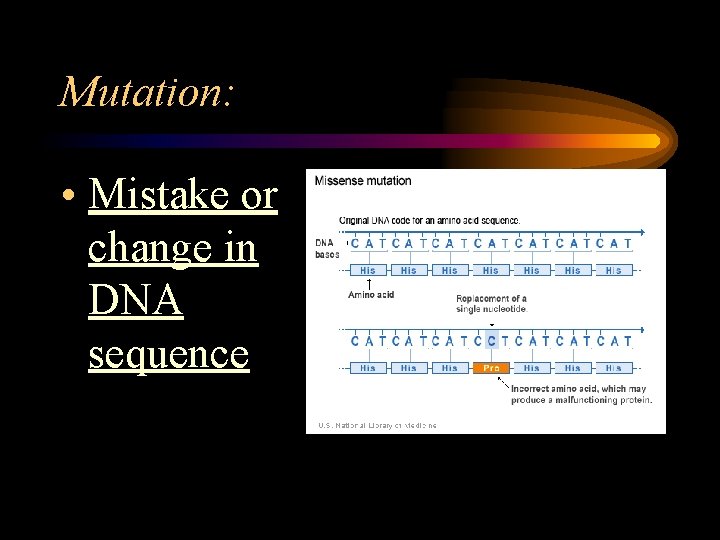
Mutation: • Mistake or change in DNA sequence
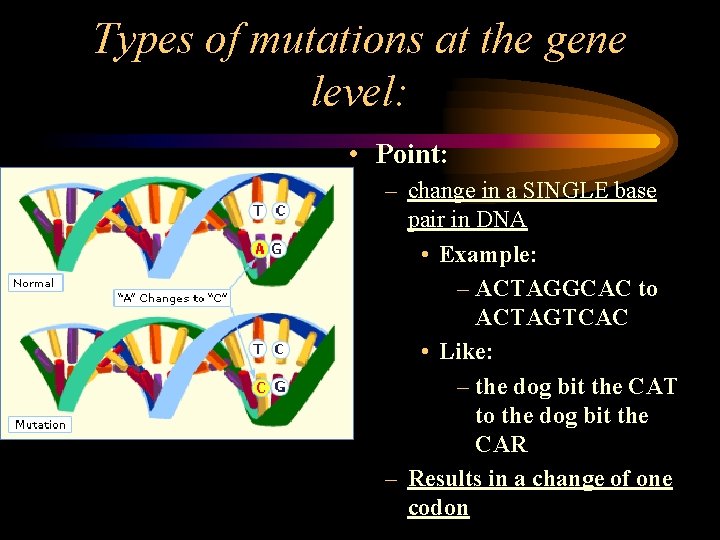
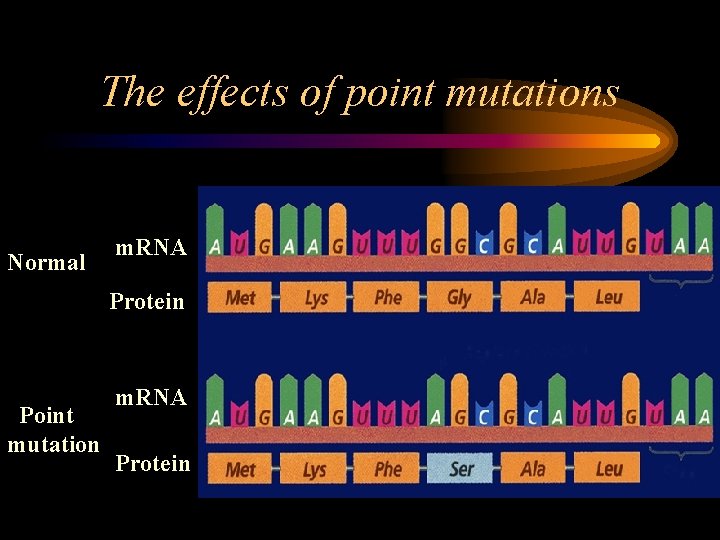
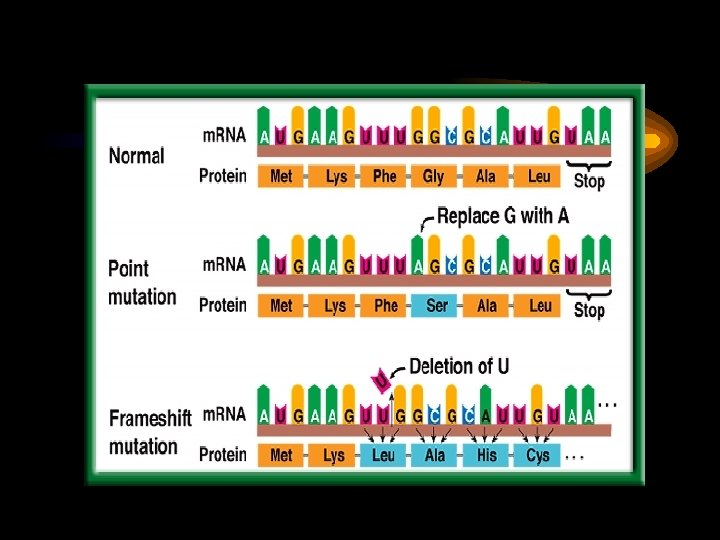
Types of mutations at the gene level: • Point: – change in a SINGLE base pair in DNA • Example: – ACTAGGCAC to ACTAGTCAC • Like: – the dog bit the CAT to the dog bit the CAR – Results in a change of one codon
• The change in the DNA is minor but important
The effects of point mutations Normal m. RNA Protein Point mutation m. RNA Protein
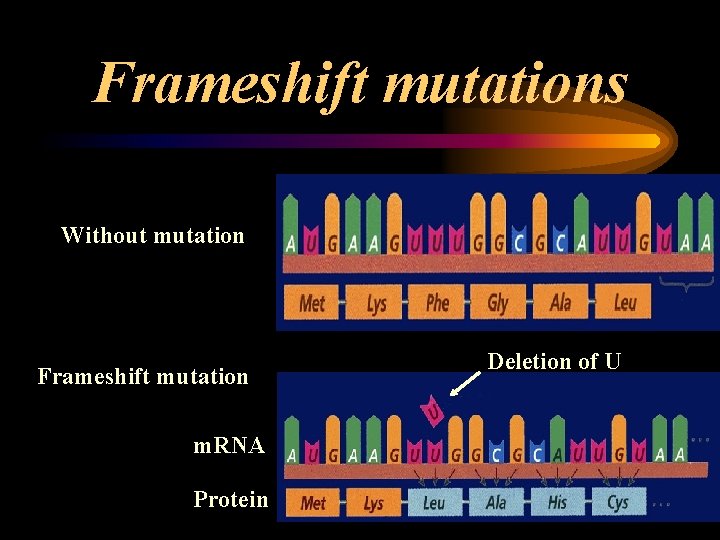
Frameshift mutations • A single base is added or deleted from DNA which shifts the reading of codons by one base. ex. ACTAGGCAC to ACTAGAC Like: The dog bit the cat to The dob itt hec at
• The results of frameshift mutations can be HUGE since every codon after the mistake is affected!
Frameshift mutations Without mutation Frameshift mutation m. RNA Protein Deletion of U
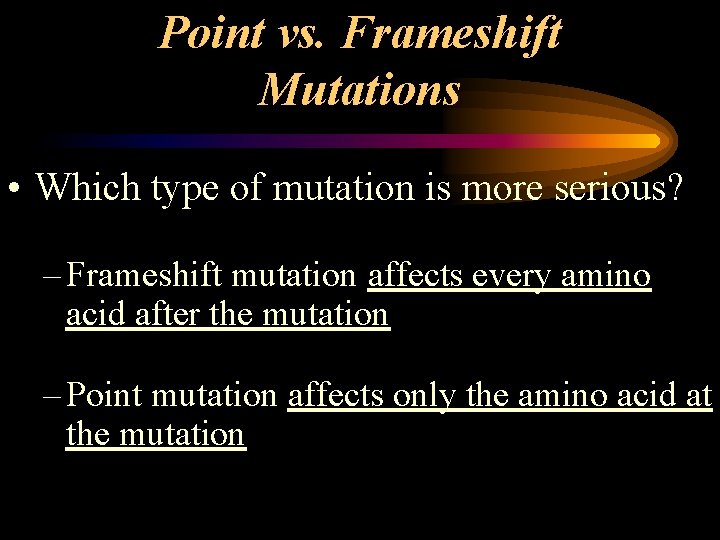
Point vs. Frameshift Mutations • Which type of mutation is more serious? – Frameshift mutation affects every amino acid after the mutation – Point mutation affects only the amino acid at the mutation
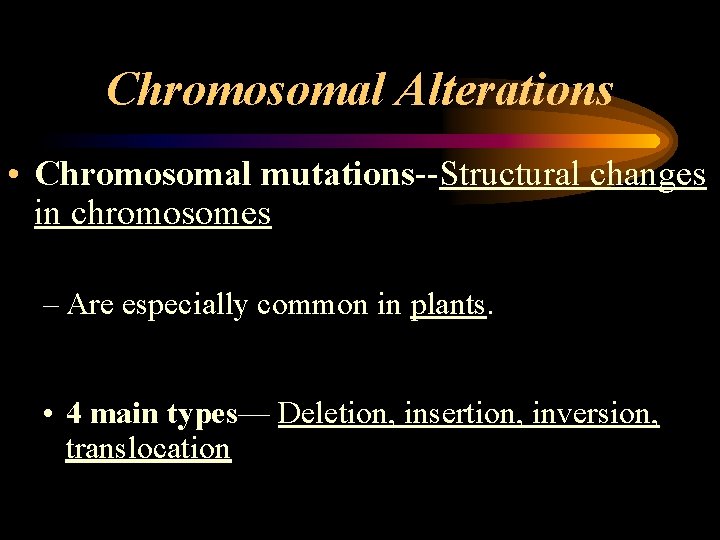
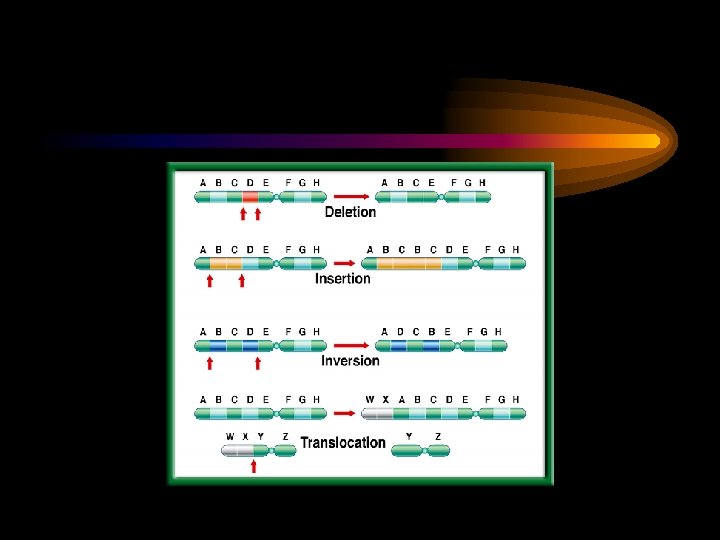
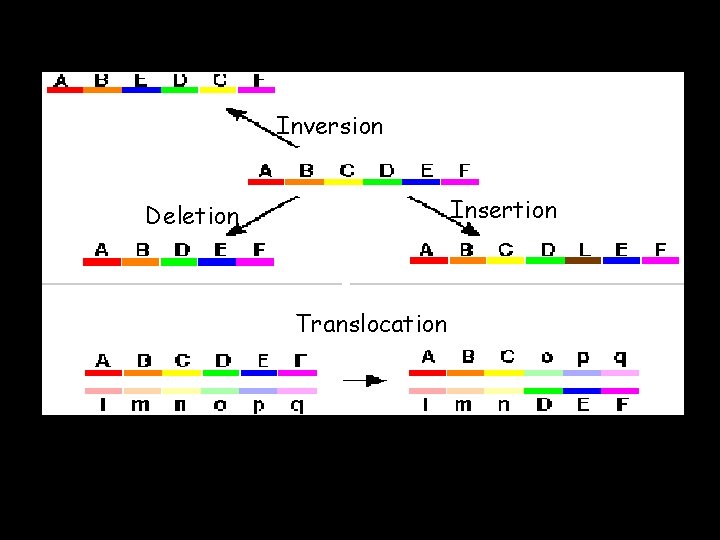
Chromosomal Alterations • Chromosomal mutations--Structural changes in chromosomes – Are especially common in plants. • 4 main types— Deletion, insertion, inversion, translocation
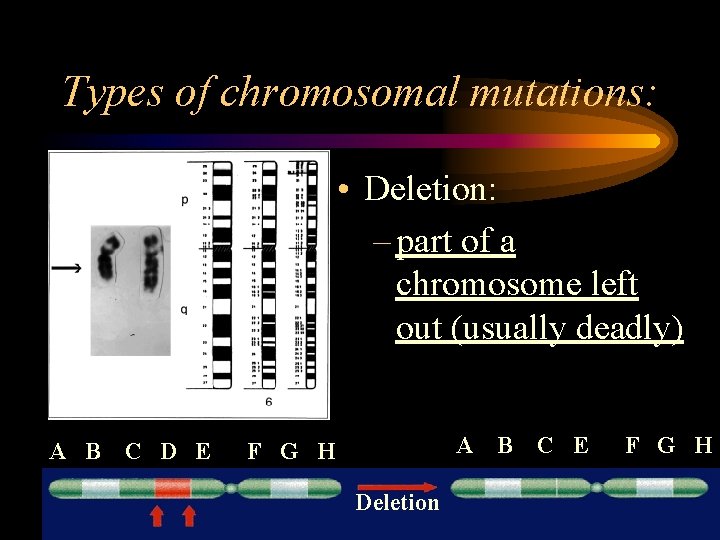
Types of chromosomal mutations: • Deletion: – part of a chromosome left out (usually deadly) A B C D E A F G H Deletion B C E F G H
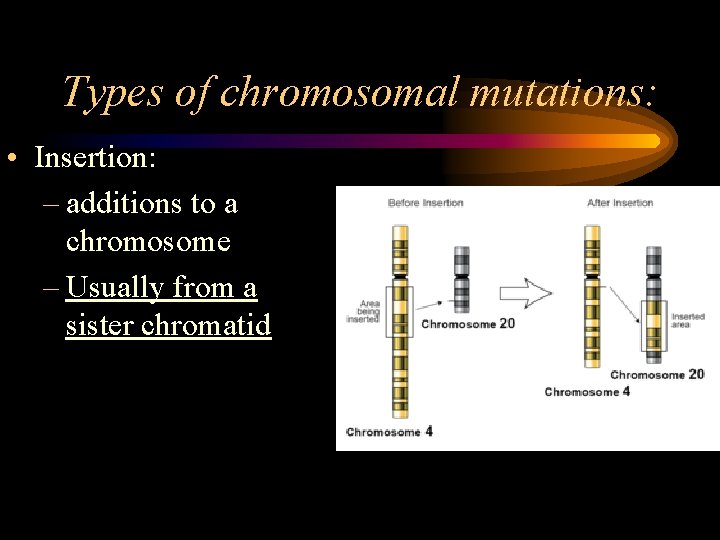
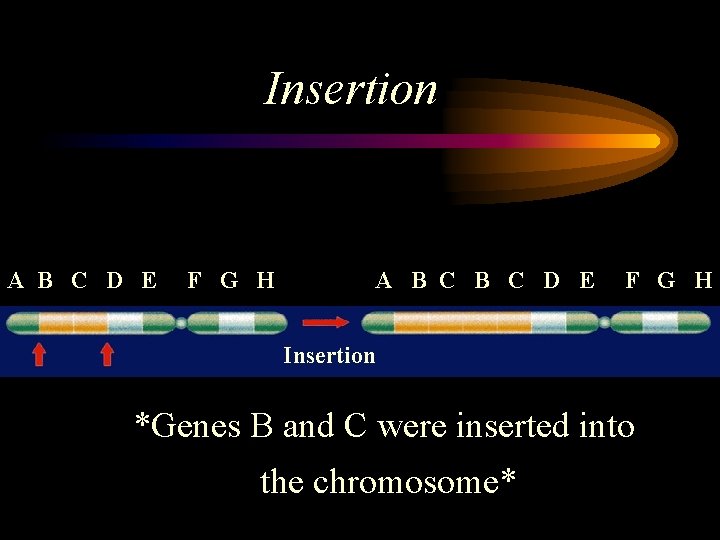
Types of chromosomal mutations: • Insertion: – additions to a chromosome – Usually from a sister chromatid
Insertion A B C D E F G H Insertion *Genes B and C were inserted into the chromosome*
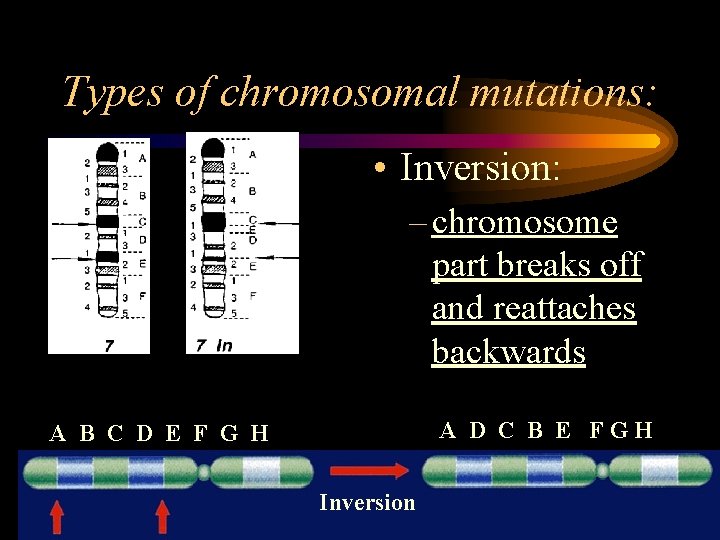
Types of chromosomal mutations: • Inversion: – chromosome part breaks off and reattaches backwards A D C B E FGH A B C D E F G H Inversion
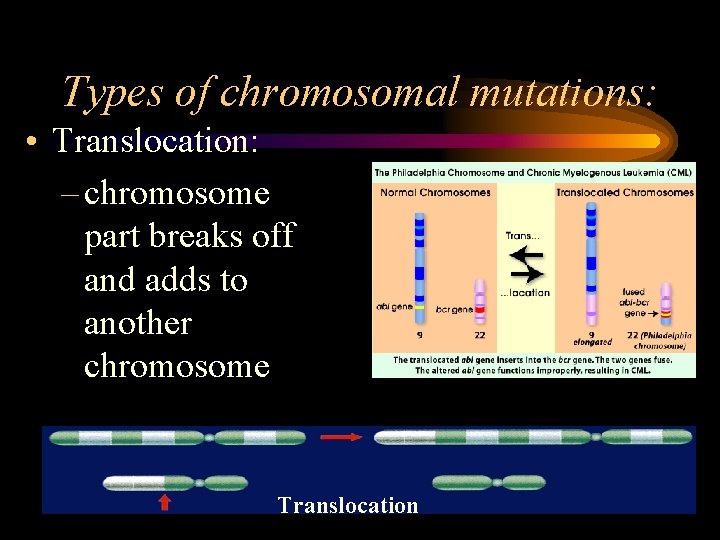
Types of chromosomal mutations: • Translocation: – chromosome part breaks off and adds to another chromosome Translocation
Causes of Mutations • Spontaneous/Random mutations– – Some mutations just happen, (ie. mistake during DNA replication, transcription, mitosis, meiosis). • These lead to evolution. • Mutagen-- Any agent that causes a change in DNA – Include environmental factors like chemicals and radiation – Lead to birth defects if sex cells affected and cancer if body cells affected
Mutations can be: • Negative: cause a structural or functional problem • Positive (very rare) ex. Can make the organism faster or stronger • Have no effect = silent mutation
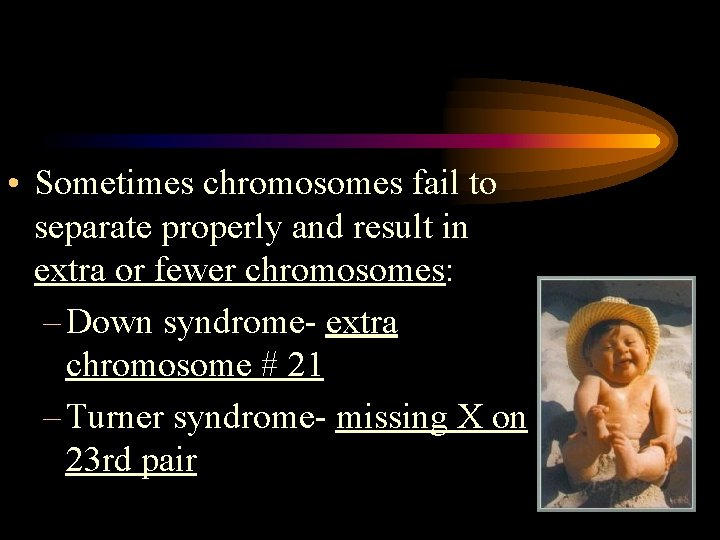
• Sometimes chromosomes fail to separate properly and result in extra or fewer chromosomes: – Down syndrome- extra chromosome # 21 – Turner syndrome- missing X on 23 rd pair
Inversion Insertion Deletion Translocation