
Mutation Mutation Means change Definition An event that


- Slides: 40
Mutation
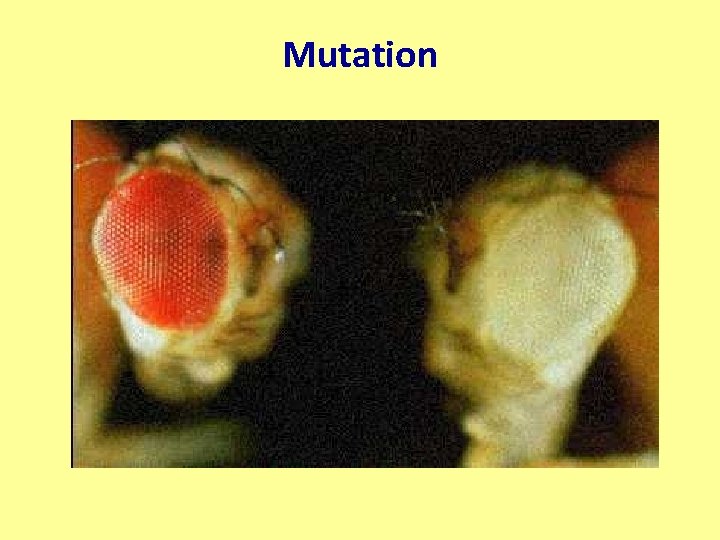
Mutation • Means change • Definition: An event that gives rise to an alteration in the genotype • It also can be the change itself • Mutation does not mean “bad” • Mutations are IMPORTANT for a variety of reasons
Mutation ‘Levels’ • DNA Level • Chromosomal Level • Genome Level
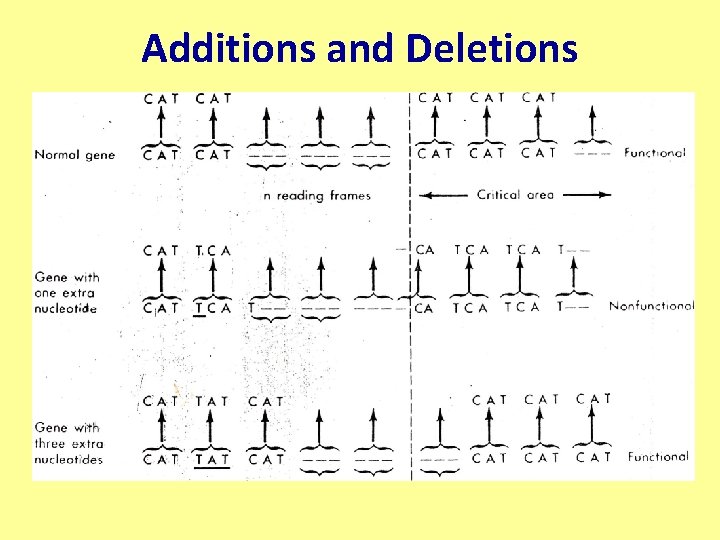
DNA Level • At or below the gene level • 1) Addition or Deletion of one or two nucleotides (+ and – frameshifts) • 2) Substitution of one nucleotide for another • 3) Inversion within a gene • 4) Crossingover within a gene – Equal – Unequal • 1 and 2 are often referred to as POINT MUTATIONS
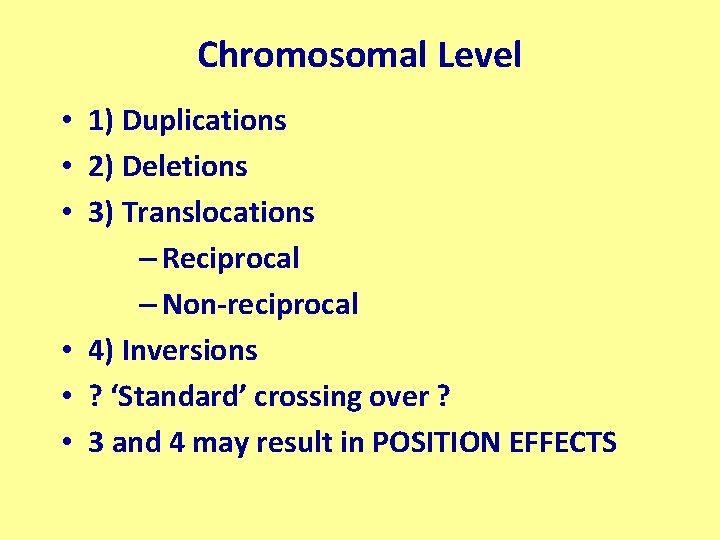
Chromosomal Level • 1) Duplications • 2) Deletions • 3) Translocations – Reciprocal – Non-reciprocal • 4) Inversions • ? ‘Standard’ crossing over ? • 3 and 4 may result in POSITION EFFECTS
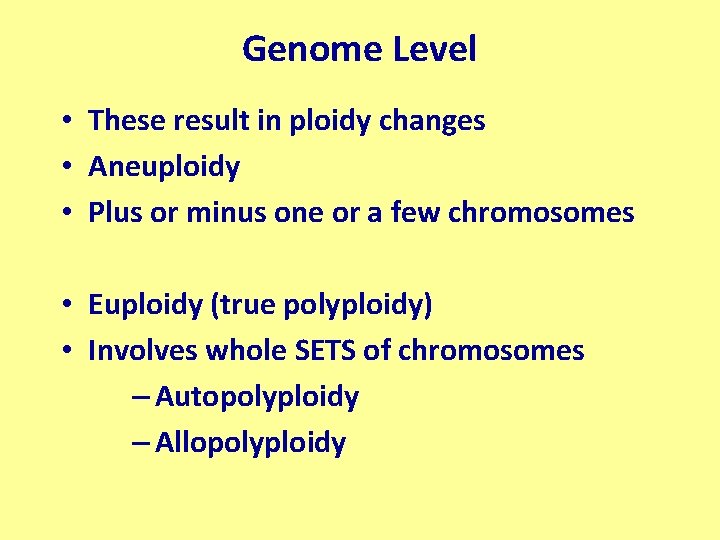
Genome Level • These result in ploidy changes • Aneuploidy • Plus or minus one or a few chromosomes • Euploidy (true polyploidy) • Involves whole SETS of chromosomes – Autopolyploidy – Allopolyploidy
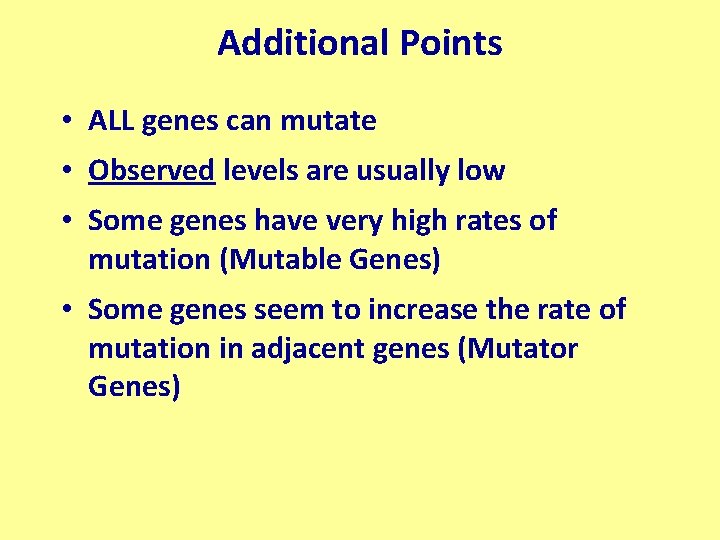
Additional Points • ALL genes can mutate • Observed levels are usually low • Some genes have very high rates of mutation (Mutable Genes) • Some genes seem to increase the rate of mutation in adjacent genes (Mutator Genes)
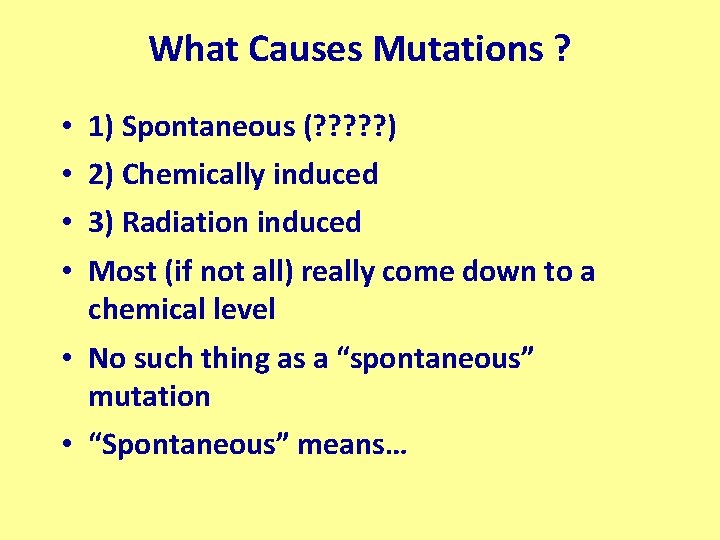
What Causes Mutations ? • • 1) Spontaneous (? ? ? ) 2) Chemically induced 3) Radiation induced Most (if not all) really come down to a chemical level • No such thing as a “spontaneous” mutation • “Spontaneous” means…
Chemicals • Many chemicals are mutagens; many others are promutagens • Chemicals (just like radiation) can cause point mutations. • Chemicals (just like radiation) can cause chromosome breakage (e. g. - LSD, Mercury, Caffeine --- at least in cell culture)
DNA Level Mutations • • + and – Frameshifts and their effects + or – one nucleotide + or – a whole codon Multiple frameshifts The effects depend on WHERE it occurs The effects depend on what the change is ? ? ? One change equals one change, or does it ? ? ?
DNA Level Mutations • Substitutions • Transitions (more common) • Purine (A, G) for a purine OR pyrimidine (T, C) for a pyrimidine • Transversions (less common) • Purine for a pyrimidine (or pyrimidine for a purine • GENERALLY have less chance of an effect than frameshifts. WHY?
Other DNA Level Mutations • Inversions within a gene • Crossingover within a gene
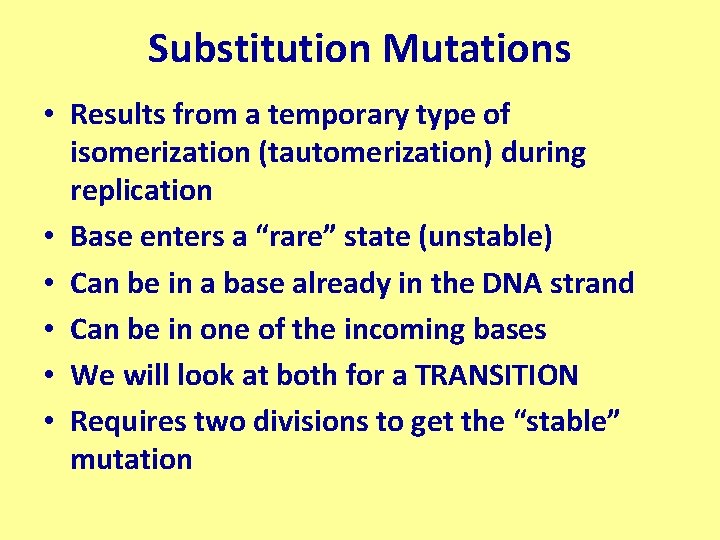
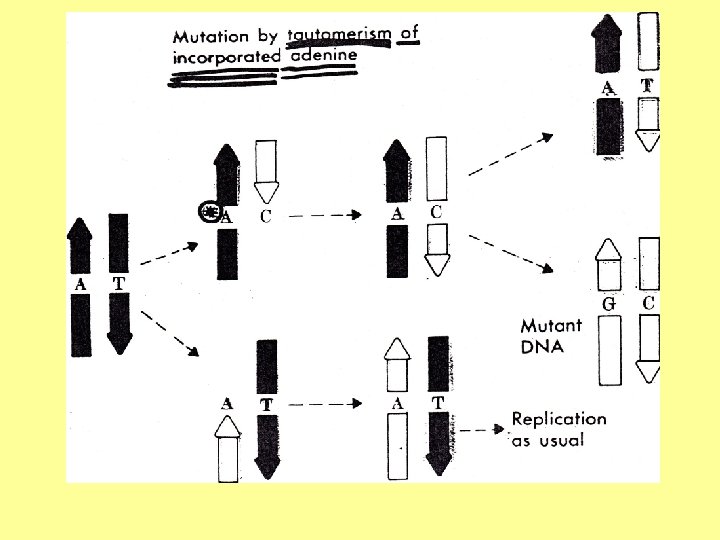
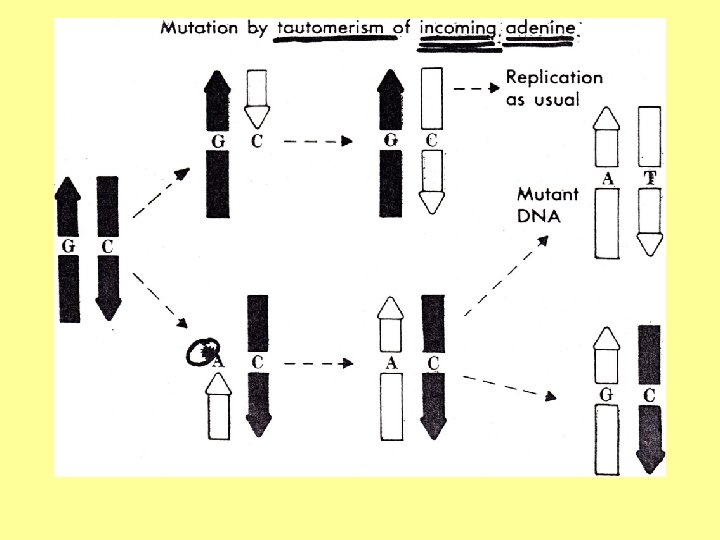
Substitution Mutations • Results from a temporary type of isomerization (tautomerization) during replication • Base enters a “rare” state (unstable) • Can be in a base already in the DNA strand • Can be in one of the incoming bases • We will look at both for a TRANSITION • Requires two divisions to get the “stable” mutation
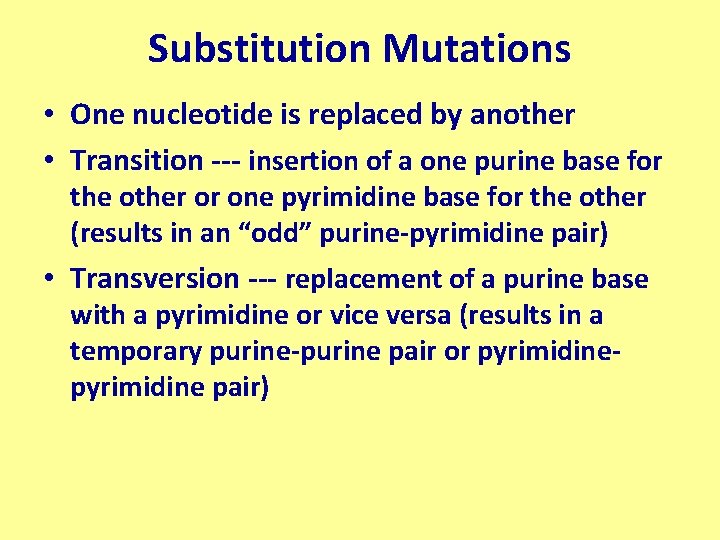
Substitution Mutations • One nucleotide is replaced by another • Transition --- insertion of a one purine base for the other or one pyrimidine base for the other (results in an “odd” purine-pyrimidine pair) • Transversion --- replacement of a purine base with a pyrimidine or vice versa (results in a temporary purine-purine pair or pyrimidine pair)
Substitution Mutations • Base analogs increase the rate of formation of substitution mutations • 5 -bromouracil (5 BU) • Use of 5 -fluorouracil
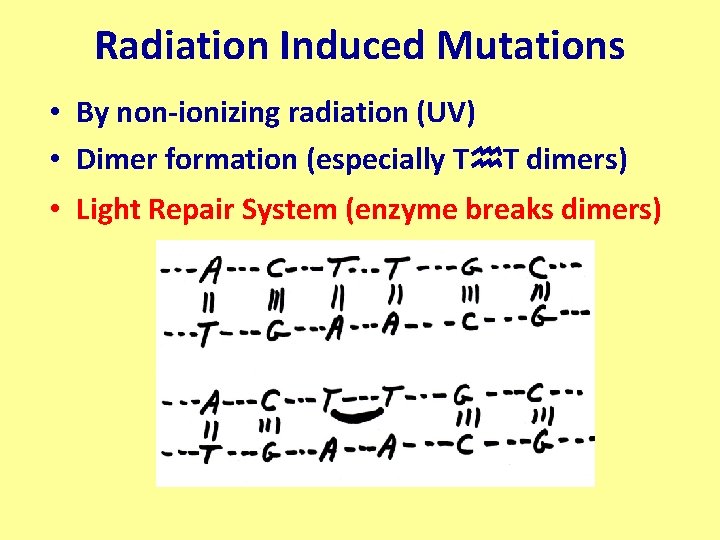
Radiation Induced Mutations • By non-ionizing radiation (UV) • Dimer formation (especially Th. T dimers) • Light Repair System (enzyme breaks dimers)
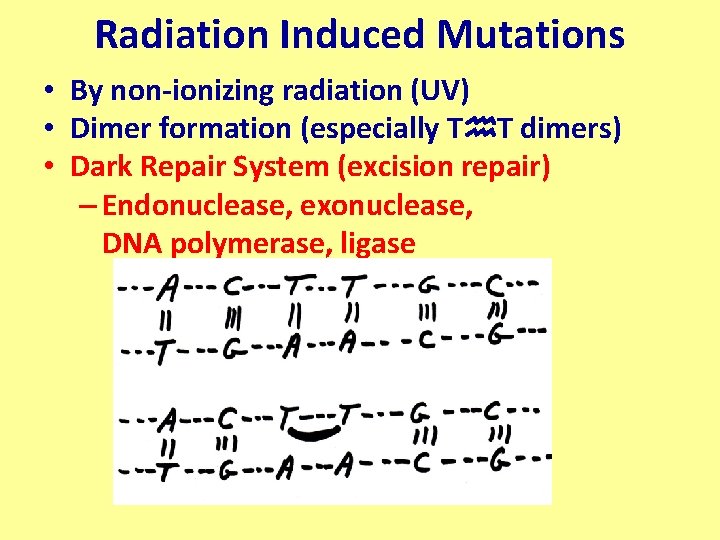
Radiation Induced Mutations • By non-ionizing radiation (UV) • Dimer formation (especially Th. T dimers) • Dark Repair System (excision repair) – Endonuclease, exonuclease, DNA polymerase, ligase
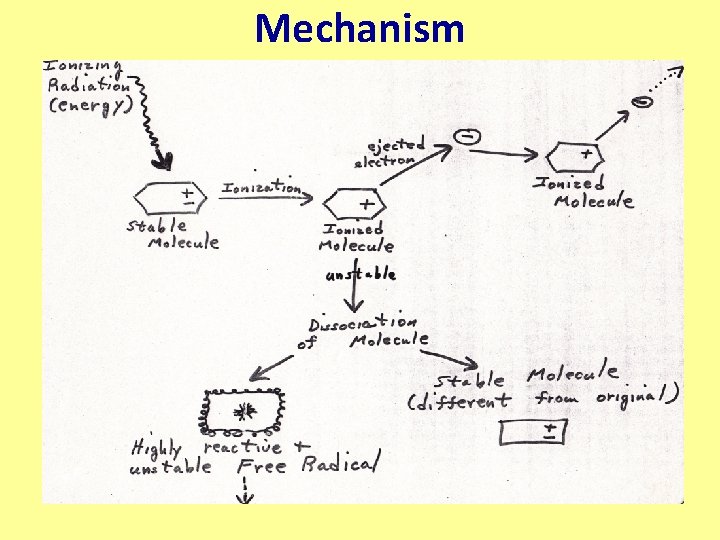
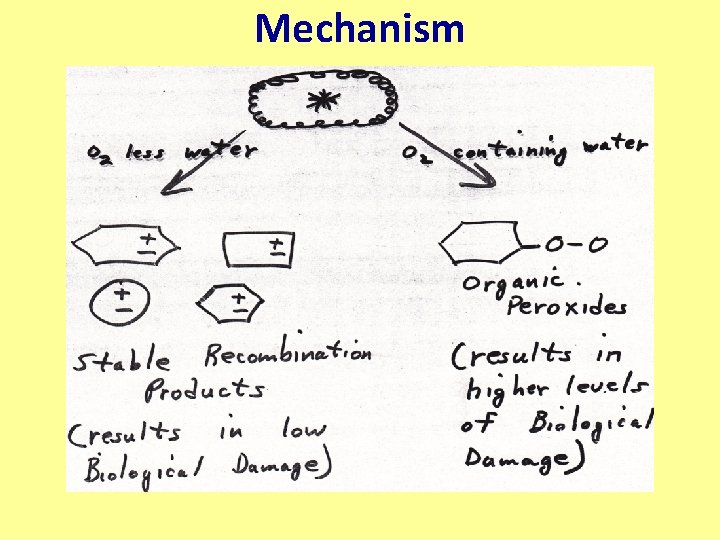
Radiation Induced Mutations • By ionizing radiation • Mechanisms - “Target Hypothesis” - “Physical-Chemical” Hypothesis • Temperature, hydration, and oxygen content all have an effect
Mechanism
Mechanism
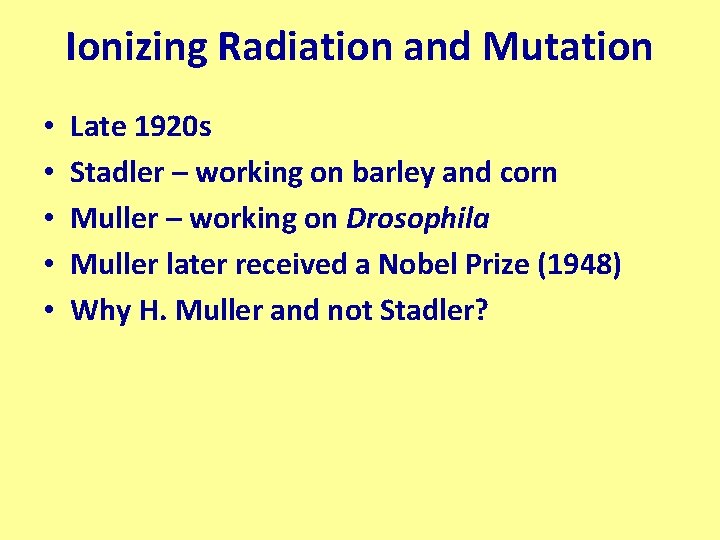
Ionizing Radiation and Mutation • • • Late 1920 s Stadler – working on barley and corn Muller – working on Drosophila Muller later received a Nobel Prize (1948) Why H. Muller and not Stadler?
SOME GENERALIZATIONS FOR IONIZING RADIATION • Mutation frequency is DIRECTLY proportional to the dose • Doesn’t matter if given in one large dose or several small ones • No lower limit (no threshold) • Safe amount? ? ?
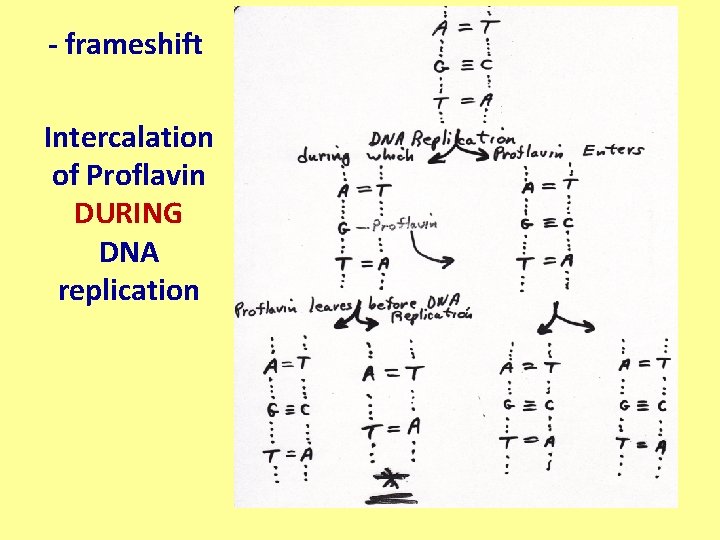
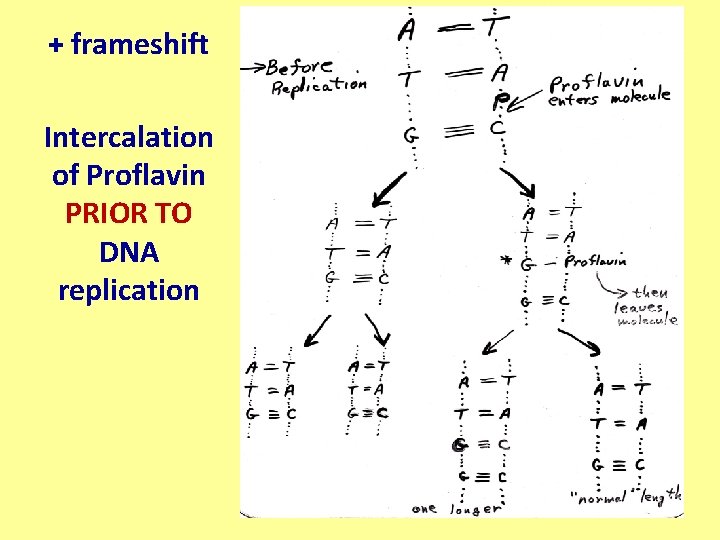
Additions and Deletions • Chemical basis • Caused by intercalation (insertion) of some nucleotide like chemical into the chain • Before replication --- increases length • Results in a Plus (+) frameshift mutation • During replication --- decreases length • Results in a Minus (-) frameshift mutation • Acridines are capable of doing this
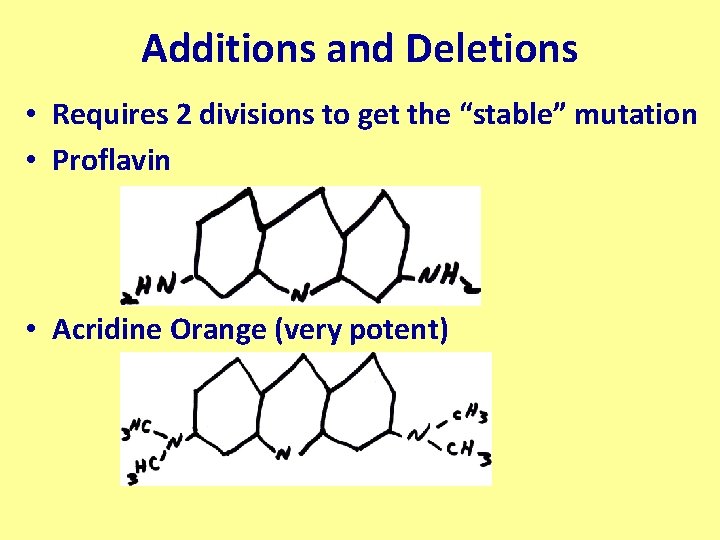
Additions and Deletions • Requires 2 divisions to get the “stable” mutation • Proflavin • Acridine Orange (very potent)
Additions and Deletions
- frameshift Intercalation of Proflavin DURING DNA replication
+ frameshift Intercalation of Proflavin PRIOR TO DNA replication
Chemicals Besides Acridines • • • Too many to mention…but… Mustard gas (adds a methyl group) Formaldehyde Phenol Nitrous Oxide (replaces NH 2 with O)
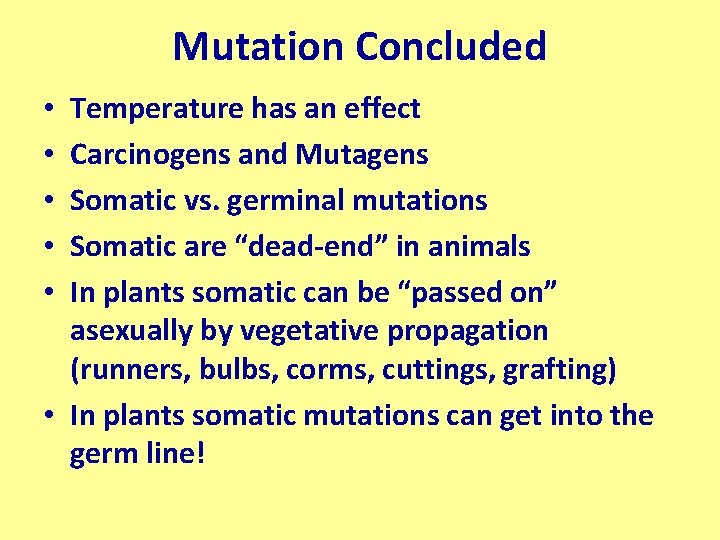
Mutation Concluded Temperature has an effect Carcinogens and Mutagens Somatic vs. germinal mutations Somatic are “dead-end” in animals In plants somatic can be “passed on” asexually by vegetative propagation (runners, bulbs, corms, cuttings, grafting) • In plants somatic mutations can get into the germ line! • • •
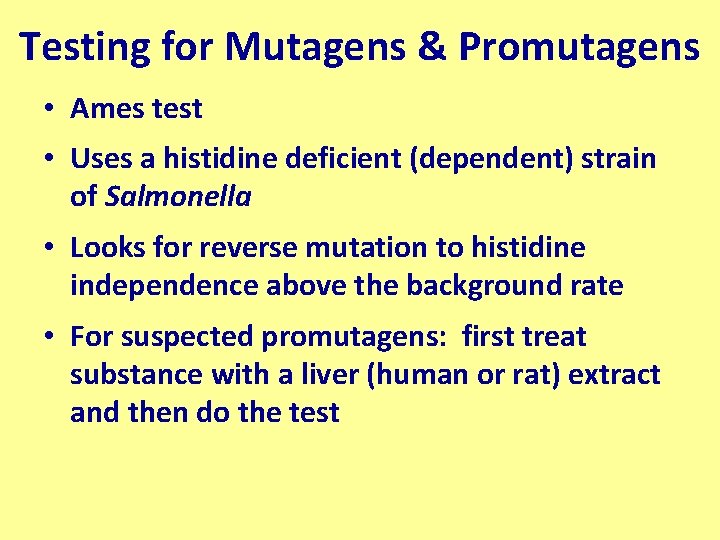
Testing for Mutagens & Promutagens • Ames test • Uses a histidine deficient (dependent) strain of Salmonella • Looks for reverse mutation to histidine independence above the background rate • For suspected promutagens: first treat substance with a liver (human or rat) extract and then do the test
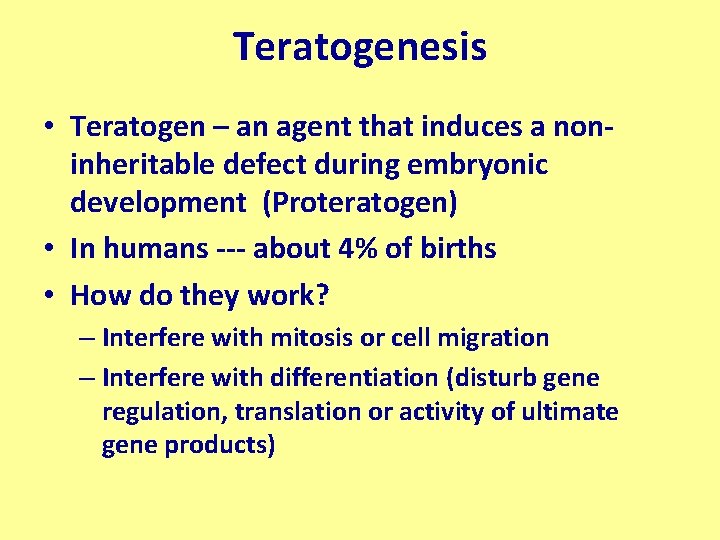
Teratogenesis • Teratogen – an agent that induces a noninheritable defect during embryonic development (Proteratogen) • In humans --- about 4% of births • How do they work? – Interfere with mitosis or cell migration – Interfere with differentiation (disturb gene regulation, translation or activity of ultimate gene products)
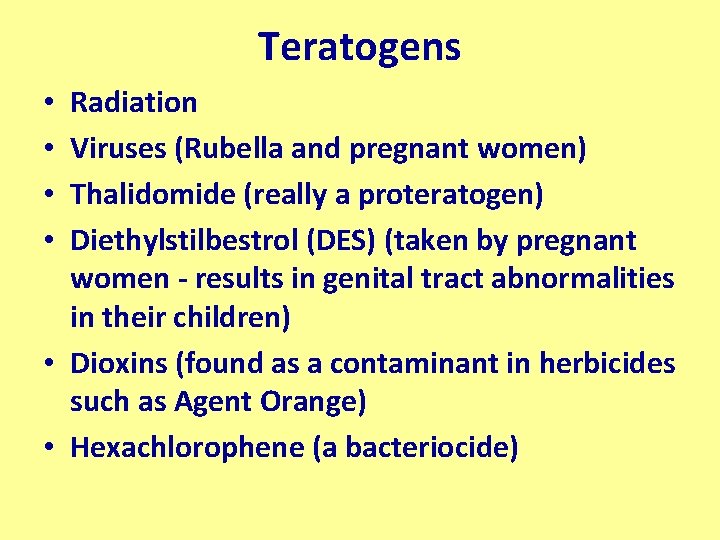
Teratogens Radiation Viruses (Rubella and pregnant women) Thalidomide (really a proteratogen) Diethylstilbestrol (DES) (taken by pregnant women - results in genital tract abnormalities in their children) • Dioxins (found as a contaminant in herbicides such as Agent Orange) • Hexachlorophene (a bacteriocide) • •
Teratogens • Smoking (CO reduces O 2 available to the fetal circulation; nicotine constricts blood vessels and reduces blood flow) • Progestin (artificial progesterone-like compound; causes masculinization of female fetuses) • Alcohol – microcephaly, low birth weight, some mental retardation) • Caffeine, Aspirin and numerous legal and not so legal drugs
Some Other Birth Defects • • Cleft lip and/or cleft palate Spina bifida Club foot Heart disease and malformations Cataracts Deafness Intestinal tract disorders Low birth weight