
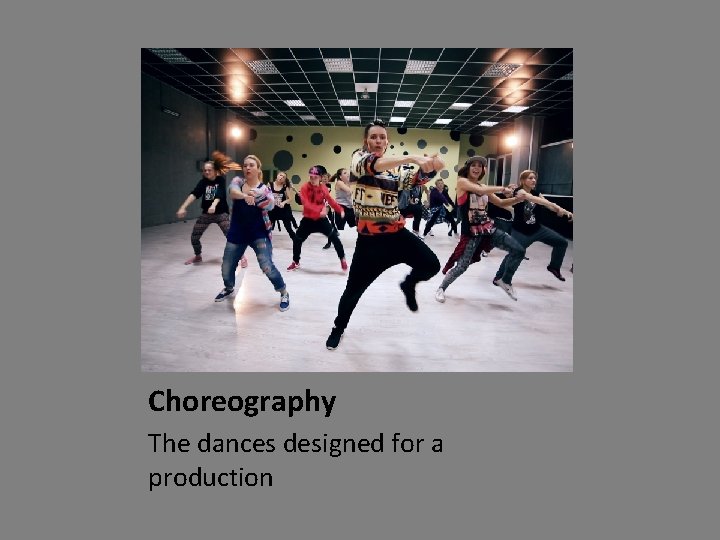
Musical Theatre Notes Choreography The dances designed for



- Slides: 24
Musical Theatre Notes
Choreography The dances designed for a production
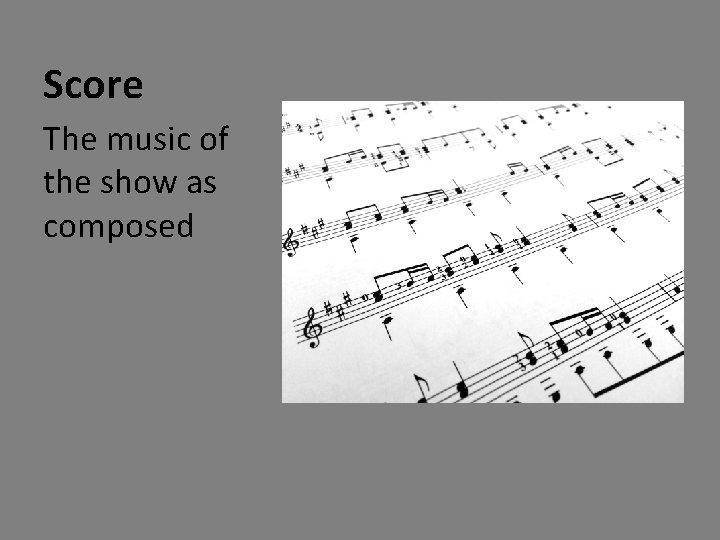
Score The music of the show as composed
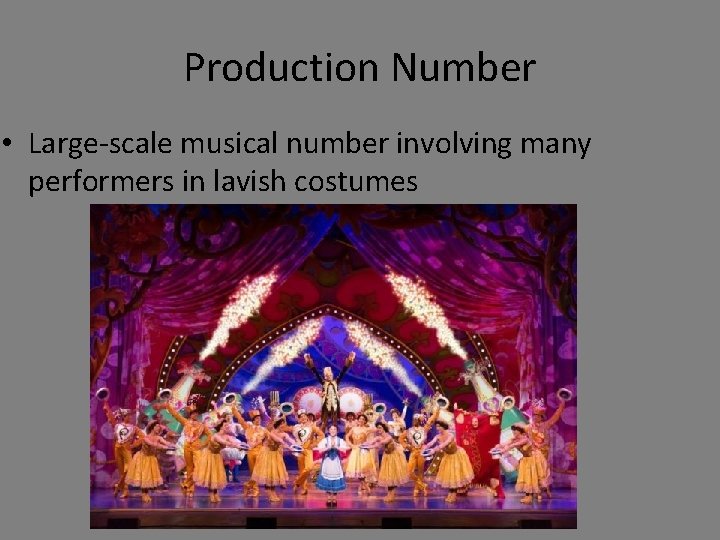
Production Number • Large-scale musical number involving many performers in lavish costumes
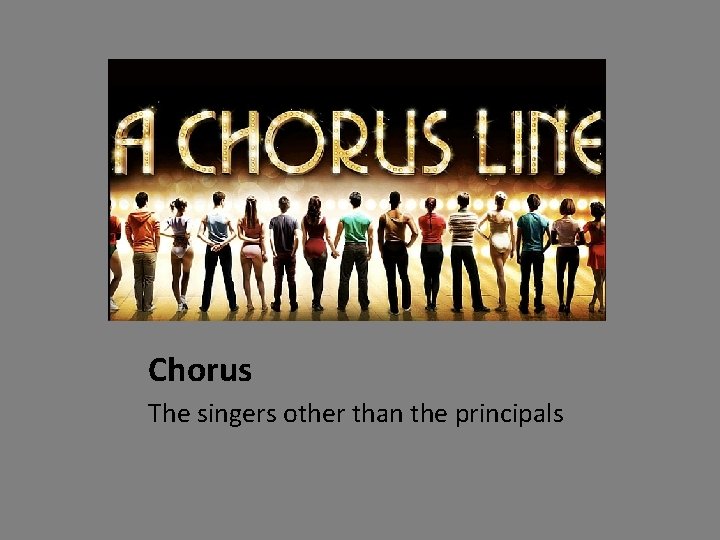
Chorus The singers other than the principals
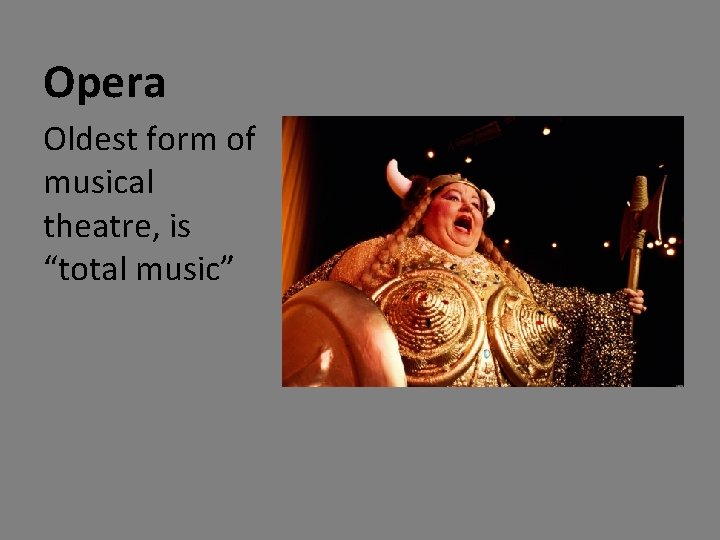
Opera Oldest form of musical theatre, is “total music”
Overture • The music, usually a medley of the show’s songs, played at the beginning of the show.
Entr’acte Music that precedes the second act; means “between acts”
Lyrics Words to the songs
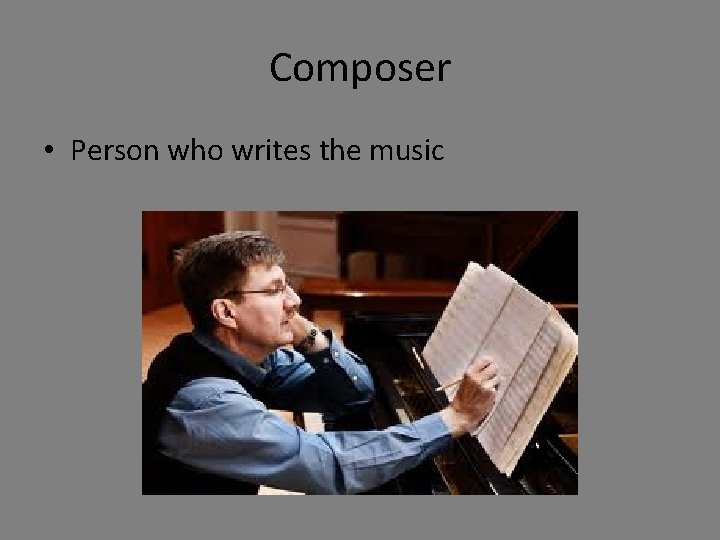
Composer • Person who writes the music
Segue Continuation of music from one number to the next without stopping; also known as a transition
Principals Named characters in a musical play
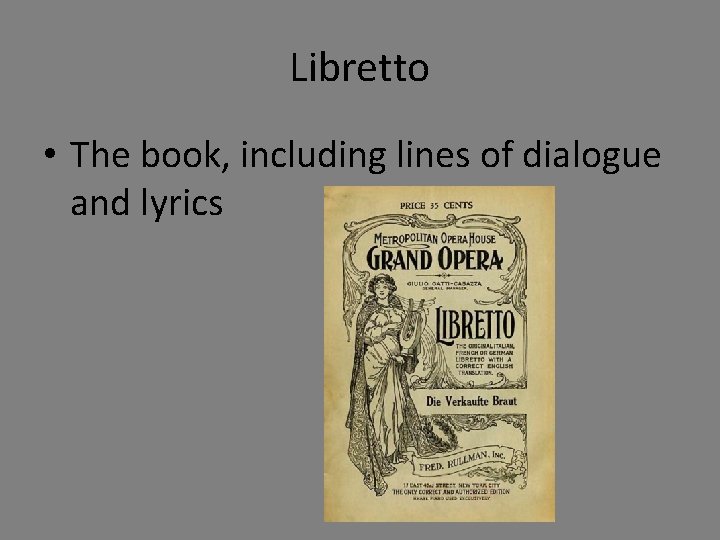
Libretto • The book, including lines of dialogue and lyrics
Vamp To repeat measures of music until a singer or scene is ready
Underscore Music played to accompany dialogue
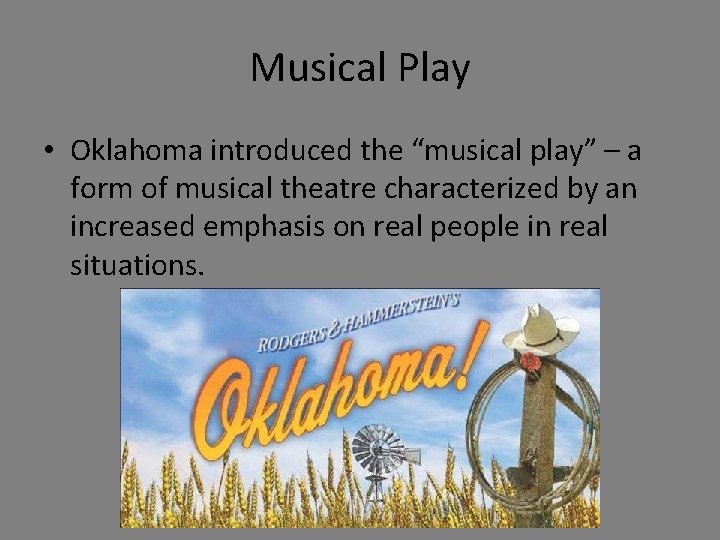
Musical Play • Oklahoma introduced the “musical play” – a form of musical theatre characterized by an increased emphasis on real people in real situations.
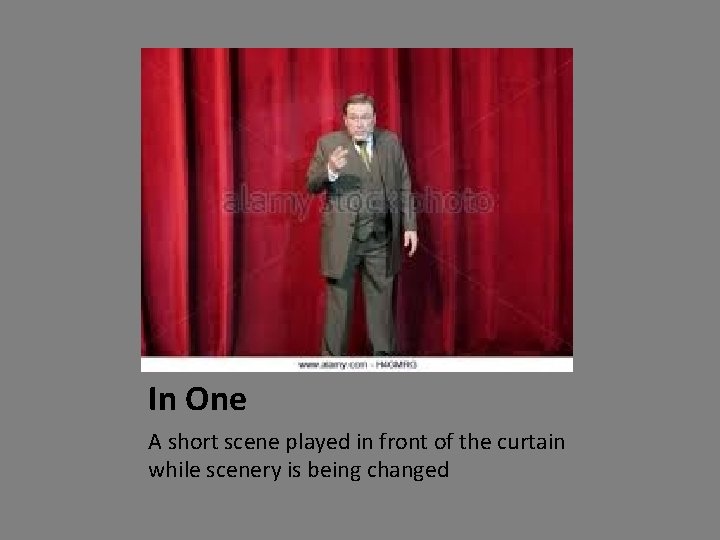
In One A short scene played in front of the curtain while scenery is being changed
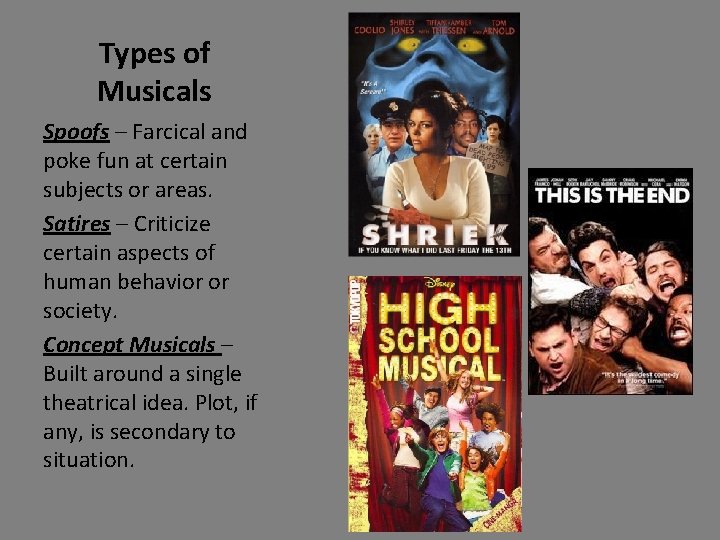
Types of Musicals Spoofs – Farcical and poke fun at certain subjects or areas. Satires – Criticize certain aspects of human behavior or society. Concept Musicals – Built around a single theatrical idea. Plot, if any, is secondary to situation.
Theatre Jargon • Pace Show – show with a brisk tempo. • Heart Show – show that requires special sensitivity. • Splash Musical – show with large production numbers.
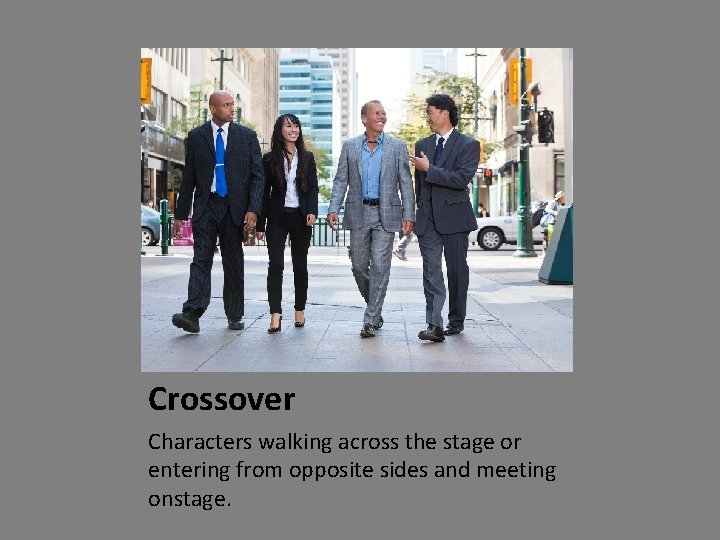
Crossover Characters walking across the stage or entering from opposite sides and meeting onstage.
Melodic Songs Pleasing sound combinations combined with moving lyrics
Rhythmic Number • Focuses on tempo, musical style, beat, and orchestration.
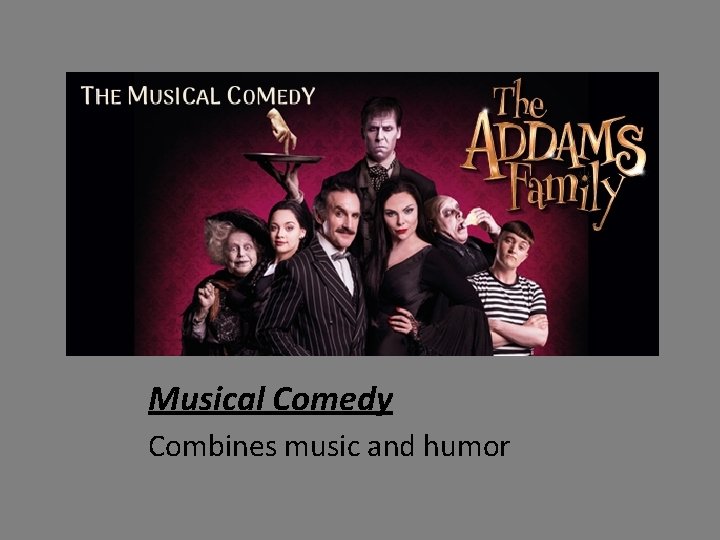
Musical Comedy Combines music and humor
Know the following • Musicals cost 2 to 10 times more than a straight play, largely due to the costs of scripts and royalty fees. • Three areas of the stage that should be used for solos are down center, down right, and center stage. Down right is stronger than down left because the audience will turn to their left first, since we read from left to right. (Down right is to the left of the audience. )