
Musical Sounds 4 Characteristics of Music Pitch Duration
- Slides: 20
Musical Sounds
4 Characteristics of Music • • Pitch Duration Volume Timbre
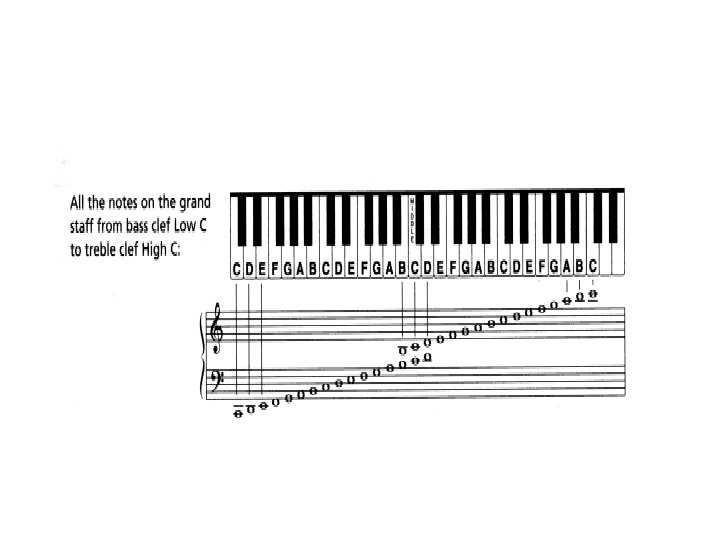
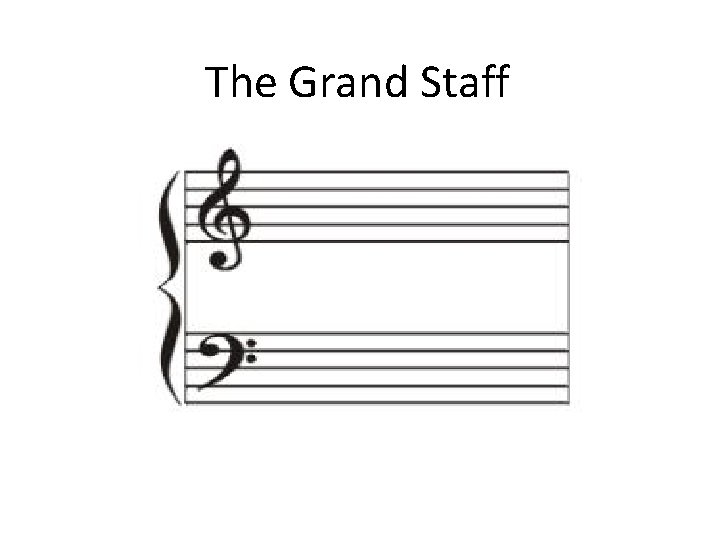
Pitch • Musical sound is the result of a definite & steady vibration • This definite & steady vibration produces a TONE. • 7 letters used to represent tones/pitches • ABCDEFG • Pitch is indicated by writing NOTES on a Grand Staff – The higher the place on the staff = high pitch – The lower the place the on the staff = lower pitch
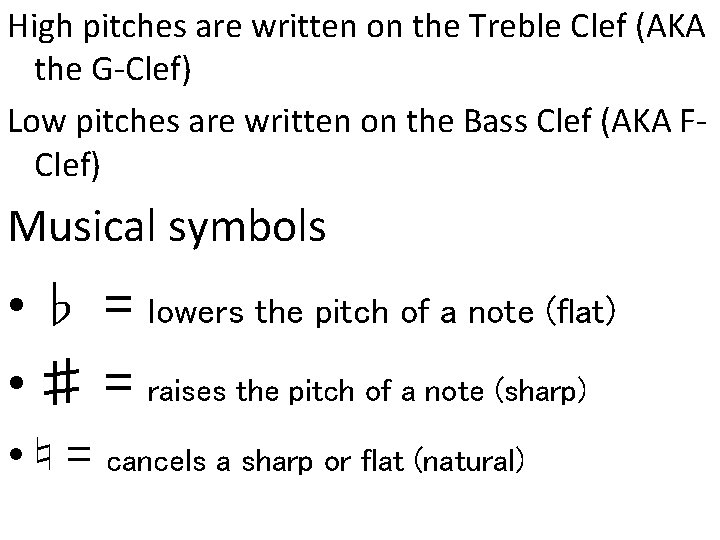
High pitches are written on the Treble Clef (AKA the G-Clef) Low pitches are written on the Bass Clef (AKA FClef) Musical symbols • ♭ = • ♯ = • ♮ = lowers the pitch of a note (flat) raises the pitch of a note (sharp) cancels a sharp or flat (natural)
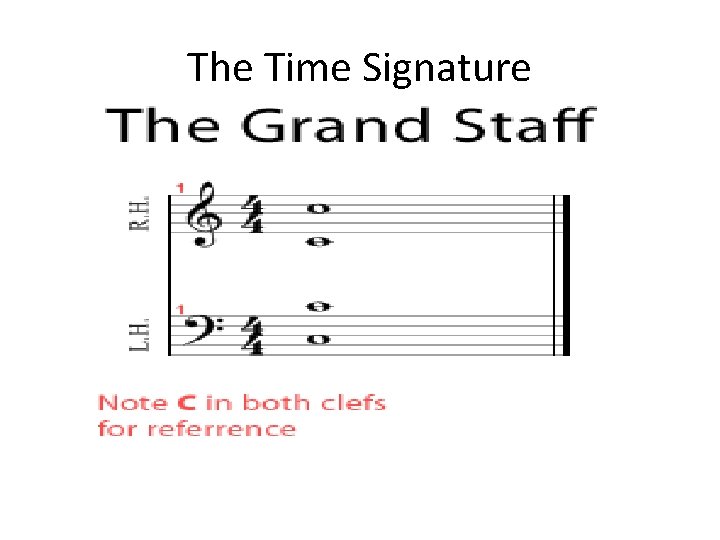
The Grand Staff
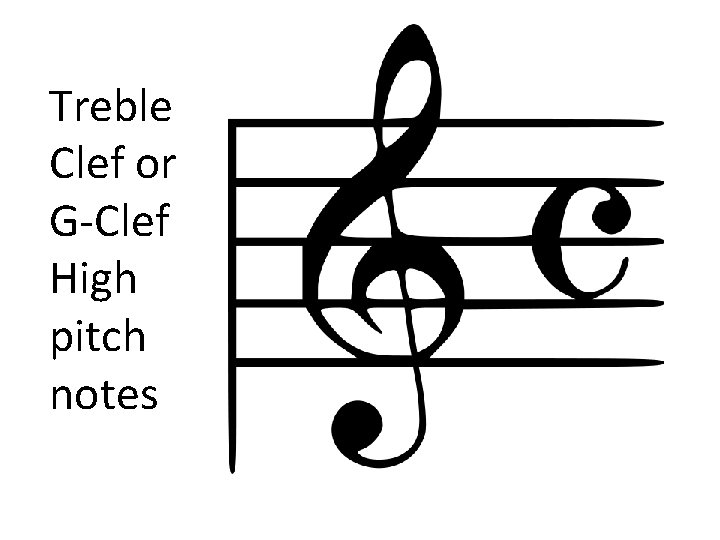
Treble Clef or G-Clef High pitch notes
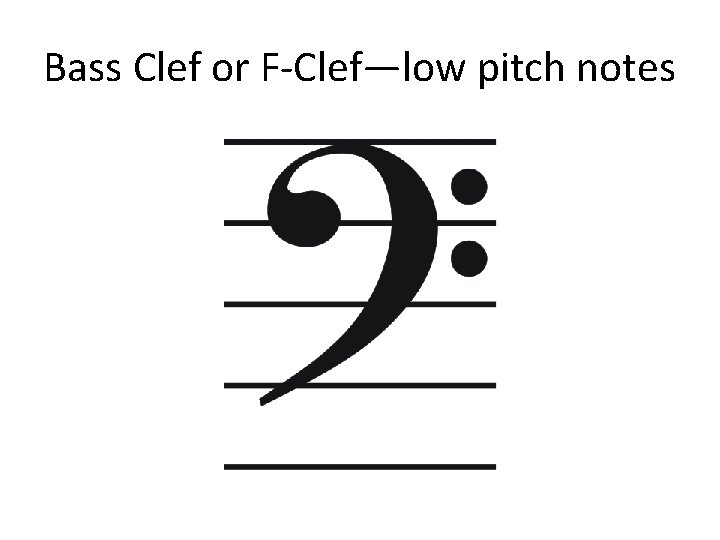
Bass Clef or F-Clef—low pitch notes
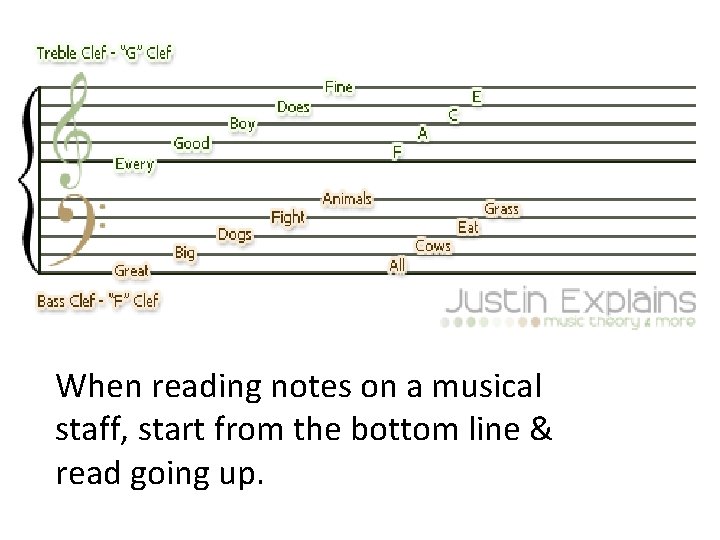
Identifying Notes on the Grand Staff
When reading notes on a musical staff, start from the bottom line & read going up.
Duration This is the passage of time thru the flow of music. How long a note should be played/held. Note Values: see handout Silence also has value; a period of silence in music is called a REST. • Rests also have the same value as notes (whole, half, quarter, eighth, sixteenth, etc. ) • •
Tempo (fast or slow) • Very slow: • Slow: • Moderate • Fast Largo (broad) Grave (grave, solemn) Lento Adagio (leisurely) Andante (walking pace) Moderato Allegretto Allegro
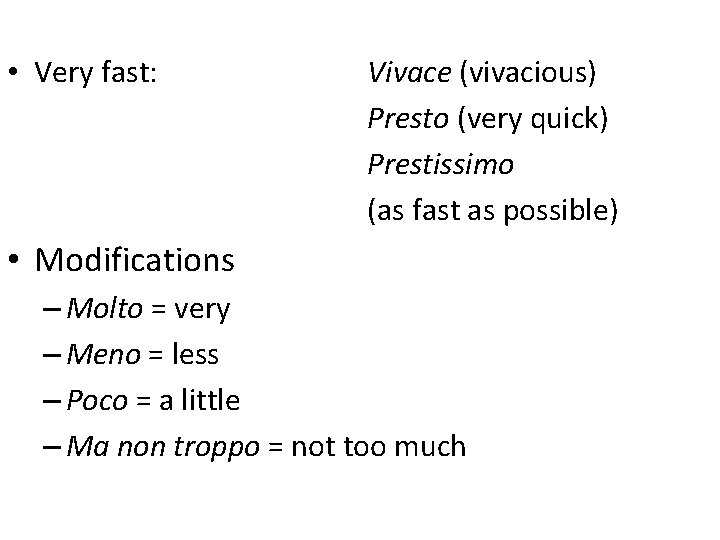
• Very fast: Vivace (vivacious) Presto (very quick) Prestissimo (as fast as possible) • Modifications – Molto = very – Meno = less – Poco = a little – Ma non troppo = not too much
Volume • AKA Dynamics • How loud or soft the music is to be played. • Dynamic instructions are written in Italian.
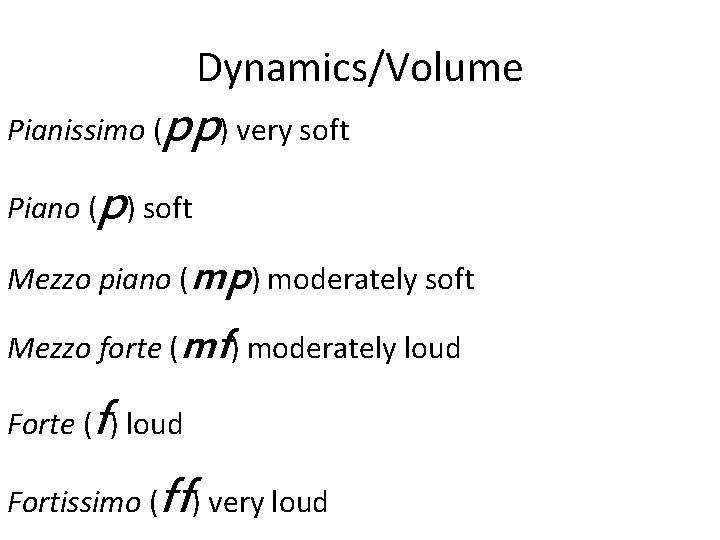
Dynamics/Volume Pianissimo ( pp) very soft p Piano ( ) soft Mezzo piano (mp) moderately soft Mezzo forte (mf) moderately loud f Forte ( ) loud Fortissimo ( ff) very loud
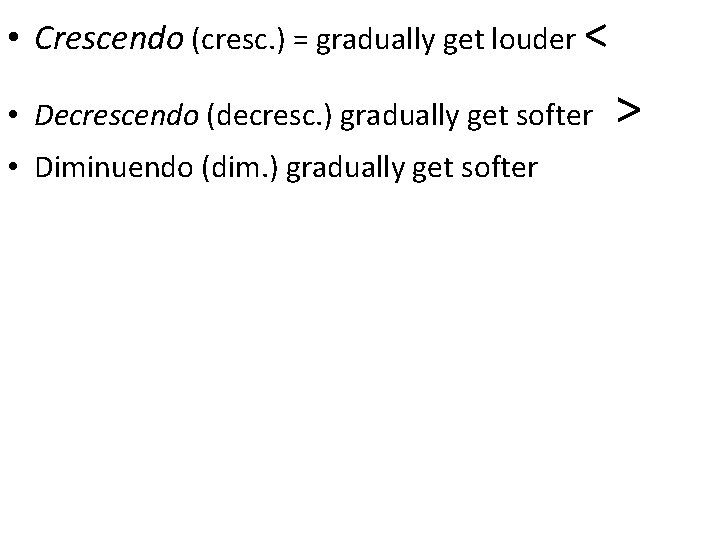
• Crescendo (cresc. ) = gradually get louder < • Decrescendo (decresc. ) gradually get softer • Diminuendo (dim. ) gradually get softer >
Timbre • Tone color • The distinctive sound quality of an instrument. • Can be affected by the material of the instrument or the playing instructions written by the composer. • Instruments differ in tone color on several levels: – Between families of instruments – How the instrument is played – The materials that the instrument is made of
Periods of Music History 1600 -1750: Baroque 1750 -1825: Classical 1820 -1900: Romantic 1900 to present: Modern ***Remember that style periods will overlap; the new will exist side by side with the old.
The Time Signature