
Musical Elements Lesson 2 Rhythm The organization of
- Slides: 17
Musical Elements Lesson 2
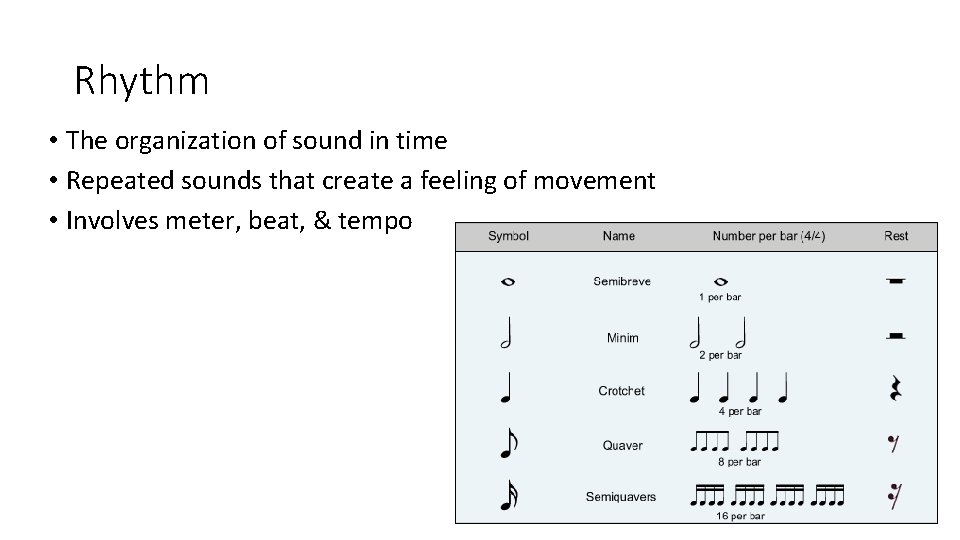
Rhythm • The organization of sound in time • Repeated sounds that create a feeling of movement • Involves meter, beat, & tempo
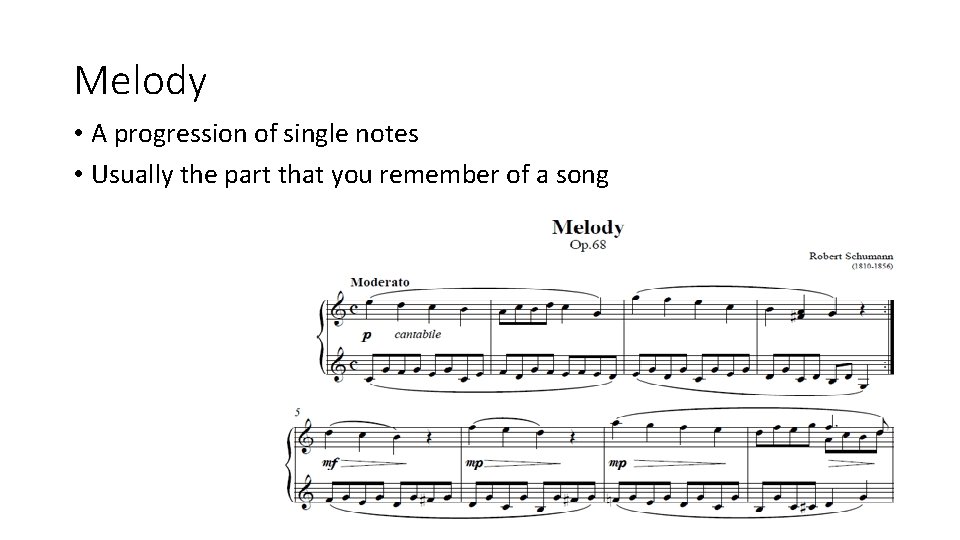
Melody • A progression of single notes • Usually the part that you remember of a song
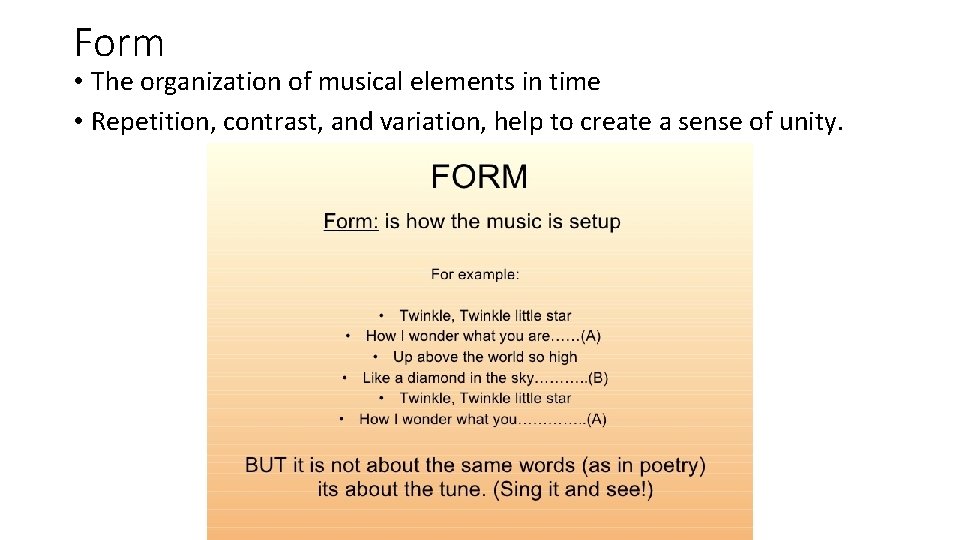
Form • The organization of musical elements in time • Repetition, contrast, and variation, help to create a sense of unity.
Form There are 6 types of Form: • Rondo- Compostional form featuring a main theme (A) which returns several times within other themes Ex: ABACA • Theme and Variation- The theme is repeated over and is changed each time in melody, rhythm, and harmony, dynamics, and tone color. Ex: symphony no. 94 in g major • Overture- Short musical composition, purely orchestral, which opens an opera. It sets the overall dramatic mood. Ex: Hector Berlioz: Roman Carnival Overture • Aria- Song for solo voice with orchestral accompaniment. Found in operas, oratorios, and cantatas • Recitative-Vocal line in an opera, oratorio, or cantata that imitates rhythm and pitch fluctuations. • Classical Symphony-orchestral composition written in four movements, typicaly lasting between 20 -45 minutes. Ex: Beetovan: Symphony no. 9
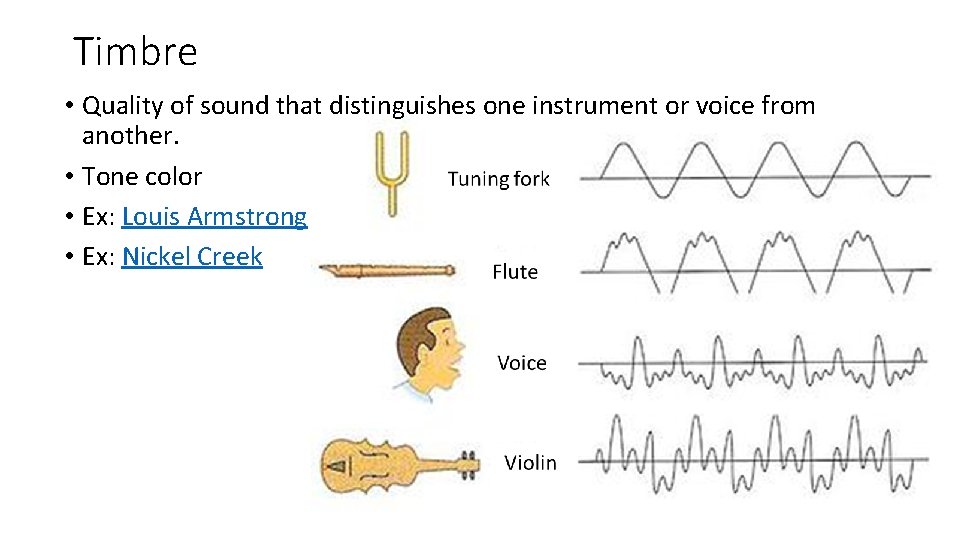
Timbre • Quality of sound that distinguishes one instrument or voice from another. • Tone color • Ex: Louis Armstrong • Ex: Nickel Creek
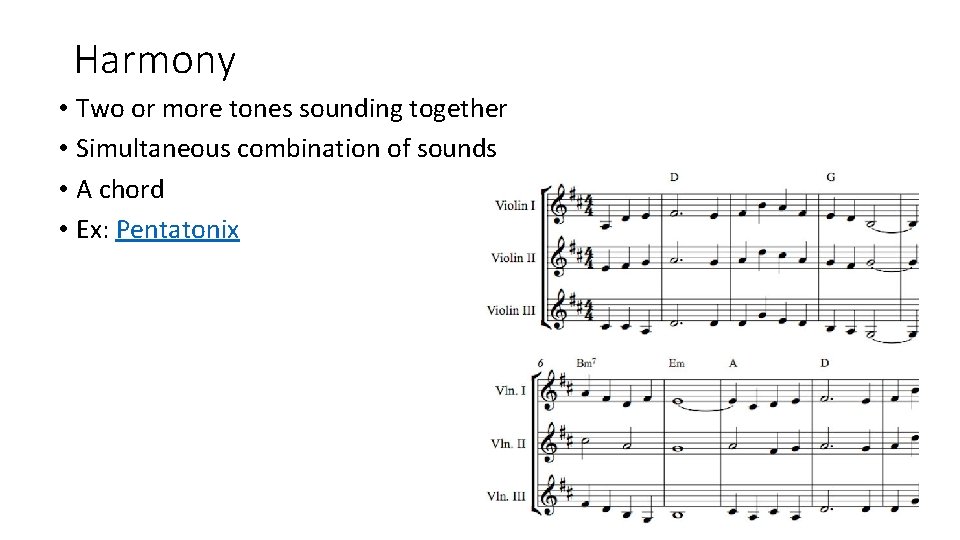
Harmony • Two or more tones sounding together • Simultaneous combination of sounds • A chord • Ex: Pentatonix
Tempo • The speed of the beat in music • Allegro- A rapid, vivacious movement • Andante- An easily flowing movement in moderate time, walking speed
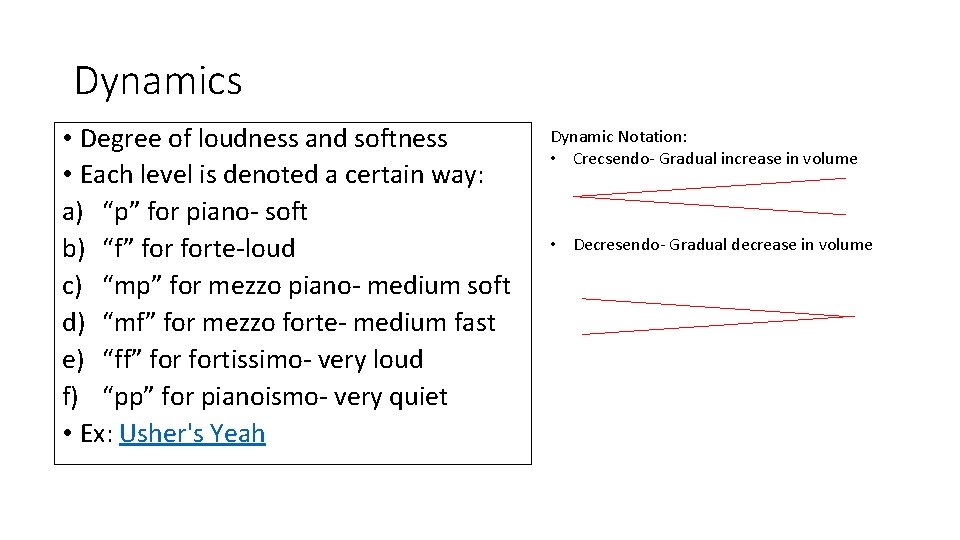
Dynamics • Degree of loudness and softness • Each level is denoted a certain way: a) “p” for piano- soft b) “f” forte-loud c) “mp” for mezzo piano- medium soft d) “mf” for mezzo forte- medium fast e) “ff” fortissimo- very loud f) “pp” for pianoismo- very quiet • Ex: Usher's Yeah Dynamic Notation: • Crecsendo- Gradual increase in volume • Decresendo- Gradual decrease in volume
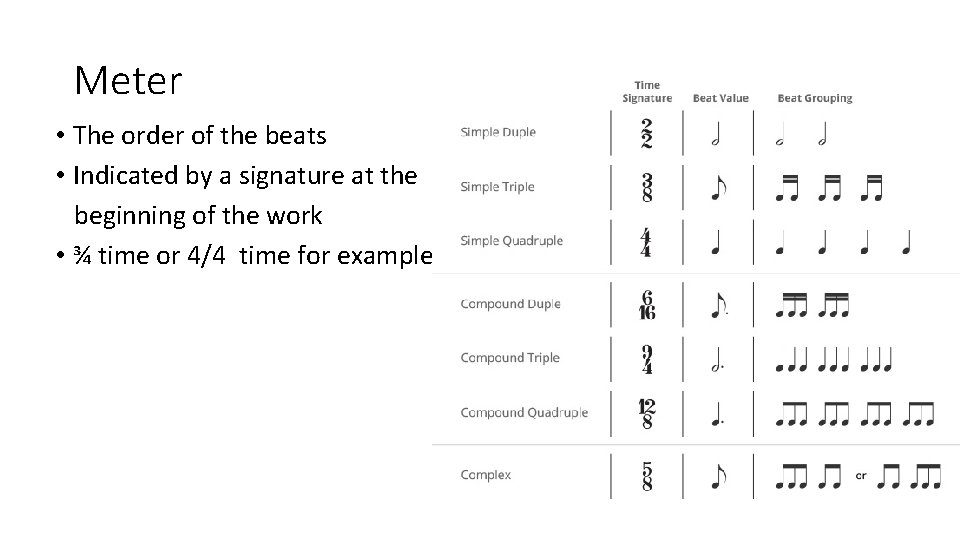
Meter • The order of the beats • Indicated by a signature at the beginning of the work • ¾ time or 4/4 time for example
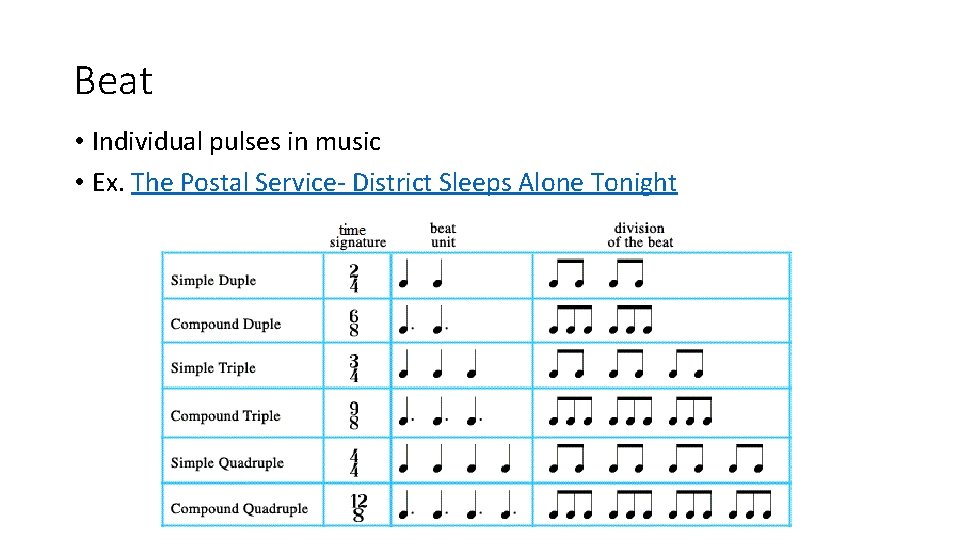
Beat • Individual pulses in music • Ex. The Postal Service- District Sleeps Alone Tonight
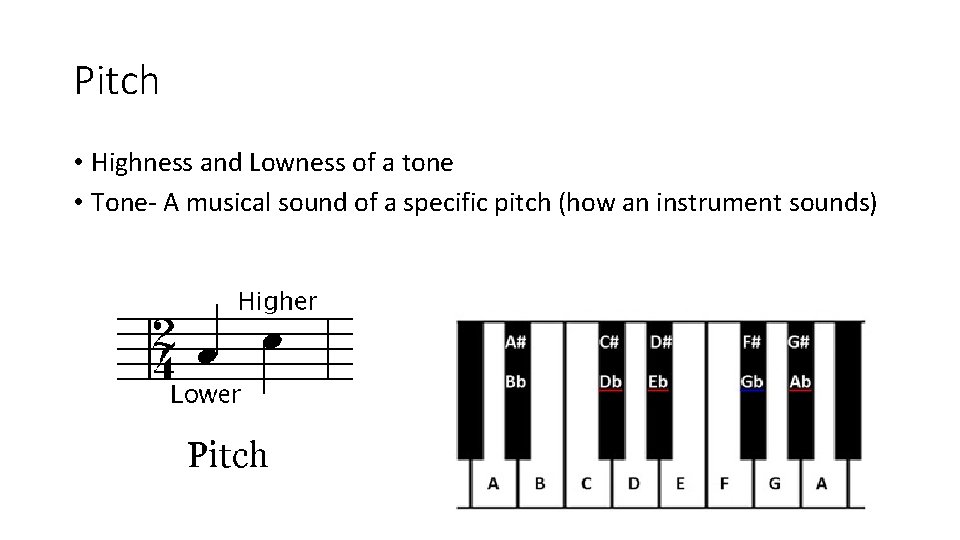
Pitch • Highness and Lowness of a tone • Tone- A musical sound of a specific pitch (how an instrument sounds)
Purposes of Music • Ceremonial- music created or performed for rituals or celebrations • Recreational- music for entertainment • Artistic Expression- music created with the intent to express or communicate one’s emotions, feelings, or experience
Response Activity • Compare and contrast these two videos: • Beautiful Girls • Stand By Me
Homework: Write your own song that includes • one verse followed by a chorus • another verse • Repeat the same chorus • Watch for inspiration. Process for Writing Songs- Ed Sheeren Drake Jay Z
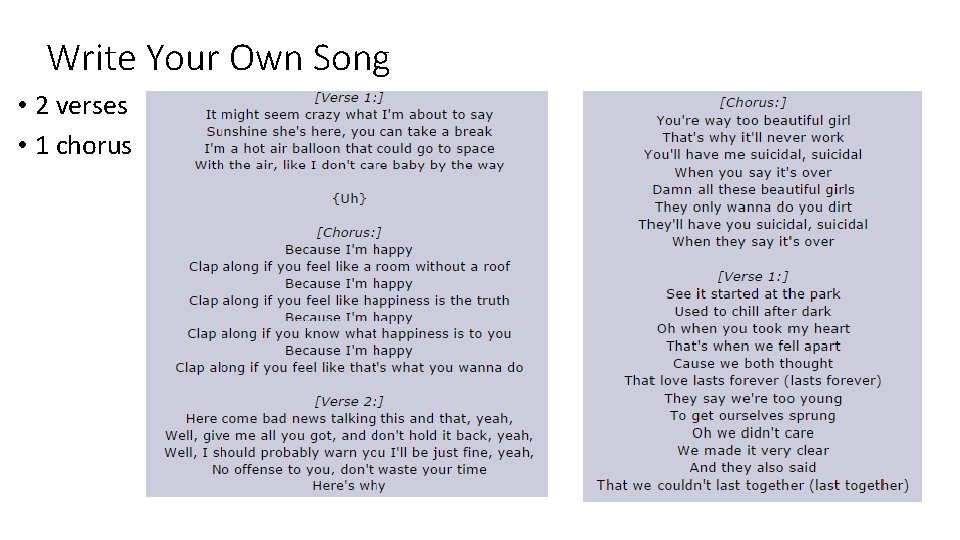
Write Your Own Song • 2 verses • 1 chorus
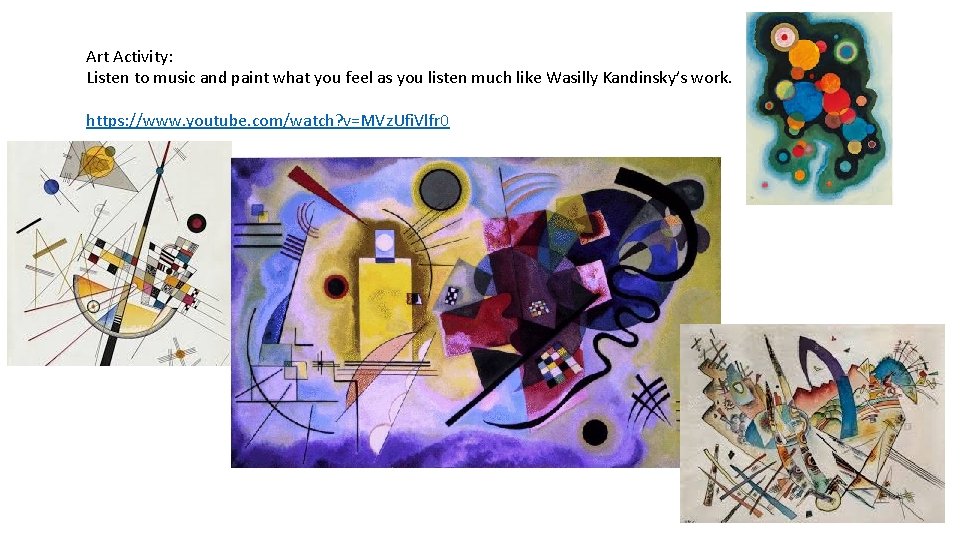
Art Activity: Listen to music and paint what you feel as you listen much like Wasilly Kandinsky’s work. https: //www. youtube. com/watch? v=MVz. Ufi. Vlfr 0