
Music Theory 1 Unit 5 Dynamic Signs and
- Slides: 19
+ Music Theory 1 Unit 5: Dynamic Signs and Tempo Marks
+ Dynamic Signs n Imagine music that has no contrast n What would that sound like? n It would probably be like staring at a painting like this: n OR THIS………. .
+ Dynamic Signs
+ Dynamic Signs n These paintings are nice and probably required a lot of work yet something is missing…… n The missing element is n Contrast adds variety and grabs the listener’s attention! CONTRAST!
+ Dynamic Signs n One of the ways composers add variety to their music is through the use of Dynamics. n Dynamics refer to how loud or soft music is sung or played and also deals with the level of intensity by which it is played. n The terms used are mostly in Italian because it was Italian composers who first started using terms to describe dynamics in their music.
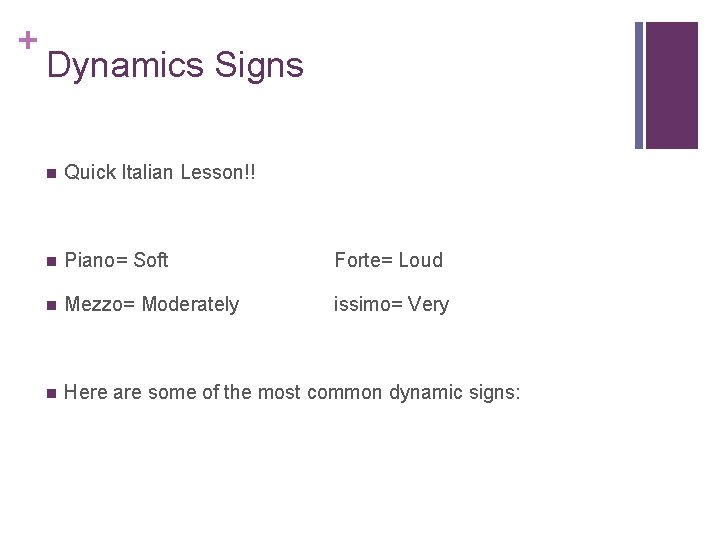
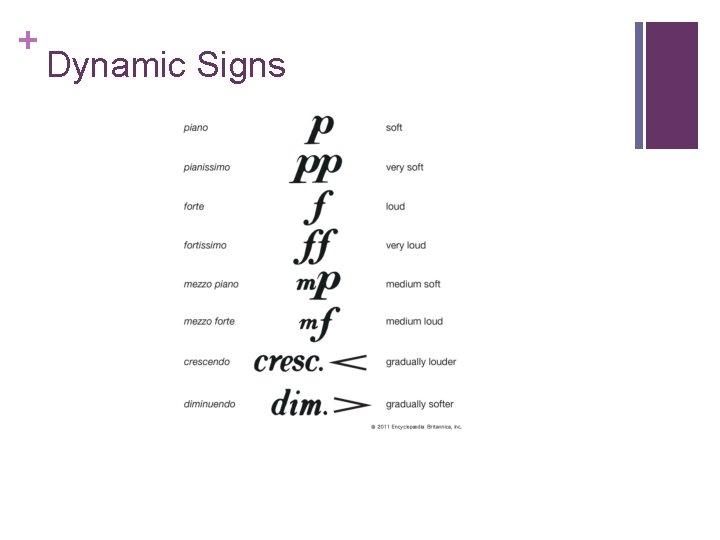
+ Dynamics Signs n Quick Italian Lesson!! n Piano= Soft Forte= Loud n Mezzo= Moderately issimo= Very n Here are some of the most common dynamic signs:
+ Dynamic Signs
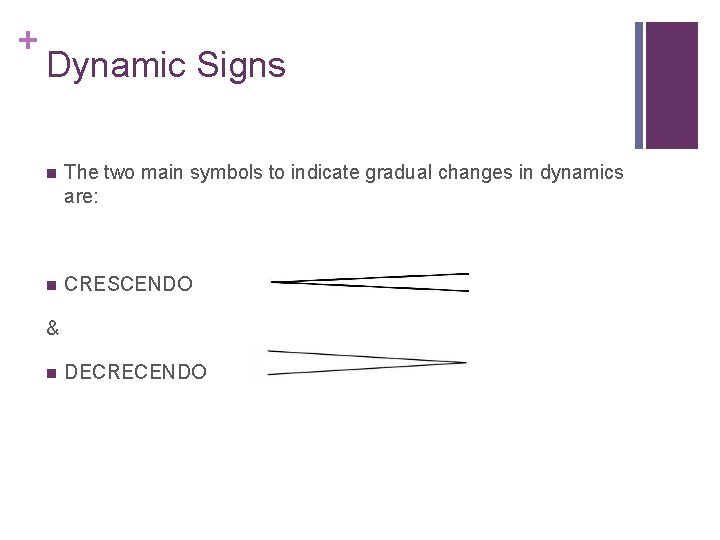
+ Dynamic Signs n The two main symbols to indicate gradual changes in dynamics are: n CRESCENDO & n DECRECENDO
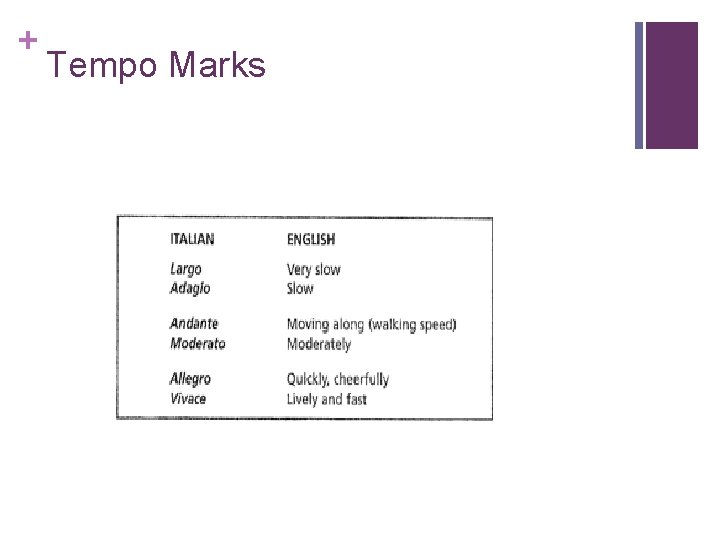
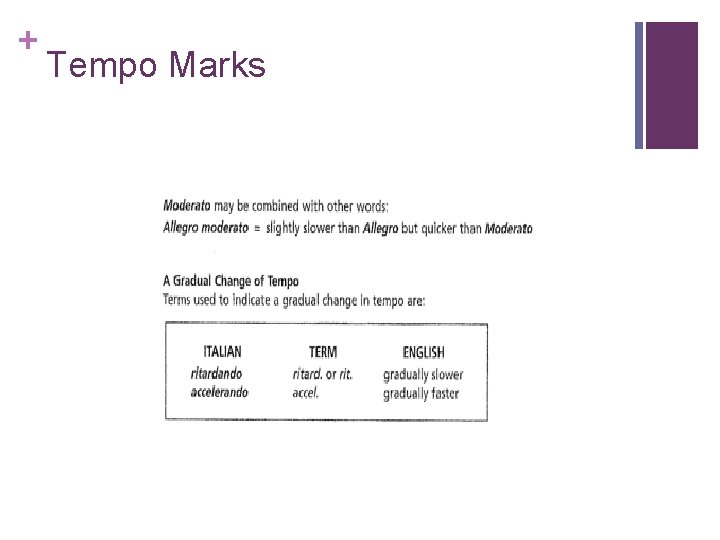
+ Tempo Marks n Another way composers add contrast to music is by changing the tempo!! n Tempo is an Italian word meaning “rate of speed” n Tempo marks tell us how fast or slow the music should be played and like dynamics are also written in Italian.
+ Tempo Marks
+ Tempo Marks n Here is a famous example of Largo n ntonín Dvořák - New World Symphony Op. 95 - Largo n https: //www. youtube. com/watch? v=l 4 DLatly 4 tg n Here is moderato n oderato op. 35 Nr. 17 (Fernando Sor) - Classical Guitar n https: //www. youtube. com/watch? v=5 CZl 7 t. Qke 90
+ Tempo Marks n Here is Allegro/ Vivace n hostakovich Festive Overture Op 96 n https: //www. youtube. com/watch? v=1 g. DZTah 8 J 2 A
+ Tempo Marks
+ Tempo Marks n Here is an example of Ritardando n https: //www. youtube. com/watch? v=Qm. DGntp. ZC 3 I n Here is an example of Accelerando n https: //www. youtube. com/watch? v=5 l. OC 4 f. D 28 sw
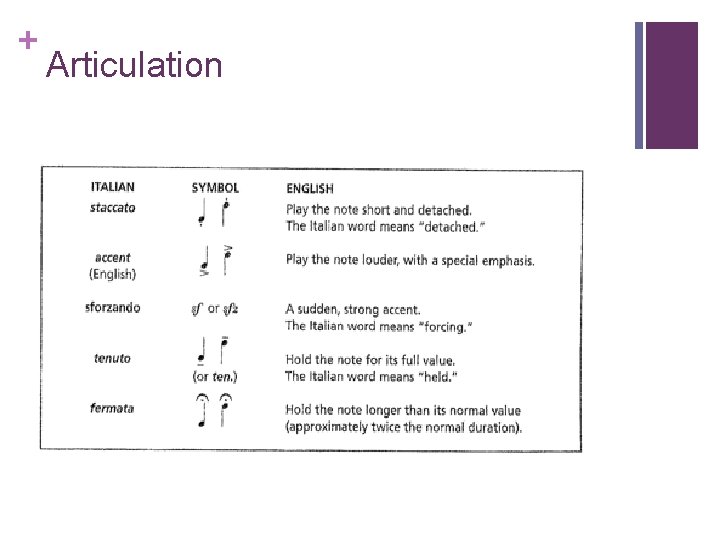
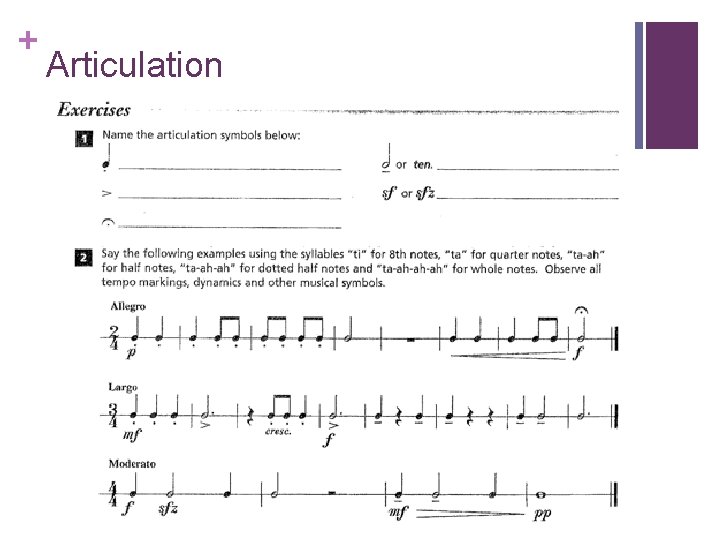
+ Articulation n Another way that composers add contrast or variety to music is through the use of ARTICULATION!!! n Articulation refers to the manner in which a note is performed n Without this aspect music would sound a bit monotone and way too mushy and blended together. n Think of articulation like the diction needed for song lyrics. n The following are some of the basic forms of articulation
+ Articulation
+ Articulation
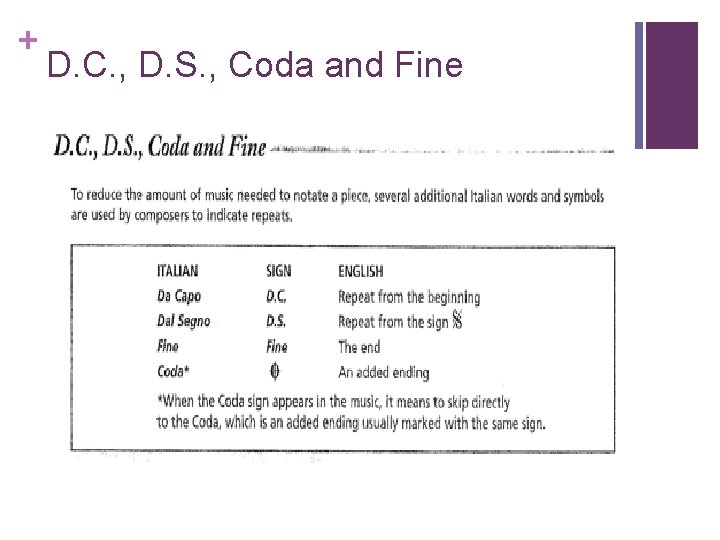
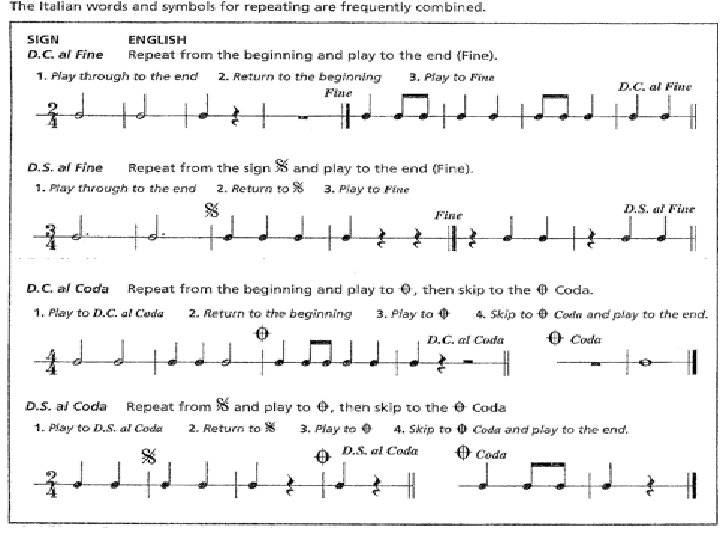
+ D. C. , D. S. , Coda and Fine