
MUSIC HISTORY Part 1 Medieval Music History MEDIEVAL
- Slides: 12
MUSIC HISTORY Part 1: Medieval Music History
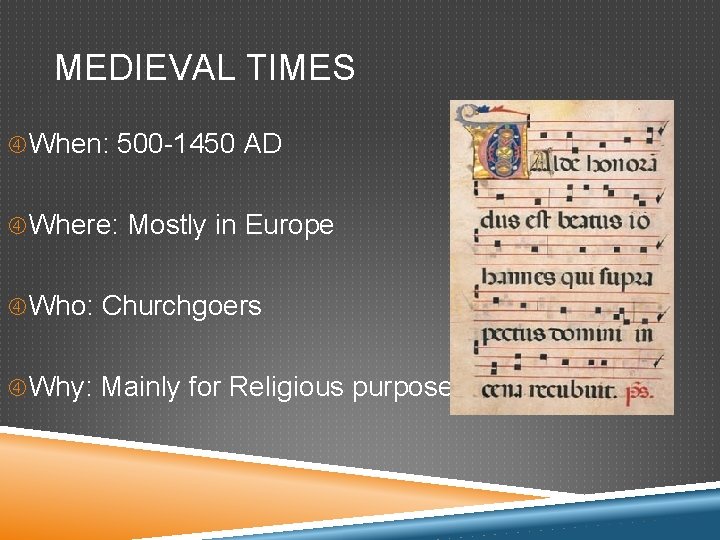
MEDIEVAL TIMES When: 500 -1450 AD Where: Mostly in Europe Who: Churchgoers Why: Mainly for Religious purposes
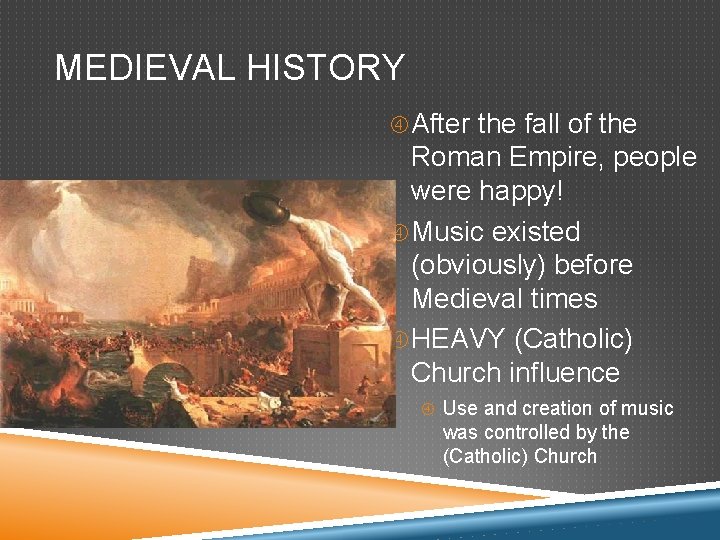
MEDIEVAL HISTORY After the fall of the Roman Empire, people were happy! Music existed (obviously) before Medieval times HEAVY (Catholic) Church influence Use and creation of music was controlled by the (Catholic) Church
MUSIC FOR THE CHURCH Why could the church all of a sudden decide who could do what and what they could do? Money and Fear • Modern notation is built upon Medieval foundations The Church paid the bills for artists/musicians Musicians were employed by churches Churches could by materials for music making • People didn’t want to make God mad, so only music “pleasing to God” was allowed
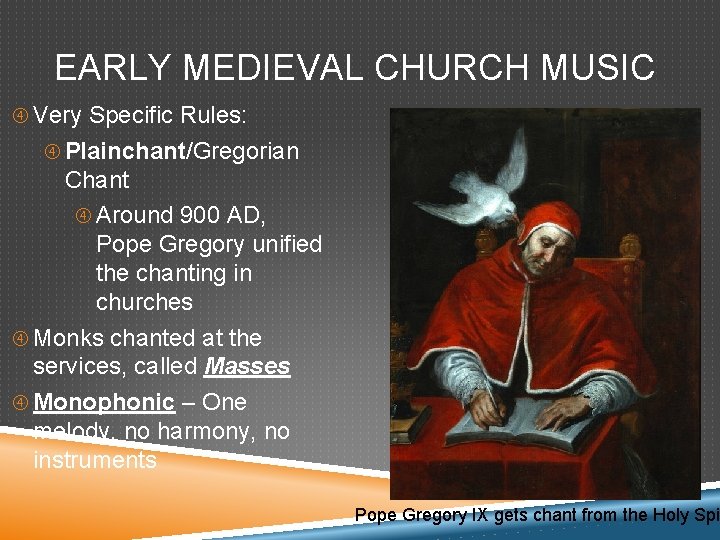
EARLY MEDIEVAL CHURCH MUSIC Very Specific Rules: Plainchant/Gregorian Chant Around 900 AD, Pope Gregory unified the chanting in churches Monks chanted at the services, called Masses Monophonic – One melody, no harmony, no instruments Pope Gregory IX gets chant from the Holy Spi
PARTS OF THE MASS KGCSA Kyrie Gloria Credo Sanctus Agnus Dei
MID-MEDIEVAL CHURCH MUSIC Around 900, more musical lines are allowed Simple Harmony Maybe because it got too boring, or some monks couldn’t sing in tune! Organum – Simple, two-part medieval harmony Two Ways: Drone Two Different Pitches
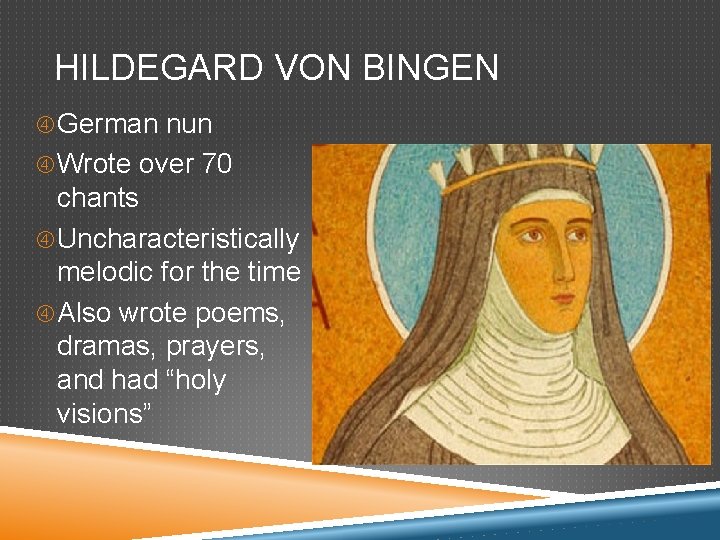
HILDEGARD VON BINGEN German nun Wrote over 70 chants Uncharacteristically melodic for the time Also wrote poems, dramas, prayers, and had “holy visions”
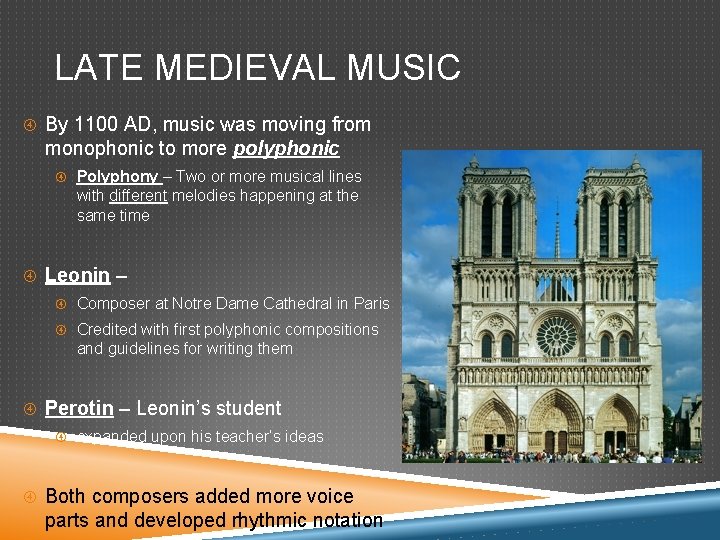
LATE MEDIEVAL MUSIC By 1100 AD, music was moving from monophonic to more polyphonic Polyphony – Two or more musical lines with different melodies happening at the same time Leonin – Composer at Notre Dame Cathedral in Paris Credited with first polyphonic compositions and guidelines for writing them Perotin – Leonin’s student expanded upon his teacher’s ideas Both composers added more voice parts and developed rhythmic notation
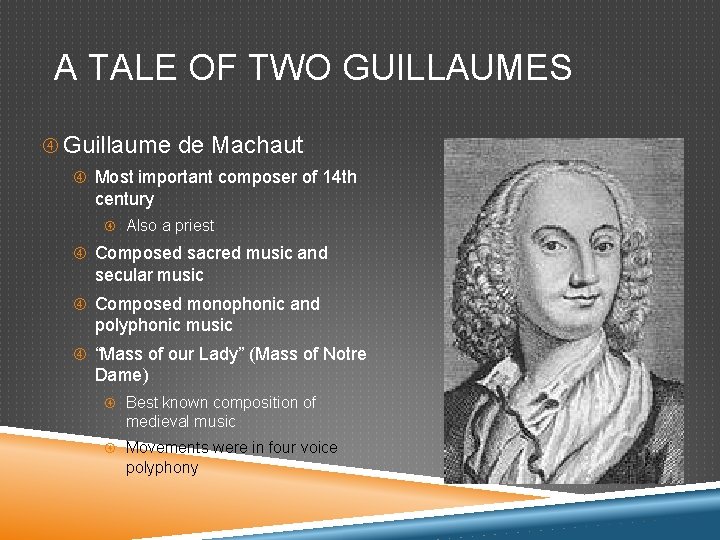
A TALE OF TWO GUILLAUMES Guillaume de Machaut Most important composer of 14 th century Also a priest Composed sacred music and secular music Composed monophonic and polyphonic music “Mass of our Lady” (Mass of Notre Dame) Best known composition of medieval music Movements were in four voice polyphony
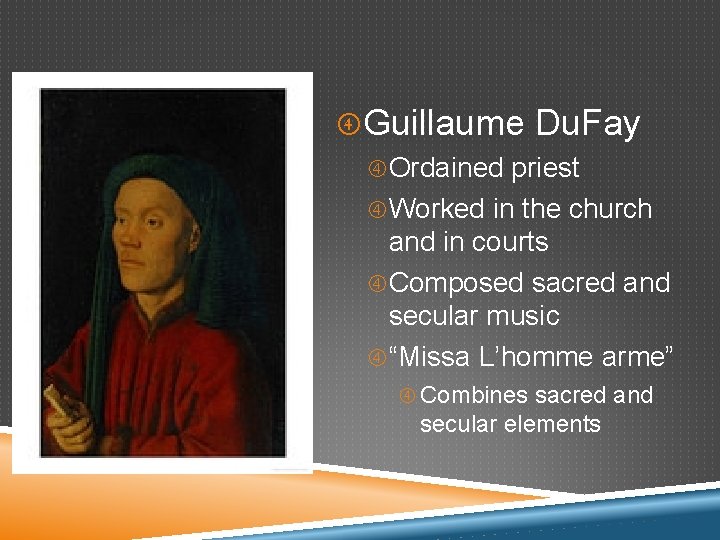
Guillaume Du. Fay Ordained priest Worked in the church and in courts Composed sacred and secular music “Missa L’homme arme” Combines sacred and secular elements
WANDERING MUSICIANS Minstrel The name most commonly used to describe a professional musician in Medieval times Often employed by Troubadours or by courts If they didn’t find permanent employment , they wandered from place to place Not just a musician: Story-teller Trials of skill Play the drums, cymbals, hurdy-gurdy, lute, harp, fiddle Juggle with knives Perform magic tricks Imitate bird songs Train dogs or bears to dance