
Musculoskeletal System Overview of musculoskeletal system Musculoskeletal of
- Slides: 22
Musculo-skeletal System
Overview of musculo-skeletal system Musculo-skeletal of: ◦ Muscles ◦ Bones ◦ Cartilage ◦ Ligaments ◦ Tendons system is composed
TASK What does the musculoskeletal system do? ◦ Write down some ideas.
What does the musculoskeletal system do? Its functions is to allow: ◦ Movement ◦ Maintenance of posture ◦ Support ◦ Protection of internal organs ◦ Heat production
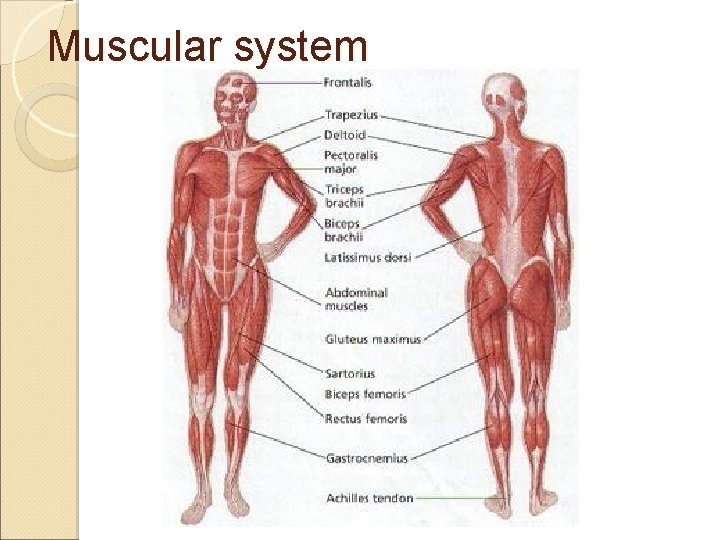
Muscular system
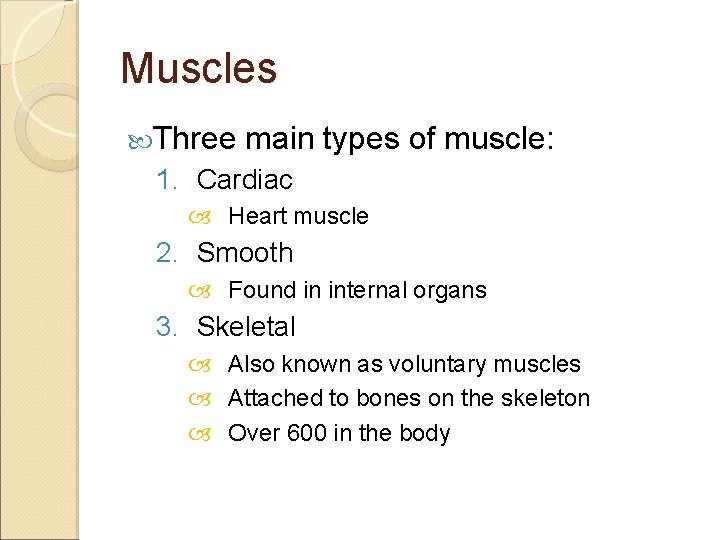
Muscles Three main types of muscle: 1. Cardiac Heart muscle 2. Smooth Found in internal organs 3. Skeletal Also known as voluntary muscles Attached to bones on the skeleton Over 600 in the body
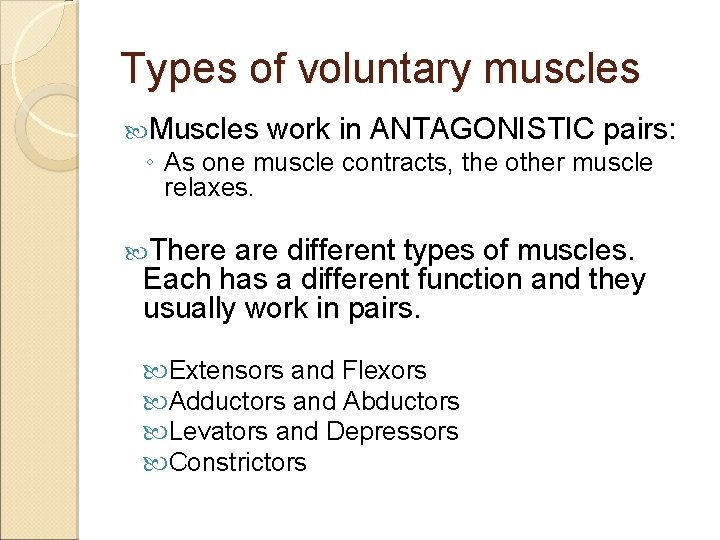
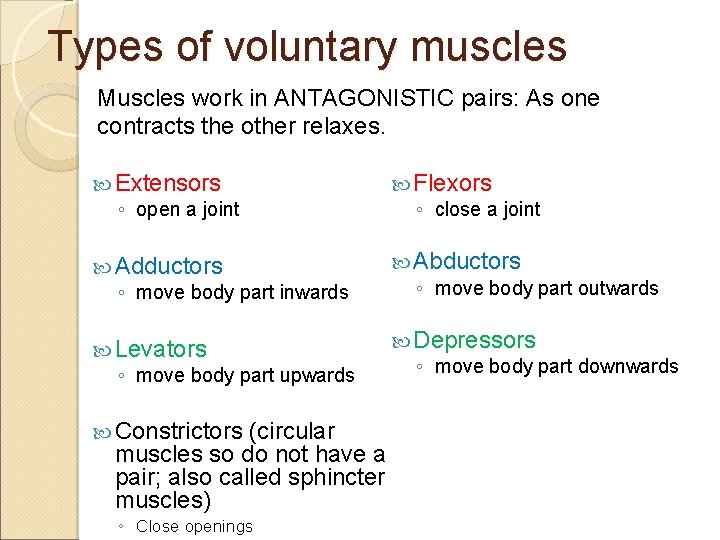
Types of voluntary muscles Muscles work in ANTAGONISTIC pairs: ◦ As one muscle contracts, the other muscle relaxes. There are different types of muscles. Each has a different function and they usually work in pairs. Extensors and Flexors Adductors and Abductors Levators and Depressors Constrictors
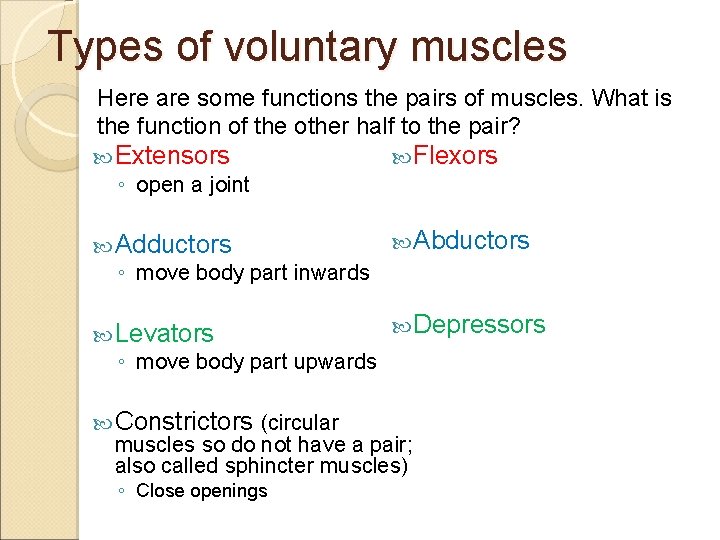
Types of voluntary muscles Here are some functions the pairs of muscles. What is the function of the other half to the pair? Extensors ◦ open a joint Flexors Abductors Adductors ◦ move body part inwards Depressors Levators ◦ move body part upwards Constrictors (circular muscles so do not have a pair; also called sphincter muscles) ◦ Close openings
Types of voluntary muscles Muscles work in ANTAGONISTIC pairs: As one contracts the other relaxes. Extensors ◦ open a joint Flexors ◦ close a joint Adductors ◦ move body part inwards Abductors ◦ move body part outwards Levators ◦ move body part upwards Depressors ◦ move body part downwards Constrictors (circular muscles so do not have a pair; also called sphincter muscles) ◦ Close openings
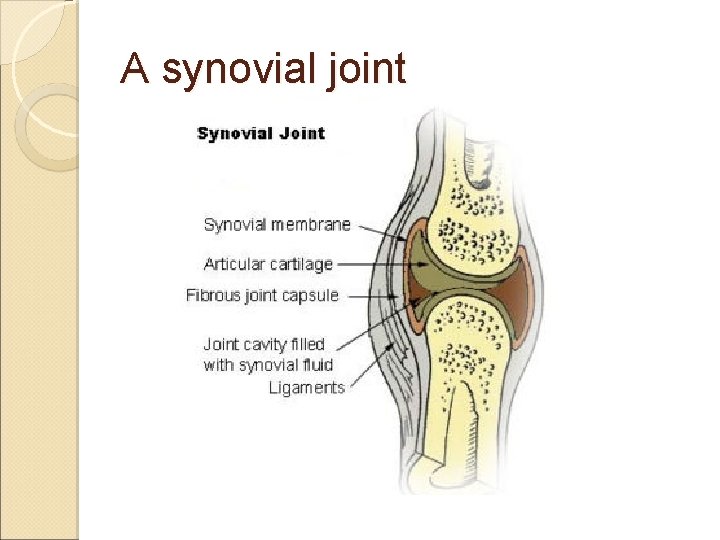
A synovial joint
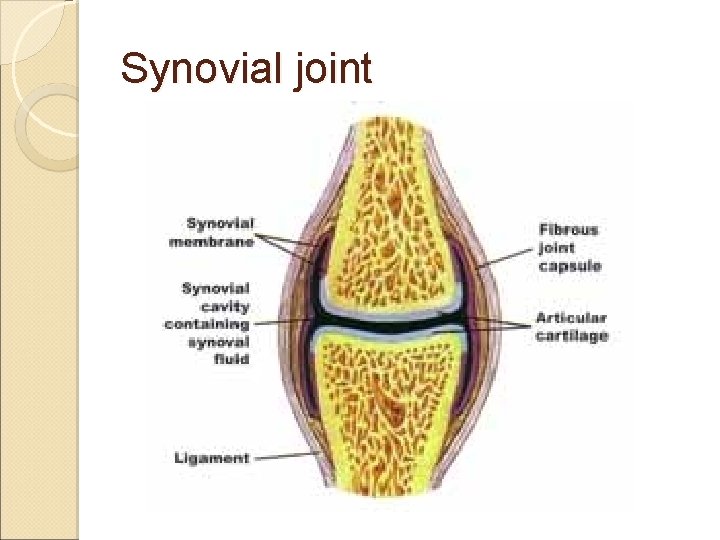
Synovial joint
Task: Main Parts of a Synovial Joint Look up in the textbook or using internet resources to find the function of the following parts of a synovial joint; Bone Articular Cartilage Synovial membrane Synovial fluid Ligaments Tendons
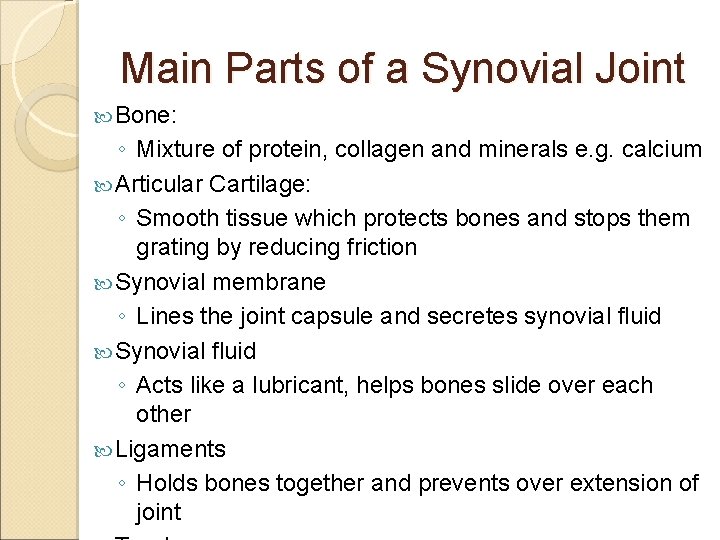
Main Parts of a Synovial Joint Bone: ◦ Mixture of protein, collagen and minerals e. g. calcium Articular Cartilage: ◦ Smooth tissue which protects bones and stops them grating by reducing friction Synovial membrane ◦ Lines the joint capsule and secretes synovial fluid Synovial fluid ◦ Acts like a lubricant, helps bones slide over each other Ligaments ◦ Holds bones together and prevents over extension of joint
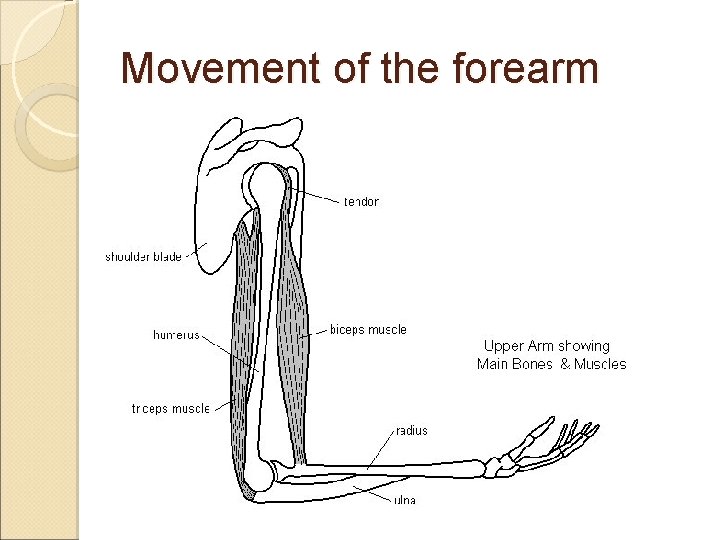
Movement of the forearm
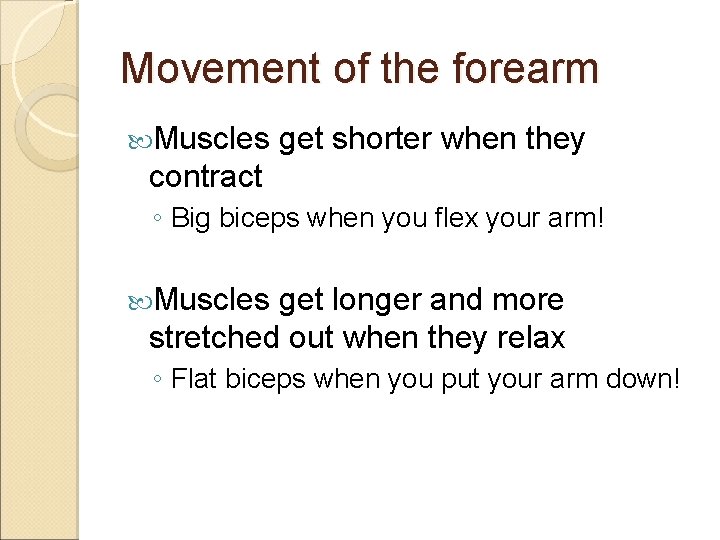
Movement of the forearm Muscles get shorter when they contract ◦ Big biceps when you flex your arm! Muscles get longer and more stretched out when they relax ◦ Flat biceps when you put your arm down!
Task: making a model arm Make the model arm and complete the worksheet. ◦ Follow all instructions on the sheet
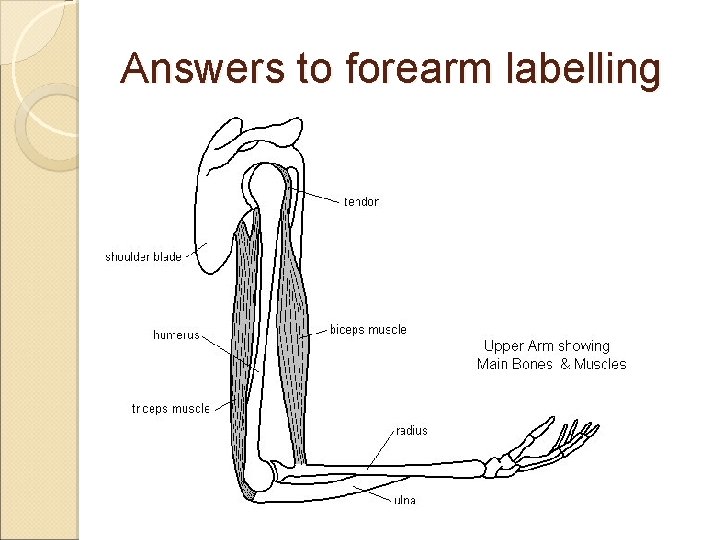
Answers to questions When the biceps contract and the triceps relax the forearm moves upwards When the triceps contract and the biceps relax the forearm moves downards We call this an Antagonistic Pair, meaning as one muscle contracts the other relaxes. Label the parts of the forearm.
Answers to forearm labelling
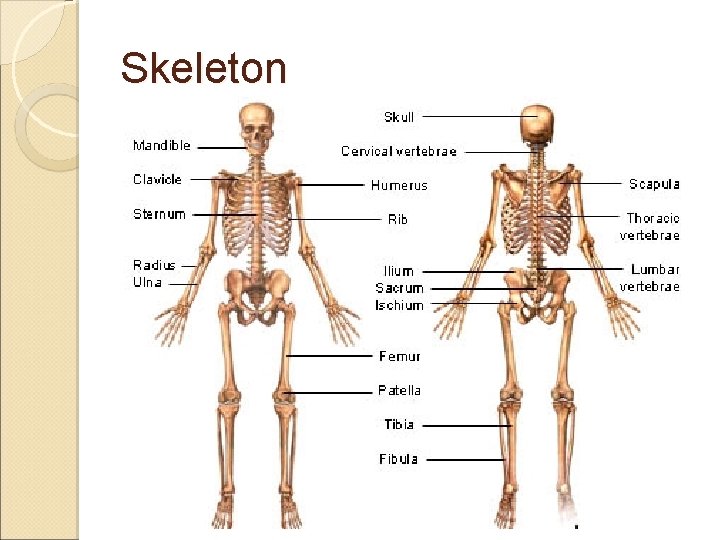
Skeleton
Skeleton functions Its functions is to allow: ◦ Movement ◦ Support ◦ Protection of internal organs
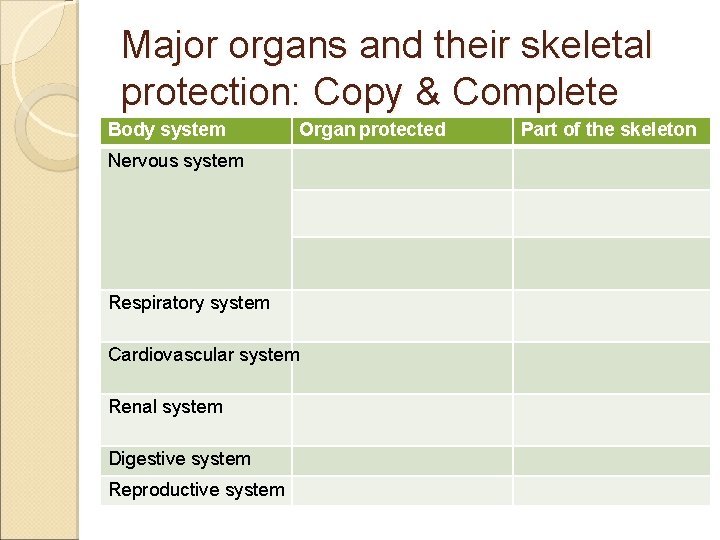
Major organs and their skeletal protection: Copy & Complete Body system Organ protected Nervous system Respiratory system Cardiovascular system Renal system Digestive system Reproductive system Part of the skeleton
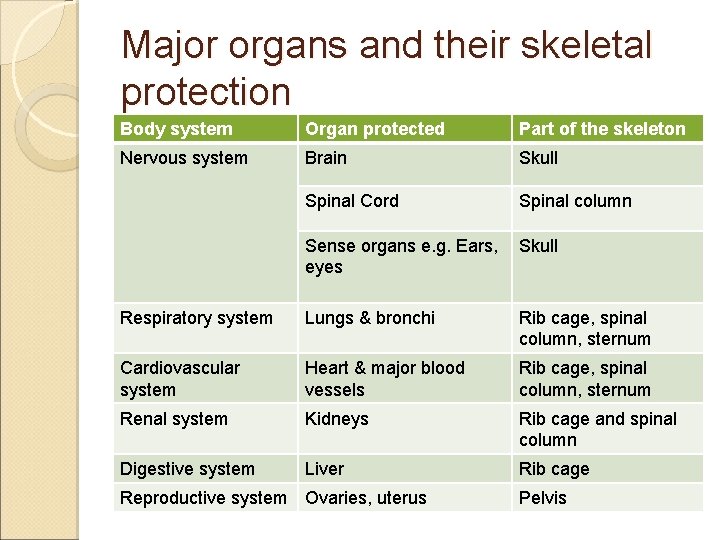
Major organs and their skeletal protection Body system Organ protected Part of the skeleton Nervous system Brain Skull Spinal Cord Spinal column Sense organs e. g. Ears, eyes Skull Respiratory system Lungs & bronchi Rib cage, spinal column, sternum Cardiovascular system Heart & major blood vessels Rib cage, spinal column, sternum Renal system Kidneys Rib cage and spinal column Digestive system Liver Rib cage Reproductive system Ovaries, uterus Pelvis