
Musculoskeletal Levers The Relationship between the Muscular and
Musculoskeletal “Levers” The Relationship between the Muscular and Skeletal System
Move It u. Your muscles pulling on bone often works like a SIMPLE MACHINE called a LEVER.
LEVER LIMBO u. Most of the bones of the limbs (ARMS and LEGS) act as Levers. u. LEVERS: simple machines made up of a BAR that moves around a FIXED POINT.
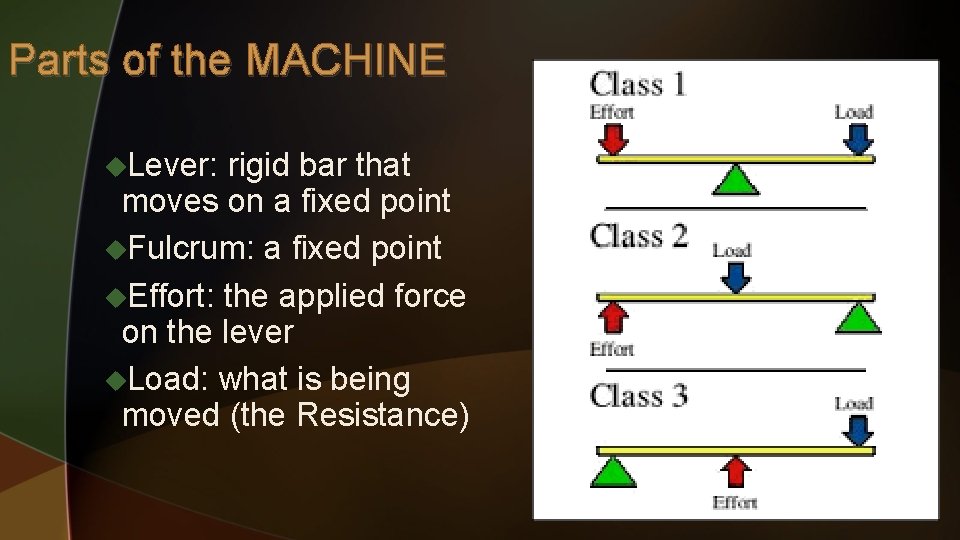
Parts of the MACHINE u. Lever: rigid bar that moves on a fixed point u. Fulcrum: a fixed point u. Effort: the applied force on the lever u. Load: what is being moved (the Resistance)
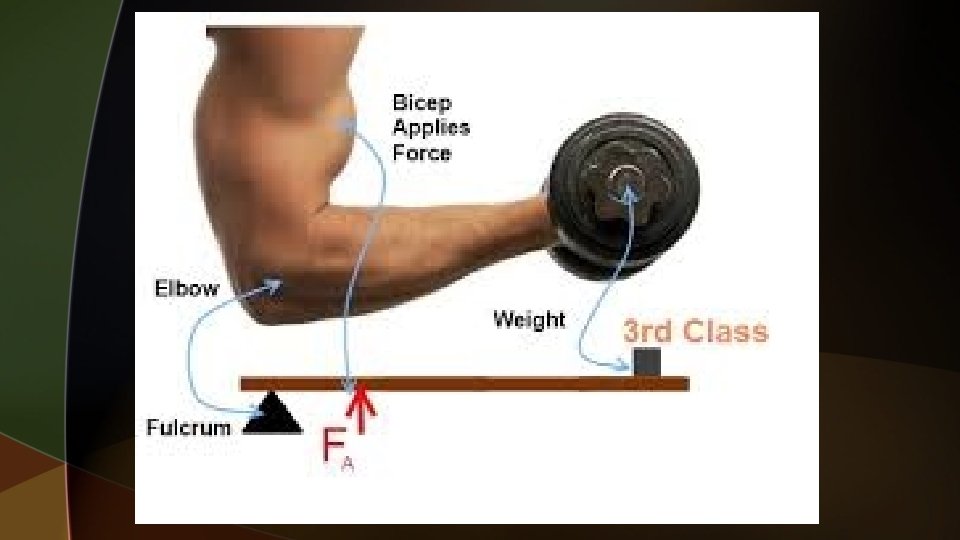
PARTS of the Body u=Bone is equal to the Lever u=Joint is equal to the Fulcrum u=Muscle (Contraction) equals the Effort (Force) u=Thing being lifted equals the Load (Resistance)

Mechanical Advantages/Disadvantage u. Advantage u. Disadvantage u. IF the Load is Close u. IF the Load is Far and the Effort from the Fulcrum applied far from the and the Effort is fulcrum applied near the fulcrum.
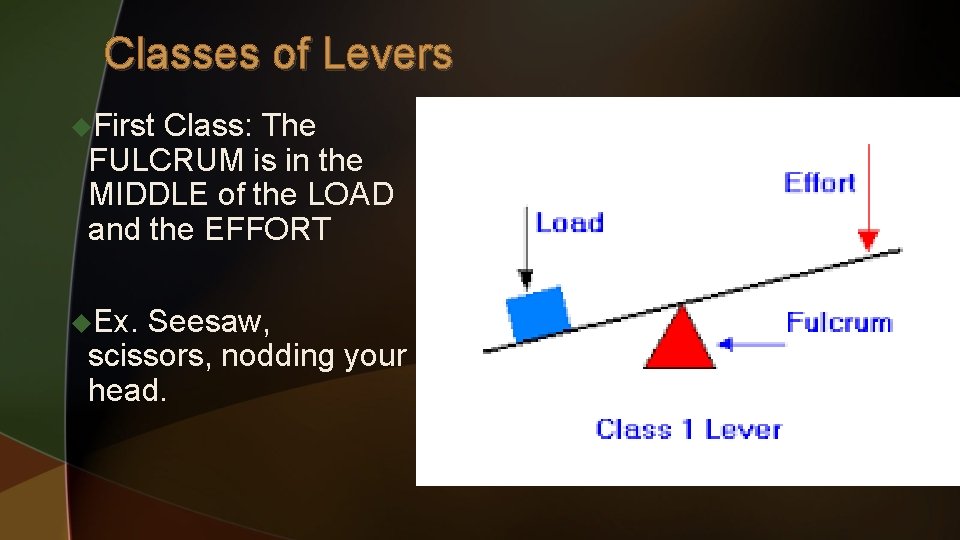
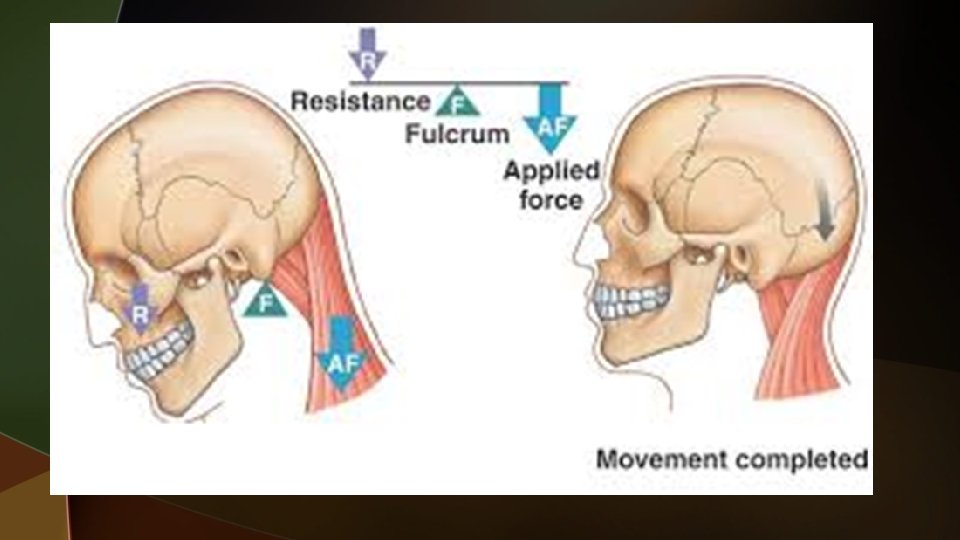
Classes of Levers u. First Class: The FULCRUM is in the MIDDLE of the LOAD and the EFFORT u. Ex. Seesaw, scissors, nodding your head.
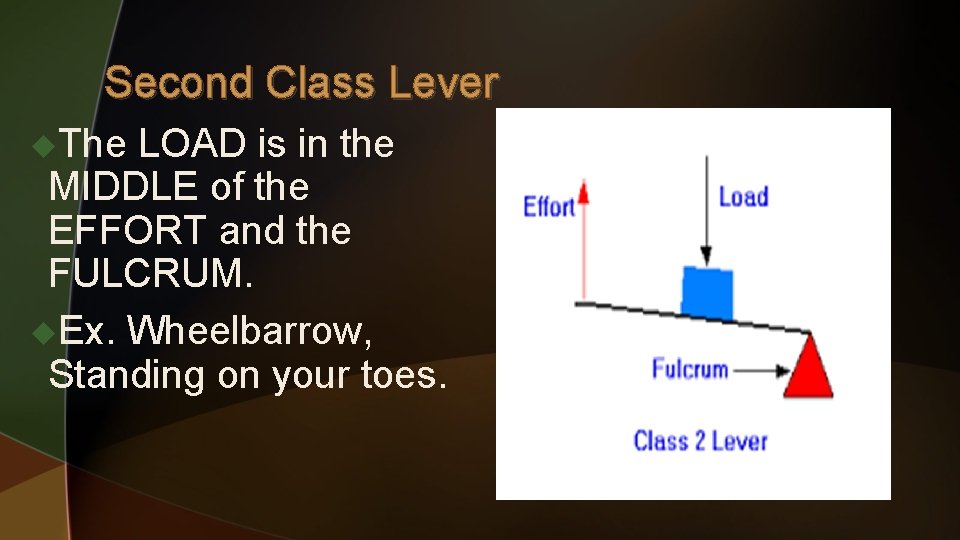
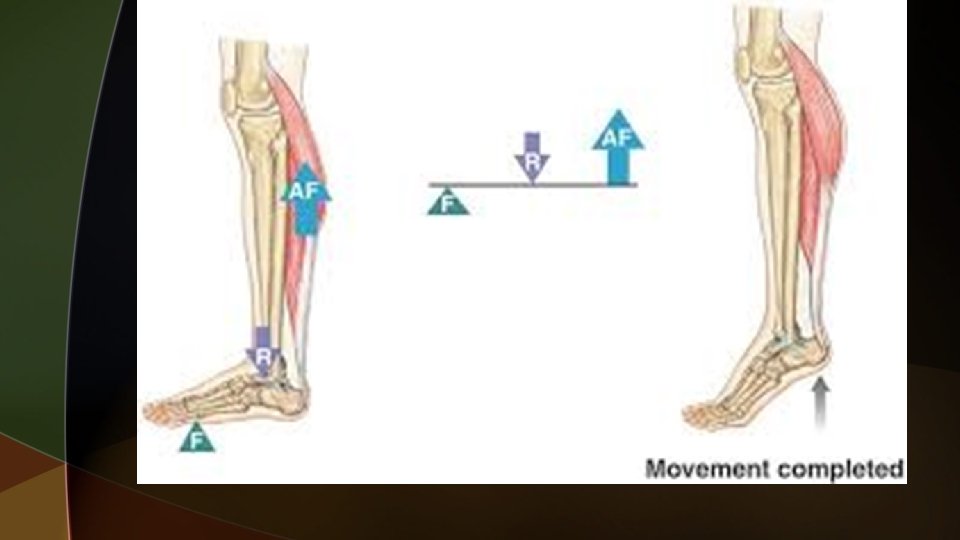
Second Class Lever u. The LOAD is in the MIDDLE of the EFFORT and the FULCRUM. u. Ex. Wheelbarrow, Standing on your toes.
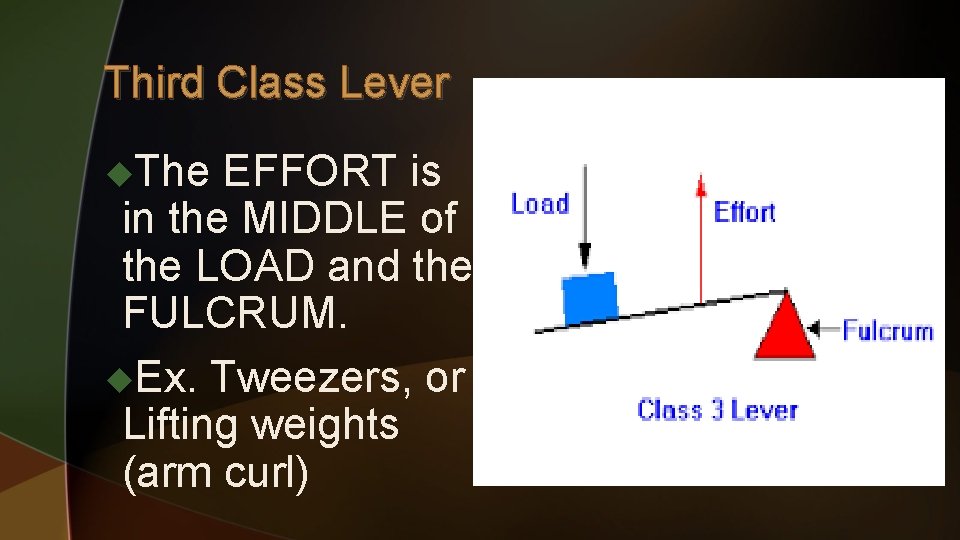
Third Class Lever u. The EFFORT is in the MIDDLE of the LOAD and the FULCRUM. u. Ex. Tweezers, or Lifting weights (arm curl)
Question Section Why are Levers Useful?
- Slides: 13