
Muscular System Types of Muscle Skeletal striated voluntary

- Slides: 27
Muscular System
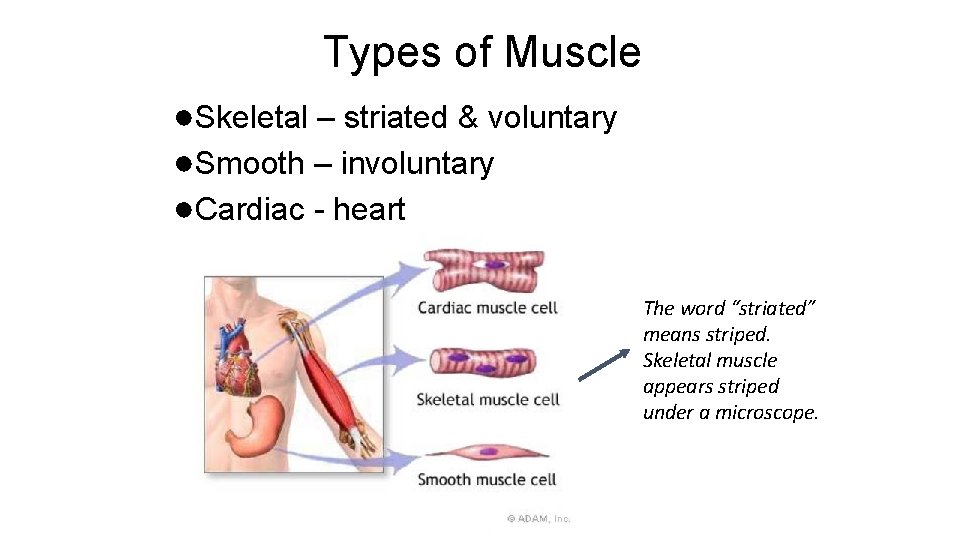
Types of Muscle ●Skeletal – striated & voluntary ●Smooth – involuntary ●Cardiac - heart The word “striated” means striped. Skeletal muscle appears striped under a microscope.
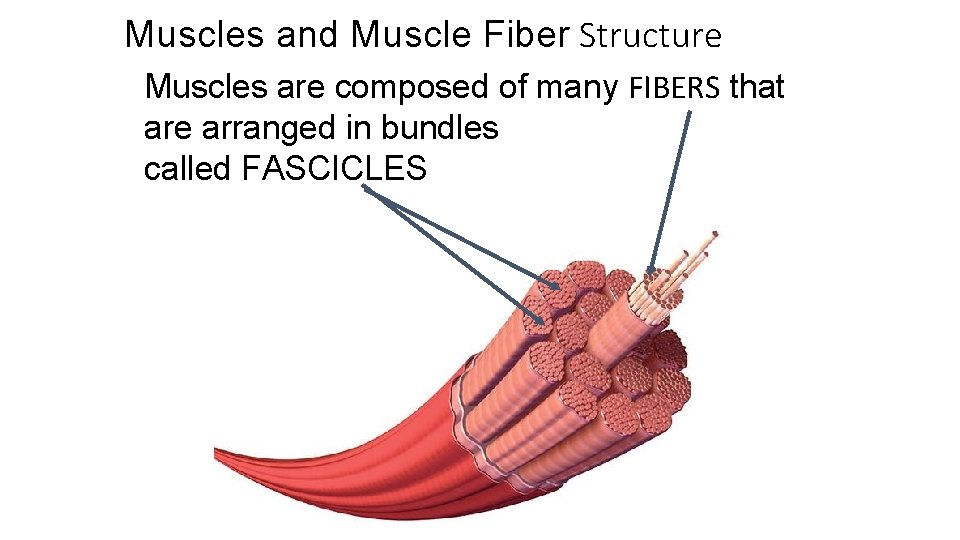
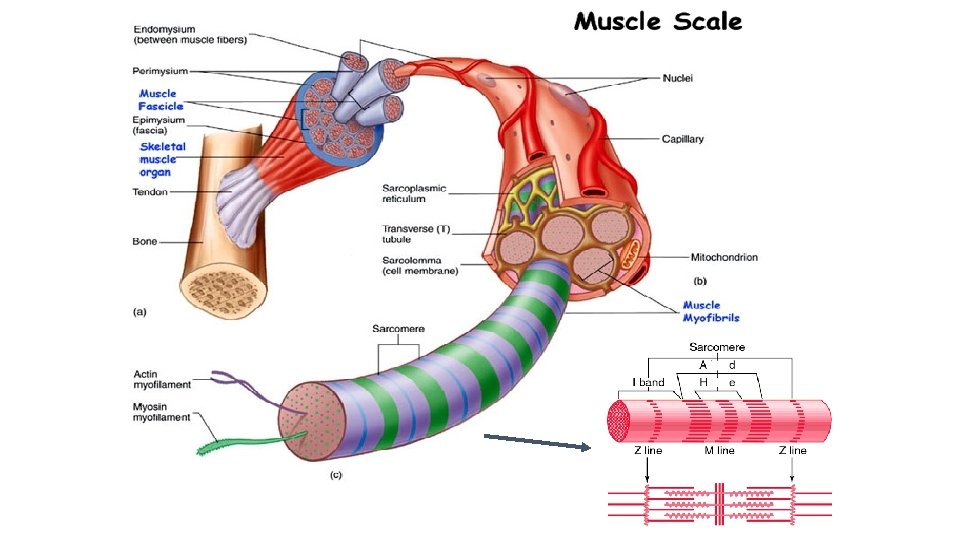
Muscles and Muscle Fiber Structure Muscles are composed of many FIBERS that are arranged in bundles called FASCICLES
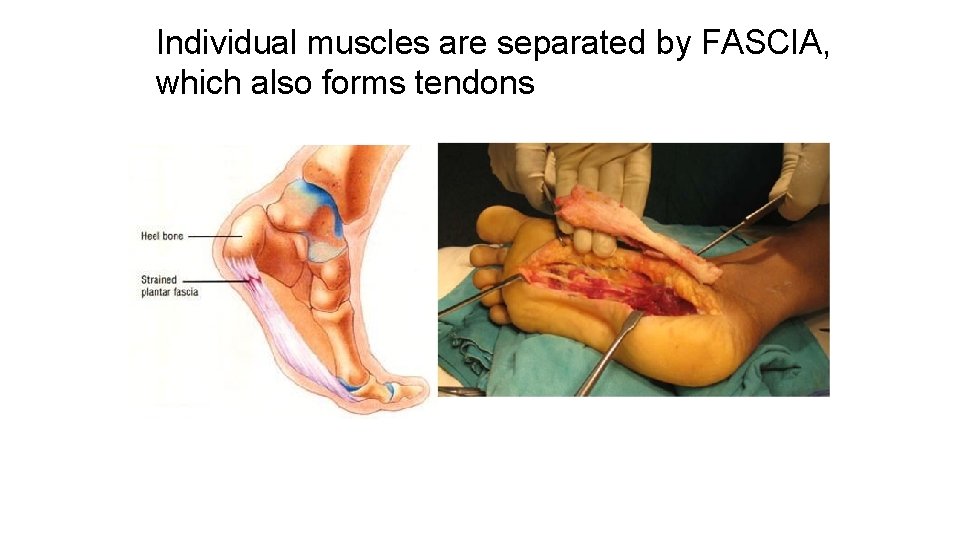
Individual muscles are separated by FASCIA, which also forms tendons
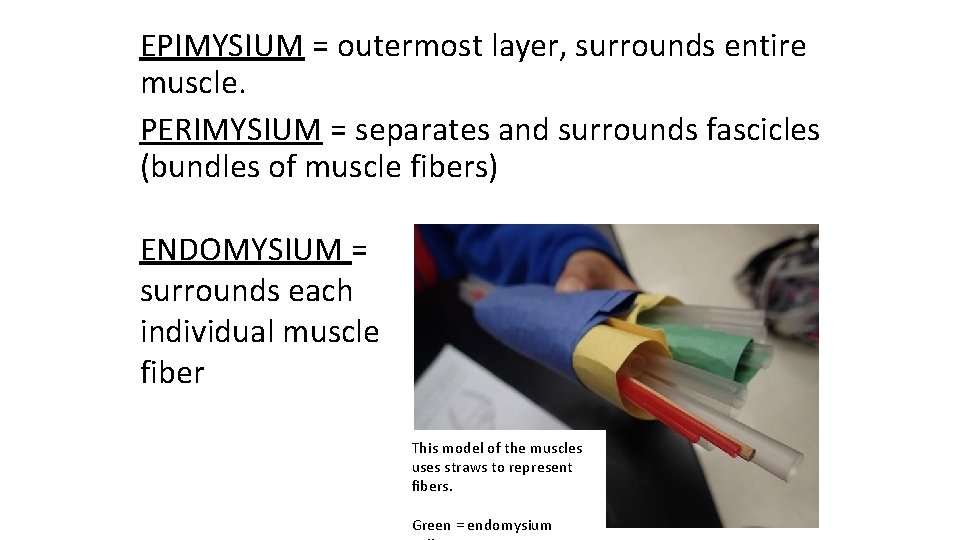
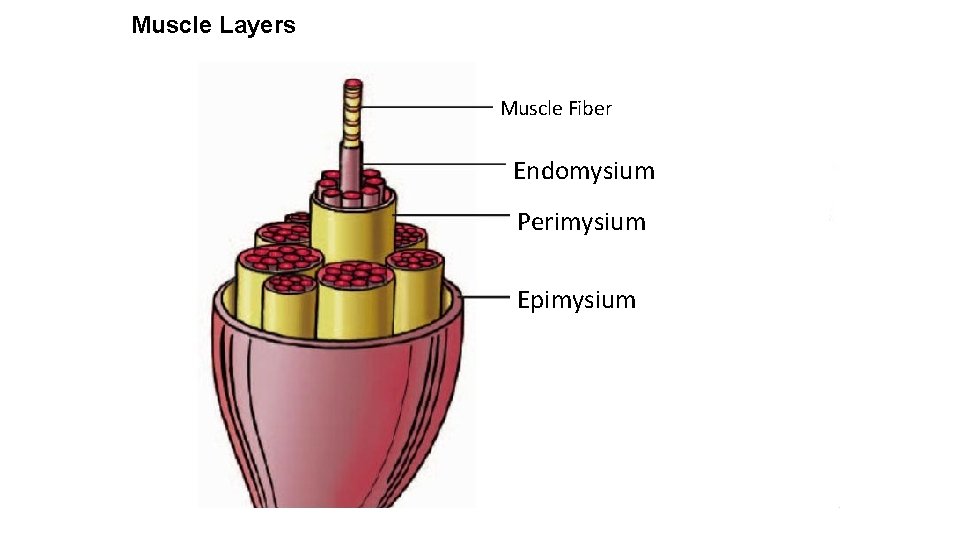
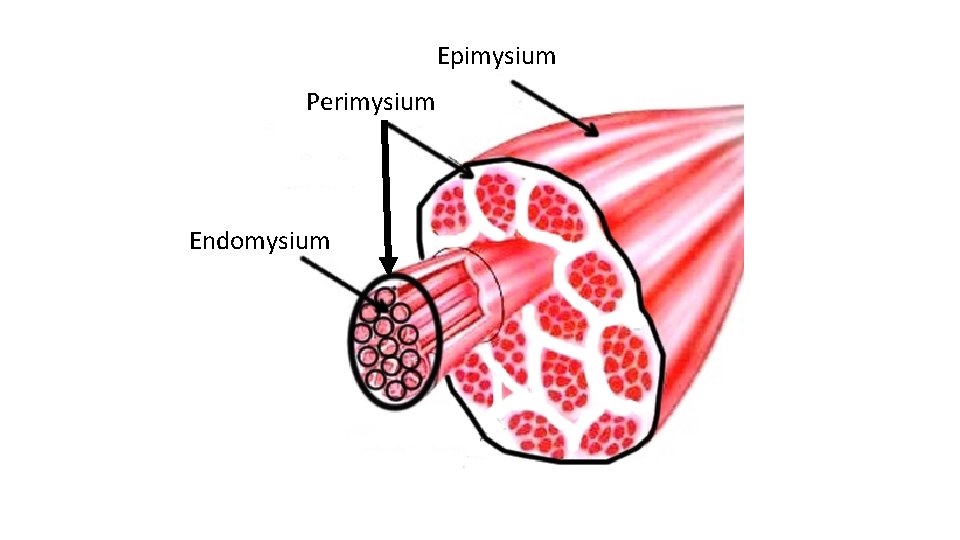
EPIMYSIUM = outermost layer, surrounds entire muscle. PERIMYSIUM = separates and surrounds fascicles (bundles of muscle fibers) ENDOMYSIUM = surrounds each individual muscle fiber This model of the muscles uses straws to represent fibers. Green = endomysium
Muscle Layers Muscle Fiber Endomysium Perimysium Epimysium
Epimysium Perimysium Endomysium
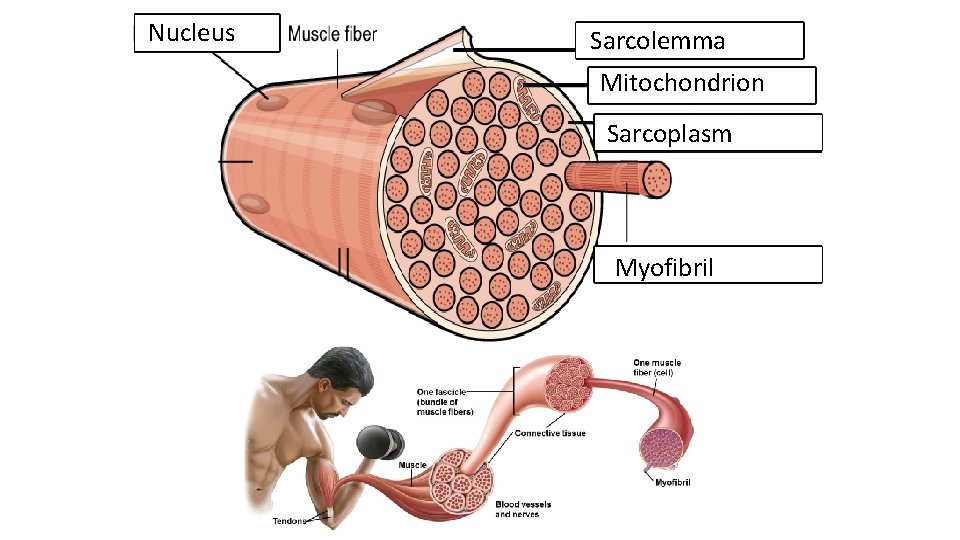
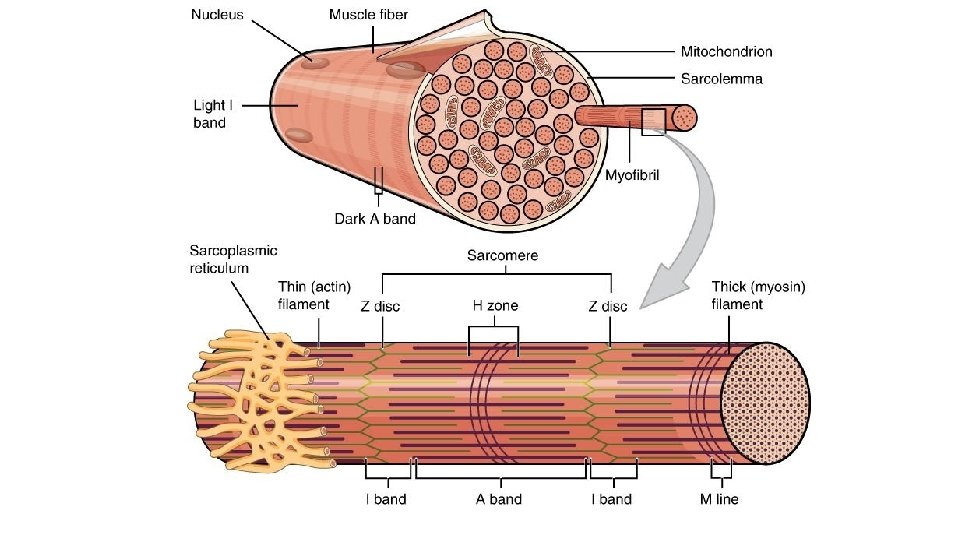
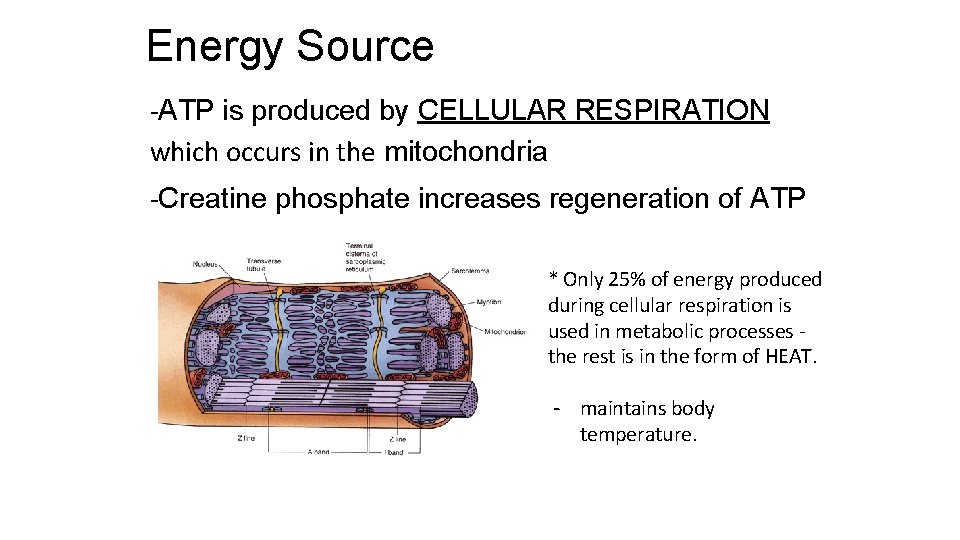
Muscles / Cells Sarcolemma = muscle fiber membrane Sarcoplasm = inner material surrounding fibers (like cytoplasm) Sarcoplasmic Reticulum - transport Myofibrils = individual parallel muscle fibers, within sarcoplasm
Nucleus Sarcolemma Mitochondrion Sarcoplasm Myofibril
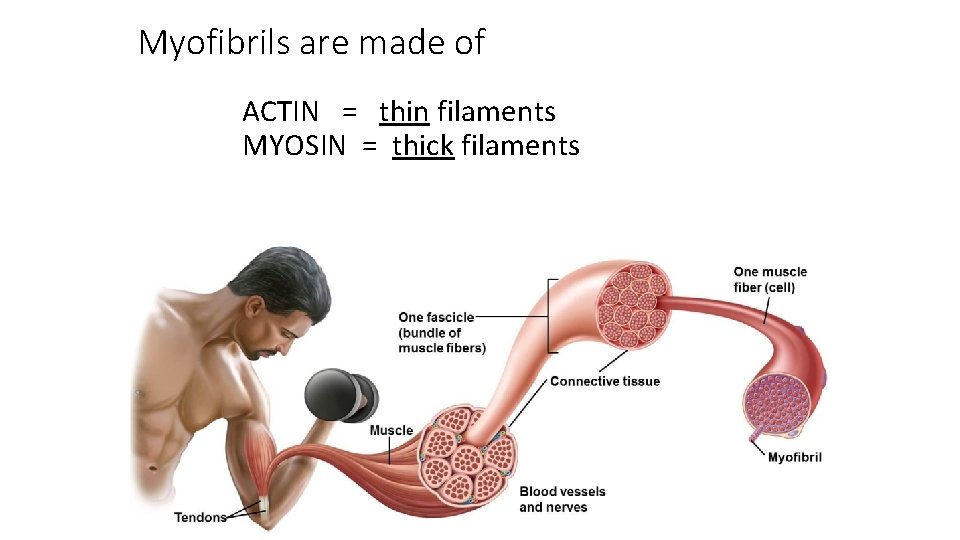
Myofibrils are made of ACTIN = thin filaments MYOSIN = thick filaments
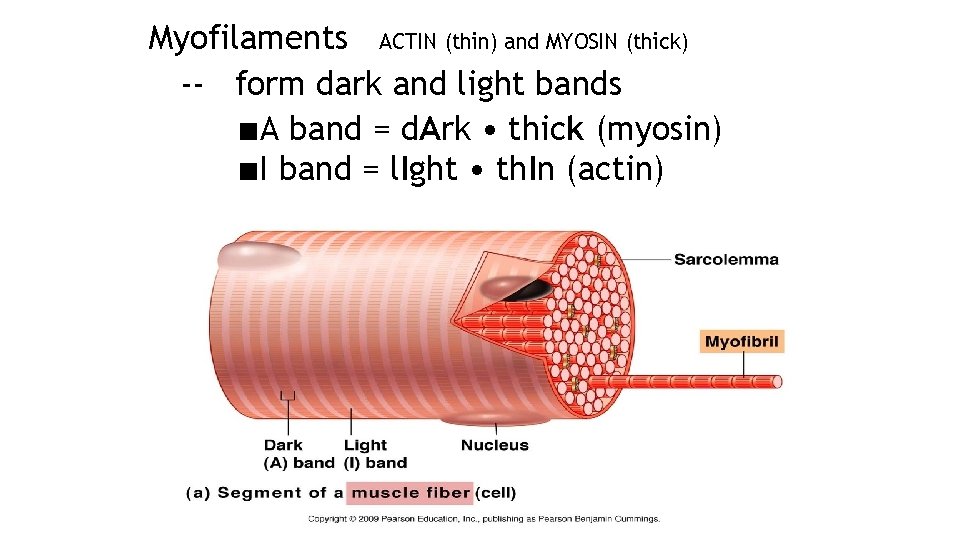
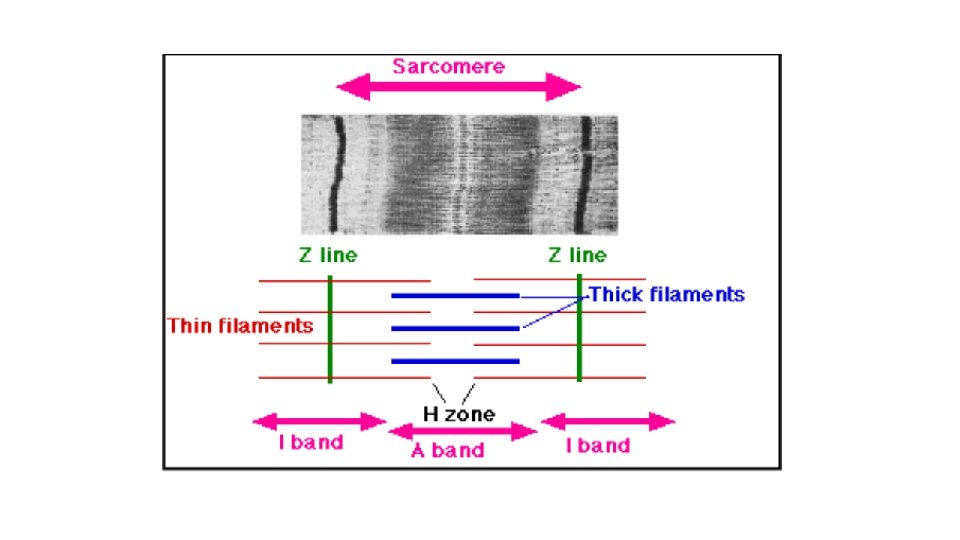
Myofilaments ACTIN (thin) and MYOSIN (thick) -- form dark and light bands ■A band = d. Ark • thick (myosin) ■I band = l. Ight • th. In (actin)
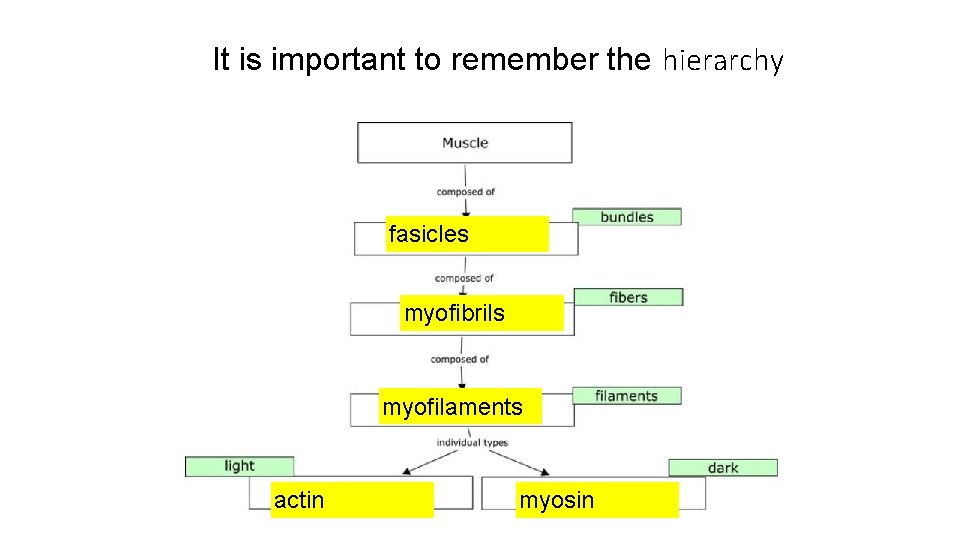
It is important to remember the hierarchy fasicles myofibrils myofilaments actin myosin
How Muscles Work with the Nervous System
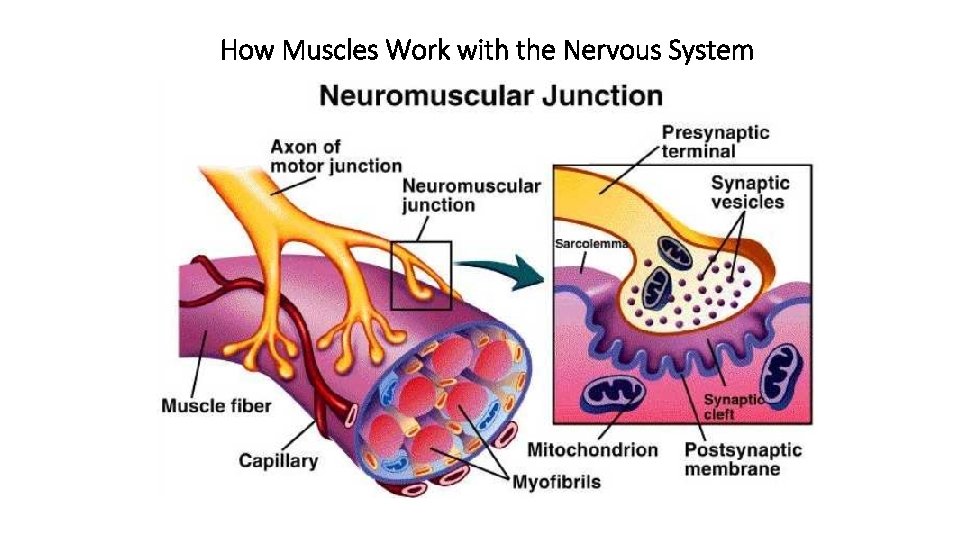
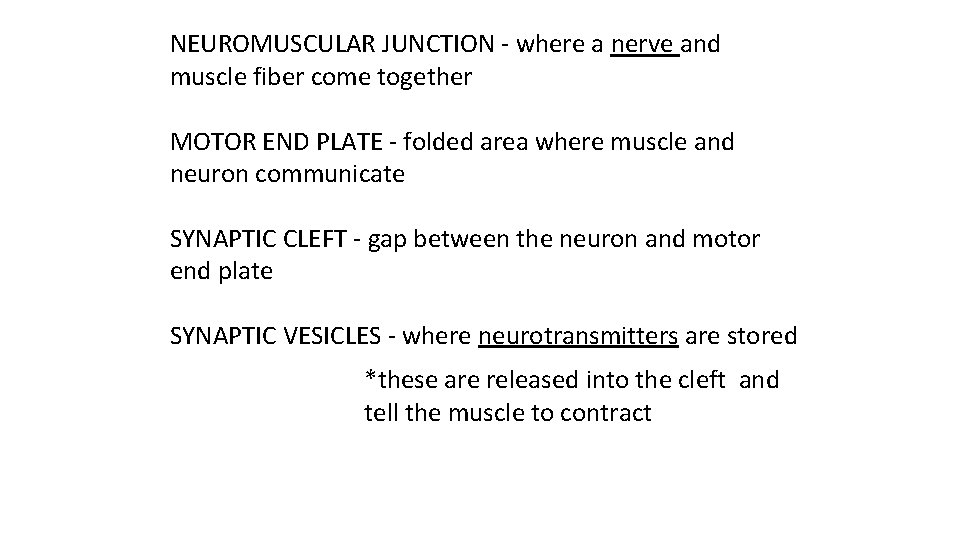
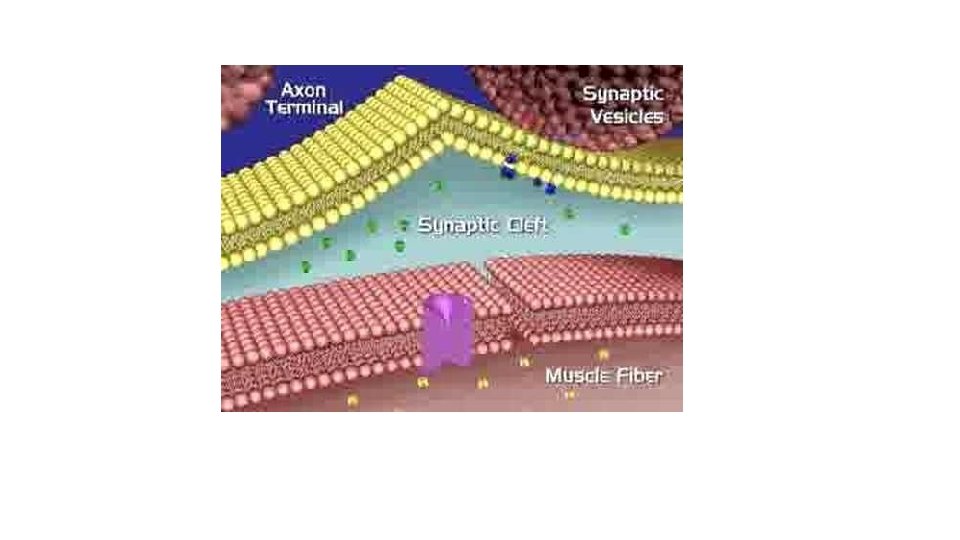
NEUROMUSCULAR JUNCTION - where a nerve and muscle fiber come together MOTOR END PLATE - folded area where muscle and neuron communicate SYNAPTIC CLEFT - gap between the neuron and motor end plate SYNAPTIC VESICLES - where neurotransmitters are stored *these are released into the cleft and tell the muscle to contract
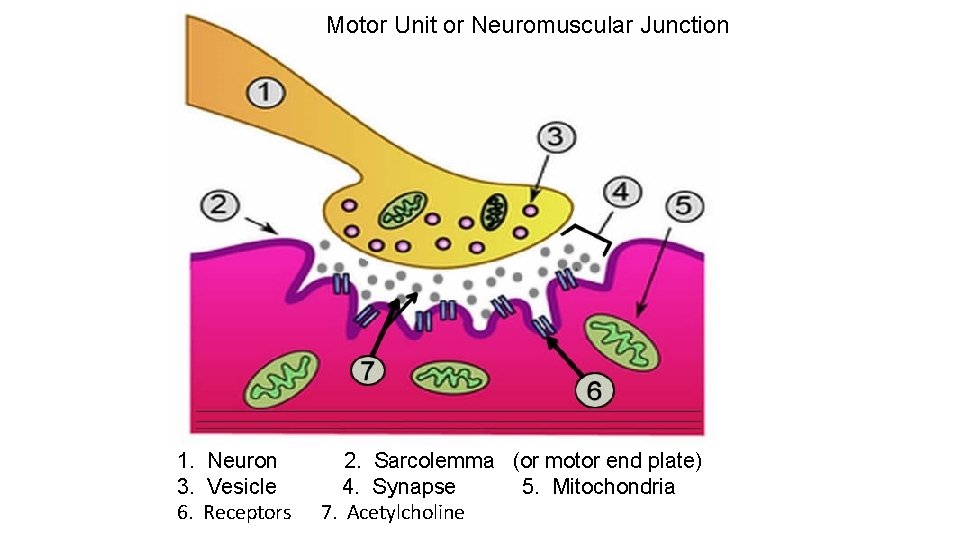
Motor Unit or Neuromuscular Junction 1. Neuron 3. Vesicle 6. Receptors 2. Sarcolemma (or motor end plate) 4. Synapse 5. Mitochondria 7. Acetylcholine
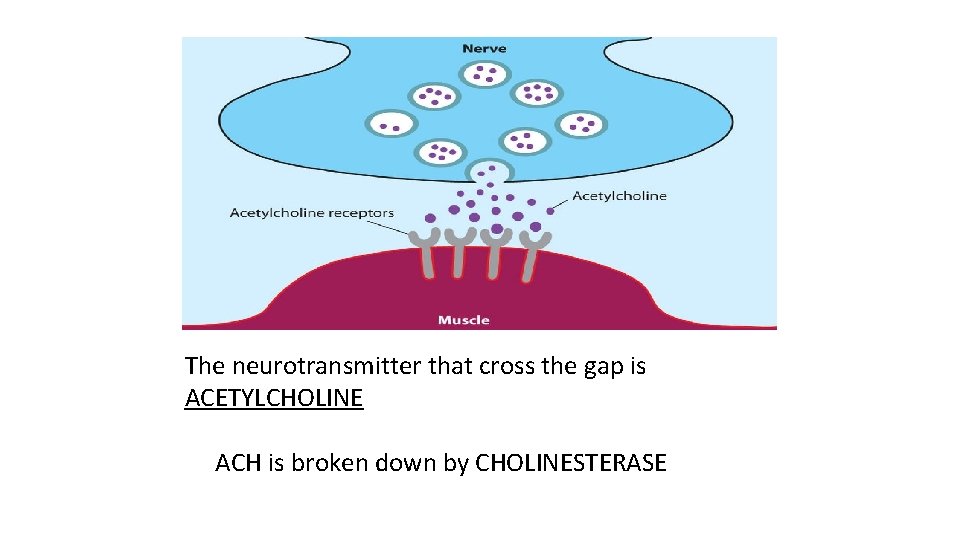
The neurotransmitter that cross the gap is ACETYLCHOLINE ACH is broken down by CHOLINESTERASE
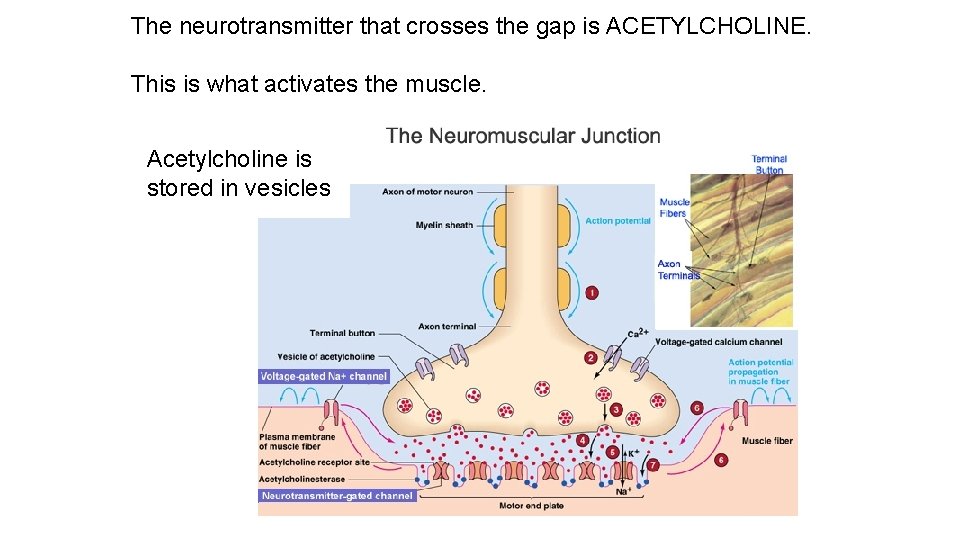
The neurotransmitter that crosses the gap is ACETYLCHOLINE. This is what activates the muscle. Acetylcholine is stored in vesicles
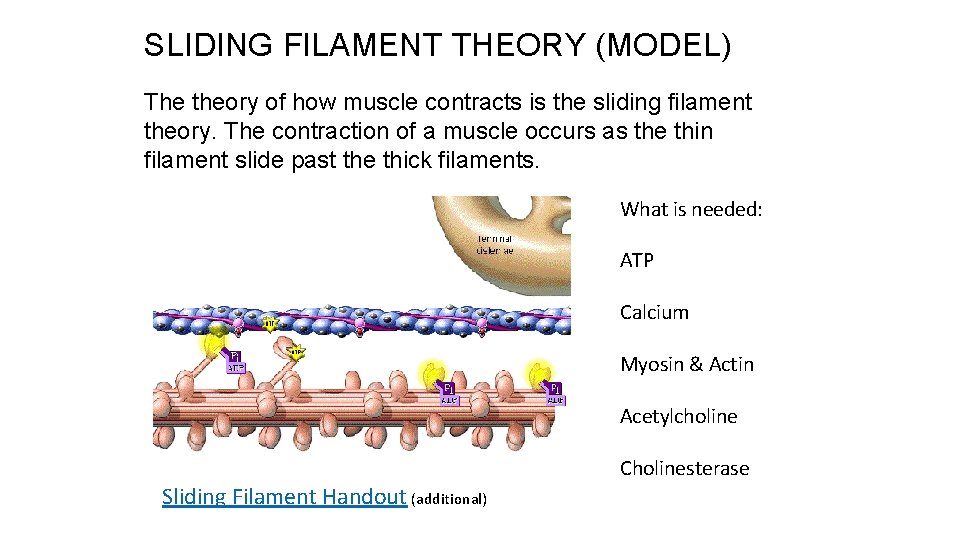
SLIDING FILAMENT THEORY (MODEL) The theory of how muscle contracts is the sliding filament theory. The contraction of a muscle occurs as the thin filament slide past the thick filaments. What is needed: ATP Calcium Myosin & Actin Acetylcholine Cholinesterase Sliding Filament Handout (additional)
Hank explains muscles and the sliding filament model.
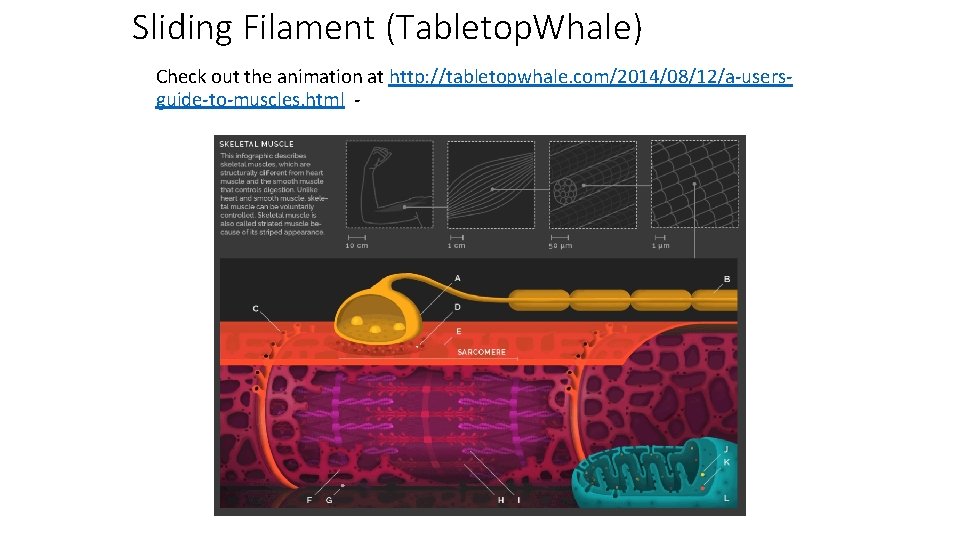
Sliding Filament (Tabletop. Whale) Check out the animation at http: //tabletopwhale. com/2014/08/12/a-usersguide-to-muscles. html -
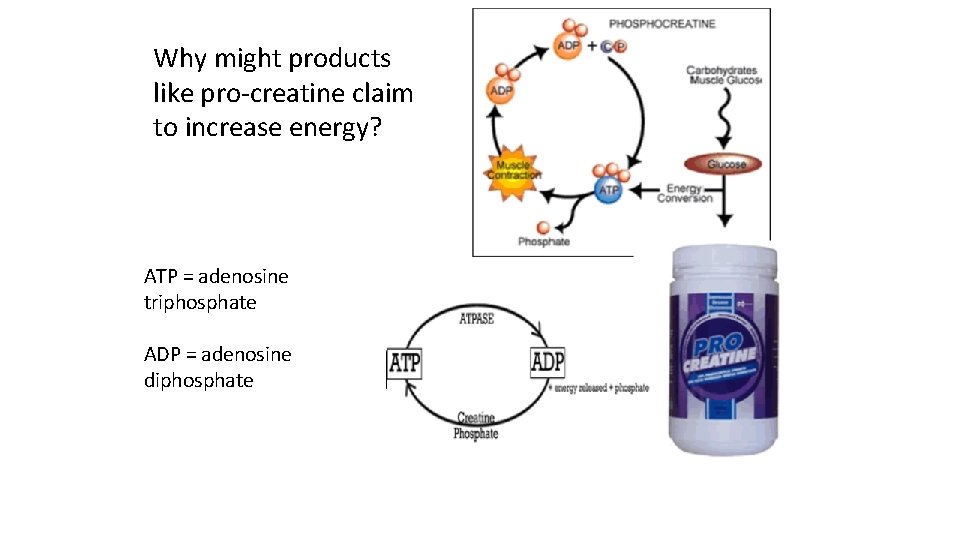
Energy Source -ATP is produced by CELLULAR RESPIRATION which occurs in the mitochondria -Creatine phosphate increases regeneration of ATP * Only 25% of energy produced during cellular respiration is used in metabolic processes the rest is in the form of HEAT. - maintains body temperature.
Why might products like pro-creatine claim to increase energy? ATP = adenosine triphosphate ADP = adenosine diphosphate