
MUSCULAR SYSTEM Total muscles in human body 650
MUSCULAR SYSTEM • • • Total muscles in human body: 650 Muscles required to smile: 17 Muscles required to frown: 33 Muscles required to walk: at least 200 Longest muscle: Gluteus maximus ( butt muscle) Shortest muscle: ear muscle
Characteristics of Muscles • Muscle cells are elongated (muscle cell = muscle fiber) • Contraction of muscles is due to the movement of microfilaments (actin and myosin) • All muscles share some terminology – Prefix myo refers to muscle – Prefix mys refers to muscle – Prefix sarco refers to flesh
Functions of Muscular system • Contract: • Skeletal Muscles: body movement • Smooth muscles: movement of contents through blood vessels, digestive organs • Cardiac Muscles: Pumping of heart • Generate heat : generate heat, by product of ATP needed for muscle contraction • Stabilize joints: Skeleton muscles pull on bones for movement, also stabilize joints • Maintaining Posture: Keeps the body straight against gravity
The Muscular System • Muscles are responsible for all types of body movement • Three basic muscle types are found in the body – Skeletal muscle – Cardiac muscle – Smooth muscle
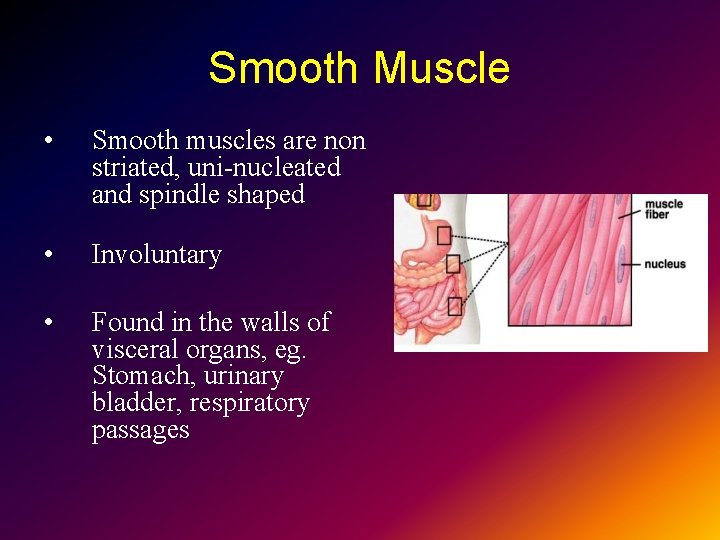
Smooth Muscle • Smooth muscles are non striated, uni-nucleated and spindle shaped • Involuntary • Found in the walls of visceral organs, eg. Stomach, urinary bladder, respiratory passages
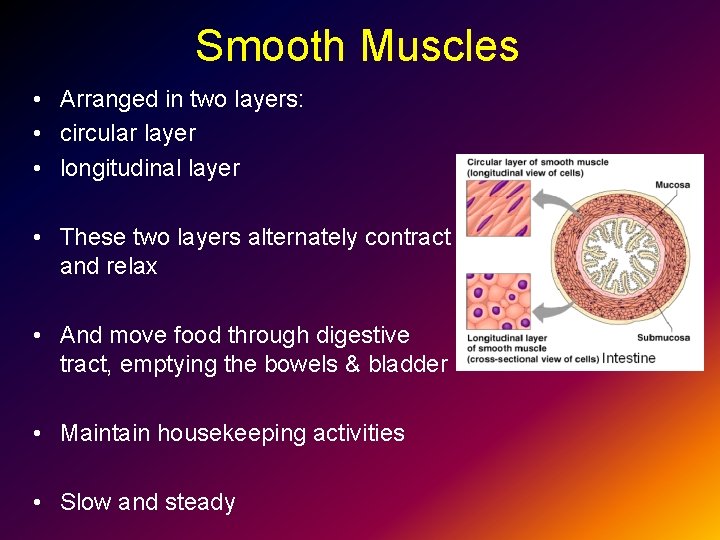
Smooth Muscles • Arranged in two layers: • circular layer • longitudinal layer • These two layers alternately contract and relax • And move food through digestive tract, emptying the bowels & bladder • Maintain housekeeping activities • Slow and steady
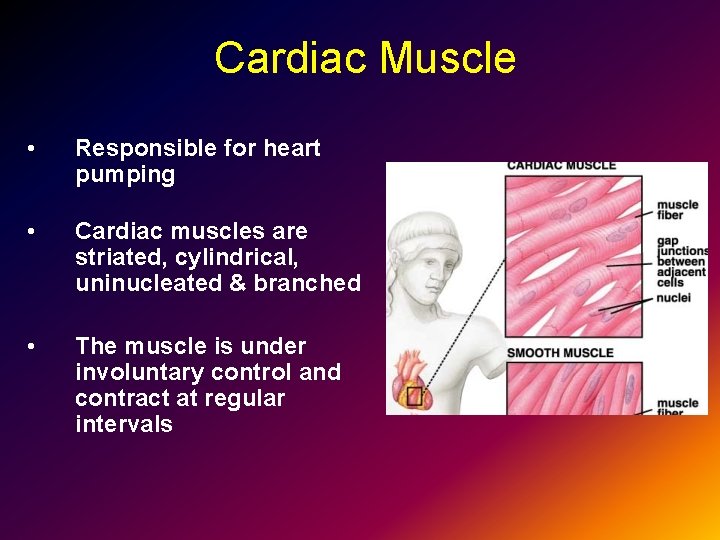
Cardiac Muscle • Responsible for heart pumping • Cardiac muscles are striated, cylindrical, uninucleated & branched • The muscle is under involuntary control and contract at regular intervals
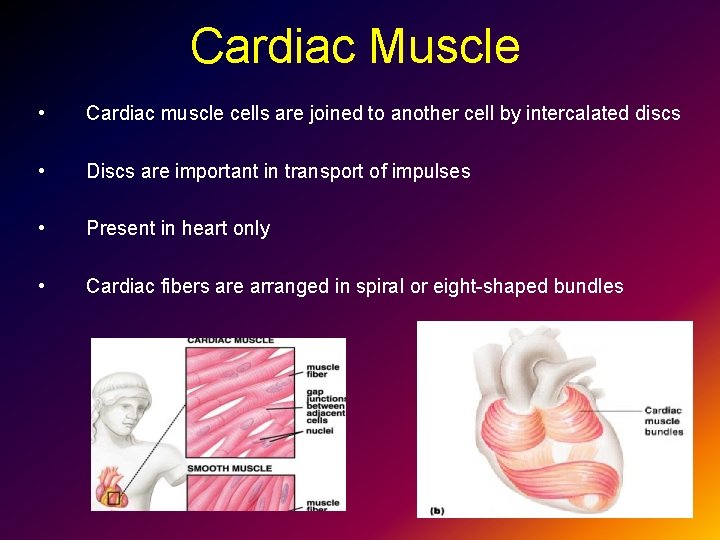
Cardiac Muscle • Cardiac muscle cells are joined to another cell by intercalated discs • Discs are important in transport of impulses • Present in heart only • Cardiac fibers are arranged in spiral or eight-shaped bundles
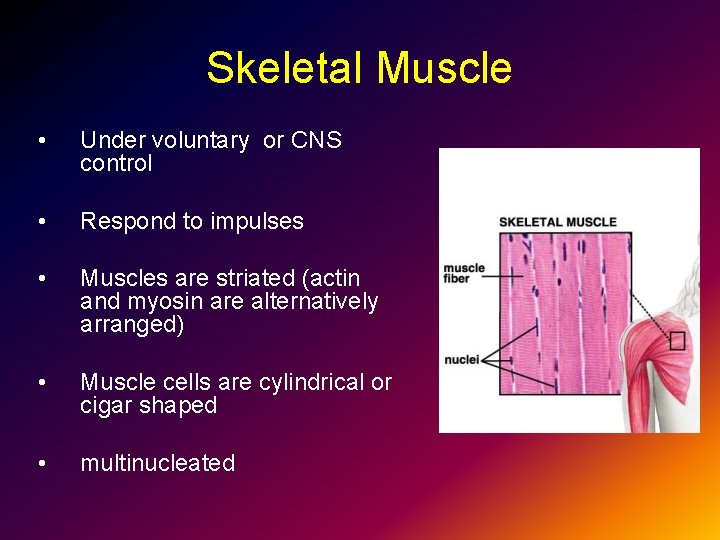
Skeletal Muscle • Under voluntary or CNS control • Respond to impulses • Muscles are striated (actin and myosin are alternatively arranged) • Muscle cells are cylindrical or cigar shaped • multinucleated
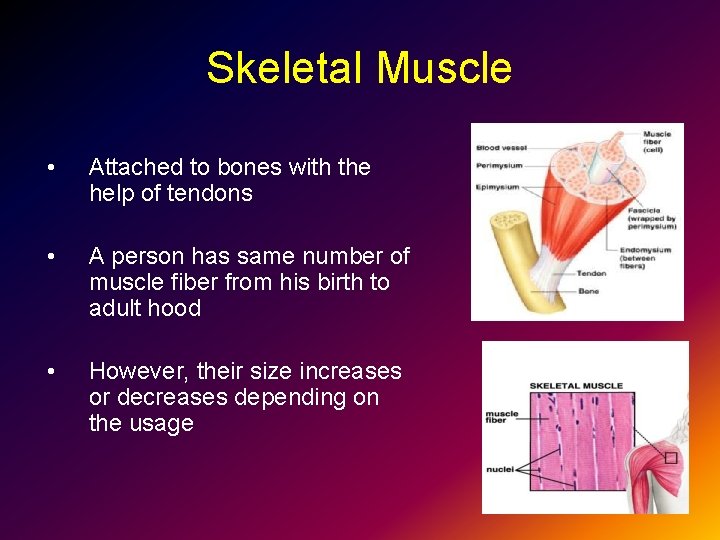
Skeletal Muscle • Attached to bones with the help of tendons • A person has same number of muscle fiber from his birth to adult hood • However, their size increases or decreases depending on the usage
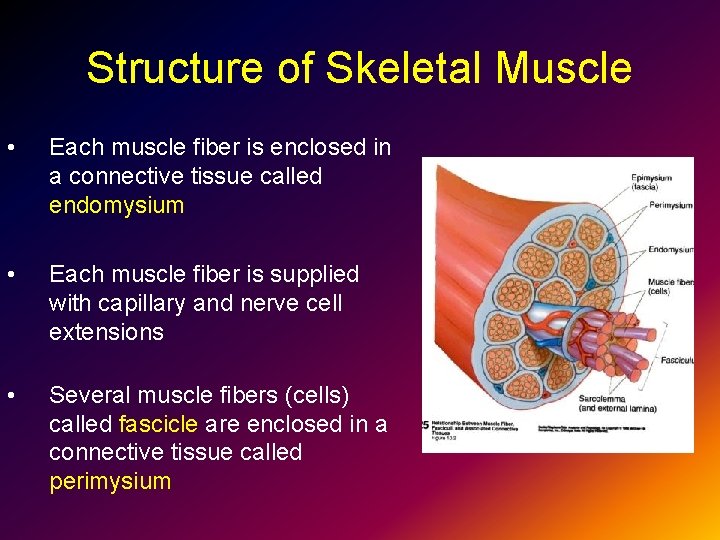
Structure of Skeletal Muscle • Each muscle fiber is enclosed in a connective tissue called endomysium • Each muscle fiber is supplied with capillary and nerve cell extensions • Several muscle fibers (cells) called fascicle are enclosed in a connective tissue called perimysium
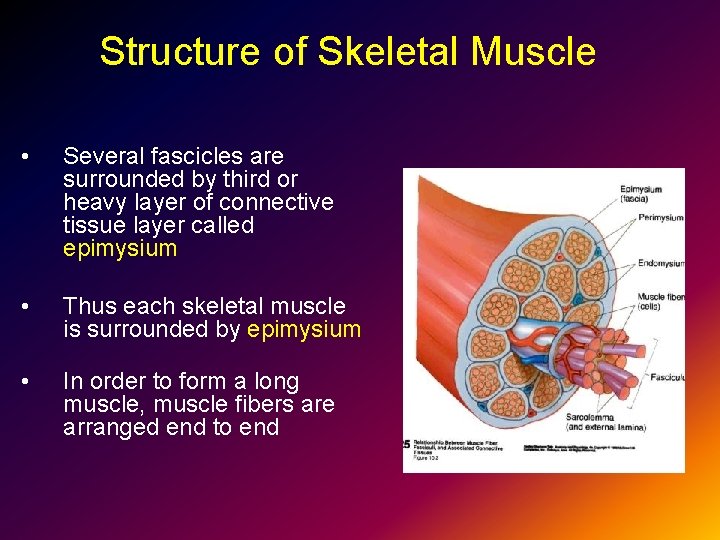
Structure of Skeletal Muscle • Several fascicles are surrounded by third or heavy layer of connective tissue layer called epimysium • Thus each skeletal muscle is surrounded by epimysium • In order to form a long muscle, muscle fibers are arranged end to end
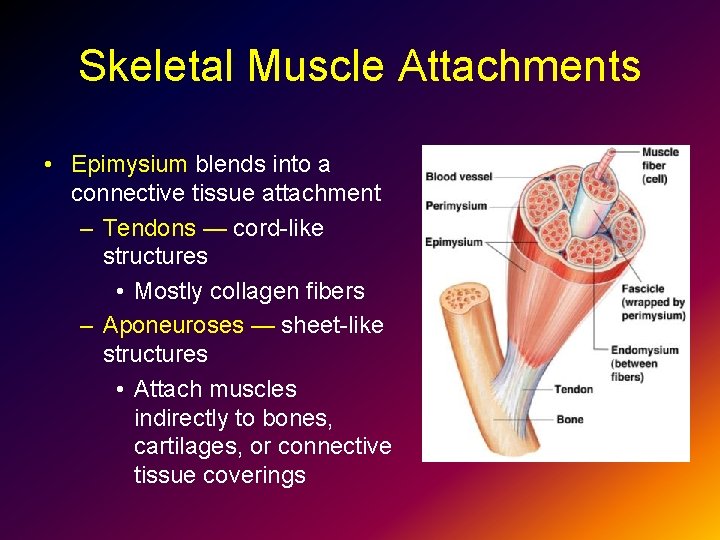
Skeletal Muscle Attachments • Epimysium blends into a connective tissue attachment – Tendons — cord-like structures • Mostly collagen fibers – Aponeuroses — sheet-like structures • Attach muscles indirectly to bones, cartilages, or connective tissue coverings
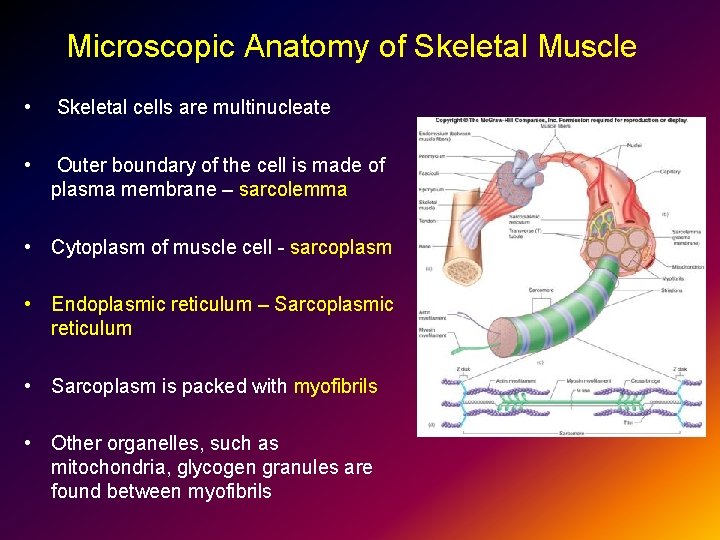
Microscopic Anatomy of Skeletal Muscle • Skeletal cells are multinucleate • Outer boundary of the cell is made of plasma membrane – sarcolemma • Cytoplasm of muscle cell - sarcoplasm • Endoplasmic reticulum – Sarcoplasmic reticulum • Sarcoplasm is packed with myofibrils • Other organelles, such as mitochondria, glycogen granules are found between myofibrils
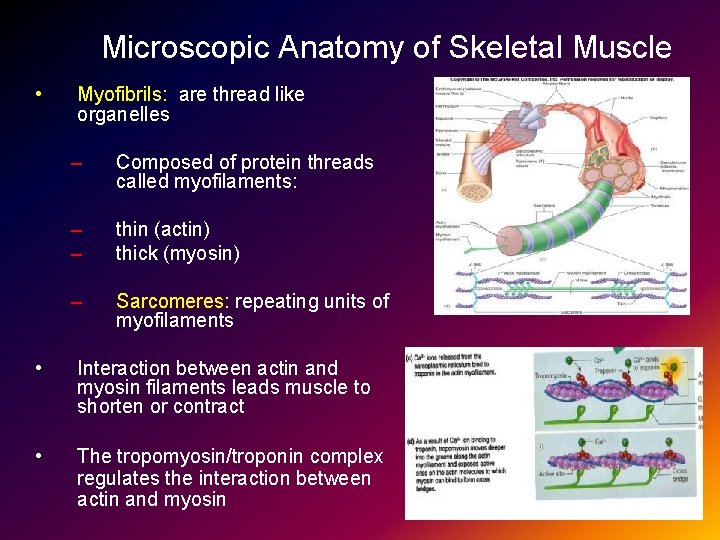
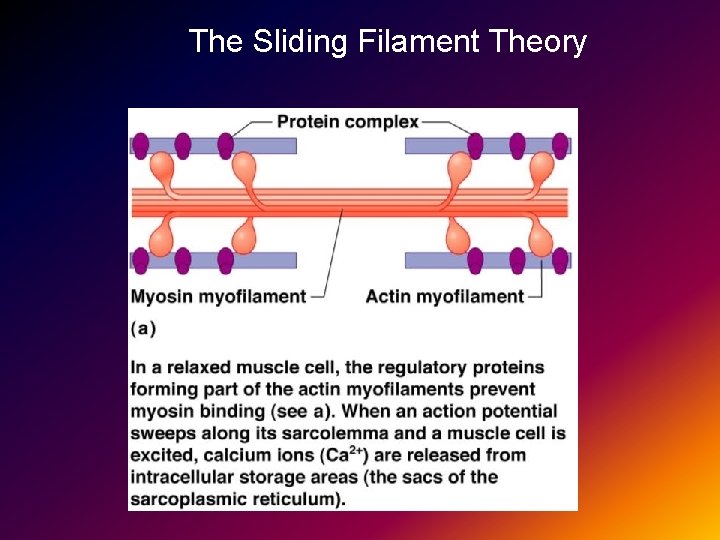
Microscopic Anatomy of Skeletal Muscle • Myofibrils: are thread like organelles – Composed of protein threads called myofilaments: – – thin (actin) thick (myosin) – Sarcomeres: repeating units of myofilaments • Interaction between actin and myosin filaments leads muscle to shorten or contract • The tropomyosin/troponin complex regulates the interaction between actin and myosin
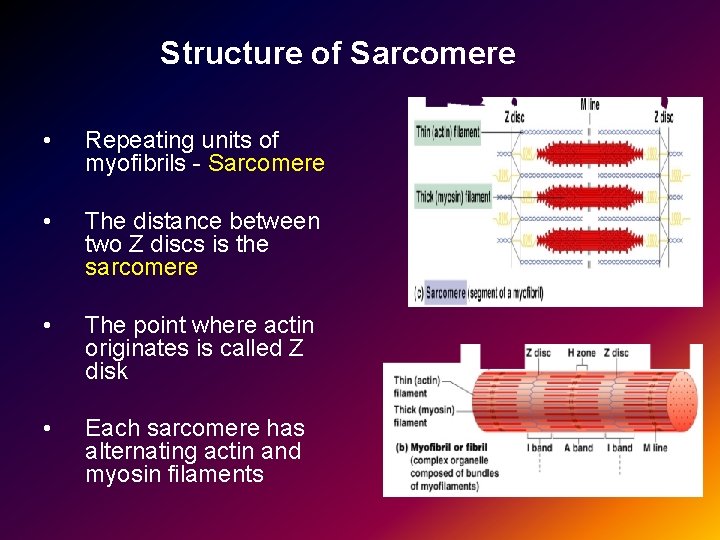
Structure of Sarcomere • Repeating units of myofibrils - Sarcomere • The distance between two Z discs is the sarcomere • The point where actin originates is called Z disk • Each sarcomere has alternating actin and myosin filaments
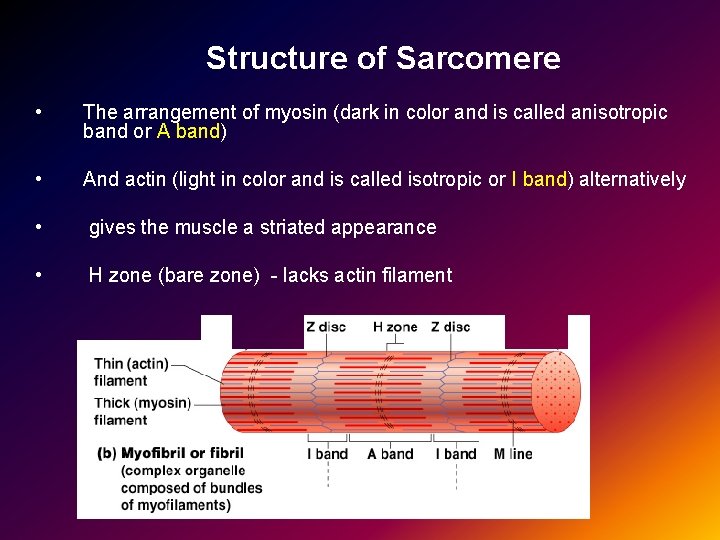
Structure of Sarcomere • The arrangement of myosin (dark in color and is called anisotropic band or A band) • And actin (light in color and is called isotropic or I band) alternatively • gives the muscle a striated appearance • H zone (bare zone) - lacks actin filament
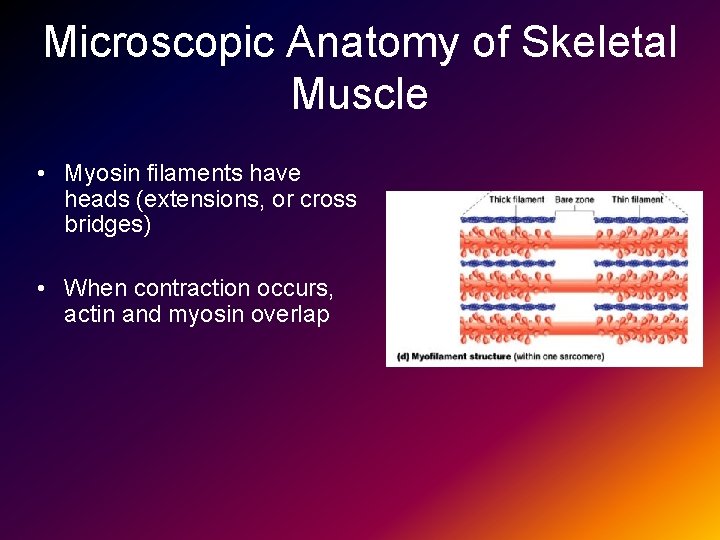
Microscopic Anatomy of Skeletal Muscle • Myosin filaments have heads (extensions, or cross bridges) • When contraction occurs, actin and myosin overlap
Properties of Skeletal Muscle Activity • Irritability – ability to receive and respond to a stimulus • Contractility – ability to shorten when an adequate stimulus is received
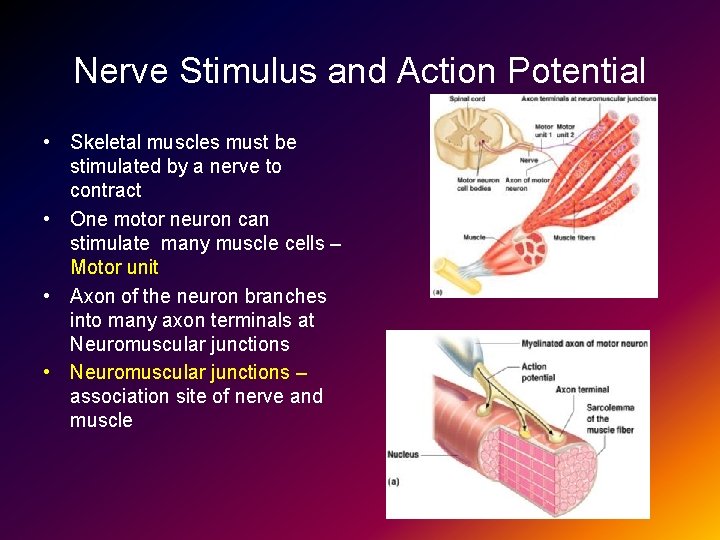
Nerve Stimulus and Action Potential • Skeletal muscles must be stimulated by a nerve to contract • One motor neuron can stimulate many muscle cells – Motor unit • Axon of the neuron branches into many axon terminals at Neuromuscular junctions • Neuromuscular junctions – association site of nerve and muscle
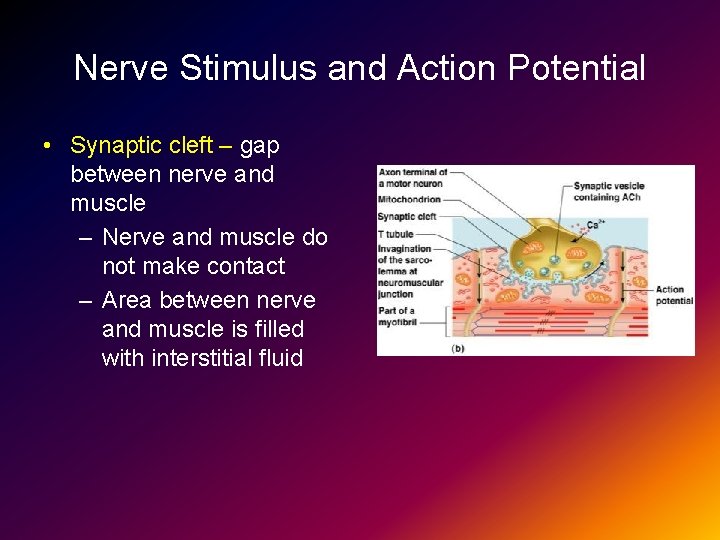
Nerve Stimulus and Action Potential • Synaptic cleft – gap between nerve and muscle – Nerve and muscle do not make contact – Area between nerve and muscle is filled with interstitial fluid
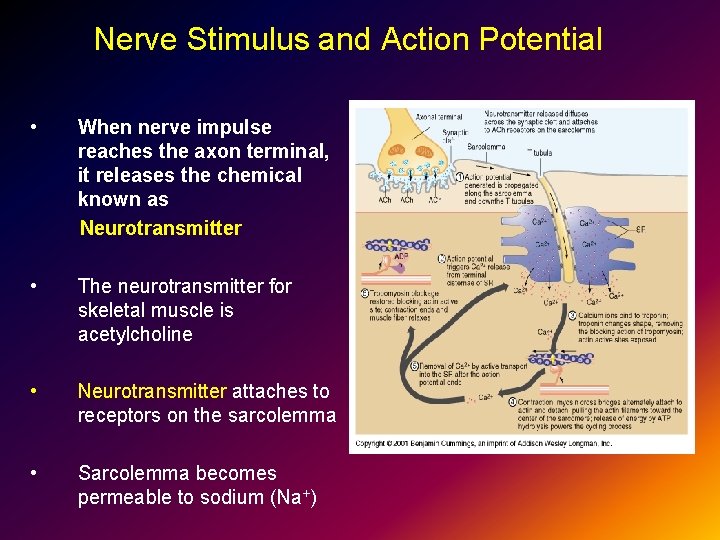
Nerve Stimulus and Action Potential • When nerve impulse reaches the axon terminal, it releases the chemical known as Neurotransmitter • The neurotransmitter for skeletal muscle is acetylcholine • Neurotransmitter attaches to receptors on the sarcolemma • Sarcolemma becomes permeable to sodium (Na+)
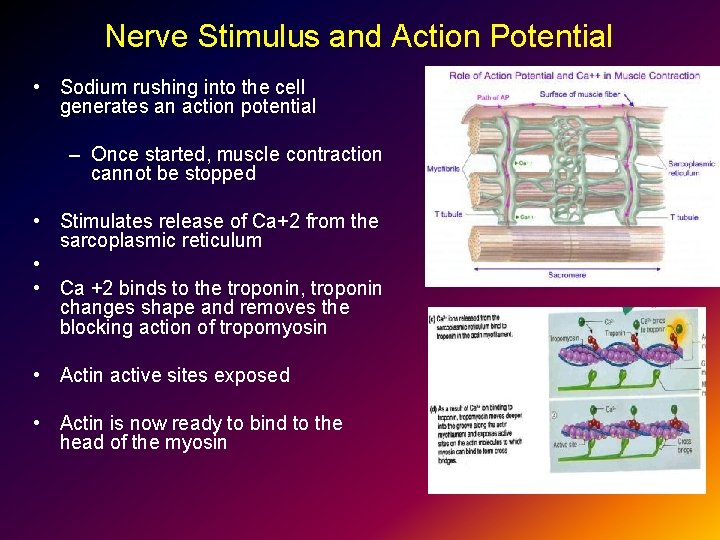
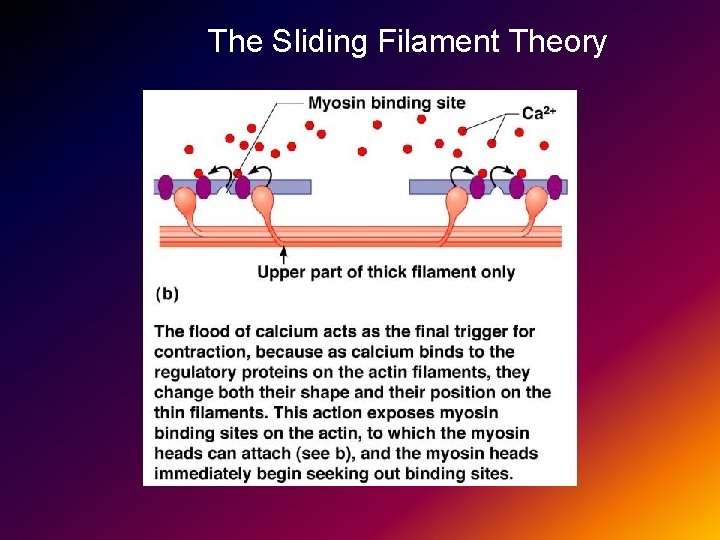
Nerve Stimulus and Action Potential • Sodium rushing into the cell generates an action potential – Once started, muscle contraction cannot be stopped • Stimulates release of Ca+2 from the sarcoplasmic reticulum • • Ca +2 binds to the troponin, troponin changes shape and removes the blocking action of tropomyosin • Actin active sites exposed • Actin is now ready to bind to the head of the myosin
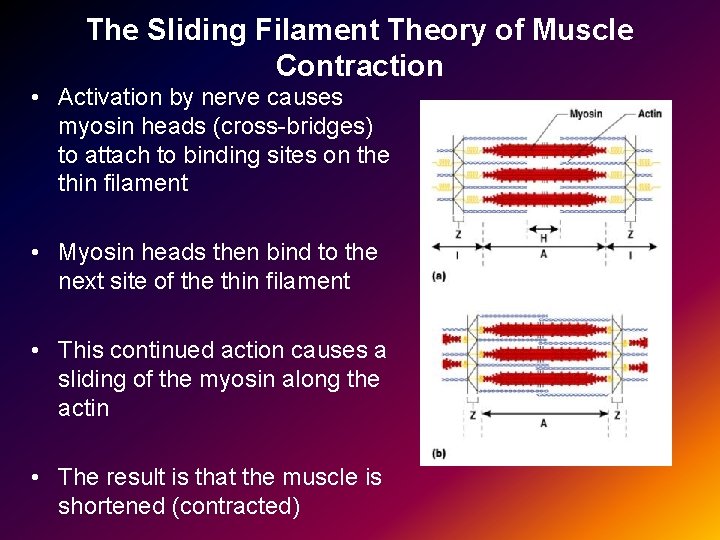
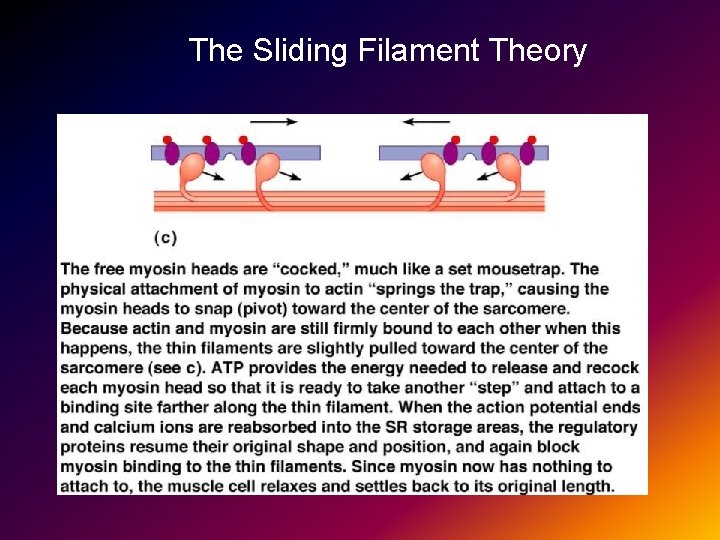
The Sliding Filament Theory of Muscle Contraction • Activation by nerve causes myosin heads (cross-bridges) to attach to binding sites on the thin filament • Myosin heads then bind to the next site of the thin filament • This continued action causes a sliding of the myosin along the actin • The result is that the muscle is shortened (contracted)
The Sliding Filament Theory
The Sliding Filament Theory
The Sliding Filament Theory
Contraction of a Skeletal Muscle as a whole • Muscle cell contraction is “all or none” • But in whole muscle not all fibers may be stimulated during the same interval • Different combinations of muscle fiber contractions may give differing responses • Graded responses – different degrees of skeletal muscle shortening • They are of 4 types: – – Twitch Tetanus Unfused
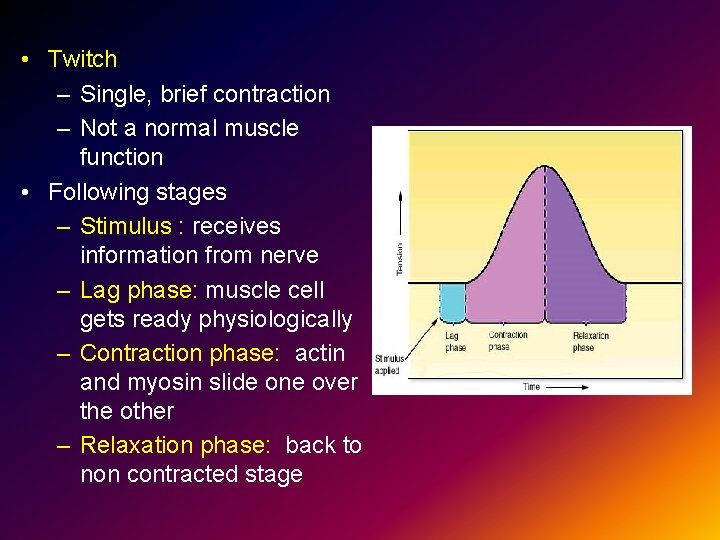
• Twitch – Single, brief contraction – Not a normal muscle function • Following stages – Stimulus : receives information from nerve – Lag phase: muscle cell gets ready physiologically – Contraction phase: actin and myosin slide one over the other – Relaxation phase: back to non contracted stage
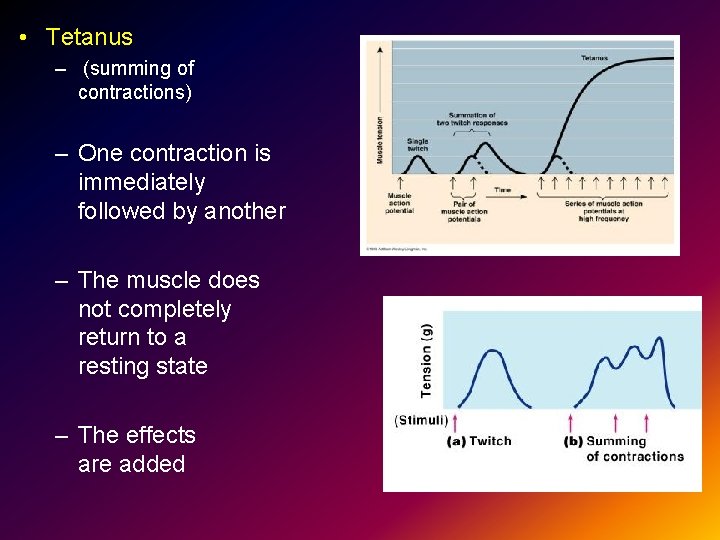
• Tetanus – (summing of contractions) – One contraction is immediately followed by another – The muscle does not completely return to a resting state – The effects are added
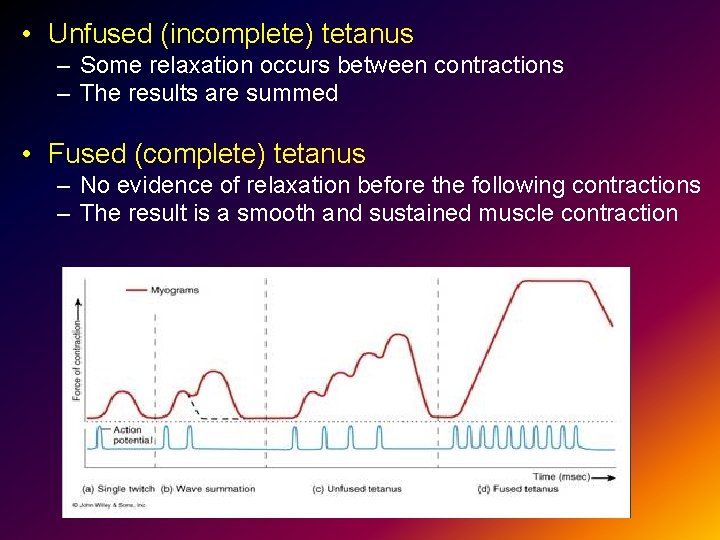
• Unfused (incomplete) tetanus – Some relaxation occurs between contractions – The results are summed • Fused (complete) tetanus – No evidence of relaxation before the following contractions – The result is a smooth and sustained muscle contraction
Muscle Response to Stronger Stimuli • Muscle force depends upon the number of fibers stimulated • More fibers contracting results in – greater muscle tension • Muscles can continue to contract unless – they run out of energy
Energy for Muscle Contraction • Initially, muscles use stored ATP for energy – Bonds of ATP are broken to release energy – Only 4 -6 seconds worth of ATP is stored by muscles • After this initial time, other pathways must be utilized to produce ATP • Working muscles use 3 pathways for ATP production
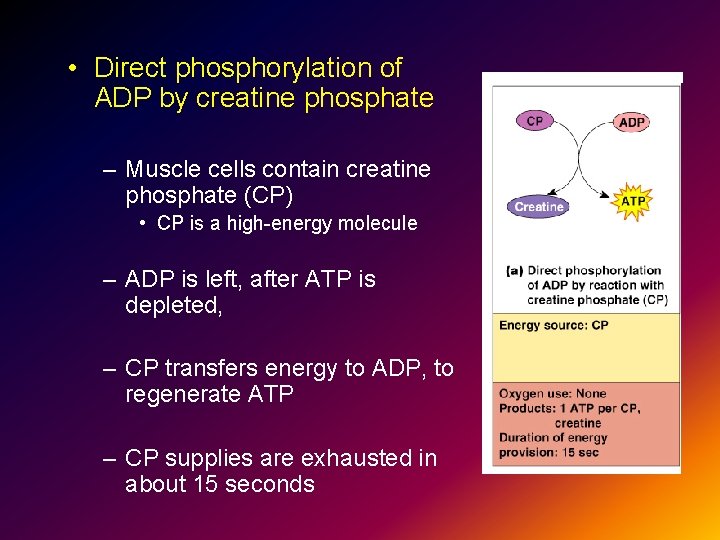
• Direct phosphorylation of ADP by creatine phosphate – Muscle cells contain creatine phosphate (CP) • CP is a high-energy molecule – ADP is left, after ATP is depleted, – CP transfers energy to ADP, to regenerate ATP – CP supplies are exhausted in about 15 seconds
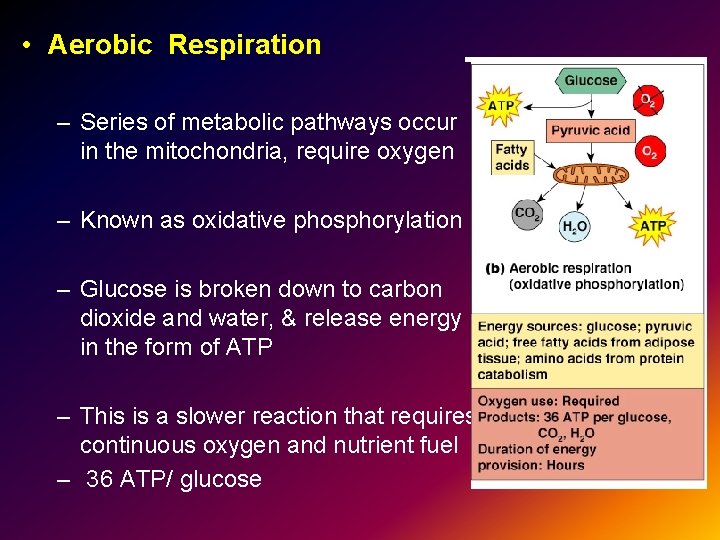
• Aerobic Respiration – Series of metabolic pathways occur in the mitochondria, require oxygen – Known as oxidative phosphorylation – Glucose is broken down to carbon dioxide and water, & release energy in the form of ATP – This is a slower reaction that requires continuous oxygen and nutrient fuel – 36 ATP/ glucose
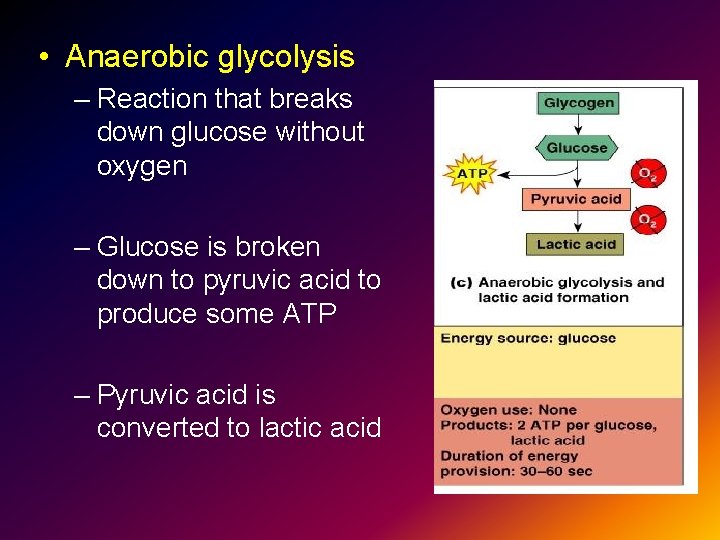
• Anaerobic glycolysis – Reaction that breaks down glucose without oxygen – Glucose is broken down to pyruvic acid to produce some ATP – Pyruvic acid is converted to lactic acid
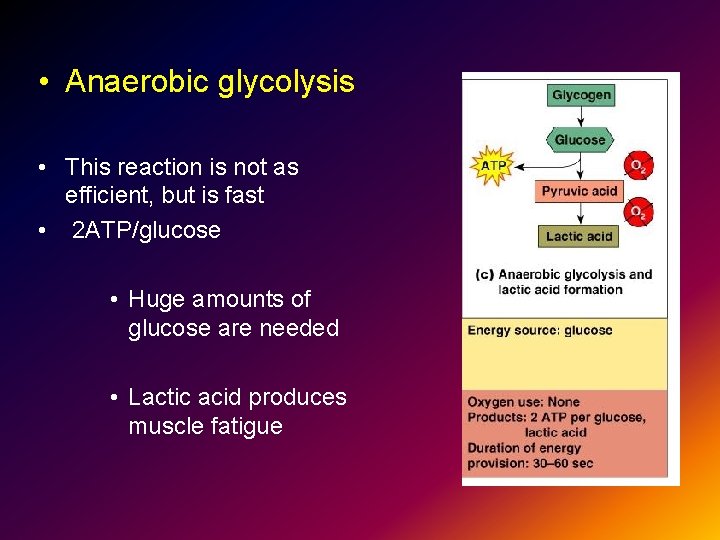
• Anaerobic glycolysis • This reaction is not as efficient, but is fast • 2 ATP/glucose • Huge amounts of glucose are needed • Lactic acid produces muscle fatigue
Muscle Fatigue and Oxygen Debt • When a muscle is fatigued, it is unable to contract • The common reason for muscle fatigue is oxygen debt – Oxygen must be “repaid” to tissue to remove oxygen debt – Oxygen is required to get rid of accumulated lactic acid • Increasing acidity (from lactic acid) and lack of ATP causes the muscle to get tired (contract less)
Muscle Tone • Some fibers are contracted even in a relaxed muscle • Contraction is not visible but muscles remain firm, healthy • This state of continuous partial contraction is Muscle tone
Effects of Exercise on Muscle • Exercise increases muscle size, strength, and endurance – Aerobic (endurance) exercise (biking, jogging) results in stronger, more flexible muscles with greater resistance to fatigue • Makes body metabolism more efficient • Improves digestion, coordination – Resistance (isometric) exercise (weight lifting) increases muscle size and strength
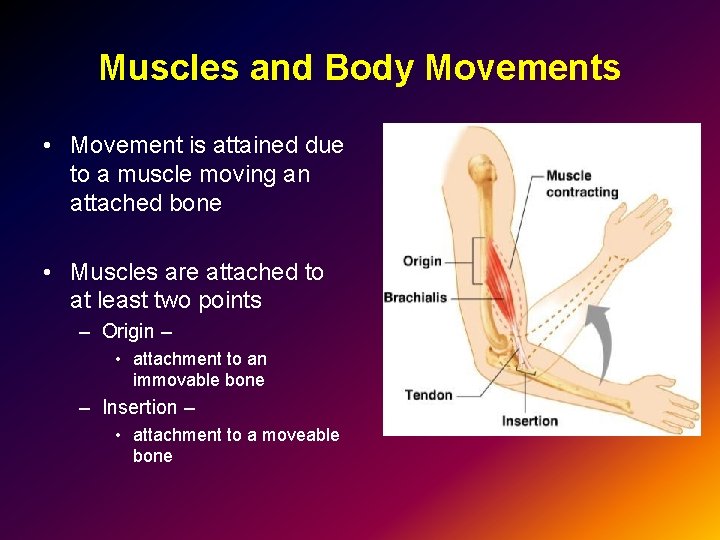
Muscles and Body Movements • Movement is attained due to a muscle moving an attached bone • Muscles are attached to at least two points – Origin – • attachment to an immovable bone – Insertion – • attachment to a moveable bone
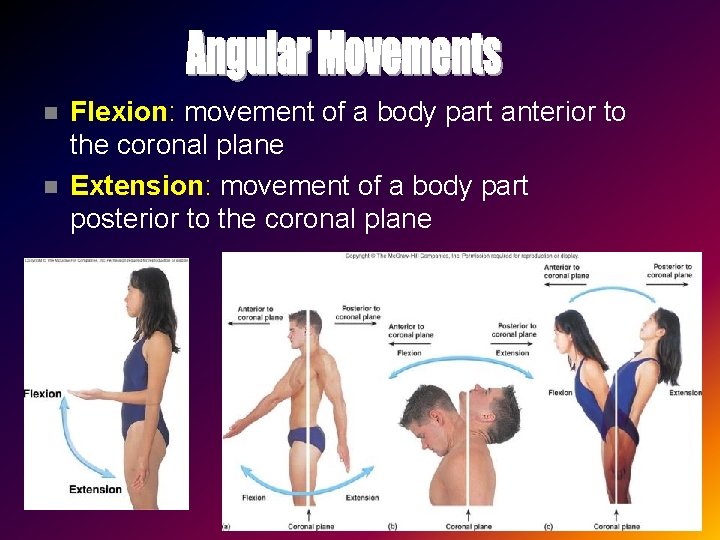
n n Flexion: movement of a body part anterior to the coronal plane Extension: movement of a body part posterior to the coronal plane
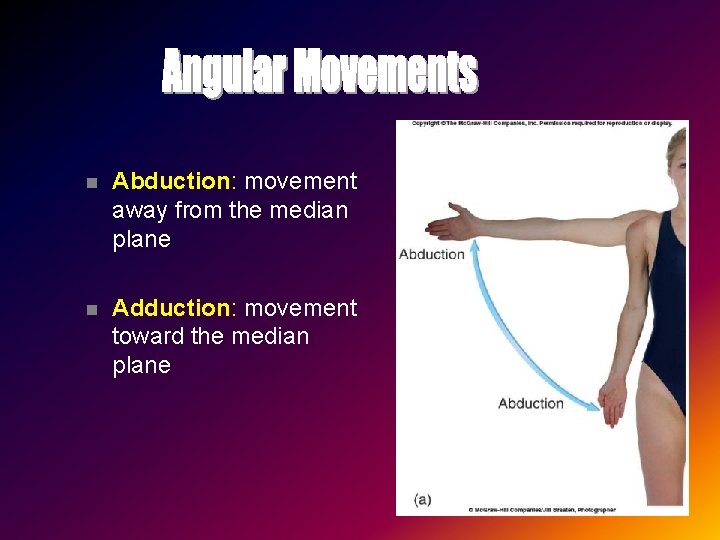
n Abduction: movement away from the median plane n Adduction: movement toward the median plane
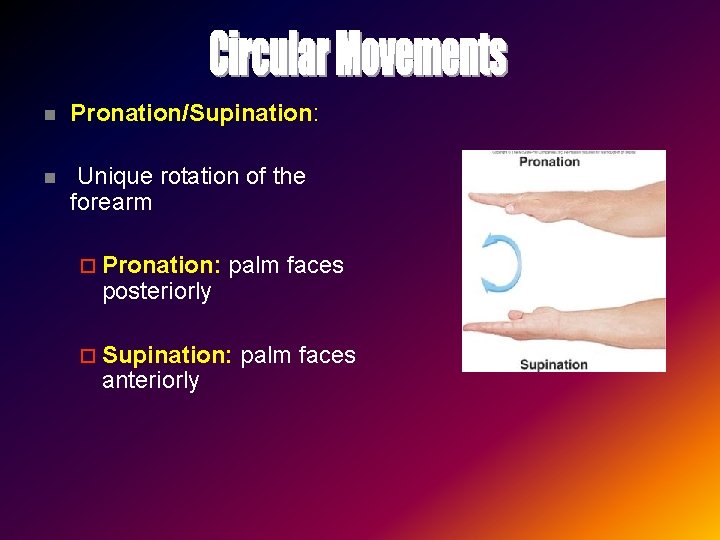
n Pronation/Supination: n Unique rotation of the forearm ¨ Pronation: posteriorly palm faces ¨ Supination: anteriorly palm faces
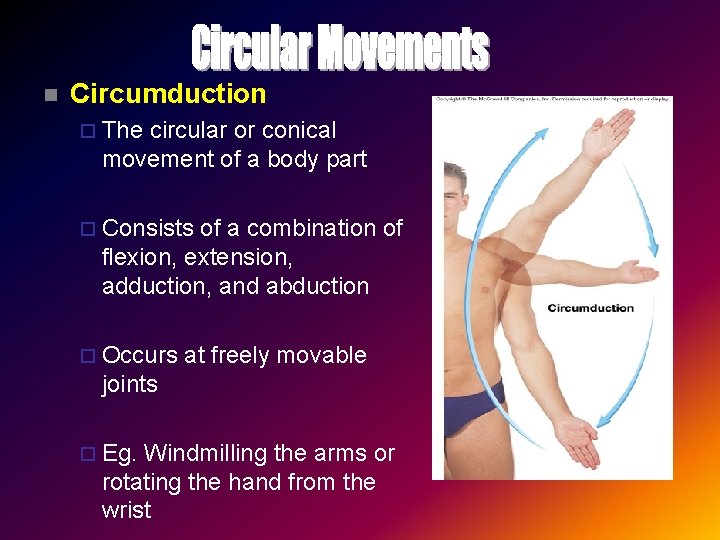
n Circumduction ¨ The circular or conical movement of a body part ¨ Consists of a combination of flexion, extension, adduction, and abduction ¨ Occurs at freely movable joints ¨ Eg. Windmilling the arms or rotating the hand from the wrist
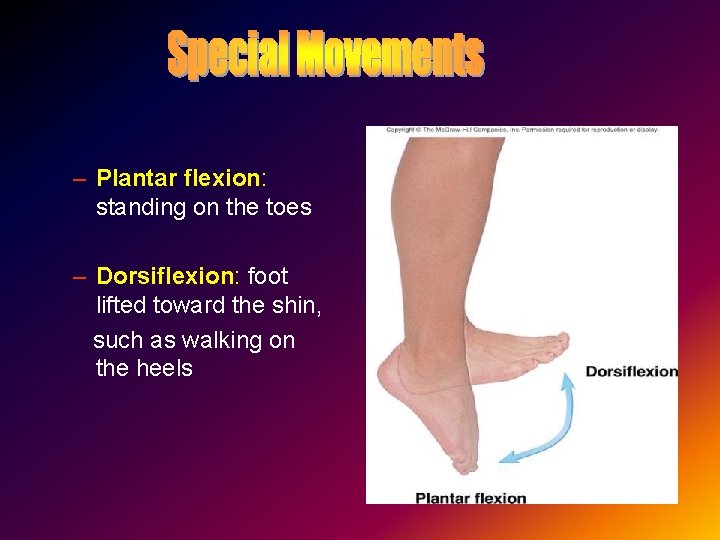
– Plantar flexion: standing on the toes – Dorsiflexion: foot lifted toward the shin, such as walking on the heels
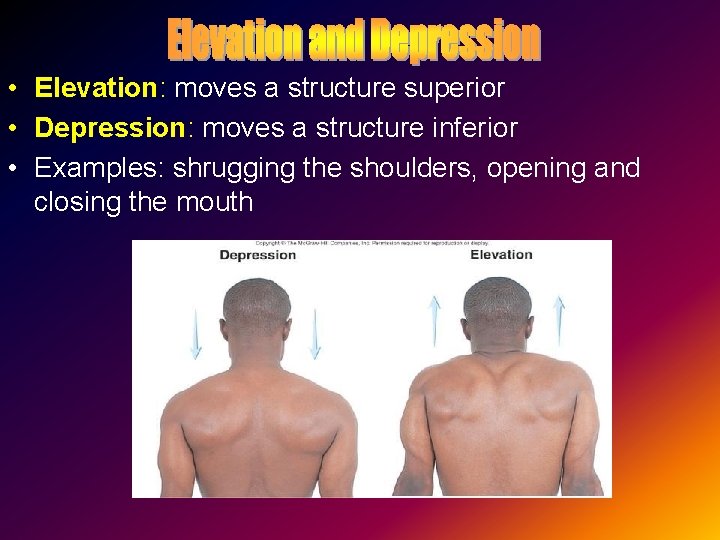
• Elevation: moves a structure superior • Depression: moves a structure inferior • Examples: shrugging the shoulders, opening and closing the mouth
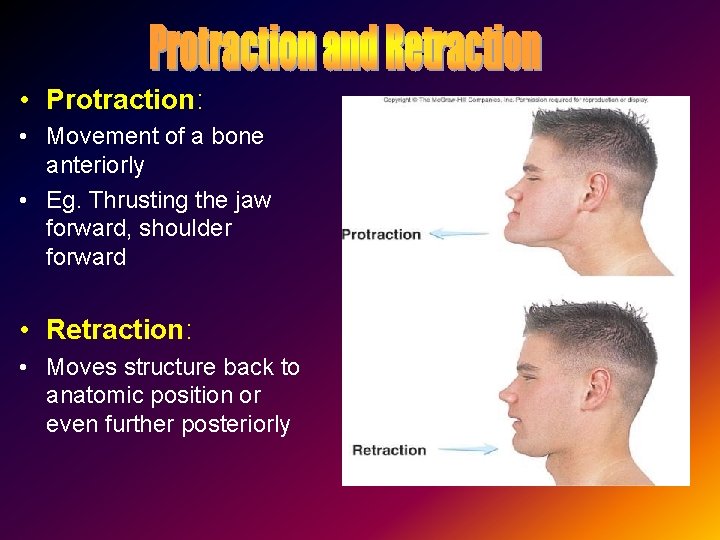
• Protraction: • Movement of a bone anteriorly • Eg. Thrusting the jaw forward, shoulder forward • Retraction: • Moves structure back to anatomic position or even further posteriorly
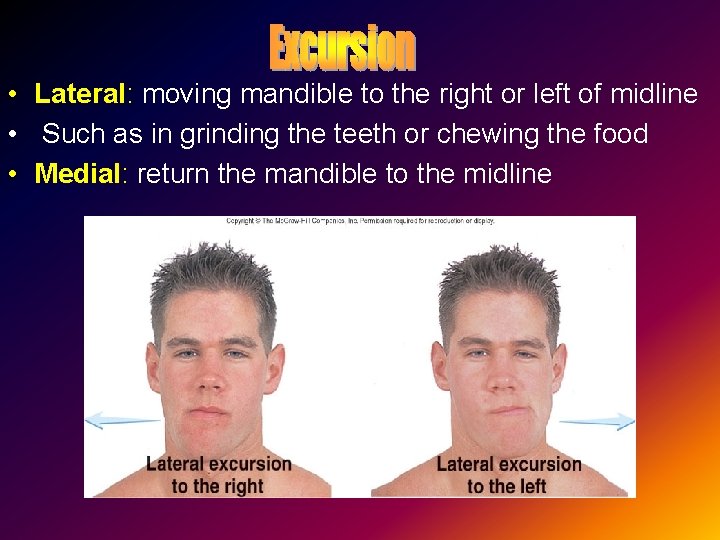
• Lateral: moving mandible to the right or left of midline • Such as in grinding the teeth or chewing the food • Medial: return the mandible to the midline
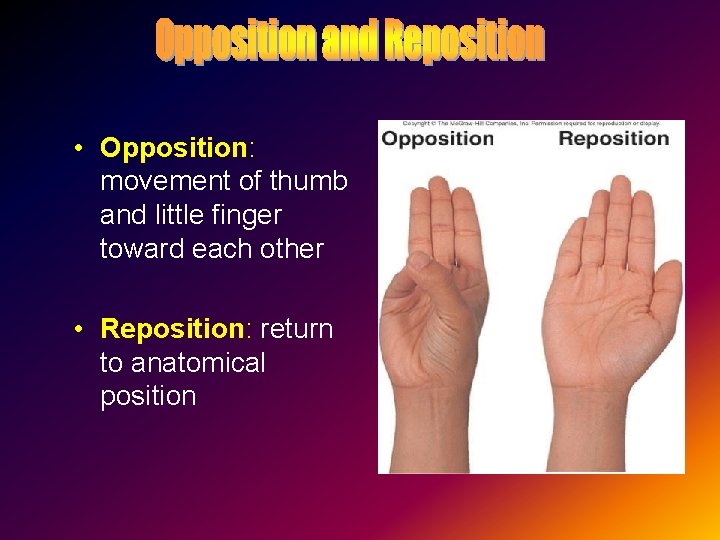
• Opposition: movement of thumb and little finger toward each other • Reposition: return to anatomical position
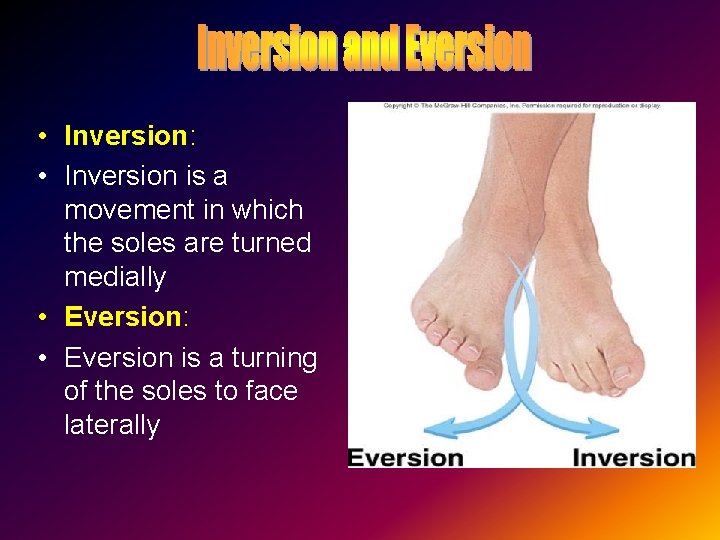
• Inversion: • Inversion is a movement in which the soles are turned medially • Eversion: • Eversion is a turning of the soles to face laterally
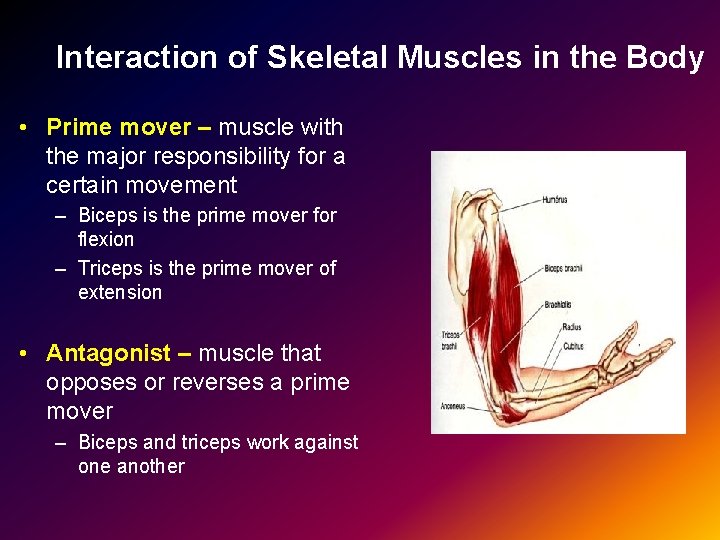
Interaction of Skeletal Muscles in the Body • Prime mover – muscle with the major responsibility for a certain movement – Biceps is the prime mover for flexion – Triceps is the prime mover of extension • Antagonist – muscle that opposes or reverses a prime mover – Biceps and triceps work against one another
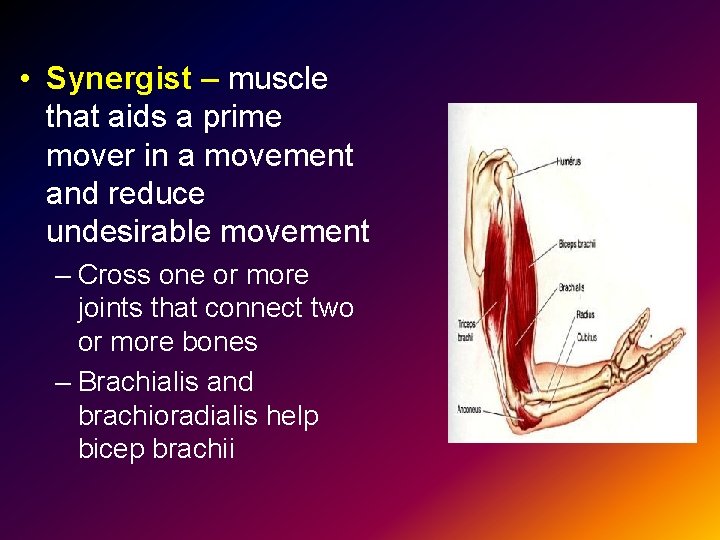
• Synergist – muscle that aids a prime mover in a movement and reduce undesirable movement – Cross one or more joints that connect two or more bones – Brachialis and brachioradialis help bicep brachii
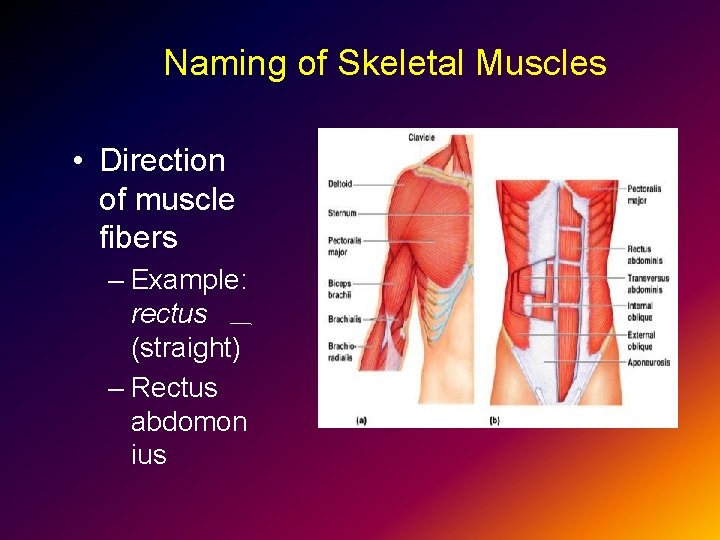
Naming of Skeletal Muscles • Direction of muscle fibers – Example: rectus (straight) – Rectus abdomon ius
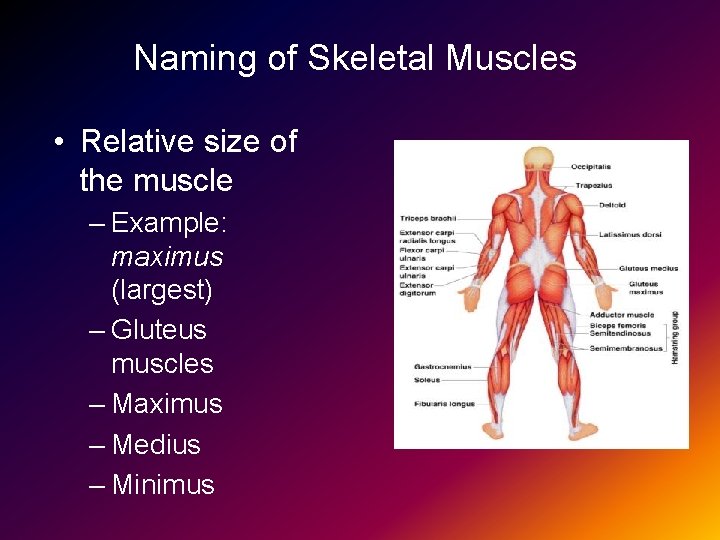
Naming of Skeletal Muscles • Relative size of the muscle – Example: maximus (largest) – Gluteus muscles – Maximus – Medius – Minimus
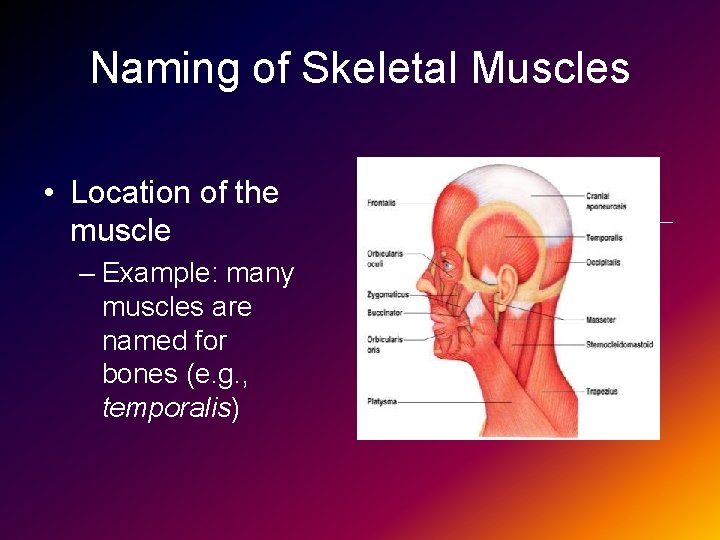
Naming of Skeletal Muscles • Location of the muscle – Example: many muscles are named for bones (e. g. , temporalis)
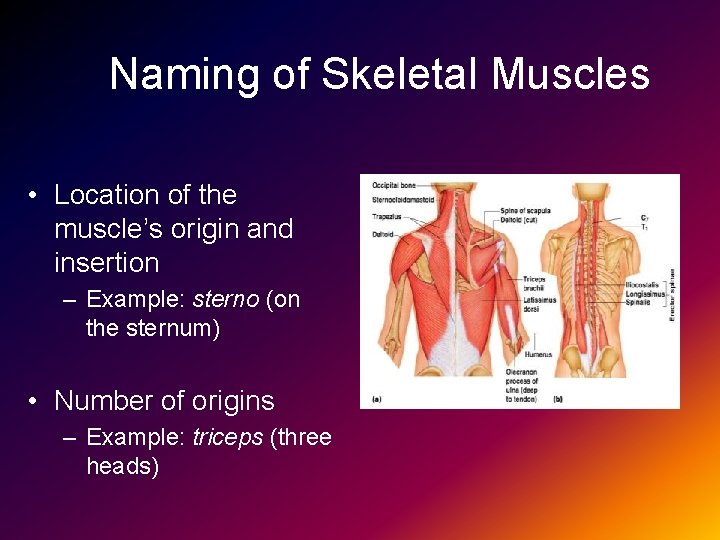
Naming of Skeletal Muscles • Location of the muscle’s origin and insertion – Example: sterno (on the sternum) • Number of origins – Example: triceps (three heads)
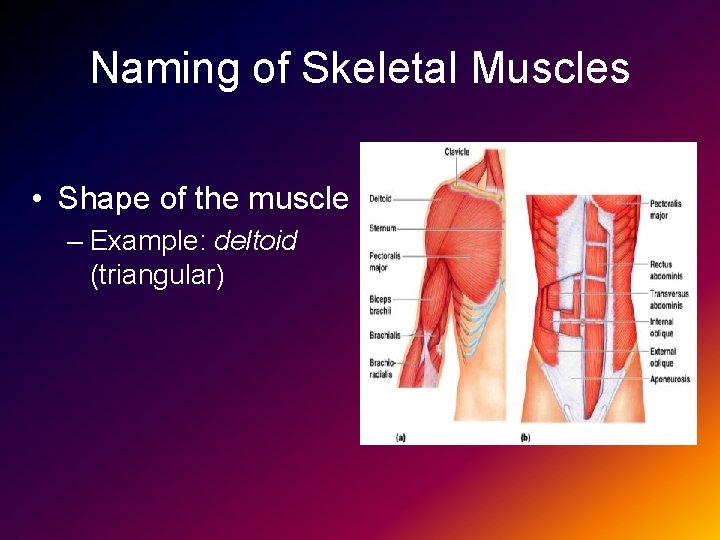
Naming of Skeletal Muscles • Shape of the muscle – Example: deltoid (triangular)
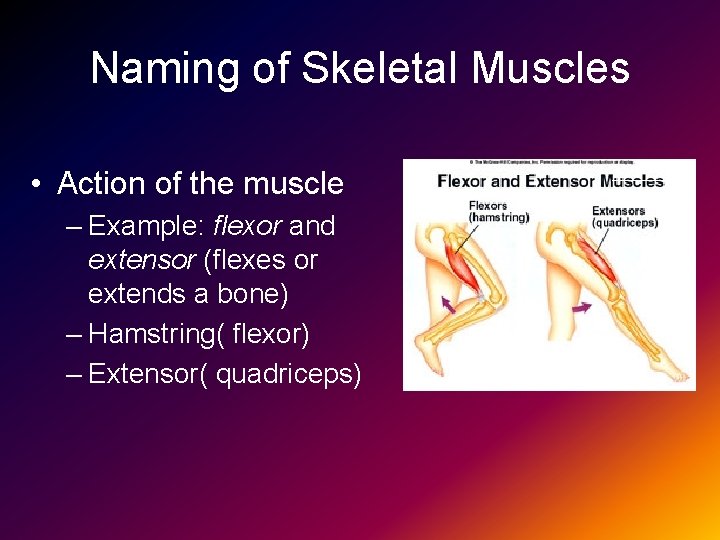
Naming of Skeletal Muscles • Action of the muscle – Example: flexor and extensor (flexes or extends a bone) – Hamstring( flexor) – Extensor( quadriceps)
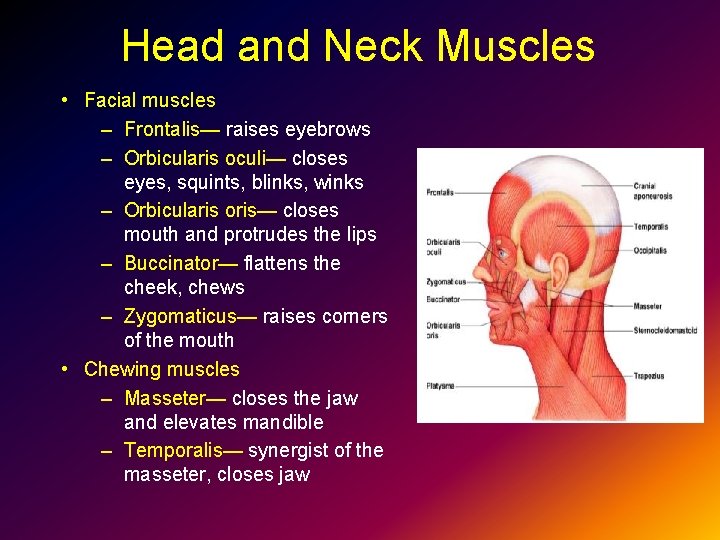
Head and Neck Muscles • Facial muscles – Frontalis— raises eyebrows – Orbicularis oculi— closes eyes, squints, blinks, winks – Orbicularis oris— closes mouth and protrudes the lips – Buccinator— flattens the cheek, chews – Zygomaticus— raises corners of the mouth • Chewing muscles – Masseter— closes the jaw and elevates mandible – Temporalis— synergist of the masseter, closes jaw
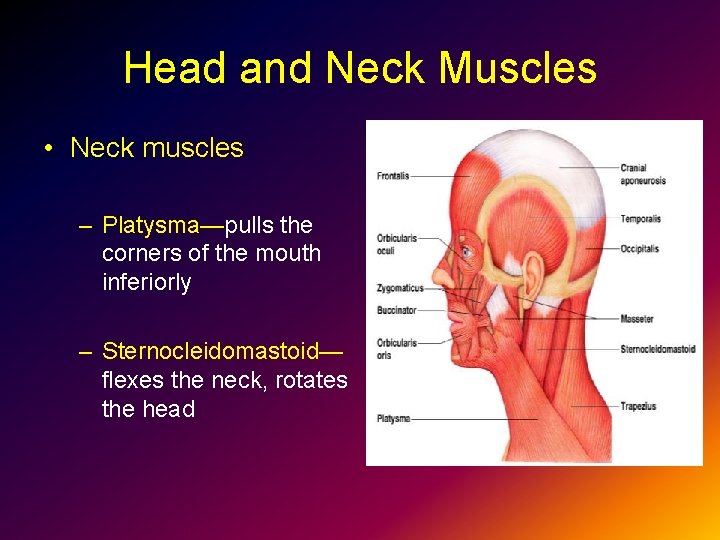
Head and Neck Muscles • Neck muscles – Platysma—pulls the corners of the mouth inferiorly – Sternocleidomastoid— flexes the neck, rotates the head
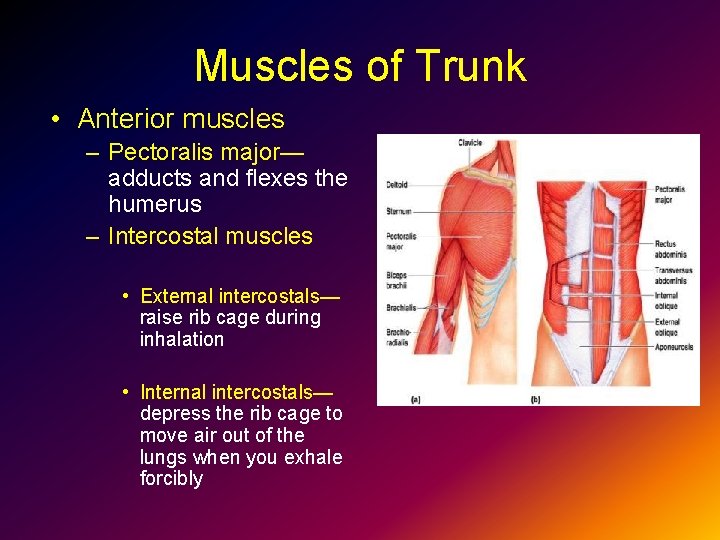
Muscles of Trunk • Anterior muscles – Pectoralis major— adducts and flexes the humerus – Intercostal muscles • External intercostals— raise rib cage during inhalation • Internal intercostals— depress the rib cage to move air out of the lungs when you exhale forcibly
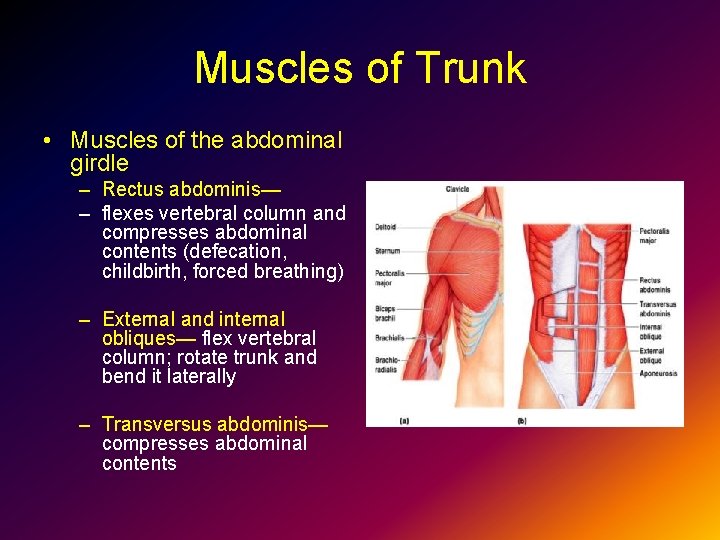
Muscles of Trunk • Muscles of the abdominal girdle – Rectus abdominis— – flexes vertebral column and compresses abdominal contents (defecation, childbirth, forced breathing) – External and internal obliques— flex vertebral column; rotate trunk and bend it laterally – Transversus abdominis— compresses abdominal contents
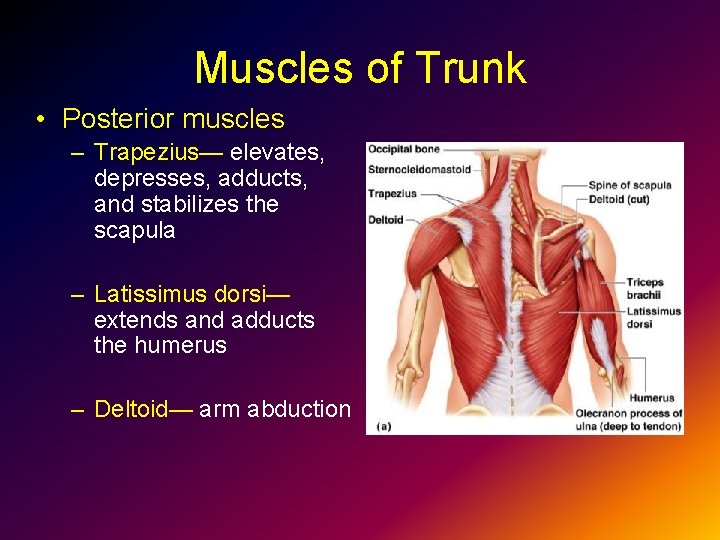
Muscles of Trunk • Posterior muscles – Trapezius— elevates, depresses, adducts, and stabilizes the scapula – Latissimus dorsi— extends and adducts the humerus – Deltoid— arm abduction
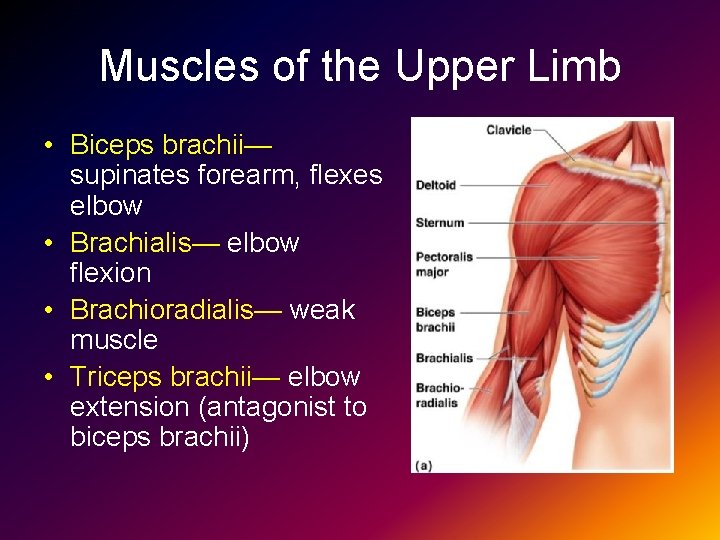
Muscles of the Upper Limb • Biceps brachii— supinates forearm, flexes elbow • Brachialis— elbow flexion • Brachioradialis— weak muscle • Triceps brachii— elbow extension (antagonist to biceps brachii)
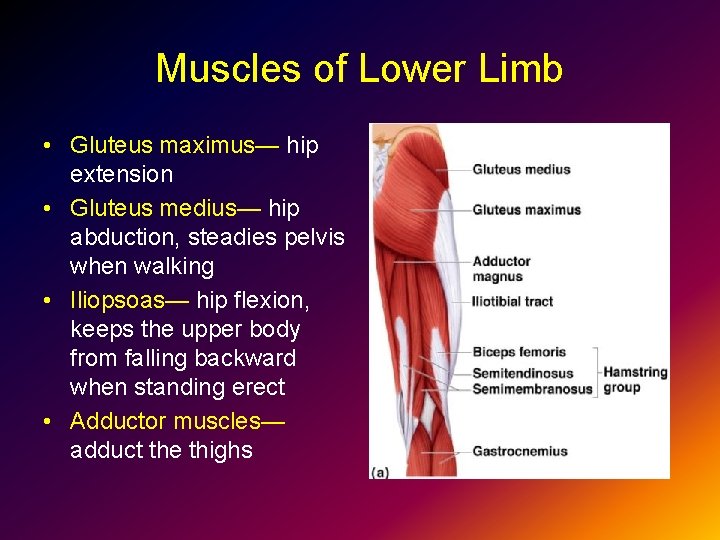
Muscles of Lower Limb • Gluteus maximus— hip extension • Gluteus medius— hip abduction, steadies pelvis when walking • Iliopsoas— hip flexion, keeps the upper body from falling backward when standing erect • Adductor muscles— adduct the thighs
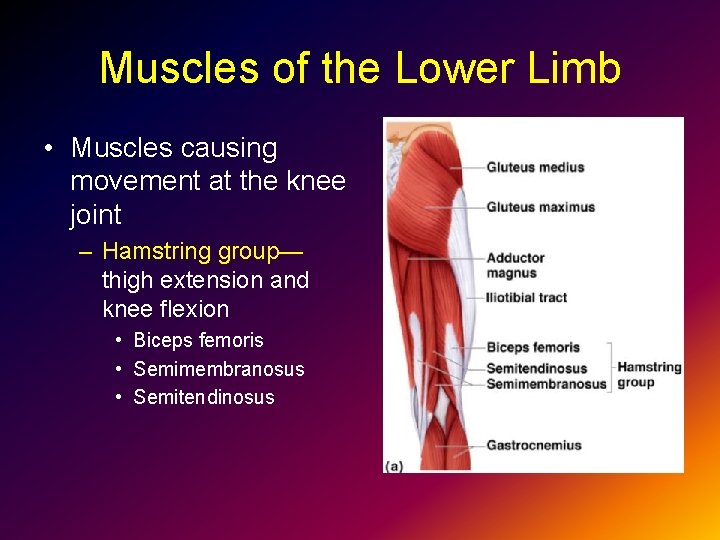
Muscles of the Lower Limb • Muscles causing movement at the knee joint – Hamstring group— thigh extension and knee flexion • Biceps femoris • Semimembranosus • Semitendinosus
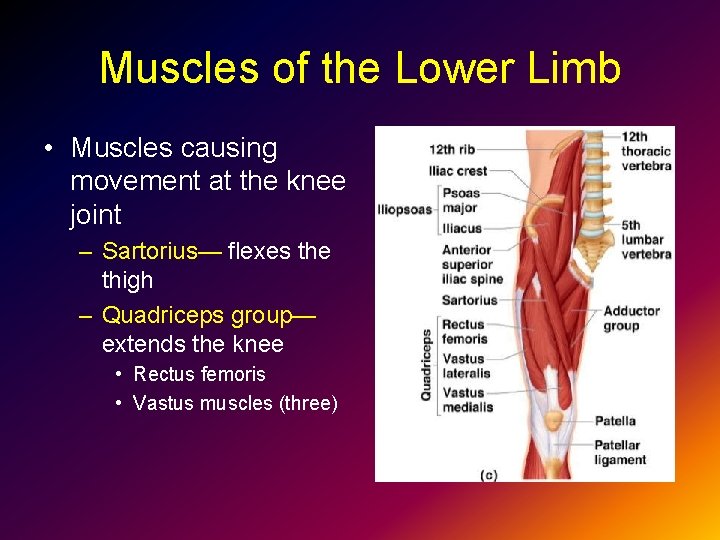
Muscles of the Lower Limb • Muscles causing movement at the knee joint – Sartorius— flexes the thigh – Quadriceps group— extends the knee • Rectus femoris • Vastus muscles (three)
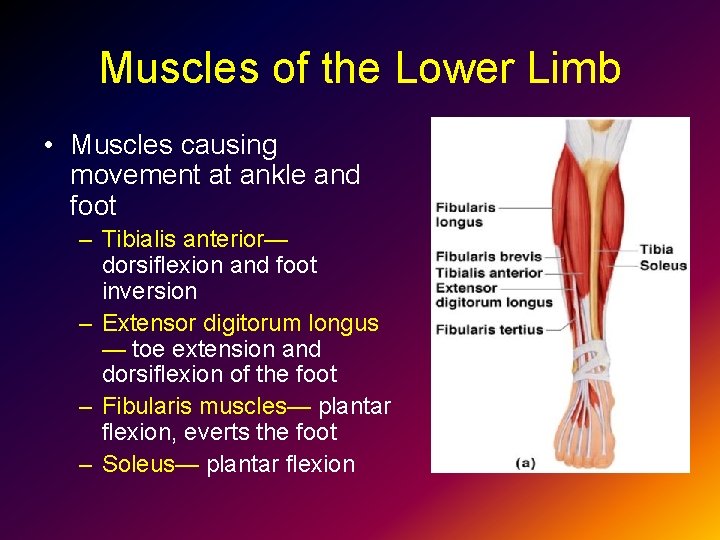
Muscles of the Lower Limb • Muscles causing movement at ankle and foot – Tibialis anterior— dorsiflexion and foot inversion – Extensor digitorum longus — toe extension and dorsiflexion of the foot – Fibularis muscles— plantar flexion, everts the foot – Soleus— plantar flexion
- Slides: 70