
Muscular System Part 2 An Overview of the
- Slides: 59
Muscular System Part 2
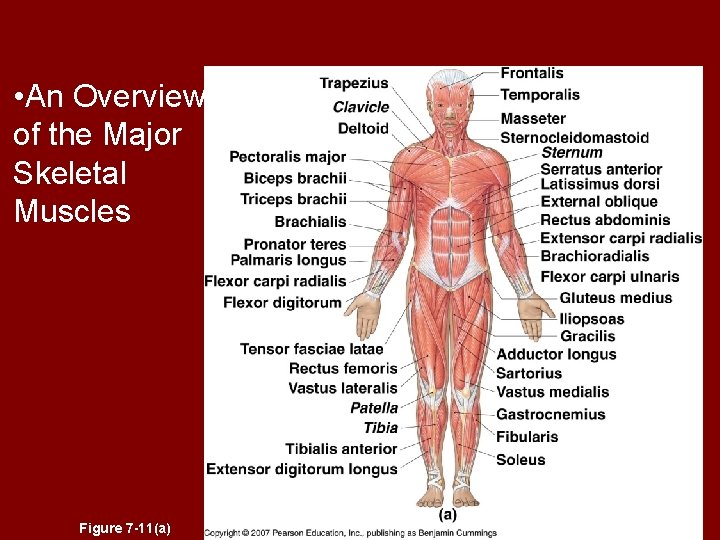
• An Overview of the Major Skeletal Muscles Figure 7 -11(a)
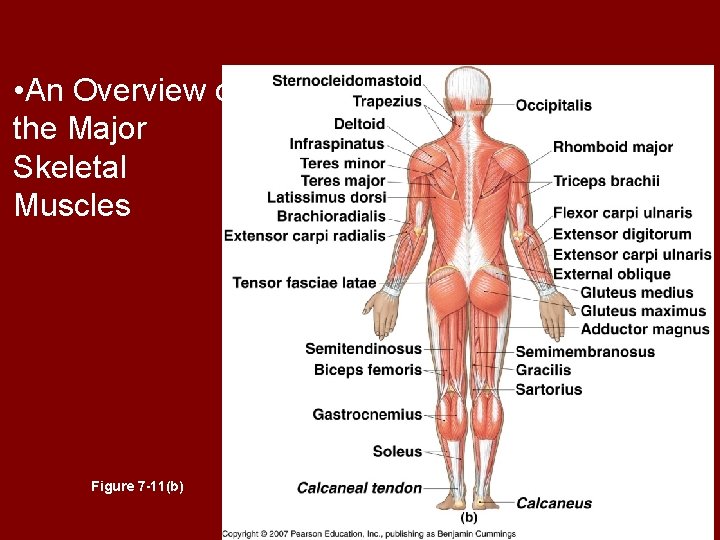
• An Overview of the Major Skeletal Muscles Figure 7 -11(b)
Muscles of the head and neck
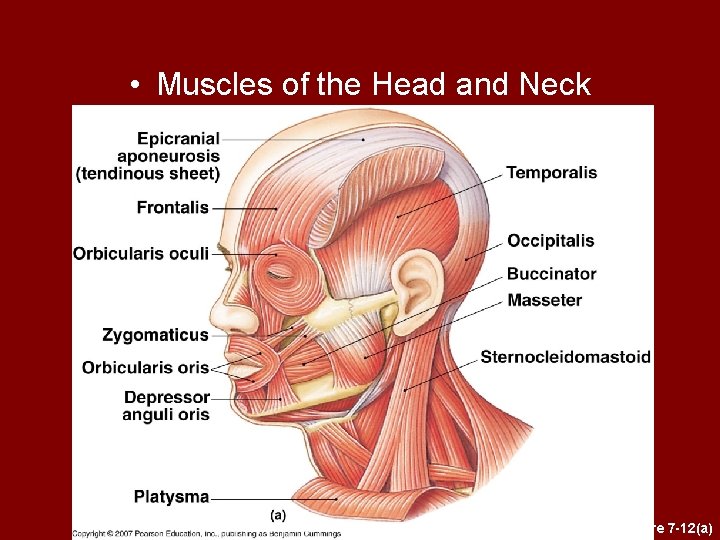
• Muscles of the Head and Neck Figure 7 -12(a)
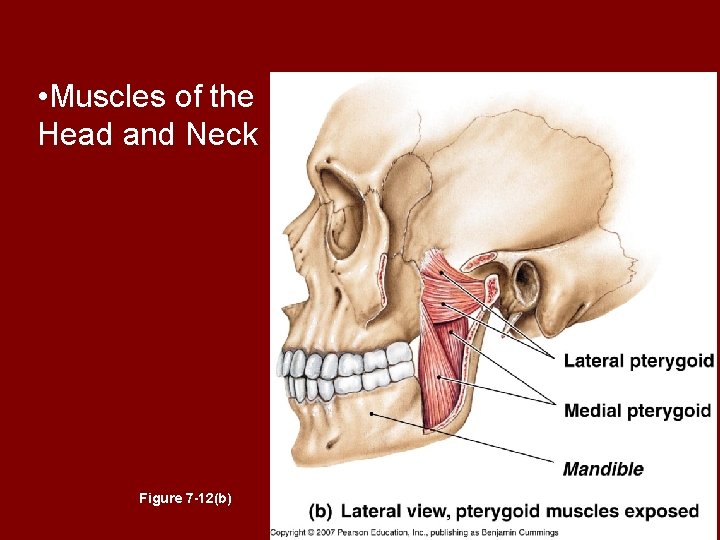
• Muscles of the Head and Neck Figure 7 -12(b)
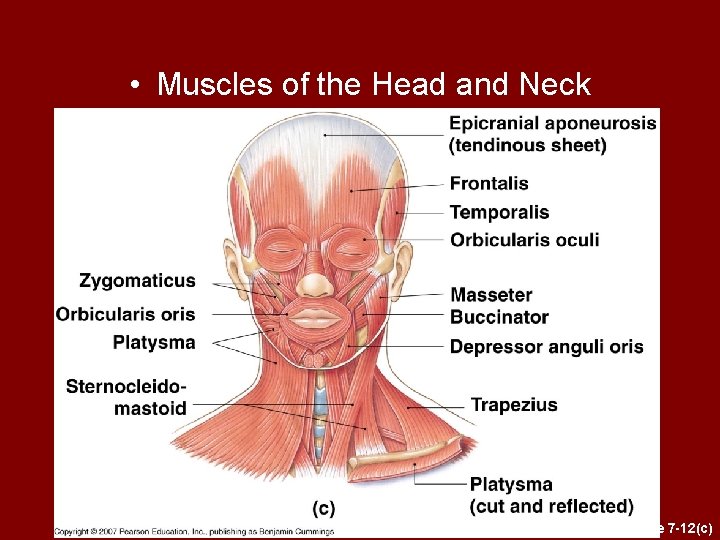
• Muscles of the Head and Neck Figure 7 -12(c)
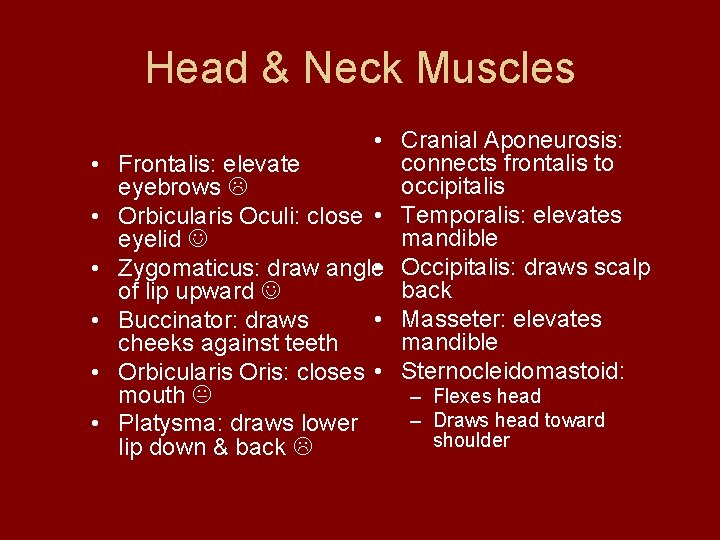
Head & Neck Muscles • • Cranial Aponeurosis: connects frontalis to Frontalis: elevate occipitalis eyebrows Orbicularis Oculi: close • Temporalis: elevates mandible eyelid Zygomaticus: draw angle • Occipitalis: draws scalp back of lip upward • Masseter: elevates Buccinator: draws mandible cheeks against teeth Orbicularis Oris: closes • Sternocleidomastoid: mouth – Flexes head – Draws head toward Platysma: draws lower shoulder lip down & back
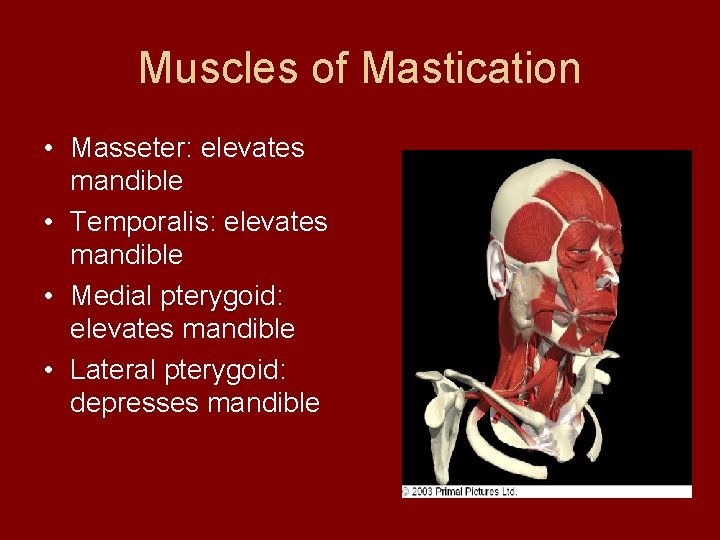
Muscles of Mastication • Masseter: elevates mandible • Temporalis: elevates mandible • Medial pterygoid: elevates mandible • Lateral pterygoid: depresses mandible
Key Muscles of Facial Expression • Smiling Muscles – Orbicularis Oculi – Nasalis – Levator Labii Superioris – Levator Anguli Superioris – Zygomaticus – Risorius • Frowning Muscles – – Frontalis Orbicularis Oris Depressor Anguli Oris Depressor Labii Inferioris – Mentalis – Platysma
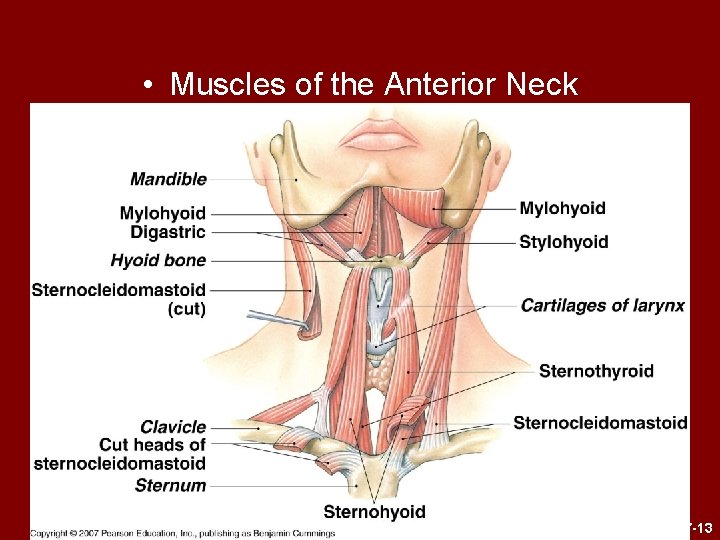
• Muscles of the Anterior Neck Figure 7 -13
Muscles of the Axial Skeleton
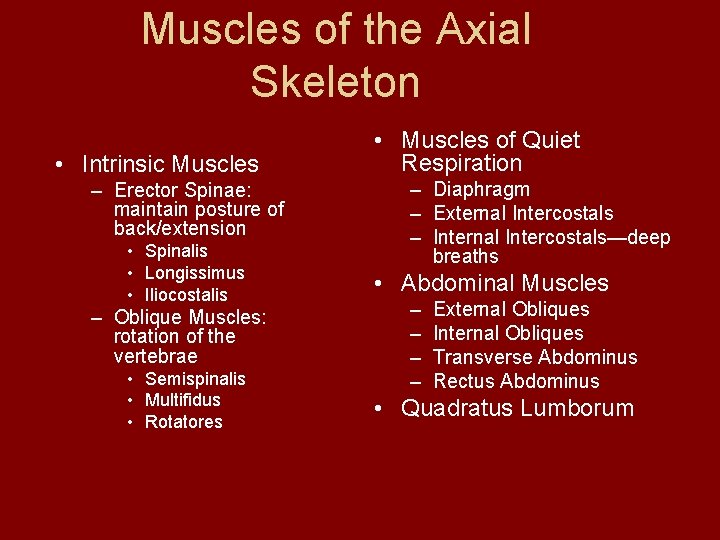
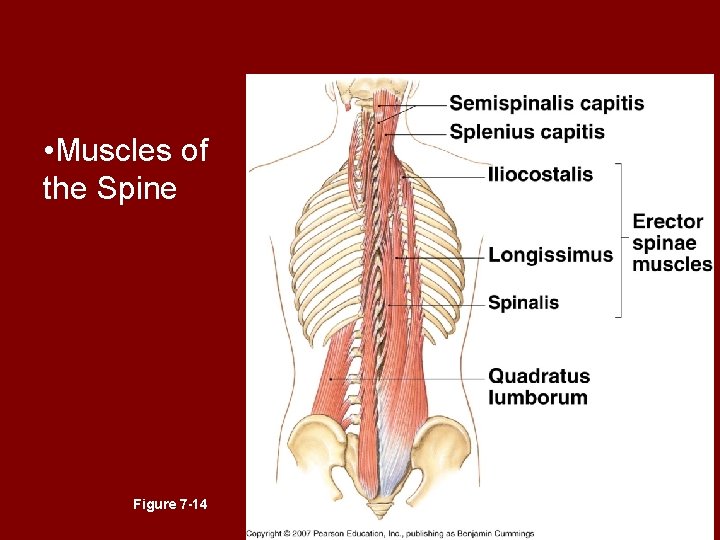
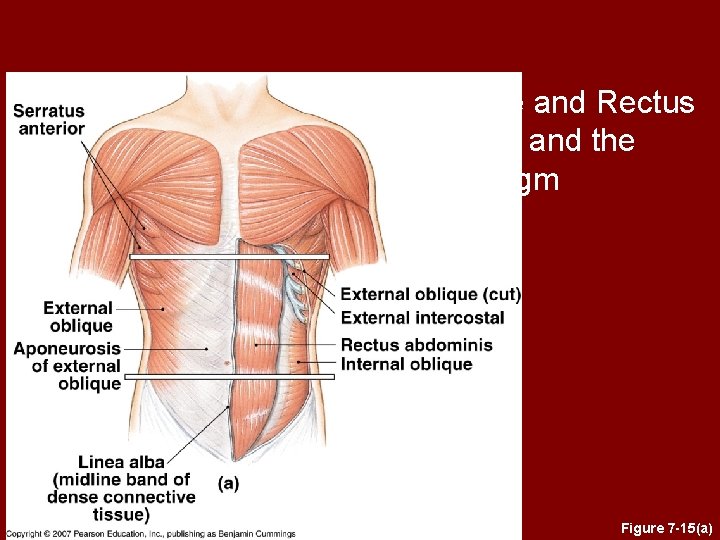
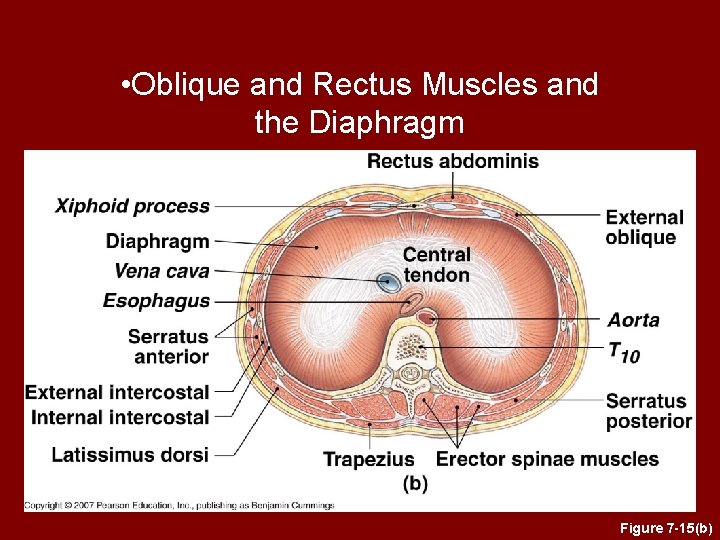
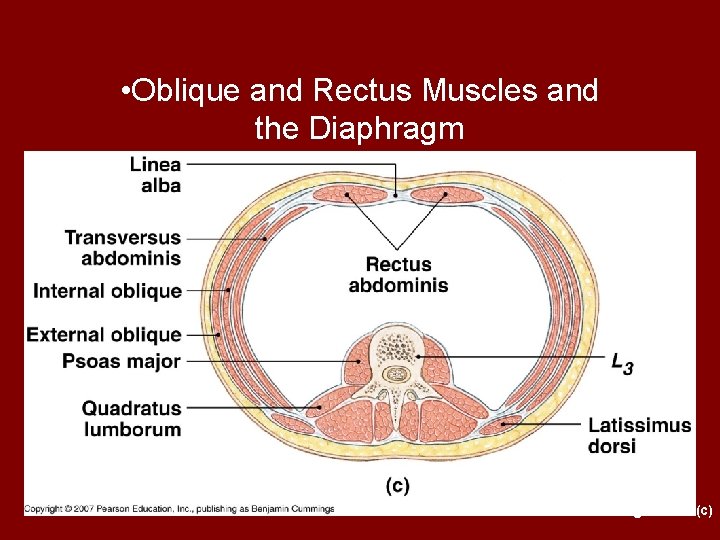
Muscles of the Axial Skeleton • Intrinsic Muscles – Erector Spinae: maintain posture of back/extension • Spinalis • Longissimus • Iliocostalis – Oblique Muscles: rotation of the vertebrae • Semispinalis • Multifidus • Rotatores • Muscles of Quiet Respiration – Diaphragm – External Intercostals – Internal Intercostals—deep breaths • Abdominal Muscles – – External Obliques Internal Obliques Transverse Abdominus Rectus Abdominus • Quadratus Lumborum
• Muscles of the Spine Figure 7 -14
• Oblique and Rectus Muscles and the Diaphragm Figure 7 -15(a)
• Oblique and Rectus Muscles and the Diaphragm Figure 7 -15(b)
• Oblique and Rectus Muscles and the Diaphragm Figure 7 -15(c)
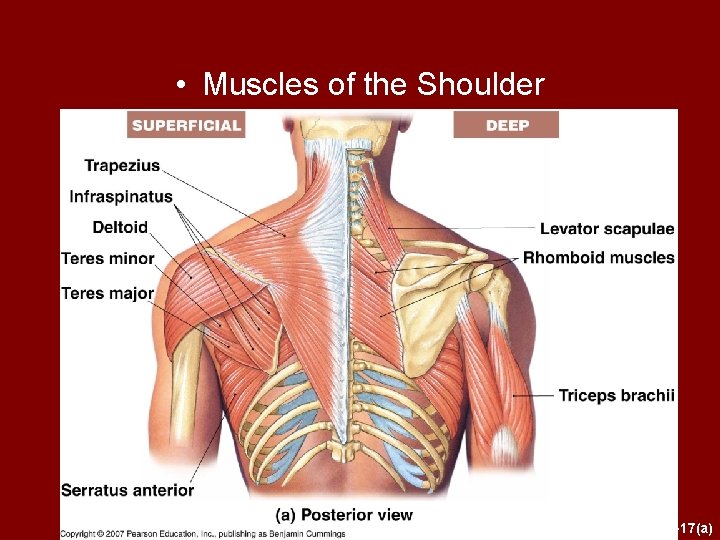
• Muscles of the Shoulder Figure 7 -17(a)
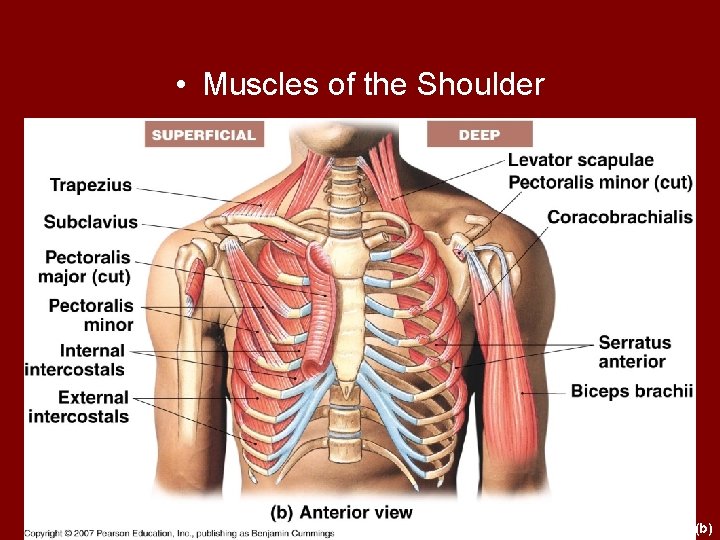
• Muscles of the Shoulder Figure 7 -17(b)
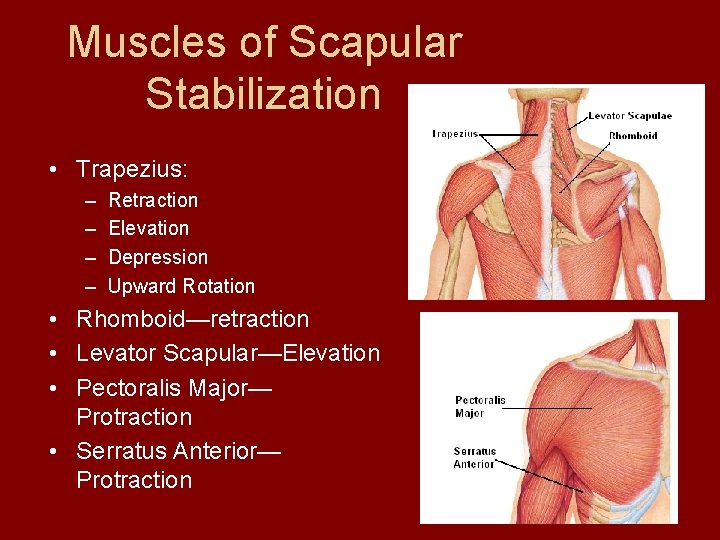
Muscles of Scapular Stabilization • Trapezius: – – Retraction Elevation Depression Upward Rotation • Rhomboid—retraction • Levator Scapular—Elevation • Pectoralis Major— Protraction • Serratus Anterior— Protraction
Upper Limbs
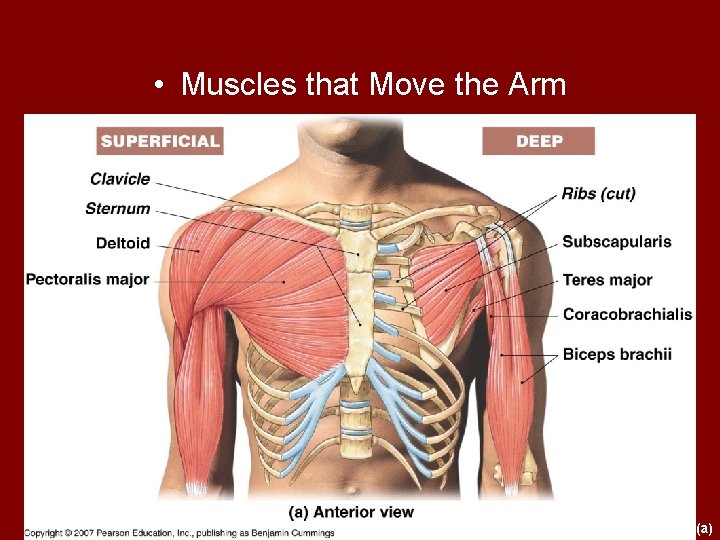
• Muscles that Move the Arm Figure 7 -18(a)
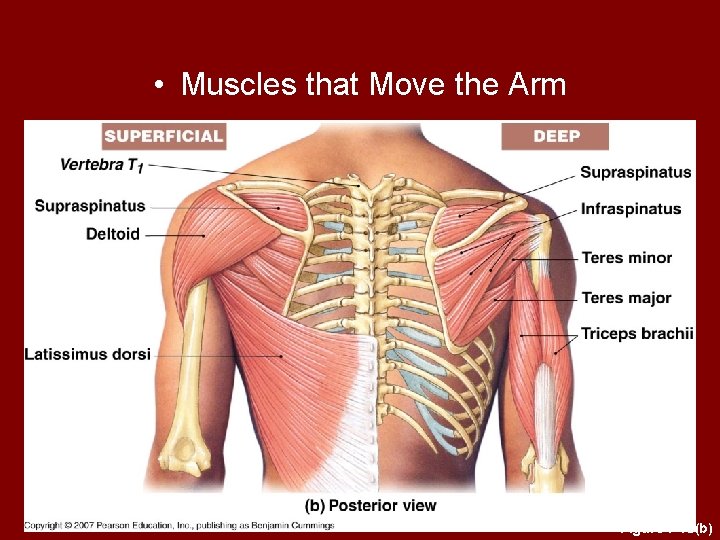
• Muscles that Move the Arm Figure 7 -18(b)
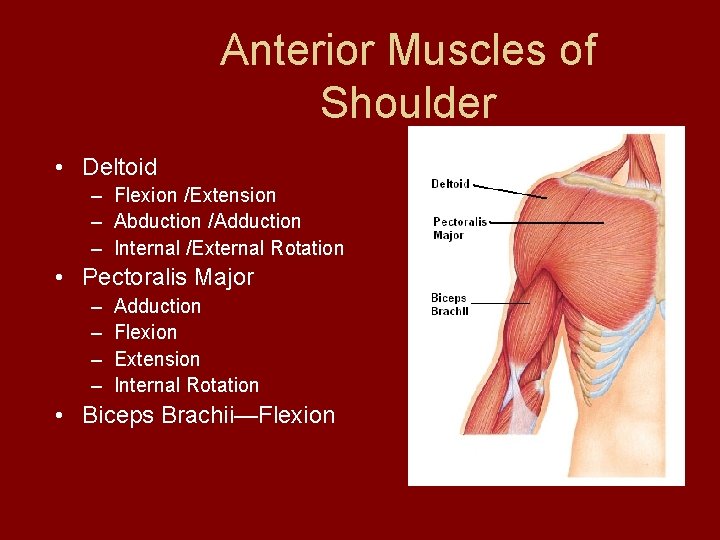
Anterior Muscles of Shoulder • Deltoid – Flexion /Extension – Abduction /Adduction – Internal /External Rotation • Pectoralis Major – – Adduction Flexion Extension Internal Rotation • Biceps Brachii—Flexion
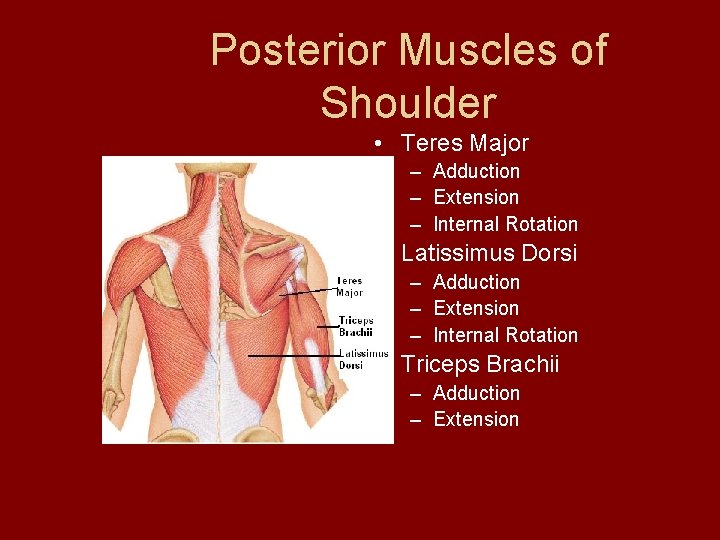
Posterior Muscles of Shoulder • Teres Major – Adduction – Extension – Internal Rotation • Latissimus Dorsi – Adduction – Extension – Internal Rotation • Triceps Brachii – Adduction – Extension
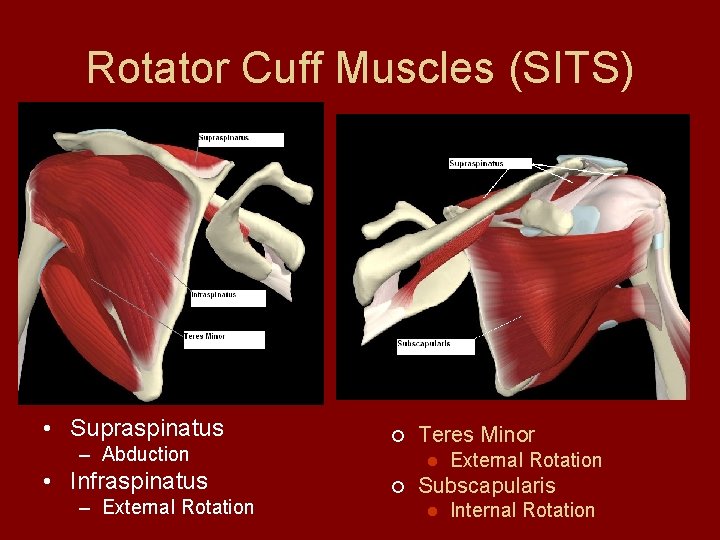
Rotator Cuff Muscles (SITS) • Supraspinatus – Abduction • Infraspinatus – External Rotation ¢ Teres Minor l ¢ External Rotation Subscapularis l Internal Rotation
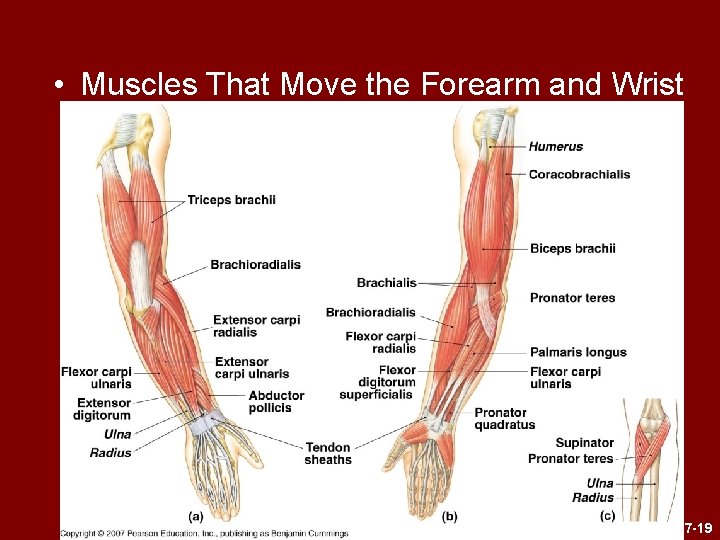
• Muscles That Move the Forearm and Wrist Figure 7 -19
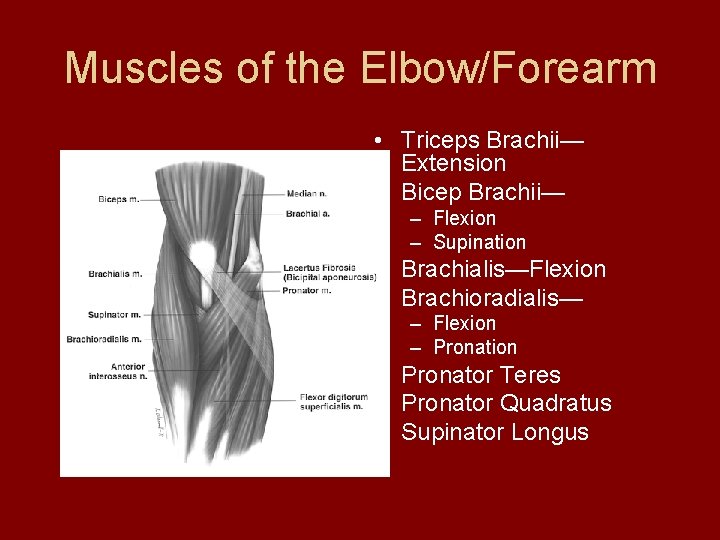
Muscles of the Elbow/Forearm • Triceps Brachii— Extension • Bicep Brachii— – Flexion – Supination • Brachialis—Flexion • Brachioradialis— – Flexion – Pronation • Pronator Teres • Pronator Quadratus • Supinator Longus
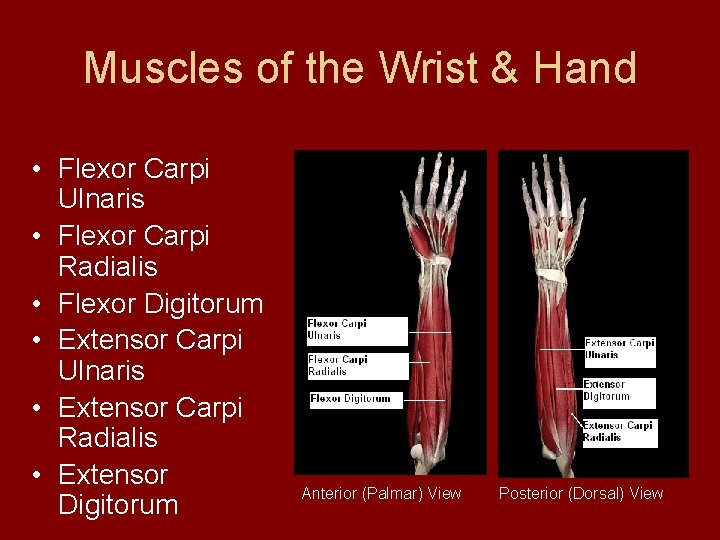
Muscles of the Wrist & Hand • Flexor Carpi Ulnaris • Flexor Carpi Radialis • Flexor Digitorum • Extensor Carpi Ulnaris • Extensor Carpi Radialis • Extensor Digitorum Anterior (Palmar) View Posterior (Dorsal) View
Lower Extremity Muscles
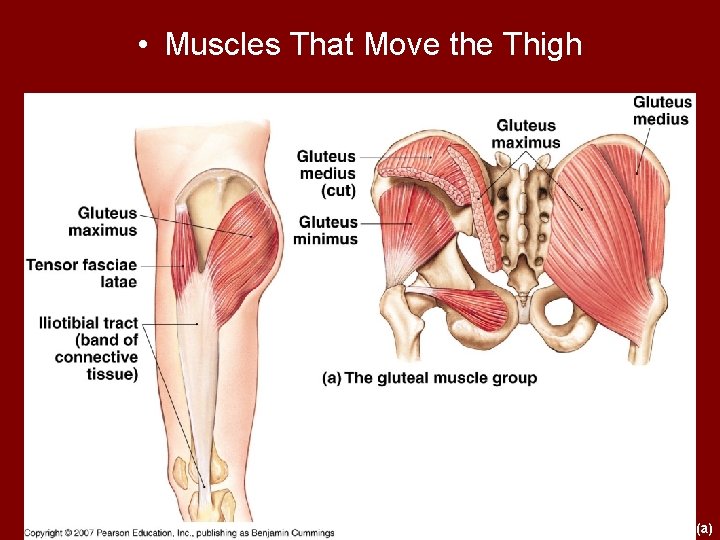
• Muscles That Move the Thigh Figure 7 -20(a)
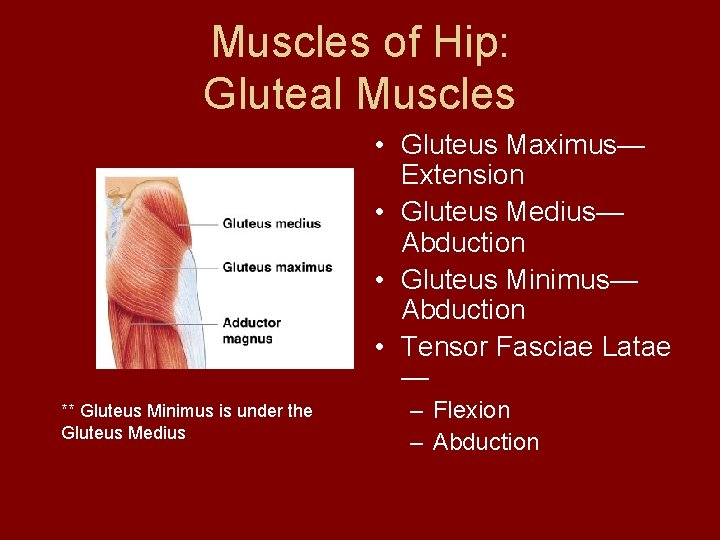
Muscles of Hip: Gluteal Muscles • Gluteus Maximus— Extension • Gluteus Medius— Abduction • Gluteus Minimus— Abduction • Tensor Fasciae Latae — ** Gluteus Minimus is under the Gluteus Medius – Flexion – Abduction
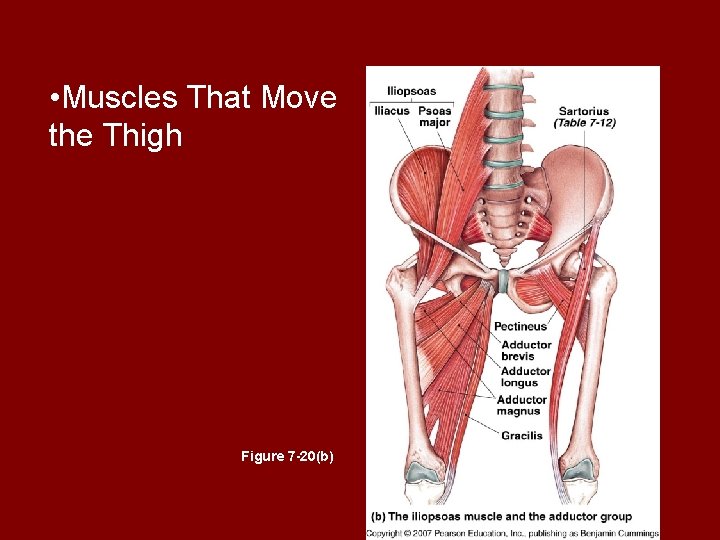
• Muscles That Move the Thigh Figure 7 -20(b)
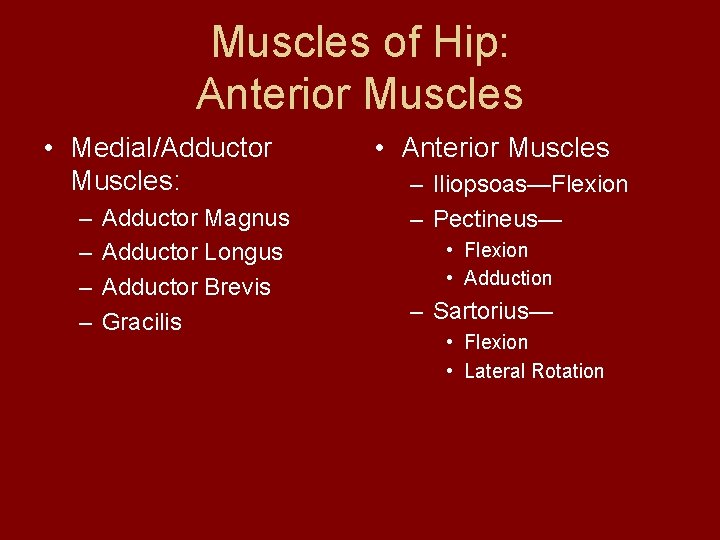
Muscles of Hip: Anterior Muscles • Medial/Adductor Muscles: – – Adductor Magnus Adductor Longus Adductor Brevis Gracilis • Anterior Muscles – Iliopsoas—Flexion – Pectineus— • Flexion • Adduction – Sartorius— • Flexion • Lateral Rotation
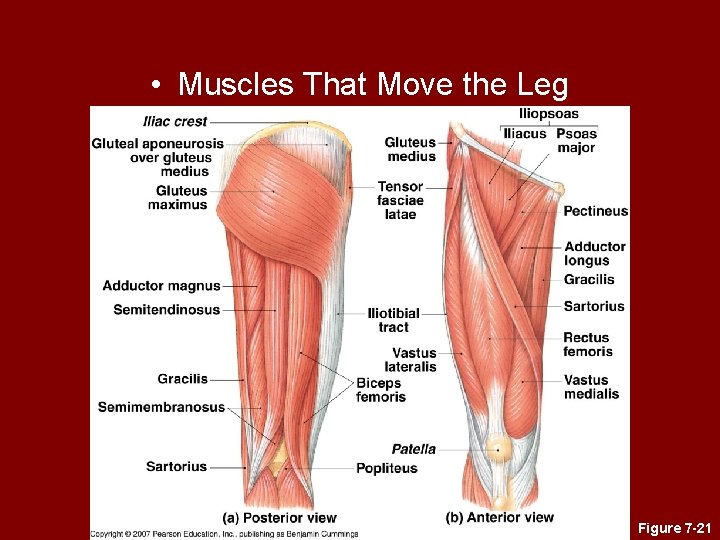
• Muscles That Move the Leg Figure 7 -21
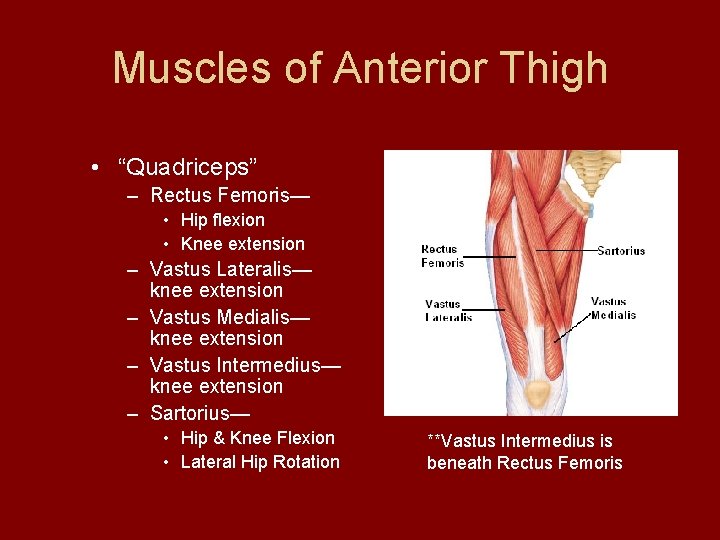
Muscles of Anterior Thigh • “Quadriceps” – Rectus Femoris— • Hip flexion • Knee extension – Vastus Lateralis— knee extension – Vastus Medialis— knee extension – Vastus Intermedius— knee extension – Sartorius— • Hip & Knee Flexion • Lateral Hip Rotation **Vastus Intermedius is beneath Rectus Femoris
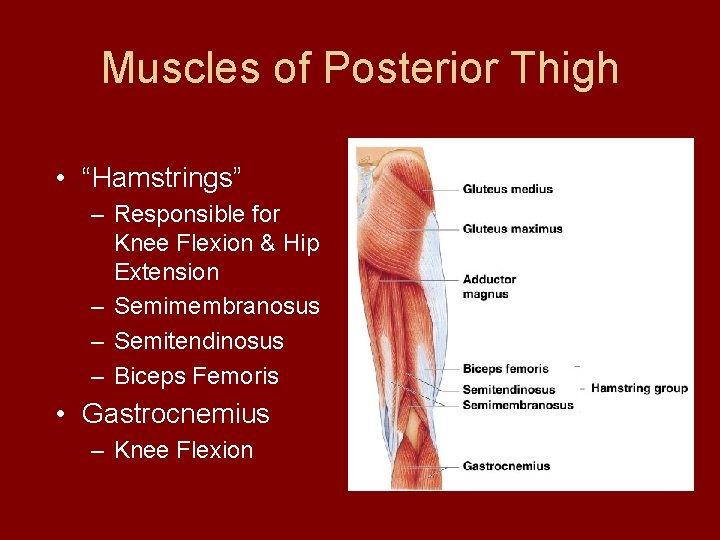
Muscles of Posterior Thigh • “Hamstrings” – Responsible for Knee Flexion & Hip Extension – Semimembranosus – Semitendinosus – Biceps Femoris • Gastrocnemius – Knee Flexion
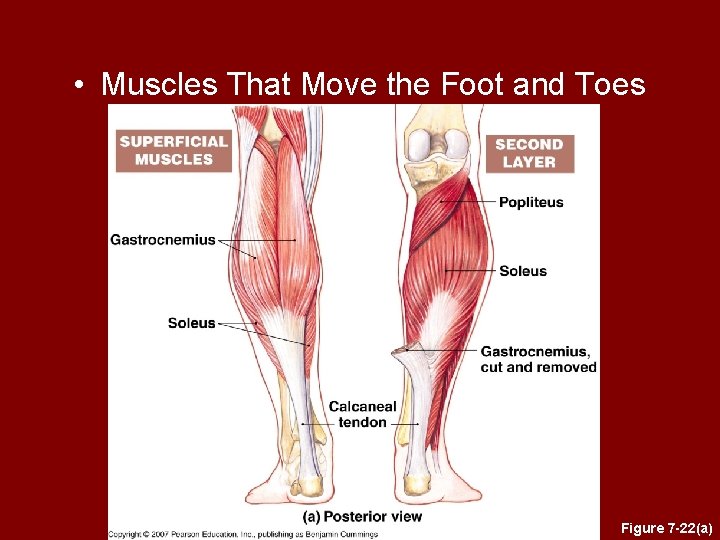
• Muscles That Move the Foot and Toes Figure 7 -22(a)
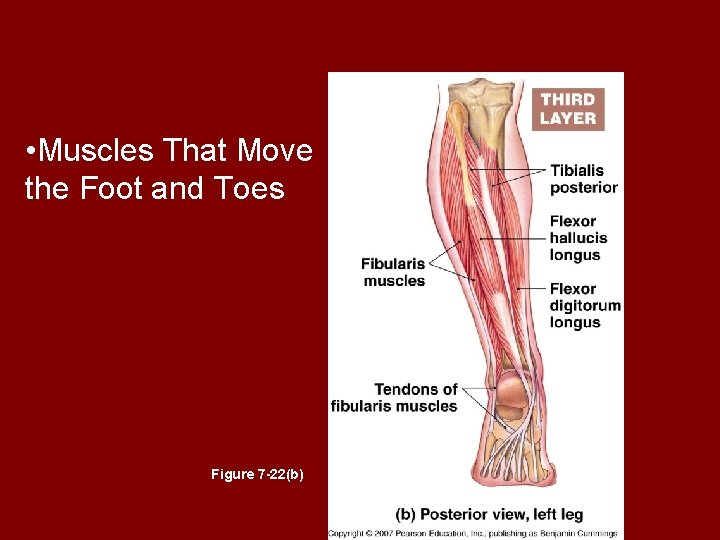
• Muscles That Move the Foot and Toes Figure 7 -22(b)
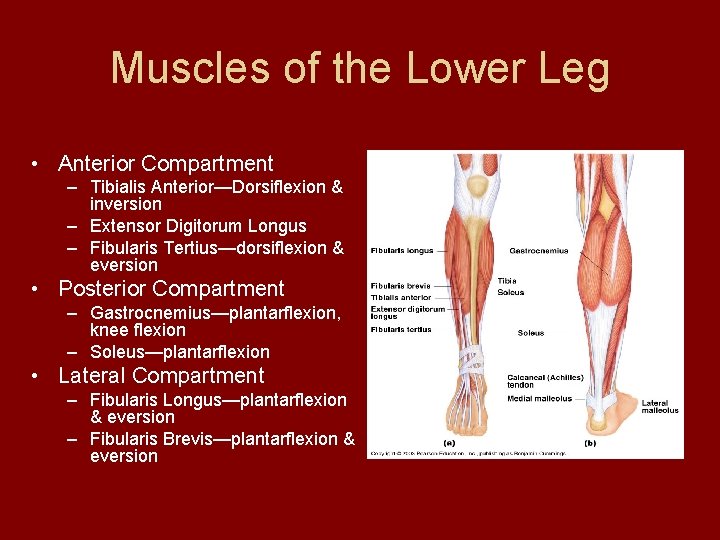
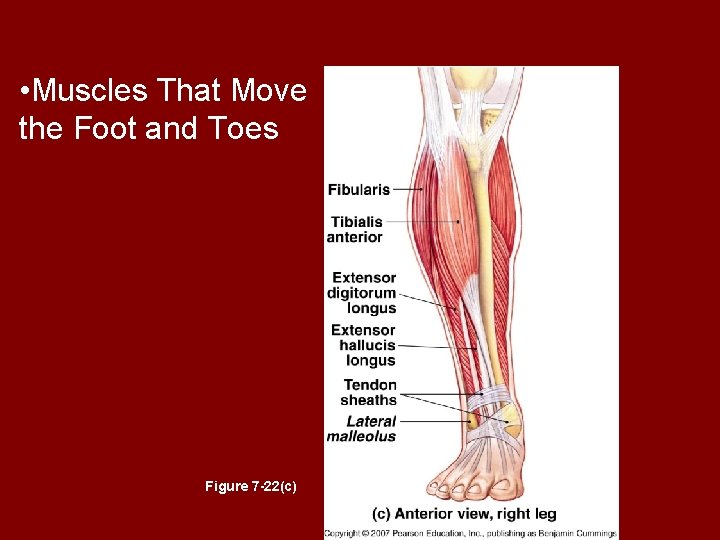
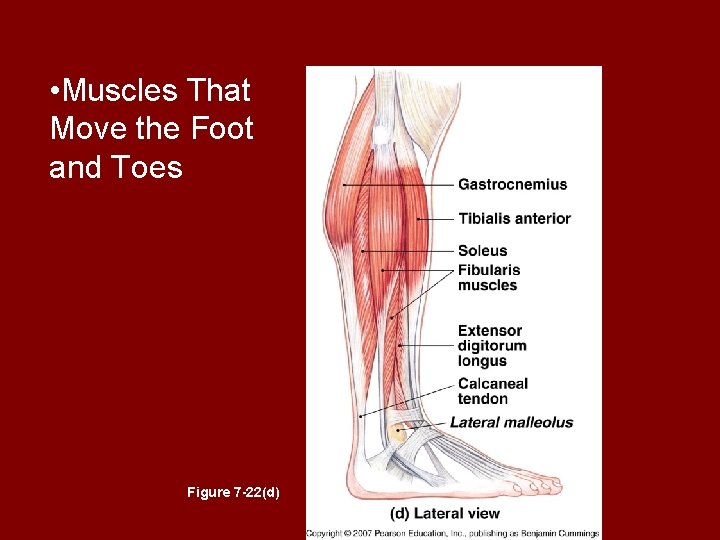
Muscles of the Lower Leg • Anterior Compartment – Tibialis Anterior—Dorsiflexion & inversion – Extensor Digitorum Longus – Fibularis Tertius—dorsiflexion & eversion • Posterior Compartment – Gastrocnemius—plantarflexion, knee flexion – Soleus—plantarflexion • Lateral Compartment – Fibularis Longus—plantarflexion & eversion – Fibularis Brevis—plantarflexion & eversion
• Muscles That Move the Foot and Toes Figure 7 -22(c)
• Muscles That Move the Foot and Toes Figure 7 -22(d)
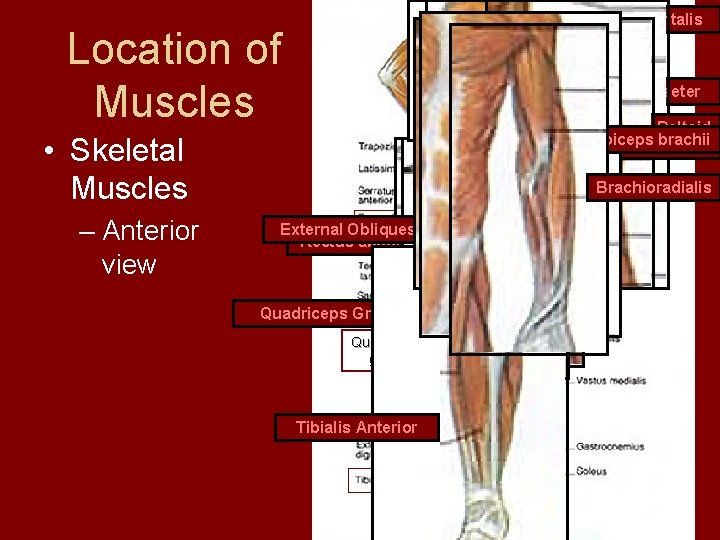
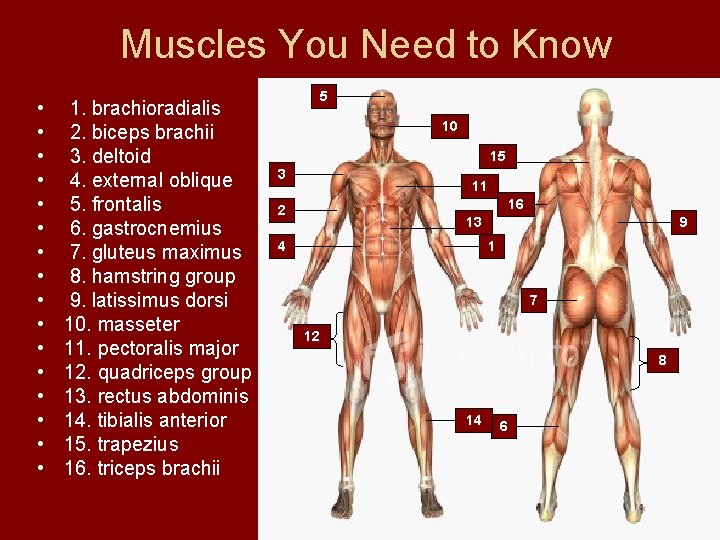
Frontalis Location of Muscles Masseter Deltoid biceps Pectoralisbrachii Major • Skeletal Muscles – Anterior view Brachioradialis External Obliques Rectus abdominis Quadriceps Group Quadriceps group Tibialis Anterior
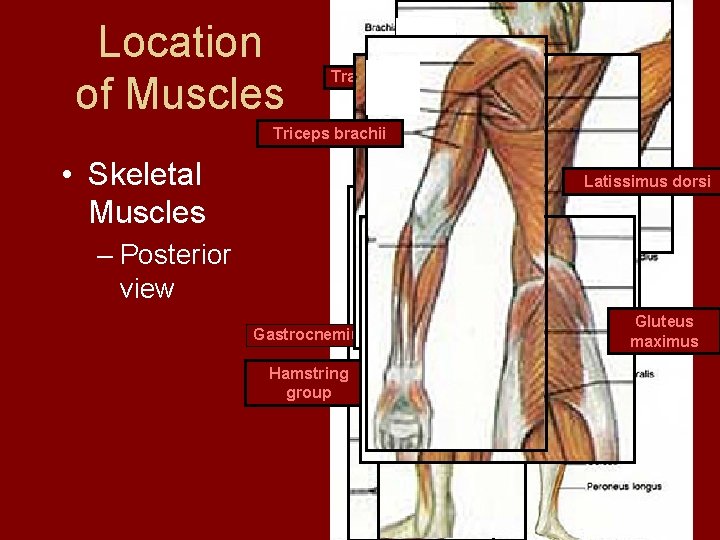
Location of Muscles Trapezius Triceps brachii • Skeletal Muscles Latissimus dorsi – Posterior view Gastrocnemius Hamstring group Gluteus maximus
Muscles You Need to Know • • • • 1. brachioradialis 2. biceps brachii 3. deltoid 4. external oblique 5. frontalis 6. gastrocnemius 7. gluteus maximus 8. hamstring group 9. latissimus dorsi 10. masseter 11. pectoralis major 12. quadriceps group 13. rectus abdominis 14. tibialis anterior 15. trapezius 16. triceps brachii 5 A F 10 15 K 3 B 11 G L 16 C 2 H 13 4 D 9 O 1 I M 7 12 E P 8 J 14 N 6
Disease Conditions in Muscles
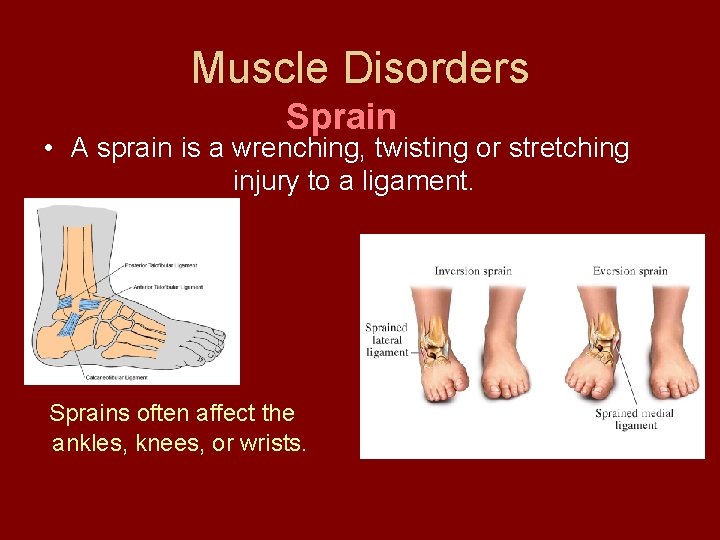
Muscle Disorders Sprain • A sprain is a wrenching, twisting or stretching injury to a ligament. Sprains often affect the ankles, knees, or wrists.
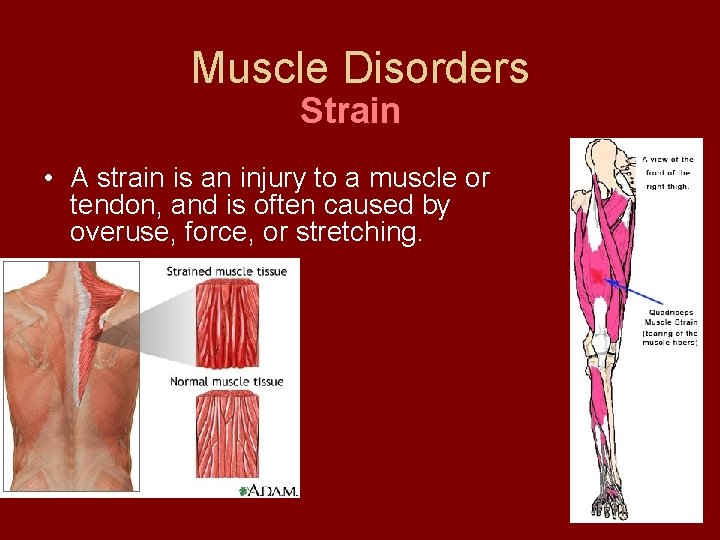
Muscle Disorders Strain • A strain is an injury to a muscle or tendon, and is often caused by overuse, force, or stretching.
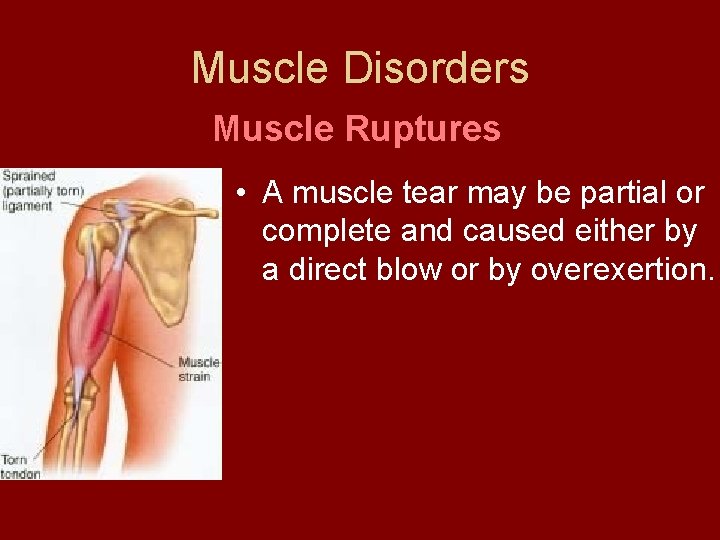
Muscle Disorders Muscle Ruptures • A muscle tear may be partial or complete and caused either by a direct blow or by overexertion.
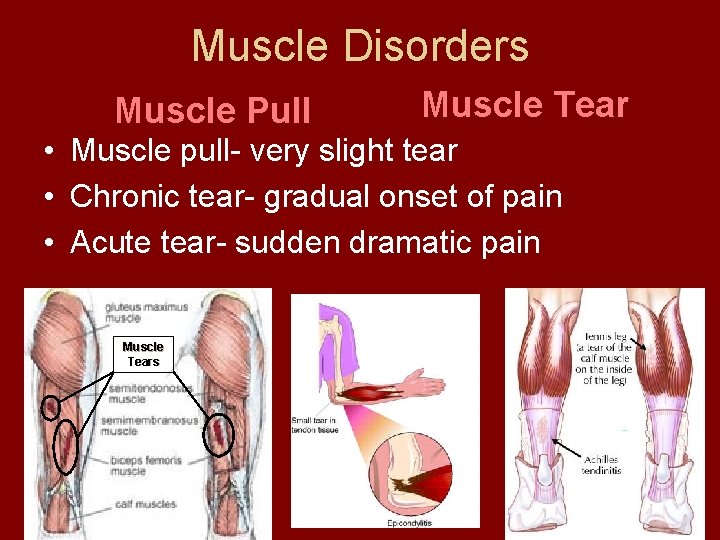
Muscle Disorders Muscle Pull Muscle Tear • Muscle pull- very slight tear • Chronic tear- gradual onset of pain • Acute tear- sudden dramatic pain Muscle Tears
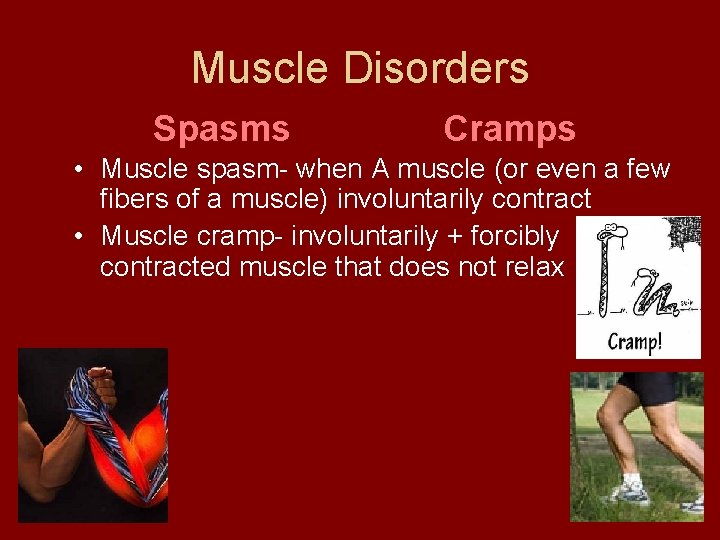
Muscle Disorders Spasms Cramps • Muscle spasm- when A muscle (or even a few fibers of a muscle) involuntarily contract • Muscle cramp- involuntarily + forcibly contracted muscle that does not relax
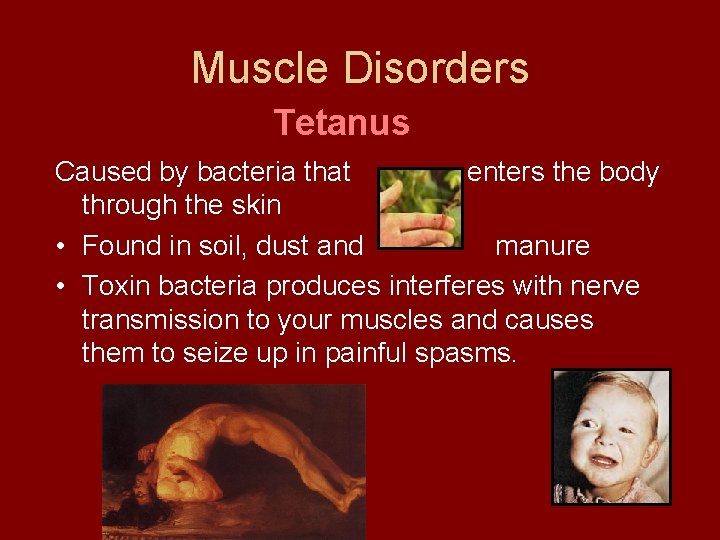
Muscle Disorders Tetanus Caused by bacteria that enters the body through the skin • Found in soil, dust and manure • Toxin bacteria produces interferes with nerve transmission to your muscles and causes them to seize up in painful spasms.
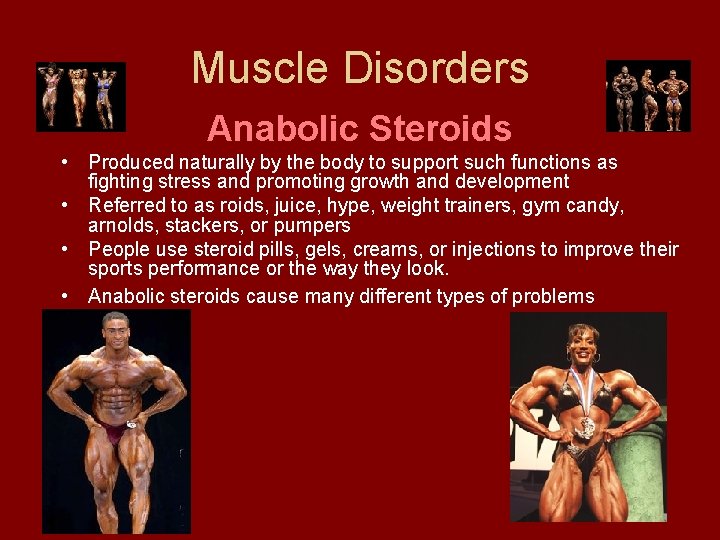
Muscle Disorders Anabolic Steroids • Produced naturally by the body to support such functions as fighting stress and promoting growth and development • Referred to as roids, juice, hype, weight trainers, gym candy, arnolds, stackers, or pumpers • People use steroid pills, gels, creams, or injections to improve their sports performance or the way they look. • Anabolic steroids cause many different types of problems
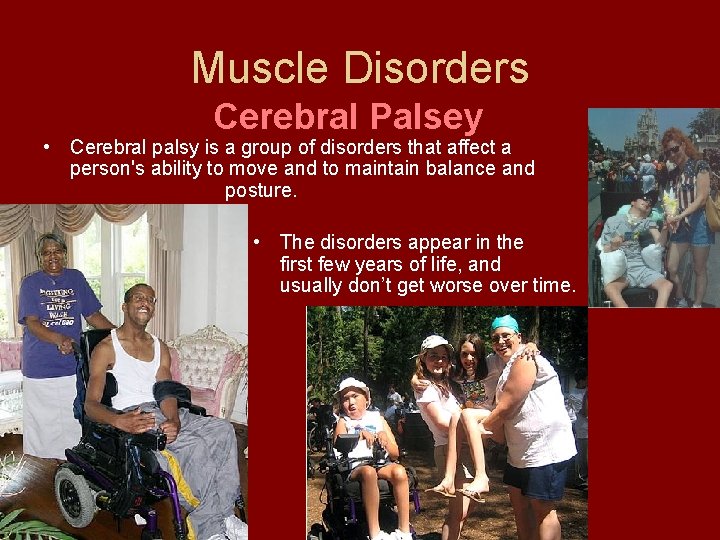
Muscle Disorders Cerebral Palsey • Cerebral palsy is a group of disorders that affect a person's ability to move and to maintain balance and posture. • The disorders appear in the first few years of life, and usually don’t get worse over time.
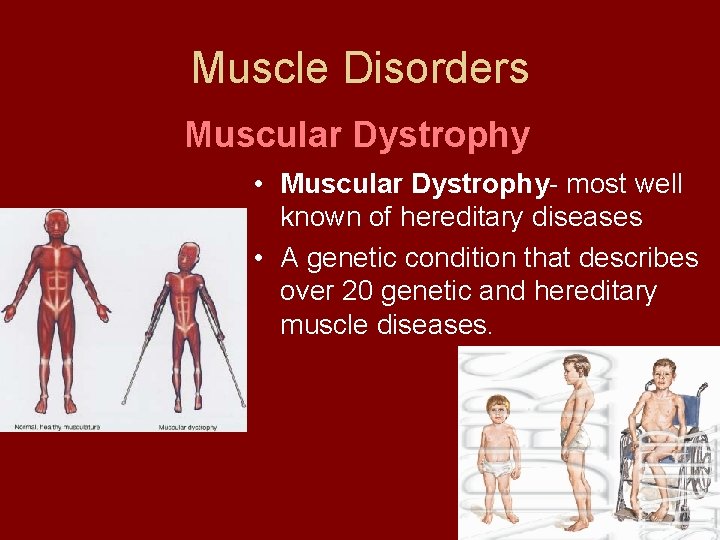
Muscle Disorders Muscular Dystrophy • Muscular Dystrophy- most well known of hereditary diseases • A genetic condition that describes over 20 genetic and hereditary muscle diseases.
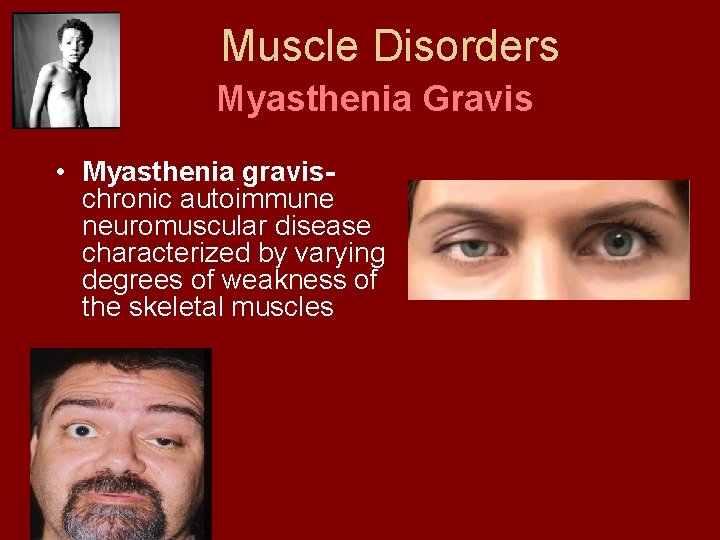
Muscle Disorders Myasthenia Gravis • Myasthenia gravischronic autoimmune neuromuscular disease characterized by varying degrees of weakness of the skeletal muscles
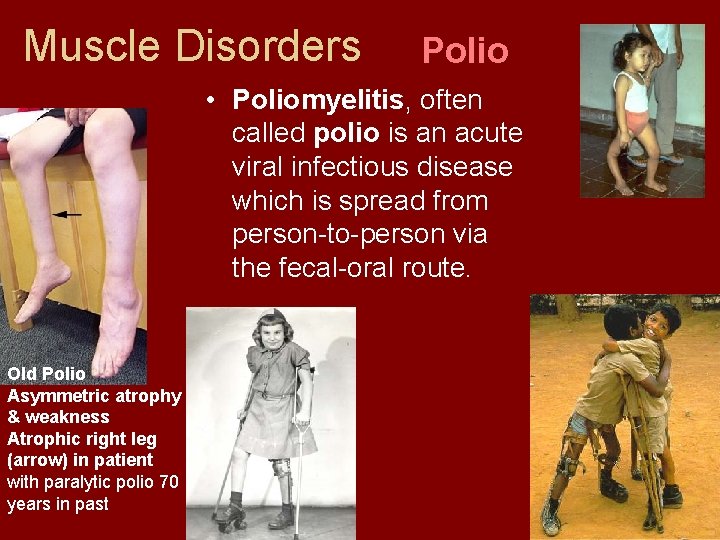
Muscle Disorders Polio • Poliomyelitis, often called polio is an acute viral infectious disease which is spread from person-to-person via the fecal-oral route. Old Polio Asymmetric atrophy & weakness Atrophic right leg (arrow) in patient with paralytic polio 70 years in past
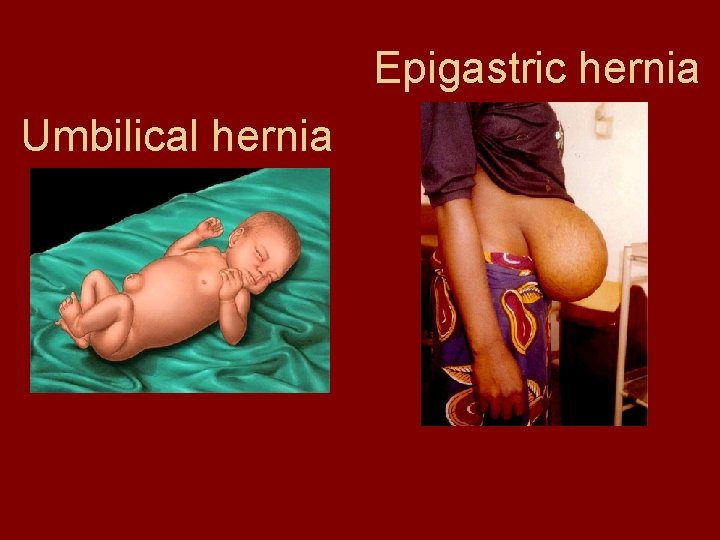
Epigastric hernia Umbilical hernia
Animations… • Muscles – Descriptions – http: //www. innerbody. com/image/musfov. html • Muscles – Locations and Actions – http: //www. getbodysmart. com/ap/muscularsys tem/menu. html